"A shiver ran down my back when I learned that they are spying on all of us," Argentine President Cristina Fernandez said in a speech on Tuesday, according to a Reuters report.
Fernandez called on several South American countries to convene a meeting Friday to articulate a response to the spying revelations.
Meanwhile, Brazil's government says it is forming a task force to investigate violations of its citizens' rights.
Chile's foreign ministry declared, "Chile cannot but firmly and categorically condemn spying practices, whatever their origin, nature and objectives."
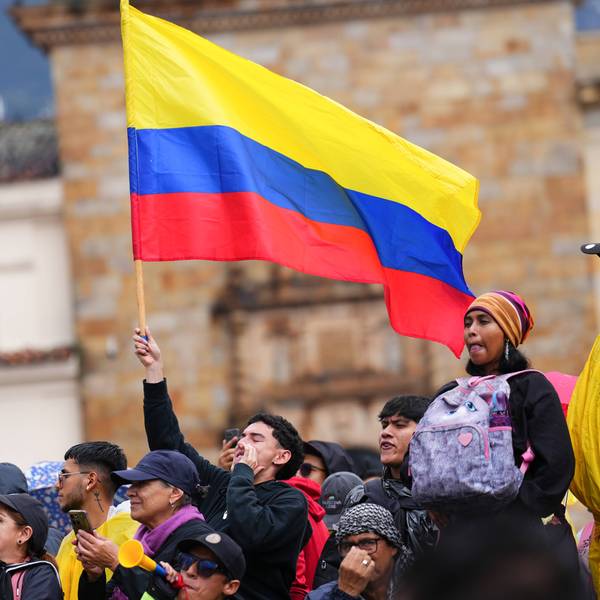
Even Colombia's right-wing government--close military and political ally to the US--issued a tepid response to the revelations. "In rejecting the acts of espionage that violate people's rights to privacy as well as the international conventions on telecommunication, Colombia requests the corresponding explanations from the United States government through its ambassador to Colombia," the foreign ministry said.
Brazilian newspaper O Globo ran a report Tuesday from Glenn Greenwald which drew on information provided by NSA whistle-blower Edward Snowden to expose secret US monitoring of phone and internet information of Venezuela, Argentina, Ecuador, Panama, Costa Rica, Nicaragua, Honduras, Paraguay, Chile, Peru, and El Salvador.
The report details how the NSA snooped on militaries and governments, as well as industry secrets, throughout the region.
Colombia was a prime target of the spying.
The revelations come after South American leaders slammed the 'kidnapping' of Bolivian president Evo Morales last week, which occurred at the behest of the US government, when Snowden was believed to be aboard his flight and it was forced to land in Europe.
Uruguay's president Jose Mujica declared last week:
We are not colonies any more. We deserve respect, and when one of our governments is insulted we feel the insult throughout Latin America.
_____________________
"A shiver ran down my back when I learned that they are spying on all of us," Argentine President Cristina Fernandez said in a speech on Tuesday, according to a Reuters report.
Fernandez called on several South American countries to convene a meeting Friday to articulate a response to the spying revelations.
Meanwhile, Brazil's government says it is forming a task force to investigate violations of its citizens' rights.
Chile's foreign ministry declared, "Chile cannot but firmly and categorically condemn spying practices, whatever their origin, nature and objectives."
Even Colombia's right-wing government--close military and political ally to the US--issued a tepid response to the revelations. "In rejecting the acts of espionage that violate people's rights to privacy as well as the international conventions on telecommunication, Colombia requests the corresponding explanations from the United States government through its ambassador to Colombia," the foreign ministry said.
Brazilian newspaper O Globo ran a report Tuesday from Glenn Greenwald which drew on information provided by NSA whistle-blower Edward Snowden to expose secret US monitoring of phone and internet information of Venezuela, Argentina, Ecuador, Panama, Costa Rica, Nicaragua, Honduras, Paraguay, Chile, Peru, and El Salvador.
The report details how the NSA snooped on militaries and governments, as well as industry secrets, throughout the region.
Colombia was a prime target of the spying.
The revelations come after South American leaders slammed the 'kidnapping' of Bolivian president Evo Morales last week, which occurred at the behest of the US government, when Snowden was believed to be aboard his flight and it was forced to land in Europe.
Uruguay's president Jose Mujica declared last week:
We are not colonies any more. We deserve respect, and when one of our governments is insulted we feel the insult throughout Latin America.
_____________________
"A shiver ran down my back when I learned that they are spying on all of us," Argentine President Cristina Fernandez said in a speech on Tuesday, according to a Reuters report.
Fernandez called on several South American countries to convene a meeting Friday to articulate a response to the spying revelations.
Meanwhile, Brazil's government says it is forming a task force to investigate violations of its citizens' rights.
Chile's foreign ministry declared, "Chile cannot but firmly and categorically condemn spying practices, whatever their origin, nature and objectives."
Even Colombia's right-wing government--close military and political ally to the US--issued a tepid response to the revelations. "In rejecting the acts of espionage that violate people's rights to privacy as well as the international conventions on telecommunication, Colombia requests the corresponding explanations from the United States government through its ambassador to Colombia," the foreign ministry said.
Brazilian newspaper O Globo ran a report Tuesday from Glenn Greenwald which drew on information provided by NSA whistle-blower Edward Snowden to expose secret US monitoring of phone and internet information of Venezuela, Argentina, Ecuador, Panama, Costa Rica, Nicaragua, Honduras, Paraguay, Chile, Peru, and El Salvador.
The report details how the NSA snooped on militaries and governments, as well as industry secrets, throughout the region.
Colombia was a prime target of the spying.
The revelations come after South American leaders slammed the 'kidnapping' of Bolivian president Evo Morales last week, which occurred at the behest of the US government, when Snowden was believed to be aboard his flight and it was forced to land in Europe.
Uruguay's president Jose Mujica declared last week:
We are not colonies any more. We deserve respect, and when one of our governments is insulted we feel the insult throughout Latin America.
_____________________