SUBSCRIBE TO OUR FREE NEWSLETTER
Daily news & progressive opinion—funded by the people, not the corporations—delivered straight to your inbox.
5
#000000
#FFFFFF
To donate by check, phone, or other method, see our More Ways to Give page.
Daily news & progressive opinion—funded by the people, not the corporations—delivered straight to your inbox.
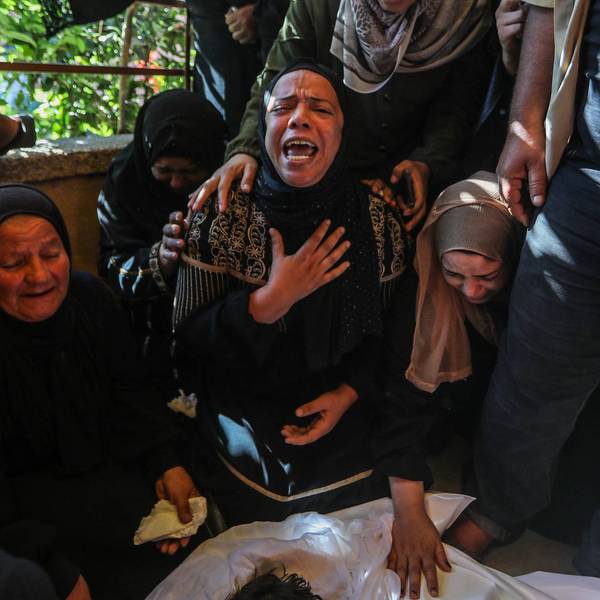
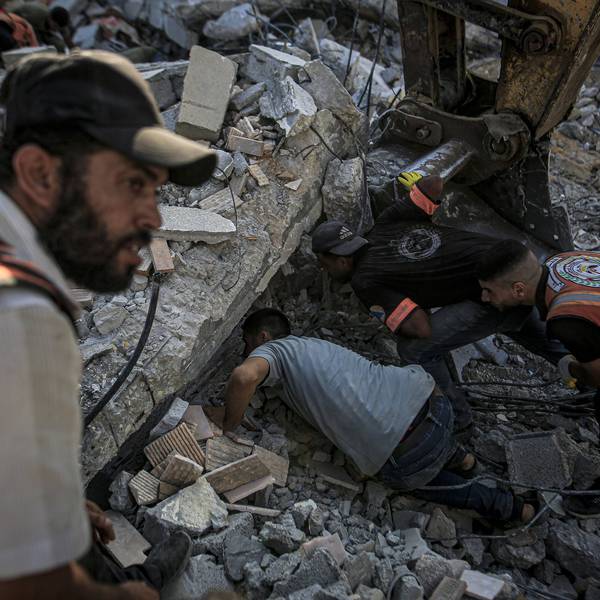
A United Nations school in the northern Gaza Strip, where hundreds of Palestinians were seeking refuge from Israeli bombing, was itself hit by missile strikes on Wednesday night, killing at least 16 people and wounding close to one hundred others.
" Children killed in their sleep; this is an affront to all of us, a source of universal shame. Today the world stands disgraced." --Pierre Krahenbuhl, UNRWA
"Last night, children were killed as they slept next to their parents on the floor of a classroom in a UN designated shelter in Gaza," said Pierre Krahenbuhl, the Commissioner-General of the United Nations Relief and Works Agency for Palestine Refugees (UNRWA), in a statement. "Children killed in their sleep; this is an affront to all of us, a source of universal shame. Today the world stands disgraced."
Krahenbuhl voiced outrage over the behavior of the Israeli military, who he says was repeatedly given the coordinates of the school:
The precise location of the Jabalia Elementary Girls School and the fact that it was housing thousands of internally displaced people was communicated to the Israeli army seventeen times, to ensure its protection; the last being at ten to nine last night, just hours before the fatal shelling.
I condemn in the strongest possible terms this serious violation of international law by Israeli forces.
This is the sixth time that one of our schools has been struck. Our staff, the very people leading the humanitarian response are being killed. Our shelters are overflowing. Tens of thousands may soon be stranded in the streets of Gaza, without food, water and shelter if attacks on these areas continue.
We have moved beyond the realm of humanitarian action alone. We are in the realm of accountability. I call on the international community to take deliberate international political action to put an immediate end to the continuing carnage.
The devastating strike came shortly after new promises by Israel's Prime Minister Benjamin Netanyahu--despite international calls for an end to the bombing--that his military forces are prepared for a "protracted" campaign and just hours after Gaza's sole power plant--which provided the population's main source of drinking water--was destroyed by Israeli missiles on Tuesday.
The Ministry of Health in Gaza reports that nearly 60 people were killed across the Gaza Strip since midnight on Wednesday, continuing what has been the deadliest 48-hours for Palestinians since fighting first began on July 8.
According to the Ma'an News Agency:
In another attack later Wednesday morning, four Palestinian children and three others, all from the Khalili family, were killed in an Israeli shelling on the al-Tuffah neighborhood of Gaza City.
The Israeli army said in a statement around 8:00 a.m. that it had targeted "75 terror sites in the Gaza Strip" overnight.
The latest killings brought the number of dead since the start of Israel's assault on Gaza to more than 1,283, according to health ministry spokesman Ashraf al-Qidra.
UN figures indicate at least three quarters of the dead were civilians.
The more than 240 Palestinian children who have died represent at least 29 percent of civilian casualties, the United Nations Children's Fund, UNICEF, said in a statement, adding that another six children in Israel had been wounded from Gaza rocket fire.
So far, UN figures show more than 215,000 people have fled their homes in a territory which is home to 1.7 million Palestinians, leaving one in eight people homeless.
On the implications of Israel's bombing of Gaza's power plant on Tuesday, historian and Middle East expert Juan Cole writes:
Without electricity, the water purification plants cannot operate and the drinking water ends up being mixed with sewage or salt water. Without electricity, patients on life support in the hospitals just die, even if Israel does not bomb the hospital, as it has in some instances. The power plant will take the good part of a year to rebuild even after the war ends. Gaza gets some electricity from Israel and Egypt, but many of those lines have been damaged in the fighting. [...]
While one can argue about whether this mortar fire or or that aerial bombing was justified, the destruction of the power plant and therefore of civilian water-purification is certainly a war crime. Babies in particular are vulnerable to dirty water, and often take revenge on their parents for the inability to give them clean water by dying. Israel is, as Rashid Khalidi argues, collectively punishing the entire Palestinian population of Gaza to punish it for being insufficiently cowed and for refusing to accept being ethnically cleansed from what is now Israel.
______________________
Dear Common Dreams reader, It’s been nearly 30 years since I co-founded Common Dreams with my late wife, Lina Newhouser. We had the radical notion that journalism should serve the public good, not corporate profits. It was clear to us from the outset what it would take to build such a project. No paid advertisements. No corporate sponsors. No millionaire publisher telling us what to think or do. Many people said we wouldn't last a year, but we proved those doubters wrong. Together with a tremendous team of journalists and dedicated staff, we built an independent media outlet free from the constraints of profits and corporate control. Our mission has always been simple: To inform. To inspire. To ignite change for the common good. Building Common Dreams was not easy. Our survival was never guaranteed. When you take on the most powerful forces—Wall Street greed, fossil fuel industry destruction, Big Tech lobbyists, and uber-rich oligarchs who have spent billions upon billions rigging the economy and democracy in their favor—the only bulwark you have is supporters who believe in your work. But here’s the urgent message from me today. It's never been this bad out there. And it's never been this hard to keep us going. At the very moment Common Dreams is most needed, the threats we face are intensifying. We need your support now more than ever. We don't accept corporate advertising and never will. We don't have a paywall because we don't think people should be blocked from critical news based on their ability to pay. Everything we do is funded by the donations of readers like you. When everyone does the little they can afford, we are strong. But if that support retreats or dries up, so do we. Will you donate now to make sure Common Dreams not only survives but thrives? —Craig Brown, Co-founder |
A United Nations school in the northern Gaza Strip, where hundreds of Palestinians were seeking refuge from Israeli bombing, was itself hit by missile strikes on Wednesday night, killing at least 16 people and wounding close to one hundred others.
" Children killed in their sleep; this is an affront to all of us, a source of universal shame. Today the world stands disgraced." --Pierre Krahenbuhl, UNRWA
"Last night, children were killed as they slept next to their parents on the floor of a classroom in a UN designated shelter in Gaza," said Pierre Krahenbuhl, the Commissioner-General of the United Nations Relief and Works Agency for Palestine Refugees (UNRWA), in a statement. "Children killed in their sleep; this is an affront to all of us, a source of universal shame. Today the world stands disgraced."
Krahenbuhl voiced outrage over the behavior of the Israeli military, who he says was repeatedly given the coordinates of the school:
The precise location of the Jabalia Elementary Girls School and the fact that it was housing thousands of internally displaced people was communicated to the Israeli army seventeen times, to ensure its protection; the last being at ten to nine last night, just hours before the fatal shelling.
I condemn in the strongest possible terms this serious violation of international law by Israeli forces.
This is the sixth time that one of our schools has been struck. Our staff, the very people leading the humanitarian response are being killed. Our shelters are overflowing. Tens of thousands may soon be stranded in the streets of Gaza, without food, water and shelter if attacks on these areas continue.
We have moved beyond the realm of humanitarian action alone. We are in the realm of accountability. I call on the international community to take deliberate international political action to put an immediate end to the continuing carnage.
The devastating strike came shortly after new promises by Israel's Prime Minister Benjamin Netanyahu--despite international calls for an end to the bombing--that his military forces are prepared for a "protracted" campaign and just hours after Gaza's sole power plant--which provided the population's main source of drinking water--was destroyed by Israeli missiles on Tuesday.
The Ministry of Health in Gaza reports that nearly 60 people were killed across the Gaza Strip since midnight on Wednesday, continuing what has been the deadliest 48-hours for Palestinians since fighting first began on July 8.
According to the Ma'an News Agency:
In another attack later Wednesday morning, four Palestinian children and three others, all from the Khalili family, were killed in an Israeli shelling on the al-Tuffah neighborhood of Gaza City.
The Israeli army said in a statement around 8:00 a.m. that it had targeted "75 terror sites in the Gaza Strip" overnight.
The latest killings brought the number of dead since the start of Israel's assault on Gaza to more than 1,283, according to health ministry spokesman Ashraf al-Qidra.
UN figures indicate at least three quarters of the dead were civilians.
The more than 240 Palestinian children who have died represent at least 29 percent of civilian casualties, the United Nations Children's Fund, UNICEF, said in a statement, adding that another six children in Israel had been wounded from Gaza rocket fire.
So far, UN figures show more than 215,000 people have fled their homes in a territory which is home to 1.7 million Palestinians, leaving one in eight people homeless.
On the implications of Israel's bombing of Gaza's power plant on Tuesday, historian and Middle East expert Juan Cole writes:
Without electricity, the water purification plants cannot operate and the drinking water ends up being mixed with sewage or salt water. Without electricity, patients on life support in the hospitals just die, even if Israel does not bomb the hospital, as it has in some instances. The power plant will take the good part of a year to rebuild even after the war ends. Gaza gets some electricity from Israel and Egypt, but many of those lines have been damaged in the fighting. [...]
While one can argue about whether this mortar fire or or that aerial bombing was justified, the destruction of the power plant and therefore of civilian water-purification is certainly a war crime. Babies in particular are vulnerable to dirty water, and often take revenge on their parents for the inability to give them clean water by dying. Israel is, as Rashid Khalidi argues, collectively punishing the entire Palestinian population of Gaza to punish it for being insufficiently cowed and for refusing to accept being ethnically cleansed from what is now Israel.
______________________
A United Nations school in the northern Gaza Strip, where hundreds of Palestinians were seeking refuge from Israeli bombing, was itself hit by missile strikes on Wednesday night, killing at least 16 people and wounding close to one hundred others.
" Children killed in their sleep; this is an affront to all of us, a source of universal shame. Today the world stands disgraced." --Pierre Krahenbuhl, UNRWA
"Last night, children were killed as they slept next to their parents on the floor of a classroom in a UN designated shelter in Gaza," said Pierre Krahenbuhl, the Commissioner-General of the United Nations Relief and Works Agency for Palestine Refugees (UNRWA), in a statement. "Children killed in their sleep; this is an affront to all of us, a source of universal shame. Today the world stands disgraced."
Krahenbuhl voiced outrage over the behavior of the Israeli military, who he says was repeatedly given the coordinates of the school:
The precise location of the Jabalia Elementary Girls School and the fact that it was housing thousands of internally displaced people was communicated to the Israeli army seventeen times, to ensure its protection; the last being at ten to nine last night, just hours before the fatal shelling.
I condemn in the strongest possible terms this serious violation of international law by Israeli forces.
This is the sixth time that one of our schools has been struck. Our staff, the very people leading the humanitarian response are being killed. Our shelters are overflowing. Tens of thousands may soon be stranded in the streets of Gaza, without food, water and shelter if attacks on these areas continue.
We have moved beyond the realm of humanitarian action alone. We are in the realm of accountability. I call on the international community to take deliberate international political action to put an immediate end to the continuing carnage.
The devastating strike came shortly after new promises by Israel's Prime Minister Benjamin Netanyahu--despite international calls for an end to the bombing--that his military forces are prepared for a "protracted" campaign and just hours after Gaza's sole power plant--which provided the population's main source of drinking water--was destroyed by Israeli missiles on Tuesday.
The Ministry of Health in Gaza reports that nearly 60 people were killed across the Gaza Strip since midnight on Wednesday, continuing what has been the deadliest 48-hours for Palestinians since fighting first began on July 8.
According to the Ma'an News Agency:
In another attack later Wednesday morning, four Palestinian children and three others, all from the Khalili family, were killed in an Israeli shelling on the al-Tuffah neighborhood of Gaza City.
The Israeli army said in a statement around 8:00 a.m. that it had targeted "75 terror sites in the Gaza Strip" overnight.
The latest killings brought the number of dead since the start of Israel's assault on Gaza to more than 1,283, according to health ministry spokesman Ashraf al-Qidra.
UN figures indicate at least three quarters of the dead were civilians.
The more than 240 Palestinian children who have died represent at least 29 percent of civilian casualties, the United Nations Children's Fund, UNICEF, said in a statement, adding that another six children in Israel had been wounded from Gaza rocket fire.
So far, UN figures show more than 215,000 people have fled their homes in a territory which is home to 1.7 million Palestinians, leaving one in eight people homeless.
On the implications of Israel's bombing of Gaza's power plant on Tuesday, historian and Middle East expert Juan Cole writes:
Without electricity, the water purification plants cannot operate and the drinking water ends up being mixed with sewage or salt water. Without electricity, patients on life support in the hospitals just die, even if Israel does not bomb the hospital, as it has in some instances. The power plant will take the good part of a year to rebuild even after the war ends. Gaza gets some electricity from Israel and Egypt, but many of those lines have been damaged in the fighting. [...]
While one can argue about whether this mortar fire or or that aerial bombing was justified, the destruction of the power plant and therefore of civilian water-purification is certainly a war crime. Babies in particular are vulnerable to dirty water, and often take revenge on their parents for the inability to give them clean water by dying. Israel is, as Rashid Khalidi argues, collectively punishing the entire Palestinian population of Gaza to punish it for being insufficiently cowed and for refusing to accept being ethnically cleansed from what is now Israel.
______________________