Renewables Not Enough: World Needs Democratic, Decentralized Energy, says Report
'A timely and equitable energy transition can occur only with greater energy democracy, which requires that workers, communities, and the public at large have a real voice in decision making.'
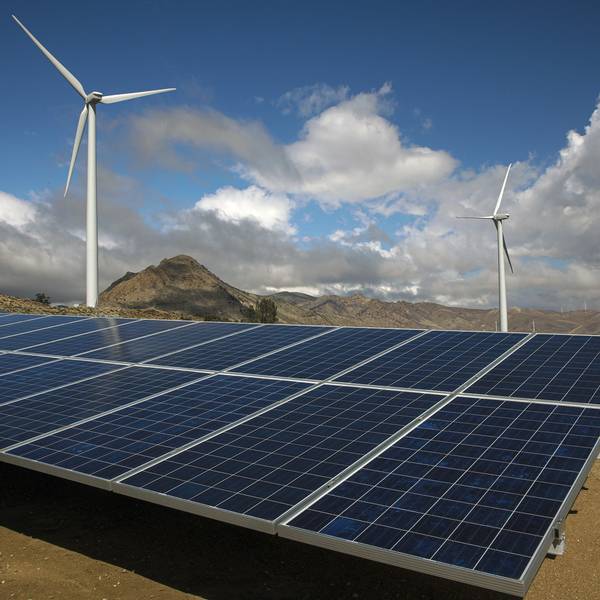
In order to build an adequate low-carbon 21st century energy system that scientists have said is necessary to stave off the worst impacts of climate change, a new report argues that the world must look beyond large-scale, centralized renewable projects--such as industrial solar and wind farms--and take up efforts to build more democratically-controlled and decentralized power grids.
Contained as a chapter in the Worldwatch Institute's State of the World 2014: Governing for Sustainability, the research compiled by professor Sean Sweeney, who co-directs of the Global Labor Institute at Cornell University, says the world's energy systems must be "reclaimed to serve public interests, rather than focus on maximizing sales and profits" for the large corporations who now benefit from the burning of fossil fuels and the centralized grids that distribute most of the world's electricity.
"A timely and equitable energy transition can occur only with greater energy democracy, which requires that workers, communities, and the public at large have a real voice in decision making, and that the anarchy of liberalized energy markets is replaced with a comprehensive and planned approach," writes Sweeney.
According to a 2010 report (pdf) by the Center for Social Inclusion, true "energy democracy" is exemplifed by renewable energy projects that are "small-scale, locally owned or controlled" and "structured to allow local investment, sweat equity, and a transparent process for setting fair [market] prices."
In order to achieve energy democracy, Sweeney says, three key ingredients are needed. They are:
1. Resisting the dominant energy agenda. As of 2012, fossil fuel-producing companies and utilities represented 19 of the world's 50 leading corporations. Their revenue and their critical role in the world economy lend them substantial political influence and staying power. Resisting the agenda of these companies and their political allies--through informed policy changes and opposition to projects that present serious risks to workers, communities, and the environment--is an indispensable part of a democratic approach. But this does not mean uncritically embracing the agenda of large renewable energy companies.
2. Reclaiming the energy system for the public benefit. Privatization has led almost invariably to worsening working conditions, falling quality of service, and corporate oligarchies. But energy systems can be reclaimed to serve public interests, rather than focus on maximizing sales and profits. This method would return public control to parts of the energy sector that have been privatized and to public energy entities that are run like private companies, while reasserting the right to develop socially owned energy systems.
3. Restructuring the energy sector. Compared to the current centralized system, decentralized generation is likely to be more conducive to local control, opening up off-grid and mini-grid potential even for remote areas struggling with poverty. Renewable energy is poised to grow spectacularly in many countries, but the energy transition that the world desperately needs will happen only if changes in the energy system are carefully planned and coordinated nationally or regionally.
"So far the kind of global political framework that is needed to drive a truly green transition has failed to emerge," writes Sweeney. Though technically possible, he says the restructuring our energy system is being resisted by powerful forces.
And as the Worldwatch report states:
Although global society has largely ignored them, for years there have been alternatives to the dominant worldview that the natural world is a platorm for living situated in a warehouse of resources that are ours for the taking. Ecological economists and others repeatedly have made the case for operating within Earth's system limits. Other eloquent voices have urged consideration of perspectives on the human place in the world that would enable and support this mode of operation.
What Sweeney argues is that this worldview must go from being part of the marginal debate, to the centerpiece of the story around climate and energy transformation. Democratic, decentralized power systems must go from being "technically possible," said Sweeney, to "politically irresistible."
An Urgent Message From Our Co-Founder
Dear Common Dreams reader, It’s been nearly 30 years since I co-founded Common Dreams with my late wife, Lina Newhouser. We had the radical notion that journalism should serve the public good, not corporate profits. It was clear to us from the outset what it would take to build such a project. No paid advertisements. No corporate sponsors. No millionaire publisher telling us what to think or do. Many people said we wouldn't last a year, but we proved those doubters wrong. Together with a tremendous team of journalists and dedicated staff, we built an independent media outlet free from the constraints of profits and corporate control. Our mission has always been simple: To inform. To inspire. To ignite change for the common good. Building Common Dreams was not easy. Our survival was never guaranteed. When you take on the most powerful forces—Wall Street greed, fossil fuel industry destruction, Big Tech lobbyists, and uber-rich oligarchs who have spent billions upon billions rigging the economy and democracy in their favor—the only bulwark you have is supporters who believe in your work. But here’s the urgent message from me today. It's never been this bad out there. And it's never been this hard to keep us going. At the very moment Common Dreams is most needed, the threats we face are intensifying. We need your support now more than ever. We don't accept corporate advertising and never will. We don't have a paywall because we don't think people should be blocked from critical news based on their ability to pay. Everything we do is funded by the donations of readers like you. When everyone does the little they can afford, we are strong. But if that support retreats or dries up, so do we. Will you donate now to make sure Common Dreams not only survives but thrives? —Craig Brown, Co-founder |
In order to build an adequate low-carbon 21st century energy system that scientists have said is necessary to stave off the worst impacts of climate change, a new report argues that the world must look beyond large-scale, centralized renewable projects--such as industrial solar and wind farms--and take up efforts to build more democratically-controlled and decentralized power grids.
Contained as a chapter in the Worldwatch Institute's State of the World 2014: Governing for Sustainability, the research compiled by professor Sean Sweeney, who co-directs of the Global Labor Institute at Cornell University, says the world's energy systems must be "reclaimed to serve public interests, rather than focus on maximizing sales and profits" for the large corporations who now benefit from the burning of fossil fuels and the centralized grids that distribute most of the world's electricity.
"A timely and equitable energy transition can occur only with greater energy democracy, which requires that workers, communities, and the public at large have a real voice in decision making, and that the anarchy of liberalized energy markets is replaced with a comprehensive and planned approach," writes Sweeney.
According to a 2010 report (pdf) by the Center for Social Inclusion, true "energy democracy" is exemplifed by renewable energy projects that are "small-scale, locally owned or controlled" and "structured to allow local investment, sweat equity, and a transparent process for setting fair [market] prices."
In order to achieve energy democracy, Sweeney says, three key ingredients are needed. They are:
1. Resisting the dominant energy agenda. As of 2012, fossil fuel-producing companies and utilities represented 19 of the world's 50 leading corporations. Their revenue and their critical role in the world economy lend them substantial political influence and staying power. Resisting the agenda of these companies and their political allies--through informed policy changes and opposition to projects that present serious risks to workers, communities, and the environment--is an indispensable part of a democratic approach. But this does not mean uncritically embracing the agenda of large renewable energy companies.
2. Reclaiming the energy system for the public benefit. Privatization has led almost invariably to worsening working conditions, falling quality of service, and corporate oligarchies. But energy systems can be reclaimed to serve public interests, rather than focus on maximizing sales and profits. This method would return public control to parts of the energy sector that have been privatized and to public energy entities that are run like private companies, while reasserting the right to develop socially owned energy systems.
3. Restructuring the energy sector. Compared to the current centralized system, decentralized generation is likely to be more conducive to local control, opening up off-grid and mini-grid potential even for remote areas struggling with poverty. Renewable energy is poised to grow spectacularly in many countries, but the energy transition that the world desperately needs will happen only if changes in the energy system are carefully planned and coordinated nationally or regionally.
"So far the kind of global political framework that is needed to drive a truly green transition has failed to emerge," writes Sweeney. Though technically possible, he says the restructuring our energy system is being resisted by powerful forces.
And as the Worldwatch report states:
Although global society has largely ignored them, for years there have been alternatives to the dominant worldview that the natural world is a platorm for living situated in a warehouse of resources that are ours for the taking. Ecological economists and others repeatedly have made the case for operating within Earth's system limits. Other eloquent voices have urged consideration of perspectives on the human place in the world that would enable and support this mode of operation.
What Sweeney argues is that this worldview must go from being part of the marginal debate, to the centerpiece of the story around climate and energy transformation. Democratic, decentralized power systems must go from being "technically possible," said Sweeney, to "politically irresistible."
In order to build an adequate low-carbon 21st century energy system that scientists have said is necessary to stave off the worst impacts of climate change, a new report argues that the world must look beyond large-scale, centralized renewable projects--such as industrial solar and wind farms--and take up efforts to build more democratically-controlled and decentralized power grids.
Contained as a chapter in the Worldwatch Institute's State of the World 2014: Governing for Sustainability, the research compiled by professor Sean Sweeney, who co-directs of the Global Labor Institute at Cornell University, says the world's energy systems must be "reclaimed to serve public interests, rather than focus on maximizing sales and profits" for the large corporations who now benefit from the burning of fossil fuels and the centralized grids that distribute most of the world's electricity.
"A timely and equitable energy transition can occur only with greater energy democracy, which requires that workers, communities, and the public at large have a real voice in decision making, and that the anarchy of liberalized energy markets is replaced with a comprehensive and planned approach," writes Sweeney.
According to a 2010 report (pdf) by the Center for Social Inclusion, true "energy democracy" is exemplifed by renewable energy projects that are "small-scale, locally owned or controlled" and "structured to allow local investment, sweat equity, and a transparent process for setting fair [market] prices."
In order to achieve energy democracy, Sweeney says, three key ingredients are needed. They are:
1. Resisting the dominant energy agenda. As of 2012, fossil fuel-producing companies and utilities represented 19 of the world's 50 leading corporations. Their revenue and their critical role in the world economy lend them substantial political influence and staying power. Resisting the agenda of these companies and their political allies--through informed policy changes and opposition to projects that present serious risks to workers, communities, and the environment--is an indispensable part of a democratic approach. But this does not mean uncritically embracing the agenda of large renewable energy companies.
2. Reclaiming the energy system for the public benefit. Privatization has led almost invariably to worsening working conditions, falling quality of service, and corporate oligarchies. But energy systems can be reclaimed to serve public interests, rather than focus on maximizing sales and profits. This method would return public control to parts of the energy sector that have been privatized and to public energy entities that are run like private companies, while reasserting the right to develop socially owned energy systems.
3. Restructuring the energy sector. Compared to the current centralized system, decentralized generation is likely to be more conducive to local control, opening up off-grid and mini-grid potential even for remote areas struggling with poverty. Renewable energy is poised to grow spectacularly in many countries, but the energy transition that the world desperately needs will happen only if changes in the energy system are carefully planned and coordinated nationally or regionally.
"So far the kind of global political framework that is needed to drive a truly green transition has failed to emerge," writes Sweeney. Though technically possible, he says the restructuring our energy system is being resisted by powerful forces.
And as the Worldwatch report states:
Although global society has largely ignored them, for years there have been alternatives to the dominant worldview that the natural world is a platorm for living situated in a warehouse of resources that are ours for the taking. Ecological economists and others repeatedly have made the case for operating within Earth's system limits. Other eloquent voices have urged consideration of perspectives on the human place in the world that would enable and support this mode of operation.
What Sweeney argues is that this worldview must go from being part of the marginal debate, to the centerpiece of the story around climate and energy transformation. Democratic, decentralized power systems must go from being "technically possible," said Sweeney, to "politically irresistible."