SUBSCRIBE TO OUR FREE NEWSLETTER
Daily news & progressive opinion—funded by the people, not the corporations—delivered straight to your inbox.
5
#000000
#FFFFFF
To donate by check, phone, or other method, see our More Ways to Give page.
Daily news & progressive opinion—funded by the people, not the corporations—delivered straight to your inbox.
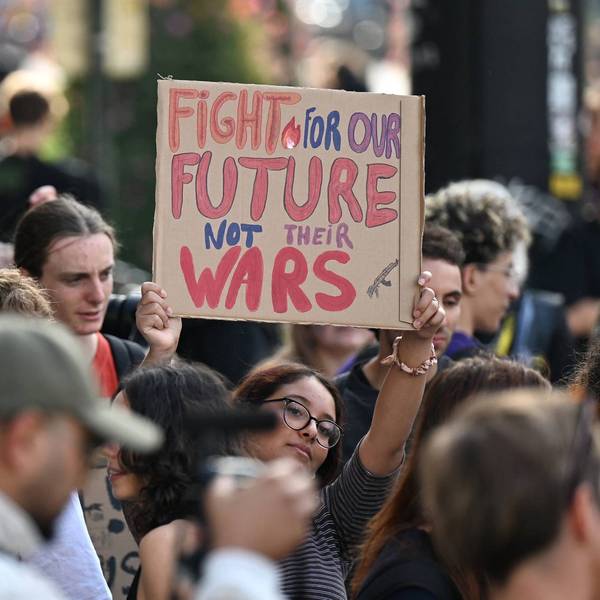
More than 100,000 workers took to the streets in Brussels, Belgium on Thursday to protest austerity cuts and free-market reforms that are set to cut vital social services, freeze wages, and raise the retirement age.
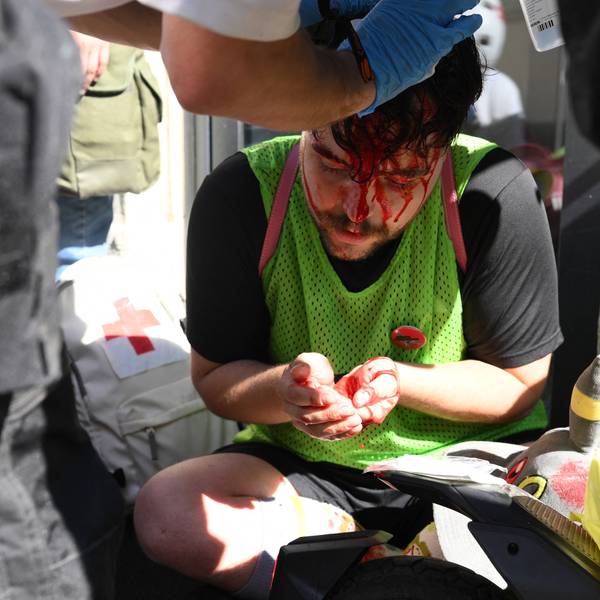
Police used tear gas and water cannons to break up the protest, which saw laborers and other low-wage workers marching peacefully through downtown Brussels to mark the start of an anticipated month-long campaign against the country's newly elected center-right government.
The actions will culminate with a nationwide strike on December 15.
"They are hitting the workers, the unemployed. They are not looking for money where it is, I mean, people with a lot of money," one worker, Philippe Dubois, told the Associated Press.
Belgium's recently elected coalition, which shuts out the Socialist Party for the first time in decades, is made up of three pro-business parties and the centrist Christian Democrats. The coalition said it was forced to institute these new free-market reforms in order to comply with the European Union's budget restrictions.
But residents and other politicians disagreed. Former Prime Minister Elio Di Rupo, a Socialist Democrat, told Reuters UK, "I share the concern of the people and the measures of the government are unjust."
Thursday's action partially shut down business and blocked major intersections in Brussels, where the headquarters of the European Union are stationed, as finance ministers arrived in the city to moderate talks between employers and union leaders. Images from Thursday showed the march coming to a turbulent end among overturned cars and burning trash cans. NBC News reported that 120,000 took part in the demonstration.
According to Reuters UK, rail operators sold 80,000 tickets in advance and scheduled an extra 15 trains so that workers from rural areas could plan ahead to join Thursday's protest. Union leaders also booked 500 buses to transport people from around the country to the capital.
"The signal is clear," ACV union chief Marc Leemans told Reuters UK. "People are angry, livid. This government's policies are totally unbalanced."
Dear Common Dreams reader, It’s been nearly 30 years since I co-founded Common Dreams with my late wife, Lina Newhouser. We had the radical notion that journalism should serve the public good, not corporate profits. It was clear to us from the outset what it would take to build such a project. No paid advertisements. No corporate sponsors. No millionaire publisher telling us what to think or do. Many people said we wouldn't last a year, but we proved those doubters wrong. Together with a tremendous team of journalists and dedicated staff, we built an independent media outlet free from the constraints of profits and corporate control. Our mission has always been simple: To inform. To inspire. To ignite change for the common good. Building Common Dreams was not easy. Our survival was never guaranteed. When you take on the most powerful forces—Wall Street greed, fossil fuel industry destruction, Big Tech lobbyists, and uber-rich oligarchs who have spent billions upon billions rigging the economy and democracy in their favor—the only bulwark you have is supporters who believe in your work. But here’s the urgent message from me today. It's never been this bad out there. And it's never been this hard to keep us going. At the very moment Common Dreams is most needed, the threats we face are intensifying. We need your support now more than ever. We don't accept corporate advertising and never will. We don't have a paywall because we don't think people should be blocked from critical news based on their ability to pay. Everything we do is funded by the donations of readers like you. When everyone does the little they can afford, we are strong. But if that support retreats or dries up, so do we. Will you donate now to make sure Common Dreams not only survives but thrives? —Craig Brown, Co-founder |
More than 100,000 workers took to the streets in Brussels, Belgium on Thursday to protest austerity cuts and free-market reforms that are set to cut vital social services, freeze wages, and raise the retirement age.
Police used tear gas and water cannons to break up the protest, which saw laborers and other low-wage workers marching peacefully through downtown Brussels to mark the start of an anticipated month-long campaign against the country's newly elected center-right government.
The actions will culminate with a nationwide strike on December 15.
"They are hitting the workers, the unemployed. They are not looking for money where it is, I mean, people with a lot of money," one worker, Philippe Dubois, told the Associated Press.
Belgium's recently elected coalition, which shuts out the Socialist Party for the first time in decades, is made up of three pro-business parties and the centrist Christian Democrats. The coalition said it was forced to institute these new free-market reforms in order to comply with the European Union's budget restrictions.
But residents and other politicians disagreed. Former Prime Minister Elio Di Rupo, a Socialist Democrat, told Reuters UK, "I share the concern of the people and the measures of the government are unjust."
Thursday's action partially shut down business and blocked major intersections in Brussels, where the headquarters of the European Union are stationed, as finance ministers arrived in the city to moderate talks between employers and union leaders. Images from Thursday showed the march coming to a turbulent end among overturned cars and burning trash cans. NBC News reported that 120,000 took part in the demonstration.
According to Reuters UK, rail operators sold 80,000 tickets in advance and scheduled an extra 15 trains so that workers from rural areas could plan ahead to join Thursday's protest. Union leaders also booked 500 buses to transport people from around the country to the capital.
"The signal is clear," ACV union chief Marc Leemans told Reuters UK. "People are angry, livid. This government's policies are totally unbalanced."
More than 100,000 workers took to the streets in Brussels, Belgium on Thursday to protest austerity cuts and free-market reforms that are set to cut vital social services, freeze wages, and raise the retirement age.
Police used tear gas and water cannons to break up the protest, which saw laborers and other low-wage workers marching peacefully through downtown Brussels to mark the start of an anticipated month-long campaign against the country's newly elected center-right government.
The actions will culminate with a nationwide strike on December 15.
"They are hitting the workers, the unemployed. They are not looking for money where it is, I mean, people with a lot of money," one worker, Philippe Dubois, told the Associated Press.
Belgium's recently elected coalition, which shuts out the Socialist Party for the first time in decades, is made up of three pro-business parties and the centrist Christian Democrats. The coalition said it was forced to institute these new free-market reforms in order to comply with the European Union's budget restrictions.
But residents and other politicians disagreed. Former Prime Minister Elio Di Rupo, a Socialist Democrat, told Reuters UK, "I share the concern of the people and the measures of the government are unjust."
Thursday's action partially shut down business and blocked major intersections in Brussels, where the headquarters of the European Union are stationed, as finance ministers arrived in the city to moderate talks between employers and union leaders. Images from Thursday showed the march coming to a turbulent end among overturned cars and burning trash cans. NBC News reported that 120,000 took part in the demonstration.
According to Reuters UK, rail operators sold 80,000 tickets in advance and scheduled an extra 15 trains so that workers from rural areas could plan ahead to join Thursday's protest. Union leaders also booked 500 buses to transport people from around the country to the capital.
"The signal is clear," ACV union chief Marc Leemans told Reuters UK. "People are angry, livid. This government's policies are totally unbalanced."