Nearly 50 Aid Agencies Charge International Community Failing People of Gaza
The Association of International Development Agencies finds that, six months after global donors pledged $3.5 billion, only a quarter of funds have been disbursed
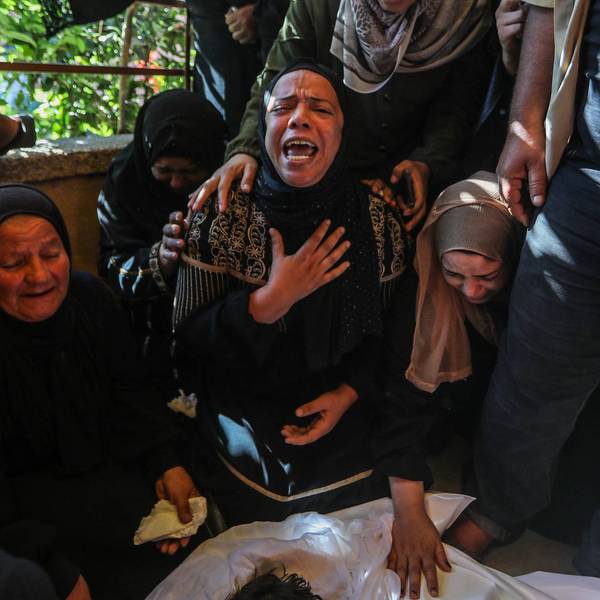
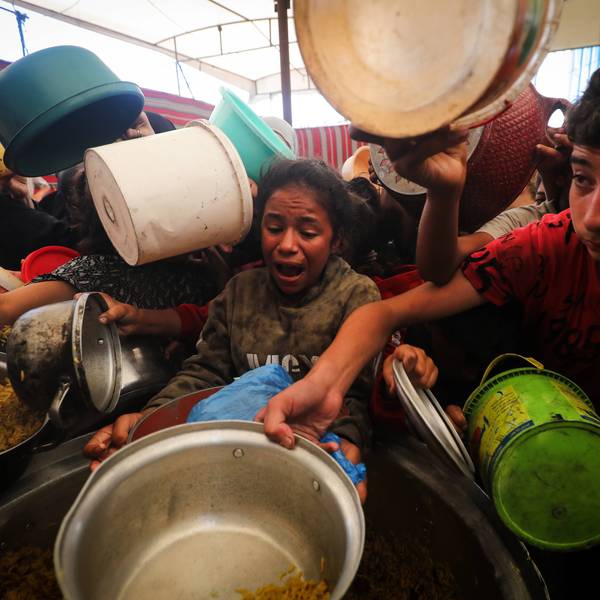
Just six months after donors from around the world pledged $3.5 billion towards the rebuilding of Gaza, following Israel's 51-day military assault last summer, only 26.8 percent of these funds have been disbursed, reconstruction has "barely begun," and the civilian population remains strangled by an economic and military siege.
The Association of International Development Agencies delivered this devastating indictment in a report released Monday, entitled Charting a New Course: Overcoming the Stalemate in Gaza (pdf).
Forty-six humanitarian organizations from across the globe signed onto the findings of the report, which was published six months after an October 2014 conference in Cairo At the conference, attended by representatives of over 60 countries and chaired by Norway, governments committed funds for Gaza's reconstruction and recovery following the devastating attacks.
Israel's ground invasion and air bombardments--termed "Operation Protective Edge"--killed an estimated 2,134 Palestinians, approximately 70 percent of whom were civilians. Seventy-one Israelis were also killed in the conflict, including five civilians.
Gaza's civilian infrastructure, furthermore, was decimated in the attack, which damaged over 160,000 homes, 20,000 meters of water pipelines, and 30 percent of agricultural lands. At least 14 health facilities and eight schools were completely destroyed, and Gaza's only power plant was targeted in the bombings, leading to ongoing electricity shortages.
"With the blockade in place we are just reconstructing a life of misery, poverty and despair."
--Tony Laurance, MAP UK
In the face of this large-scale destruction, the international community has so far failed to deliver on its recovery promises, the report charges.
"The promising speeches at the donor conference have turned into empty words," said Winnie Byanyima, Executive Director of Oxfam, a signatory to the report. "There has been little rebuilding, no permanent ceasefire agreement and no plan to end the blockade. The international community is walking with eyes wide open into the next avoidable conflict, by upholding the status quo they themselves said must change."
And, even when funds do get in, reconstruction projects stall, or do not begin at all, because the blockade prevents materials from reaching Gaza.
"Most of the 81 health clinics and hospitals that were damaged still lack funds for reconstruction, but the few that have funds do not have the material needed to proceed," notes a report summary.
In addition, an estimated 100,000 people in Gaza are homeless, and not one of the 19,000 homes destroyed in the war has been rebuilt.
Furthermore, the report charges, there has been "no accountability to address violations of international law" and the international community has not posed a meaningful challenge to the siege itself.
As many have argued, international aid is a pittance as long as global super-powers like the United States throw their political and financial backing behind Israel's siege of Gaza, home to 1.8 million people and one of the most densely-populated places on earth.
The report urges, "The international community, in particular the (Middle East diplomatic) Quartet of the US, the EU, Russia and the UN, should propose a time-bound plan to support an end to the blockade."
Tony Laurance, CEO of MAP UK, another signatory to the report, declared, "The world is shutting its eyes and ears to the people of Gaza when they need it most. Reconstruction cannot happen without funds, but money alone will not be enough. With the blockade in place we are just reconstructing a life of misery, poverty and despair."
We are at a crossroads
This country and this world are at a monumental crossroads. In a few short weeks, US voters will have an opportunity to beat back the forces of fascism and confront the billionaires who are rigging the economy, our media system, and our democracy, making it increasingly impossible for ordinary people to get by. We’re not just talking about the election. We’re talking about what must be done once these fascist elements are vanquished from power. We need a bolder set of solutions than what either major party has so far been willing to offer and a working-class movement ready to fight like hell for it. Trump didn't emerge from nowhere. The conditions that fueled MAGA authoritarianism were created by decades of radical neoliberal economic policies and a corrupt political system dominated by corporate interests. They slashed taxes on the super-rich, promising that the benefits would trickle down. They said giveaways to the corporate titans would make life more affordable for the rest of us. It was all bullshit. And when a bitter, betrayed populace searches for someone to blame, right-wing demagogues have little trouble finding scapegoats. People know when they're being lied to, but you won't hear any of this from the corporate media. Only independent journalism—powered and funded by people who believe in building a better world—can deliver truly trustworthy daily news. Our Fall Campaign is underway, and we need your help. To power our newsroom through the rest of the year, we need to raise $125,000 by midnight on October 31. So if you share our vision, please contribute whatever you can to sustain our work. |
Just six months after donors from around the world pledged $3.5 billion towards the rebuilding of Gaza, following Israel's 51-day military assault last summer, only 26.8 percent of these funds have been disbursed, reconstruction has "barely begun," and the civilian population remains strangled by an economic and military siege.
The Association of International Development Agencies delivered this devastating indictment in a report released Monday, entitled Charting a New Course: Overcoming the Stalemate in Gaza (pdf).
Forty-six humanitarian organizations from across the globe signed onto the findings of the report, which was published six months after an October 2014 conference in Cairo At the conference, attended by representatives of over 60 countries and chaired by Norway, governments committed funds for Gaza's reconstruction and recovery following the devastating attacks.
Israel's ground invasion and air bombardments--termed "Operation Protective Edge"--killed an estimated 2,134 Palestinians, approximately 70 percent of whom were civilians. Seventy-one Israelis were also killed in the conflict, including five civilians.
Gaza's civilian infrastructure, furthermore, was decimated in the attack, which damaged over 160,000 homes, 20,000 meters of water pipelines, and 30 percent of agricultural lands. At least 14 health facilities and eight schools were completely destroyed, and Gaza's only power plant was targeted in the bombings, leading to ongoing electricity shortages.
"With the blockade in place we are just reconstructing a life of misery, poverty and despair."
--Tony Laurance, MAP UK
In the face of this large-scale destruction, the international community has so far failed to deliver on its recovery promises, the report charges.
"The promising speeches at the donor conference have turned into empty words," said Winnie Byanyima, Executive Director of Oxfam, a signatory to the report. "There has been little rebuilding, no permanent ceasefire agreement and no plan to end the blockade. The international community is walking with eyes wide open into the next avoidable conflict, by upholding the status quo they themselves said must change."
And, even when funds do get in, reconstruction projects stall, or do not begin at all, because the blockade prevents materials from reaching Gaza.
"Most of the 81 health clinics and hospitals that were damaged still lack funds for reconstruction, but the few that have funds do not have the material needed to proceed," notes a report summary.
In addition, an estimated 100,000 people in Gaza are homeless, and not one of the 19,000 homes destroyed in the war has been rebuilt.
Furthermore, the report charges, there has been "no accountability to address violations of international law" and the international community has not posed a meaningful challenge to the siege itself.
As many have argued, international aid is a pittance as long as global super-powers like the United States throw their political and financial backing behind Israel's siege of Gaza, home to 1.8 million people and one of the most densely-populated places on earth.
The report urges, "The international community, in particular the (Middle East diplomatic) Quartet of the US, the EU, Russia and the UN, should propose a time-bound plan to support an end to the blockade."
Tony Laurance, CEO of MAP UK, another signatory to the report, declared, "The world is shutting its eyes and ears to the people of Gaza when they need it most. Reconstruction cannot happen without funds, but money alone will not be enough. With the blockade in place we are just reconstructing a life of misery, poverty and despair."
Just six months after donors from around the world pledged $3.5 billion towards the rebuilding of Gaza, following Israel's 51-day military assault last summer, only 26.8 percent of these funds have been disbursed, reconstruction has "barely begun," and the civilian population remains strangled by an economic and military siege.
The Association of International Development Agencies delivered this devastating indictment in a report released Monday, entitled Charting a New Course: Overcoming the Stalemate in Gaza (pdf).
Forty-six humanitarian organizations from across the globe signed onto the findings of the report, which was published six months after an October 2014 conference in Cairo At the conference, attended by representatives of over 60 countries and chaired by Norway, governments committed funds for Gaza's reconstruction and recovery following the devastating attacks.
Israel's ground invasion and air bombardments--termed "Operation Protective Edge"--killed an estimated 2,134 Palestinians, approximately 70 percent of whom were civilians. Seventy-one Israelis were also killed in the conflict, including five civilians.
Gaza's civilian infrastructure, furthermore, was decimated in the attack, which damaged over 160,000 homes, 20,000 meters of water pipelines, and 30 percent of agricultural lands. At least 14 health facilities and eight schools were completely destroyed, and Gaza's only power plant was targeted in the bombings, leading to ongoing electricity shortages.
"With the blockade in place we are just reconstructing a life of misery, poverty and despair."
--Tony Laurance, MAP UK
In the face of this large-scale destruction, the international community has so far failed to deliver on its recovery promises, the report charges.
"The promising speeches at the donor conference have turned into empty words," said Winnie Byanyima, Executive Director of Oxfam, a signatory to the report. "There has been little rebuilding, no permanent ceasefire agreement and no plan to end the blockade. The international community is walking with eyes wide open into the next avoidable conflict, by upholding the status quo they themselves said must change."
And, even when funds do get in, reconstruction projects stall, or do not begin at all, because the blockade prevents materials from reaching Gaza.
"Most of the 81 health clinics and hospitals that were damaged still lack funds for reconstruction, but the few that have funds do not have the material needed to proceed," notes a report summary.
In addition, an estimated 100,000 people in Gaza are homeless, and not one of the 19,000 homes destroyed in the war has been rebuilt.
Furthermore, the report charges, there has been "no accountability to address violations of international law" and the international community has not posed a meaningful challenge to the siege itself.
As many have argued, international aid is a pittance as long as global super-powers like the United States throw their political and financial backing behind Israel's siege of Gaza, home to 1.8 million people and one of the most densely-populated places on earth.
The report urges, "The international community, in particular the (Middle East diplomatic) Quartet of the US, the EU, Russia and the UN, should propose a time-bound plan to support an end to the blockade."
Tony Laurance, CEO of MAP UK, another signatory to the report, declared, "The world is shutting its eyes and ears to the people of Gaza when they need it most. Reconstruction cannot happen without funds, but money alone will not be enough. With the blockade in place we are just reconstructing a life of misery, poverty and despair."