SUBSCRIBE TO OUR FREE NEWSLETTER
Daily news & progressive opinion—funded by the people, not the corporations—delivered straight to your inbox.
5
#000000
#FFFFFF
To donate by check, phone, or other method, see our More Ways to Give page.
Daily news & progressive opinion—funded by the people, not the corporations—delivered straight to your inbox.
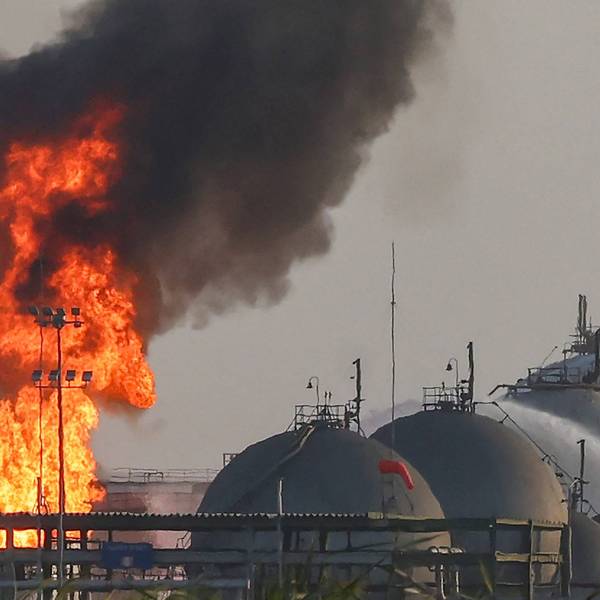
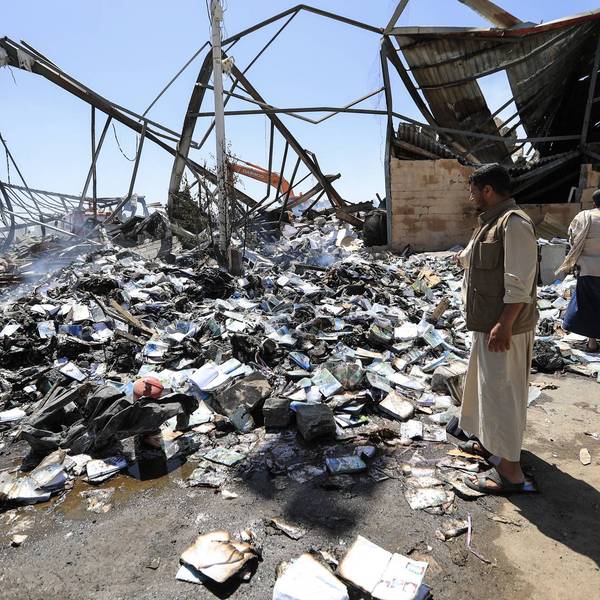
During a war-fueled water crisis, the Saudi Arabia-led coalition reportedly bombed a water bottling plant in northern Yemen on Sunday, adding to mounting civilian casualties as the military onslaught enters its sixth month.
"The corpses of 36 workers, many of them burnt or in pieces, were pulled out after an air strike hit the plant this morning," resident Issa Ahmed told Reuters of Sunday's bombing in the province of Hajjah.
The Yemeni Defense Ministry put the number of civilians killed at 34, with dozens wounded.
Coalition spokesperson Brigadier General Ahmed Asseri denied that the bombing hit a civilian target. However, this claim contradicts reports by residents and medical officials. Meanwhile, four civilians were reportedly killed in a separate bombing in the capital of Sana'a.
The bombings follow a series of attacks targeting civilian infrastructure and neighborhoods. Coalition strikes killed 65 people in Taiz late last week, the vast majority of them civilians. Furthermore, the bombing of a milk factory in the Red Sea port city of Hodeida in July killed 65 people.
In a report released earlier this month, humanitarian aid agency Amnesty International criticized the coalition's "pattern of strikes targeting heavily populated areas including civilian homes, a school, a market, and a mosque. In the majority of case,s no military target could be located nearby."
The organization reported that a July 9 attack killed "10 members of one family including four children who had sought shelter at a school in north Aden after being displaced from their home because of fighting."
Since March 26, the Saudi-led bombing campaign has also struck markets, schools, medical facilities, power plants, refugee camps, and warehouses storing humanitarian aid. Over 4,300 people have been killed in the conflict, according to the United Nations. Meanwhile, Saudi ground forces have reportedly entered Yemen for the first time since the conflict began.
The Saudi-led military coalition includes the United Arab Emirates, Bahrain, Egypt, Jordan, Kuwait, Morocco, Qatar, and Sudan. While the United States and the United Kingdom say they are not formally part of the coalition, they provide direct assistance—including logistics and intelligence—and serve as major weapons suppliers for the campaign.
The ongoing fighting, decimation of civilian infrastructure, and Saudi-led naval blockade, is driving a food and water crisis. The World Food Program warned earlier this month that roughly 13 million people in Yemen are food insecure, including 6 million--or one in five people--who are in "urgent need of external assistance." Meanwhile, water has reached critical shortages, with prices in Sana'a tripling since the start of the conflict.
"Right now, the conflict-driven convergence between the lack of staple food, access to clean water, and a diminished fuel supply create the dawn of a perfect storm for the most vulnerable Yemeni people," said Ertharin Cousin, WFP Executive Director.
People from within Yemen and the diaspora have turned to social media to document the impacts of the military assault. The independent online campaign Kefaya War, or "enough war" in Arabic, continues to call for a cessation of hostilities:
Dear Common Dreams reader, It’s been nearly 30 years since I co-founded Common Dreams with my late wife, Lina Newhouser. We had the radical notion that journalism should serve the public good, not corporate profits. It was clear to us from the outset what it would take to build such a project. No paid advertisements. No corporate sponsors. No millionaire publisher telling us what to think or do. Many people said we wouldn't last a year, but we proved those doubters wrong. Together with a tremendous team of journalists and dedicated staff, we built an independent media outlet free from the constraints of profits and corporate control. Our mission has always been simple: To inform. To inspire. To ignite change for the common good. Building Common Dreams was not easy. Our survival was never guaranteed. When you take on the most powerful forces—Wall Street greed, fossil fuel industry destruction, Big Tech lobbyists, and uber-rich oligarchs who have spent billions upon billions rigging the economy and democracy in their favor—the only bulwark you have is supporters who believe in your work. But here’s the urgent message from me today. It's never been this bad out there. And it's never been this hard to keep us going. At the very moment Common Dreams is most needed, the threats we face are intensifying. We need your support now more than ever. We don't accept corporate advertising and never will. We don't have a paywall because we don't think people should be blocked from critical news based on their ability to pay. Everything we do is funded by the donations of readers like you. When everyone does the little they can afford, we are strong. But if that support retreats or dries up, so do we. Will you donate now to make sure Common Dreams not only survives but thrives? —Craig Brown, Co-founder |
During a war-fueled water crisis, the Saudi Arabia-led coalition reportedly bombed a water bottling plant in northern Yemen on Sunday, adding to mounting civilian casualties as the military onslaught enters its sixth month.
"The corpses of 36 workers, many of them burnt or in pieces, were pulled out after an air strike hit the plant this morning," resident Issa Ahmed told Reuters of Sunday's bombing in the province of Hajjah.
The Yemeni Defense Ministry put the number of civilians killed at 34, with dozens wounded.
Coalition spokesperson Brigadier General Ahmed Asseri denied that the bombing hit a civilian target. However, this claim contradicts reports by residents and medical officials. Meanwhile, four civilians were reportedly killed in a separate bombing in the capital of Sana'a.
The bombings follow a series of attacks targeting civilian infrastructure and neighborhoods. Coalition strikes killed 65 people in Taiz late last week, the vast majority of them civilians. Furthermore, the bombing of a milk factory in the Red Sea port city of Hodeida in July killed 65 people.
In a report released earlier this month, humanitarian aid agency Amnesty International criticized the coalition's "pattern of strikes targeting heavily populated areas including civilian homes, a school, a market, and a mosque. In the majority of case,s no military target could be located nearby."
The organization reported that a July 9 attack killed "10 members of one family including four children who had sought shelter at a school in north Aden after being displaced from their home because of fighting."
Since March 26, the Saudi-led bombing campaign has also struck markets, schools, medical facilities, power plants, refugee camps, and warehouses storing humanitarian aid. Over 4,300 people have been killed in the conflict, according to the United Nations. Meanwhile, Saudi ground forces have reportedly entered Yemen for the first time since the conflict began.
The Saudi-led military coalition includes the United Arab Emirates, Bahrain, Egypt, Jordan, Kuwait, Morocco, Qatar, and Sudan. While the United States and the United Kingdom say they are not formally part of the coalition, they provide direct assistance—including logistics and intelligence—and serve as major weapons suppliers for the campaign.
The ongoing fighting, decimation of civilian infrastructure, and Saudi-led naval blockade, is driving a food and water crisis. The World Food Program warned earlier this month that roughly 13 million people in Yemen are food insecure, including 6 million--or one in five people--who are in "urgent need of external assistance." Meanwhile, water has reached critical shortages, with prices in Sana'a tripling since the start of the conflict.
"Right now, the conflict-driven convergence between the lack of staple food, access to clean water, and a diminished fuel supply create the dawn of a perfect storm for the most vulnerable Yemeni people," said Ertharin Cousin, WFP Executive Director.
People from within Yemen and the diaspora have turned to social media to document the impacts of the military assault. The independent online campaign Kefaya War, or "enough war" in Arabic, continues to call for a cessation of hostilities:
During a war-fueled water crisis, the Saudi Arabia-led coalition reportedly bombed a water bottling plant in northern Yemen on Sunday, adding to mounting civilian casualties as the military onslaught enters its sixth month.
"The corpses of 36 workers, many of them burnt or in pieces, were pulled out after an air strike hit the plant this morning," resident Issa Ahmed told Reuters of Sunday's bombing in the province of Hajjah.
The Yemeni Defense Ministry put the number of civilians killed at 34, with dozens wounded.
Coalition spokesperson Brigadier General Ahmed Asseri denied that the bombing hit a civilian target. However, this claim contradicts reports by residents and medical officials. Meanwhile, four civilians were reportedly killed in a separate bombing in the capital of Sana'a.
The bombings follow a series of attacks targeting civilian infrastructure and neighborhoods. Coalition strikes killed 65 people in Taiz late last week, the vast majority of them civilians. Furthermore, the bombing of a milk factory in the Red Sea port city of Hodeida in July killed 65 people.
In a report released earlier this month, humanitarian aid agency Amnesty International criticized the coalition's "pattern of strikes targeting heavily populated areas including civilian homes, a school, a market, and a mosque. In the majority of case,s no military target could be located nearby."
The organization reported that a July 9 attack killed "10 members of one family including four children who had sought shelter at a school in north Aden after being displaced from their home because of fighting."
Since March 26, the Saudi-led bombing campaign has also struck markets, schools, medical facilities, power plants, refugee camps, and warehouses storing humanitarian aid. Over 4,300 people have been killed in the conflict, according to the United Nations. Meanwhile, Saudi ground forces have reportedly entered Yemen for the first time since the conflict began.
The Saudi-led military coalition includes the United Arab Emirates, Bahrain, Egypt, Jordan, Kuwait, Morocco, Qatar, and Sudan. While the United States and the United Kingdom say they are not formally part of the coalition, they provide direct assistance—including logistics and intelligence—and serve as major weapons suppliers for the campaign.
The ongoing fighting, decimation of civilian infrastructure, and Saudi-led naval blockade, is driving a food and water crisis. The World Food Program warned earlier this month that roughly 13 million people in Yemen are food insecure, including 6 million--or one in five people--who are in "urgent need of external assistance." Meanwhile, water has reached critical shortages, with prices in Sana'a tripling since the start of the conflict.
"Right now, the conflict-driven convergence between the lack of staple food, access to clean water, and a diminished fuel supply create the dawn of a perfect storm for the most vulnerable Yemeni people," said Ertharin Cousin, WFP Executive Director.
People from within Yemen and the diaspora have turned to social media to document the impacts of the military assault. The independent online campaign Kefaya War, or "enough war" in Arabic, continues to call for a cessation of hostilities: