SUBSCRIBE TO OUR FREE NEWSLETTER
Daily news & progressive opinion—funded by the people, not the corporations—delivered straight to your inbox.
5
#000000
#FFFFFF
To donate by check, phone, or other method, see our More Ways to Give page.
Daily news & progressive opinion—funded by the people, not the corporations—delivered straight to your inbox.
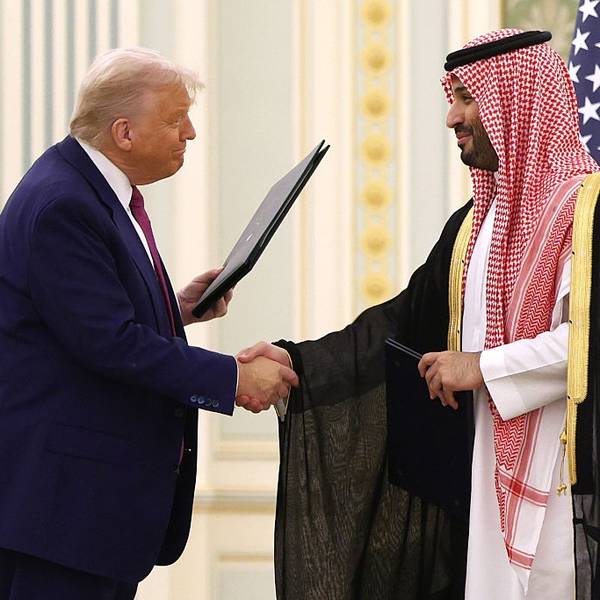
The Pentagon announced on Monday that the U.S. has approved a $1.29 billion arms sale to Saudi Arabia, despite mounting evidence of the country's mass atrocities and possible war crimes in neighboring Yemen.
The U.S. State Department on Friday approved the sale of over 10,000 bombs, munitions, and weapons parts produced by Boeing and Raytheon. This includes 5,200 Paveway II "laser guided" and 12,000 "general purpose" bombs. "Bunker Busters," also included in the deal, are designed to destroy concrete structures.
"The proposed sale augments Saudi Arabia's capability to meet current and future threats from potential adversaries during combat operations," the Defense Security Cooperation Agency, which is part of the U.S. Department of Defense, said in an announcement of the deal released Monday.
But Raed Jarrar, government relations manager for the American Friends Service Committee (AFSC), told Common Dreams: "Sending additional weapons to the Middle East will not stabilize the region or put an end to violence and extremism. Supporting proxy wars, interventions, and military occupations will only add fuel to the fire."
"It's also illegal under US and international law to transfer weapons to human rights abusers, or to forces that will likely use it to commit gross violations of human rights," Jarrar continued. "There is documented evidence that such abuses have been committed by almost all of U.S. allies in the region."
The U.S. statement indicates that the deal will, in part, be used to replenish arms for Saudi Arabia's seven-month-long military assault on Yemen, which has killed at least 2,355 civilians and wounded 4,862, according to United Nations statistics.
With the backing of the U.S. and U.K., the Saudi-led coalition is responsible for the vast majority of these killings. The office of the United Nations High Commissioner for Human Rights reported in September that "almost two-thirds of reported civilian deaths had allegedly been caused by coalition airstrikes, which were also responsible for almost two-thirds of damaged or destroyed civilian public buildings."
The approval came just a month after the U.S. approved an $11.25 billion sale of combat ships to Saudi Arabia, defying the international call for an arms embargo over war crimes concerns. What's more, it continues a long-standing trend in which the U.S. is a major weapons supplier to the gulf state. The IHS Jane's 360 report, released in March, found that Saudi Arabia was the primary "defense" trading partner with the United States in 2014.
In announcing this latest weapons deal, the Defense Security Cooperation Agency said: "Providing these defense articles supports Saudi Arabian defense missions and promotes stability in the region... and enables Saudi Arabia to safeguard the world's largest oil reserves."
But experts warn that such sales, in fact, are driving instability and atrocities across the Middle East--far beyond Yemen.
In a statement released on Monday, Paul Shannon of the AFSC called on "the U.S., France and the west to cut off its support and vast weapons supplies to Saudi Arabia and other Gulf monarchies whose royal families have been responsible for the spread of the jihadist extremist ideology throughout the region."
The arms deal will proceed unless Congress moves to block it in the next 30 days.
Dear Common Dreams reader, It’s been nearly 30 years since I co-founded Common Dreams with my late wife, Lina Newhouser. We had the radical notion that journalism should serve the public good, not corporate profits. It was clear to us from the outset what it would take to build such a project. No paid advertisements. No corporate sponsors. No millionaire publisher telling us what to think or do. Many people said we wouldn't last a year, but we proved those doubters wrong. Together with a tremendous team of journalists and dedicated staff, we built an independent media outlet free from the constraints of profits and corporate control. Our mission has always been simple: To inform. To inspire. To ignite change for the common good. Building Common Dreams was not easy. Our survival was never guaranteed. When you take on the most powerful forces—Wall Street greed, fossil fuel industry destruction, Big Tech lobbyists, and uber-rich oligarchs who have spent billions upon billions rigging the economy and democracy in their favor—the only bulwark you have is supporters who believe in your work. But here’s the urgent message from me today. It's never been this bad out there. And it's never been this hard to keep us going. At the very moment Common Dreams is most needed, the threats we face are intensifying. We need your support now more than ever. We don't accept corporate advertising and never will. We don't have a paywall because we don't think people should be blocked from critical news based on their ability to pay. Everything we do is funded by the donations of readers like you. When everyone does the little they can afford, we are strong. But if that support retreats or dries up, so do we. Will you donate now to make sure Common Dreams not only survives but thrives? —Craig Brown, Co-founder |
The Pentagon announced on Monday that the U.S. has approved a $1.29 billion arms sale to Saudi Arabia, despite mounting evidence of the country's mass atrocities and possible war crimes in neighboring Yemen.
The U.S. State Department on Friday approved the sale of over 10,000 bombs, munitions, and weapons parts produced by Boeing and Raytheon. This includes 5,200 Paveway II "laser guided" and 12,000 "general purpose" bombs. "Bunker Busters," also included in the deal, are designed to destroy concrete structures.
"The proposed sale augments Saudi Arabia's capability to meet current and future threats from potential adversaries during combat operations," the Defense Security Cooperation Agency, which is part of the U.S. Department of Defense, said in an announcement of the deal released Monday.
But Raed Jarrar, government relations manager for the American Friends Service Committee (AFSC), told Common Dreams: "Sending additional weapons to the Middle East will not stabilize the region or put an end to violence and extremism. Supporting proxy wars, interventions, and military occupations will only add fuel to the fire."
"It's also illegal under US and international law to transfer weapons to human rights abusers, or to forces that will likely use it to commit gross violations of human rights," Jarrar continued. "There is documented evidence that such abuses have been committed by almost all of U.S. allies in the region."
The U.S. statement indicates that the deal will, in part, be used to replenish arms for Saudi Arabia's seven-month-long military assault on Yemen, which has killed at least 2,355 civilians and wounded 4,862, according to United Nations statistics.
With the backing of the U.S. and U.K., the Saudi-led coalition is responsible for the vast majority of these killings. The office of the United Nations High Commissioner for Human Rights reported in September that "almost two-thirds of reported civilian deaths had allegedly been caused by coalition airstrikes, which were also responsible for almost two-thirds of damaged or destroyed civilian public buildings."
The approval came just a month after the U.S. approved an $11.25 billion sale of combat ships to Saudi Arabia, defying the international call for an arms embargo over war crimes concerns. What's more, it continues a long-standing trend in which the U.S. is a major weapons supplier to the gulf state. The IHS Jane's 360 report, released in March, found that Saudi Arabia was the primary "defense" trading partner with the United States in 2014.
In announcing this latest weapons deal, the Defense Security Cooperation Agency said: "Providing these defense articles supports Saudi Arabian defense missions and promotes stability in the region... and enables Saudi Arabia to safeguard the world's largest oil reserves."
But experts warn that such sales, in fact, are driving instability and atrocities across the Middle East--far beyond Yemen.
In a statement released on Monday, Paul Shannon of the AFSC called on "the U.S., France and the west to cut off its support and vast weapons supplies to Saudi Arabia and other Gulf monarchies whose royal families have been responsible for the spread of the jihadist extremist ideology throughout the region."
The arms deal will proceed unless Congress moves to block it in the next 30 days.
The Pentagon announced on Monday that the U.S. has approved a $1.29 billion arms sale to Saudi Arabia, despite mounting evidence of the country's mass atrocities and possible war crimes in neighboring Yemen.
The U.S. State Department on Friday approved the sale of over 10,000 bombs, munitions, and weapons parts produced by Boeing and Raytheon. This includes 5,200 Paveway II "laser guided" and 12,000 "general purpose" bombs. "Bunker Busters," also included in the deal, are designed to destroy concrete structures.
"The proposed sale augments Saudi Arabia's capability to meet current and future threats from potential adversaries during combat operations," the Defense Security Cooperation Agency, which is part of the U.S. Department of Defense, said in an announcement of the deal released Monday.
But Raed Jarrar, government relations manager for the American Friends Service Committee (AFSC), told Common Dreams: "Sending additional weapons to the Middle East will not stabilize the region or put an end to violence and extremism. Supporting proxy wars, interventions, and military occupations will only add fuel to the fire."
"It's also illegal under US and international law to transfer weapons to human rights abusers, or to forces that will likely use it to commit gross violations of human rights," Jarrar continued. "There is documented evidence that such abuses have been committed by almost all of U.S. allies in the region."
The U.S. statement indicates that the deal will, in part, be used to replenish arms for Saudi Arabia's seven-month-long military assault on Yemen, which has killed at least 2,355 civilians and wounded 4,862, according to United Nations statistics.
With the backing of the U.S. and U.K., the Saudi-led coalition is responsible for the vast majority of these killings. The office of the United Nations High Commissioner for Human Rights reported in September that "almost two-thirds of reported civilian deaths had allegedly been caused by coalition airstrikes, which were also responsible for almost two-thirds of damaged or destroyed civilian public buildings."
The approval came just a month after the U.S. approved an $11.25 billion sale of combat ships to Saudi Arabia, defying the international call for an arms embargo over war crimes concerns. What's more, it continues a long-standing trend in which the U.S. is a major weapons supplier to the gulf state. The IHS Jane's 360 report, released in March, found that Saudi Arabia was the primary "defense" trading partner with the United States in 2014.
In announcing this latest weapons deal, the Defense Security Cooperation Agency said: "Providing these defense articles supports Saudi Arabian defense missions and promotes stability in the region... and enables Saudi Arabia to safeguard the world's largest oil reserves."
But experts warn that such sales, in fact, are driving instability and atrocities across the Middle East--far beyond Yemen.
In a statement released on Monday, Paul Shannon of the AFSC called on "the U.S., France and the west to cut off its support and vast weapons supplies to Saudi Arabia and other Gulf monarchies whose royal families have been responsible for the spread of the jihadist extremist ideology throughout the region."
The arms deal will proceed unless Congress moves to block it in the next 30 days.