SUBSCRIBE TO OUR FREE NEWSLETTER
Daily news & progressive opinion—funded by the people, not the corporations—delivered straight to your inbox.
5
#000000
#FFFFFF
To donate by check, phone, or other method, see our More Ways to Give page.
Daily news & progressive opinion—funded by the people, not the corporations—delivered straight to your inbox.
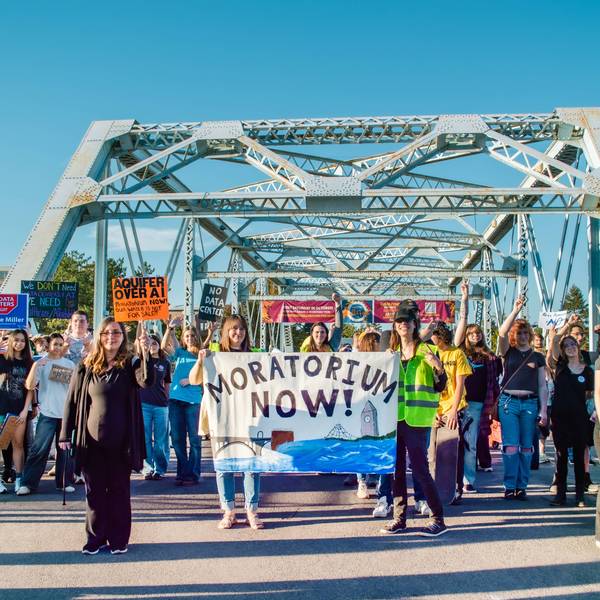
In an unprecedented gesture hailed by environmentalists, Washington's Whatcom County enacted an emergency 60-day moratorium on fossil fuel exports late Wednesday.
"Tonight, our county council sent a powerful message that Whatcom County won't be a waystation for pipelines and deadly coal and oil trains."
--Matt Krogh, StandEnvironmentalists and industrialists were both shocked by the move from the coastal county once known as "Wide Open Whatcom" for its welcoming of oil refineries and a massive aluminum smelter.
"The moratorium applies to 'all forms of crude oil whether stabilized or not, raw bitumen, diluted bitumen and syncrude; coal; methane, propane, butane and other 'natural gas' in liquid or gaseous form,'" reports seattlepi.com.
"I woke up this morning and was happy to see I wasn't just dreaming last night," wrote Carl Weimer, a Whatcom County councilmember and executive director of the Pipeline Safety Trust, on Facebook.
The stretch of coastline north of Bellingham has become "ground zero" for fossil fuel exports in the U.S. Northwest, Weimer told The Stranger.
Weimer "rattle[d] off a list of recent issues," the magazine writes:
Cherry Point, which could have become the largest coal export facility in the United States; a new pipeline proposal for a liquid natural gas facility on Vancouver Island; the expansion of the Kinder Morgan pipeline to the north, which could transport twice the capacity of the Keystone pipeline; two refineries with rail yards transporting crude; and foreign investors interested [in] building propane facilities.
"Now that Congress has lifted its 40 year ban on crude oil exports," The Stranger observes, "Whatcom County residents are anticipating even more fossil fuel shipments moving through their backyards. Which is why, last night, Whatcom County's seven-person council took the unusual and surprising step of banning all unrefined fossil fuel export permits for 60 days."
Conservation group Stand, formerly ForestEthics, wrote in a statement that the move "temporarily prevents permitting for new projects that would allow the shipment or export of crude oil, coal, or liquefied natural gas (LNG) from Cherry Point. The emergency moratorium was put into place while the county finalizes a Comprehensive Plan update that will inform future zoning regulation changes that could prevent permits for new projects facilitating the export of crude oil, coal, or fracked gases."
"I woke up this morning and was happy to see I wasn't just dreaming last night."
--Carl Weimer, Pipeline Safety Trust"The oil and gas industry have targeted Cherry Point and Whatcom County as a sacrifice zone in their plans to export unrefined extreme oil, dirty coal and gas overseas," said Matt Krogh, Stand's extreme oil campaign director and local resident.
"Tonight, our county council sent a powerful message that Whatcom County won't be a waystation for pipelines and deadly coal and oil trains," Krogh added. "We choose public safety, we choose a just and swift transition to clean energy. We also choose climate stability--coal and oil industry plans for Cherry Point would have caused twice the amount of carbon pollution that the entire state of Washington currently emits."
The Stranger writes: "It's still an open question whether the Whatcom County Council's decision will hold up in court. In the meantime, Weimer says that the Council's next step is to hold a public hearing--and perhaps expand the moratorium for four more months, until the Planning Commission issues its decision on the 20-year plan."
Dear Common Dreams reader, It’s been nearly 30 years since I co-founded Common Dreams with my late wife, Lina Newhouser. We had the radical notion that journalism should serve the public good, not corporate profits. It was clear to us from the outset what it would take to build such a project. No paid advertisements. No corporate sponsors. No millionaire publisher telling us what to think or do. Many people said we wouldn't last a year, but we proved those doubters wrong. Together with a tremendous team of journalists and dedicated staff, we built an independent media outlet free from the constraints of profits and corporate control. Our mission has always been simple: To inform. To inspire. To ignite change for the common good. Building Common Dreams was not easy. Our survival was never guaranteed. When you take on the most powerful forces—Wall Street greed, fossil fuel industry destruction, Big Tech lobbyists, and uber-rich oligarchs who have spent billions upon billions rigging the economy and democracy in their favor—the only bulwark you have is supporters who believe in your work. But here’s the urgent message from me today. It's never been this bad out there. And it's never been this hard to keep us going. At the very moment Common Dreams is most needed, the threats we face are intensifying. We need your support now more than ever. We don't accept corporate advertising and never will. We don't have a paywall because we don't think people should be blocked from critical news based on their ability to pay. Everything we do is funded by the donations of readers like you. When everyone does the little they can afford, we are strong. But if that support retreats or dries up, so do we. Will you donate now to make sure Common Dreams not only survives but thrives? —Craig Brown, Co-founder |
In an unprecedented gesture hailed by environmentalists, Washington's Whatcom County enacted an emergency 60-day moratorium on fossil fuel exports late Wednesday.
"Tonight, our county council sent a powerful message that Whatcom County won't be a waystation for pipelines and deadly coal and oil trains."
--Matt Krogh, StandEnvironmentalists and industrialists were both shocked by the move from the coastal county once known as "Wide Open Whatcom" for its welcoming of oil refineries and a massive aluminum smelter.
"The moratorium applies to 'all forms of crude oil whether stabilized or not, raw bitumen, diluted bitumen and syncrude; coal; methane, propane, butane and other 'natural gas' in liquid or gaseous form,'" reports seattlepi.com.
"I woke up this morning and was happy to see I wasn't just dreaming last night," wrote Carl Weimer, a Whatcom County councilmember and executive director of the Pipeline Safety Trust, on Facebook.
The stretch of coastline north of Bellingham has become "ground zero" for fossil fuel exports in the U.S. Northwest, Weimer told The Stranger.
Weimer "rattle[d] off a list of recent issues," the magazine writes:
Cherry Point, which could have become the largest coal export facility in the United States; a new pipeline proposal for a liquid natural gas facility on Vancouver Island; the expansion of the Kinder Morgan pipeline to the north, which could transport twice the capacity of the Keystone pipeline; two refineries with rail yards transporting crude; and foreign investors interested [in] building propane facilities.
"Now that Congress has lifted its 40 year ban on crude oil exports," The Stranger observes, "Whatcom County residents are anticipating even more fossil fuel shipments moving through their backyards. Which is why, last night, Whatcom County's seven-person council took the unusual and surprising step of banning all unrefined fossil fuel export permits for 60 days."
Conservation group Stand, formerly ForestEthics, wrote in a statement that the move "temporarily prevents permitting for new projects that would allow the shipment or export of crude oil, coal, or liquefied natural gas (LNG) from Cherry Point. The emergency moratorium was put into place while the county finalizes a Comprehensive Plan update that will inform future zoning regulation changes that could prevent permits for new projects facilitating the export of crude oil, coal, or fracked gases."
"I woke up this morning and was happy to see I wasn't just dreaming last night."
--Carl Weimer, Pipeline Safety Trust"The oil and gas industry have targeted Cherry Point and Whatcom County as a sacrifice zone in their plans to export unrefined extreme oil, dirty coal and gas overseas," said Matt Krogh, Stand's extreme oil campaign director and local resident.
"Tonight, our county council sent a powerful message that Whatcom County won't be a waystation for pipelines and deadly coal and oil trains," Krogh added. "We choose public safety, we choose a just and swift transition to clean energy. We also choose climate stability--coal and oil industry plans for Cherry Point would have caused twice the amount of carbon pollution that the entire state of Washington currently emits."
The Stranger writes: "It's still an open question whether the Whatcom County Council's decision will hold up in court. In the meantime, Weimer says that the Council's next step is to hold a public hearing--and perhaps expand the moratorium for four more months, until the Planning Commission issues its decision on the 20-year plan."
In an unprecedented gesture hailed by environmentalists, Washington's Whatcom County enacted an emergency 60-day moratorium on fossil fuel exports late Wednesday.
"Tonight, our county council sent a powerful message that Whatcom County won't be a waystation for pipelines and deadly coal and oil trains."
--Matt Krogh, StandEnvironmentalists and industrialists were both shocked by the move from the coastal county once known as "Wide Open Whatcom" for its welcoming of oil refineries and a massive aluminum smelter.
"The moratorium applies to 'all forms of crude oil whether stabilized or not, raw bitumen, diluted bitumen and syncrude; coal; methane, propane, butane and other 'natural gas' in liquid or gaseous form,'" reports seattlepi.com.
"I woke up this morning and was happy to see I wasn't just dreaming last night," wrote Carl Weimer, a Whatcom County councilmember and executive director of the Pipeline Safety Trust, on Facebook.
The stretch of coastline north of Bellingham has become "ground zero" for fossil fuel exports in the U.S. Northwest, Weimer told The Stranger.
Weimer "rattle[d] off a list of recent issues," the magazine writes:
Cherry Point, which could have become the largest coal export facility in the United States; a new pipeline proposal for a liquid natural gas facility on Vancouver Island; the expansion of the Kinder Morgan pipeline to the north, which could transport twice the capacity of the Keystone pipeline; two refineries with rail yards transporting crude; and foreign investors interested [in] building propane facilities.
"Now that Congress has lifted its 40 year ban on crude oil exports," The Stranger observes, "Whatcom County residents are anticipating even more fossil fuel shipments moving through their backyards. Which is why, last night, Whatcom County's seven-person council took the unusual and surprising step of banning all unrefined fossil fuel export permits for 60 days."
Conservation group Stand, formerly ForestEthics, wrote in a statement that the move "temporarily prevents permitting for new projects that would allow the shipment or export of crude oil, coal, or liquefied natural gas (LNG) from Cherry Point. The emergency moratorium was put into place while the county finalizes a Comprehensive Plan update that will inform future zoning regulation changes that could prevent permits for new projects facilitating the export of crude oil, coal, or fracked gases."
"I woke up this morning and was happy to see I wasn't just dreaming last night."
--Carl Weimer, Pipeline Safety Trust"The oil and gas industry have targeted Cherry Point and Whatcom County as a sacrifice zone in their plans to export unrefined extreme oil, dirty coal and gas overseas," said Matt Krogh, Stand's extreme oil campaign director and local resident.
"Tonight, our county council sent a powerful message that Whatcom County won't be a waystation for pipelines and deadly coal and oil trains," Krogh added. "We choose public safety, we choose a just and swift transition to clean energy. We also choose climate stability--coal and oil industry plans for Cherry Point would have caused twice the amount of carbon pollution that the entire state of Washington currently emits."
The Stranger writes: "It's still an open question whether the Whatcom County Council's decision will hold up in court. In the meantime, Weimer says that the Council's next step is to hold a public hearing--and perhaps expand the moratorium for four more months, until the Planning Commission issues its decision on the 20-year plan."