SUBSCRIBE TO OUR FREE NEWSLETTER
Daily news & progressive opinion—funded by the people, not the corporations—delivered straight to your inbox.
5
#000000
#FFFFFF
To donate by check, phone, or other method, see our More Ways to Give page.
Central American women holding a hunger strike at the Berks County Family Detention Center in rural Pennsylvania implored President Barack Obama to "set aside [his] vacation for 10 minutes and look at how we're suffering locked up in here" on Wednesday, as they continued their second week of striking.
The women, who are also mothers, said they will continue striking until they receive some word on their asylum petitions. Activists with the grassroots group Make the Road Pennsylvania, who spent several months protesting outside the facility in solidarity, have taken their action to Martha's Vineyard in Massachusetts, where Obama is on break with his family.
There are 22 women locked up at the facility with their children, none of whom have been charged with any crimes. The Nation reported on their plight:
The women and their children are housed six to a room at the Berks County Family Detention Center in Leesport, Pennsylvania. They share a bathroom with a short curtain but no door. They're awoken at 6:30 every morning for the first of several mandatory check-ins. During the night, a guard shines a flashlight into their eyes every 15 minutes. Most of them are badly sleep deprived. Many of their kids are showing symptoms of early childhood trauma and other developmental problems; some have stopped growing. The youngest detainee at Berks is 2 years old, and has spent around half of his life in detention. Like the other children, he isn't allowed to sleep in his mother's bed at night.
They're refugees who fled brutal violence in Central America and are now caught in a legal limbo. They were denied asylum after a cursory interview at the border and are subject to deportation. But attorneys representing them say that the screenings they went through at the border were legally flawed. The Obama administration claims that they have no right to appeal the decisions--a stark departure from longstanding legal precedent. They're now being detained, indefinitely, while a legal challenge works its way through federal courts.
"Our children are really paying the price psychologically and emotionally by remaining locked up in here," one woman, Margarita, 22, told MSNBC by phone. "We don't really care about ourselves anymore; what we want is for our children to have a fighting chance and that will happen outside of these walls."
There is no reason to keep the families in detention while they wait for a decision on their asylum requests, the Nation says, citing a study by Human Rights First which found that refugees allowed supervised release nearly always show up for their hearings.
Another woman, Anna, told the Nation that staff at Berks are also ignoring her request for medical treatments for her son's dental pains and another injury that makes it hard for him to walk. "They just tell us to wait," she said. "They always tell us to wait. A lot of [the children] don't eat, they don't sleep, and we just can't take it anymore. All we want is our freedom."
Berks is not the only detention center in recent days to come under fire for its treatment of migrants. The Guardian on Thursday published stills from the security cameras at the U.S. Border Patrol's facility in Tuscon, Arizona, which shows 15 people shrouded in emergency blankets lying on the floor of a single cell, packed so tightly that their shimmery Mylar wrappings and the grainy imagery of the footage makes it hard to recognize them as human beings.
The images, previously sealed but released on order of a federal judge, gives "the most damning evidence yet" of what many say are abusive conditions to which migrants are subjected when detained at the U.S.-Mexico border.
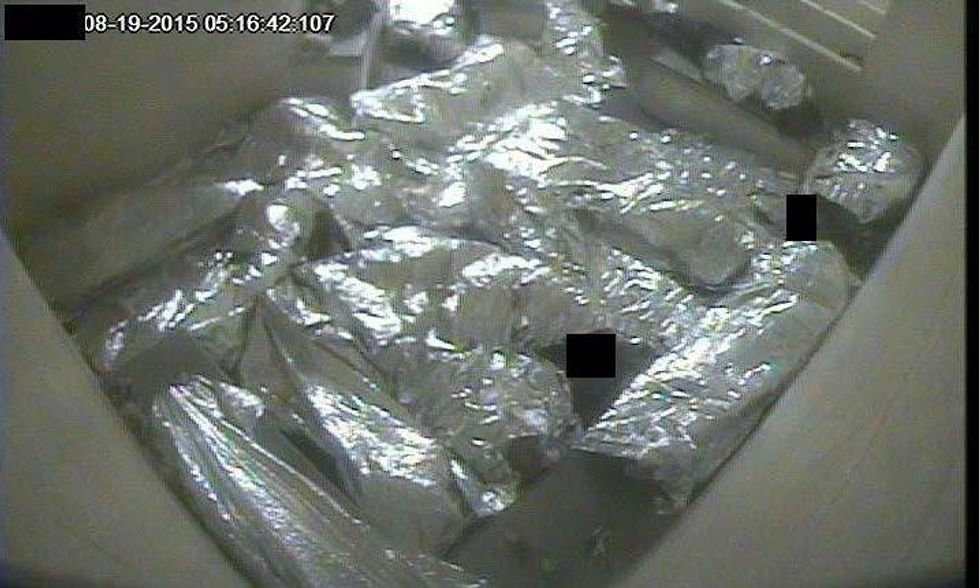
"Previously held under seal in a federal lawsuit in which the [U.S. Customs and Border Protection] is being sued for allegedly degrading and unconstitutional treatment of its charges, the photos offer a window into a world that until now has been rarely seen," the Guardian reports.
Nora Preciado, staff attorney with the National Immigration Law Center, told the Guardian in response to the release, "The images unsealed by the court leave no room to debate the fact that thousands of immigrants are subjected to inhumane and unconstitutional conditions by the Border Patrol."
"We urgently need meaningful and lasting reforms that put an end to these abuses, hold the agency accountable, and ensure that people are treated with dignity," Preciado said.
Central American women holding a hunger strike at the Berks County Family Detention Center in rural Pennsylvania implored President Barack Obama to "set aside [his] vacation for 10 minutes and look at how we're suffering locked up in here" on Wednesday, as they continued their second week of striking.
The women, who are also mothers, said they will continue striking until they receive some word on their asylum petitions. Activists with the grassroots group Make the Road Pennsylvania, who spent several months protesting outside the facility in solidarity, have taken their action to Martha's Vineyard in Massachusetts, where Obama is on break with his family.
There are 22 women locked up at the facility with their children, none of whom have been charged with any crimes. The Nation reported on their plight:
The women and their children are housed six to a room at the Berks County Family Detention Center in Leesport, Pennsylvania. They share a bathroom with a short curtain but no door. They're awoken at 6:30 every morning for the first of several mandatory check-ins. During the night, a guard shines a flashlight into their eyes every 15 minutes. Most of them are badly sleep deprived. Many of their kids are showing symptoms of early childhood trauma and other developmental problems; some have stopped growing. The youngest detainee at Berks is 2 years old, and has spent around half of his life in detention. Like the other children, he isn't allowed to sleep in his mother's bed at night.
They're refugees who fled brutal violence in Central America and are now caught in a legal limbo. They were denied asylum after a cursory interview at the border and are subject to deportation. But attorneys representing them say that the screenings they went through at the border were legally flawed. The Obama administration claims that they have no right to appeal the decisions--a stark departure from longstanding legal precedent. They're now being detained, indefinitely, while a legal challenge works its way through federal courts.
"Our children are really paying the price psychologically and emotionally by remaining locked up in here," one woman, Margarita, 22, told MSNBC by phone. "We don't really care about ourselves anymore; what we want is for our children to have a fighting chance and that will happen outside of these walls."
There is no reason to keep the families in detention while they wait for a decision on their asylum requests, the Nation says, citing a study by Human Rights First which found that refugees allowed supervised release nearly always show up for their hearings.
Another woman, Anna, told the Nation that staff at Berks are also ignoring her request for medical treatments for her son's dental pains and another injury that makes it hard for him to walk. "They just tell us to wait," she said. "They always tell us to wait. A lot of [the children] don't eat, they don't sleep, and we just can't take it anymore. All we want is our freedom."
Berks is not the only detention center in recent days to come under fire for its treatment of migrants. The Guardian on Thursday published stills from the security cameras at the U.S. Border Patrol's facility in Tuscon, Arizona, which shows 15 people shrouded in emergency blankets lying on the floor of a single cell, packed so tightly that their shimmery Mylar wrappings and the grainy imagery of the footage makes it hard to recognize them as human beings.
The images, previously sealed but released on order of a federal judge, gives "the most damning evidence yet" of what many say are abusive conditions to which migrants are subjected when detained at the U.S.-Mexico border.
"Previously held under seal in a federal lawsuit in which the [U.S. Customs and Border Protection] is being sued for allegedly degrading and unconstitutional treatment of its charges, the photos offer a window into a world that until now has been rarely seen," the Guardian reports.
Nora Preciado, staff attorney with the National Immigration Law Center, told the Guardian in response to the release, "The images unsealed by the court leave no room to debate the fact that thousands of immigrants are subjected to inhumane and unconstitutional conditions by the Border Patrol."
"We urgently need meaningful and lasting reforms that put an end to these abuses, hold the agency accountable, and ensure that people are treated with dignity," Preciado said.
Central American women holding a hunger strike at the Berks County Family Detention Center in rural Pennsylvania implored President Barack Obama to "set aside [his] vacation for 10 minutes and look at how we're suffering locked up in here" on Wednesday, as they continued their second week of striking.
The women, who are also mothers, said they will continue striking until they receive some word on their asylum petitions. Activists with the grassroots group Make the Road Pennsylvania, who spent several months protesting outside the facility in solidarity, have taken their action to Martha's Vineyard in Massachusetts, where Obama is on break with his family.
There are 22 women locked up at the facility with their children, none of whom have been charged with any crimes. The Nation reported on their plight:
The women and their children are housed six to a room at the Berks County Family Detention Center in Leesport, Pennsylvania. They share a bathroom with a short curtain but no door. They're awoken at 6:30 every morning for the first of several mandatory check-ins. During the night, a guard shines a flashlight into their eyes every 15 minutes. Most of them are badly sleep deprived. Many of their kids are showing symptoms of early childhood trauma and other developmental problems; some have stopped growing. The youngest detainee at Berks is 2 years old, and has spent around half of his life in detention. Like the other children, he isn't allowed to sleep in his mother's bed at night.
They're refugees who fled brutal violence in Central America and are now caught in a legal limbo. They were denied asylum after a cursory interview at the border and are subject to deportation. But attorneys representing them say that the screenings they went through at the border were legally flawed. The Obama administration claims that they have no right to appeal the decisions--a stark departure from longstanding legal precedent. They're now being detained, indefinitely, while a legal challenge works its way through federal courts.
"Our children are really paying the price psychologically and emotionally by remaining locked up in here," one woman, Margarita, 22, told MSNBC by phone. "We don't really care about ourselves anymore; what we want is for our children to have a fighting chance and that will happen outside of these walls."
There is no reason to keep the families in detention while they wait for a decision on their asylum requests, the Nation says, citing a study by Human Rights First which found that refugees allowed supervised release nearly always show up for their hearings.
Another woman, Anna, told the Nation that staff at Berks are also ignoring her request for medical treatments for her son's dental pains and another injury that makes it hard for him to walk. "They just tell us to wait," she said. "They always tell us to wait. A lot of [the children] don't eat, they don't sleep, and we just can't take it anymore. All we want is our freedom."
Berks is not the only detention center in recent days to come under fire for its treatment of migrants. The Guardian on Thursday published stills from the security cameras at the U.S. Border Patrol's facility in Tuscon, Arizona, which shows 15 people shrouded in emergency blankets lying on the floor of a single cell, packed so tightly that their shimmery Mylar wrappings and the grainy imagery of the footage makes it hard to recognize them as human beings.
The images, previously sealed but released on order of a federal judge, gives "the most damning evidence yet" of what many say are abusive conditions to which migrants are subjected when detained at the U.S.-Mexico border.
"Previously held under seal in a federal lawsuit in which the [U.S. Customs and Border Protection] is being sued for allegedly degrading and unconstitutional treatment of its charges, the photos offer a window into a world that until now has been rarely seen," the Guardian reports.
Nora Preciado, staff attorney with the National Immigration Law Center, told the Guardian in response to the release, "The images unsealed by the court leave no room to debate the fact that thousands of immigrants are subjected to inhumane and unconstitutional conditions by the Border Patrol."
"We urgently need meaningful and lasting reforms that put an end to these abuses, hold the agency accountable, and ensure that people are treated with dignity," Preciado said.