SUBSCRIBE TO OUR FREE NEWSLETTER
Daily news & progressive opinion—funded by the people, not the corporations—delivered straight to your inbox.
5
#000000
#FFFFFF
To donate by check, phone, or other method, see our More Ways to Give page.
Daily news & progressive opinion—funded by the people, not the corporations—delivered straight to your inbox.
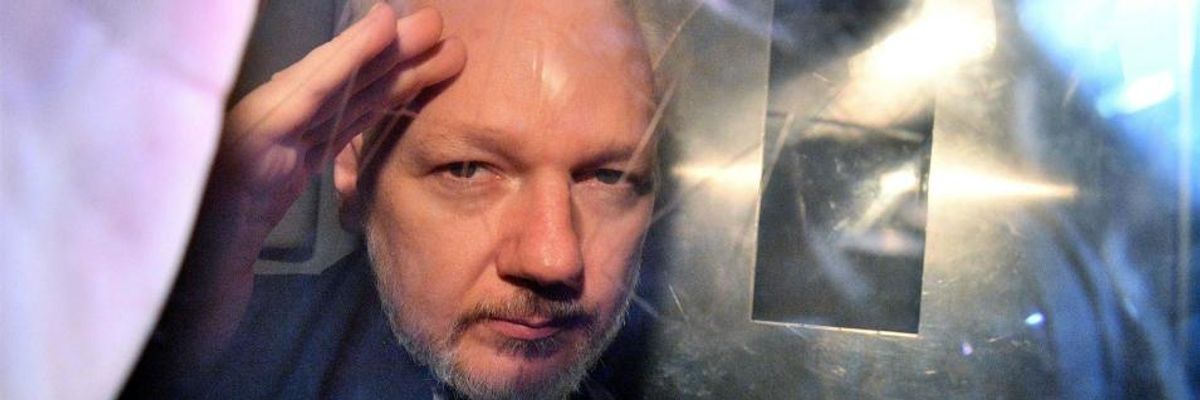
WikiLeaks founder Julian Assange leaves Southwark Crown Court in London on May 1, 2019. (Photo: Daniel Leal-Olivas/AFP/Getty Images)
After visiting Julian Assange in the London prison where he is serving a 50-week sentence for skipping bail, a United Nations expert warned Friday that the WikiLeaks founder is showing "all symptoms typical for prolonged exposure to psychological torture" and demanded an end to U.S. extradition attempts.
In a statement, Nils Meltzer--the U.N. Special Rapporteur on Torture--issued a scathing rebuke of the U.S., the United Kingdom, Ecuador, and Sweden for their treatment of Assange, who was reportedly too ill to appear via video at a scheduled extradition hearing on Thursday.
"In 20 years of work with victims of war, violence, and political persecution, I have never seen a group of democratic states ganging up to deliberately isolate, demonize, and abuse a single individual for such a long time."
--Nils Meltzer, U.N. Special Rapporteur on Torture
Meltzer, who was accompanied on his visit by two medical experts, said Assange was experiencing "physical ailments" as well as "extreme stress, chronic anxiety, and intense psychological trauma" in part due to the Trump administration's efforts to extradite and prosecute him for exposing U.S. war crimes and other state secrets.
"In 20 years of work with victims of war, violence, and political persecution, I have never seen a group of democratic states ganging up to deliberately isolate, demonize, and abuse a single individual for such a long time and with so little regard for human dignity and the rule of law," said Meltzer. "The collective persecution of Julian Assange must end here and now!"
If Assange is extradited to the U.S., Meltzer warned, he "would be exposed to a real risk of serious violations of his human rights, including his freedom of expression, his right to a fair trial, and the prohibition of torture and other cruel, inhuman, or degrading treatment or punishment."
"I am particularly alarmed at the recent announcement by the U.S. Department of Justice of 17 new charges against Mr. Assange under the Espionage Act, which currently carry up to 175 years in prison," said Meltzer. "This may well result in a life sentence without parole, or possibly even the death penalty, if further charges were to be added in the future."
Echoing the concerns of press freedom advocates, Meltzer said the prosecution of Assange may amount to "the criminalization of investigative journalism in violation of both the U.S. Constitution and international human rights law."
"Since 2010, when WikiLeaks started publishing evidence of war crimes and torture committed by U.S. forces, we have seen a sustained and concerted effort by several states towards getting Mr. Assange extradited to the United States for prosecution," Meltzer said. "Since then, there has been a relentless and unrestrained campaign of public mobbing, intimidation, and defamation against Mr. Assange."
"I condemn, in the strongest terms, the deliberate, concerted, and sustained nature of the abuse inflicted on Mr. Assange," Meltzer added, "and seriously deplore the consistent failure of all involved governments to take measures for the protection of his most fundamental human rights and dignity."
Dear Common Dreams reader, It’s been nearly 30 years since I co-founded Common Dreams with my late wife, Lina Newhouser. We had the radical notion that journalism should serve the public good, not corporate profits. It was clear to us from the outset what it would take to build such a project. No paid advertisements. No corporate sponsors. No millionaire publisher telling us what to think or do. Many people said we wouldn't last a year, but we proved those doubters wrong. Together with a tremendous team of journalists and dedicated staff, we built an independent media outlet free from the constraints of profits and corporate control. Our mission has always been simple: To inform. To inspire. To ignite change for the common good. Building Common Dreams was not easy. Our survival was never guaranteed. When you take on the most powerful forces—Wall Street greed, fossil fuel industry destruction, Big Tech lobbyists, and uber-rich oligarchs who have spent billions upon billions rigging the economy and democracy in their favor—the only bulwark you have is supporters who believe in your work. But here’s the urgent message from me today. It's never been this bad out there. And it's never been this hard to keep us going. At the very moment Common Dreams is most needed, the threats we face are intensifying. We need your support now more than ever. We don't accept corporate advertising and never will. We don't have a paywall because we don't think people should be blocked from critical news based on their ability to pay. Everything we do is funded by the donations of readers like you. When everyone does the little they can afford, we are strong. But if that support retreats or dries up, so do we. Will you donate now to make sure Common Dreams not only survives but thrives? —Craig Brown, Co-founder |
After visiting Julian Assange in the London prison where he is serving a 50-week sentence for skipping bail, a United Nations expert warned Friday that the WikiLeaks founder is showing "all symptoms typical for prolonged exposure to psychological torture" and demanded an end to U.S. extradition attempts.
In a statement, Nils Meltzer--the U.N. Special Rapporteur on Torture--issued a scathing rebuke of the U.S., the United Kingdom, Ecuador, and Sweden for their treatment of Assange, who was reportedly too ill to appear via video at a scheduled extradition hearing on Thursday.
"In 20 years of work with victims of war, violence, and political persecution, I have never seen a group of democratic states ganging up to deliberately isolate, demonize, and abuse a single individual for such a long time."
--Nils Meltzer, U.N. Special Rapporteur on Torture
Meltzer, who was accompanied on his visit by two medical experts, said Assange was experiencing "physical ailments" as well as "extreme stress, chronic anxiety, and intense psychological trauma" in part due to the Trump administration's efforts to extradite and prosecute him for exposing U.S. war crimes and other state secrets.
"In 20 years of work with victims of war, violence, and political persecution, I have never seen a group of democratic states ganging up to deliberately isolate, demonize, and abuse a single individual for such a long time and with so little regard for human dignity and the rule of law," said Meltzer. "The collective persecution of Julian Assange must end here and now!"
If Assange is extradited to the U.S., Meltzer warned, he "would be exposed to a real risk of serious violations of his human rights, including his freedom of expression, his right to a fair trial, and the prohibition of torture and other cruel, inhuman, or degrading treatment or punishment."
"I am particularly alarmed at the recent announcement by the U.S. Department of Justice of 17 new charges against Mr. Assange under the Espionage Act, which currently carry up to 175 years in prison," said Meltzer. "This may well result in a life sentence without parole, or possibly even the death penalty, if further charges were to be added in the future."
Echoing the concerns of press freedom advocates, Meltzer said the prosecution of Assange may amount to "the criminalization of investigative journalism in violation of both the U.S. Constitution and international human rights law."
"Since 2010, when WikiLeaks started publishing evidence of war crimes and torture committed by U.S. forces, we have seen a sustained and concerted effort by several states towards getting Mr. Assange extradited to the United States for prosecution," Meltzer said. "Since then, there has been a relentless and unrestrained campaign of public mobbing, intimidation, and defamation against Mr. Assange."
"I condemn, in the strongest terms, the deliberate, concerted, and sustained nature of the abuse inflicted on Mr. Assange," Meltzer added, "and seriously deplore the consistent failure of all involved governments to take measures for the protection of his most fundamental human rights and dignity."
After visiting Julian Assange in the London prison where he is serving a 50-week sentence for skipping bail, a United Nations expert warned Friday that the WikiLeaks founder is showing "all symptoms typical for prolonged exposure to psychological torture" and demanded an end to U.S. extradition attempts.
In a statement, Nils Meltzer--the U.N. Special Rapporteur on Torture--issued a scathing rebuke of the U.S., the United Kingdom, Ecuador, and Sweden for their treatment of Assange, who was reportedly too ill to appear via video at a scheduled extradition hearing on Thursday.
"In 20 years of work with victims of war, violence, and political persecution, I have never seen a group of democratic states ganging up to deliberately isolate, demonize, and abuse a single individual for such a long time."
--Nils Meltzer, U.N. Special Rapporteur on Torture
Meltzer, who was accompanied on his visit by two medical experts, said Assange was experiencing "physical ailments" as well as "extreme stress, chronic anxiety, and intense psychological trauma" in part due to the Trump administration's efforts to extradite and prosecute him for exposing U.S. war crimes and other state secrets.
"In 20 years of work with victims of war, violence, and political persecution, I have never seen a group of democratic states ganging up to deliberately isolate, demonize, and abuse a single individual for such a long time and with so little regard for human dignity and the rule of law," said Meltzer. "The collective persecution of Julian Assange must end here and now!"
If Assange is extradited to the U.S., Meltzer warned, he "would be exposed to a real risk of serious violations of his human rights, including his freedom of expression, his right to a fair trial, and the prohibition of torture and other cruel, inhuman, or degrading treatment or punishment."
"I am particularly alarmed at the recent announcement by the U.S. Department of Justice of 17 new charges against Mr. Assange under the Espionage Act, which currently carry up to 175 years in prison," said Meltzer. "This may well result in a life sentence without parole, or possibly even the death penalty, if further charges were to be added in the future."
Echoing the concerns of press freedom advocates, Meltzer said the prosecution of Assange may amount to "the criminalization of investigative journalism in violation of both the U.S. Constitution and international human rights law."
"Since 2010, when WikiLeaks started publishing evidence of war crimes and torture committed by U.S. forces, we have seen a sustained and concerted effort by several states towards getting Mr. Assange extradited to the United States for prosecution," Meltzer said. "Since then, there has been a relentless and unrestrained campaign of public mobbing, intimidation, and defamation against Mr. Assange."
"I condemn, in the strongest terms, the deliberate, concerted, and sustained nature of the abuse inflicted on Mr. Assange," Meltzer added, "and seriously deplore the consistent failure of all involved governments to take measures for the protection of his most fundamental human rights and dignity."