SUBSCRIBE TO OUR FREE NEWSLETTER
Daily news & progressive opinion—funded by the people, not the corporations—delivered straight to your inbox.
5
#000000
#FFFFFF
To donate by check, phone, or other method, see our More Ways to Give page.
Daily news & progressive opinion—funded by the people, not the corporations—delivered straight to your inbox.
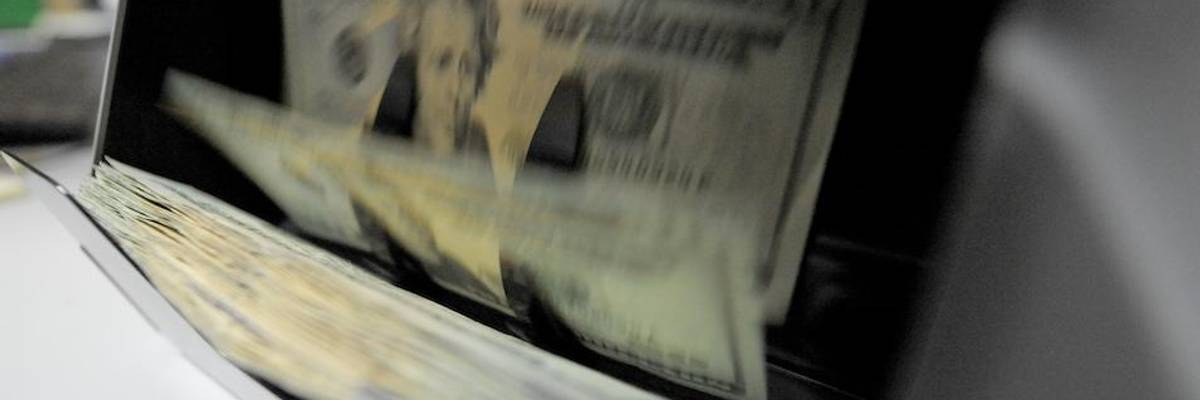
Trade organizations are using nonprofit tax rules to wriggle out of disclosing spending, according to a new report. (Photo: Staff Sgt. Joshua J. Garcia/U.S. Air Force/cc)
A new report from nonprofit research group MapLight details the way that trade organizations spend huge amounts of money on lobbying that's seldom accounted for due to tax reporting loopholes.
MapLight examined how trade organizations are using legal loopholes in their status as 501(c)(6) nonprofit groups to funnel hundreds of millions--even billions--of dollars in lobbying lawmakers to push industry priorities.
According to the report:
The Internal Revenue Service has approved thousands of applications for nonprofit status for such organizations, which range from the U.S. Chamber of Commerce, which spends more on lobbying than any other trade organization, to the Washington State Society of Anesthesiologists. Their influence has grown substantially since the Supreme Court's 2010 Citizens United decision allowed them to spend directly on politics.
With a combination of large cashflows and secrecy, said University of Miami law professor Frances R. Hill, an expert in the U.S. tax code, comes the opportunity to use an almost unlimited slush fund to influence policy.
"The trade associations are more alien to a lot of people who are interested in exempt organizations than the 501(c)(3) public charities or 501(c)(4) social welfare organizations, which have become standard campaign participants," said Hill. "As long as people don't really bother you and aren't too upset about you, you can do fairly amazing or distressing things."
Examples of the unregulated spending uncovered by MapLight include:
The secrecy doesn't end there, MapLight reported:
Nonprofits are only required to itemize their "other fees for services" if they account for more than 10 percent of their total functional expenses, which offers some trade associations an additional avenue for secrecy. For example, since the American Hospital Association listed more than $126 million in total functional expenses in 2017, it didn't need to spell out any of the items included in its $12 million line for "other fees for services."
The story, by reporters Andrew Perez, Tim Zelina, and Abigail Luke, was published on Tuesday morning and is part of an investigation produced by MapLight with The Intercept and Tarbell.
Most of the groups did not return requests for comment, telling reporters that their tax filings spoke for themselves.
That's in line with the kind of secrecy the trade organizations are used to, explained University of Miami's Hill--the groups are not accustomed to the spotlight.
"People forget about them because they've just been there [collecting] large sums of money for a very long time," said Hill.
This country and this world are at a monumental crossroads. US voters have an opportunity to beat back the forces of fascism and confront the billionaires who are rigging the economy, our media system, and our democracy, making it increasingly impossible for ordinary people to get by. We’re not just talking about the election. We’re talking about what must be done once these fascist elements are vanquished from power. We need a bolder set of solutions than what either major party has so far been willing to offer and a working-class movement ready to fight like hell for it. Trump didn't emerge from nowhere. The conditions that fueled MAGA authoritarianism were created by decades of radical neoliberal economic policies and a corrupt political system dominated by corporate interests. They slashed taxes on the super-rich, promising that the benefits would trickle down. They said giveaways to the corporate titans would make life more affordable for the rest of us. It was all bullshit. And when a bitter, betrayed populace searches for someone to blame, right-wing demagogues have little trouble finding scapegoats. People know when they're being lied to, but you won't hear any of this from the corporate media. Only independent journalism—powered and funded by people who believe in building a better world—can deliver truly trustworthy daily news. If you share our vision, please contribute whatever you can to sustain our work. |
A new report from nonprofit research group MapLight details the way that trade organizations spend huge amounts of money on lobbying that's seldom accounted for due to tax reporting loopholes.
MapLight examined how trade organizations are using legal loopholes in their status as 501(c)(6) nonprofit groups to funnel hundreds of millions--even billions--of dollars in lobbying lawmakers to push industry priorities.
According to the report:
The Internal Revenue Service has approved thousands of applications for nonprofit status for such organizations, which range from the U.S. Chamber of Commerce, which spends more on lobbying than any other trade organization, to the Washington State Society of Anesthesiologists. Their influence has grown substantially since the Supreme Court's 2010 Citizens United decision allowed them to spend directly on politics.
With a combination of large cashflows and secrecy, said University of Miami law professor Frances R. Hill, an expert in the U.S. tax code, comes the opportunity to use an almost unlimited slush fund to influence policy.
"The trade associations are more alien to a lot of people who are interested in exempt organizations than the 501(c)(3) public charities or 501(c)(4) social welfare organizations, which have become standard campaign participants," said Hill. "As long as people don't really bother you and aren't too upset about you, you can do fairly amazing or distressing things."
Examples of the unregulated spending uncovered by MapLight include:
The secrecy doesn't end there, MapLight reported:
Nonprofits are only required to itemize their "other fees for services" if they account for more than 10 percent of their total functional expenses, which offers some trade associations an additional avenue for secrecy. For example, since the American Hospital Association listed more than $126 million in total functional expenses in 2017, it didn't need to spell out any of the items included in its $12 million line for "other fees for services."
The story, by reporters Andrew Perez, Tim Zelina, and Abigail Luke, was published on Tuesday morning and is part of an investigation produced by MapLight with The Intercept and Tarbell.
Most of the groups did not return requests for comment, telling reporters that their tax filings spoke for themselves.
That's in line with the kind of secrecy the trade organizations are used to, explained University of Miami's Hill--the groups are not accustomed to the spotlight.
"People forget about them because they've just been there [collecting] large sums of money for a very long time," said Hill.