

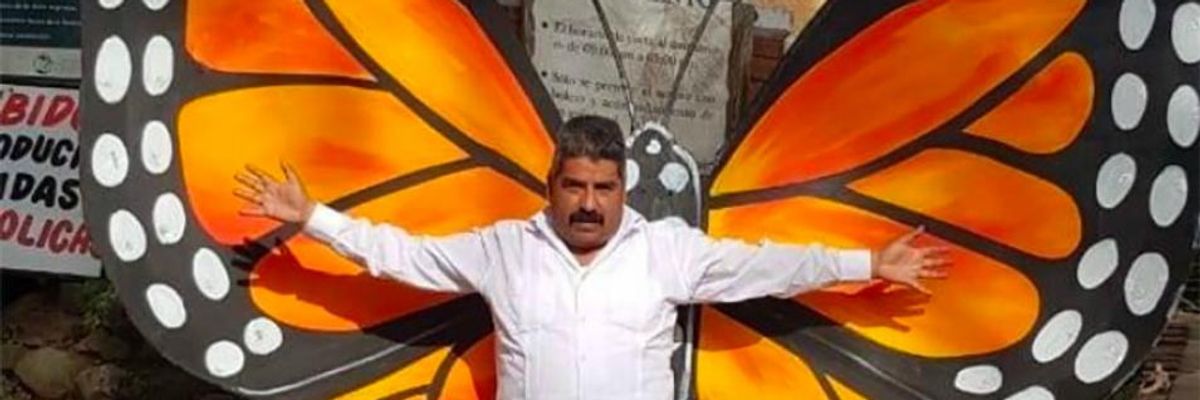
Two weeks after Mexican conservationist Homero Gomez Gonzalez was reported missing, authorities found his body in a well Wednesday. (Photo: Mexico News Daily)
Missing Mexican Monarch Butterfly Defender Homero Gomez Gonzalez Found Dead: Heartbreaking News
Human rights advocates and the conservationist's family raised concerns about threats from the illegal logging industry and organized crime.
Mexican conservationist Homero Gomez Gonzalez was found dead Wednesday, about two weeks after he was reported missing, provoking a wave sorrow from allies and advocates worldwide as they honored his work running a butterfly sanctuary in the state of Michoacan.
"Authorities found Gomez Gonzalez's body floating in a well in the community of El Soldado de Ocampo, not far from the butterfly sanctuary," according to the Washington Post. "Authorities told local media outlets that his body did not show any obvious signs of violence. But Gomez Gonzalez's friends didn't have any details."
As Common Dreams reported last week, human rights advocates have expressed fears that Gomez Gonzalez may have been targeted because of his activism by those involved in the local illegal logging industry, and the 50-year-old butterfly defender's family told the media that he had received threats from a criminal organization.
Gomez Gonzalez was reported missing by his family on Jan. 14, a day after he attended a meeting in the village of El Soldado. BBC News noted Thursday that "more than 200 volunteers had joined the search for the environmentalist and, last week, the entire police forces of Ocampo and neighboring Angangueo were detained for questioning."
The conservationist often posted videos to Twitter from the El Rosario sanctuary, which is located in the Monarch Butterfly Biosphere Reserve, a UNESCO World Heritage site. Millions of monarch butterflies travel thousands of miles across North American to arrive each autumn in the mountainous region of Mexico, where they remain until spring. Local illegal logging has long threatened the butterflies.
A Global Witness report from last year named Mexico the world's sixth-deadliest country for eco-defenders, part of "a worrying global trend" of environmentalists risking their safety by facing off against "governments, companies, and criminal gangs [that] are routinely stealing land and trashing habitats in pursuit of profit."
Some responses to Gomez Gonzalez's death on social media highlighted the rising threats to those involved in conservation work and environmental activism.
"Illegal logging is one of the most lucrative environmental crimes. It's also one of the biggest drivers of killings of #environmentdefenders," tweeted Ali Hines, a land campaigner at Global Witness. "Homero Gomez Gonzalez's death must be independently investigated."
An Urgent Message From Our Co-Founder
Dear Common Dreams reader, It’s been nearly 30 years since I co-founded Common Dreams with my late wife, Lina Newhouser. We had the radical notion that journalism should serve the public good, not corporate profits. It was clear to us from the outset what it would take to build such a project. No paid advertisements. No corporate sponsors. No millionaire publisher telling us what to think or do. Many people said we wouldn't last a year, but we proved those doubters wrong. Together with a tremendous team of journalists and dedicated staff, we built an independent media outlet free from the constraints of profits and corporate control. Our mission has always been simple: To inform. To inspire. To ignite change for the common good. Building Common Dreams was not easy. Our survival was never guaranteed. When you take on the most powerful forces—Wall Street greed, fossil fuel industry destruction, Big Tech lobbyists, and uber-rich oligarchs who have spent billions upon billions rigging the economy and democracy in their favor—the only bulwark you have is supporters who believe in your work. But here’s the urgent message from me today. It's never been this bad out there. And it's never been this hard to keep us going. At the very moment Common Dreams is most needed, the threats we face are intensifying. We need your support now more than ever. We don't accept corporate advertising and never will. We don't have a paywall because we don't think people should be blocked from critical news based on their ability to pay. Everything we do is funded by the donations of readers like you. When everyone does the little they can afford, we are strong. But if that support retreats or dries up, so do we. Will you donate now to make sure Common Dreams not only survives but thrives? —Craig Brown, Co-founder |
Mexican conservationist Homero Gomez Gonzalez was found dead Wednesday, about two weeks after he was reported missing, provoking a wave sorrow from allies and advocates worldwide as they honored his work running a butterfly sanctuary in the state of Michoacan.
"Authorities found Gomez Gonzalez's body floating in a well in the community of El Soldado de Ocampo, not far from the butterfly sanctuary," according to the Washington Post. "Authorities told local media outlets that his body did not show any obvious signs of violence. But Gomez Gonzalez's friends didn't have any details."
As Common Dreams reported last week, human rights advocates have expressed fears that Gomez Gonzalez may have been targeted because of his activism by those involved in the local illegal logging industry, and the 50-year-old butterfly defender's family told the media that he had received threats from a criminal organization.
Gomez Gonzalez was reported missing by his family on Jan. 14, a day after he attended a meeting in the village of El Soldado. BBC News noted Thursday that "more than 200 volunteers had joined the search for the environmentalist and, last week, the entire police forces of Ocampo and neighboring Angangueo were detained for questioning."
The conservationist often posted videos to Twitter from the El Rosario sanctuary, which is located in the Monarch Butterfly Biosphere Reserve, a UNESCO World Heritage site. Millions of monarch butterflies travel thousands of miles across North American to arrive each autumn in the mountainous region of Mexico, where they remain until spring. Local illegal logging has long threatened the butterflies.
A Global Witness report from last year named Mexico the world's sixth-deadliest country for eco-defenders, part of "a worrying global trend" of environmentalists risking their safety by facing off against "governments, companies, and criminal gangs [that] are routinely stealing land and trashing habitats in pursuit of profit."
Some responses to Gomez Gonzalez's death on social media highlighted the rising threats to those involved in conservation work and environmental activism.
"Illegal logging is one of the most lucrative environmental crimes. It's also one of the biggest drivers of killings of #environmentdefenders," tweeted Ali Hines, a land campaigner at Global Witness. "Homero Gomez Gonzalez's death must be independently investigated."
Mexican conservationist Homero Gomez Gonzalez was found dead Wednesday, about two weeks after he was reported missing, provoking a wave sorrow from allies and advocates worldwide as they honored his work running a butterfly sanctuary in the state of Michoacan.
"Authorities found Gomez Gonzalez's body floating in a well in the community of El Soldado de Ocampo, not far from the butterfly sanctuary," according to the Washington Post. "Authorities told local media outlets that his body did not show any obvious signs of violence. But Gomez Gonzalez's friends didn't have any details."
As Common Dreams reported last week, human rights advocates have expressed fears that Gomez Gonzalez may have been targeted because of his activism by those involved in the local illegal logging industry, and the 50-year-old butterfly defender's family told the media that he had received threats from a criminal organization.
Gomez Gonzalez was reported missing by his family on Jan. 14, a day after he attended a meeting in the village of El Soldado. BBC News noted Thursday that "more than 200 volunteers had joined the search for the environmentalist and, last week, the entire police forces of Ocampo and neighboring Angangueo were detained for questioning."
The conservationist often posted videos to Twitter from the El Rosario sanctuary, which is located in the Monarch Butterfly Biosphere Reserve, a UNESCO World Heritage site. Millions of monarch butterflies travel thousands of miles across North American to arrive each autumn in the mountainous region of Mexico, where they remain until spring. Local illegal logging has long threatened the butterflies.
A Global Witness report from last year named Mexico the world's sixth-deadliest country for eco-defenders, part of "a worrying global trend" of environmentalists risking their safety by facing off against "governments, companies, and criminal gangs [that] are routinely stealing land and trashing habitats in pursuit of profit."
Some responses to Gomez Gonzalez's death on social media highlighted the rising threats to those involved in conservation work and environmental activism.
"Illegal logging is one of the most lucrative environmental crimes. It's also one of the biggest drivers of killings of #environmentdefenders," tweeted Ali Hines, a land campaigner at Global Witness. "Homero Gomez Gonzalez's death must be independently investigated."