SUBSCRIBE TO OUR FREE NEWSLETTER
Daily news & progressive opinion—funded by the people, not the corporations—delivered straight to your inbox.
5
#000000
#FFFFFF
To donate by check, phone, or other method, see our More Ways to Give page.
Daily news & progressive opinion—funded by the people, not the corporations—delivered straight to your inbox.
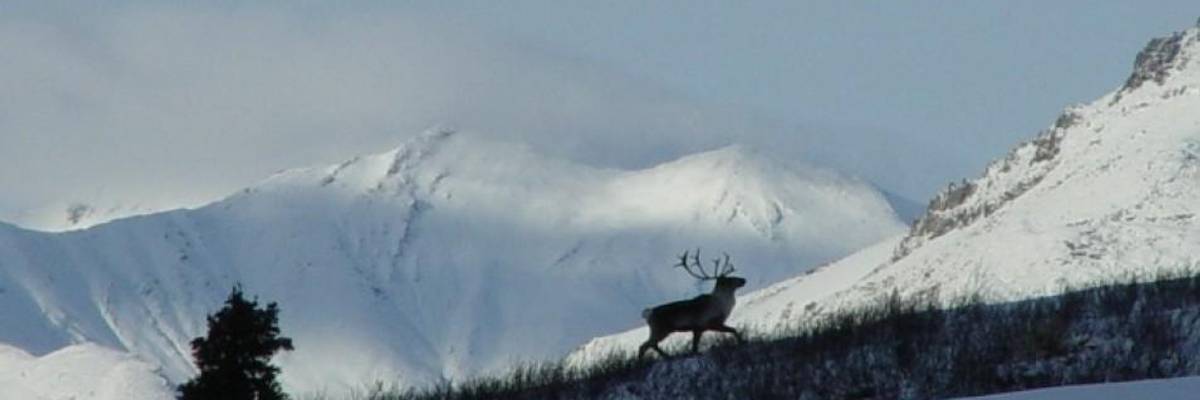
A Porcupine caribou, a species which conservation and Indigenous groups say would be horribly impacted if fossil fuel exploration and extraction takes place in ANWR's Coastal Plain. (Photo: G. MacRae/Flickr/cc)
As the outgoing Trump administration rushes to auction off oil and gas drilling rights in Alaska's Arctic National Wildlife Refuge--home to the Gwich'in Indigenous people and one of the nation's largest tracts of unspoiled wildnerness--environmental and progressive organizations on Tuesday called on Bank of America to join other leading financial institutions in refusing to finance fossil fuel extraction in the region.
"Arctic drilling would be a disaster for the climate and Indigenous rights, and for the reputation of any financial institution foolish enough to fund it."
--Ben Cushing, Sierra Club
On the same day that the U.S. Bureau of Land Management asked fossil fuel companies to choose which areas of the refuge they wish to drill, Stop the Money Pipeline--a broad coalition of over 130 groups dedicated to pressuring financial institutions and investors to "stop funding, insuring, and investing in climate destruction" and "start respecting human rights and Indigenous sovereignty"--issued a statement imploring Bank of America to "walk away now before it's too late."
"The overwhelming majority of Americans do not want to see [the refuge] destroyed by drilling," Sierra Club senior campaign representative Ben Cushing noted in the statement. "Bank of America should certainly be worried about the massive public backlash in store for them if they are associated with this wildly unpopular project."
"Arctic drilling would be a disaster for the climate and Indigenous rights, and for the reputation of any financial institution foolish enough to fund it," added Cushing, whose group is part of the coalition.
Stop the Money Pipeline co-coordinator Alec Connon said that "Trump doesn't care about Indigenous rights or our planet, that is clear. In this, he and Bank of America are one and the same. If Bank of America wants to prove it is concerned about the climate crisis, [it] would listen to the demands of the Gwich'in people and stop funding drilling in the Arctic."
The Republican-controlled Congress in 2017 approved drilling inside the refuge, sparking fierce opposition from the Gwich'in, who call the area "Iizhik Gwats'an Gwandaii Goodlit," or, "the sacred place where life begins." The region is also home to some 270 species, including all of the world's remaining South Beaufort Sea polar bears, 250 musk oxen, Arctic foxes, and hundreds of thousands of snow geese and other birds which fly there from all 50 states and around the world.
Due largely to pressure from grassroots organizers, major banks have largely declined to finance fossil fuel extraction in the refuge.
"To date, more than two dozen major banks around the world have adopted policies to reject financing for Arctic oil and gas development," noted Stop the Money Pipeline in its statement. "Five of the six largest U.S. banks--Goldman Sachs, JPMorgan Chase, Wells Fargo, Citi, [and] Morgan Stanley--have ruled out funding Arctic drilling."
"Bank of America has faced growing demands from Alaska Native leaders, House and Senate Democrats, environmental groups, investors, and clients to join its peers in standing up against the destruction of the Arctic," the statement added.
The Stop the Money Pipeline coalition includes groups such as 350.org, Amazon Watch, Action Center on Race and the Economy, Global Witness, Public Citizen, and Indigenous Environmental Network.
Dear Common Dreams reader, It’s been nearly 30 years since I co-founded Common Dreams with my late wife, Lina Newhouser. We had the radical notion that journalism should serve the public good, not corporate profits. It was clear to us from the outset what it would take to build such a project. No paid advertisements. No corporate sponsors. No millionaire publisher telling us what to think or do. Many people said we wouldn't last a year, but we proved those doubters wrong. Together with a tremendous team of journalists and dedicated staff, we built an independent media outlet free from the constraints of profits and corporate control. Our mission has always been simple: To inform. To inspire. To ignite change for the common good. Building Common Dreams was not easy. Our survival was never guaranteed. When you take on the most powerful forces—Wall Street greed, fossil fuel industry destruction, Big Tech lobbyists, and uber-rich oligarchs who have spent billions upon billions rigging the economy and democracy in their favor—the only bulwark you have is supporters who believe in your work. But here’s the urgent message from me today. It's never been this bad out there. And it's never been this hard to keep us going. At the very moment Common Dreams is most needed, the threats we face are intensifying. We need your support now more than ever. We don't accept corporate advertising and never will. We don't have a paywall because we don't think people should be blocked from critical news based on their ability to pay. Everything we do is funded by the donations of readers like you. When everyone does the little they can afford, we are strong. But if that support retreats or dries up, so do we. Will you donate now to make sure Common Dreams not only survives but thrives? —Craig Brown, Co-founder |
As the outgoing Trump administration rushes to auction off oil and gas drilling rights in Alaska's Arctic National Wildlife Refuge--home to the Gwich'in Indigenous people and one of the nation's largest tracts of unspoiled wildnerness--environmental and progressive organizations on Tuesday called on Bank of America to join other leading financial institutions in refusing to finance fossil fuel extraction in the region.
"Arctic drilling would be a disaster for the climate and Indigenous rights, and for the reputation of any financial institution foolish enough to fund it."
--Ben Cushing, Sierra Club
On the same day that the U.S. Bureau of Land Management asked fossil fuel companies to choose which areas of the refuge they wish to drill, Stop the Money Pipeline--a broad coalition of over 130 groups dedicated to pressuring financial institutions and investors to "stop funding, insuring, and investing in climate destruction" and "start respecting human rights and Indigenous sovereignty"--issued a statement imploring Bank of America to "walk away now before it's too late."
"The overwhelming majority of Americans do not want to see [the refuge] destroyed by drilling," Sierra Club senior campaign representative Ben Cushing noted in the statement. "Bank of America should certainly be worried about the massive public backlash in store for them if they are associated with this wildly unpopular project."
"Arctic drilling would be a disaster for the climate and Indigenous rights, and for the reputation of any financial institution foolish enough to fund it," added Cushing, whose group is part of the coalition.
Stop the Money Pipeline co-coordinator Alec Connon said that "Trump doesn't care about Indigenous rights or our planet, that is clear. In this, he and Bank of America are one and the same. If Bank of America wants to prove it is concerned about the climate crisis, [it] would listen to the demands of the Gwich'in people and stop funding drilling in the Arctic."
The Republican-controlled Congress in 2017 approved drilling inside the refuge, sparking fierce opposition from the Gwich'in, who call the area "Iizhik Gwats'an Gwandaii Goodlit," or, "the sacred place where life begins." The region is also home to some 270 species, including all of the world's remaining South Beaufort Sea polar bears, 250 musk oxen, Arctic foxes, and hundreds of thousands of snow geese and other birds which fly there from all 50 states and around the world.
Due largely to pressure from grassroots organizers, major banks have largely declined to finance fossil fuel extraction in the refuge.
"To date, more than two dozen major banks around the world have adopted policies to reject financing for Arctic oil and gas development," noted Stop the Money Pipeline in its statement. "Five of the six largest U.S. banks--Goldman Sachs, JPMorgan Chase, Wells Fargo, Citi, [and] Morgan Stanley--have ruled out funding Arctic drilling."
"Bank of America has faced growing demands from Alaska Native leaders, House and Senate Democrats, environmental groups, investors, and clients to join its peers in standing up against the destruction of the Arctic," the statement added.
The Stop the Money Pipeline coalition includes groups such as 350.org, Amazon Watch, Action Center on Race and the Economy, Global Witness, Public Citizen, and Indigenous Environmental Network.
As the outgoing Trump administration rushes to auction off oil and gas drilling rights in Alaska's Arctic National Wildlife Refuge--home to the Gwich'in Indigenous people and one of the nation's largest tracts of unspoiled wildnerness--environmental and progressive organizations on Tuesday called on Bank of America to join other leading financial institutions in refusing to finance fossil fuel extraction in the region.
"Arctic drilling would be a disaster for the climate and Indigenous rights, and for the reputation of any financial institution foolish enough to fund it."
--Ben Cushing, Sierra Club
On the same day that the U.S. Bureau of Land Management asked fossil fuel companies to choose which areas of the refuge they wish to drill, Stop the Money Pipeline--a broad coalition of over 130 groups dedicated to pressuring financial institutions and investors to "stop funding, insuring, and investing in climate destruction" and "start respecting human rights and Indigenous sovereignty"--issued a statement imploring Bank of America to "walk away now before it's too late."
"The overwhelming majority of Americans do not want to see [the refuge] destroyed by drilling," Sierra Club senior campaign representative Ben Cushing noted in the statement. "Bank of America should certainly be worried about the massive public backlash in store for them if they are associated with this wildly unpopular project."
"Arctic drilling would be a disaster for the climate and Indigenous rights, and for the reputation of any financial institution foolish enough to fund it," added Cushing, whose group is part of the coalition.
Stop the Money Pipeline co-coordinator Alec Connon said that "Trump doesn't care about Indigenous rights or our planet, that is clear. In this, he and Bank of America are one and the same. If Bank of America wants to prove it is concerned about the climate crisis, [it] would listen to the demands of the Gwich'in people and stop funding drilling in the Arctic."
The Republican-controlled Congress in 2017 approved drilling inside the refuge, sparking fierce opposition from the Gwich'in, who call the area "Iizhik Gwats'an Gwandaii Goodlit," or, "the sacred place where life begins." The region is also home to some 270 species, including all of the world's remaining South Beaufort Sea polar bears, 250 musk oxen, Arctic foxes, and hundreds of thousands of snow geese and other birds which fly there from all 50 states and around the world.
Due largely to pressure from grassroots organizers, major banks have largely declined to finance fossil fuel extraction in the refuge.
"To date, more than two dozen major banks around the world have adopted policies to reject financing for Arctic oil and gas development," noted Stop the Money Pipeline in its statement. "Five of the six largest U.S. banks--Goldman Sachs, JPMorgan Chase, Wells Fargo, Citi, [and] Morgan Stanley--have ruled out funding Arctic drilling."
"Bank of America has faced growing demands from Alaska Native leaders, House and Senate Democrats, environmental groups, investors, and clients to join its peers in standing up against the destruction of the Arctic," the statement added.
The Stop the Money Pipeline coalition includes groups such as 350.org, Amazon Watch, Action Center on Race and the Economy, Global Witness, Public Citizen, and Indigenous Environmental Network.