

SUBSCRIBE TO OUR FREE NEWSLETTER
Daily news & progressive opinion—funded by the people, not the corporations—delivered straight to your inbox.
5
#000000
#FFFFFF
To donate by check, phone, or other method, see our More Ways to Give page.
Daily news & progressive opinion—funded by the people, not the corporations—delivered straight to your inbox.

Expert contacts: Kurt Walters, (434) 227-8160, kurt@rootstrikers.org; Bill Waren, (202) 222-0746, wwaren@foe.org
Communications contact: Kate Colwell, (202) 222-0744, kcolwell@foe.org
Today, 10 organizations representing more than 10 million Americans called on U.S. Trade Representative -- USTR -- Michael Froman to publicly release all records of communication between himself and representatives of the ten largest U.S. financial institutions -- including his former employer Citigroup -- while he has served in the USTR position.
The groups, including Rootstrikers, Communications Workers of America, CREDO Action, Friends of the Earth, Public Citizen's Global Trade Watch, MoveOn.org Civic Action, Demand Progress, The Other 98%, Daily Kos, and National People's Action propose that the administration could rebuild credibility and trust and help the prospects of its embattled trade agenda by promptly releasing Mr. Froman's communications with Wall Street. They note that former Obama administration financial regulators, prominent academics, and a Bloomberg fact-check have all refuted the administration's attempts to dismiss widespread concerns about the threat Trade Promotion Authority -- TPA -- and various proposed trade agreements pose to robust financial regulation in general and the American financial reforms implemented after the financial crisis in specific.
The letter states: "If these communications demonstrate that you personally and privately communicated to the Wall Street banks lobbying for financial reform rollbacks to be included in the TTIP that that can never happen under any circumstances, that would help build trust in the Administration's position that TPA poses no threat to financial reform. On the other hand, if your communications with large financial institutions on this issue are somewhere less clear with respect to these regulatory concerns - or if there is anything in your communication that undercuts the Administration's public position that these concerns are 'baseless' - that is something members of Congress and the American people have a right to know."
"Michael Froman is not just President Obama's trade representative, he is also a former senior executive of Citigroup," said Justin Krebs, Campaign Director of MoveOn.org Civic Action. "He raised money from Citigroup for Obama's Senate and presidential campaigns and remained on the Citigroup payroll late into 2008 while helping select Obama's policy staff as a senior member of President Obama's transition team - all while Citigroup was making history as the biggest bailout recipient ever."
The groups highlighted the links between Citigroup, which has lobbied extensively on TPA, the Trans-Pacific Partnership -- TPP -- and the Transatlantic Trade and Investment Partnership -- and Froman, who received a more than $4 million golden parachute from Citigroup upon leaving the large financial institution to join the Obama administration in 2009.
As a senior official on President Obama's transition team, Froman successfully pushed to install Tim Geithner -- the Chairman of the New York Federal Reserve and architect of the bailout -- as Treasury Secretary while Froman's employer, Citigroup, continued to receive record-shattering cash infusions as part of the bailout to prevent it from collapsing.
The advocates noted that President Obama's nominee for deputy USTR, Marisa Lago, is also an alumna of Citigroup, raising additional questions about the level of influence Citigroup and other Wall Street banks have over the Administration's trade policymaking.
"It's no surprise that the TPP - an unprecedented corporate giveaway - is being negotiated by someone as cozy with Wall Street banks as Michael Froman," said Murshed Zaheed, Deputy Political Director at CREDO Action. Zaheed continued, "The American people deserve transparency. The Administration must make public all communications between Froman and the massive financial institutions that stand to benefit from proposed trade deals." Zaheed added "the American people and Congress need to see what kinds of commitments Froman is making to his Wall Street cronies behind closed doors."
President Obama has called the concern expressed by Sen. Elizabeth Warren (D-Mass.), leading economists and legal scholars, and others that the passage of TPA could threaten financial reform "absolutely wrong." However, a recent fact check from Bloomberg News -- headlined "Why Obama is Wrong and Warren is Right on Trade Bill Quarrel" -- indicated that "Elizabeth Warren has got the law on her side" and that "a number of constitutional scholars and other legal experts say she's right."
In addition, the Canadian finance minister recently alleged that the Volcker Rule violates the North American Free Trade Agreement. This has intensified congressional scrutiny of the president's assertion that trade deals can't be used to roll back financial regulation.
"Citigroup snuck a lobbyist-written Dodd-Frank rollback into last December's CRomnibus, so we already know they're willing to hijack unrelated bills to weaken regulations on Wall Street," said Kurt Walters of Rootstrikers. "Wall Street has been lobbying to include financial regulation in ongoing trade negotiations, and Americans deserve to know what Froman has been privately saying to these big banks."
Because TPA would provide a means for trade pact legislation written exclusively by the executive branch that is not subject to committee mark-up to remove extraneous terms to be passed under expedited rules by a mere 50-vote simple majority in the Senate, future presidents could use the process to roll back U.S. financial regulatory policies that would not survive normal congressional voting procedures. In the past, presidents have used this extraordinary authority to alter non-trade policy, with a rewrite of the Pension Benefit Guarantee Corporation statute in the fast-tracked implementing legislation for the World Trade Organization just one example.
"If the Obama administration gets Fast Track, it would delegate Congress's constitutional authority to a U.S. Trade Representative who, by background and mindset, responds to Wall Street rather than ordinary people," said Michelle Chan, director of Economic Policy at Friends of the Earth.
Friends of the Earth fights for a more healthy and just world. Together we speak truth to power and expose those who endanger the health of people and the planet for corporate profit. We organize to build long-term political power and campaign to change the rules of our economic and political systems that create injustice and destroy nature.
(202) 783-7400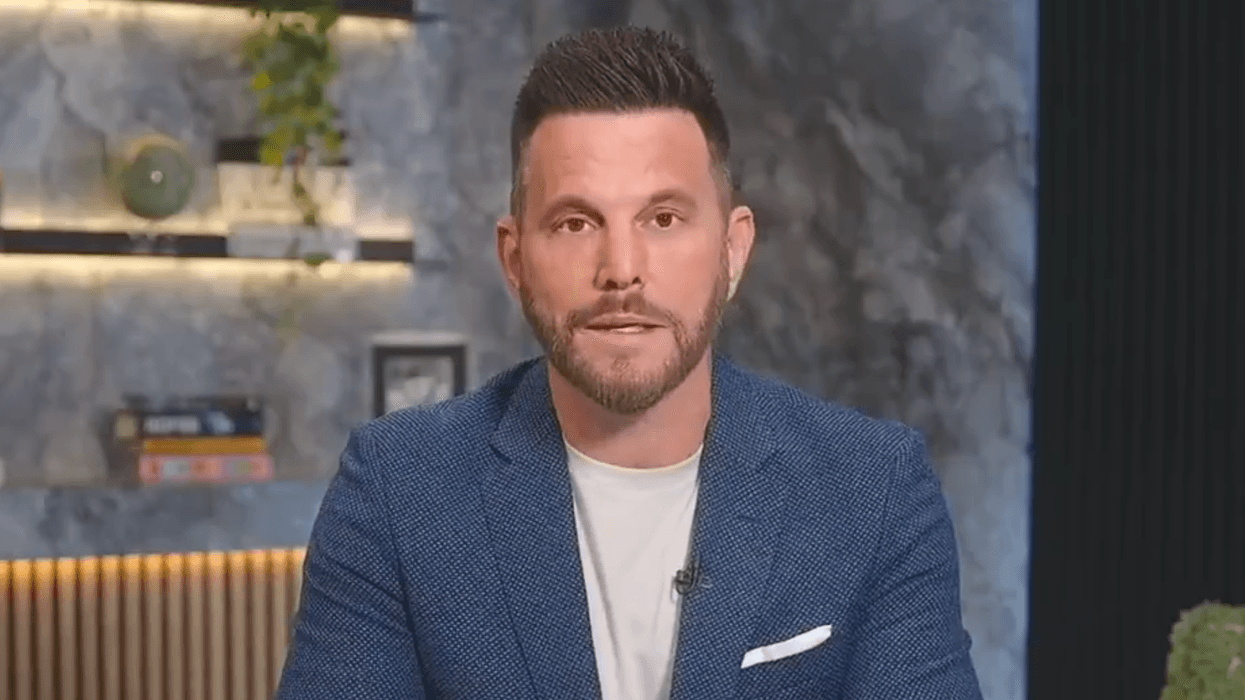
"He’s the Jim Cramer of Iran war predictions," said one critic.
Conservative commentator Dave Rubin, who for months has been a top booster of President Donald Trump's illegal war with Iran, was inundated with mockery on Sunday after a viral video exposed months' worth of his failed predictions about the conflict.
The video, which was posted on social media Saturday, begins with Rubin telling viewers to not listen to any of the prognostications being made by critics of the war, which Trump launched in late February without any authorization from Congress.
"I'm pretty good with predictions," Rubin says. "And my prediction here is that everything the media is now going to say about Iran—it's going to close the Strait of Hormuz, and energy prices are going to go crazy—none of this is going to come to pass."
Iran war: greatest hits from the last 12 weeks pic.twitter.com/9pgXyvmsgF
— Dave Rubin Clips II (Parody) - Retired Jan.20/2025 (@DaveClips) May 24, 2026
The video then cuts to Rubin wrongly predicting that gas prices during the conflict "will continue to come down," before switching to claims that Iran lacks the military capability to keep the Strait of Hormuz closed in the face of US military power.
"If the United States wants to keep the Strait of Hormuz open, which it does," says Rubin, "and Donald Trump says we'll escort ships through if we have to, it's going to stay open."
From there, the video shows Rubin hyping of the prospect of Iranian dissident Reza Pahlavi swooping in to take over the country after the war, and then getting fooled by a fake artificial intelligence-generated video of Iranians giving thanks to Israeli Prime Minister Benjamin Netanyahu for bombing their country.
The video compilation of Rubin's failed predictions drew immediate ridicule from critics.
"He’s the Jim Cramer of Iran war predictions," joked Krystal Ball.
Commentator Adam Mockler wrote of Rubin that "it’s brutal watching him make failed predictions week after week."
Journalist Glenn Greenwald argued that the video should be the last nail in the coffin of whatever credibility Rubin had left.
"Imagine having sat through and listened to all of this Israeli propaganda, which turned out to be (predictably and completely) false," commented Greenwald, "and then thinking there was some value in continuing to listen to this person."
The Bulwark's Tim Miller said that while he knew Rubin was "a smooth-brained hack," he still "couldn’t even fathom how bad these war takes would be."
Political analyst Omar Baddar, meanwhile, said the video should erase any doubt that Rubin is "the dumbest man on the internet."

The Trump administration last week sued Minnesota after it passed a law banning prediction markets from operating in the state.
A Sunday report in The New York Times revealed how the Trump administration is using a key government agency to shut down any efforts to regulate online betting markets such as Kalshi and Polymarket.
According to the Times, the administration has stacked the Commodity Futures Trading Commission (CFTC) with industry insiders who have systematically "mowed down" staffers at the agency who have expressed interest in providing oversight on prediction markets.
Among other things, the report documented how multiple officials at CTFC have been put on leave simply for asking questions about the betting markets' ties to members of President Donald Trump's family or for having past experience enforcing regulations related to cryptocurrencies.
What's more, the Times found that even being an industry insider isn't enough to guarantee good standing in the agency. Brian Quintenz, who was tapped by Trump to lead CTFC last year, saw his nomination withdrawn after he drew the ire of Cameron and Tyler Winklevoss for refusing to support their cryptocurrency exchange's complaint against the agency.
Revelations about industry insiders rolling over regulators at CTFC come as the Trump administration is fighting any attempts by states to regulate prediction markets.
As explained in a Thursday report from CNBC, the Trump administration is "fighting a multi-front battle to stop the state actions and assert its regulatory authority," with CTFC arguing that it is "the only entity that can regulate" betting platforms.
16 different states are engaged in legal proceedings against the platforms, and Minnesota last week passed a law to ban them outright, which immediately drew a lawsuit from the administration.
The new Minnesota law, which is scheduled to take effect in August, bans prediction markets "from hosting, creating or advertising in the state," according to ABC News.
In an interview with ABC, Minnesota state Rep. Emma Greenman (D-63B) said she authored the legislation because she has grown increasingly concerned about young people in the state seeing their finances drained from placing online bets.
"We're seeing studies come out that say [the companies] are targeting 18- to 21-year-olds," said Greenman, "and we are seeing gambling starting younger and younger."
CFTC Chair Michael Selig last month warned states against trying to regulate prediction markets, which he said would "circumvent the clear directive of Congress."
"Our message to Wisconsin is the same as to New York, Arizona, and others," said Selig. "If you interfere with the operation of federal law in regulating financial markets, we will sue you."
"Nothing was accomplished by Operation Epic Fury except putting the Islamic Revolutionary Guard Corps in charge of Iran and the Strait of Hormuz," said one critic of the war.
President Donald Trump revealed on Saturday that he is mulling a deal that would end his illegal war with Iran, and some hawks within the Republican Party are expressing alarm.
According to a Sunday report in The New York Times, many details of the agreement to end the war remain murky, with the fate of Iran's enriched uranium up in the air. US and Iranian officials have also given contradictory messages about the proposed deal's contents, suggesting there is much work still to be done before any agreement is finalized.
Regardless, three hawkish GOP senators on Saturday raised major concerns about the contents of the deal, warning against accepting any agreement that will leave Iran in a stronger position than before Trump illegally launched a war against it without any authorization from Congress in late February.
"If it is perceived in the region that a deal with Iran allows the regime to survive and become more powerful over time, we will have poured gasoline on the conflicts in Lebanon and Iraq," wrote Sen. Lindsey Graham (R-SC), who lobbied Trump to attack Iran repeatedly before the start of the war. "A deal that is perceived to allow Iran to survive and possess the ability to control the [Strait of Hormuz] in the future will put Hezbollah in Lebanon and the Shia militias in Iraq on steroids.
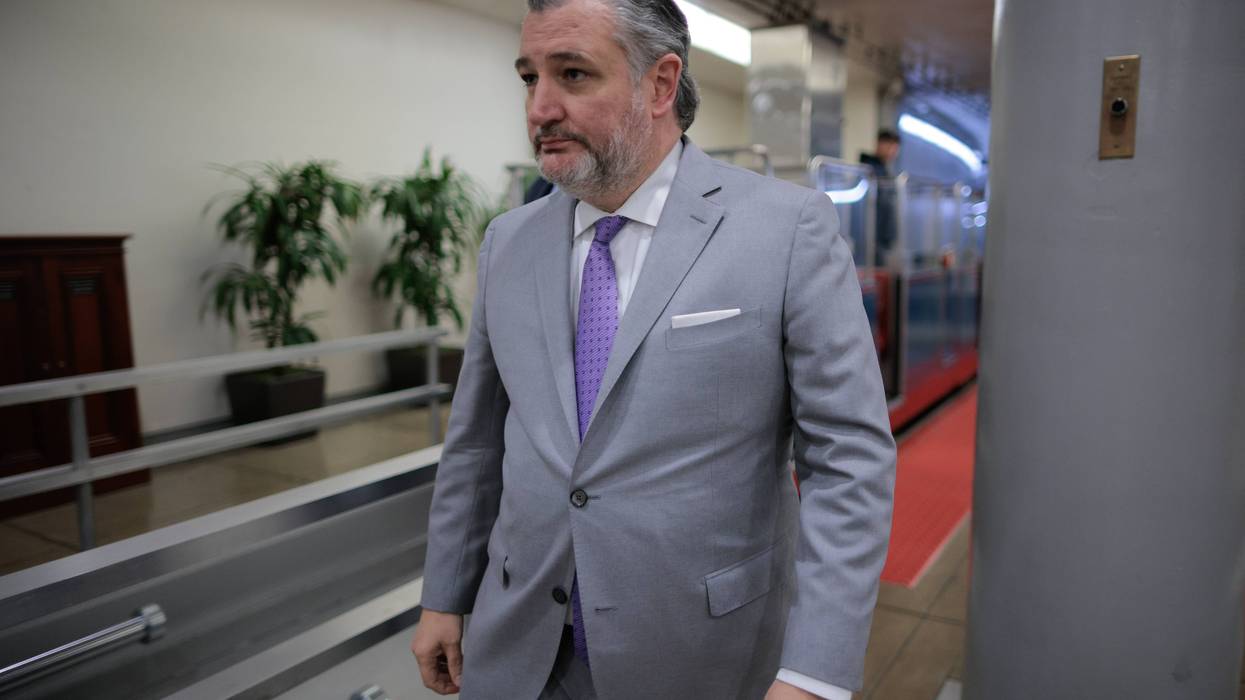
Sen. Ted Cruz (R-Texas), another longtime Iran hawk, said he was "deeply concerned" about what he's been hearing about the deal and expressed particular worry about Iran getting relief from US sanctions while still maintaining the ability to shut down the Strait of Hormuz.
"If the result of all that is to be an Iranian regime—still run by Islamists who chant 'death to America'—now receiving billions of dollars," Cruz wrote, "being able to enrich uranium and develop nuclear weapons, and having effective control over the Strait of Hormuz, then that outcome would be a disastrous mistake."
Sen. Roger Wicker (D-Miss.) was even blunter in his condemnation of the reported agreement.
"The rumored 60-day ceasefire—with the belief that Iran will ever engage in good faith—would be a disaster," Wicker wrote. "Everything accomplished by Operation Epic Fury would be for naught!"
Ben Rhodes, a former deputy national security adviser for President Barack Obama, challenged Wicker's claims that Trump's illegal war had achieved anything of value.
"Nothing was accomplished by Operation Epic Fury," Rhodes wrote, "except putting the Islamic Revolutionary Guard Corps in charge of Iran and the Strait of Hormuz."
Rhodes' criticism was echoed by Stephen Wertheim, senior fellow at the Carnegie Endowment for International Peace, who wrote that "everything accomplished by Operation Epic Fury is already for naught."
Ali Vaez, director of the Iran Project at the International Crisis Group, accused the Iran hawks of being delusional for thinking further bombing would force Iran to capitulate.
"DC's Iran hawks got two wars, nearly every conceivable sanction designation, a blockade, threw a wrench in global economy," Vaez wrote, "and will still claim that just a little more pressure and a touch more bombing will magically yield the concessions they still won't be satisfied with."