October, 13 2015, 04:30pm EDT
For Immediate Release
Contact:
Sam Husseini, (202) 347-0020; or David Zupan, (541) 484-9167
Award in Iowa: Black Farms Matter
On Wednesday, in Des Moines, Iowa, the Food Sovereignty Prize will be awarded to the Federation of Southern Cooperatives, run by African-American farmers of the southern United States and to OFRANEH -- the Black Fraternal Organization of Honduras (Organizacion Fraternal Negra Hondurena).
WASHINGTON
On Wednesday, in Des Moines, Iowa, the Food Sovereignty Prize will be awarded to the Federation of Southern Cooperatives, run by African-American farmers of the southern United States and to OFRANEH -- the Black Fraternal Organization of Honduras (Organizacion Fraternal Negra Hondurena).
A new piece by Eric Holt Gimenez, the executive director of Food First, contrasts these organizations with the dominant view of agriculture: "Over the last four decades we have consistently produced one and one half times enough food for every man, woman and child on the planet. Yet, over a billion people are still hungry and malnourished because they are too poor to buy food. ... Because a focus on growth allows us to ignore the problems of inequity, exploitation and the growing disparity of wealth in the world. It allows us to ignore the issue of resource distribution -- and its corollary: re-distribution. Eighty-four individuals now own as much wealth as half of the world's population. The growing wealth gap is causing hunger."

BEVERLY BELL, bev.otherworlds at gmail.com
Bell is a writer and organizer on food sovereignty, coordinator of Other Worlds, and associate fellow at the Institute for Policy Studies. She works with the U.S. Food Sovereignty Alliance and is available for interviews and can arrange interviews with representatives from the recipients.
She said: "The [work of the] Federation of Southern Cooperatives is today more important than ever, given that African-American-owned farms in the U.S. have fallen from 14 percent to 1 percent in less than 100 years."
Ben Burkett, co-founder of the Federation of Southern Cooperatives and Mississippi farmer, said, "Our view is local production for local consumption. It's just supporting mankind as family farmers. Everything we're about is food sovereignty, the right of every individual on earth to wholesome food, clean water, clean air, clean land, and the self-determination of a local community to grow and do what they want. We just recognize the natural flow of life. It's what we've always done."
Bell said: "The grassroots organization OFRANEH was created in 1979 to protect the economic, social, and cultural rights of 46 Garifuna communities along the Atlantic coast of Honduras. At once Afro-descendent and indigenous, the Garifuna people are connected to both the land and the sea, and sustain themselves through farming and fishing. Land grabs for agrofuels (African palm plantations), tourist-resort development, and narco-trafficking seriously threaten their way of life, as do rising sea levels and the increased frequency and severity of storms due to climate change."
Miriam Miranda, coordinator of OFRANEH said: "Our liberation starts because we can plant what we eat. This is food sovereignty. There is a big job to do in Honduras and everywhere, because people have to know that they need to produce to bring the autonomy and the sovereignty of our peoples. If we continue to consume [only], it doesn't matter how much we shout and protest. We need to become producers. It's about touching the pocketbook, the surest way to overcome our enemies. It's also about recovering and reaffirming our connections to the soil, to our communities, to our land."
A nationwide consortium, the Institute for Public Accuracy (IPA) represents an unprecedented effort to bring other voices to the mass-media table often dominated by a few major think tanks. IPA works to broaden public discourse in mainstream media, while building communication with alternative media outlets and grassroots activists.
LATEST NEWS
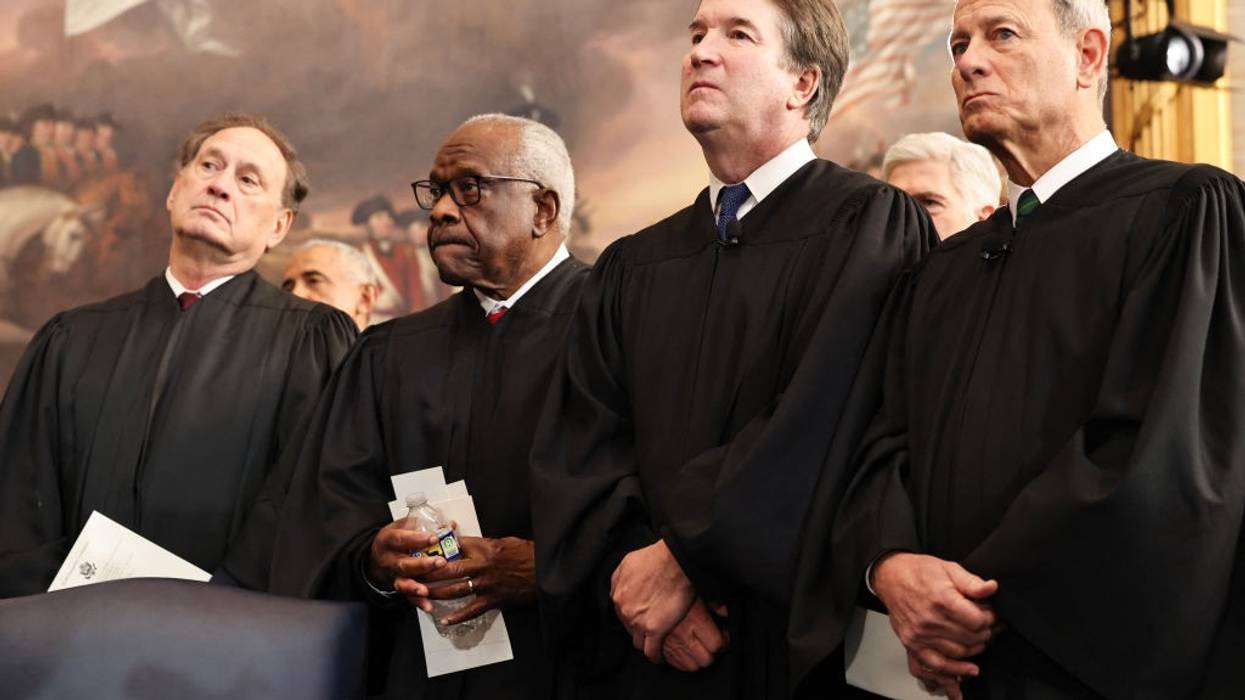
Roberts' Supreme Court Has Made Prosecuting Corrupt Politicians Nearly Impossible: Veteran Prosecutor
"This behavior should be illegal because corruption is poison to democracy."
Oct 19, 2026
Corruption has become a leading issue for US voters heading into the 2026 midterm elections, driven in no small part by concerns about President Donald Trump's unprecedented self-enrichment while in office.
But even as Americans express greater worry about corruption in government, actually prosecuting corrupt politicians has grown significantly more difficult over the last 40 years—and one legal expert places blame for this directly on the US Supreme Court.
In an essay published by The Atlantic on Monday, former federal prosecutor Leo Wise argued that the Supreme Court since the 1980s has "interpreted anti-corruption laws in ways so narrow as to effectively legalize flat-out corruption," thus putting "whole categories of politicians' conduct beyond a prosecutor’s reach."
The trend began in 1987, Wise explained, when the court overturned a mail fraud conviction of a member of the Kentucky governor’s Cabinet, which relied upon proving that the official had violated the public's right to "honest services" from its government.
In its ruling, the court declared that federal mail and wire fraud statutes only protected money and property, and did not apply to abstract principles like the right to an honest government.
Wise noted that Congress would subsequently step in and pass bipartisan legislation that effectively overturned the court's ruling, although this kind of congressional action would grow increasingly rare in the coming years.
Far greater damage would come after John Roberts took over as chief justice of the court in 2005, Wise continued, starting with a 2010 case that overturned former Enron CEO Jeff Skilling's conviction of conspiring to commit honest-services fraud.
The majority opinion, written by the late Justice Ruth Bader Ginsburg, claimed that "because bribery and kickbacks were the 'basis of most honest-services prosecutions,' that’s what the statute’s application would be limited to," Wise explained.
The impact of this decision, Wise added, was to further restrict prosecutors' ability to bring corruption charges.
Wise then singled out the 2016 decision that overturned the bribery conviction of former Republican Virginia Gov. Robert McDonnell, which he described as the court's "grossest" intervention.
"A jury had convicted the former governor on bribery charges for accepting $175,000 in loans and gifts from the CEO of a nutritional-supplement company that wanted Virginia’s public universities to run clinical trials on his product," Wise wrote. "The court held that what McDonnell did for the CEO—setting up meetings, hosting events, talking to other elected officials, all to benefit his company—did not qualify as 'official acts,' for which McDonnell could be bribed."
In 2024, the court took another major step forward in legalizing corruption with its ruling granting US presidents absolute immunity from criminal prosecution for carrying out official acts.
This decision was particularly egregious, Wise contended, because "unlike the earlier decisions that interpreted statutes and that therefore Congress can reverse by passing new legislation, the Court claimed that presidential immunity was required by the Constitution itself," thus making it vastly more difficult to overturn.
Nonetheless, Wise said that Congress could chip away at presidents' ability to act corruptly by "prohibiting the US government from accepting gifts such as the Qatari plane" that Trump accepted last year, as well as "disqualifying companies that invest in a president’s businesses or donate to his library from bidding on government contracts."
"This behavior should be illegal," Wise emphasized, "because corruption is poison to democracy."
Keep ReadingShow Less
Student Loans on Ballot as Trump Officials Gear Up to Garnish Wages From Defaulted Borrowers After Midterms
"Democrats need to get LOUD," said one political strategist.
Oct 19, 2026
As the Trump administration makes plans to task private debt collectors with going after millions of student borrowers in default on their federal loans, officials are reportedly pushing for the effort to begin after the midterm elections—as they grapple with the fact that many supporters of President Donald Trump are likely to be affected.
The Washington Sun reported Monday that the US Department of the Treasury is planning to move forward with punitive measures after previously blocking a push by the Education Department and Office of Management and Budget to garnish wages and seize people's benefits if their loans are in default.
As the Center for American Progress (CAP) said in a report Monday, defaults on student loans have reached record levels, with 9.5 million—or 1 in 5—borrowers unable to make scheduled payments following the passage of the One Big Beautiful Bill Act (OBBBA).
The law eliminated the Saving on a Valuable Education (SAVE) program and forced borrowers into the Repayment Assistance Plan instead, bringing the average annual cost to $2,163 per borrower, according to CAP.
According to the Sun, administration staffers have advised officials to consider the impact that more upheaval for student borrowers—in the form of debt collectors either following through on the earlier wage-garnishing plan or seizing tax refunds and payments—would likely have on Trump voters.
“This is not who you think it is. The demographics are not good for us,” aides told officials last year when they pushed for a delay on the wage-garnishment plan.
An Associated Press analysis in July found that states with the highest rates of student loan defaults were overwhelmingly Republican-leaning, with Mississippi, Louisiana, and Alabama leading the way.
The advocacy group Protect Borrowers also found earlier this year that roughly two-thirds of all defaulted borrowers live in states Trump won in 2024.
Sources in the administration told the Sun that some officials are pushing for a further delay of the debt collection, as they ensure the Treasury Department's portal for defaulted borrowers is working. The Defaulted Loans Support Center was launched last month with the stated goal of giving borrowers "a simple, streamlined way to understand the consequences of default and apply online to either rehabilitate or consolidate their loans."
Others want to begin garnishing wages or seize tax payments for the current tax year ending in April 2027.
One source told the Sun that they expect many calls to government agencies "from borrowers saying: ‘What’s going on? How do I make sure this won’t happen again?'"
"It would be politically insane to do this before the midterms—but 2027 probably makes a little more sense to give Treasury time to get contracts [with debt collectors] signed, up and running," they said.
Democratic strategist Michelle Kinney called on Democratic candidates to "get LOUD" about the reported plan to shield the White House and the GOP from accountability.
Michael Pierce, executive director of Protect Borrowers, told the Sun that if the administration follows through with the plan—as families struggle with rising gas and grocery prices resulting from Trump's tariff policy and illegal war on Iran—"what comes next will be a catastrophe for families across the country," who will have "even less money to put food on the table or make rent.”
"Restarting debt collection the moment any political accountability has passed just shows how little interest Trump has in helping working families stay afloat,” Pierce told the Sun.
On social media, Pierce noted that despite its threats against borrowers, the administration and any debt collectors it contracts with must ensure the defaulted debts are valid for collection.
Along with the Project on Predatory Student Lending and the Debt Collection Lab at Princeton University, Protect Borrowers wrote to Treasury Secretary Scott Bessent last week, noting the "mounting evidence that the US Department of Education may not have the data it needs to certify these debts for collection in the first place."
"Certifying that a debt is accurate requires having accurate data on the debt in the first place," they wrote. "According to industry experts, the default database is rife with incomplete or inaccurate records. Former federal officials described ongoing 'material deficiencies' in [the Debt Management and Collections System], such as dummy Social Security numbers, inaccurate loan balances, [and] missing communication records... Collecting on uncollectable debt will illegally siphon money from the most vulnerable borrowers who can afford it the least."
Marshall Steinbaum, an associate economics professor at the University of Utah, emphasized that defaulted student loan borrowers are "overwhelmingly people whose debts would have been erased" by the student debt cancellation plan by the Biden administration, which was blocked after Republican states and other plaintiffs challenged it in court.
"Congratulations to everyone who blocked that," said Steinbaum, "on their glorious policy success."
Keep ReadingShow Less
'She’s Going to Win,' Says Bernie Sanders After Weekend in Florida Backing Angie Nixon
"Trust me on this," Sanders said. "This is going to be a spark that is going to ignite the entire country."
Oct 19, 2026
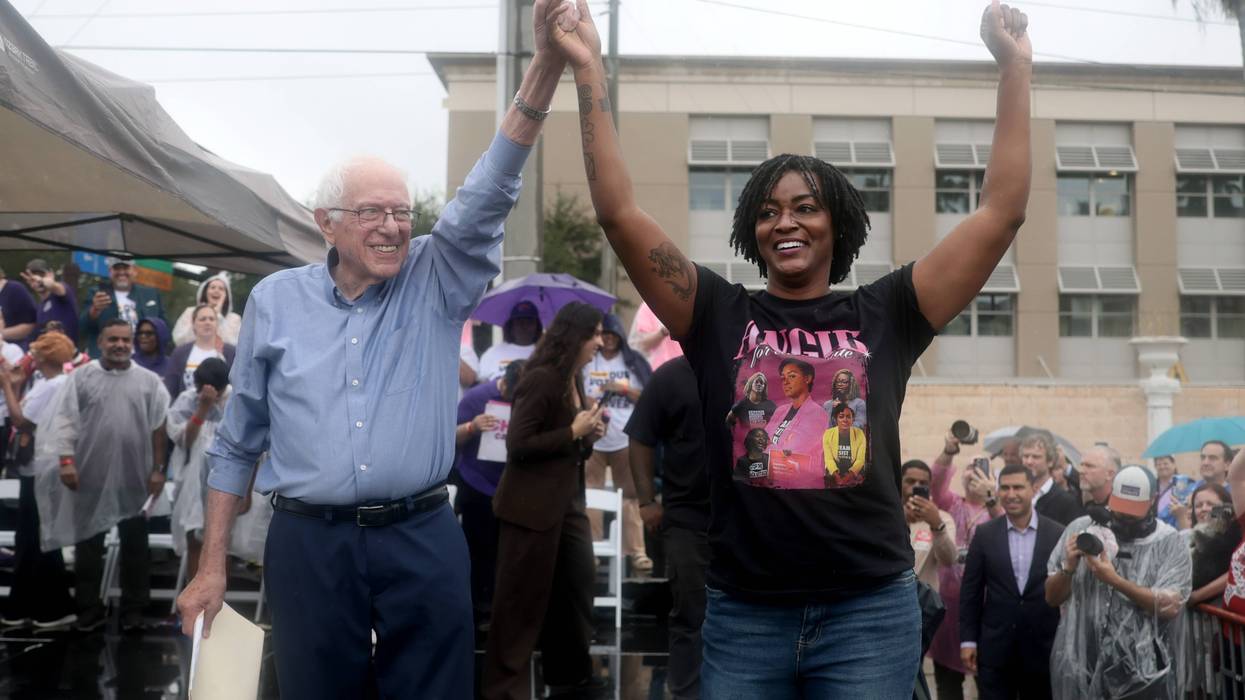
Judging by the polls, progressive Democrat Angie Nixon faces an uphill battle as she contends for Florida’s US Senate seat. But after campaigning with her this weekend, Sen. Bernie Sanders is confident she's being underestimated.
"She’s going to win," Sanders (I-Vt.) wrote on social media Sunday night, after making four stops across a state that's long been written off as a GOP stronghold.
"They say Florida is a red state, but you know what I'm hearing?" Sanders said. "Working people everywhere are sick and tired of the same old politics and policies. They want real change."
Nixon, a state representative and former labor leader, has already shown that calls for change can galvanize voters. Running on what she's called a "Working Families Guarantee"—which includes Medicare for All, free childcare, paid leave, and stronger bargaining power for workers—she unexpectedly defeated the better-funded, establishment-backed centrist Alex Vindman in August's Democratic primary.
In an election season where Republicans are expected to face a reckoning over rising prices and shameless self-enrichment by President Donald Trump and his allies, Nixon's message seems to be resonating in Florida. Despite the past decade's massive influx of wealthy retirees, a strong base of working-class supporters, particularly in Florida's politically neglected Black communities, has mobilized behind her.
At a rain-drenched rally in Tampa on Saturday, about 2,200 people watched as Nixon spoke with what the Tampa Bay Times called "a preacher’s charisma," hitting back at Republican Sen. Ashley Moody’s attempts to characterize her platform as "radical."
"If believing that a child with cancer should get treatment they need whether their parents can afford it or not is radical, then call me radical," Nixon thundered. "Then I guess I'm a radical, Ashley. I guess I'm radical as hell."
"Where I come from, none of that is radical," she continued. "That is just plain common sense. That is basic human decency."
Nixon has called for Moody to be jailed over her actions as the state's attorney general. In 2024, Moody approved the diversion of $10 million from a Medicaid fraud settlement—which would have benefited low-income Floridians, including children—to political campaigns supporting Gov. Ron DeSantis (R-Fla.) and other Republicans.
"Are you all ready to fight back?" Nixon shouted to a roaring crowd in Tallahassee on Sunday. "Are you all ready to put an end to the corruption that's driving up our prices and ruining our democracy?"
"Well, I am ready, too!" she said, as supporters stood behind her waving signs reading "Freeze the Rent," "Tax Billionaires," and "Protect Social Security."
While recent polls still show Nixon trailing Moody in the final weeks of the campaign, her fundraising in the third quarter of the year has soared, and other major figures in the Democratic Party from progressives like Rep. Maxwell Frost (D-Fla.) to establishment liberals like Sen. Ruben Gallego (D-Ariz.) have campaigned with her in person.
With gas prices continuing to soar as Trump threatens dramatic escalations in his war with Iran, signs of a coming electoral apocalypse for Republicans are flashing ever brighter.
Democrats now lead by around nine points on the generic congressional ballot, and Trump's approval has dipped to historic lows. The GOP's fundraising arms have begun diverting resources initially for swing states like Georgia and North Carolina to protect territory once thought safe—in South Carolina, Kansas, Ohio, and, yes, even Florida.
The 2026 cycle has already challenged the long-standing conventional wisdom that chasing Republicans to the right is a necessity to win voters in purple and red states.
With similar populist messaging, Abdul El-Sayed and Troy Jackson are leading Republican opponents in Michigan and Maine, respectively. James Talarico is favored to become the first Democrat to win a statewide election in Texas since the Clinton administration. Meanwhile, Dan Osborn, Josh Turek, Adam Hamilton, and Sherrod Brown are all hanging tough in states that Trump won by double digits in 2024.
But a win by Nixon—a member of the Democratic Socialists of America who, unlike other progressives, won her primary largely with support from the state's lowest-income, least college-educated constituencies—would signify more than just a backlash to "the most dangerous president in the history of the United States," Sanders said.
"This election is not only important for the people of Florida in getting a senator who is going to fight for you," Sanders told the Tallahassee crowd. "Trust me on this, after Angie wins, this is going to be a spark that is going to ignite the entire country."
Keep ReadingShow Less
Half a Million People in Gaza to Lose Food Aid Due to Funding Shortages: UN
The World Food Program said the fiscal shortfalls came after it received "less than half as much funding for its Palestine operation in 2026 as in previous years."
Oct 19, 2026
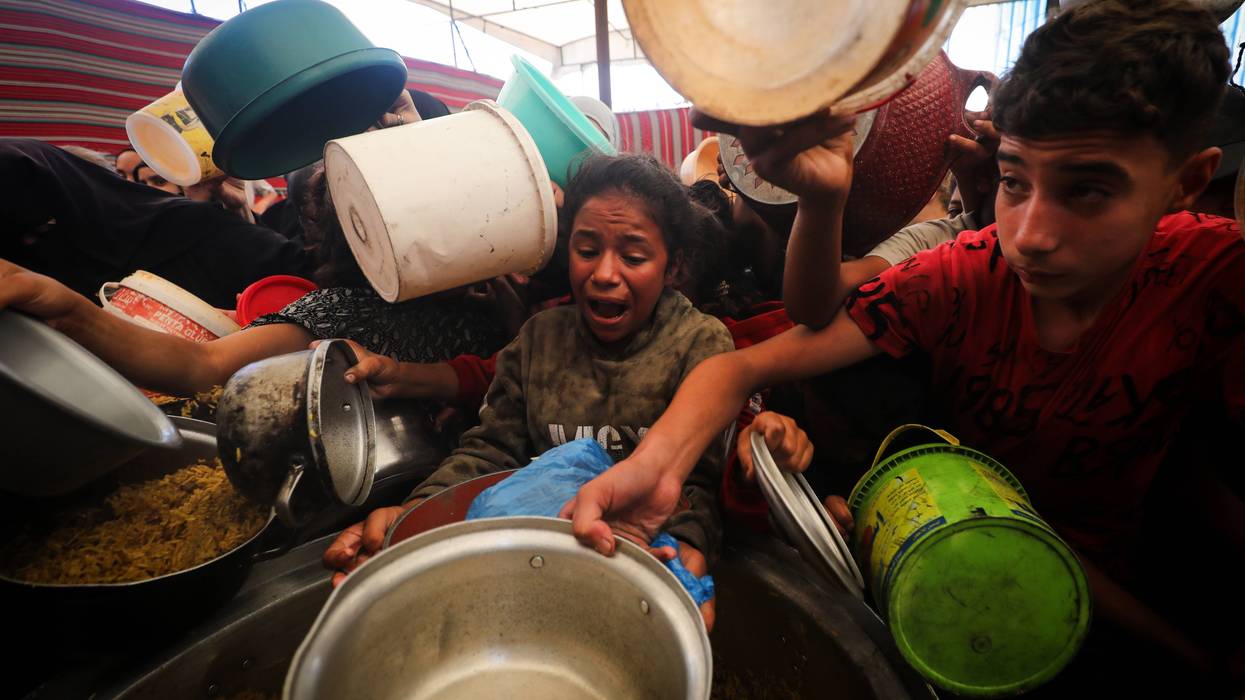
The United Nations's World Food Program announced on Monday that funding shortages were forcing it to significantly reduce assistance in Gaza, where it projected half a million people would lose access to food aid.
The WFP said the cuts would also mean that families still receiving assistance will only get half of the rations they previously received.
WFP has cut the number of hot meals it provides in Gaza by 40%, while reducing the value of cash assistance it provides to 75,000 families.
The agency also said that it would be reducing its operations in the West Bank, where an estimated 200,000 people are projected to lose access to food assistance.
The WFP said the fiscal shortfalls came after it received "less than half as much funding for its Palestine operation in 2026 as in previous years," adding that it needs $450 million to maintain its critical operations in the two Palestinian territories over the next six months.
"As winter approaches," WFP said, "additional resources are urgently needed to sustain emergency food assistance, provide critical engineering support and prevent malnutrition among young children and pregnant and breastfeeding women."
Shaun Hughes, WFP's representative and country director for Palestine, told The Guardian that the cuts were coming after the program had made steady progress in reducing hunger in Gaza, while emphasizing that "these are very fragile gains, easily reversed, and the situation is still brutal."
"We need to invest in recovery," Hughes added. "This humanitarian operation isn’t affordable or sustainable in the long term. Ultimately that’s also what everyone in Gaza is telling us. They really don’t want to be reliant on these handouts, don’t want to stand in the hot meals queue every day. They want to have some chance of stability and recovery."
Some Palestinians who spoke with BBC on Monday expressed horror at news of the cuts, which come as Gaza is still under attack by Israeli forces.
Mervat al-Satari, a displaced Palestinian mother, told BBC that the cuts were "a disaster" and asked "how will we provide for the little ones?"
Palestinian mother Dalal al-Dahdouh, who is living in the ruins of her home in Gaza City, told BBC that WFP rations were already insufficient before the cuts took effect.
"In the past, thank God, we had our own home and a wonderful life," al-Dahdouh said. "We had fresh vegetables, proper sanitation facilities, and our own land. Now we live entirely on aid, including WFP vouchers."
Keep ReadingShow Less
As Millions Struggle to Get By, Plutocrat Working to Kill California Billionaire Tax Dines With Trump
"He’d rather working class kids die because they can’t afford healthcare than pay his fair share in taxes," Sen. Bernie Sanders said of Google co-founder Sergey Brin.
Oct 19, 2026
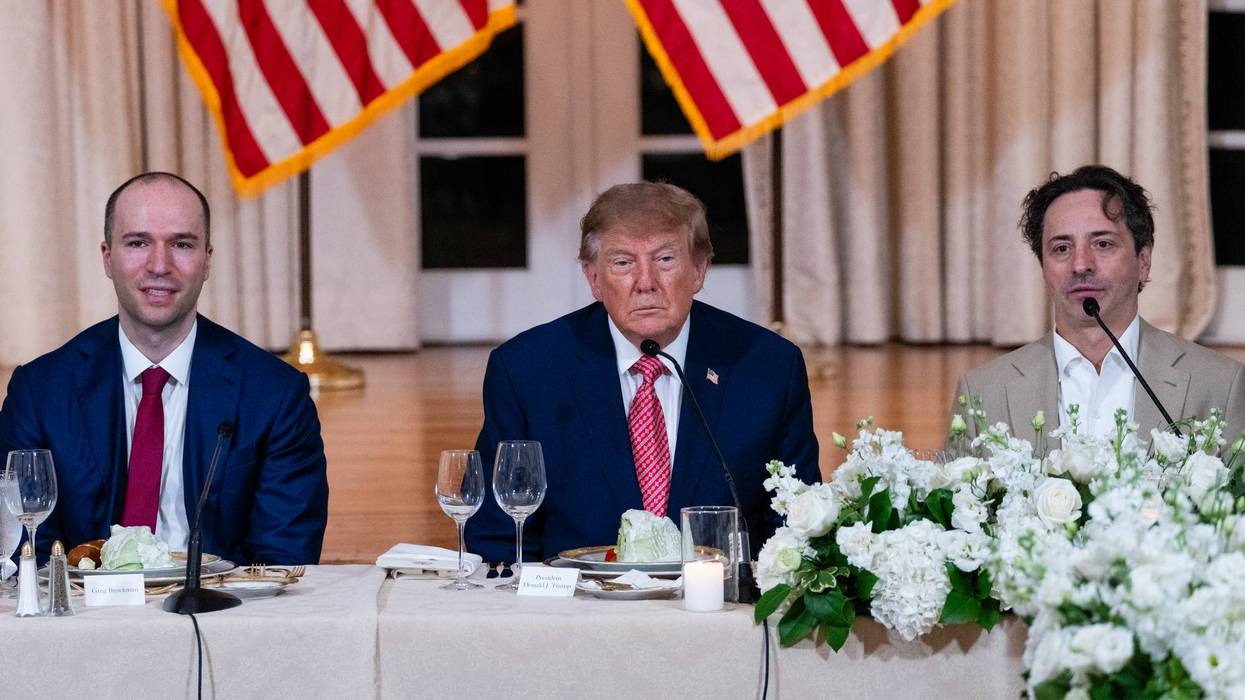
Billionaire Google co-founder Sergey Brin, who has spent more than $100 million fighting a proposed wealth tax in California, shared a lavish dinner with billionaire US President Donald Trump over the weekend at his Mar-a-Lago estate in Palm Beach, Florida as millions of American families struggle to afford groceries, healthcare, and other necessities.
Brin was seated directly to the billionaire president's left during the fundraising dinner, which was hosted by the pro-Trump super PAC MAGA Inc. On Trump's right was Greg Brockman, president of the leading artificial intelligence firm OpenAI.
The proposal that Brin is trying to defeat would impose a one-time, 5% tax on California's billionaire residents and use the revenue to offset the damage of unprecedented federal Medicaid cuts, which Trump signed into law last year. The proposal will appear on California's November ballot as Proposition 40.
"When Sergey Brin, the 4th richest man alive, isn’t dining with Trump, what’s he doing? He’s spending $138 million against California’s 5% billionaire wealth tax," Sen. Bernie Sanders (I-Vt.) wrote in response to pictures of Brin and the president.
"He’d rather working class kids die because they can’t afford healthcare than pay his fair share in taxes," added Sanders, a vocal proponent of the tax. "Obscene."
Brin, who moved his primary residence from California to Nevada late last year to avoid the potential tax, is the primary funder of Building a Better California, a group that is trying to defeat the proposed levy and sponsoring competing measures.
Earlier this month, Democratic California Gov. Gavin Newsom—who opposes the billionaire wealth tax—endorsed Proposition 42, a measure backed by Building a Better California. If passed, the initiative would cancel out the proposed billionaire tax and prohibit future wealth taxes.
In an op-ed for The Guardian on Monday, US Rep. Ro Khanna (D-Calif.) wrote that he stands "with the nurses and healthcare workers who put Prop 40 on the ballot."
"Newsom stands with Peter Thiel, Sergey Brin, and Elon Musk, Trump backers who all oppose it," wrote Khanna, who is considering a presidential run in 2028. "If they paid this tax, they would be worth the same as they were on Labor Day of this year. That’s the speed at which their wealth is growing. The tax would raise about $100 billion, 90% of it for healthcare. It would help keep 3 million Californians from losing coverage. Trump’s cuts could cost Medi-Cal more than $30 billion a year, and this tax would help fill that gigantic hole."
"In Trump’s America, working people pay more than they should, while billionaires are so unburdened that they are becoming trillionaires. In the America we seek, billionaires and trillionaires will pay their fair share, while working people will be unburdened," the congressman added. "Will California this November stand with the working class or the oligarchs?"
Keep ReadingShow Less

'Backing Settler Terrorists Is Its Policy': IDF Ignored Distress Calls Before Attack on Diplomats
"European diplomats got a glimpse of everyday life for Palestinians in the West Bank."
Oct 19, 2026
The Israeli military reportedly ignored repeated distress calls before masked settlers attacked a group of European diplomats with metal bars during a visit to the illegally occupied West Bank this past weekend, sparking international outrage.
The Israeli newspaper Haaretz reported that "despite the warnings, security forces were not sent to the area to prevent the attack or intervene as it unfolded." The outlet noted that "an activist who was in the area following reports of attacks on Palestinian olive pickers sent a report of the settlers' attack to a phone in the brigade's operations room used to receive messages from settlement security coordinators. The soldiers in the operations room did not recognize the sender's number, so they ignored the message and did not relay it to forces in the field."
In the Saturday attack, settlers targeted diplomats from France, Belgium, and Poland, as well as Catholic representatives. Israeli authorities said Monday that they had arrested 10 suspects as part of an investigation into the incident, but critics expressed doubt that the Israeli government would hold the perpetrators to account given the general pattern of impunity for violent settlers.
"It was clear to me this had to come for Israel to save face," Mairav Zonszein, a senior analyst on Israel at the International Crisis Group, wrote in response to the arrests. "They probably will be released shortly."
The attack on diplomats came a day after Israeli settlers in the West Bank brutally attacked 63-year-old Heidi Levine, a photojournalist with The Washington Post and a US citizen. The office of Israeli Prime Minister Benjamin Netanyahu issued a statement casting doubt on Levine's account and news reports, and said the incident was under investigation.
Netanyahu's office took a similar line following the Saturday attack on European diplomats, saying in a statement, "The more serious the accusation, the greater the demand for compelling evidence."
Video of masked Israeli settlers striking European diplomats and elected officials near Taybeh, a Christian village in Palestine. The 78-year-old French mayor Bernard Baudoux was thrown to the ground and beaten with iron bars.Make no mistake: If the Israeli government wanted to put an end to this, they could within minutes. They don't.Just like Biden pretended that he wanted a ceasefire, but in reality worked tirelessly to enable Israel's genocide.They are playing the same trick on us again.
— Trita Parsi (@tparsi) October 18, 2026
France's foreign affairs ministry denounced the attacks on diplomats as "acts of terror" and called on Israeli authorities to "arrest the perpetrators of this extremely serious assault and bring them to justice." Bernard Baudoux, a French mayor who was attacked, said he was "struck with metal bars and kicked before being thrown to the ground."
"We were finally able to get back to our vehicles," Baudoux added.
Breaking the Silence, an Israeli anti-occupation group, said in a statement on Sunday that "European diplomats got a glimpse of everyday life for Palestinians in the West Bank."
The group added that the IDF "will always have a bureaucratic excuse" for not acting to prevent such attacks, "but the real reason is that backing settler terrorists is its policy."
"This horrifying routine serves a purpose," the group said. "Through daily terror and economic strangulation, it aims to drive Palestinians off their land. The ultimate goals: ethnic cleansing and annexation."
The attacks also drew condemnation from lawmakers in the US, where Republicans and Democratic Sen. John Fetterman recently blocked legislation aimed at shining light on Israeli abuses in the West Bank.
"I condemn the brutal settler attacks on American photojournalist Heidi Levine, European diplomats, and Palestinian olive harvesters in the West Bank," US Rep. Gregory Meeks (D-NY), ranking member of the House Foreign Affairs Committee, said in a statement on Sunday. "Prime Minister Netanyahu must act now to stop settler violence, protect civilians, and ensure those responsible are brought to justice. The impunity must end."
Keep ReadingShow Less
'This Is So Appalling': Barack Obama Delivers Blistering Rebuke of Trump's Ilhan Omar Deportation Plot
"The full weight of the federal government is being brought down on a law-abiding elected official because she has dared to criticize the president."
Oct 18, 2026
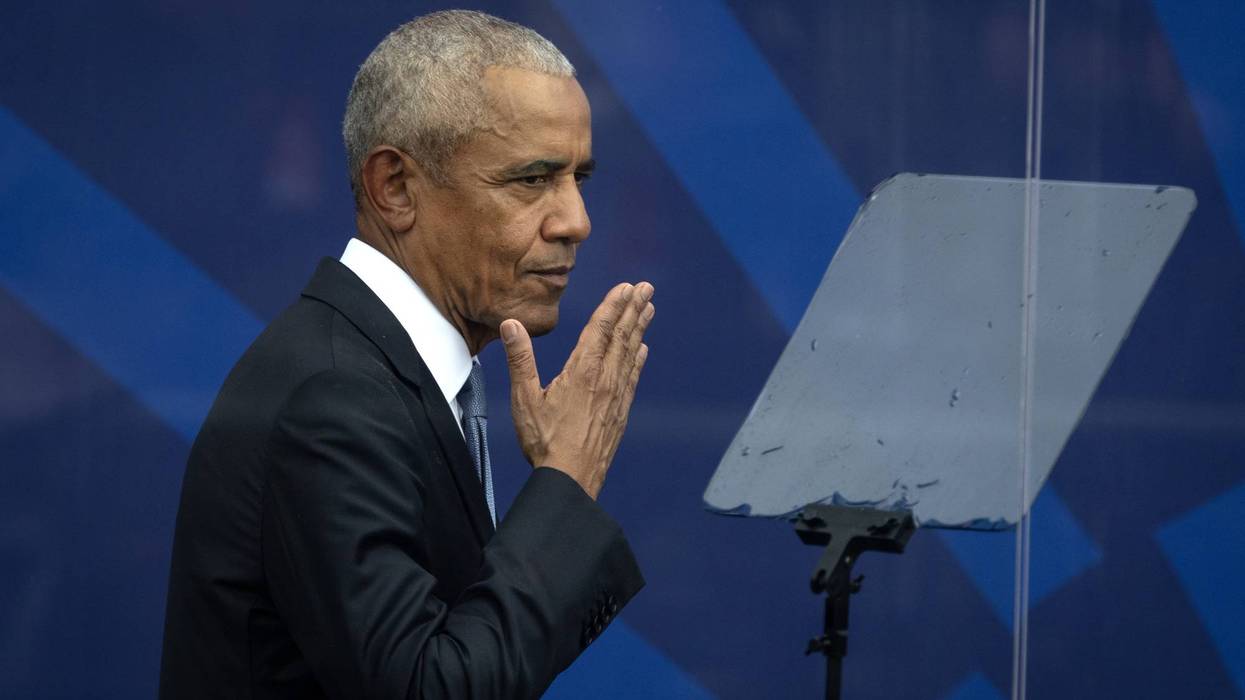
Former President Barack Obama on Sunday spoke out against the Trump administration's plot to strip Rep. Ilhan Omar of her US citizenship and remove her from the country.
In a lengthy social media post, Obama said the administration's attack on Omar (D-Minn.) violates "a basic principle of American democracy that the government can’t selectively target individuals simply because of their political beliefs or what they say."
Obama's post came nearly one week after agents at the US Department of Homeland Security conducted a raid of Omar's home. Days after the raid, the Wall Street Journal reported that the raid on Omar was part of an effort to build “a case to strip her of her US citizenship and ultimately deport her."
"To understand why this is so appalling, it’s important to know the facts," Obama wrote. "Congresswoman Omar came to this country with her father when she was 12 years old. Five years later, her father became a naturalized citizen. If Ilhan had been 18 at the time, she would have had to apply for citizenship separately. But because she was 17, she became a naturalized citizen automatically."
Obama noted that President Donald Trump has repeatedly targeted Omar "as someone who he believes does not belong in this country," and accused the president of seizing upon an "unsubstantiated theory that she was actually 18 when her father was naturalized" to carry out his deportation plot.
"The full weight of the federal government is being brought down on a law-abiding elected official because she has dared to criticize the president," Obama wrote. "And it’s not the first time this has happened. Under President Trump, the Justice Department has repeatedly gone after those he considers his political enemies—from the Attorney General of New York, to the former head of the FBI, to members of the Federal Reserve."
Obama concluded by warning that letting Trump's actions go unchallenged would set a terrible precedent that even the president's allies could one day live to regret.
"If this becomes the new normal, there’s no reason to believe it will stop with [Omar]," Obama wrote, "or that future presidents, in either party, won’t do the same."
Trump rose to political prominence last decade by spreading a racist conspiracy theory falsely claiming that Obama was born in Kenya, and thus ineligible to be president.
Keep ReadingShow Less
GOP Operatives 'Taken Aback' as Rural Voters Blame Billionaires for Economic Woes: Report
"Trump told everybody one singular truth. He said the system is broken... and unfortunately, it turned out that he was lying about all the ways they were going to fix these things," said Montana Democratic congressional candidate Sam Forstag.
Oct 18, 2026
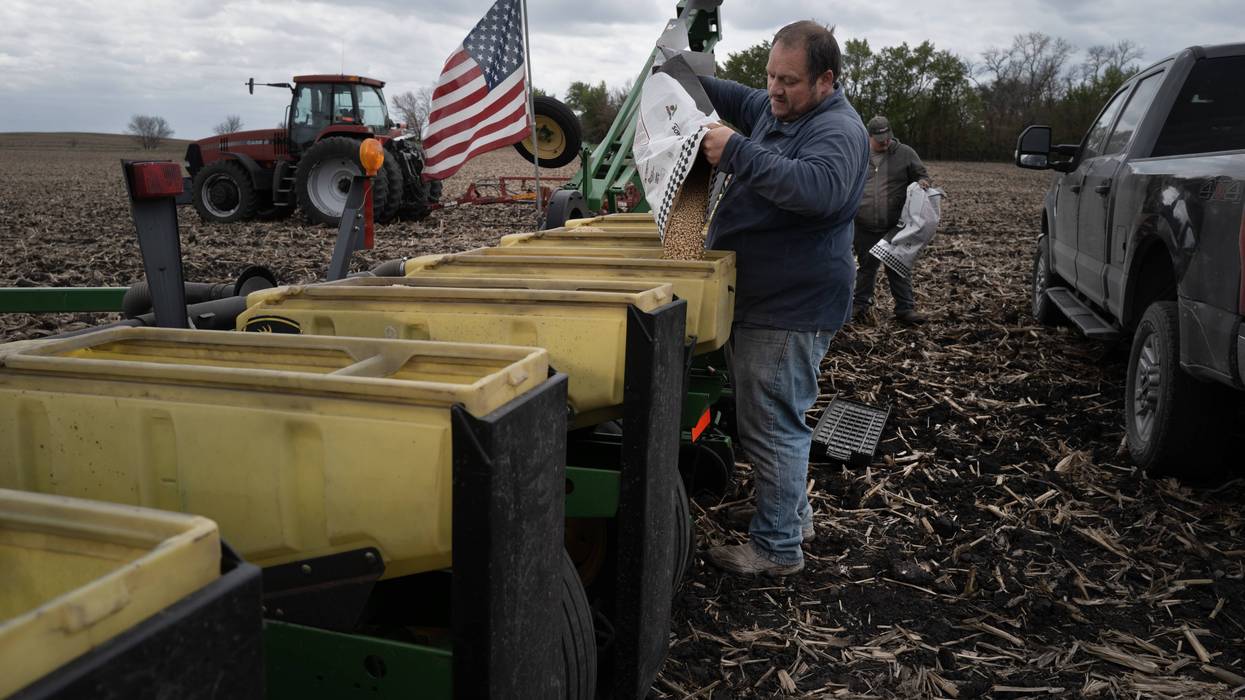
Rural voters who have long been the Republican Party's core base are expressing major discontent with the current state of the US economy, which has been hurt by President Donald Trump's tariffs and his illegal war with Iran.
While it's not clear that rural voters are ready to abandon the GOP to support Democrats, a recent focus group showed they appear receptive to populist economic appeals.
According to a Sunday CNN report, Republican operatives were recently "taken aback" when they spoke with rural voters who blamed "billionaires" and "corrupt politicians" for the country's economic woes.
These operatives were surprised, CNN wrote, because they had "never seen government corruption emerge as a top issue for so many Republican voters in congressional races."
This comes as Republicans across the country have increasingly come to rely on contributions from billionaires, and in particular SpaceX CEO Elon Musk, who has funneled at least $276 million to GOP groups and his own super political action committee (PAC) since July alone.
Democrat Sam Forstag, who is making a populist economic pitch in his campaign in Montana's 1st Congressional District, told CNN that voters' concerns about corruption are now "all out in the open," and he said many of Trump's current political troubles stem from his broken promises to fix a rigged system.
"Trump told everybody one singular truth," said Forstag. "He said the system is broken... and unfortunately, it turned out that he was lying about all the ways they were going to fix these things."
Forstag's comments were echoed by Arthur Ray Lambert, a Colorado horse trainer who explained his disappointment with Trump in an interview published by The New York Times on Sunday.
"We thought that the president was going to come in with his team and fix stuff," Lambert said. "And at first, he sounded good. But now, I hate to say it, but I think it’s time for him and his team to get out of there and somebody else come in."
Joseph Kennedy, a Colorado cattle and sheep farmer, told the Times he felt "bamboozled" after voting for Trump, and would instead sit out the upcoming election.
"I’m over politics," Kennedy explained. "I’ve dropped out."
Journalist Yvonne Wingett Sanchez, in a story published by The Atlantic last week, wrote that residents she spoke with recently in rural Arizona are both disappointed with Trump's economy and disgusted by political corruption.
"Almost all told me they are angry about Trump’s decisions to start a war and spend hundreds of millions of dollars ornamenting a capital city they will never see," Sanchez wrote. "They lamented the corruption they see as endemic in the government and in large corporations, and denounced billionaires, whom they view as capitalizing on their pain."
A Fox News poll released last week found that 60% of voters say they are “extremely concerned” about government corruption, which is higher than the 58% who are extremely concerned about inflation and the 50% who are extremely concerned about gas prices.
Keep ReadingShow Less
Fears of Big Tech Censorship Grow After Meta Suspends No Kings Instagram Account
Meta has also been accused of trying to sabotage Brazilian President Luiz Inácio Lula da Silva's campaign.
Oct 18, 2026
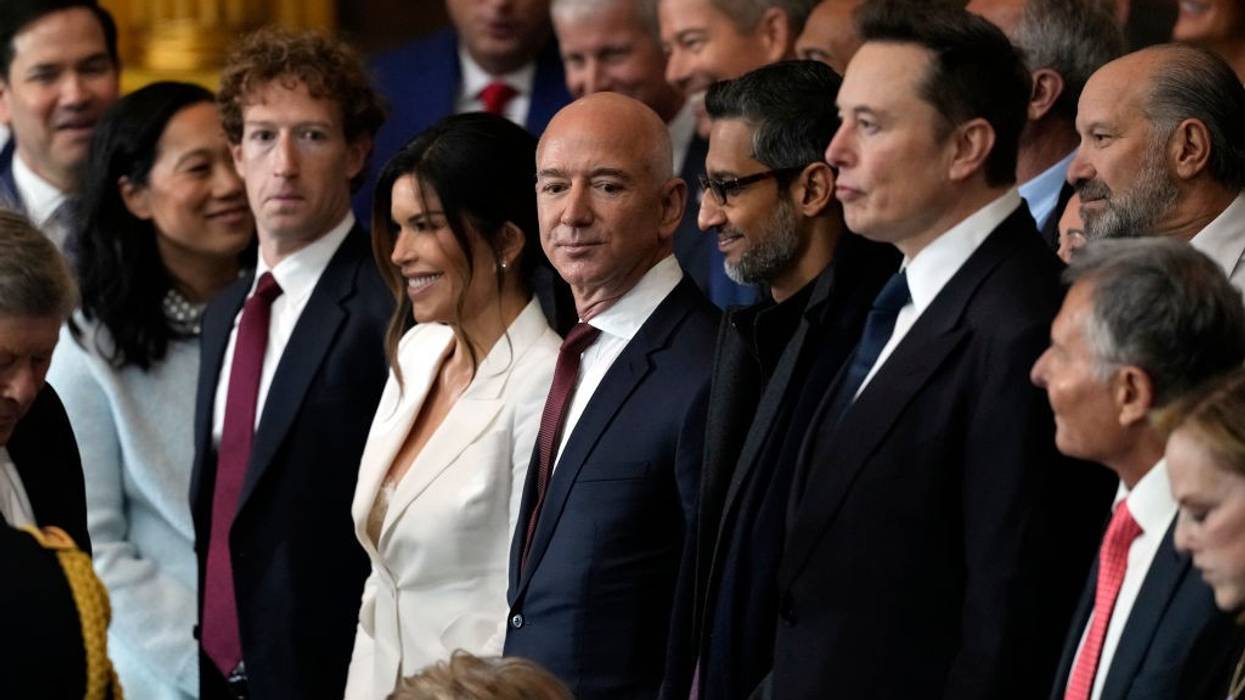
Fears of big tech platforms censoring progressive political movements are on the rise after social media giant Meta temporarily shut down the Instagram account of the No Kings coalition on Saturday.
According to No Kings, Meta suspended its official account, which was being used to post videos and images of demonstrations throughout the US, at approximately 1:00 pm Eastern time on Saturday.
The account was restored roughly two hours later, but its administrators were still blocked from posting new content for hours after.
When asked about why the account was taken down, Meta told No Kings that it "made a bad call," without elaborating.
Meta spokesperson Andy Stone would subsequently offer a more detailed explanation in a Saturday social media post.
"When accounts post, share or comment at very high frequencies it can trigger automated systems," Stone wrote. "That's what happened with the No Kings IG account in the lead up to today's day of action. Unfortunately, that automated action was clearly taken in error. Everything is now working as it should and we sincerely apologize."
Leah Greenberg, co-founder of No Kings sponsor Indivisible, was not buying Meta's official explanation.
"This excuse does not match the facts," Greenberg wrote. "We will look forward to a detailed explanation of what happened here and how Meta will take steps to make sure it doesn’t happen again."
Sen. Chris Murphy (D-Conn.) called Meta's suspension of the account "outrageous," and vowed to "put this on the January investigation list" should Democrats retake control of Congress after the 2026 midterm elections.
Sen. Chris Van Hollen (D-Md.) asked if Meta was "censoring free speech to appease [President] Donald Trump," and added that "we the people deserve answers."
The suspension of the No Kings account was just the latest example of alleged Big Tech censorship.
Bleecker Street, the distributor of director Alex Gibney's four-hour documentary about SpaceX CEO Elon Musk, told The Hollywood Reporter on Saturday that TikTok had permanently suspended the film's promotional account.
Messages shared with The Hollywood Reporter revealed that TikTok accused the Musk documentary account of violating its rules regarding political content, although it was not clear what those violations were.
The Hollywood Reporter noted that while "TikTok has no official affiliation with Elon Musk... it is partly owned by [Oracle founder] Larry Ellison, who gets a rough moment in the doc when a text from him offering to pay billions to the mogul to help finance his Twitter acquisition is shown."
In Brazil, the campaign of President Luiz Inácio Lula da Silva last week filed a legal complaint accusing Meta of shutting down accounts promoting his candidacy while using its algorithms to promote content produced by the campaign of far-right rival Flávio Bolsonaro.
As The Associated Press reported on Thursday, a judge in Brazil's top electoral court sided with Lula's campaign, ruling that Meta "cannot reduce the distribution of political content, restrict searches, or remove posts in a way that creates an imbalance between Lula and Bolsonaro."
Attorneys representing Lula's campaign said the lawsuit against Meta was necessary because content produced by the president and his supporters "faces delivery restrictions, without any justification or transparency," while "profiles acting as political operatives for the opposing side... receive a disproportionate and artificial reach, garnering more views even than global celebrities."
Meta has consistently denied that it is biased against Lula's campaign, and it accused the president in a court filing of using "minor technical issues" to spin "a political narrative" against the company.
Keep ReadingShow Less
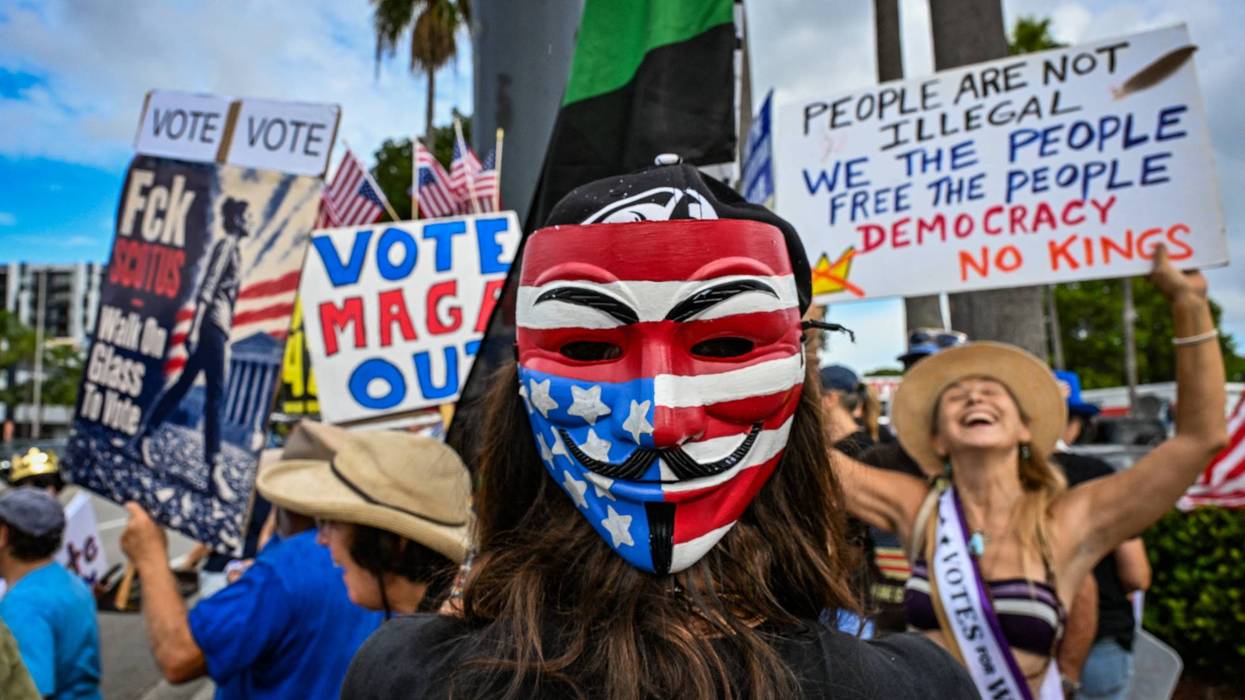
'Power Lies at the Hands of the People': Thousands of No Kings Events Rally Voters for 2026 Midterms
"Voting early is the first step in how we protect those rights. A vote cast today can't be lost to a long line or a closed polling place."
Oct 17, 2026
More than 3,000 No Kings rallies held in all 50 US states on Saturday sought to rally voters to the polls ahead of the 2026 midterm elections.
While past No Kings demonstrations have focused on protesting the policies of President Donald Trump and the Republican Party, Saturday's demonstrations were geared toward helping Americans ensure that their vote is counted in next month's elections.
On the No Kings website, organizers described the events as "a day of nonpartisan voter participation, being in community with each other, and making sure every eligible voter has a plan, knows their options, and is ready to make their voice count."
Speaking at a No Kings event in Atlanta, Georgia, Indivisible co-founder Leah Greenberg emphasized how important early voting will be to stopping any attempted meddling by the Trump administration in the elections.
"In America, power lies at the hands of the people, and we express our power at the ballot box," said Greenberg. "Nobody knows better than the folks here that that right was never given by the powerful, it was demanded by generations of dedicated, brilliant, fearless organizers who put their lives and their freedom on the line to demand that this nation live up to its promises."
Leah Greenberg: No Kings is a deceptively simple statement. It is a statement that in America, power lies at the hands of the people, and we express our power at the ballot box.
[image or embed]
— Indivisible ❌👑 (@indivisible.org) October 17, 2026 at 12:53 PM
Greenberg outlined how Trump has tried to attack the voting process throughout his second term, including his unprecedented mid-decade redistricting campaign and his attempts to restrict the right to vote by mail.
"They want chaos, fear, and confusion at the polls," said Greenberg. "Voting early is the first step in how we protect those rights. A vote cast today can't be lost to a long line or a closed polling place."
In a Thursday interview with journalist Steven Beschloss, Indivisible co-founder Ezra Levin said he hoped the No Kings rallies would drive "the biggest turnout in midterms in American history," which he said was important "because we have an authoritarian" in Trump "who will take advantage of any uncertainty."
Minnesota Democratic US Senate candidate Peggy Flanagan, whose state came under siege last winter from federal immigration agents, expressed support for the No Kings rallies in a Saturday social media post.
"This year, Minnesotans showed the world that we don't do kings," Flanagan wrote. "Today, we're doing it again. No matter where you are, make your voice heard."
The demonstrations also earned a thumbs up from Rep. Delia Ramirez (D-Ill.).
"No kings. No authoritarians. No warmongers. No despots," Ramirez wrote. "All across the country, Americans are taking to the streets and organizing to defend our neighbors and our democracy! Remember that you have rights."
Attendance estimates for Saturday’s No Kings protests were not available as of this writing, though past rallies have drawn as many as 8 million people nationwide.
Keep ReadingShow Less
See More
Most Popular