

SUBSCRIBE TO OUR FREE NEWSLETTER
Daily news & progressive opinion—funded by the people, not the corporations—delivered straight to your inbox.
5
#000000
#FFFFFF
To donate by check, phone, or other method, see our More Ways to Give page.
Daily news & progressive opinion—funded by the people, not the corporations—delivered straight to your inbox.
Over the course of a four-day visit to the Philippines this week, four representatives of Communications Workers of America who are on strike discovered that the extent to which Verizon is offshoring work is far beyond what has previously been reported and what the company publicly has claimed. Verizon is offshoring customer service calls to numerous call centers in the Philippines, where workers are paid just $1.78 an hour and forced to work overtime without compensation. Terrified that the public might find out about what has happened to the good middle-class jobs the company has shipped overseas, Verizon sent private armed security forces after peaceful CWA representatives and called in a SWAT team armed with automatic weapons.
"Executives repeatedly have claimed that Verizon offshores few jobs, and none that affect our members. Recently, our union was contacted by call center workers in the Philippines who revealed that Verizon was lying to our members and the public about the extent of the off-shoring of good American jobs, so we sent four CWA members to the Philippines to learn the truth," said CWA President Chris Shelton. "When our members uncovered how Verizon is padding its incredible profit margins by replacing good paying American jobs with poverty-wage jobs abroad, Verizon sent armed guards and a SWAT team after them."
CWA President Shelton continued: "Worse, Verizon has doubled down on its deception, claiming workers were on a 'vacation.' Let's be clear: being on strike, exposing Verizon's lies about off-shoring and being harassed by Verizon armed security guards is no vacation. Striking men and women from Massachusetts to Virginia are standing up for their families, their customers and to save middle class jobs for all Americans."
Appearing on a picket line in Syracuse on April 14th, Verizon CEO Lowell McAdam claimed that only a small part of the business' calls were sent to call centers in the Philippines. But CWA's delegation this week uncovered call centers in the Philippines staffed with workers during U.S. daytime hours taking every imaginable type of customer service call related to the company's wireline services. At one call center, the depth of Verizon's greed was exposed when the CWA delegation discovered that the offshore workers are paid just $1.78 an hour to answer calls from frustrated customers based in the U.S.
And despite Verizon's protestation that the strike is not affecting service, it has forced call center workers in the Philippines to work overtime hours since 40,000 highly trained U.S. employees went on strike, including about 13,000 US call center workers. Call center workers said they were forced to commit to 1-2 hours of overtime 5 days a week, plus a full 8-hour 6th day of overtime. Verizon's subcontractors do not pay workers additional overtime compensation for these hours.
"Verizon is terrified that the public might find out about what has happened to the good middle-class jobs the company has shipped to the Philippines. The truth is that Verizon is destroying middle-class American jobs so that it can pay workers $1.78 per hour and force them to work around the clock, rather than preserve good jobs in our communities. That's what our strike is about. Instead of profiting off of poverty abroad, Verizon should come back to the table and negotiate a fair contract that protects middle-class jobs," said Dennis Trainor, President of CWA District One.
One of Verizon's key demands in the strike is the ability to close several call centers based on the East Coast, which are staffed by union members who earn a living wage with decent benefits. The company also wants to reduce the percentage of call center work that must be handled within the state that it originates from, another ploy that enables it to shift work to low-wage, non-union domestic contractors, or to Filipino or Mexican call centers.
"Talking about poverty pay does not warrant a response from armed guards, but it seems Verizon is going to great lengths to try to hide their strategy of outsourcing middle-class American jobs in favor of poverty wages abroad," said CWA District 2-13 Vice President Edward Mooney.
When confronted about these issues at their corporate headquarters in the Philippines on Wednesday, May 11, Verizon officials refused to speak to the representatives. Presumably, it is difficult to justify paying workers $1.78 an hour when the company's CEO made $18 million last year, and the company has piled up $1.5 billion a month in profits for the past 15 months. When the CWA delegation left peacefully, Verizon had their armed private security team pull over the departing van on a public street. The Verizon security team then called in a SWAT team, who surrounded the car, bearing automatic weapons. One police officer with his face covered in a balaclava pounded on the van window with his automatic rifle, demanding that the labor representatives leave the vehicle.
The union representatives, including CWA staff, a representative of UNI (global labor federation) and representatives of KMU (a Filipino union), were allowed to leave without further issue, as they had done nothing illegal and the police had no cause to detain them.
Communication Workers of America (CWA) is America's largest communications & media union. CWA members work in telecommunications and information technology, the airline industry, news media, broadcast and cable television, education, health care, public service and education, law enforcement, manufacturing and other fields.

Trump claimed on social media that a diplomatic agreement would be signed on Sunday, but Iran's Foreign Ministry pushed back on that timeline.
President Donald Trump claimed Saturday that the US and Iran are on track to sign a diplomatic agreement this weekend, but added that "we have the ultimate alternative" if the process doesn't "work out."
"The 'ultimate alternative' sounds a lot like a nuclear threat," Sina Toossi, a senior fellow at the Center for International Policy, wrote in response to the president's Truth Social post. "Not the first time Trump has hinted at it."
The agreement Trump referenced is believed to be "memorandum of understanding" that's expected be fleshed out in "technical talks" that could begin next week, according to Pakistani Prime Minister Shehbaz Sharif, who is mediating the negotiations.
"We are closer to a peace deal than ever before," Sharif wrote on social media, echoing Iranian Foreign Minister Abbas Araghchi, who said on Friday that "the Islamabad Memorandum of Understanding has never been closer."
"Pending its finalization, the media should refrain from entering speculation about its content," Araghchi added. "In line with our responsible and transparent approach, all details will be shared with the public in due course."
On Saturday, a spokesperson for the Iranian Foreign Ministry cast doubt on the timeline put forth by Trump and Sharif.
"We will have to wait and see about the exact date of the signing of the memorandum of understanding, although it will not be tomorrow,” said Esmaeil Baqaei, as reported by Iranian state media. “The possibility of this happening in the coming days cannot be ruled out. However, due to the hesitation of the other side, we must be cautious in making any comments about this process.”
In his Truth Social post on Saturday, Trump declared that the Strait of Hormuz will be "OPEN TO ALL" immediately after the deal is signed—a condition that Iran has not confirmed.
"We look forward to working with Iran, and the entire Middle East, long into the future," Trump added. "Hopefully, this process will all work out quickly, easily, and smoothly. If it doesn’t, we have the ultimate alternative, hopefully never to be used again!"
Trump has repeatedly issued genocidal threats against Iran since launching the illegal war in late February, openly declaring his intention to target Iran's civilian infrastructure and wipe out its "whole civilization." Experts say such threats, even if they aren't acted on, constitute war crimes under international law.
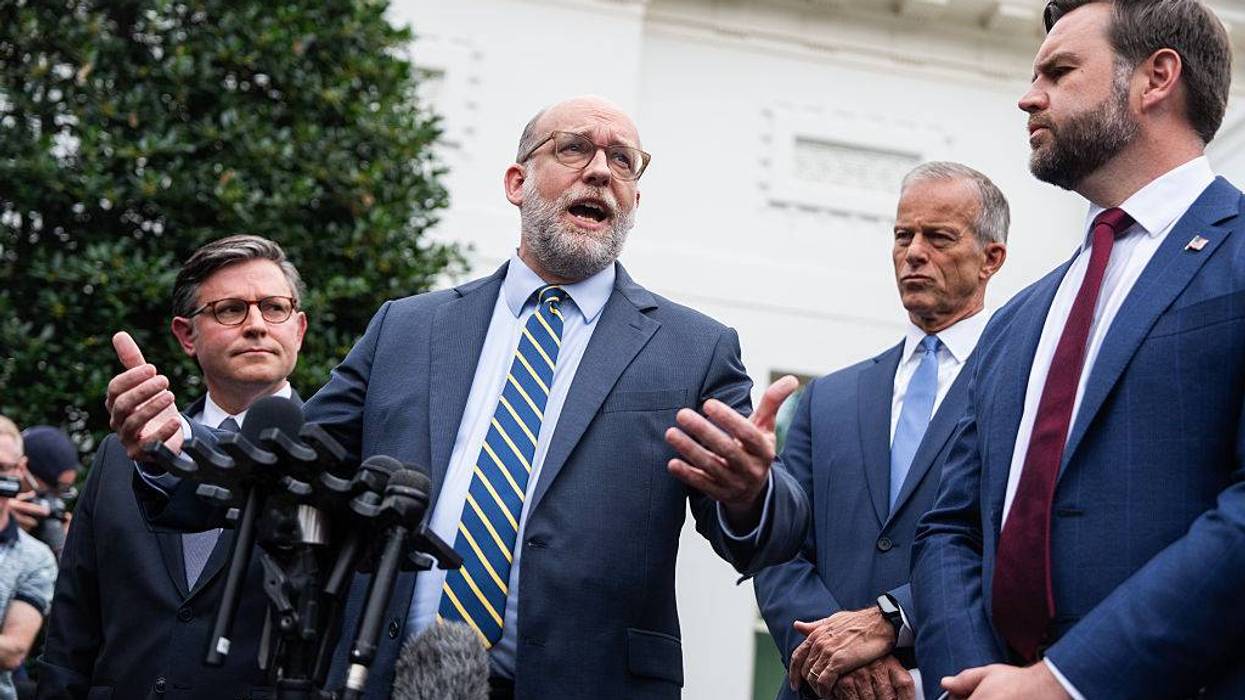
"The test will be a simple one: Are you sufficiently loyal to the president? If the answer is no, it will result in the denial of lifesaving disaster relief, funding for research into cures, the closure of Head Start offices, and more."
A Trump White House plan to give political appointees more power over federal grant money has sparked alarm among scientists, public health organizations, environmental groups, and others who fear that the proposal amounts to an attempt to subordinate critical funds to the whims of the president and his far-right allies.
More than 300 organizations signed a joint letter on Friday calling on White House budget director Russell Vought, the proposed rule's architect, to extend the public comment period that's set to end on July 13, warning that the "scope and impact of [the Office of Management and Budget's] rule is vast."
"The rule will impact the entirety of government grant-making across the United States," the groups warned. "OMB itself says the revisions suggested would relate to over $179 billion of funds to small entities."
Politico, which exclusively obtained the letter, noted that the "proposed rule has already garnered over 15,000 public comments, with many expressing alarm that the changes could undermine research across fields."
Under Vought's rule, federal agencies would be required to perform "pre-issuance reviews" of federal grants—funds appropriated by Congress—to ensure their distribution is consistent with "applicable law, federal agency priorities, and the national interest."
The rule lays out a number of standards that political appointees at federal agencies must screen for when deciding whether an organization can receive federal grant dollars. For instance, the rule would prohibit the distribution of federal grants to organizations that "promote anti-American values" or support "ideologies that deny the biological reality of sex or the sex binary in humans."
The New York Times reported that the consequences of Vought's rule "could fall hardest on health and science, a field in which [President Donald Trump] has pursued some of the steepest cuts in his second term."
"In exchange for federal assistance, researchers would face limits on the subjects that they can explore, the foreign labs with which they may collaborate and even the conferences at which they can appear," the Times noted. "Dr. Georges C. Benjamin, the chief executive of the American Public Health Association, a professional organization and advocacy group, said the policy could 'devastate innovation, science, and research' in the United States."
"This is an executive power grab that would hand presidential political appointees unchecked control over more than a trillion dollars that Congress appropriated in the interests of all Americans."
Earlier this month, Lawyers for Good Government and the Environmental Protection Network said that "if finalized, the rule would put senior political appointees in charge of approving and canceling individual grants, while stripping recipients of due process rights" while attaching "ideological conditions to nearly every federal dollar, raising First Amendment and equal-protection concerns."
The two organizations published a fact sheet warning that the proposed rule has the potential to halt billions of dollars in funding that communities across the US depend on for "health, public education, scientific research, public safety, and economic development projects."
“This is an executive power grab that would hand presidential political appointees unchecked control over more than a trillion dollars that Congress appropriated in the interests of all Americans,” said Jillian Blanchard, senior vice president for climate change and environmental justice at Lawyers for Good Government. “Conditioning funding for critical programs on ideology and viewpoint discrimination, while erasing basic due-process protections, violates freedoms of speech, equal protection, and eviscerates Congress’ power of the purse.”
Democratic lawmakers have also sounded the alarm about Vought's proposal. Rep. Rosa DeLauro (D-Conn.), the top Democrat on the House Appropriations Committee, said Thursday that she has given her Republican colleagues two opportunities to denounce Vought's rule—and they declined both times.
"Vought continues to attempt to steal from communities across the country. Now, he is trying to set a new political test on grants for a wide swath of the federal government," said DeLauro. "The test will be a simple one: Are you sufficiently loyal to the president? If the answer is no, it will result in the denial of lifesaving disaster relief, funding for research into cures, the closure of Head Start offices, and more. If you are not loyal enough, if you speak out against this administration, the president and his cronies will take away resources Congress provided."
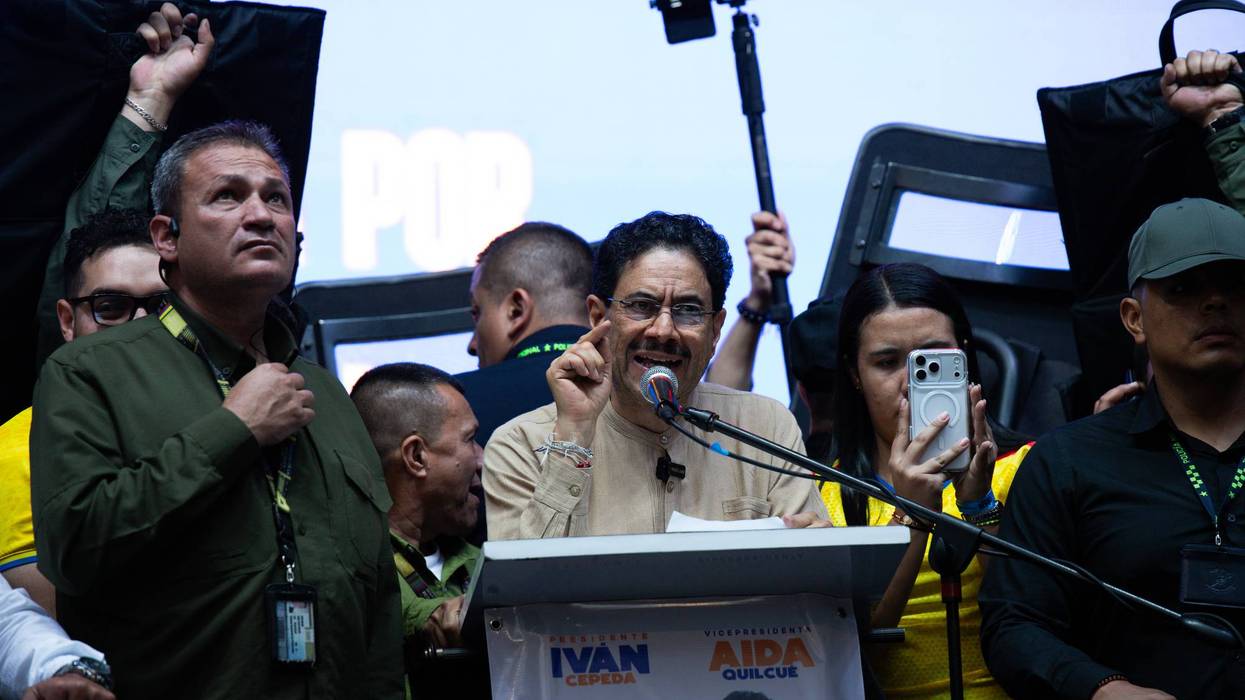
"The future of Colombia must be decided by the Colombian people—not American politicians with their own agenda."
A group of Democratic members of the US Congress on Friday condemned President Donald Trump and Republican lawmakers' attempts to influence the results of Colombia's upcoming presidential runoff, calling it an "insult" to the Colombian people's sovereignty.
"We see actions by US President Donald Trump and other members of Congress to endorse, advocate for, or otherwise tip the scales to a particular candidate as detrimental to the democratic rights of the Colombian people," said the lawmakers, led by Rep. Jim McGovern (D-Mass.). "The future of Colombia must be decided by the Colombian people—not American politicians with their own agenda."
The statement came days after Trump publicly injected himself into Colombia's presidential contest by endorsing far-right candidate Abelardo De La Espriella, a 47-year-old defense lawyer who has pledged to "disembowel the left."
“The results of this Election are very important to the future of Colombia and its relationship to the United States,” Trump wrote in a Truth Social post earlier this month. “Because of his tremendous accomplishments in life, and his political support for me, personally, it is my Honor to give Abelardo my Complete and Total Endorsement.”
The US president said that if De la Espriella wins, he "will have the total support and strength of the United States behind him."
The Center for Economic and Policy Research noted that "the implicit threat in Trump’s endorsement of De la Espriella is that Colombians will be punished—through reduced aid, tariffs, sanctions, etc.—if they vote for a political leader not backed by the United States."
Two Republican lawmakers, Rep. María Salazar of Florida and Sen. Bernie Moreno of Ohio, have also endorsed De la Espriella. The New York Times reported that "before Mr. Trump posted his full-throated endorsement of Mr. De La Espriella, Mr. Moreno held a call with reporters in which he said US officials had 'vetted' Mr. De La Espriella and found him to be 'impeccable.'"
De la Espriella will face leftist Sen. Iván Cepeda, an ally of incumbent President Gustavo Petro, in the June 21 presidential runoff.
Petro has criticized his US counterpart for meddling in Colombia's presidential race, urging Trump in a recent social media post to "not intervene in the campaign and allow the people of Colombia to decide freely."
"Whoever wins will maintain the friendship of more than two centuries between Colombia and the US," Petro added.
Earlier this week, Petro planned to meet with New York City Mayor Zohran Mamdani during the Colombian leader's trip to the US, but "the Trump administration effectively nixed it in a behind-the-scenes effort," The Washington Post reported.
"The Colombian government quietly called off the event following a meeting between US and Colombian officials in Bogotá in which State Department officials made clear that this week’s engagement was unacceptable, a move Colombian officials interpreted as a threat to arrest Petro on site if he proceeded," the newspaper revealed. "A State Department official told The Washington Post that the visit would violate visa restrictions the US imposed against Petro following his comments last year criticizing US support of Israel’s war in Gaza and imploring US soldiers to disobey presidential orders to kill."