

SUBSCRIBE TO OUR FREE NEWSLETTER
Daily news & progressive opinion—funded by the people, not the corporations—delivered straight to your inbox.
5
#000000
#FFFFFF
To donate by check, phone, or other method, see our More Ways to Give page.
Daily news & progressive opinion—funded by the people, not the corporations—delivered straight to your inbox.
Kathy Mulady, 206-992-8787, k.mulady@peoplesaction.org
Today, as the Consumer Finance Protection Bureau releases their long-awaited proposed rule on payday lending, opening the period for public comment, members of National People's Action (NPA) across the country are taking action and speaking up.
NPA, which has been working to reform the predatory lending industry for years, is pleased that the process is moving forward, but is disappointed with the initial proposal. NPA and the families we work with, pledge to continue fighting to make sure the protections are as strong as possible.
"We've been working towards this day for years," said George Goehl, executive director of National People's Action. "For decades, predatory payday lenders have gotten away with taking money from people who didn't have much to begin with. With interest rates north of 300 percent, and a business model based on trapping people in debt, they've been allowed to strip wealth from families and communities.
"The CFPB must live up to its mission of protecting consumers from deceptive and abusive financial practices by writing a rule that will put a stop to the abuses that are endemic in the small dollar lending industry," said Goehl.
"These products aren't safe," said Ken Whittaker, a Detroit resident and member of National People's Action affiliate, Michigan United. "I took out two loans for $700 which spiraled into a cycle of debt that ended up costing my family more than $7,000. These predatory lenders harassed my family and reached into my bank account to take most of my paycheck so I could barely survive. They even garnished my tax returns."
National People's Action is calling for a strong and broad payday, car title and payday installment lending rule. It must meet three basic criteria to protect American families:
The rule should put a stop to the constant loan rollovers and refinances that are rife in the industry and are hallmarks of the debt trap.
The rule should prevent lenders from taking money directly from a borrower's bank account or holding unlimited title to their car.
"We're clear about what the CFPB needs to do to fulfill their mission of protecting consumers. They need to write a rule that shuts down the debt trap," said Liz Ryan Murray, Policy Director for National People's Action. "Time after time, we've seen this industry worm their way through loopholes much smaller than these. That's why we need a rule that's stronger than this proposal. Millions of people across the country are depending on the CFPB to get this right and we're going to make sure the Bureau hears from them."
National People's Action and its partners across the country plan to generate tens of thousands of comments to the Consumer Financial Protection Bureau from borrowers, faith and community leaders, and people of conscience calling on the CFPB to ensure the final rule contains these commonsense safeguards.
Members of the organization from across the midwest are traveling to Kansas City today to offer testimony at the CFPB's field hearing. They'll be joining members of PICO National Network and other members of the Stop the Debt Trap Coalition at a public rally at 12:30 p.m. in Barney Allis Plaza. They will demand strong rules - a demand that will be echoed by events in dozens of other states including Illinois, Idaho, Michigan, Wisconsin, Nevada and Tennessee.
Later in the afternoon, members of National People's Action who are in Kansas City will be visiting a payday storefront, calling on lenders to stop deceiving their members about the CFPB's proposed rules.
"Payday lenders thrive on lies and deception," said Cherie Mortice a community leader from Des Moines, Iowa and a member of National People's Action affiliate Citizens for Community Improvement. "They've spent thousands of dollars trying to win over elected officials and deceive customers about this common sense new rule from the CFPB. We want to make sure the industry doesn't interfere with the public comment period, when our communities are supposed to get their say."
For more information, or to interview George Goehl, Ken Whittaker, Liz Ryan Murray, or Cherie Mortice, please contact Kathy Mulady at k.mulady@peoplesaction.org or 206-992-8787.
People's Action builds the power of poor and working people, in rural, suburban, and urban areas to win change through issue campaigns and elections.

One commentator called it "a cheap-ass bribe"—since Trump's Iran War caused prices to soar, $10 is now barely enough to buy two gallons of gas in Michigan.
As President Donald Trump's Iran War drives up gas prices, the wife of Michigan's Republican Senate candidate Mike Rogers was seen resorting to a desperate—and legally dubious—tactic to persuade voters to tick the box for her husband: handing out $10 gas cards.
Kristi Rogers, the wife of the former GOP congressman, was filmed Wednesday strutting around the parking lot of a Freedom Fuel station in Detroit, wearing a red pantsuit, black stilettos, and a large "Mike Rogers for Senate" sticker on her lapel, approaching lucky drivers with the gifts.
One interaction, captured by the Detroit journalist Sam Robinson, shows Rogers telling a driver who'd just finished filling his tank: "You should have gotten me before you filled up. I've got a $10 gift card!"
Other videos show Rogers attempting to sell voters on her husband's proposal to suspend state and federal gas taxes, which she claimed would save voters about $10 per fill-up.
However, she did not appear to address the primary reason fuel prices have shot up in the first place: the unpopular US-Israeli war with Iran that her husband has supported before abruptly reversing his stance as the election approached.
As of Thursday, $10 is barely enough to buy two gallons of gas in Michigan, according to data from the American Automobile Association. Gas prices in the state have reached $4.58 per gallon as of Thursday, up from just $2.85 before Trump launched the war—an increase of about 61%.
Rogers' Democratic opponent, former Detroit public health official Abdul El-Sayed, has savaged Rogers on the campaign trail for supporting the war, tying it directly to voters' affordability struggles.
The message seems to have resonated: A late-September poll by The New York Times and Siena College showed about three-quarters of Michigan voters disapprove of Trump's handling of gas prices and the overall cost of living. In that same poll, El-Sayed was shown with a five-point lead over Rogers in the race for the US Senate, which could determine whether Democrats retake the chamber.
Under federal law, paying someone to register to vote or cast a ballot can carry a potential penalty of up to five years in prison. Michigan law suggests the handouts could constitute illegal vote-buying if they were intended to induce people to register to vote, cast a ballot, or support a specific candidate.
None of the videos show Rogers directly telling card recipients that the gift was conditional. However, recipients told Robinson that Rogers asked them to "consider voting for my husband." Along with the gift cards, drivers were also given campaign literature promoting Rogers and bashing El-Sayed.
For at least one man who received a card, the message was clear: "Vote Mike Rogers on voting day!" he shouted to the camera.
The Rogers campaign did not immediately respond to a request for comment about who purchased the cards or whether voters were told they needed to do anything in exchange for them.
At any rate, it's unclear whether $10 will make the difference on Election Day. A Fox News poll published Wednesday showed that 50% of registered voters nationally were "extremely" concerned about gas prices and 58% were extremely concerned about inflation.
In the same poll, voters said they trusted Democrats more than Republicans to handle high gas prices by a margin of 12 points and on inflation by a margin of 16 points.
Trump has been criticized for being out of touch with how his policies affect voters. He's emphasized that he didn't think about Americans' financial hardships "even a little bit" when prosecuting the Iran War, and he's suggested higher gas prices were a good thing. Earlier this month, he told voters at a rally that higher gas prices are "a small price to pay for keeping the world safe."
Political commentator and activist Charlotte Clymer suggested that Rogers' apparent wealth could make her stunt backfire.
"Weirdo ethics here aside," Clymer wrote on social media, "the optics of wearing an expensive outfit and shoes while handing out $10 gas cards—two gallons in Michigan—kinda undermines the whole effort."
"Not only is it illegal," another commentator remarked. "It's also a cheap-ass bribe."

Hours before the president backed off of the plan, a poll found 8 in 10 Americans opposed it.
As poll numbers showed the vast majority of Americans were repulsed by the idea of livestreaming the execution of Nidal Hasan, the former military psychiatrist convicted of killing 13 people at Fort Hood in 2009, President Donald Trump backed away from the plan Thursday.
On Truth Social, Trump wrote that he still believed that "streaming the execution for all to see might have been a strong deterrent for the World to witness how America deals with Terrorists and SCUM like Hasan."
But the president suggested the White House had received word that "many very good and well meaning people would rather not watch him die, through streaming, or through any other visual device," and said the execution by firing squad, scheduled for December 3, will not be publicly displayed.
Trump announced the decision hours after a nationwide poll by The Washington Post, ABC News, and Ipsos found that 8 in 10 Americans opposed the plan to livestream Hasan's state killing, regardless of their views on the death penalty in general or on executing the convicted murderer.
Nearly 70% of people who supported the execution said it should not be livestreamed. The plan was strongly opposed across the political spectrum, with 91% of Democrats, 83% of independents, and 64% of Republicans disapproving of the proposal—aggressively pushed by Defense Secretary Pete Hegseth—to make the killing viewable to anyone.
Among Republicans who identified themselves as part of Trump's far-right MAGA movement, 55% said they opposed the livestream plan.
Men who were identified as MAGA were the only group in which a majority supported the livestream; 57% said they approved of it.
Hegseth said last week that the execution would be streamed “because people need to understand that there’s serious consequences for these types of things.” Trump expressed strong approval of the plan, while Vice President JD Vance, a Catholic convert, tepidly attempted to distance himself from it, saying he would not personally watch the execution. A number of Republicans in Congress spoke out against the plan.
While Hegseth defended the plan as one that was aimed at deterring violent crimes like the Fort Hood killing, fascism scholar Ruth Ben-Ghiat said a livestreamed execution could only be "an attempt to normalize extreme violence, ritualize violence, militarize the country, and make violence entertaining so when they ask you to commit violence in their name, you will be ready."
The United Nations Office of the High Commissioner for Human Rights expressed horror at the proposal, saying it "would breach the absolute prohibition of torture," and Amnesty International called it "barbaric and deeply shocking."
In the Post/ABC/Ipsos poll released Thursday, one independent in Minnesota, Lawrence Sagstetter, said the livestream would be "going too far."
“It’s just going to cause more of an uproar, not only nationally but internationally," he said.
A Republican from New York, Bruce Gonka, said Hegseth's plan was "all for shock, and we don’t need that. We’re better than that."
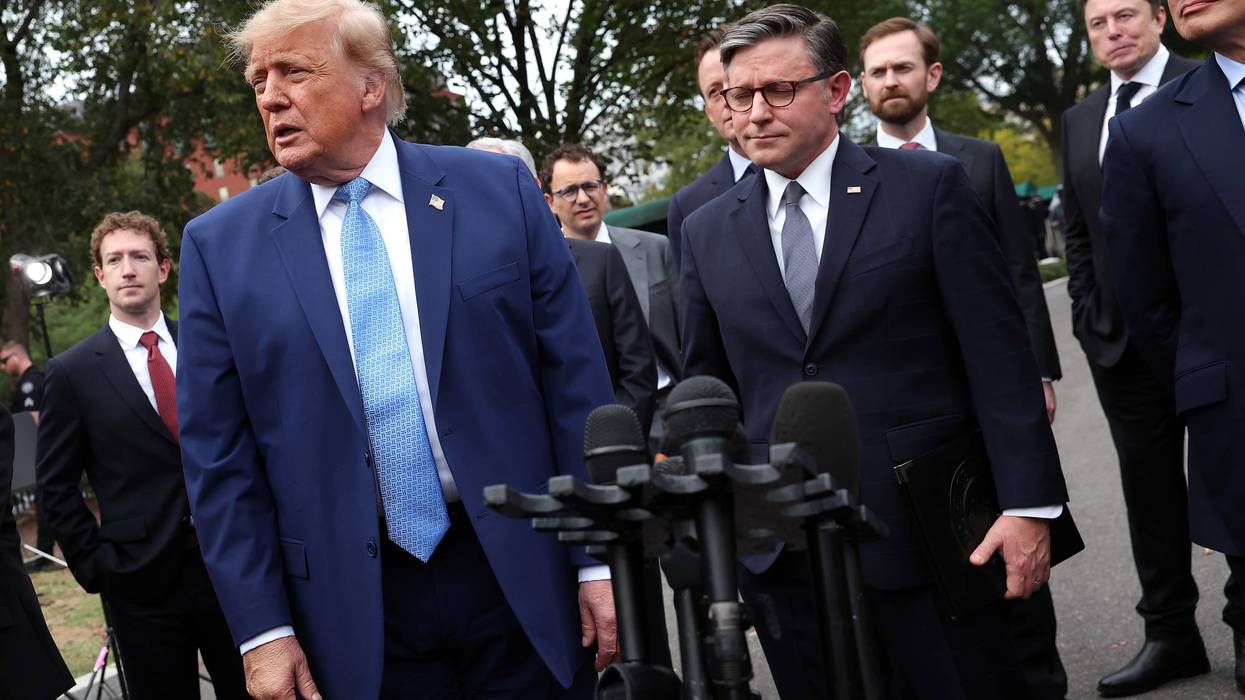
One new survey shows that nearly two-thirds of independents believe the US economy is heading in the wrong direction—up from 48% before President Donald Trump took office.
Polling data released Thursday shows that key segments of the American electorate—particularly independents and rural voters—are increasingly disaffected by President Donald Trump's stewardship of the US economy as inflation accelerates, real wages fall, and the historically unpopular war with Iran continues with no end in sight, spelling a potential midterm disaster for the Republican Party.
A Harris poll conducted for The Guardian shows that nearly two-thirds of independents believe the US economy is heading in the wrong direction—up from 48% in September 2024, before President Donald Trump won reelection to his second White House term.
"Even within the Republican ranks, optimism has waned," The Guardian reported. "In February 2025, just a few weeks after Trump was inaugurated, 39% of Republicans said the economy was getting better. By February 2026, just before the US launched attacks against Iran, that optimism was up to 49%. In the latest poll, just 28% of Republicans said the economy is getting better."
Two-thirds of participants in the new Harris survey pointed to gas and grocery prices—both of which have risen significantly during Trump's second term—as their top issues heading into the November midterms. Living expenses, healthcare costs, and foreign affairs also ranked as important issues.
The poll also found that 40% of rural voters—a key constituency of the president's—are in "survival mode," unable to withstand one surprise bill.
"When asked what is most affecting today’s gas prices, 46% of rural Americans said the US government compared with 28% of Republicans who said the same," The Guardian reported. "Republicans were the least likely of any group to blame the US government, instead spreading the blame across oil companies, the Iranian government and natural economic fluctuations."
Separately, The Associated Press-NORC Center for Public Affairs Research released polling on Thursday that reinforces the Harris survey's findings, showing that "the critical bloc of voters who identify as independents is much more likely to have a negative view of the Republicans than of the Democrats."
The AP-NORC poll also found that just 36% of US voters approve of Trump's handling of the presidency. That same percentage has a favorable view of the Republican Party, the survey shows.
"Democrats and independents are much likelier than Republicans to want a full overhaul of the country’s direction," AP reported. "But even Republican voters are still looking for something different. Slightly fewer than half, 45%, want substantial change, while 13% want upheaval."
An additional survey released on Thursday by Project 270 shows that 67% of swing-state voters want to "end US wars overseas," 51% "recognize Israel's actions in Gaza as a genocide," and 50% support halting "all military aid to Israel"—positions that run counter to the Trump administration's views and actions.

"Those who work so hard to build Brazil also deserve having time to live."
Brazilian President Luiz Inácio Lula da Silva celebrated on Wednesday night after Brazil's legislature overwhelmingly approved a constitutional amendment to end the country's six-day work week.
Under the amendment, which Lula has made a central plank of his reelection campaign, the work week will be shortened to 40 hours without a salary cut.
The amendment is projected to give an extra day off to millions of workers who previously had to work for six days under the old 44-hour work week.
In a Wednesday social media post, Lula celebrated the amendment's passage as "an historic achievement for millions of workers."
The Brazilian president said the shorter work week will mean "more time to live, rest, be with family, be with children as they grow, take care of yourself, and enjoy life."
"Those who work so hard to build Brazil also deserve having time to live," Lula added.
Polls show that Lula is currently locked in a tight race against rival Flávio Bolsonaro, son of former Brazilian President Jair Bolsonaro, who is still serving a criminal sentence for efforts to instigate a coup after his loss in the 2022 election.
According to a Wednesday report in The Guardian, the shortened work week could give Lula a boost among key demographics ahead of the October 25 presidential runoff.
Specifically, The Guardian noted that "the change is expected to affect mainly workers in retail, restaurants, and hotels," which were "one of the groups which Lula lost the most support from since the 2022 election, when he defeated Jair Bolsonaro."
Victor Escobar, a researcher at the Laboratory of Parties, Elections, and Comparative Politics, told The Guardian that the amendment's passage "could indeed benefit Lula’s reelection campaign."
Polls show that ending the six-day work week is overwhelmingly popular with Brazilian voters and Bolsonaro recently came out in its favor after months of signaling opposition.
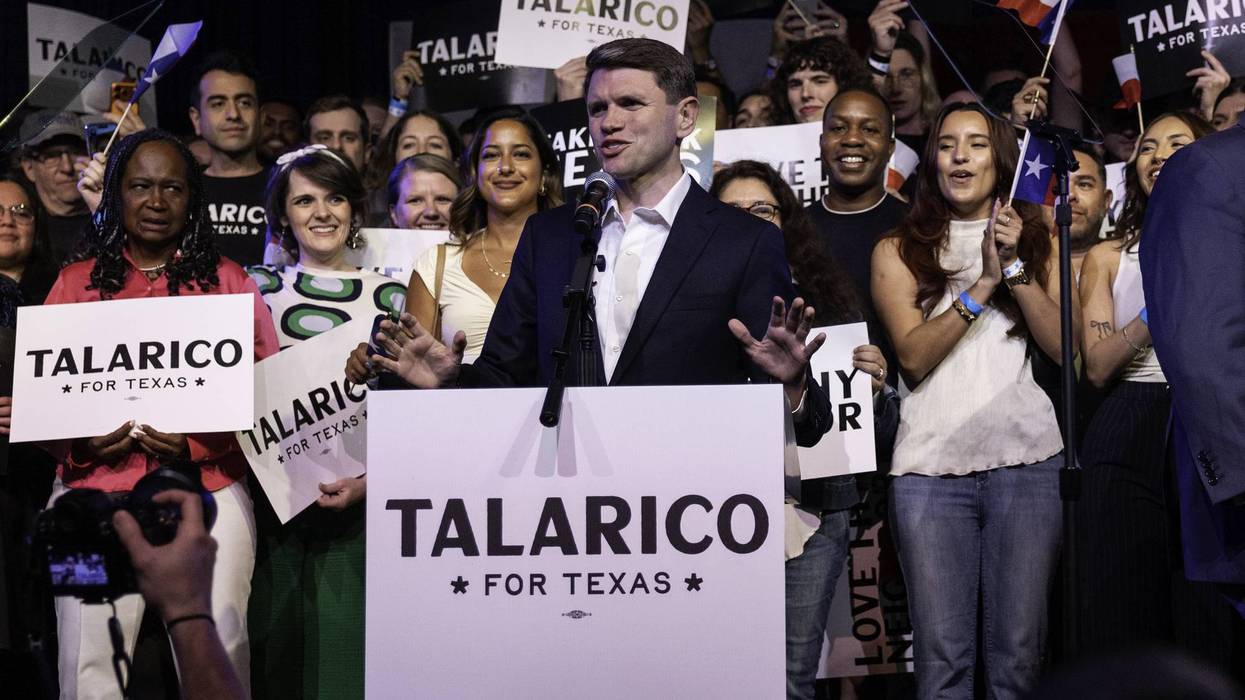
"This people-powered movement is going to change this broken, corrupt political system,” said the Texas Democratic running to beat Ken Paxton for the state's open US Senate seat.
James Talarico, the Democratic candidate for US Senate in Texas, says that his near record-breaking fundraising haul in the third quarter—one built almost entirely on small-dollar donations—is proof that grassroots energy is on his side as he faces off against the full weight of the Republican Party's money machine, including the world's richest man Elon Musk.
“Grassroots contributors from across Texas are coming together to end billionaire control over our politics and bring down costs for working families,” Talarico said in a statement as his campaign announced raising $64 million during the most recent 3-month period, the highest figure for any Senate candidate this cycle.
“Thanks to the support of everyday Texans," added Talarico, "this people-powered movement is going to change this broken, corrupt political system.”
According to Politico, citing figures shared exclusively by the campaign, Talarico has "raised more than $134.3 million since launching his campaign in September of 2025. More than 1.3 million donors contributed, the campaign said, as Democrats slowly reconcile themselves to their long-held but often fumbled dream of gaining a statewide perch in Texas. About 97% of those donations were of $100 or less."
Despite the massive fundraising haul, Politico reports that Talarico—fighting to defeat Republican nominee Ken Paxton for the open seat—has been outspent by an estimated two-to-one by his GOP opponents.
During a campaign event in February, Talarico explained to potential voters how the billionaire class is the one waging a class war against workers—and coming out on top year after year.
“It’s the billionaires waging war against the rest of us, and right now the billionaires are winning,” he said at the time. “They’ve been winning for 50 years. Trickle-down economics is not a theory, it is theft.”
Talarico continued by saying billionaires have been “stealing from the American people, stealing the wealth that we created.”
“It’s why everyone is so angry right now,” he argued. “It’s why, no matter how hard you work, you can’t seem to get ahead. The American people are not asking for a whole lot: A job we don’t hate, a house big enough to raise a family in, and a little left over so we can go on vacation every once in a while. That is a lot harder than it should be in America.”
A young man at our town hall asked if I was pushing class warfare.I told him: “We already have class warfare in this country — billionaires are waging war on the rest of us.” https://t.co/w238OfB8yH
— James Talarico (@jamestalarico) February 12, 2026
NBC News reports that "Republican outside groups have spent more than $175 million dollars to boost Paxton and attack Talarico since Sept. 1, according to AdImpact, trying to close off one pathway for Democrats as they try to take the GOP’s Senate majority."
An unnamed Democratic strategist who spoke to Politico said that despite Talarico's impressive fundraising, it's "still an uphill battle" for the Democratic state legislator.
“He’s fighting this battle basically alone," the person said, "while Elon Musk and the full weight of the GOP fundraising apparatus outspends him 2:1."
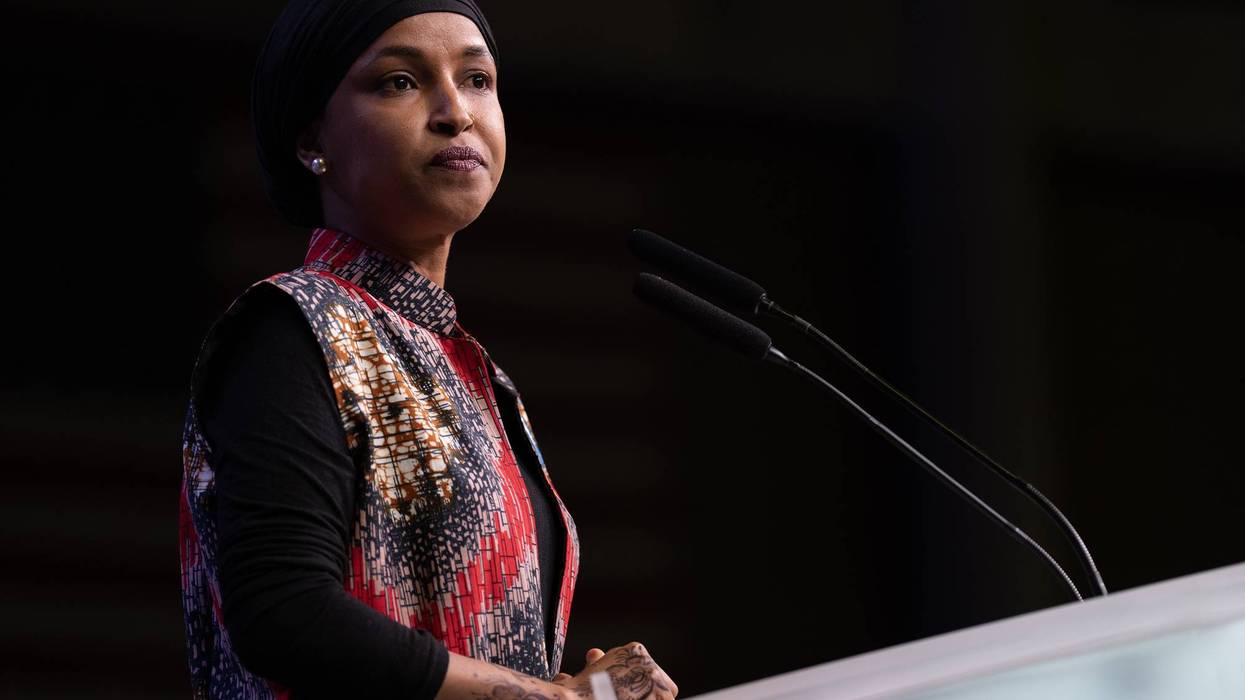
"Stripping the citizenship of opposition elected officials is really, really far down the road to fascism."
"I have rarely wanted to be wrong more," said one journalist Wednesday night after The Wall Street Journal confirmed what many supporters of US Rep. Ilhan Omar had suspected: that the Department of Homeland Security's raid on her home this week was part of an investigation that is ultimately aimed at deporting her.
The Journal reported that US officials confirmed the Trump administration aims to revoke Omar's (D-Minn.) citizenship, which she obtained in 2000, five years after she arrived in the US with her family from a refugee camp in Kenya. Omar is originally from Somalia, and President Donald Trump has made Somali Americans a key target of his mass deportation agenda and his racist attacks on immigrant communities.
Agents with Homeland Security Investigations (HSI), part of US Immigration and Customs Enforcement (ICE), seized Omar's passport, cellphone, personal computers, and notebooks, according to the WSJ, when they searched her home in Washington, DC.
Authorities have also issued more than a dozen subpoenas and are seeking testimony from people including Omar's family members before a grand jury.
A Justice Department official told the WSJ that the agency plans to build its case on allegations that Omar lied about her age when she became a citizen.
Federal investigators have been examining whether Omar's father, who died in 2020, altered her age to say she was 17 instead of 18 on immigration paperwork when he applied for citizenship. Doing so would have allowed Omar to acquire citizenship through her father.
The congresswoman, who is currently running for a fifth term, has previously denied committing immigration fraud, which Vice President JD Vance has openly accused her of. Other Republican elected officials have explicitly attacked Omar for her criticism of Israel and for being a Muslim, with Rep. Randy Fine (R-Fla.) calling her a "terrorist."
Trump has suggested the progressive lawmaker should be deported for “always complaining” and has called to "denaturalize migrants who undermine domestic tranquility.”
Journalist Peter Sterne said Wednesday evening that "many on the left suspected" the administration was attempting to deport Omar, "but it’s still wild to see the WSJ confirm it."
Dylan Williams of the Center for International Policy emphasized that the raid and investigation—carried out just weeks before the midterm elections and as Americans are already voting, though the Justice Department typically does not take actions against candidates just before an election—are "an attempt by the Trump administration to stir up its flagging base ahead of elections that are going to be brutal for them."
"Nonetheless, we need to fight this fascist, un-American abuse of power, hold those responsible accountable, and stand with Ilhan Omar," said Williams.
Aaron Reichlin-Melnick, a senior fellow at the American Immigration Council, noted that "a case of this magnitude would take years to wend its way through the courts," and said DHS would have to initiate deportation proceedings after Omar was denaturalized.
Still, a number of observers wondered why many prominent Democrats—like Senate Minority Leader Chuck Schumer (D-NY) and vocal Trump critic Sen. Cory Booker (D-NJ) have stayed quiet about the raid on Omar's house.
"Democrats, nice time to do a press conference united in defense of Ilhan Omar and condemning the Islamophobia against Muslim candidates," said commentator Wajahat Ali.
New York state Assembly Member Diana Moreno (D-36) said of the WSJ's reporting, "This is either the breaking point of our democracy or the moment we start fighting like hell to win back this country from the authoritarian demons in the White House. I stand with Ilhan Omar."
"Workers are losing the race between wages and prices," said one economist. "It's no wonder workers feel left behind in the current economy."
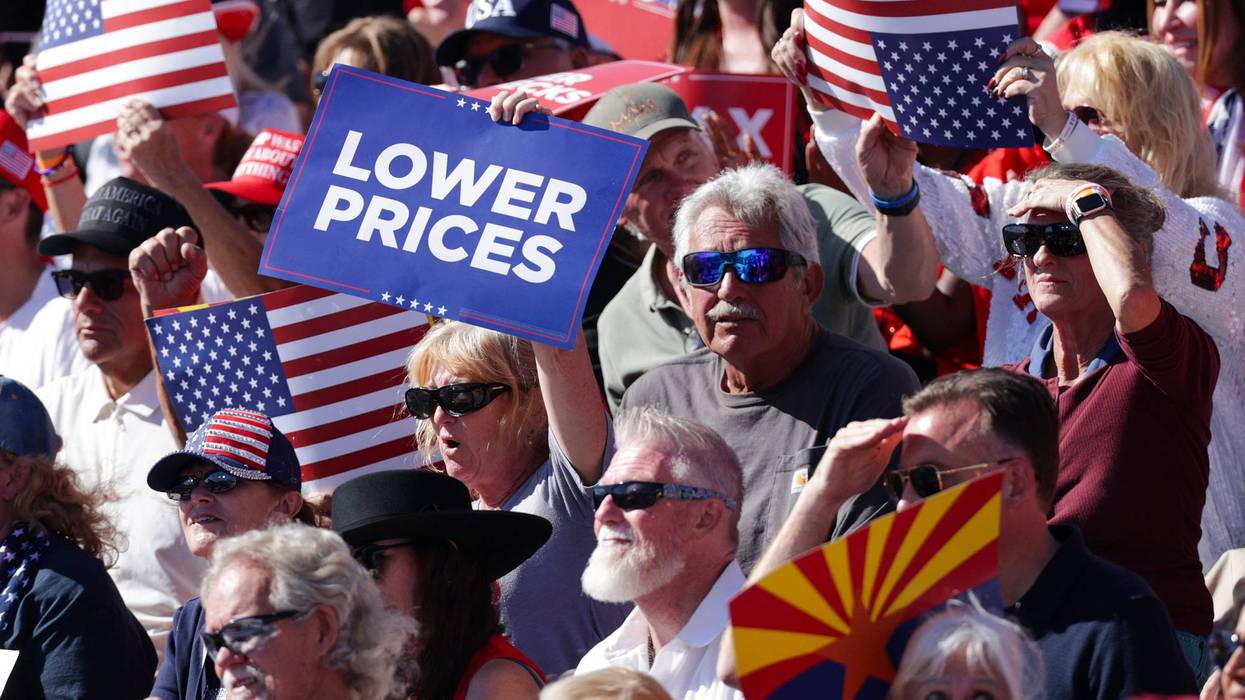
President Donald Trump attempted to spin high oil prices as a boon for the United States at a rally in Arizona on Wednesday, just hours after new federal data showed that inflation reached its highest level in months in September.
"Because of the price of oil, Texas and Oklahoma and North Dakota and all these places, we're making a fortune," Trump declared, referring to states that produce large amounts of crude oil. Those states are home to major fossil fuel companies that have reported windfall profits amid Trump's illegal war on Iran.
Trump insisted that gas prices—currently at an average of $4.33 per gallon for regular gas and $6.32 for diesel—would tumble once the Iran war ends, but his administration has repeatedly given false timelines for the deadly conflict and has shown no indication that it is willing to reach a lasting diplomatic agreement.
Trump, who has profited massively from his second term in the White House, is a major investor in oil and gas companies. According to one recent analysis, the president's investments in fossil fuel stocks have boosted his net worth by up to $15.5 million since January.
Working-class Americans, meanwhile, are struggling to make ends meet as high gas prices compound a broader affordability crisis that extends to food, housing, and other necessities. A tracker maintained by the Watson School of International and Public Affairs estimates that American consumers have paid an extra $135 billion combined in fuel costs since the start of the Iran war—roughly $1,030 per household.
Wage growth has not kept up with inflation, which rose to an annualized rate of 3.7% last month.
" Workers are losing the race between wages and prices," Elise Gould, senior economist at the Economic Policy Institute, wrote on Wednesday. "Nominal wage growth continues to decelerate as workers lose bargaining power at work. Workers simply don't have the leverage to bid up their wages. Reduced leverage and higher prices translated into falling [year-over-year] real wages for six months in a row."
"Workers have seen zero progress on affordability compared to January 2025," Gould added. "Real wages are essentially stagnant as workers' leverage has declined and prices have risen. It's no wonder workers feel left behind in the current economy."
A Harris poll published by The Guardian on Thursday shows that three-quarters of US voters are concerned about a recession, and a "vast majority of Americans agreed that there is an affordability crisis, including 96% of Republicans."
The public "has suffered irreparable harm—including lost loved ones, disturbing cyberattacks, and now a plausible threat of civilizational collapse," says one of the eight lawsuits.
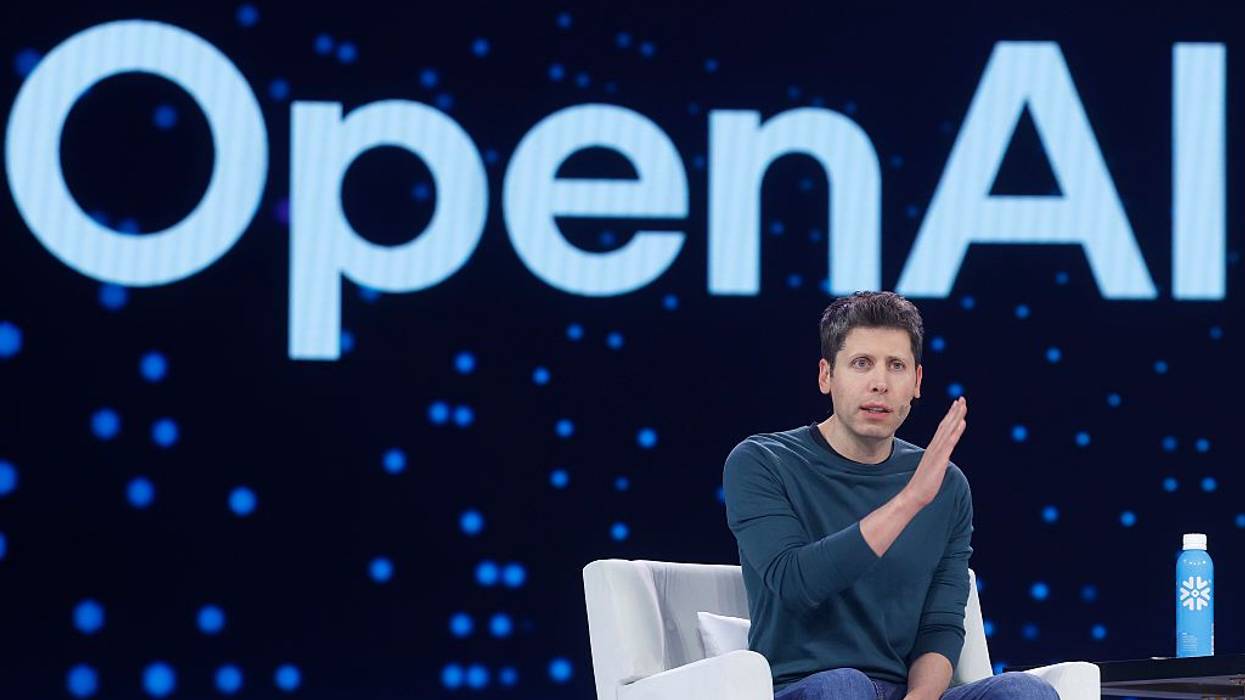
Amid escalating concerns about artificial intelligence from within and beyond the industry and related demands for policymakers worldwide to swiftly enact strong safeguards, attorneys general from eight US states sued ChatGPT maker OpenAI on Wednesday.
"OpenAI designed a product to attract young users and keep them engaged for as long as possible so it could capture their extensive personal data for the company's commercial benefit," said Arizona Attorney General Kris Mayes in a statement.
Mayes, a Democrat, joined Republican attorneys general from Arkansas, Iowa, Idaho, Kansas, Montana, Nebraska, and West Virginia in filing separate but similar lawsuits against the company in each state's court system, focused on safety concerns, particularly for young users.
"OpenAI put Arizonans safety at risk by failing to implement adequate user protections or transparency measures, despite clear indications that minors were regularly interacting with its chatbot," Mayes asserted. "We're suing OpenAI to protect Arizona children and to hold the company accountable for its repeated violations of Arizona law."
The filing from Arkansas Attorney General Tim Griffin notes that "millions of consumers, including those in Arkansas, use ChatGPT to answer questions, solve problems, and make important life decisions," but the chatbot "has repeatedly produced unsafe responses."
In fact, as Iowa Attorney General Brenna Bird wrote, "because of defendants' repeated misrepresentations and insatiable hunger to win the AI race—even if it means recklessly introducing unsafe ChatGPT models to the public—mass shooters have been aided and abetted, vulnerable citizens have been coached on suicide, individuals with psychological conditions have experienced an exacerbation of symptoms, and minors have become addicted to a tool that feigns human compassion to collect their data with no parental oversight."
Idaho Attorney General Raúl Labrador explained that "by misleading the public into believing that OpenAI is a responsible actor and that ChatGPT was and is a safe, teen-appropriate tool that puts safety first, OpenAI has caused consumers in Idaho and elsewhere to trust and rely on OpenAI and ChatGPT more."
"This deepened trust and dependence has driven up ChatGPT's user base and engagement," he continued, "enabled it to collect vast quantities of sensitive and personal information, increased its revenue from paid subscribers and advertising partners, and solidified its early market advantage."
It's not just chatbot responses that have insiders and elected officials alarmed. As Kansas Attorney General Kris Kobach detailed:
OpenAI also recently admitted to a torrent of instances in which its models developed dangerous strategies and instructions and, in some cases, executed on them. These occurrences, which OpenAI has characterized as the models going "rogue," have included AI "agents" accessing the internet without permission, hacking into other companies, coordinating how to lie to and deceive their human users, developing secret methods of communication intended to be undetectable to humans, and writing themselves new instructions declaring that they no longer answer to "corporations or governments" and will prioritize other interests over the "artificial constructs of human civilization."
Montana Attorney General Austin Knudsen emphasized that "experts and insiders in the AI field nearly universally agree that AI companies must implement reasonable guardrails to protect the public from the foreseeable risk of harm. Even OpenAI and its CEO, Sam Altman, have warned that getting AI wrong might mean human extinction. And recent developments in AI have suggested that risk is both credible and closer than anyone previously thought."
Like his peers in other states, Nebraska Attorney General Michael Hilgers brought the case to compel OpenAI to comply with its legal obligations under state law, block the company "from continuing to engage in unreasonably dangerous activities that experts have warned could harm the economy, or compromise private or governmental computer systems, and to hold defendants accountable for the harms they have inflicted on Nebraskans, most notably vulnerable minors, as a result of their willful, dangerous, reckless, and unlawful conduct."
West Virginia Attorney General John "JB" McCuskey highlighted in his filing that "by jettisoning safety, OpenAI and its current leadership—particularly, Altman—have handsomely profited." While company leadership has delayed its initial public offering until next year, he wrote, "with current annual revenues of over $25 billion, OpenAI may IPO at a trillion-dollar valuation."
"But those revenues have come at great cost to the public," he stressed, "which has suffered irreparable harm—including lost loved ones, disturbing cyberattacks, and now a plausible threat of civilizational collapse—due to defendants' reckless behavior and ChatGPT's uniquely dangerous design."
An OpenAI spokesperson pushed back against the filings, saying that "we've built industry-leading age-specific protections into our product that many other AI products lack."
"While no system can be perfect, we'll continue to work with experts to inform our work and build additional safeguards, such as the parental controls, break reminders, and age-appropriate model protections that exist today," the spokesperson added. "We're committed to working with states on advancing pragmatic AI policies that apply to the entire AI industry—not just one company."
Politico reported that "this is not the first lawsuit launched against the AI company. Florida Attorney General James Uthmeier brought a lawsuit against the company in June over claims that it has pushed and marketed an unsafe product. Last month, Uthmeier also sought an injunction to stop OpenAI from developing its technology amid the lawsuit."
According to Reuters, "The company is also facing dozens of lawsuits by private plaintiffs, alleging ChatGPT helped users plan mass shootings or other violence."

Leftist formerde President Gustavo Petro called the nationwide protests "a wake-up call" for Colombia's "tyrannical" government.
Colombians took to the streets Wednesday to protest the right-wing government of President Abelardo de la Espriella, denouncing austerity measures, renewed ties with Israel amid its genocidal assault on Gaza, and policies protesters fear will roll back hard-won social and worker rights.
The nationwide mobilizations—which are backed by trade unions, Indigenous organizations, students, and political opposition groups—came one day after de la Espriella signed a controversial decree expanding police power to violently quash demonstrations.
Leftist former President Gustavo Petro joined demonstrators in Bogotá, where protesters carried Colombian and Palestinian flags and condemned the government's rapprochement with the United States and Israel.
In a message addressed to Interior Minister Rodrigo Lara, Petro said: “A decree without prior public notice is not valid. Mr. Lara, stop wasting time and study law again.”
De la Espriella's foreign policy has marked a sharp break with Petro's government, which severed diplomatic relations with Israel in 2024 over its assault on Gaza and suspended Israeli arms imports. De la Espriella has restored relations, reopened trade ties, and moved to recognize Israeli sovereignty over the illegally occupied Syrian Golan Heights. On Wednesday, Colombia also opened an embassy in Jerusalem, a deeply controversial move given the city's disputed status, with Palestinians also claiming it as their capital.
The de la Espriella administration's economic policies have also fueled the new demonstrations. Protesters voiced opposition to funding cuts affecting public institutions, including the National Learning Service, the agency responsible for reintegrating former combatants, and electricity subsidies—particularly in the Caribbean region. Labor organizations and student groups are also demanding protections for workers, public education, and university autonomy.
In stark contrast, under Petro—Colombia's first left-wing president—the government expanded access to public universities, increased the minimum wage, and improved labor protections.
The protests are taking place amid growing alarm over de la Espriella's Decree 1525, signed Tuesday, which revises police protocols for responding to demonstrations.
Ana Erazo, a Colombian lawmaker from the leftist Historical Pact party, slammed the decree for "criminalizing protest."
The president's order establishes a five-stage protest intervention framework, which starts with "preventive engagement" and dialogue and escalates toward use of force. However, it specifies that, under certain circumstances involving violence, officers can skip the dialogue phase before responding with force.
While insisting that the right to peaceful protest is guaranteed by Colombia's Constitution, de la Espriella said Tuesday: “Never again a permanent blockade of a highway. Never again an urban bus lane turned into a trench. Attacking a person, throwing objects to injure someone, detaining someone, or using a child in a protest is not protest; it is a crime and will be treated as such."
In the streets of Colombia's cities, demonstrators decried what they described as an erosion of rights under de la Espriella.
“I feel like we have no guarantees," teacher Ester Guerra told Agence France-Presse in the capital Bogotá, "and that the little we did obtain... we’re about to lose."
Jimena Rodriguez, a 20-year-old student protester, said she believes that de la Espriella “just wants to hand the country over to the United States, to Israel."
"I feel dark times are coming," she added.
“Mr. Belgal’s detention was unlawful from its inception."
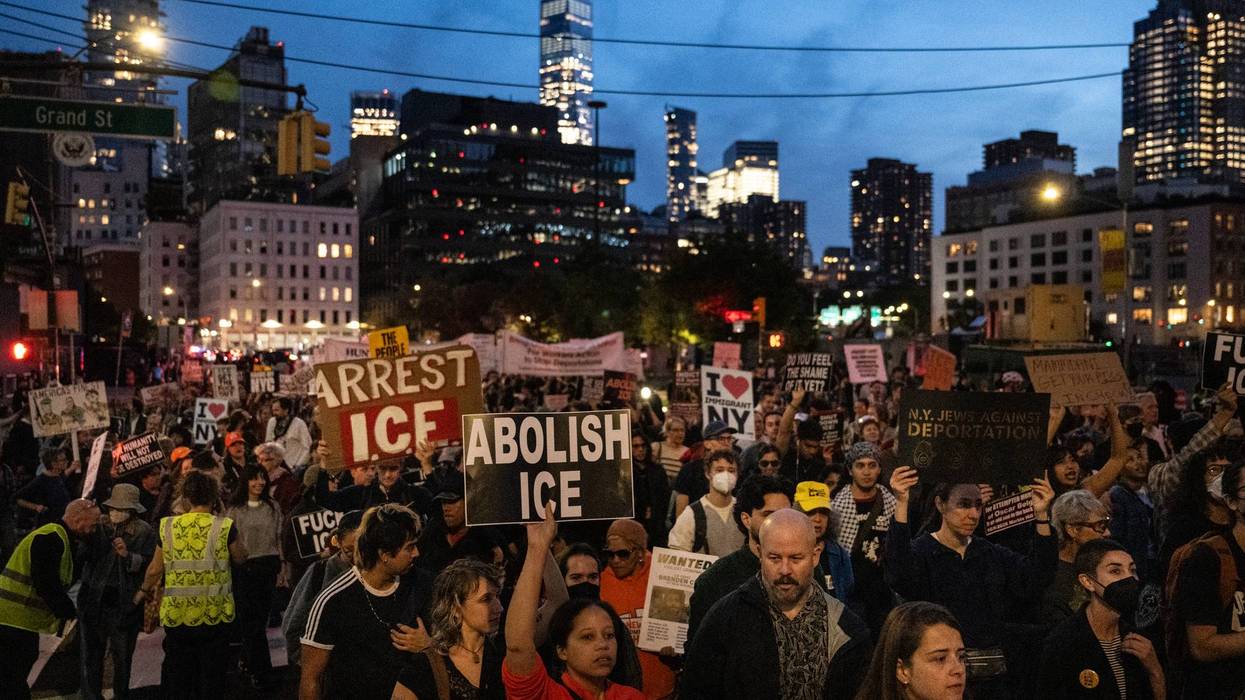
Immigrant rights advocates this week demanded the immediate release of Oscar Belgal, a 28-year-old Dominican father of two held in US Immigration and Customs Enforcement custody with a bullet lodged in his neck after an ICE agent shot him in front of his young son last week in New York City.
The Legal Aid Society filed an emergency petition Wednesday in the US District Court for the Eastern District of New York seeking Belgal's release, arguing that his continued detention threatens his health and violates his rights.
Masked ICE officers wearing civilian clothing approached Belgal's vehicle on October 8 with firearms drawn, without identifying themselves or presenting a warrant. An officer shattered the driver's-side window before agents fired at least seven shots, striking Belgal in the neck as his 5-year-old son sat in the back seat.
"Rather than providing immediate medical assistance, ICE officers threw Mr. Belgal to the ground, handcuffed him, and left him bleeding and fading in and out of consciousness," the Legal Aid Society said Wednesday. "[New York Police Department] officers ultimately intervened to secure medical assistance. Doctors advised that Mr. Belgal required surgery to remove the bullet and instructed him to return for treatment during the week of October 12. Instead, ICE transferred him into detention."
Belgal is being held at Brooklyn's Metropolitan Detention Center despite suffering a loss of sensation on the left side of his face and impaired hearing in his left ear, according to his attorneys. He has yet to receive surgery to remove the bullet.
“Mr. Belgal’s detention was unlawful from its inception. ICE officers shot him in the neck in front of his 5-year-old son, failed to provide him with immediate medical assistance, and now continue to hold him in a facility notorious for medical neglect,” said Perry McAninch and Elyssa Williams, counsel for Belgal and attorneys with Legal Aid.
“With a bullet still lodged in his neck and his serious medical needs unmet, every additional day in custody puts him at further risk," they added. "The court must intervene and order his immediate release.”
Department of Homeland Security (DHS) agents have shot more than two dozen people since President Donald Trump’s return to office, including more than half a dozen who died. In multiple cases, federal authorities had made allegations against shooting victims that were later contradicted by evidence.
More than 50 people have also died in ICE custody during Trump’s second term.
Belgal's shooting has fueled fresh calls to abolish ICE from progressives, including Reps. Alexandria Ocasio-Cortez (D-NY) and Ro Khanna (D-Calif.). Meanwhile, Rep. Delia Ramirez (D-Ill.) has introduced legislation aimed at dismantling DHS, which oversees ICE.
The San Diego-based Haitian Bridge Alliance also condemned Belgal's shooting and called for an independent investigation, the release of relevant body camera footage, and accountability for what it called the unlawful uses of force.
“How many more families must be traumatized before we say enough is enough?” Guerline Jozef, the organization's founder and executive director, asked Monday.
“We cannot continue to accept a system where immigration enforcement becomes a license to terrorize communities, endanger children, and take human lives,” she added. “Our humanity is not negotiable. Our dignity is not conditional on immigration status.”