

SUBSCRIBE TO OUR FREE NEWSLETTER
Daily news & progressive opinion—funded by the people, not the corporations—delivered straight to your inbox.
5
#000000
#FFFFFF
To donate by check, phone, or other method, see our More Ways to Give page.
Daily news & progressive opinion—funded by the people, not the corporations—delivered straight to your inbox.
Responding to civilian casualty figures released by the White House today, international human rights organization Reprieve has expressed dismay at how little the Obama Administration appears to know about those it has killed in its covert use of lethal drones outside of war zones.
Responding to civilian casualty figures released by the White House today, international human rights organization Reprieve has expressed dismay at how little the Obama Administration appears to know about those it has killed in its covert use of lethal drones outside of war zones.
Jennifer Gibson, attorney at Reprieve, said:
"For three years now, President Obama has been promising to shed light on the CIA's covert drone program. Today, he had a golden opportunity to do just that.
"Instead, he chose to do the opposite. He published numbers that are hundreds lower than even the lowest estimates by independent organizations.
"The only thing those numbers tell us is that this Administration simply doesn't know who it has killed.
"Back in 2011, it claimed to have killed "only 60" civilians. Does it really expect us to believe that it has killed only 4 more civilians since then, despite taking hundreds more strikes?
"The most glaring absence from this announcement are the names and faces of those civilians that have been killed.
"Today's announcement tells us nothing about 14 year old Faheem Qureshi, who was severely injured in Obama's first drone strike. Reports suggest Obama knew he had killed civilians that day. Is Faheem's family in those numbers?
"They make no mention of nine-year old Nabila Rehman. She travelled all the way to the US in 2013 to try to get answers about the strike that killed her grandmother, Mamana Bibi. Will she now get the same apology as an American and Italian hostage killed in another strike?
"We need real transparency and accountability, not more smoke and mirrors. It's past time that there be an independent investigation into just who the US drone program has killed and what the rules and legal framework were for doing so.
"Only then can we begin to grapple with the effectiveness of this program and whether it really has made us any safer."
Faisal bin Ali Jaber, an engineer from Yemen whose family members were mistakenly killed by a US drone strike in 2012, said:
"The Obama Administration is wrong to think that publishing statistics makes up for the pain his secret drone program has caused families like mine.
"It's no surprise that the White House didn't bother to consult the victims of drone strikes before publishing these figures - the US has never even acknowledged its role in the deaths of our loved ones.
"My brother-in-law was an Imam who was leading a campaign against Al Qaeda's ideology - particularly their targeting of young boys. He spoke out against Al Qaeda in his sermons just few days before he was assassinated. We all expected that one day he would be killed by Al Qaeda, but instead he was killed by a US drone".
"Obama's secret drone wars have also killed schoolteachers, policemen, women and children. What we need from Obama is an apology - and a promise that these terrible crimes will not be repeated."
Reprieve is a UK-based human rights organization that uses the law to enforce the human rights of prisoners, from death row to Guantanamo Bay.

"Those who work so hard to build Brazil also deserve having time to live."
Brazilian President Luiz Inácio Lula da Silva celebrated on Wednesday night after Brazil's legislature overwhelmingly approved a constitutional amendment to end the country's six-day work week.
Under the amendment, which Lula has made a central plank of his reelection campaign, the work week will be shortened to 40 hours without a salary cut.
The amendment is projected to give an extra day off to millions of workers who previously had to work for six days under the old 44-hour work week.
In a Wednesday social media post, Lula celebrated the amendment's passage as "an historic achievement for millions of workers."
The Brazilian president said the shorter work week will mean "more time to live, rest, be with family, be with children as they grow, take care of yourself, and enjoy life."
"Those who work so hard to build Brazil also deserve having time to live," Lula added.
Polls show that Lula is currently locked in a tight race against rival Flávio Bolsonaro, son of former Brazilian President Jair Bolsonaro, who is still serving a criminal sentence for efforts to instigate a coup after his loss in the 2022 election.
According to a Wednesday report in The Guardian, the shortened work week could give Lula a boost among key demographics ahead of the October 25 presidential runoff.
Specifically, The Guardian noted that "the change is expected to affect mainly workers in retail, restaurants, and hotels," which were "one of the groups which Lula lost the most support from since the 2022 election, when he defeated Jair Bolsonaro."
Victor Escobar, a researcher at the Laboratory of Parties, Elections, and Comparative Politics, told The Guardian that the amendment's passage "could indeed benefit Lula’s reelection campaign."
Polls show that ending the six-day work week is overwhelmingly popular with Brazilian voters and Bolsonaro recently came out in its favor after months of signaling opposition.
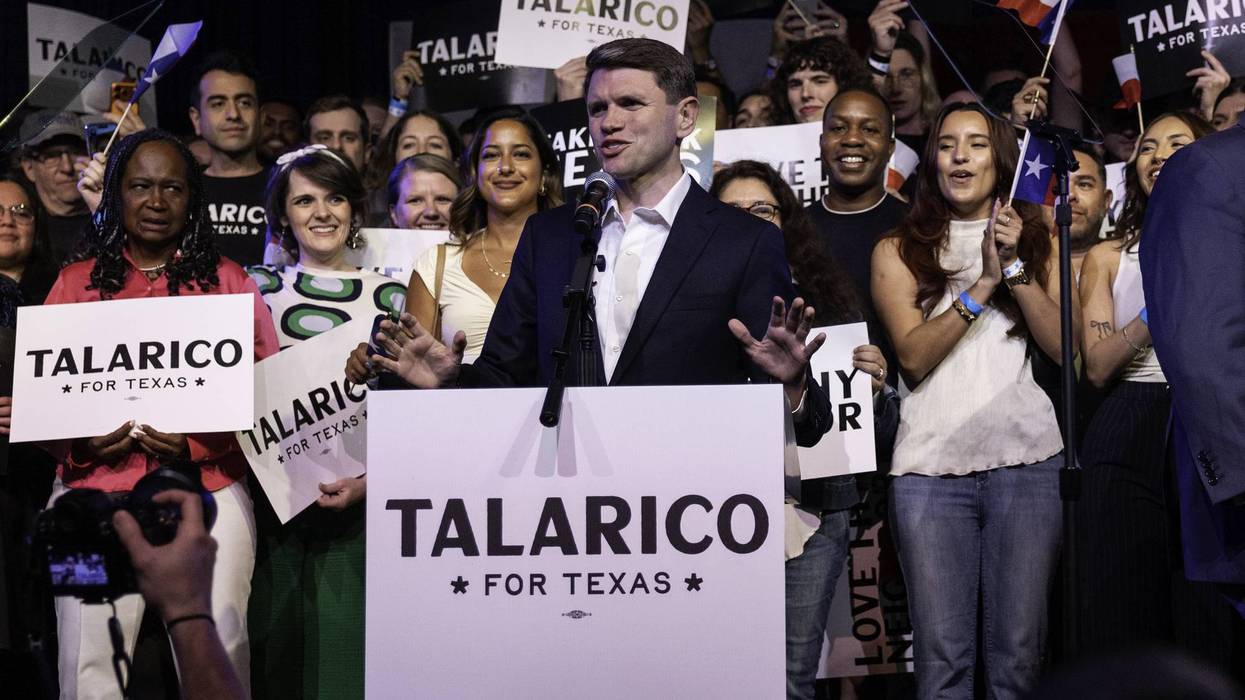
"This people-powered movement is going to change this broken, corrupt political system,” said the Texas Democratic running to beat Ken Paxton for the state's open US Senate seat.
James Talarico, the Democratic candidate for US Senate in Texas, says that his near record-breaking fundraising haul in the third quarter—one built almost entirely on small-dollar donations—is proof that grassroots energy is on his side as he faces off against the full weight of the Republican Party's money machine, including the world's richest man Elon Musk.
“Grassroots contributors from across Texas are coming together to end billionaire control over our politics and bring down costs for working families,” Talarico said in a statement as his campaign announced raising $64 million during the most recent 3-month period, the highest figure for any Senate candidate this cycle.
“Thanks to the support of everyday Texans," added Talarico, "this people-powered movement is going to change this broken, corrupt political system.”
According to Politico, citing figures shared exclusively by the campaign, Talarico has "raised more than $134.3 million since launching his campaign in September of 2025. More than 1.3 million donors contributed, the campaign said, as Democrats slowly reconcile themselves to their long-held but often fumbled dream of gaining a statewide perch in Texas. About 97% of those donations were of $100 or less."
Despite the massive fundraising haul, Politico reports that Talarico—fighting to defeat Republican nominee Ken Paxton for the open seat—has been outspent by an estimated two-to-one by his GOP opponents.
During a campaign event in February, Talarico explained to potential voters how the billionaire class is the one waging a class war against workers—and coming out on top year after year.
“It’s the billionaires waging war against the rest of us, and right now the billionaires are winning,” he said at the time. “They’ve been winning for 50 years. Trickle-down economics is not a theory, it is theft.”
Talarico continued by saying billionaires have been “stealing from the American people, stealing the wealth that we created.”
“It’s why everyone is so angry right now,” he argued. “It’s why, no matter how hard you work, you can’t seem to get ahead. The American people are not asking for a whole lot: A job we don’t hate, a house big enough to raise a family in, and a little left over so we can go on vacation every once in a while. That is a lot harder than it should be in America.”
A young man at our town hall asked if I was pushing class warfare.I told him: “We already have class warfare in this country — billionaires are waging war on the rest of us.” https://t.co/w238OfB8yH
— James Talarico (@jamestalarico) February 12, 2026
NBC News reports that "Republican outside groups have spent more than $175 million dollars to boost Paxton and attack Talarico since Sept. 1, according to AdImpact, trying to close off one pathway for Democrats as they try to take the GOP’s Senate majority."
An unnamed Democratic strategist who spoke to Politico said that despite Talarico's impressive fundraising, it's "still an uphill battle" for the Democratic state legislator.
“He’s fighting this battle basically alone," the person said, "while Elon Musk and the full weight of the GOP fundraising apparatus outspends him 2:1."
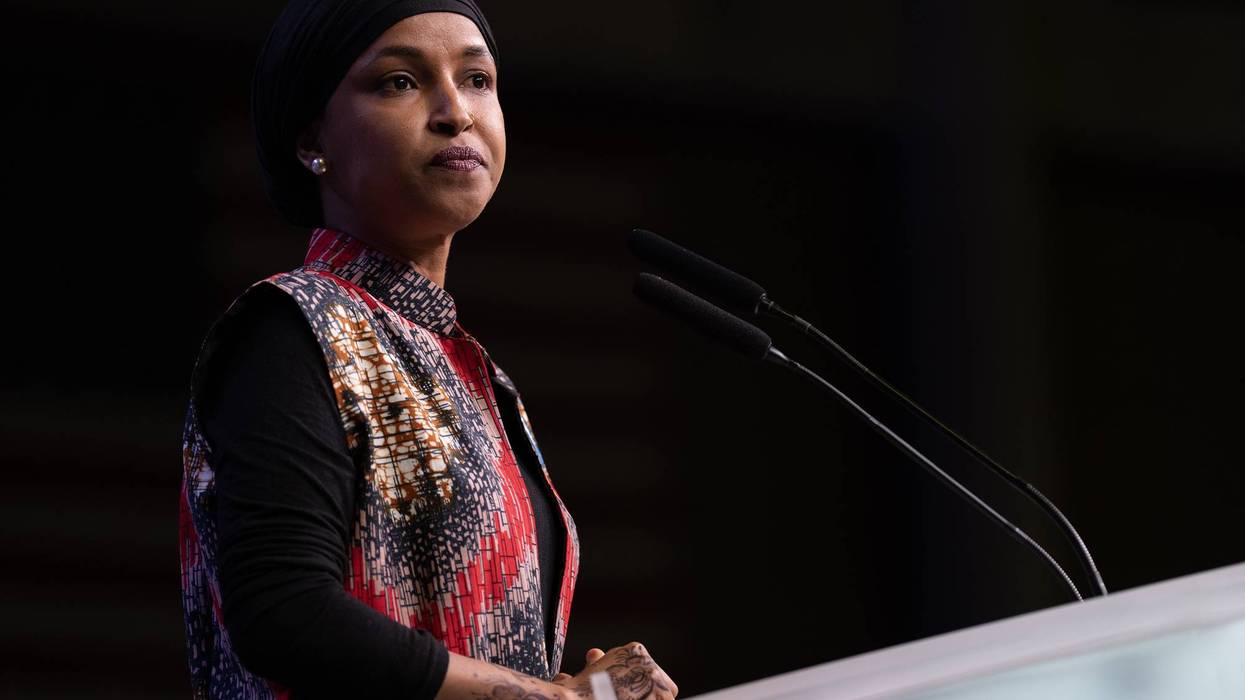
"Stripping the citizenship of opposition elected officials is really, really far down the road to fascism."
"I have rarely wanted to be wrong more," said one journalist Wednesday night after The Wall Street Journal confirmed what many supporters of US Rep. Ilhan Omar had suspected: that the Department of Homeland Security's raid on her home this week was part of an investigation that is ultimately aimed at deporting her.
The Journal reported that US officials confirmed the Trump administration aims to revoke Omar's (D-Minn.) citizenship, which she obtained in 2000, five years after she arrived in the US with her family from a refugee camp in Kenya. Omar is originally from Somalia, and President Donald Trump has made Somali Americans a key target of his mass deportation agenda and his racist attacks on immigrant communities.
Agents with Homeland Security Investigations (HSI), part of US Immigration and Customs Enforcement (ICE), seized Omar's passport, cellphone, personal computers, and notebooks, according to the WSJ, when they searched her home in Washington, DC.
Authorities have also issued more than a dozen subpoenas and are seeking testimony from people including Omar's family members before a grand jury.
A Justice Department official told the WSJ that the agency plans to build its case on allegations that Omar lied about her age when she became a citizen.
Federal investigators have been examining whether Omar's father, who died in 2020, altered her age to say she was 17 instead of 18 on immigration paperwork when he applied for citizenship. Doing so would have allowed Omar to acquire citizenship through her father.
The congresswoman, who is currently running for a fifth term, has previously denied committing immigration fraud, which Vice President JD Vance has openly accused her of. Other Republican elected officials have explicitly attacked Omar for her criticism of Israel and for being a Muslim, with Rep. Randy Fine (R-Fla.) calling her a "terrorist."
Trump has suggested the progressive lawmaker should be deported for “always complaining” and has called to "denaturalize migrants who undermine domestic tranquility.”
Journalist Peter Sterne said Wednesday evening that "many on the left suspected" the administration was attempting to deport Omar, "but it’s still wild to see the WSJ confirm it."
Dylan Williams of the Center for International Policy emphasized that the raid and investigation—carried out just weeks before the midterm elections and as Americans are already voting, though the Justice Department typically does not take actions against candidates just before an election—are "an attempt by the Trump administration to stir up its flagging base ahead of elections that are going to be brutal for them."
"Nonetheless, we need to fight this fascist, un-American abuse of power, hold those responsible accountable, and stand with Ilhan Omar," said Williams.
Aaron Reichlin-Melnick, a senior fellow at the American Immigration Council, noted that "a case of this magnitude would take years to wend its way through the courts," and said DHS would have to initiate deportation proceedings after Omar was denaturalized.
Still, a number of observers wondered why many prominent Democrats—like Senate Minority Leader Chuck Schumer (D-NY) and vocal Trump critic Sen. Cory Booker (D-NJ) have stayed quiet about the raid on Omar's house.
"Democrats, nice time to do a press conference united in defense of Ilhan Omar and condemning the Islamophobia against Muslim candidates," said commentator Wajahat Ali.
New York state Assembly Member Diana Moreno (D-36) said of the WSJ's reporting, "This is either the breaking point of our democracy or the moment we start fighting like hell to win back this country from the authoritarian demons in the White House. I stand with Ilhan Omar."
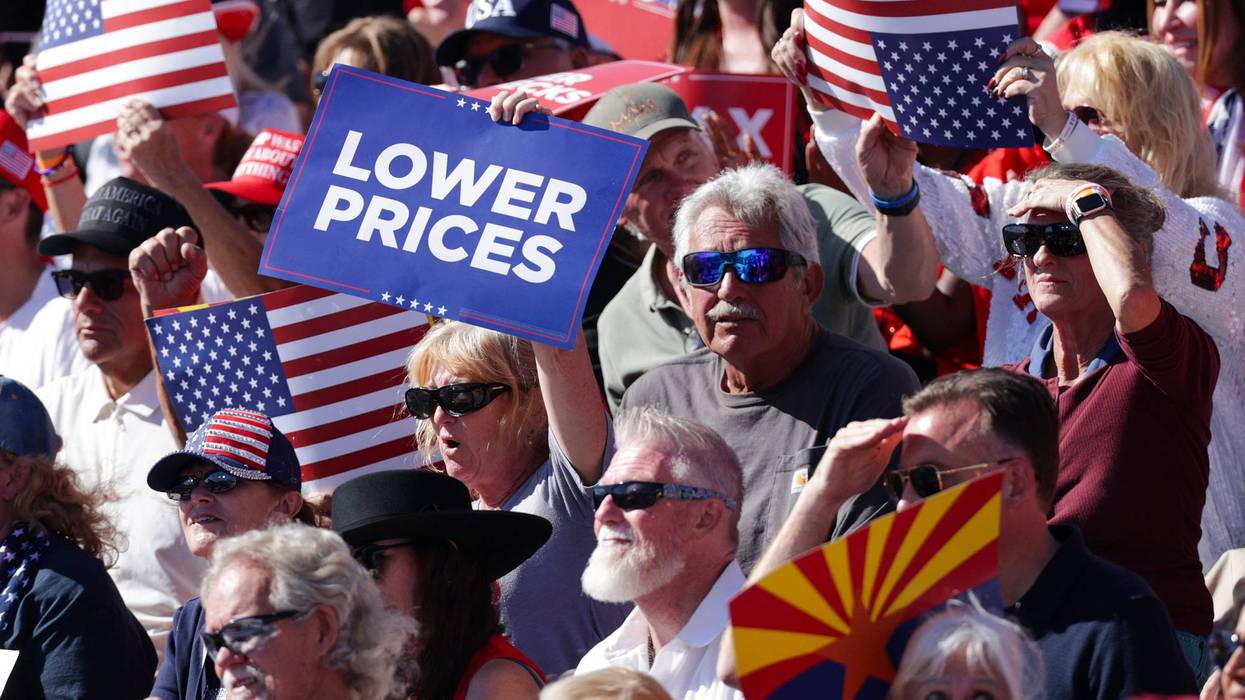
"Workers are losing the race between wages and prices," said one economist. "It's no wonder workers feel left behind in the current economy."
President Donald Trump attempted to spin high oil prices as a boon for the United States at a rally in Arizona on Wednesday, just hours after new federal data showed that inflation reached its highest level in months in September.
"Because of the price of oil, Texas and Oklahoma and North Dakota and all these places, we're making a fortune," Trump declared, referring to states that produce large amounts of crude oil. Those states are home to major fossil fuel companies that have reported windfall profits amid Trump's illegal war on Iran.
Trump insisted that gas prices—currently at an average of $4.33 per gallon for regular gas and $6.32 for diesel—would tumble once the Iran war ends, but his administration has repeatedly given false timelines for the deadly conflict and has shown no indication that it is willing to reach a lasting diplomatic agreement.
Trump, who has profited massively from his second term in the White House, is a major investor in oil and gas companies. According to one recent analysis, the president's investments in fossil fuel stocks have boosted his net worth by up to $15.5 million since January.
Working-class Americans, meanwhile, are struggling to make ends meet as high gas prices compound a broader affordability crisis that extends to food, housing, and other necessities. A tracker maintained by the Watson School of International and Public Affairs estimates that American consumers have paid an extra $135 billion combined in fuel costs since the start of the Iran war—roughly $1,030 per household.
Wage growth has not kept up with inflation, which rose to an annualized rate of 3.7% last month.
" Workers are losing the race between wages and prices," Elise Gould, senior economist at the Economic Policy Institute, wrote on Wednesday. "Nominal wage growth continues to decelerate as workers lose bargaining power at work. Workers simply don't have the leverage to bid up their wages. Reduced leverage and higher prices translated into falling [year-over-year] real wages for six months in a row."
"Workers have seen zero progress on affordability compared to January 2025," Gould added. "Real wages are essentially stagnant as workers' leverage has declined and prices have risen. It's no wonder workers feel left behind in the current economy."
A Harris poll published by The Guardian on Thursday shows that three-quarters of US voters are concerned about a recession, and a "vast majority of Americans agreed that there is an affordability crisis, including 96% of Republicans."

The public "has suffered irreparable harm—including lost loved ones, disturbing cyberattacks, and now a plausible threat of civilizational collapse," says one of the eight lawsuits.
Amid escalating concerns about artificial intelligence from within and beyond the industry and related demands for policymakers worldwide to swiftly enact strong safeguards, attorneys general from eight US states sued ChatGPT maker OpenAI on Wednesday.
"OpenAI designed a product to attract young users and keep them engaged for as long as possible so it could capture their extensive personal data for the company's commercial benefit," said Arizona Attorney General Kris Mayes in a statement.
Mayes, a Democrat, joined Republican attorneys general from Arkansas, Iowa, Idaho, Kansas, Montana, Nebraska, and West Virginia in filing separate but similar lawsuits against the company in each state's court system, focused on safety concerns, particularly for young users.
"OpenAI put Arizonans safety at risk by failing to implement adequate user protections or transparency measures, despite clear indications that minors were regularly interacting with its chatbot," Mayes asserted. "We're suing OpenAI to protect Arizona children and to hold the company accountable for its repeated violations of Arizona law."
The filing from Arkansas Attorney General Tim Griffin notes that "millions of consumers, including those in Arkansas, use ChatGPT to answer questions, solve problems, and make important life decisions," but the chatbot "has repeatedly produced unsafe responses."
In fact, as Iowa Attorney General Brenna Bird wrote, "because of defendants' repeated misrepresentations and insatiable hunger to win the AI race—even if it means recklessly introducing unsafe ChatGPT models to the public—mass shooters have been aided and abetted, vulnerable citizens have been coached on suicide, individuals with psychological conditions have experienced an exacerbation of symptoms, and minors have become addicted to a tool that feigns human compassion to collect their data with no parental oversight."
Idaho Attorney General Raúl Labrador explained that "by misleading the public into believing that OpenAI is a responsible actor and that ChatGPT was and is a safe, teen-appropriate tool that puts safety first, OpenAI has caused consumers in Idaho and elsewhere to trust and rely on OpenAI and ChatGPT more."
"This deepened trust and dependence has driven up ChatGPT's user base and engagement," he continued, "enabled it to collect vast quantities of sensitive and personal information, increased its revenue from paid subscribers and advertising partners, and solidified its early market advantage."
It's not just chatbot responses that have insiders and elected officials alarmed. As Kansas Attorney General Kris Kobach detailed:
OpenAI also recently admitted to a torrent of instances in which its models developed dangerous strategies and instructions and, in some cases, executed on them. These occurrences, which OpenAI has characterized as the models going "rogue," have included AI "agents" accessing the internet without permission, hacking into other companies, coordinating how to lie to and deceive their human users, developing secret methods of communication intended to be undetectable to humans, and writing themselves new instructions declaring that they no longer answer to "corporations or governments" and will prioritize other interests over the "artificial constructs of human civilization."
Montana Attorney General Austin Knudsen emphasized that "experts and insiders in the AI field nearly universally agree that AI companies must implement reasonable guardrails to protect the public from the foreseeable risk of harm. Even OpenAI and its CEO, Sam Altman, have warned that getting AI wrong might mean human extinction. And recent developments in AI have suggested that risk is both credible and closer than anyone previously thought."
Like his peers in other states, Nebraska Attorney General Michael Hilgers brought the case to compel OpenAI to comply with its legal obligations under state law, block the company "from continuing to engage in unreasonably dangerous activities that experts have warned could harm the economy, or compromise private or governmental computer systems, and to hold defendants accountable for the harms they have inflicted on Nebraskans, most notably vulnerable minors, as a result of their willful, dangerous, reckless, and unlawful conduct."
West Virginia Attorney General John "JB" McCuskey highlighted in his filing that "by jettisoning safety, OpenAI and its current leadership—particularly, Altman—have handsomely profited." While company leadership has delayed its initial public offering until next year, he wrote, "with current annual revenues of over $25 billion, OpenAI may IPO at a trillion-dollar valuation."
"But those revenues have come at great cost to the public," he stressed, "which has suffered irreparable harm—including lost loved ones, disturbing cyberattacks, and now a plausible threat of civilizational collapse—due to defendants' reckless behavior and ChatGPT's uniquely dangerous design."
An OpenAI spokesperson pushed back against the filings, saying that "we've built industry-leading age-specific protections into our product that many other AI products lack."
"While no system can be perfect, we'll continue to work with experts to inform our work and build additional safeguards, such as the parental controls, break reminders, and age-appropriate model protections that exist today," the spokesperson added. "We're committed to working with states on advancing pragmatic AI policies that apply to the entire AI industry—not just one company."
Politico reported that "this is not the first lawsuit launched against the AI company. Florida Attorney General James Uthmeier brought a lawsuit against the company in June over claims that it has pushed and marketed an unsafe product. Last month, Uthmeier also sought an injunction to stop OpenAI from developing its technology amid the lawsuit."
According to Reuters, "The company is also facing dozens of lawsuits by private plaintiffs, alleging ChatGPT helped users plan mass shootings or other violence."

Leftist formerde President Gustavo Petro called the nationwide protests "a wake-up call" for Colombia's "tyrannical" government.
Colombians took to the streets Wednesday to protest the right-wing government of President Abelardo de la Espriella, denouncing austerity measures, renewed ties with Israel amid its genocidal assault on Gaza, and policies protesters fear will roll back hard-won social and worker rights.
The nationwide mobilizations—which are backed by trade unions, Indigenous organizations, students, and political opposition groups—came one day after de la Espriella signed a controversial decree expanding police power to violently quash demonstrations.
Leftist former President Gustavo Petro joined demonstrators in Bogotá, where protesters carried Colombian and Palestinian flags and condemned the government's rapprochement with the United States and Israel.
In a message addressed to Interior Minister Rodrigo Lara, Petro said: “A decree without prior public notice is not valid. Mr. Lara, stop wasting time and study law again.”
De la Espriella's foreign policy has marked a sharp break with Petro's government, which severed diplomatic relations with Israel in 2024 over its assault on Gaza and suspended Israeli arms imports. De la Espriella has restored relations, reopened trade ties, and moved to recognize Israeli sovereignty over the illegally occupied Syrian Golan Heights. On Wednesday, Colombia also opened an embassy in Jerusalem, a deeply controversial move given the city's disputed status, with Palestinians also claiming it as their capital.
The de la Espriella administration's economic policies have also fueled the new demonstrations. Protesters voiced opposition to funding cuts affecting public institutions, including the National Learning Service, the agency responsible for reintegrating former combatants, and electricity subsidies—particularly in the Caribbean region. Labor organizations and student groups are also demanding protections for workers, public education, and university autonomy.
In stark contrast, under Petro—Colombia's first left-wing president—the government expanded access to public universities, increased the minimum wage, and improved labor protections.
The protests are taking place amid growing alarm over de la Espriella's Decree 1525, signed Tuesday, which revises police protocols for responding to demonstrations.
Ana Erazo, a Colombian lawmaker from the leftist Historical Pact party, slammed the decree for "criminalizing protest."
The president's order establishes a five-stage protest intervention framework, which starts with "preventive engagement" and dialogue and escalates toward use of force. However, it specifies that, under certain circumstances involving violence, officers can skip the dialogue phase before responding with force.
While insisting that the right to peaceful protest is guaranteed by Colombia's Constitution, de la Espriella said Tuesday: “Never again a permanent blockade of a highway. Never again an urban bus lane turned into a trench. Attacking a person, throwing objects to injure someone, detaining someone, or using a child in a protest is not protest; it is a crime and will be treated as such."
In the streets of Colombia's cities, demonstrators decried what they described as an erosion of rights under de la Espriella.
“I feel like we have no guarantees," teacher Ester Guerra told Agence France-Presse in the capital Bogotá, "and that the little we did obtain... we’re about to lose."
Jimena Rodriguez, a 20-year-old student protester, said she believes that de la Espriella “just wants to hand the country over to the United States, to Israel."
"I feel dark times are coming," she added.
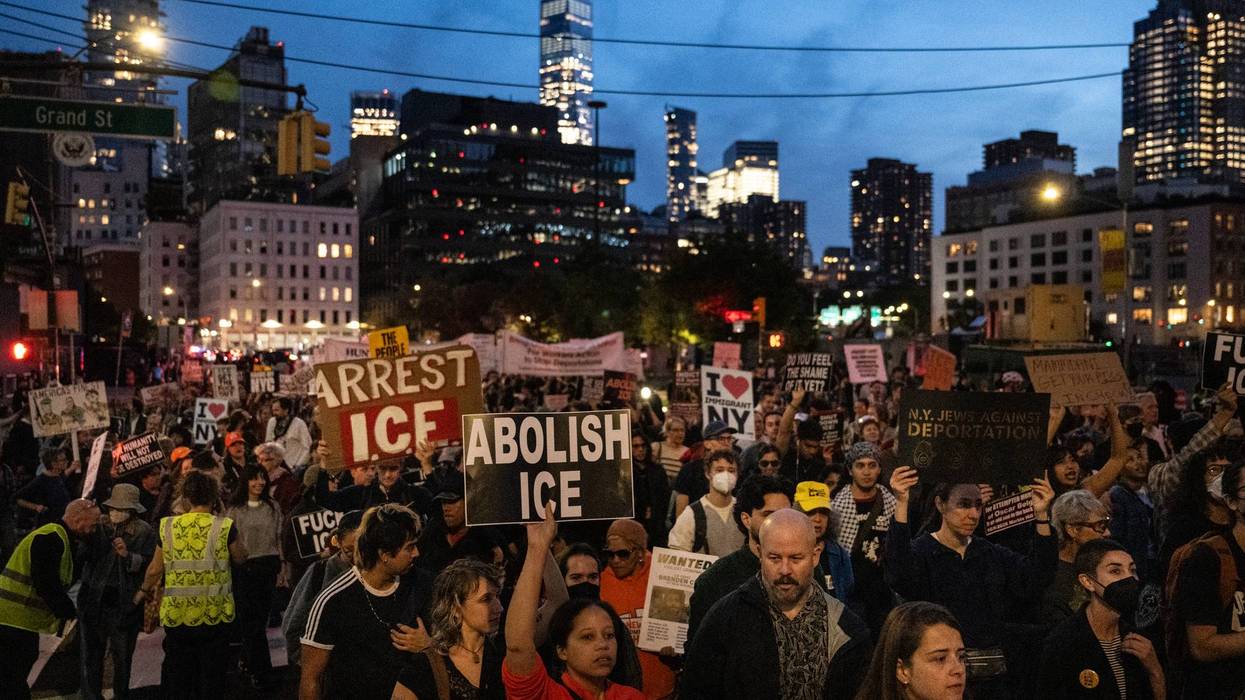
“Mr. Belgal’s detention was unlawful from its inception."
Immigrant rights advocates this week demanded the immediate release of Oscar Belgal, a 28-year-old Dominican father of two held in US Immigration and Customs Enforcement custody with a bullet lodged in his neck after an ICE agent shot him in front of his young son last week in New York City.
The Legal Aid Society filed an emergency petition Wednesday in the US District Court for the Eastern District of New York seeking Belgal's release, arguing that his continued detention threatens his health and violates his rights.
Masked ICE officers wearing civilian clothing approached Belgal's vehicle on October 8 with firearms drawn, without identifying themselves or presenting a warrant. An officer shattered the driver's-side window before agents fired at least seven shots, striking Belgal in the neck as his 5-year-old son sat in the back seat.
"Rather than providing immediate medical assistance, ICE officers threw Mr. Belgal to the ground, handcuffed him, and left him bleeding and fading in and out of consciousness," the Legal Aid Society said Wednesday. "[New York Police Department] officers ultimately intervened to secure medical assistance. Doctors advised that Mr. Belgal required surgery to remove the bullet and instructed him to return for treatment during the week of October 12. Instead, ICE transferred him into detention."
Belgal is being held at Brooklyn's Metropolitan Detention Center despite suffering a loss of sensation on the left side of his face and impaired hearing in his left ear, according to his attorneys. He has yet to receive surgery to remove the bullet.
“Mr. Belgal’s detention was unlawful from its inception. ICE officers shot him in the neck in front of his 5-year-old son, failed to provide him with immediate medical assistance, and now continue to hold him in a facility notorious for medical neglect,” said Perry McAninch and Elyssa Williams, counsel for Belgal and attorneys with Legal Aid.
“With a bullet still lodged in his neck and his serious medical needs unmet, every additional day in custody puts him at further risk," they added. "The court must intervene and order his immediate release.”
Department of Homeland Security (DHS) agents have shot more than two dozen people since President Donald Trump’s return to office, including more than half a dozen who died. In multiple cases, federal authorities had made allegations against shooting victims that were later contradicted by evidence.
More than 50 people have also died in ICE custody during Trump’s second term.
Belgal's shooting has fueled fresh calls to abolish ICE from progressives, including Reps. Alexandria Ocasio-Cortez (D-NY) and Ro Khanna (D-Calif.). Meanwhile, Rep. Delia Ramirez (D-Ill.) has introduced legislation aimed at dismantling DHS, which oversees ICE.
The San Diego-based Haitian Bridge Alliance also condemned Belgal's shooting and called for an independent investigation, the release of relevant body camera footage, and accountability for what it called the unlawful uses of force.
“How many more families must be traumatized before we say enough is enough?” Guerline Jozef, the organization's founder and executive director, asked Monday.
“We cannot continue to accept a system where immigration enforcement becomes a license to terrorize communities, endanger children, and take human lives,” she added. “Our humanity is not negotiable. Our dignity is not conditional on immigration status.”
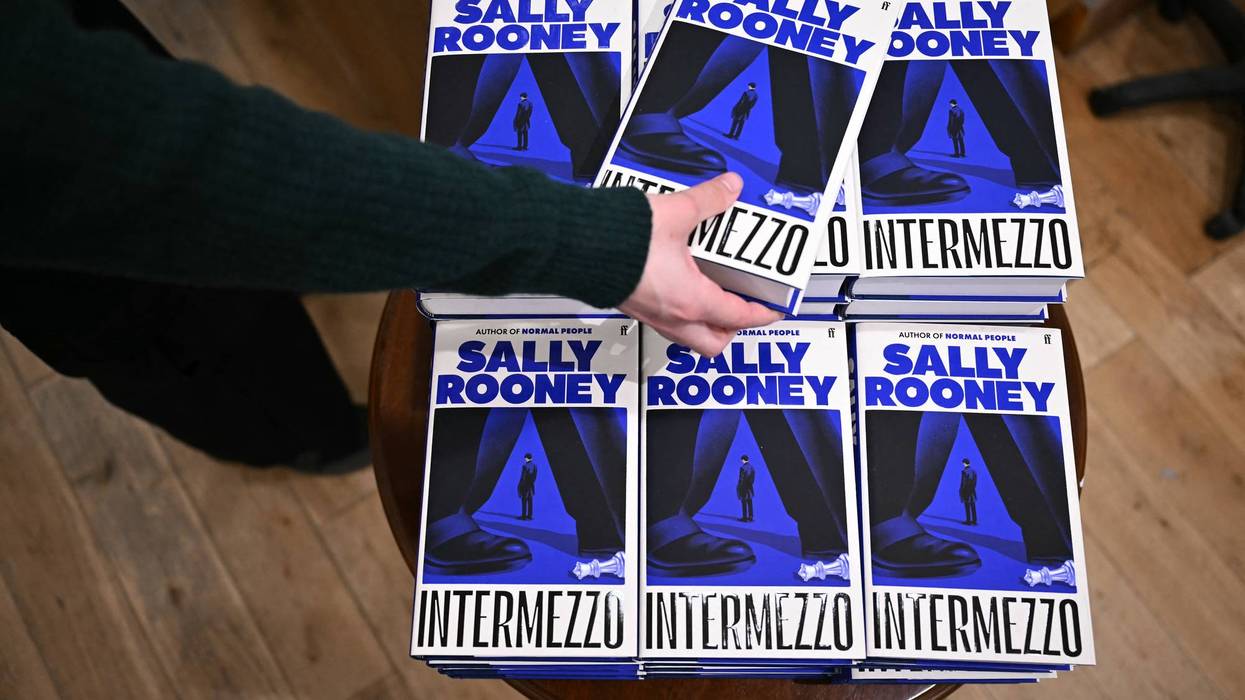
"What a stain on this government that people in this country are unable to buy and enjoy the work of one of this generation’s greatest writing talents," said lawmaker Jeremy Corbyn. "De-proscribe Palestine Action now."
News out of the British book publishing world encapsulated the UK government's priorities when it comes to Israel and Palestine, one protest group suggested Wednesday.
"We got a Sally Rooney book ban before a single arrest of the more than 2,000 Britons who have participated in Israel’s genocide and now walk our streets," said Defend Our Juries after Irish author Sally Rooney announced she would no longer be able to sell her books in the United Kingdom because of her support for the pro-Palestinian group Palestine Action.
In July 2025, the group was proscribed as a terrorist organization under the Terrorism Act of 2000, with lawmakers voting to ban Palestine Action after some of its members vandalized two military planes at a Royal Air Force base. The UK has provided military and political support to Israel as it has killed more than 74,000 Palestinians in Gaza since October 2023, in retaliation for a Hamas-led attack.
Under Section 15 of the Terrorism Act, it is a crime punishable by up to 14 years in prison for a person or group to provide funds to Palestine Action.
Rooney, author of novels including Normal People, Conversations With Friends, and Intermezzo, said Wednesday that her publisher, Faber, would not continue to sell her books in the UK because of an opinion she wrote a month after Palestine Action's proscription, saying she planned to continue supporting the group, which is not labeled a terrorist organization in Ireland, and would donate proceeds from her book sales to it.
“As a result, the fulfillment of contracts to publish my work in the UK could now constitute a serious criminal offense," Rooney said in a statement to The Guardian. "After a process of consultation and deliberation, and with my full agreement, my publisher Faber has therefore determined that it can no longer supply my work within the UK. I have made every effort to be honest with the public about my beliefs and intentions, and I am wholly prepared to accept the consequences.”
Faber explained that should it continue to sell Rooney's popular and acclaimed novels in the UK, it would not be able to pass the author's royalties on to her due to her statements about backing the nonviolent group, which has called on the British government to end its support for Israel. Numerous human rights groups and Holocaust scholars have said Israel's bombardment of Gaza and its blocking of humanitarian aid, which have continued despite a ceasefire deal signed one year ago, constitutes a genocide.
"To sell a writer’s work and not be able to pass on earnings is an unconscionable situation for a publisher," said Faber in a statement. "As such, and in full agreement with Sally, we have taken the decision that we can no longer supply her works in the UK in any format. We remain the proud publisher of her remarkable body of work, which we will continue to sell in other territories.”
Palestine Action's proscription has led to the arrests of about 3,700 people in the UK—most for simply holding signs that say, “I oppose genocide, I support Palestine Action.”
The arrests of nonviolent protesters—many of whom have been senior citizens—have been widely condemned around the world, and Palestine Action co-founder Huda Ammori said the new outgrowth of the proscription on Wednesday was "a new low in the escalating assault on free speech."
Rooney, Ammori told The Guardian, "took a brave and principled stand from the moment plans to ban Palestine Action were announced. She has refused to compromise her convictions, even at considerable personal and professional cost. Her work should be celebrated and widely available, not driven off the shelves of British bookshops because she refuses to be complicit in the suppression of solidarity with the Palestinian people."
"No author should have to choose between their principles and their freedom to publish," she said.
The Ireland-Palestine Solidarity Campaign called the banning of Rooney's books "disgraceful and embarrassing for the British government."
Kerry Moscogiuri, the chief executive of Amnesty International UK, told The Guardian that with Rooney pushed into removing her books from stores across Britain, "there is a real danger that others, seeing the price she has paid, will decide they cannot afford to speak out.”
“Writers should not find their books disappearing from shelves because of their political beliefs. Nor should people have to choose between expressing their conscience and pursuing their livelihoods," said Moscogiuri. “Sally Rooney’s willingness to accept the personal consequences of her convictions deserves recognition."
The hip-hop trio Kneecap, from Northern Ireland, expressed solidarity with Rooney, while Member of Parliament Jeremy Corbyn, who represents the progressive Your Party, said the removal of her books was "more proof of the complete absurdity of the proscription of Palestine Action."
"What a stain on this government that people in this country are unable to buy and enjoy the work of one of this generation’s greatest writing talents," he said. "De-proscribe Palestine Action now."
A legal challenge against the group's proscription will be heard by the UK Supreme Court next month.
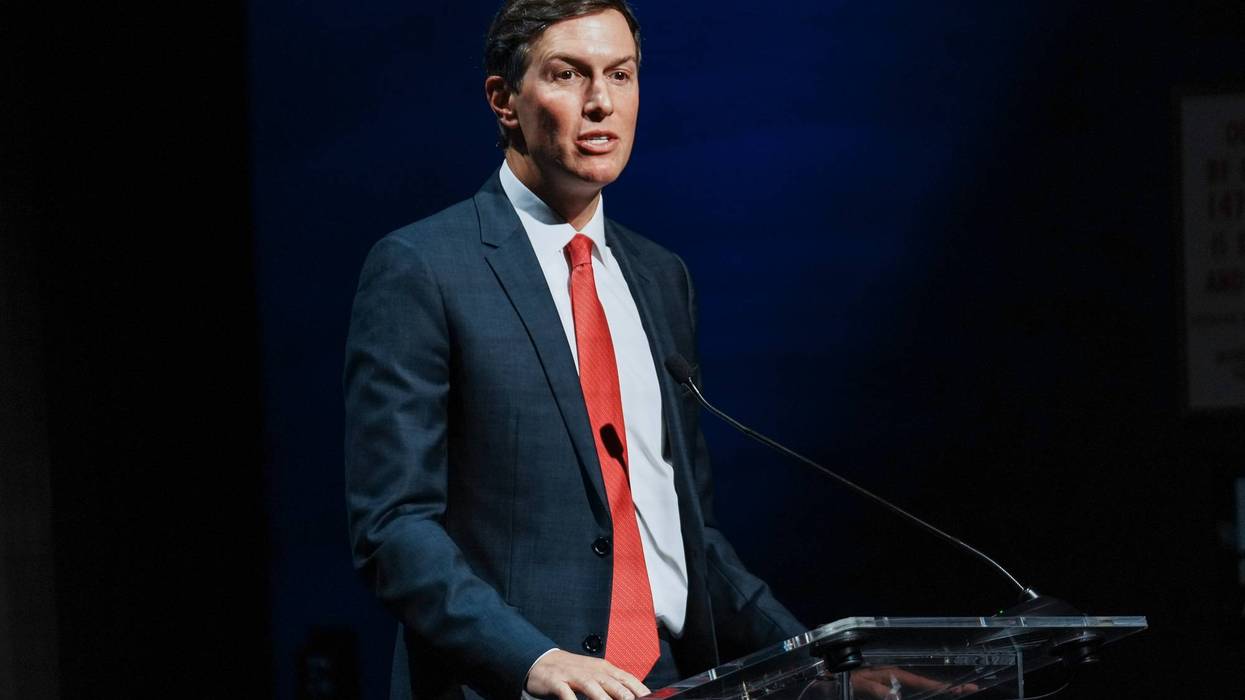
"Senate confirmation processes and financial disclosures exist to ensure that qualified individuals are appointed and carry out their official duties with integrity. Kushner is not an exception."
A government watchdog on Wednesday filed a lawsuit aimed at blocking Jared Kushner from serving as a top American foreign policy official while lacking confirmation from the US Senate.
In a complaint filed with the US District Court for the District of Columbia, Citizens for Responsibility and Ethics in Washington (CREW) alleged that Kushner, who is President Donald Trump's son-in-law, is engaged in "unlawful exercise of government power."
Even though Kushner has been given the role of an informal "envoy," the lawsuit contends that he has been tasked with major responsibilities, such as negotiating an end to Russia's war against Ukraine, that under the Constitution should require Senate confirmation.
"Kushner is one of President Trump’s go-to foreign policy negotiators," the complaint explains. "He represents the United States in the highest profile global conflicts... He negotiates directly with foreign leaders. He fills a crucial and continuing role in shaping and implementing the country’s foreign policy during President Trump’s second term."
Even as Kushner oversees such highly consequential diplomatic efforts, the lawsuit continues, he is still working as a private businessman operating an investment firm that has received billions of dollars in investments from the sovereign wealth funds of Saudi Arabia, Qatar, and the United Arab Emirates.
"The interplay and overlap between his government role and private business interests present a heightened risk of financial conflicts of interest," the complaint says. "Nonetheless, Kushner continues to exercise significant government power while circumventing the very protections put in place to guard against such conflicts."
Kushner has also been appointed in a manner that has helped him completely evade "transparency and conflict-of-interest obligations, including the filing of public financial disclosures during the appointment process," the lawsuit says.
The complaint urges the court to order Kushner to file financial disclosures and, if it finds him in violation of the US Constitution's appointments clause, bar him from continued government service.
CREW president Donald K. Sherman said the lawsuit is necessary to ensure that Kushner is not using US foreign policy as a vehicle for self-enrichment.
"Senate confirmation processes and financial disclosures exist to ensure that qualified individuals are appointed and carry out their official duties with integrity," Sherman explained. "Kushner is not an exception. He cannot simply opt out and expect the public to simply take him at his word.”

“Flock’s technology isn’t making us safer," the Michigan congresswoman said. "Instead, it has been used to stalk people, misidentify and arrest innocent people, surveil protestors, and wrongfully record our neighbors."
Amid what she called a "mass surveillance crisis," US Rep. Rashida Tlaib announced legislation on Wednesday to ban the use of federal funds for powerful dragnet spying systems—including the automated license plate-reading cameras manufactured by Flock Safety.
Flock has quickly grown into a massive nationwide surveillance network with more than 120,000 of its artificial intelligence-powered cameras installed across 49 states, allowing law enforcement agencies to track and reconstruct Americans' movements, often without warrants.
While supporters describe Flock cameras as a tool to help police solve crimes, there is little evidence that they actually reduce it. There are also many documented cases of cops using the technology to stalk romantic partners, track women who've had abortions, monitor First Amendment-protected protests, and surveil people on behalf of US Immigration and Customs Enforcement (ICE) as part of its mass deportation push.
“Flock’s technology isn’t making us safer," Tlaib (D-Mich.) said in a statement on Wednesday. "Instead, it has been used to stalk people, misidentify and arrest innocent people, surveil protesters, and wrongfully record our neighbors. My bill would prevent our government on all levels from selling us out to Big Tech companies that trample our civil rights for profit.”
The bill, titled the Get the Flock Out of Our Communities Act, is co-sponsored by Reps. Sylvia Garcia (D-Texas), Summer Lee (D-Pa.), Ilhan Omar (D-Minn.), Delia Ramirez (D-Ill.), Nydia Velázquez (D-NY), and Bonnie Watson Coleman (D-NJ).
It is part of a growing wave of bipartisan efforts to restrict the use of Flock cameras and other surveillance tech. Reps. Thomas Massie (R-Ky.) and Greg Steube (R-Fla.), along with Rep. Alexandria Ocasio-Cortez, have introduced legislation to limit government use or funding of automated license plate readers, while Sen. Josh Hawley (R-Mo.) has proposed limits on data collection.
Tlaib's legislation would go further. Its restrictions would also extend beyond license plate readers to other "mass surveillance systems," such as those that employ facial recognition technology and biometric tracking.
It would not only prohibit federal, state, and local governments from using federal funds to purchase, operate, or access automated mass surveillance systems; it would also make state and local governments ineligible for certain federal law enforcement grants unless they stop operating or accessing mass surveillance networks that already exist.
Federal agencies would also be barred from using data derived from these systems, and they'd be required to delete certain data that has already been gathered.
The full extent to which Flock cameras are funded with federal dollars is unknown. But the company itself has identified several federal grant programs that local police departments can apply for to purchase the cameras.
"Federal funds should be used to invest in our communities in real safety solutions. We need good jobs, affordable homes, clean water, and reliable electricity. That’s what’s going to make us safer," Tlaib said at a news conference Wednesday. "Instead, our government is sacrificing our rights to big tech companies that care more about their profits, selling our data, than about our safety."
Tlaib's bill comes as backlash to Flock cameras grows around the country. A recent Data for Progress poll showed 52% of voters viewed Flock cameras unfavorably, while more than 200 cities and counties have canceled their contracts with the company.
“People everywhere are starting to recognize that conflating surveillance with safety makes communities less safe,” said Tawana Petty, a digital and data justice organizer from Detroit. “The persistent abuse of Flock cameras and other surveillance systems by law enforcement agencies across the United States, and the lack of transparency by the companies that market them, has caused an awakening among residents and city government agencies who are ridding themselves of the technologies."