SUBSCRIBE TO OUR FREE NEWSLETTER
Daily news & progressive opinion—funded by the people, not the corporations—delivered straight to your inbox.
5
#000000
#FFFFFF
To donate by check, phone, or other method, see our More Ways to Give page.


Daily news & progressive opinion—funded by the people, not the corporations—delivered straight to your inbox.

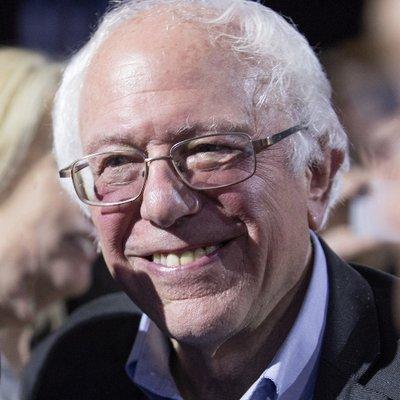
Total wealth in the United States doubled between 1989 and 2013, but the wealth of the American family right in the middle of the economy barely budged in that time, according to a new report prepared by the Congressional Budget Office for U.S. Sen. Bernie Sanders (I-Vt.).
"Over the period from 1989 through 2013, family wealth grew at significantly different rates for different segments of the U.S. population," CBO wrote. "The distribution of wealth among the nation's families was more unequal in 2013 than it had been in 1989."
Total wealth in the United States doubled between 1989 and 2013, but the wealth of the American family right in the middle of the economy barely budged in that time, according to a new report prepared by the Congressional Budget Office for U.S. Sen. Bernie Sanders (I-Vt.).
"Over the period from 1989 through 2013, family wealth grew at significantly different rates for different segments of the U.S. population," CBO wrote. "The distribution of wealth among the nation's families was more unequal in 2013 than it had been in 1989."
"The reality, as this report makes clear, is that since the 1980s there has been an enormous transfer of wealth from the middle class and the poor to the wealthiest people in this country," Sanders said. "There is something profoundly wrong when the rich keep getting richer and virtually everyone else gets poorer. That is unacceptable, and that has got to change."
As of 2013, the top 10 percent of families owned three-quarters of total family wealth in the United States. The average wealth of the top 10 percent was $4 million, but families in the bottom 25 percent were $13,000 in debt on average.
Although CBO did not look at the wealth of the top one-tenth of 1 percent, Emmanuel Saez and Gabriel Zucman found that the top one-tenth of 1 percent now owns almost as much wealth as the bottom 90 percent.
While the top 10 percent of families have vastly increased their share of wealth, the bottom 25 percent has suffered enormously. Since 1989, the amount owed by indebted American families tripled. In 2013, families in the bottom 25 percent were $13,000 in debt, on average, whereas they had virtually no debt in 2001. A total of 15 million families were in debt in 2013, with an average indebtedness of $32,000.
Higher education plays a key role in determining family wealth, according to the report. In 2013, households headed by someone with a college degree had four times more wealth than households headed by an individual with a high school degree.
But student loan debt was largely responsible for the increase in debt among the bottom 25 percent of families. Between 2007 and 2013 "the share of families with student debt increased from 25 percent to 36 percent, and the average amount increased from $24,000 to $36,000," CBO wrote. The percentage of indebted families with outstanding student debt rose from 56 percent in 2007 to 64 percent in 2013, and their average student loan balances increased from $29,000 to $41,000.
"If we are going to reduce wealth inequality in this country, we must make public colleges and universities tuition-free and substantially lower student loan interest rates so that millions of young people do not leave school with a mountain of debt that burdens them for decades," Sanders said.
Young and middle-aged Americans have seen the fewest gains of any age group in America. Only families headed by someone over the age of 65 have more wealth today than they did in 1989.
To read the CBO report, click here.
"New York just got a lot more livable for thousands of families."
Thousands of parents in New York City will have access to free childcare after Gov. Kathy Hochul joined forces with Mayor Zohran Mamdani on Thursday to roll out the first steps of his campaign promise to make childcare universal throughout the city.
The governor announced $1.7 billion in this year's budget that will seek to create childcare access for 100,000 more children, part of a plan to spend $4.5 billion on childcare across the state during this fiscal year.
She said she is committed to “fully fund the first two years of the city’s implementation" of Mamdani's program, which he hopes will one day provide free childcare to kids between 6 weeks and 5 years old.
According to the childcare marketplace website TrustedCare, the average cost of daycare for children in New York City ranges from $2,000 to $4,200 per month, depending on the child's age and schedule.
"This is something every family can agree on," Hochul said at a press conference Thursday at a YMCA in the Flatbush neighborhood of Brooklyn. "The cost of childcare is too damn high."
The governor and mayor will begin by increasing funding for the city's existing 3K program, created under former Mayor Bill de Blasio, which extended free pre-K, which was already available to all 4-year-olds, to 3-year-olds when spots are available. Hochul said she and Mamdani will seek to "fix" the program and make it truly universal.
After initially promising to make it available to all 3-year-olds, Mamdani's predecessor, former Mayor Eric Adams, instead slashed funding for it and other early childhood education programs, which children's advocates said drove kids out of the public school system and left many unable to find seats in nearby areas.
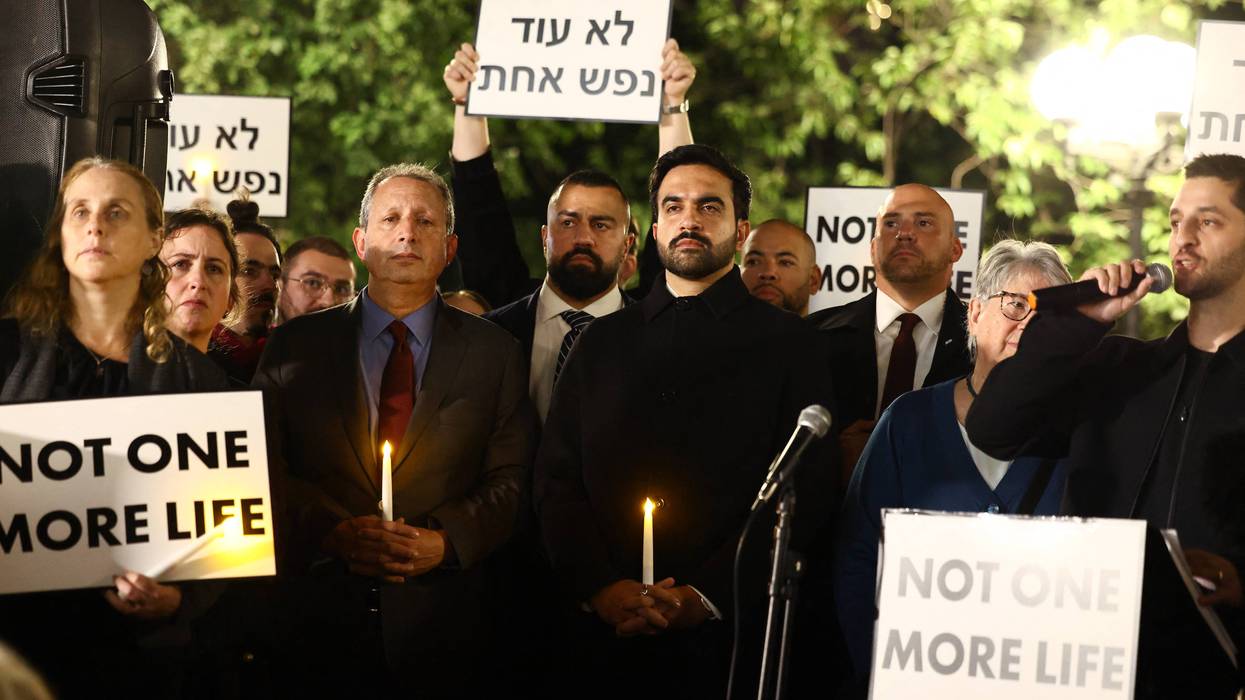
"We stand here today because of the young New Yorkers who were no longer willing to accept that the joy of beginning a family had to be paired with the heartbreak of moving away from a city that they have always loved," Mamdani said.
In addition to making that program universal, Hochul and Mamdani are rolling out a program offering childcare for 2-year-olds, known as "2 Care," which will first be available in "high-need areas" before being rolled out to all parents by 2029.
Mamdani has estimated that the plan to make pre-K fully universal will cost about $6 billion per year, with funding made more challenging by the fact that President Donald Trump recently cut off federal childcare subsidies to states, including $3 billion to New York, amid a manufactured panic about rampant fraud. Hochul has said the state is mulling its legal options to fight the funding freeze.
In the meantime, she plans to spend $73 million in the first year to cover the cost and creation of 2 Care, and $425 million in the second year as more children enroll.
While the source of the funds was not immediately clear, Hochul has said that money for the initial phase of the rollout will come from revenue already allocated by the legislature and not from any tax hikes in the coming year.
"We’re barely six months away from people dismissing Zohran Mamdani for running on universal childcare," said Rebecca Katz, an adviser to the new mayor's campaign. "And now here we are. Incredible. New York just got a lot more livable for thousands of families."
Some New Yorkers who supported Mamdani's campaign expressed excitement on social media about having one of their highest costs lifted.
"Universal 3K is the major reason we could afford to stay in our apartment in NYC," said Jordan Zakarin, a producer at the labor-focused media company More Perfect Union. "Making care free for 2-year-olds will be a game-changer for so many families and keep so many of them in NYC."
Andrei Berman, a father of three children, said that "this will save me 40 grand and eliminate my biggest expense a year early."
The high cost of childcare is an issue that has brought Mamdani, a self-described democratic socialist, together with the centrist Hochul. The endorsement of New York's "first mom governor," a leading Democratic power-broker in the state and the country, proved a critical stepping stone for Mamdani on his unlikely ascent to the city's highest office last year.
"To the cynics who insist that politics is too broken to deliver meaningful change, to those who think that the promises of a campaign cannot survive once confronted with the realities of government, today is your answer," Mamdani said. "This is a day that so many believed would never come, but it is a day that working people across our city have delivered through the sheer power of their hard work and their unwavering belief that a better future was within their grasp."
"The good news is that the global war on terror is finally over," said journalist Ken Klippenstein. "The bad news is that it came home."
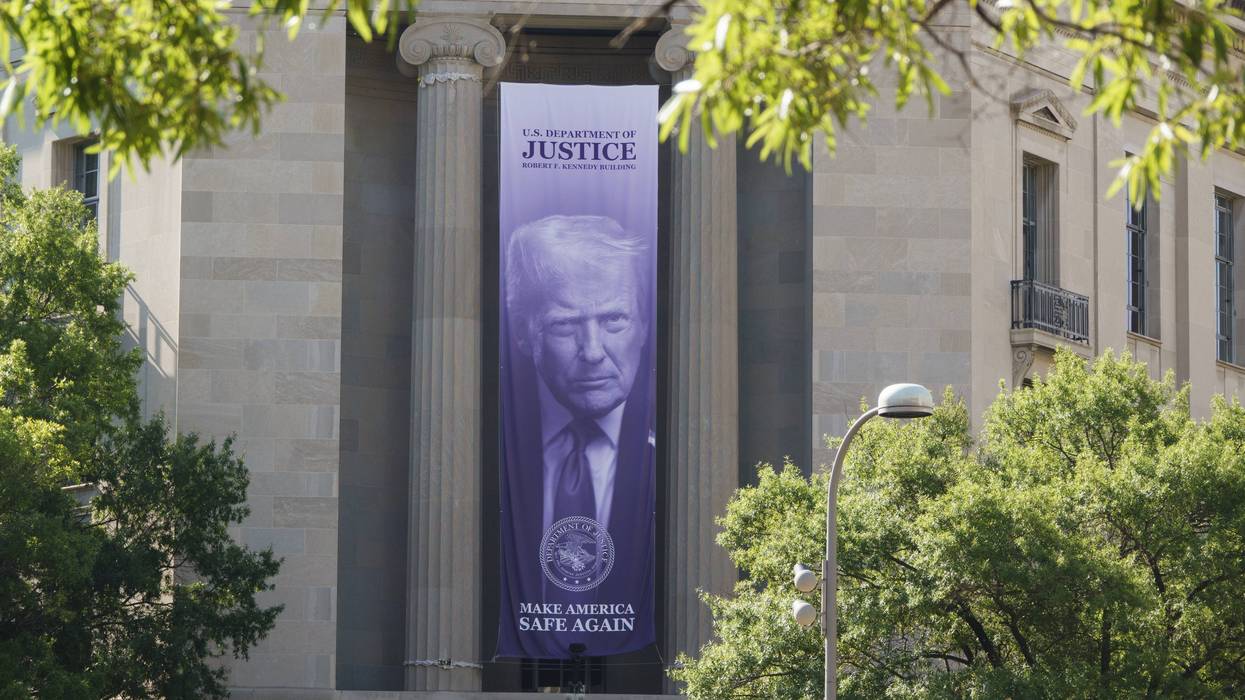
As US Homeland Security Secretary Kristi Noem on Thursday doubled down on claims that Renee Nicole Good had committed "an act of domestic terrorism" before being killed by a federal immigration agent, one journalist warned that the killing appeared to be the direct result of an underreported memo signed by President Donald Trump several months ago—a sign that the administration is entering a new phase in what it views as a war with the so-called "enemy within."
US Immigration and Customs Enforcement's (ICE) "killing of unarmed American citizen Renee Nicole Good in Minneapolis has NSPM-7 written all over it," said independent journalist Ken Klippenstein, who has reported extensively on National Security Presidential Memorandum 7.
The memo was signed soon after Trump announced that Antifa—which is not an organization—had been designated a domestic terrorist group, and weeks after the White House blamed the "radical left" for the assassination of right-wing activist Charlie Kirk.
NSPM-7 mandates a "national strategy to investigate and disrupt networks, entities, and organizations that foment political violence so that law enforcement can intervene in criminal conspiracies before they result in violent political acts," and has an exclusive focus on "anti-fascist" or left-wing activities.
Klippenstein noted on Wednesday that NSPM-7 was followed by an order signed by Attorney General Pam Bondi, which directs federal law enforcement agents to crack down on "threats" to ICE officers, including actions that impede enforcement operations.
Speaking to reporters on Thursday, Noem highlighted the administration's claim—one that has not been made clear by evidence that's been released—that Good was impeding ICE officers on Wednesday before she was killed.
A reporter asked if Noem still believed the officer accused of killing Good, Jonathan Ross, had acted in self-defense and according to ICE procedures.
"This is an experienced officer who followed his training," said Noem. "These individuals had followed our officers all day, had harassed them, had blocked them in. They were impeding our law enforcement operations, which is against the law. And when they demanded and commanded her to get out of her vehicle several times, she did not."
Noem: "What happened was our officers were out trying to get a car stuck out of the snow when they were surrounded and assaulted and blocked in by protesters ... this was an act of domestic terrorism" (It was 40 degrees in Minneapolis yesterday and snow was melting ... ) pic.twitter.com/eGDsBnGcJE
— Aaron Rupar (@atrupar) January 8, 2026
"The directive goes on to direct prosecutors to target those interfering with or impeding ICE actions," wrote Klippenstein. "'The U.S. Attorney’s Office for each district shall prosecute any individual who assaults or forcibly impedes or intimidates these officers, who interferes with the performance of these officers’ official duties, or who attempts to do so, consistent with 18 U.S.C.§ 111 and other applicable federal laws,' the document says."
The reporter on Thursday also questioned how the administration could declare Good a domestic terrorist despite the fact that no investigation has been completed into the case.
"This was an act of domestic terrorism," she said simply.
The Trump administration's continued smearing of Good as a terrorist is a sign, said Klippenstein, that while the "global War on Terror is finally over... It came home."
Podcast host Wajahat Ali wrote that "if Renee Good is 'a domestic terrorist' according to Kristi Noem, it means the label is meaningless and will be used by the Trump administration to murder anyone it wants. From Venezuelan fishermen to anti-Trump protestors. Eyes wide open, friends."
"With this historic, bipartisan vote to prevent further war in Venezuela, Congress has begun the long-overdue work of reasserting its constitutional role in decisions of war and peace," said one observer.
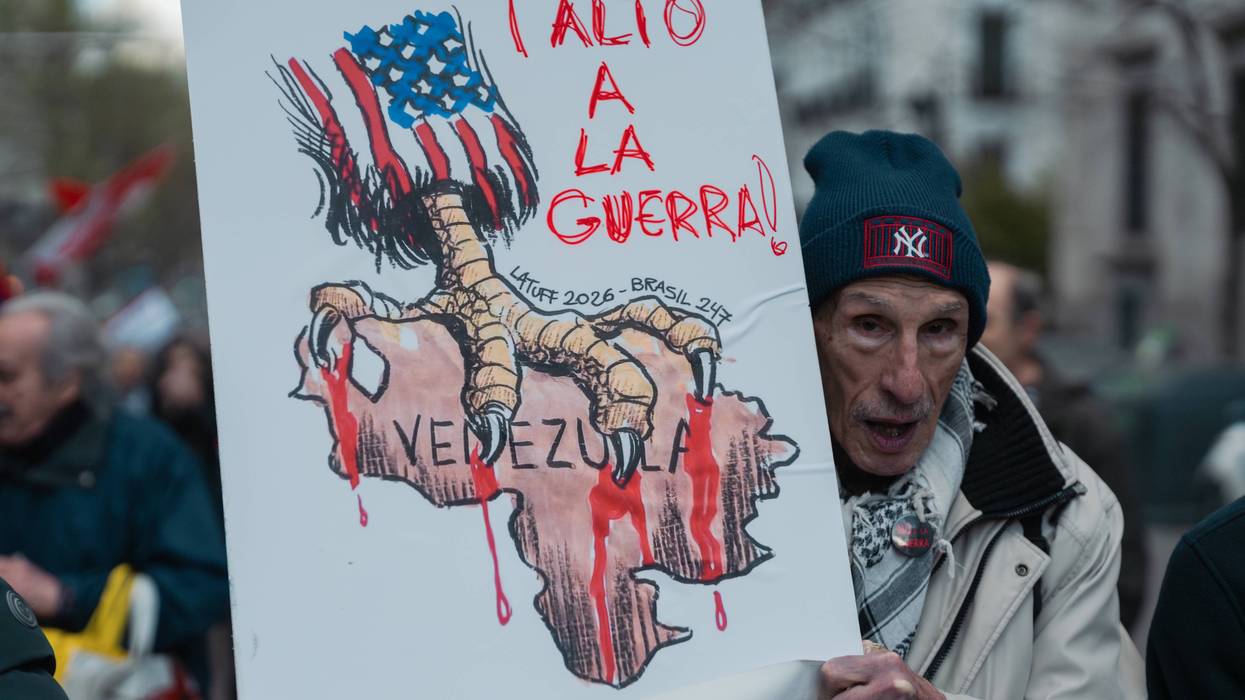
Amid President Donald Trump's admission that his intervention in Venezuela could last years, US senators voted Thursday to advance legislation aimed at blocking the president's use of military forces against the oil-rich South American nation.
Senators voted 52-47 to advance a war powers resolution introduced last month by Sens. Tim Kaine (D-Va.), Rand Paul (R-Ky.), Adam Schiff (D-Calif.), and Senate Minority Leader Chuck Schumer (D-NY) "to block the use of the US armed forces to engage in hostilities within or against Venezuela unless authorized by Congress" as required by the 1973 War Powers Act.
The Senate will now continue debating the measure, which, if passed by both the upper chamber and the House of Representatives, would be subject to a likely veto by Trump—who has sunk two previous war powers resolutions unrelated to Venezuela.
In addition to Paul, four other GOP senators voted to advance the resolution: Susan Collins of Maine, Josh Hawley of Missouri, Lisa Murkowski of Alaska, and Todd Young of Indiana. While lawmakers often assent during the procedural phase, only to cast ballots against legislation during final votes, at least one of the GOP senators signaled they will vote the same as they did Thursday.
"While I support the operation to seize [Venezuelan President] Nicolás Maduro, which was extraordinary in its precision and complexity, I do not support committing additional US forces or entering into any long-term military involvement in Venezuela or Greenland without specific congressional authorization," Collins said in a statement, referring to Trump's threats to acquire the Danish territory by force if he deems it necessary. Sen. Ruben Gallego (D-Ariz.) this week introduced a bill that would ban the president from any such action.
"I believe invoking the War Powers Act at this moment is necessary, given the president’s comments about the possibility of ‘boots on the ground’ and a sustained engagement ‘running’ Venezuela, with which I do not agree," added Collins, who is facing a serious challenge for her Senate seat from candidates including former Maine Gov. Janet Mills and progressive Graham Platner, both Democrats who oppose US military action in Venezuela.
At the time of bipartisan war powers resolution's introduction last month, Trump had not yet attacked Venezuelan territory, although he had threatened to do so, deployed warships and thousands of US troops to the region, authorized covert CIA action to topple Maduro, and ordered the bombing of boats the administration claimed—without evidence—were smuggling drugs in the Caribbean Sea and Pacific Ocean.
However, Trump dramatically escalated US intervention in Venezuela, first with a December drone strike on a port facility and then by bombing and invading the country and abducting Maduro and his wife.
Asked during a Wednesday interview with the New York Times whether the US intervention in Venezuela would last a year, or longer, Trump replied, "I would say much longer," explaining that "we will rebuild" the country "in a very profitable way," including by "taking oil" from it.
The specter of yet another US "forever war" like the ongoing open-ended War on Terror that's left nearly 1 million people dead in at least seven countries since 2001 has prompted the introduction of several congressional war powers resolutions. So far, none have passed.
“If there was ever a moment for the Senate to find its voice, it is now," Schumer said on the Senate floor ahead of Thursday's vote. "Today, the Senate must assert the authority given to it on matters of war and peace. We must send Donald Trump a clear message on behalf of the American people: No more endless wars. Donald Trump’s ready for an endless war in Venezuela, and lord knows where else. The American people are not.”
Kaine made it clear during his pre-vote Senate floor remarks that the resolution does not challenge the "execution of a valid arrest warrant against Nicolás Maduro," which—despite experts concurring that the invasion and abduction were illegal—he called "good for America and good for Venezuela."
However, Kaine said, given that Trump's intervention "will go on for a long period of time," US troops "should not be used for hostilities in Venezuela without a vote of Congress as the Constitution requires.”
“No one has ever regretted a vote that just says, Mr. President, before you send our sons and daughters to war, come to Congress," he added.
However, such votes have very rarely succeeded in stopping any president from proceeding with military action.
In 2019 during Trump's first term, the House and Senate both passed a war powers resolution introduced by Sen. Bernie Sanders (I-Vt.) to cut off US military support for the Saudi-led coalition’s atrocity-laden war on Yemen. Trump vetoed the measure, and senators lacked the two-thirds majority needed to override his move.
The following year, both houses of Congress passed another war powers resolution—this one introduced in the Senate by Kaine—to terminate military action against Iran. But Trump again vetoed the legislation, and the Senate could not muster the two-thirds majority required for an override. After returning to office last year, Trump ordered sweeping attacks on Iran—and is threatening to do so again.
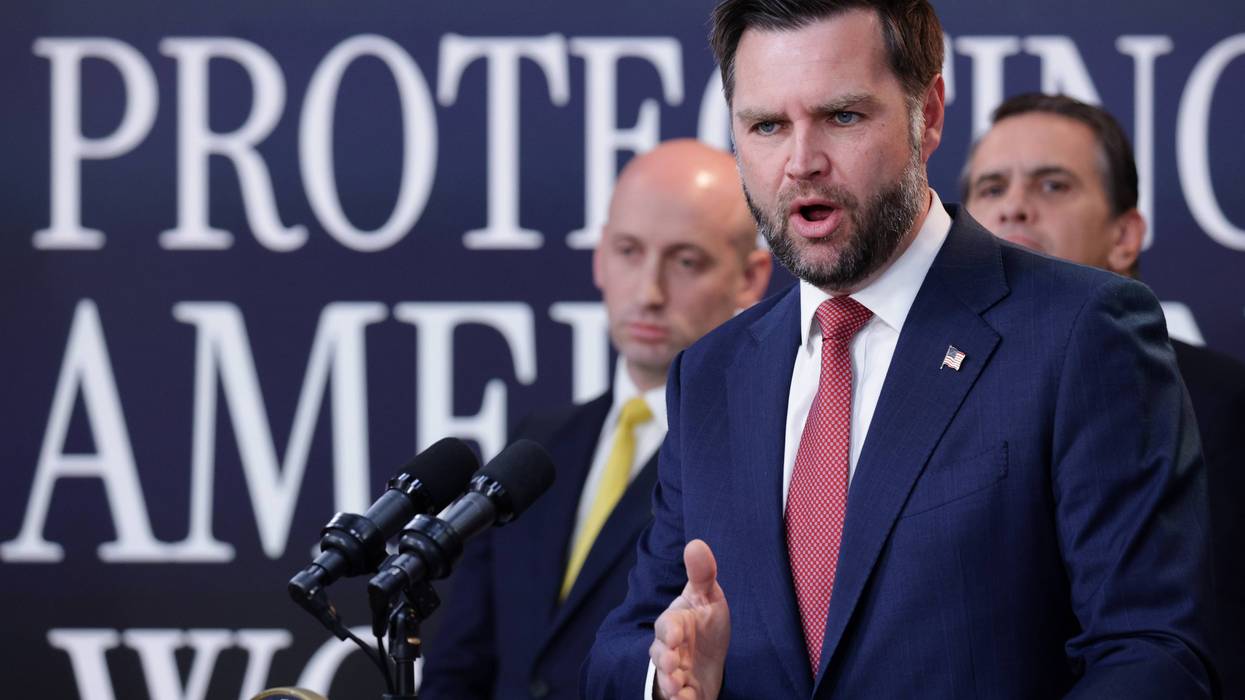
While Trump took to his Truth Social network to blast the five Republican senators who voted to advance the war powers resolution on Thursday and Vice President JD Vance called the War Powers Act "fundamentally a fake and unconstitutional law," progressive and anti-war advocacy groups hailed the advancement.
"With this historic, bipartisan vote to prevent further war in Venezuela, Congress has begun the long-overdue work of reasserting its constitutional role in decisions of war and peace," Demand Progress senior policy adviser Cavan Kharrazian said in a statement.
"We commend the leadership of Sens. Kaine and Paul in forcing this vote, and we thank Sens. Collins, Young, Hawley, and Murkowski for their principled votes," Kharrazian continued. "Senators should move quickly to adopt the resolution to prevent further unauthorized military escalation and the House should follow suit."
"Congress should also make clear, using the full force of the law, that no president has the authority to unilaterally launch hostilities anywhere in the world," he added, "whether in Venezuela or against other countries the administration has openly threatened, including Cuba, Greenland, Colombia, and Iran.”
"The dam has broken." Afghanistan War Veteran Max Rose applauds the Senate’s bipartisan vote advancing the War Powers Resolution. He calls it a stunning rebuke of Trump’s unilateral wars, reminding the President that the military belongs to America, not him.
[image or embed]
— VoteVets (@votevets.org) January 8, 2026 at 9:05 AM
Jose Vasquez, executive director of Common Defense and an Army veteran, said, "The vote is a victory for the Constitution, the stability of the region, and for the veterans and military families who organized, spoke out, and refused to accept another reckless slide toward forever war."
"By drawing this vote, Congress sends an essential message that accountability still matters and that no one person or presidential administration can send Americans to war," he added. "Veterans will remain organized and vigilant, but today shows what is possible when Congress listens to the will of the people and leans toward peace rather than war."