SUBSCRIBE TO OUR FREE NEWSLETTER
Daily news & progressive opinion—funded by the people, not the corporations—delivered straight to your inbox.
5
#000000
#FFFFFF
To donate by check, phone, or other method, see our More Ways to Give page.


Daily news & progressive opinion—funded by the people, not the corporations—delivered straight to your inbox.

Tara Houska, National Campaign Director, Honor the Earth, tara@honortheearth.org
For the last six weeks, a global coalition has been pressuring banks providing project loans to the Dakota Access Pipeline to renegotiate or cancel their loans. In December, the Standing Rock Sioux Tribe and other Indigenous leaders requested that each of these banks meet with tribal representatives to hear their concerns.
The deadline for banks to respond to the Tribe's meeting request was January 10, and as of this statement:
In response, organizers are escalating their pressure on banks that refuse to engage. The Indigenous coalition at Standing Rock has a running billboard in Times Square asking millions of people to #DefundDAPL. Organizers continue a drumbeat of protests and bank occupations, along with brand-damaging campaigns that have already led to the closure of thousands of accounts worth a self-reported $46,314,727.18.
Protests have increased in fervor and frequency over the last few weeks, including multiple occupations of Wells Fargo, US Bank and Citibank branches, as well as a daring banner drop during a nationally televised Vikings/Bears NFL game at US Bank Stadium in protest of their bankrolling of DAPL project sponsors Sunoco Logistics and Energy Transfer Partners.
Backed by hundreds of thousands of online signatures and commitments to #DefundDAPL, organizers from more than 25 grassroots groups vowed the campaign will continue and intensify in the coming weeks, building up to a planned "global week of action" unless all 17 of the banks act. The ask for the banks is to discontinue loan disbursements in consultation with Native leaders until outstanding issues are resolved, and Free, Prior and Informed Consent from Indigenous peoples is upheld.
Standing Rock Sioux Tribal Chairman Dave Archambault II said: "We are pleased that some of the banks behind DAPL are willing to engage Standing Rock Sioux leadership, but maintain that all 17 should not be helping a company who deliberately ignores our concerns. We call on the remaining banks to agree to a meeting with the Tribe. We know that they have heard Energy Transfer Partners' side of the story, and they need to hear our perspective as well."
Ladonna Bravebull Allard, Sacred Stone Camp said: "I want the banks to know that the power of their investment comes from the people, and the people are saying we have the right to water, and we will stand for the water. Stop investing in destruction of the earth."
Tara Houska, National Campaigns Director, Honor the Earth said: "This movement has shown again and again that the power and strength of the people is incredible. Banks need our dollars to make their investments. We can and must hold these financial backers accountable for supporting destruction of our shared planet and futures. Move past dated fuels and justly transition to a green economy."
Eryn Wise, International Indigenous Youth Council said: "What began as a protection of the earth has now become a reclamation of power. We are demanding that our interests as a prospering people be put before banks and their investments. We hold in our hands the ability to encourage divestment to the point of fruition and we will not back down."
Dallas Goldtooth, Keep it in the Ground Organizer, Indigenous Environmental Network said: "As a movement to stop this dirty Bakken oil pipeline, we are demonstrating the inherent power of organized communities and mobilized citizens. We are showing Big Oil and government leaders that we know the power of our capital, and as such we collectively choose to invest in life and water, not death and oil. As first peoples of the land and in defense of our Indigenous rights, we will continue to rise, resist, self-determine and divest until the Dakota Access pipeline is nothing but the defeated aspirations of a Energy Transfer Partners' dream."
Judith LeBlanc, Director, Native Organizers Alliance said: "The Standing Rock Sioux Tribe has a spiritual obligation to protect the Missouri River for all. The best way for the banks to meet their obligation to protect their investor's interest is to meet with the Tribal leadership. Mother Earth and all of our ancestors deserve the opportunity for an exchange on our shared moral obligations to protect Mother Earth for generations to come."
Sara Nelson, Executive Director, Romero Institute and the Lakota People's Law Project said: "We are moving our financial accounts from Wells Fargo to a local bank that does not invest in companies who violate Indigenous rights and environmental impact requirements, and will not endanger clean water for millions of people. We want our money used to support positive solutions for our children's future, not to float big companies who send oil overseas, make the American people pay for inevitable spills, and generate profits for banks and billion dollar global companies."
Leila Salazar Lopez, Executive Director, Amazon Watch said: "From Standing Rock to the Amazon, Indigenous peoples are defending their territories and providing a model for a fossil free world. It's time banks listen to Indigenous peoples and their allies in our call to Keep It In The Ground."
Lindsey Allen, Executive Director, Rainforest Action Network said: "Investing in a project of Energy Transfer Partners, a company that has abused Indigenous and human rights, was a big mistake. These banks now have a chance to fix it by meeting with the Standing Rock Sioux, and upholding Free, Prior and Informed Consent from Indigenous peoples."
Dr. Gabriela Lemus, President of Progressive Congress Action Fund said: "No bank should support poisoning communities' land and water- yet too many banks still have investments in Energy Transfer Partners and the Dakota Access Pipeline. We call on these banks to divest completely. Families' lives are at risk, and that should always take priority over profits. All banks have a responsibility not only to their shareholders and customers, but to the communities that are impacted by their investments. Don't keep funding this dangerous project."
Todd Larsen, Executive Co-Director of Green America said: "Banks need to end investments that harm the rights and lives of Indigenous peoples. We call on all banks to divest entirely from the Dakota Access Pipeline. Until these banks do so, all Americans should divest their money from any bank providing financing to this ruinous pipeline."
Erich Pica, President, Friends of the Earth U.S. said: "The voices of Indigenous peoples have been ignored for too long - by the US government, corporations and big banks. By not acknowledging Indigenous peoples, or outright refusing to meet with them, these ten banks are perpetuating a pattern of colonialism and failing to respect Indigenous peoples' rights to Free, Prior and Informed Consent."
Johan Frijns, Director of BankTrack said: "The Dakota Access Pipeline project is supposed to be in compliance with the Equator Principles, and therefore guarantee Indigenous peoples' rights to be properly consulted. The refusal of leading EP banks to meet with the Sioux Tribe not only makes a complete mockery of that commitment, but also poses a severe risk to the very credibility of the Equator Principles."
Vanessa Green, Director of DivestInvest Individual said: "DAPL is simply the wrong kind of investment, and people don't want their money behind it. With government mandates to scale up clean energy investments, a market increasingly supportive of a low carbon future, and unprecedented consumer and investor interest in moving money into climate and community solutions, the question now is which banks will lose the most in this historic energy transition."
Mary Sweeters, Arctic Campaigner with Greenpeace USA, said: "People across the world have pledged their solidarity with the Indigenous communities who reject this dirty pipeline and the threat it poses to the water and climate. The banks must choose whether they want to continue to invest their money in yesterday or listen to the millions of people who stand with Standing Rock."
Lena Moffitt, Sierra Club Beyond Dirty Fuels Director, said, "People power can, does, and will continue to prevail over corporate polluters. The people will not stop until the banks financing these operations invest in our clean air and water -- not fossil fuels."
Friends of the Earth fights for a more healthy and just world. Together we speak truth to power and expose those who endanger the health of people and the planet for corporate profit. We organize to build long-term political power and campaign to change the rules of our economic and political systems that create injustice and destroy nature.
(202) 783-7400"Trump is preparing to take the US into another illegal war against Cuba," warned one progressive critic of the US president. "We must stop him. It’s not too late."
Is Cuba next in line for a US attack?
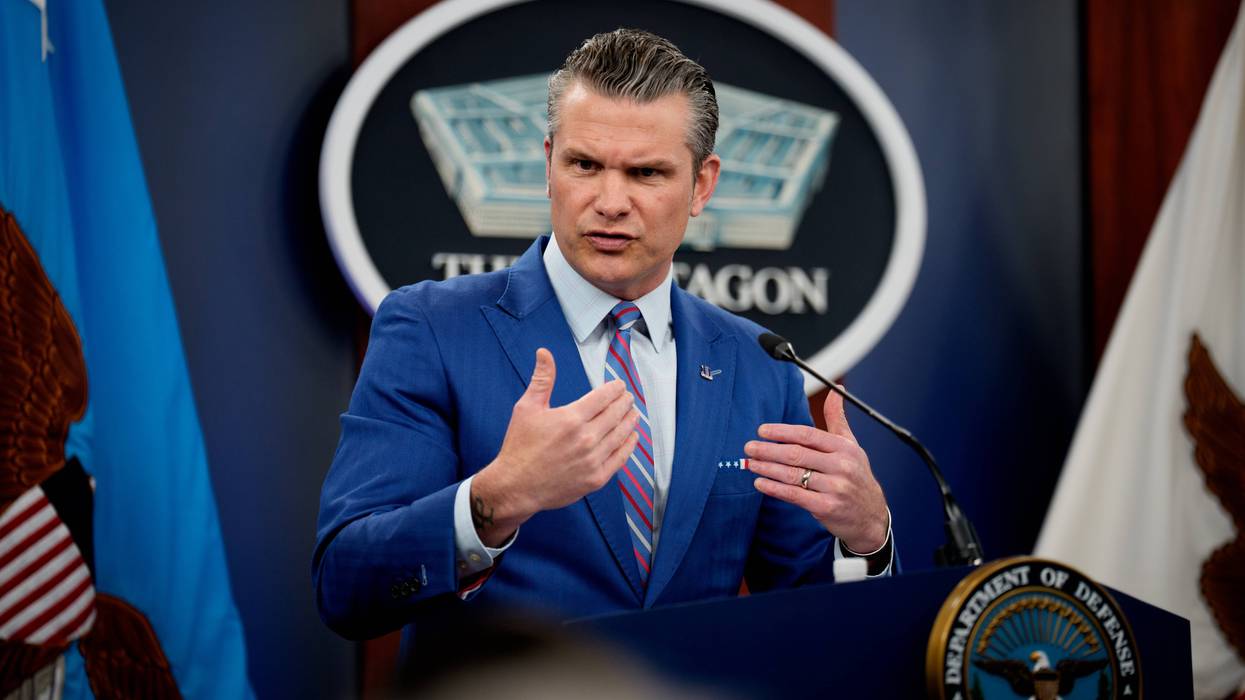
US President Donald Trump has repeatedly said it could be, and USA Today on Wednesday cited "sources familiar" with the matter who said that the Pentagon is "quietly ramping up" preparations to wage war on the socialist nation if Trump gives the order.
On Monday, Trump flippantly declared that “we may stop by Cuba after we’re finished with this," referring to the illegal US-Israeli war of choice on Iran that's left thousands of Iranians dead or wounded, including hundreds of children.
Trump has also said that he believes he’ll “be having the honor of taking Cuba,” language echoing the 19th century US imperialists who conquered the island along with Puerto Rico and the Philippines from Spain in another war waged on dubious pretense.
"Whether I free it, take it—I think I can do anything I want," Trump said of the island and its 11 million inhabitants.
The USA Today report—authored by Kim Hjelmgaard, Rick Jervis, and Francesca Chambers—sparked widespread alarm among advocates for peace.
"This is not a drill. Trump is preparing to take the US into another illegal war against Cuba to appease the Miami mafia," Progressive International co-general coordinator David Adler said Wednesday on X. "We must stop him. It’s not too late."
Cubans—who have been subjected to generations of privation and hardship due largely to the internationally condemned US economic embargo of their island—have mostly shrugged off Trump's threats, with some observers noting that Cuba's socialist era has outlasted a dozen American presidents.
Responding to a question about a possible US attack on his country, Cuban President Miguel Díaz-Canel said Sunday on NBC News' "Meet the Press" that “if that happens, there will be fighting, and there will be a struggle, and we will defend ourselves, and if we need to die, we’ll die, because as our national anthem says, ‘Dying for the homeland is to live’.”
Numerous observers expressed shock, but not surprise, that Trump—the self-proclaimed "peace president" who has bombed 10 countries, more than any other US president—is setting his sights on Cuba, which American presidents since Thomas Jefferson have coveted.
Trump has been threatening Cuba since his first administration, when he systematically rolled back the Obama administration's diplomatic normalization with the island's socialist government. He also activated a provision of the Helms-Burton Act allowing lawsuits over property confiscated after the Cuban Revolution.
On the last day of his first term, Trump re-designated Cuba a state sponsor of terrorism, a move critics slammed as absurd given that Cuba has never carried out any acts of terrorism—unlike the United States and the militant Cuban exiles it harbors, who have a decadeslong record of terrorist bombings and other attacks, as well as numerous failed or aborted attempts to assassinate former revolutionary leader Fidel Castro.
Since returning to office, Trump has ratcheted up military threats and economic pressure on Cuba, which was already reeling from decades of US sanctions and the inefficiencies of centralized state control. Trump tightened the embargo by severely restricting fuel imports, exacerbating an energy emergency characterized by blackouts and deadly suffering among the most vulnerable Cubans, including sick people and children.
Last month, US Sens. Tim Kaine (D-Va.), Adam Schiff (D-Calif.), and Ruben Gallego (D-Ariz.) introduced a war powers resolution aimed at preventing Trump from attacking Cuba without congressional authorization as required by law. Numerous war powers resolutions related to Iran, Venezuela, and Trump's extralegal high-seas boat bombings have failed to pass.
Abdul El-Sayed has been attacked by a centrist think tank for campaigning with anti-Israel commentator Hasan Piker. He faces Haley Stevens and Mallory McMorrow, who both have ties to the pro-Israel lobby.
Weeks into a controversy egged on by the centrist think tank Third Way regarding Democratic US Senate candidate Dr. Abdul El-Sayed's decision to campaign with an outspoken anti-Israel commentator, a new poll out Wednesday revealed that despite the best efforts of the explicitly anti-left group and El-Sayed's opponents, the three candidates are in a dead heat with four months to go until Michigan's primary.
The Data for Progress poll, conducted on behalf of Zeteo News and Drop Site News, found that US Rep. Haley Stevens (D-Mich.) was in the lead with 23%, but state Sen. Mallory McMorrow (D-8) and El-Sayed were not far behind, with 22% each. A third of voters were undecided, potentially leaving many open to learning more about the three candidates ahead of the August 4 primary.
With Israel and Palestine already a central theme in the primary due the uproar over El-Sayed's decision to campaign with Twitch streamer and commentator Hasan Piker, voters were asked about their views on Piker as well as Stevens' and McMorrow's ties to the pro-Israel lobby, and signaled that the latter two candidates may have more to explain than El-Sayed.
"Michigan primary voters appear significantly more concerned about the influence of [the American Israel Public Affairs Committee], America’s top pro-Israel lobby," wrote Andrew Perez at Zeteo. "Sixty-four percent said they are less likely to support a Senate candidate who receives donations from AIPAC and other pro-Israel groups, while 10% said they are more likely."
Stevens received $340,000 in direct campaign contributions from AIPAC's political action committee last year before she launched her Senate campaign, and she taped a promotional video for the powerful group last month.
McMorrow has positioned herself as a middle ground between Stevens and El-Sayed, a vehement supporter of Palestinian rights, and has spoken out against Israel's US-backed assault on Gaza. The war, which has killed more than 72,000 Palestinians, has been called a genocide by leading human rights groups and Holocaust scholars, but McMorrow has not used that word to describe the attacks and has complained that those who urge politicians to do so are subjecting them to a "purity test."
McMorrow reportedly drafted a position paper for AIPAC and attended an invite-only event hosted by the group last year, featuring a columnist who publicly questioned whether Israel was imposing a starvation policy in Gaza.
Michigan primary voters' views on AIPAC mirror those of the larger electorate, according to one poll from last October by Upswing Strategies, which found that nearly half of voters in competitive districts said they "could never support" a candidate funded by AIPAC or the pro-Israel lobby.
The Data for Progress poll also found that 62% of voters agreed with the statement, "If a candidate is not willing to stand up to AIPAC, I am less likely to trust them to stand up for Michiganders on other issues."
The poll was taken between April 2-8, with 515 people surveyed around the time that El-Sayed was appearing with Piker at rallies at the University of Michigan and Michigan State University.
Stevens and McMorrow both took aim at El-Sayed for associating with Piker, who once said the US "deserved" the September 11 attacks—a remark he later apologized for—and has said the Hamas-led October 7, 2023 attack was a "direct consequence" of US and Israeli actions. Stevens condemned El-Sayed for "choosing to campaign with someone who has a history of antisemitic rhetoric," while McMorrow compared Piker to far-right, white nationalist streamer Nick Fuentes. Piker and El-Sayed have spoken out against antisemitism and emphasized the difference between opposition to the Israeli government and bias against Jewish people.
Despite the focus on Piker in recent weeks, the poll found that the vast majority of Michigan primary voters didn't know enough about him to have an opinion about his involvement in El-Sayed's rallies. Thirteen percent of respondents had a favorable view of him while 7% viewed him negatively.
Data for Progress gave respondents some context about Piker, highlighting his past remarks and noting he's been accused of antisemitism as well as mentioning El-Sayed's view that "criticism of Israel should not be confused with antisemitism." With the background information, 40% of respondents said they approved of El-Sayed campaigning with Piker, 30% said they disapproved, and 30% said they weren't sure.
Previous polls have found larger gaps between the three candidates; a poll by Upswing Research found in early March that 27% of voters backed Stevens, 25% supported McMorrow, and 23% supported El-Sayed.
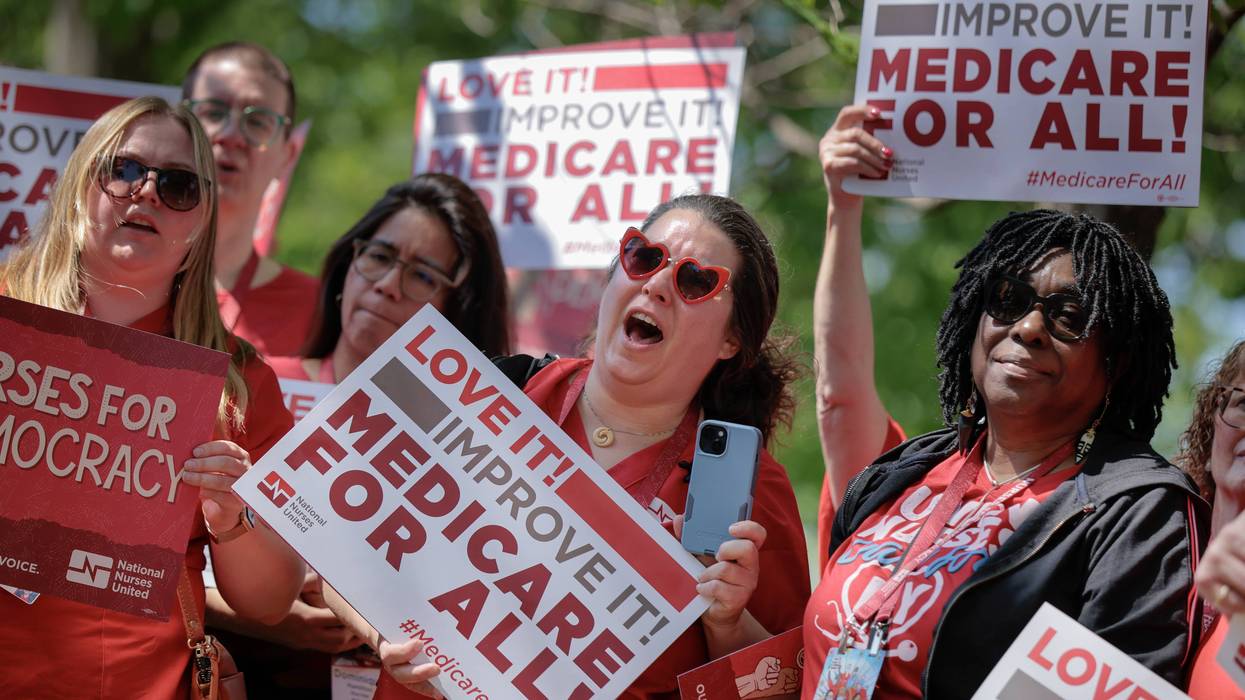
While Third Way has cast the primary election as a referendum on a popular livestreamer in recent weeks, Data for Progress executive director Ryan O'Donnell said the poll offered clarity on the other issues that matter to Michigan voters, including expanding Medicare to the entire US population and abolishing US Immigration and Customs Enforcement—both proposals El-Sayed strongly supports.
The Data for Progress poll was released as progressive organization Our Revolution announced its endorsement of El-Sayed.
"He is running on a bold vision beyond universal healthcare, from taking on corporate greed to ending big money in politics to advancing a more just and humane future for all," said Our Revolution. "This is a people-powered campaign—and a chance to build a government that truly works for working families."
Minnesota Attorney General Keith Ellison called the verdict "a win for everyone who thinks concert tickets are too damn expensive."
Antitrust advocates celebrated on Wednesday after a jury found that Live Nation and is subsidiary Ticketmaster were illegal monopolies who for decades systematically overcharged customers for concert tickets.
As reported by The Associated Press, the verdict against Live Nation and Ticketmaster could cost the two entities "hundreds of millions of dollars, just for the $1.72 per ticket that the jury found Ticketmaster had overcharged consumers in 22 states," and they could be forced to sell off some of the venues they own.
The case against Live Nation, which was brought by 33 states and the District of Columbia, was initially led by the US Department of Justice. However, under President Donald Trump, the DOJ last month reached a last-minute settlement with the company that would not require it to be broken up.
The state attorneys general, however, vowed to see the case through and were rewarded with a big verdict in their favor.
New York Attorney General Letitia James celebrated the verdict, describing it as "a landmark victory to protect New Yorkers from harmful monopolies."
Minnesota Attorney General Keith Ellison called the verdict "a win for everyone who thinks concert tickets are too damn expensive," and declared himself "proud to have brought this lawsuit."
District of Columbia Attorney General Brian Schwalb noted Live Nation "has raked in billions in profits from an illegal monopoly that coerces venues, restricts artists, and exploits fans," and called the verdict "a massive win in the fight for fairness for local venues, artists, and fans."
Lina Khan, former chair of the Federal Trade Commission under President Joe Biden, hailed the verdict, but said it was just "a key first step towards ending Live Nation’s monopolistic control and securing real relief for those it harmed."
Lee Hepner, senior legal counsel at the American Economic Liberties Project, said the verdict was "decades in the making," and he cited iconic Seattle band Pearl Jam's fight against Ticketmaster in the 1990s to illustrate just how long it's taken to hold the company accountable.
"Pour one out for Pearl Jam, who testified before Congress in 1993 about Ticketmaster's abuse of the live concert industry," he commented.
The Roosevelt Institute took a shot at the Trump DOJ for bailing on the case, and noted the verdict against Live Nation "only happened because state AGs kept pushing after a federal settlement that let the companies off the hook."