February, 13 2017, 10:15am EDT
Days Before Confirmation Hearing, Fight for $15 to Flood Hardee's, Carl's Jr. Restaurants Nationwide Declaring Trump Labor Nominee Unfit to Serve
Restaurant Workers to Turn up Heat on Embattled Andy Puzder In Protests at CKE’s Corporate Offices in Anaheim, Hardee’s Headquarters in St. Louis
NATIONWIDE
Days before a U.S. Senate committee hearing, the working Americans in the Fight for $15 movement will escalate its opposition to Andy Puzder's nomination as labor secretary today with its most militant and disruptive protests yet against President Trump's pick.
Hundreds of cooks and cashiers from multiple states will converge on Hardee's corporate headquarters in St. Louis, Mo., while hundreds more will descend on CKE corporate offices in Anaheim, Calif. In two dozen other cities, food service workers will protest at Hardee's Carl's Jr. and McDonald's restaurants. McDonald's CEO recently expressed support for Puzder despite an escalating series of unsavory revelations and complaints against the beleaguered nominee.
"Andy Puzder is unfit to be Labor Secretary - period," said Angel Gallegos, a Carl's Jr. cashier from Los Angeles, Calif. "We're stepping up our fight to demand that Puzder withdraw his nomination, and if he won't, then the U.S. Senate should reject him. Working families need a real labor secretary who will fight for ordinary people, not powerful corporations."
Working people announced the protests as Puzder revealed he can't even follow the law in his own home. This week, Puzder admitted that he didn't pay legally required taxes for his housekeeper for many years and that he only paid up when pressured to do so because of his nomination.
At the protests, workers will carry signs that read, "Andy Puzder: Worst of the Worst CEOs" and "Puzder: I Pay My Taxes, Why Don't You Pay Yours?"
The wave of protests will mark the third time that workers in the Fight for $15 have taken to the streets in protest against President Trump's nomination of Puzder. In late January, people who work at CKE brand stores filed 33 complaints with state and federal agencies alleging wage theft, sexual harassment, and retaliation and intimidation against workers trying to organize on the job.
Puzder's restaurants have a long and troubled history of worker abuse. In 60 percent of Department of Labor investigations since 2009, CKE restaurants and franchises were found to have violated wage and hour laws. Since Puzder became CEO of CKE in 2000, the Occupational Safety and Health Administration, which falls under the DOL, has found 98 safety violations at Carl's Jr. and Hardee's locations, with 36 of them capable of causing death or grave physical harm. Capital & Main reported that, under Puzder's tenure as CEO, Carl's Jr. and Hardee's have been hit with more federal employment discrimination lawsuits than any other major U.S. hamburger chain.
According to CKE's latest financial disclosures, Puzder makes as much as $10 million a year, which means he makes more in one day than he pays his minimum wage workers in one year. Despite this, he has been an outspoken opponent of minimum wage hikes, spending $10,000 of his own money in 2006 to block a Nevada ballot initiative raising the minimum wage to just $6.15. He's shown open contempt for men and women who work in his restaurants, calling them "the worst of the worst." A report from the National Employment Law Project estimated Puzder's low pay costs taxpayers $250 million a year in public assistance.
Puzder has also opposed basic protections and working Americans' rights, like meal and rest breaks for employees working long hours. He has even said he would like to replace Carl's Jr. workers with machines because they "never take a vacation, they never show up late, there's never a slip-and-fall, or an age, sex, or race discrimination case." Puzder has also supported repealing the Affordable Care Act and cuts to Medicaid, even while he forces his own workers to rely on these programs by denying them health care.
"By picking Puzder, Donald Trump has shown that instead of taking on the rigged economy, he wants to rig it up even more," said Doreatha Hines, a Hardee's cashier from Orlando, Fla. "If Trump is going to be a president for the fast-food corporations instead of for the fast-food workers he is going to be on the wrong side of history. And one thing is for sure, whether Puzder's nomination is confirmed, denied or withdrawn: we won't back down for one minute in our demands for $15 an hour and union rights for all working Americans."
Fast food workers are coming together all over the country to fight for $15 an hour and the right to form a union without retaliation. We work for corporations that are making tremendous profits, but do not pay employees enough to support our families and to cover basic needs like food, health care, rent and transportation.
LATEST NEWS
Trump's 9 New Prescription Drug Deals 'No Substitute' for Systemic Reform
"Patients are overwhelmingly calling on Congress to do more to lower prescription drug prices by holding Big Pharma accountable and addressing the root causes of high drug prices," said one campaigner.
Dec 19, 2025
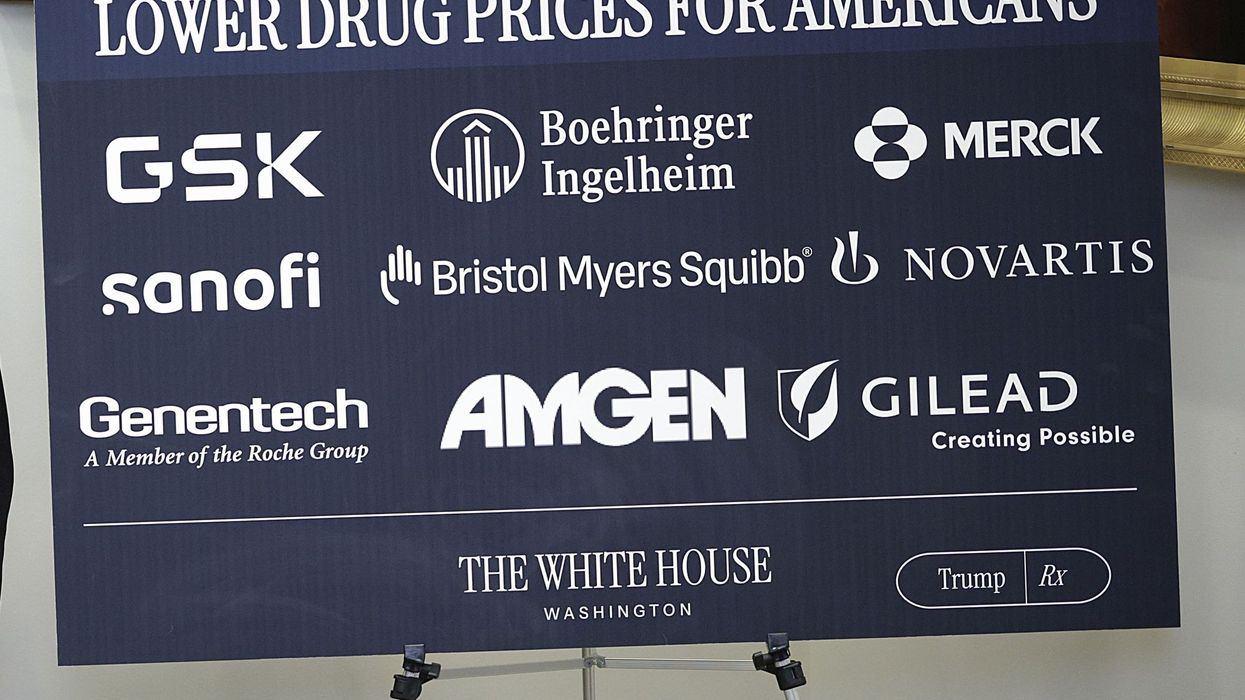
"Starting next year, American drug prices will come down fast and furious and will soon be the lowest in the developed world," President Donald Trump claimed Friday as the White House announced agreements with nine pharmaceutical manufacturers.
The administration struck most favored nation (MFN) pricing deals with Amgen, Bristol Myers Squibb, Boehringer Ingelheim, Genentech, Gilead Sciences, GSK, Merck, Novartis, and Sanofi. The president—who has launched the related TrumpRx.gov—previously reached agreements with AstraZeneca, EMD Serono, Eli Lilly, Novo Nordisk, and Pfizer.
"The White House said it has made MFN deals with 14 of the 17 biggest drug manufacturers in the world," CBS News noted Friday. "The three drugmakers that were not part of the announcement are AbbVie, Johnson & Johnson, and Regeneron, but the president said that deals involving the remaining three could be announced at another time."
However, as Trump and congressional Republicans move to kick millions of Americans off of Medicaid and potentially leave millions more uninsured because they can't afford skyrocketing premiums for Affordable Care Act (ACA) plans, some critics suggested that the new drug deals with Big Pharma are far from enough.
"When 47% of Americans are concerned they won't be able to afford a healthcare cost next year, steps to reduce drug prices for patients are welcomed, especially by patients who rely on one of the overpriced essential medicines named in today's announcement," said Merith Basey, CEO of Patients for Affordable Drugs Now, in a statement.
"But voluntary agreements with drug companies—especially when key details remain undisclosed—are no substitute for durable, system-wide reforms," Basey stressed. "Patients are overwhelmingly calling on Congress to do more to lower prescription drug prices by holding Big Pharma accountable and addressing the root causes of high drug prices, because drugs don't work if people can't afford them."
As the New York Times reported Friday:
Drugs that will be made available in this way include Amgen's Repatha, for lowering cholesterol, at $239 a month; GSK's asthma inhaler, Advair Diskus, at $89 a month; and Merck's diabetes medication Januvia, at $100 a month.
Many of these drugs are nearing the end of their patent protection, meaning that the arrival of low-cost generic competition would soon have prompted manufacturers to lower their prices.
In other cases, the direct-buy offerings are very expensive and out of reach for most Americans.
For example, Gilead will offer Epclusa, a three-month regimen of pills that cures hepatitis C, for $2,492 a month on the site. Most patients pay far less using insurance or with help from patient assistance programs. Gilead says on its website that "typically a person taking Epclusa pays between $0 and $5 per month" with commercial insurance or Medicare.
While medication prices are a concern for Americans who face rising costs for everything from groceries to utility bills, the outcome of the ongoing battle on Capitol Hill over ACA tax credits—which are set to expire at the end of the year—is expected to determine how many people can even afford to buy health insurance for next year.
The ACA subsidies fight—which Republicans in the US House of Representatives ignored in the bill they passed this week before leaving Capitol Hill early—has renewed calls for transitioning the United States from its current for-profit healthcare system to Medicare for All.
"At the heart of our healthcare crisis is one simple truth: Corporations have too much power over our lives," Rep. Pramila Jayapal (D-Wash.), former chair of the Congressional Progressive Caucus, said on social media Friday. "Medicare for All is how we take our power back and build a system that puts people over profits."
Jayapal reintroduced the Medicare for All Act in April with Rep. Debbie Dingell (D-Mich.) and Senate Health, Education, Labor, and Pensions Committee Ranking Member Bernie Sanders (I-Vt.). The senator said Friday that some of his top priorities in 2026 will be campaign finance reform, income and wealth inequality, the rapid deployment of artificial intelligence, and Medicare for All.
Earlier this month, another backer of that bill, US Sen. Chris Van Hollen (D-Md.), said: "We must stop tinkering around the edges of a broken healthcare system. Yes, let's extend the ACA tax credits to prevent a huge spike in healthcare costs for millions. Then, let's finally create a system that puts your health over corporate profits. We need Medicare for All."
It's not just progressives in Congress demanding that kind of transformation. According to Data for Progress polling results released late last month, 65% of likely US voters—including 78% of Democrats, 71% of Independents, and 49% of Republicans—either strongly or somewhat support "creating a national health insurance program, sometimes called 'Medicare for All.'"
Keep ReadingShow Less
Trump: US Forces 'Striking Very Strongly' Against 70+ Targets in Syria
"Most anti-war president ever, also a winner of the FIFA Peace Prize, threatened to invade Venezuela for oil earlier this week and has now launched strikes in Syria," said one observer.
Dec 19, 2025
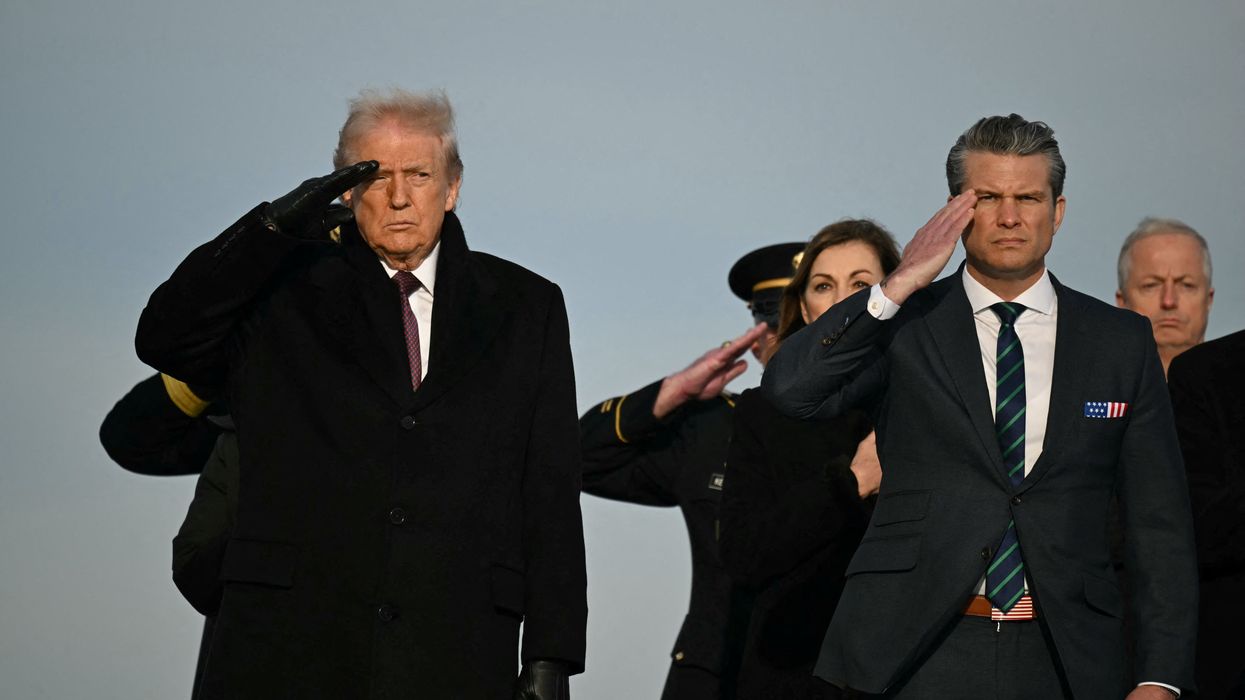
President Donald Trump—the self-described "most anti-war president in history"—on Friday said the US military is "striking very strongly" against Islamic State strongholds in Syria following the killing of two Iowa National Guard members and an American civilian interpreter in the Mideast nation.
"Because of ISIS’s vicious killing of brave American Patriots in Syria, whose beautiful souls I welcomed home to American soil earlier this week in a very dignified ceremony, I am hereby announcing that the United States is inflicting very serious retaliation, just as I promised, on the murderous terrorists responsible," Trump said on his Truth Social network.
"We are striking very strongly against ISIS strongholds in Syria, a place soaked in blood which has many problems, but one that has a bright future if ISIS can be eradicated," the president continued. "The Government of Syria, led by a man who is working very hard to bring Greatness back to Syria, is fully in support."
"All terrorists who are evil enough to attack Americans are hereby warned—YOU WILL BE HIT HARDER THAN YOU HAVE EVER BEEN HIT BEFORE IF YOU, IN ANY WAY, ATTACK OR THREATEN THE U.S.A.," he added.
US Defense Secretary Pete Hegseth said on X that "earlier today, US forces commenced OPERATION HAWKEYE STRIKE in Syria to eliminate ISIS fighters, infrastructure, and weapons sites in direct response to the attack on US forces that occurred on December 13th in Palmyra, Syria."
According to the Wall Street Journal, Jordanian warplanes also took part in Friday's attacks, which reportedly hit more than 70 targets in Syria.
"This is not the beginning of a war—it is a declaration of vengeance," said Hegseth. "The United States of America, under President Trump’s leadership, will never hesitate and never relent to defend our people. As we said directly following the savage attack, if you target Americans—anywhere in the world—you will spend the rest of your brief, anxious life knowing the United States will hunt you, find you, and ruthlessly kill you. Today, we hunted and we killed our enemies. Lots of them. And we will continue."
US Central Command (CENTCOM) said that one of Friday's airstrikes killed ISIS leader Abu Yusif in Dayr az Zawr province in eastern Syria.
“As stated before, the United States—working with allies and partners in the region—will not allow ISIS to take advantage of the current situation in Syria and reconstitute," CENTCOM commander Gen. Michael Erik Kurilla said in a statement. "ISIS has the intent to break out of detention the over 8,000 ISIS operatives currently being held in facilities in Syria. We will aggressively target these leaders and operatives, including those trying to conduct operations external to Syria."
During his first term, Trump followed through on his promise to "bomb the shit out of" ISIS militants in Syria and Iraq, killing thousands of civilians in a campaign launched by former President Barack Obama in 2014. Trump prematurely declared victory over ISIS in 2018.
Since then, the Biden and Trump administrations have bombed Syria, where around 1,000 US troops remain.
During his second term, Trump has ordered attacks on Iran, Somalia, Syria, Yemen, and boats allegedly transporting drugs in the Caribbean Sea and Pacific Ocean. The president—who says he deserves a Nobel Peace Prize—has also deployed warships and thousands of troops for a possible war on Venezuela.
"Most anti-war president ever, also a winner of the FIFA Peace Prize, threatened to invade Venezuela for oil earlier this week and has now launched strikes in Syria," political commentator David Pakman said on X in response to Friday's attacks.
Some observers noted that the strikes on Syria took place on the same day that the Trump administration released some of the files related to the late convicted sex criminal and longtime former Trump friend Jeffrey Epstein.
Keep ReadingShow Less
Mitt "47%" Romney's Post-Career Call to Tax the Rich Met With Kudos and Criticism
"When Romney had real power," noted journalist David Sirota, "he fortified the rigged tax system that he's only now criticizing from the sidelines."
Dec 19, 2025
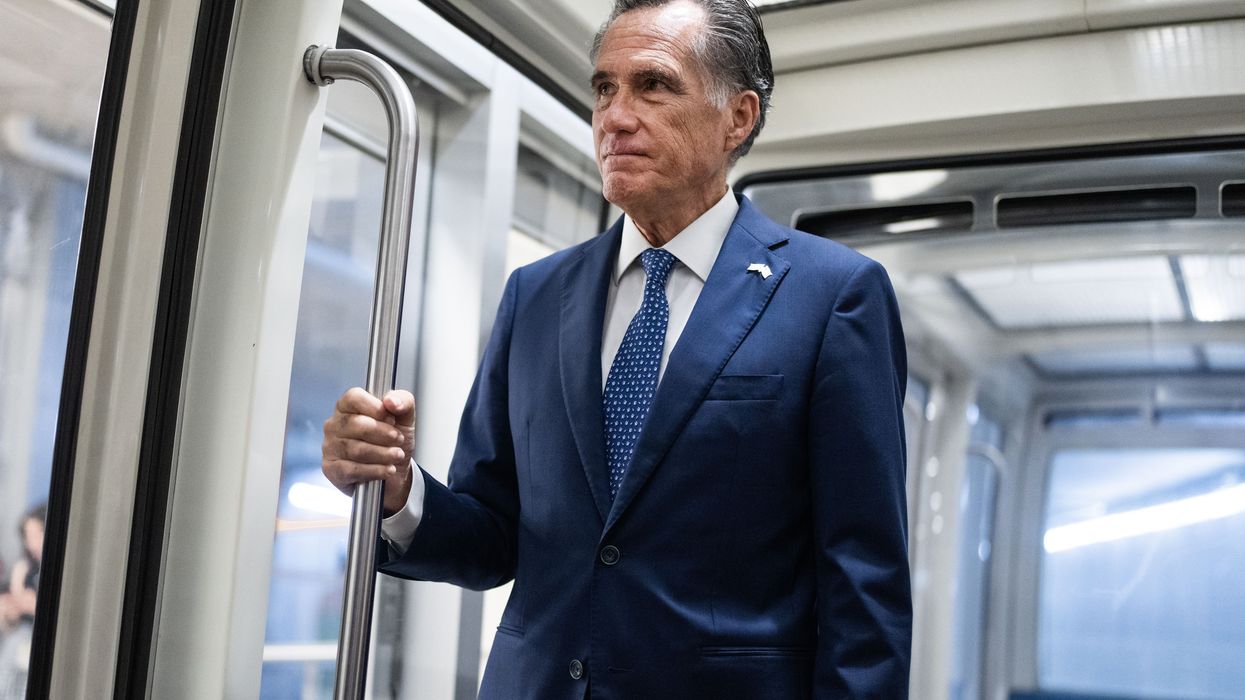
In a leaked fundraiser footage from the 2012 US presidential campaign, Republican candidate Mitt Romney infamously claimed that 47% of Americans are people "who believe that they are victims, who believe that government has a responsibility to care for them, who believe that they are entitled to healthcare, to food, to housing, to you name it." On Friday, the former US senator from Utah published a New York Times opinion piece titled, "Tax the Rich, Like Me."
"In 2012, political ads suggested that some of my policy proposals, if enacted, would amount to pushing grandma off a cliff. Actually, my proposals were intended to prevent that very thing from happening," Romney began the article, which was met with a range of reactions. "Today, all of us, including our grandmas, truly are headed for a cliff: If, as projected, the Social Security Trust Fund runs out in the 2034 fiscal year, benefits will be cut by about 23%."
"Typically, Democrats insist on higher taxes, and Republicans insist on lower spending. But given the magnitude of our national debt as well as the proximity of the cliff, both are necessary," he argued. "On the spending-cut front... Social Security and Medicare benefits for future retirees should be means-tested—need-based, that is to say—and the starting age for entitlement payments should be linked to American life expectancy."
"And on the tax front, it's time for rich people like me to pay more," wrote Romney, whose estimated net worth last year, when he announced his January 2025 retirement from the Senate, was $235 million. "I long opposed increasing the income level on which FICA employment taxes are applied (this year, the cap is $176,100). No longer; the consequences of the cliff have changed my mind."
"The largest source of additional tax revenues is also probably the most compelling for fairness and social stability. Some call it closing tax code loopholes, but the term 'loopholes' grossly understates their scale. 'Caverns' or 'caves' would be more fitting," he continued, calling for rewriting capital gains tax treatment rules for "mega-estates over $100 million."
"Sealing the real estate caverns would also raise more revenue," Romney noted. "There are more loopholes and caverns to be explored and sealed for the very wealthy, including state and local tax deductions, the tax rate on carried interest, and charity limits on the largest estates at death."
Some welcomed or even praised Romney's piece. Iowa state Rep. JD Scholten (D-1), a progressive who has previously run for both chambers of Congress, declared on social media: "Tax the rich! Welcome to the coalition, Mitt!"
US House Committee on the Budget Ranking Member Brendan Boyle (D-Pa.), who is part of the New Democrat Coalition, said: "I welcome this op-ed by Mitt Romney and encourage people to read it. As the next chair of the House Budget Committee, increasing revenue by closing loopholes exploited by the wealthiest Americans will be a top priority."
Progressive Saikat Chakrabarti, who is reportedly worth at least $167 million and is one of the candidates running to replace retiring former House Speaker Nancy Pelosi (D-Calif.), responded: "Even Mitt Romney now agrees that we need to tax the wealthiest. I call for a wealth tax on our billionaires and centimillionaires."
Michael Linden, a senior policy fellow at the Washington Center for Equitable Growth, said: "Kudos to Mitt Romney for changing his mind and calling for higher taxes on the rich. I'm not going to nitpick his op-ed (though there are a few things I disagree with), because the gist of it is right: We need real tax reform to make the rich pay more."
Others pointed to Romney's record, including the impactful 47% remarks. The Lever's David Sirota wondered, "Why is it that powerful people typically wait until they have no power to take the right position and effectively admit they were wrong when they had more power to do something about it?"
According to Sirota:
The obvious news of the op-ed is that we've reached a point in which even American politics' very own Gordon Gekko—a private equity mogul-turned-Republican politician—is now admitting the tax system has been rigged for his fellow oligarchs.
And, hey, that's good. I believe in the politics of addition. I believe in welcoming converts to good causes in the spirit of "better late than never." I believe there should be space for people to change their views for the better. And I appreciate Romney offering at least some pro forma explanation about what allegedly changed his thinking (sidenote: I say "allegedly" because it's not like Romney only just now learned that the tax system was rigged—he was literally a co-founder of Bain Capital!).
"And yet, these kinds of reversals (without explicit apologies, of course) often come off as both long overdue but also vaguely inauthentic, or at least not as courageous and principled as they seem," Sirota continued, stressing that "when Romney had real power, he fortified the rigged tax system that he's only now criticizing from the sidelines."
Keep ReadingShow Less
Most Popular