

SUBSCRIBE TO OUR FREE NEWSLETTER
Daily news & progressive opinion—funded by the people, not the corporations—delivered straight to your inbox.
5
#000000
#FFFFFF
To donate by check, phone, or other method, see our More Ways to Give page.
Daily news & progressive opinion—funded by the people, not the corporations—delivered straight to your inbox.
As political leaders debate the merits of a future Medicare for All system in the U.S., some analysts predict that implementing universal coverage could cause a sharp, unaffordable increase in hospital use and costs, overwhelming the system. But new research by a team at Harvard Medical School and The City University of New York at Hunter College, published today in the Annals of Internal Medicine, contradicts that assumption, finding that past insurance expansions did not result in a net increase in hospital use. Instead, researchers found a redistribution of care, with increases in hospital care among those newly insured that was offset by small decreases among healthier and wealthier Americans.
The study examined changes in hospital use among those who gained coverage -- as well as those whose coverage remained unchanged -- after the implementation of Medicare and Medicaid in 1966 and the Affordable Care Act (ACA) in 2014. Each of those programs provided new coverage to about 10% of the U.S. population, about the same share expected to gain coverage under a Medicare for All program. The researchers analyzed large national surveys from both the Medicare/Medicaid and ACA eras, and examined hospital use before and after the coverage expansions. Hospital admissions averaged 12.8 for every 100 persons in the three years before Medicare, and 12.7 per 100 in the four years after Medicare's implementation. Similarly, the hospital admission rate was statistically unchanged in the wake of the ACA, averaging 9.4 admissions per 100 in the six years before the ACA coverage expansion and 9.0 per 100 in the two years' afterward.
While the study found no overall change in hospital use, the coverage expansions redistributed care. Medicare increased hospital admissions by 3.7 per 100 among the elderly, and by 0.7 per 100 among the poorest one-third of the population, i.e., the groups that gained new coverage. In contrast, hospitalizations fell slightly (about 0.5 per 100) for younger and wealthier individuals. After the ACA, admissions rose by 1.5 per 100 among sicker Americans, but fell by 0.6 per 100 among those in good health. The researchers also found a slight shift of hospital care toward the poor after the ACA.
Dr. Steffie Woolhandler, a study author and distinguished professor of public health at CUNY's Hunter College who is also on the faculty at Harvard Medical School commented: "The good news is that even big coverage expansions didn't increase hospitalizations overall, indicating that universal coverage won't cause a surge in care, and that Medicare for All is affordable. On the other hand, it implies that overturning the ACA would deprive millions of needed care without saving any money."
The researchers hypothesized that the limited supply of hospital beds constrained the overall use of hospitals when coverage was expanded. They noted that many previous studies, such as the Rand and Oregon Health Insurance Experiments, only examined the effects of greater coverage for the newly insured, not changes among those whose coverage was unchanged, nor the societal effects of expanded coverage.
"We've long known that when people get new or better coverage, they use more health care," said senior author Dr. David Himmelstein, a distinguished professor of public health at CUNY's Hunter College and lecturer in medicine at Harvard Medical School. "What we didn't know is what happens to those who were already well-insured, and how this plays out society-wide given the limited number of hospital beds, doctors and nurses," he stated. "Our data shows that if you sensibly control hospital growth, you can cover everybody without breaking the bank."
Lead author Dr. Adam Gaffney, instructor in medicine at Harvard Medical School and a pulmonary and critical care physician at Cambridge Health Alliance, suggested that the small reductions in hospitalizations among healthier and wealthier individuals are unlikely to be harmful. "We know that the well-insured often receive unnecessary hospitalizations," said Dr. Gaffney. "While defibrillator implants and coronary artery stents can be lifesaving, thousands of patients each year get these and other procedures even when they offer no benefit," he added, pointing to an Institute of Medicine study that found that nearly one-third of medical spending is wasted. "The fact that coverage expansions shift hospital care to those who need it, and reduce care for groups currently getting excessive and possibly harmful interventions, means that universal coverage could help everyone," he stated.
"The Effects on Hospital Utilization of the 1966 and 2014 Health Insurance Coverage Expansions in the United States," by Adam Gaffney, M.D.; Danny McCormick, M.D.; David H. Bor, M.D.; Anna Goldman, M.D.; Steffie Woolhandler, M.D., M.P.H.; and David U. Himmelstein, M.D. Annals of Internal Medicine, July 23, 2019. DOI: 10.7326/M18-2806
Physicians for a National Health Program is a single issue organization advocating a universal, comprehensive single-payer national health program. PNHP has more than 21,000 members and chapters across the United States.

"It is outrageous that the US government would target people for bringing humanitarian aid... But even more disturbing is the cruel and deeply immoral policy the United States continues to impose on Cuba."
The antiwar group CodePink it has yet to be served with any subpoenas after it was reported over the weekend that the Trump administration has opened an investigation into a recent humanitarian trip it helped organize to Cuba, but vehemently denied wrongdoing and said any government probe, if there is one, would only show that "this administration is beyond grotesque."
"Taking medical supplies to pediatric hospitals in Cuba is now a crime?" asked co-founder Medea Benjamin on social media on Saturday after Fox News reported that organizers had been served subpoenas. "Saving the lives of babies is a crime?"
Fox reported that Benjamin and left-wing commentator Hasan Piker had been subpoenaed by federal investigators two months after they were among 40 Americans who sailed to Havana on the Nuestra America Convoy, which carried 20 tons of humanitarian aid to the island nation.
The Fox reporting claimed the subpoenas issued to Benjamin and Piker seek to obtain financial, logistical, and communications information related to the trip, which was organized in response to the Trump administration's decision in late January to threaten to impose tariffs on any country that provided Cuba with oil.
The administration cut off Cuba's main source of fuel at the beginning of the year when it sent US troops into Venezuela to abduct President Nicolás Maduro and took control of the country's vast oil supply.
White House officials, including Secretary of State Marco Rubio, the son of Cuban immigrants, have long desired regime change in the communist country, and rights advocates have warned the administration appears to be moving toward just that as it strangles the island's oil supply—causing frequent blackouts and impacting the healthcare and food systems—and claims the Cuban government poses a threat to the US.
In organizing the Nuestra America Convoy, said Benjamin on Sunday, the advocates were acting "as moral US citizens trying to bring some relief to a population being deliberately starved by the cruel policies of our own government."
"This policy has contributed to catastrophic shortages of medicine and electricity, massive blackouts, transportation collapse, and a public health crisis that has hurt the most vulnerable, especially children and the elderly," said Benjamin. "It is a policy that is, literally, killing babies, as we have seen in the recent tragic doubling of the infant mortality rate. This is why we focused our donations on medical supplies for pediatric hospitals."
The blockade is compounding the suffering caused by the trade embargo the US has imposed for decades, said Benjamin.
The Cuban Assets Control Regulations law prohibits US citizens from conducting unlicensed travel-related transations with Cuba, but the law makes exceptions for humanitarian endeavors and other activities aimed at supporting the Cuban people.
"We traveled to Cuba under the US government-authorized category of providing humanitarian aid to the Cuban people. We brought desperately needed medicines and medical supplies at a time when Cuba is suffering catastrophic shortages caused by the crippling US blockade," said Benjamin.
Benjamin, Piker, and Drop Site News co-founder Ryan Grim emphasized that the group stayed in Spanish-owned hotels that are "explicitly permitted under" the US law—while right-wing influencer Nick Shirley allegedly stayed in a sanctioned hotel on a recent trip to Cuba.
"It is outrageous that the US government would target people for bringing humanitarian aid to suffering Cuban children," Benjamin said. "But even more disturbing is the cruel and deeply immoral policy the United States continues to impose on Cuba—a policy designed to strangle the island economically, deprive people of food, fuel, medicine, and basic necessities, and make daily life unbearable."
Piker said the reports of the investigation indicate that "the American government would rather try to criminalize delivering aid to a country we’ve starved, than punish the Epstein class."
Benjamin emphasized that the reports of the probe come as the administration intensified its threats against Cuba, having indicted former President Raúl Castro last week on charges related to the shooting down of a plane operated by Cuban-American exiles in the 1990s. Trump and his allies have repeatedly mused about invading the country following his military attacks on Venezuela and Iran.
"President Trump already has his hands full trying to disentangle himself from the disastrous US war with Iran," said Benjamin. "He should not start another one in Cuba. The American people are tired of endless wars, interventions, sanctions, and suffering imposed in our name."
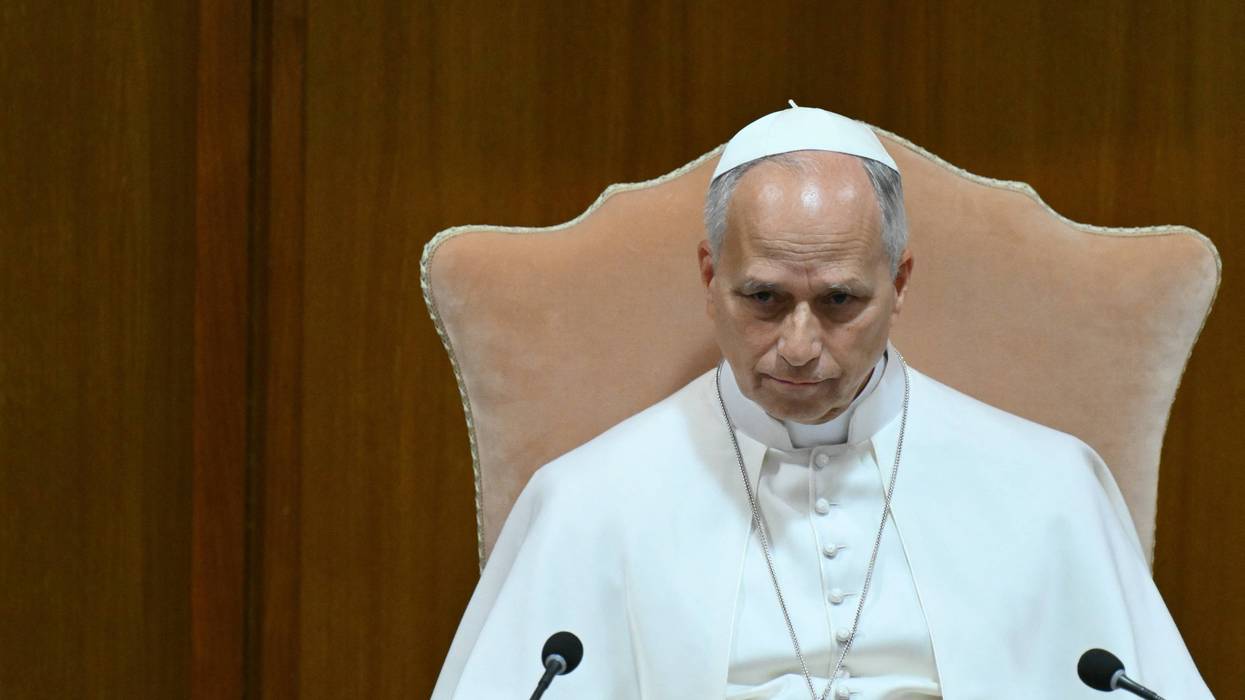
"The pursuit of greater profits cannot justify choices that systematically sacrifice jobs, because the human person is an end, not a means."
Pope Leo XIV on Monday released a 42,000-word encyclical calling for government regulation of artificial intelligence and implored world leaders to ensure the burgeoning technology is used for the benefit of all humankind—not concentrated in the hands of a powerful, profit-seeking few.
Leo warned in the first major theological document of his papacy that unrestrained AI and its potentially far-reaching impacts—including mass job loss, environmental degradation, and increasingly catastrophic warfare—heightens the "risk of dehumanization," subjugating much of humanity in the name of "greater efficiency" and technological advancement.
"As with every major technological shift, AI tends to amplify the power of those who already possess economic resources, expertise, and access to data," Leo wrote in the document, titled Magnifica Humanitas. "In light of the common good and the universal destination of goods, this raises serious concerns, since small but highly influential groups can shape information and consumption patterns, influence democratic processes, and steer economic dynamics to their own advantage, undermining social justice and solidarity among peoples."
Leo warned that eliminating jobs en masse by replacing human beings with robots—an aim of some of the most powerful companies in the world, including the e-commerce behemoth Amazon—without adequate protections and compensation for impacted workers would be morally obscene and calamitous to social order.
"A society that guarantees employment to only a small fraction of the population, despite having a high level of technical development, risks exposing many to forced inactivity, a lack of responsibility, and the absence of daily tasks and stimuli, resulting in human and cultural impoverishment," the pope wrote. "This creates a paradox of material progress and anthropological regression that undermines the foundations of a just and stable social peace."
In the era of #ArtificialIntelligence, when human dignity is threatened by new forms of dehumanization, ours is the pressing duty to remain profoundly human. We must lovingly safeguard the grandeur of humanity bestowed upon us and revealed in its fullness in Christ, the splendor…
— Pope Leo XIV (@Pontifex) May 25, 2026
Leo cautioned against the growing use of AI in military conflict, a warning delivered alongside the CEO of the artificial intelligence firm Anthropic, which was embroiled in a tense and public dispute with the Trump administration earlier this year over the use of the company's technology for military purposes and mass surveillance. The pontiff has also clashed with the Trump administration, which has attacked Leo for publicly criticizing the US-Israeli war on Iran.
"No algorithm can make war morally acceptable," reads the pope's encyclical. "AI does not remove the intrinsic inhumanity of conflict; indeed it can only bring about conflict more quickly and render it more impersonal, lowering the threshold for resorting to violence, transforming defense into threat prediction and thus reducing victims to data. In this way, it will accustom us to the idea that violence is inevitable and needs only to be optimized."
Leo, whose warnings about the implications of rapid advancements in AI technology echoed concerns expressed by progressive lawmakers in the US and around the world, made clear that he doesn't view new technology, including AI, as inherently "antagonistic to humanity," noting that "technological development has significantly improved the living conditions of humanity."
"At the same time, each phase of progress has also revealed the ambiguity of tools that can cause harm when not oriented toward the good," Leo wrote. "It is necessary to establish adequate regulatory tools capable of upholding justice and curbing the distorting effects of technological power."
"Crucial questions impose themselves on our conscience," he added, "and can no longer be avoided: Where are we going? Toward what goal do we wish to orient ourselves? What direction should we choose as a people and as a human community?"

"We will defeat the oligarchy and the political system that it maintains," said Graham Platner. "The politics of Susan Collins."
US Sen. Bernie Sanders on Sunday rallied in Orono, Maine with progressive Senate candidate Graham Platner, who called for transformative political change to reclaim the wealth that has been "stolen by corrupt politicians and the corporations that bought them."
Platner, who effectively locked up the Maine's US Senate Democratic primary after Gov. Janet Mills exited the race last month, placed five-term incumbent Republican Sen. Susan Collins among the corrupt lawmakers who have sold out workers and advanced the interests of the billionaire class, which is shelling out millions to protect Collins' seat.
"We will not just fight the oligarchy," Platner told an audience of 1,400 gathered at the University of Maine, the location of the 40th stop of Sanders' (I-Vt.) nationwide "Fighting Oligarchy" tour. "We will defeat the oligarchy and the political system that it maintains... The politics of Susan Collins. A politics that turns politicians into millionaires but tells you to be grateful for crumbs. It is a lie."
Platner declared that "we need a political revolution," something he said Sanders "has been fighting for for 60 years."
"When we beat back fascism, when we defend our democracy and our freedom, let it be a different kind of freedom," said Platner. "A freedom to not be condemned to scraps and struggle, but to live with the dignity and fulfillment that gives us the society we deserve."
Watch the full rally:
Sanders, who became the first US senator to endorse Platner last August when he was widely seen as a long shot to win the Democratic nomination, said that "what we're talking about"—from Medicare for All to a living wage to union rights for all workers—"is not radical."
"What is radical is when so few have so much," said Sanders. "What is radical is when billionaires control our political system."
Sunday's "Fight Oligarchy" rally came days after a survey showed Platner leading Collins—who has held her seat for nearly three decades—by seven percentage points among likely voters, who appear unfazed by an intensifying wave of attacks on Platner from pro-Collins super PACs and the National Republican Senatorial Committee.
"Susan Collins is spineless and corrupt," Platner wrote on social media ahead of the rally. "And in 163 days, we will defeat her."