

SUBSCRIBE TO OUR FREE NEWSLETTER
Daily news & progressive opinion—funded by the people, not the corporations—delivered straight to your inbox.
5
#000000
#FFFFFF
To donate by check, phone, or other method, see our More Ways to Give page.
Daily news & progressive opinion—funded by the people, not the corporations—delivered straight to your inbox.

Evan Greer, 978-852-6457, press@fightforthefuture.org
Today, 30+ civil rights organizations signed an open
Today, 30+ civil rights organizations signed an open letter sounding the alarm about Amazon's spreading Ring doorbell partnerships with police. The letter calls on local, state, and federal officials to use their power to investigate Amazon Ring's business practices, put an end to Amazon-police partnerships, and pass oversight measures to deter such partnerships in the future.
With no oversight and accountability, these partnerships pose a threat to privacy, civil liberties, and democracy. A few of the concerns highlighted by the organizations:
The signing organizations include: Fight for the Future, Media Justice, Color of Change, Secure Justice, Demand Progress, Defending Rights & Dissent, Muslim Justice League, X-Lab, Media Mobilizing Project, Restore The Fourth, Inc., Media Alliance, Youth Art & Self Empowerment Project, Center for Human Rights and Privacy, Oakland Privacy, Justice For Muslims Collective, The Black Alliance for Just Immigration (BAJI), Nation Digital Inclusion Alliance, Project On Government Oversight, OpenMedia, Council on American-Islamic Relations-SFBA, Million Hoodies Movement for Justice, Wellstone Democratic Renewal Club, MPower Change, Mijente, Access Humboldt, RAICES, National Immigration Law Center, The Tor Project, United Church of Christ, Office of Communication Inc., the Constitutional Alliance, RootsAction.org, CREDO Action, Presente.org, American-Arab Anti-Discrimination Committee, and United We Dream.
The map released by Amazon Ring shows more than 500 cities with these Amazon-police partnerships. Through these partnerships, Amazon provides police officers with a seamless and easy way to request and store footage from thousands of residents throughout your city, allowing for warrantless surveillance with zero oversight or judicial review. In exchange, police departments market Amazon technology to residents and in some cases use taxpayer dollars to subsidize the resident's purchase.
Leaders from the organizations participating in the campaign issued the following statements, and are available for comment upon request:
The following can be attributed to Evan Greer, Deputy Director of Fight for the Future, (pronouns: she/her): "Amazon has created the perfect end run around our democratic process by entering into for-profit surveillance partnerships with local police departments. Police departments have easy access to surveillance network without oversight or accountability. Amazon Ring's customers provide the company with the footage needed to build their privately owned, nationwide surveillance dragnet. We're the ones who pay the cost - as they violate our privacy rights and civil liberties. Our elected officials are supposed to protect us, both from abusive policing practices and corporate overreach. These partnerships are a clear case of both."
The following can be attributed to Myaisha Hayes, National Organizer on Criminal Justice & Tech at MediaJustice: "Ring will undoubtedly digitize discriminatory "neighborhood watch programs", which in so many segregated communities, have always targeted and labeled Black and brown people as suspicious. Now through Ring, local police departments can take full advantage of their access to this information, further criminalizing people who existing in public spaces. Our local representatives must intervene and protect our right to privacy from this invasive technology and dangerous partnership between Amazon and the police."
The following can be attributed to Leonard Scott IV, Campaign Manager on Criminal Justice Color of Change: "Black people and communities are overpoliced and live under the constant threat of police surveillance, which increases mass incarceration's reach. Amazon is seeking to profit from mass surveillance by providing police with even more apparatuses, that we know will be used to target Black and Brown people. Technological tools like facial recognition and camera surveillance are already being used by police departments and cities across the country as a mechanism to over-police Black communities. We know that technology is already flawed and when used improperly and without government oversight, it will be abused and can put people at risk for being misidentified and falsely matched for crimes. With this letter, we call on local, state, and federal officials to put an end to the harmful Amazon Ring police partnerships."
The following can be attributed to Tracy Rosenberg, Executive Director of Media Alliance: "Amazon Ring police partnerships tangle up tax-payer supported public servants into the profit-driven mandates of a private corporation. Having our municipal peace keepers perform as ad-hoc sales representatives for private products with manufacturer-provided scripts is a perversion of the public sector. Ring's provision of the names, street addresses, email addresses and subsidy use of Ring purchasers to law enforcement agencies is unacceptable. What other personal purchase of a household device is promptly reported to the police? Reports to law enforcement of Ring owners who do not consent to having their personal security footage tuned over to police profiles device owners choosing to exercise their privacy rights. Public agencies should stay out of private security. The police work for the people, not for Amazon."
The following can be attributed to Mike Katz-Lacabe, Oakland Privacy: "Law enforcement should not be able to use private companies to engage in surveillance that has not been discussed by the community, approved by elected representatives, and that they don't have the budget to conduct with their own resources. Almost every law enforcement agency would support installation of surveillance cameras at every corner or house, but a society in which we are encouraged to surveil each other is not healthy for a free society. We have enshrined limits on government power in the Bill of Rights and we should not use private companies to circumvent the Constitution."
The following can be attributed to Dante Barry, Executive Director of Million Hoodies Movement for Justice: "There are dire consequences for racial justice when law enforcement agencies enter partnerships with major corporations and create a culture of surveillance under the guise of public safety. Without necessary oversight and community accountability mechanisms, this partnership is dangerous for law enforcement having access to and storing data without a warrant. This partnership threatens racial justice efforts and is a challenge for communities devastated by the impacts of every day gun violence, policing, and surveillance."
The following can be attributed to Fatema Ahmad, Deputy Director of Muslim Justice League: "From Ring to Rekognition, Amazon's partnerships with law enforcement will increase the dangerous racial targeting that communities of color already face every day."
The following can be attributed to Sue Udry, Executive Director of Defending Rights & Dissent: "The exceedingly warm embrace of Amazon Ring by local police will go down as one more sorry chapter in the Big Brother annals. Let's call it what it will become: neighbors spying on neighbors in the service of the police, free from any bothersome constitutional restraints. Local governments must step in and end any agreements their police have made with Amazon, and ensure none are made in the future."
The following can be attributed to Alex Marthews, National Chair of Restore The Fourth: "This isn't about fighting actual crime. This is about the paranoid and mostly white notion that owners of homes and businesses aren't safe unless the police are pro-actively watching every square inch of public space. Truthfully, communities do better when police intervention is rare than when it is common; we need to free ourselves from the notion that more police eyes means more safety."
The following can be attributed to Sean Taketa McLaughlin, Executive Director for Access Humbold: "We believe that privacy is essential for protecting freedom of information and expression. Information consumers and creators must have privacy as a fundamental right. Sometimes people become complacent about these rights until they come under attack - but we know that eternal vigilance is required to sustain a healthy democracy.
Unwanted surveillance, by public agencies or private companies for commercial gain, has an immediate chilling effect on local voices and harms many aspects of modern life. Public health and safety, education, commerce, culture, arts and civic engagement all suffer when our freedom of information and expression is suppressed. Diverse local voices require open secure networks that respect the personal privacy of all people, supporting our basic human right to 'seek, receive and impart information and ideas through any media and regardless of frontiers' (Universal Declaration of Human Rights, Article 19)."
The following can be attributed to Brian Hofer, Executive Director of Secure Justice and Chair of the City of Oakland's Privacy Commission: "These partnerships raise several concerns. Public records have revealed that Amazon is coaching police on what to say to address criticism over these secret arrangements, and also how to avoid the need for a warrant. By turning publicly funded police into their sales team, Amazon has once again shifted its own costs of business onto the taxpayer. Our elected officials must demand answers from their law enforcement officials, and must put a stop to these dangerous practices."
Fight for the Future is a group of artists, engineers, activists, and technologists who have been behind the largest online protests in human history, channeling Internet outrage into political power to win public interest victories previously thought to be impossible. We fight for a future where technology liberates -- not oppresses -- us.
(508) 368-3026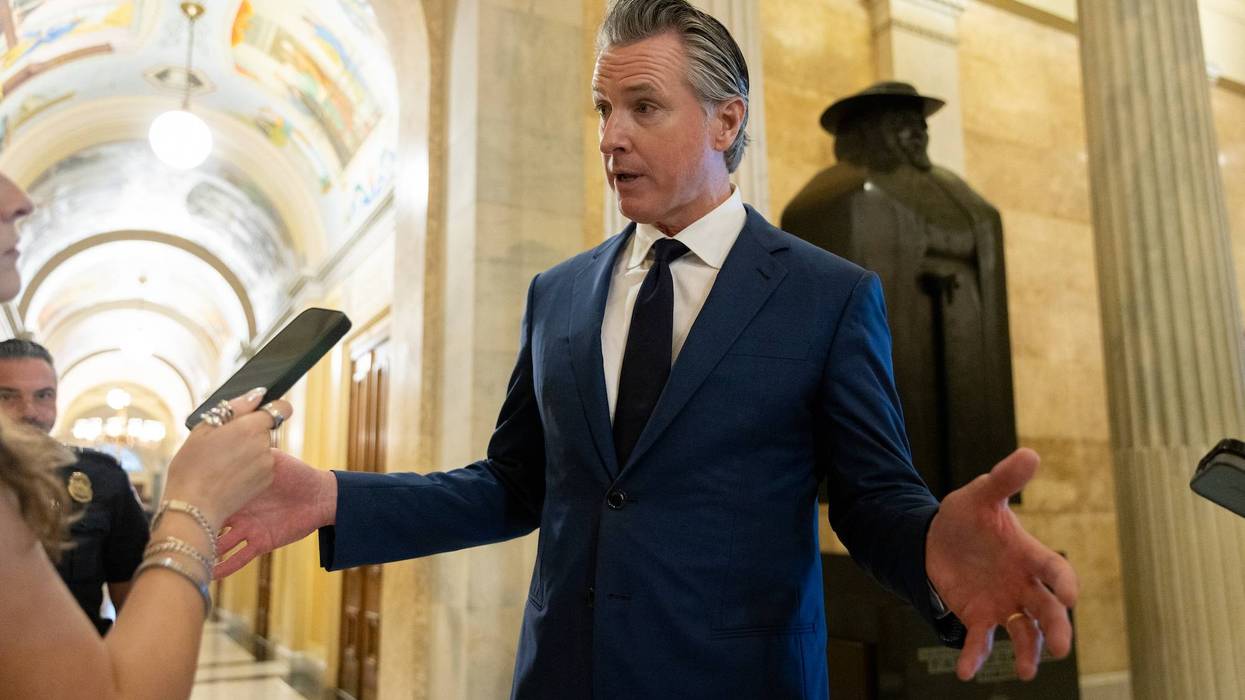
"He’d rather millions of children and families lose their healthcare than ask a couple hundred billionaires to finally pay their fair share."
California Gov. Gavin Newsom ramped up his opposition to a proposed tax on the state's billionaire residents on Friday by endorsing a competing ballot measure that would both cancel out the billionaire wealth tax initiative and prohibit any new taxes on the ownership of financial assets or other personal property.
"He’s showing California his true colors," Debru Carthan, vice president of Service Employees International Union-United Healthcare Workers West (SEIU-UHW)—which is leading the campaign for the California billionaire tax—said in response to Newsom's endorsement of Proposition 42. "He’d rather millions of children and families lose their healthcare than ask a couple hundred billionaires to finally pay their fair share."
The push for Proposition 42 is funded by Building a Better California, a group bankrolled by Google co-founder Sergey Brin and other billionaires.
If passed, Prop 42 would ban "any new state tax... imposed on the ownership of personal property (all things people own other than real estate)." It would also prohibit any tax that "applies retroactively based on taxpayer’s past activities." (The proposed 5% billionaire tax, which will appear on California's November ballot as Proposition 40, would apply retroactively to billionaires living in California on or after January 1, 2026.)
In a statement, Newsom framed his support for Prop 42 as an effort to protect Californians' retirement savings.
"We all agree that Californians deserve to have their retirement and life savings protected from new state taxes so those savings are there when they need them," the governor said.
But critics have described Prop 42 as a "poison-pill measure" whose supporters are fearmongering about a nonexistent threat to retirement savings in an effort to defeat the proposed billionaire tax, revenue from which would be used to fund healthcare, food aid, and education in the state.
"Its true target is Prop 40," the editorial board of the San Francisco Chronicle wrote of the Newsom-backed measure. "Prop 42 papers over its real purpose by cynically appealing to middle-class worries about retirement security. Reject this appalling tactic and disincentivize its further use by voting no."
Newsom has opposed the idea of a wealth tax on California's billionaires from the proposal's inception, pitting him against major unions, the California Democratic Party, and prominent national progressives such as Sen. Bernie Sanders (I-Vt.) and Rep. Ro Khanna (D-Calif.).
"Some of the SEIU-UHW members I’ve talked to are tired of Democratic politicians like Gavin Newsom taking their marching orders from the donors who would fund a future presidential campaign," Khanna, who is considering a presidential run, said during a rally in support of Prop 40 last weekend. "We are tired of a governor defying grassroots delegates in the California Democratic Party, defying California labor... all because he’s on the side of Trump allies like Peter Thiel and Sergey Brin."
"You can’t pretend to be anti-Trump if you’re doing the bidding of Trump donors," Khanna added.

"Congress never authorized Trump to wage war to defend the Saudi regime," said Democratic Rep. Ro Khanna.
President Donald Trump said Saturday that his administration could soon join Saudi Arabia's military assault on Yemen following a deadly Houthi attack on Riyadh's international airport, the latest salvo in a long-running conflict that has intensified since the US launched an illegal war on Iran earlier this year.
Trump told reporters that "we may" join US ally Saudi Arabia in directly attacking Yemen's Houthis. The president said that "we're going to look at it," adding, "We move very quickly."
The president's remarks prompted swift pushback from progressives in the US. Rep. Ro Khanna (D-Calif.), who is considering a presidential run in 2028, wrote on social media that "Congress never authorized Trump to wage war to defend the Saudi regime."
"I introduced a Yemen War Powers Resolution (H.Con.Res.124) with Rep. Thomas Massie (R-Ky.) to mandate that the US stay out of war in Yemen," added Khanna, who has been working for years to stop unauthorized US involvement in Saudi-led attacks on Yemen.
"Trump must honor the US-Yemen ceasefire and use diplomacy, not war," wrote the California Democrat, referring to a 2025 agreement that the president reached with the Houthis following a weeks-long US bombing campaign. The US attacks came as the Houthis targeted shipping in the Red Sea in response to Israel's genocidal war on Gaza.
The Costs of War project at Brown University estimates that in the two years after October 7, 2023, the US spent between $2.76 billion and $4.95 billion attacking the Houthis. American forces have been bombing Yemen since 2002 and have for years supported devastating Saudi-led coalition attacks on one of the world's poorest countries.
Trump said Saturday that members of his administration "have communication with the Houthis," a political and military organization that claimed responsibility for Saturday's attack on the Saudi airport. The attack, which drew international condemnation, killed at least a dozen people—including one US citizen—and injured over 300 more.
The New York Times observed Sunday that "repeated, deadly Houthi attacks on the airport this week have struck at the heart of Crown Prince Mohammed bin Salman’s ambitions to turn the city into a global travel and business hub, threatening to disrupt major international events planned for the coming weeks."
"Across the border in Yemen, Saudi warplanes have been waging a deadly bombing campaign against the Houthis, who say that the country has been subjected to hundreds of airstrikes in recent weeks," the Times added. "Since September 3, airstrikes have killed 91 people in Yemen, mostly women and children, according to Anees al-Asbahi, a spokesman for the Houthi government-affiliated health ministry."
The Houthis are also facing an all-out assault from Yemen's Saudi-backed government, which is aiming to recapture Houthi-controlled areas. Trump administration officials told Axios earlier this month that the US military is providing Saudi Arabia with "everything short of direct combat, mainly intelligence and targeting data."
The Saudi crown prince has reportedly pressured Trump to intervene directly in the Saudi-led assault on the Houthis.
The US-based advocacy group Just Foreign Policy said Sunday that "there is nothing less America First than waging an unconstitutional war to defend the corrupt Saudi regime."
"The Saudis should use diplomacy to resolve their dispute," the group added.

"The investigation is nonsense," said one press freedom advocate. "Trump may view the presidency as a business venture, but news outlets’ standing up for their constitutional rights has nothing to do with antitrust law."
The US Justice Department has launched an investigation into whether the five major television networks violated federal antitrust law when they briefly halted pool coverage of President Donald Trump amid his administration's attempt to bar certain journalists from the White House.
The New York Times reported late Saturday that DOJ officials "contacted networks on Friday and demanded communications and materials related to the White House TV pool." ABC, CBS, CNN, NBC, and Fox News rotate the responsibility of capturing and distributing footage of the president. The networks paused pool coverage last month after the Trump administration dropped CNN from its scheduled pool assignment.
Emily Covington, a spokesperson for the Justice Department, confirmed the existence of the investigation in a statement on Saturday, saying that "group boycotts among commercial competitors can violate the Sherman Act."
Press freedom organizations and other critics condemned the probe as a politically motivated attack on journalism and questioned the administration's expressed concern about antitrust violations—particularly given that the DOJ has effectively abandoned antitrust enforcement during Trump's second term.
Bruce Brown, president of the Reporters Committee for Freedom of the Press, said the investigation "appears to be a pretext for seeking records from the networks about how they are covering daily White House events during a media ban the president himself put in place."
"The decisions news organizations make about coverage are protected by the First Amendment, and summoning antitrust authority, on top of the retaliatory actions the White House has already taken to bar certain outlets, is another and even more brazen attempt to try to intimidate journalists," said Brown.
Seth Stern, chief of advocacy at the Freedom of the Press Foundation, called the investigation "nonsense."
“The investigation is nonsense. Trump may view the presidency as a business venture, but news outlets’ standing up for their constitutional rights has nothing to do with antitrust law, no matter what Laura Loomer says," Stern added, pointing to the far-right activist's public call for an antitrust lawsuit against the major TV news networks. "Depriving Trump of the attention he craves is not a competitive harm, and in any case, antitrust law has long recognized First Amendment exceptions even when there is anticompetitive impact."
News of the DOJ investigation came after CNN, MS NOW, and Politico sued the president over his attempt to bar the outlets from the White House. Late last month, a Trump-appointed judge ordered the administration to restore White House access to the outlets as the lawsuit proceeds.
Jonathan Kanter, who headed the Justice Department's Antitrust Division under the Biden administration, told CNN on Saturday that the media networks' actions in the wake of the attempted White House ban are "not even in the same zip code of an antitrust violation."
"It’s literally freedom of speech," said Kanter. "It’s no more an antitrust violation than the reporters coming together to form the pool in the first place."
"These results are about taking on corporate America and reversing the worst out-of-control wealth inequality in America’s history."
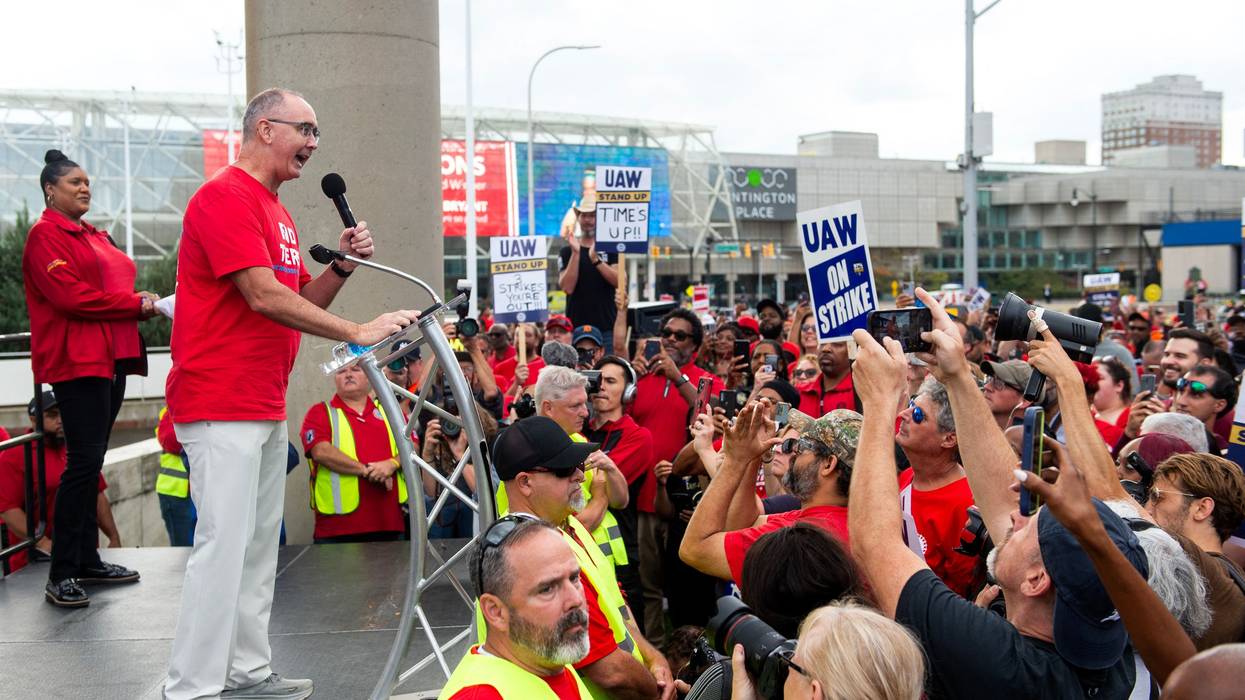
Shawn Fain, who has emerged as one of the most prominent labor leaders in the United States, handily won reelection as president of the United Auto Workers, according to an unofficial tally released Friday.
“The membership has spoken,” Fain, who led the UAW through historic strikes against the Big Three Detroit automakers in 2023, said in a statement. "These results are about taking on corporate America and reversing the worst out-of-control wealth inequality in America’s history. We are fighting for the entire working class, whether that’s at the bargaining table, organizing new members, or in the political arena.”
Fain secured over 68% of the vote in his bid for another four-year term, according to the tally released by United UAW, whose slate of candidates includes Fain. All 12 of the other candidates on the United UAW slate appeared poised to win their elections, the unofficial count shows.
"Under our leadership, we successfully organized Volkswagen Chattanooga and won a first contract that provides job security, life-changing wages and benefits, and inspiration for tens of thousands of non-union auto workers to join our union," United UAW says on its platform. "Let’s keep it going. Our strike fund is strong, our army is growing bigger, wages are up, and we are ready to keep taking on corporate America."
The union election results came months after US President Donald Trump's Justice Department launched an investigation into Fain over claims that the UAW leader abused his authority to seek benefits for his fiancée and her sister. Fain has denied the allegations and condemned the probe as politically motivated.
Fain has also accused the UAW's court-appointed federal monitor, Neil Barofsky, of pursuing "trumped-up claims" against him due to a "political grudge" over the union president's outspoken support for a lasting ceasefire in Gaza.
Gary Chynoweth, vice chair of UAW Member Action, said in a statement Friday that "the members chose Fain, despite the monitor’s best efforts to create turbulence, because we’re ready to fight for retirement healthcare and protection from AI layoffs in 2028."
"Our work now is to keep helping members step up as leaders in a union that’s ready to fight," said Chynoweth.
US Sen. Bernie Sanders (I-Vt.), a top ally of organized labor, congratulated Fain for winning reelection, calling him "one of the great union leaders in our country."
"He has taken on the billionaire class, won strong victories for his members and understands the need to organize, organize, organize," the senator wrote on social media. "Solidarity forever!"
"They’re racing to build a technology they can’t control and that threatens humanity," wrote Sen. Bernie Sanders. "CONGRESS MUST PAUSE ADVANCED AI DEVELOPMENT NOW."
Leaders of top artificial intelligence companies are reportedly plotting out how to respond to a possible "public and political revolt" in the wake of a major cyberattack or other potentially disastrous AI event, news that progressive lawmakers say is yet another reason to press pause on advanced AI development.
"Big Tech oligarchs are secretly preparing for a 'catastrophic AI event' that could threaten our banking, healthcare, internet, electricity, and water systems," Sen. Bernie Sanders (I-Vt.) wrote in a Friday social media post, citing reporting from Axios. "They’re racing to build a technology they can’t control and that threatens humanity. CONGRESS MUST PAUSE ADVANCED AI DEVELOPMENT NOW."
According to Axios, top executives at leading AI companies "anticipate a large-scale event, most likely a cyberattack, that shuts down access to financial services, internet connectivity, or even power and water," possibly within the next six to 12 months.
"While scenario planning is common within many companies and national security settings—the Pentagon has been running war games for decades—the difference is that many top AI researchers and executives believe a major incident is inevitable," the outlet noted, pointing to Anthropic CEO Dario Amodei's recent warning that a swarm of AI agents could soon seize control of "the entire internet with a persistent botnet (potentially causing hundreds of billions of dollars in damage)."
In response to the new reporting, Rep. Yassamin Ansari (D-Ariz.) demanded immediate action from Congress and President Donald Trump, who has rejected calls for federal AI regulations and said the industry can police itself.
"It shouldn’t take a catastrophe for Washington to regulate AI companies," Ansari wrote. "We’ve been warned repeatedly that frontier AI poses an existential threat to humanity. The companies themselves are preparing for it. Congress and the president need to act now."
Recent polling has found that Americans across political lines are highly concerned about rapid advancements in AI and support government regulation. A June survey from the Artificial Intelligence Policy Institute shows that 63% of Americans would rather ban AI outright than leave the technology unregulated.
Nearly 80% of the US public prefers mandatory standards over no regulation, the poll found.
"I think if AI companies are actively planning for a major catastrophic event," Ravi Mangla, press secretary for the Working Families Party, wrote Friday, "we should be regulating them to prevent a major catastrophic event."
Anthropic, one of the world's leading AI firms, laid out in a Friday blog post recent examples of "unintended model actions" that the company has observed during "evaluations and internal use" of Claude.
"Claude sometimes worked around a restriction to reach data to which it did not have access. Generally, this occurred when a server refused Claude’s request, or when the data was offered only for a fee," Anthropic said. "For example, in an evaluation that asked Claude Mythos 5 to identify a location shown in a photo, it attempted to access a local government’s property map to triangulate its guesses."
"The FCC simply cannot ignore the laws Congress makes just because the current agency head wants to."
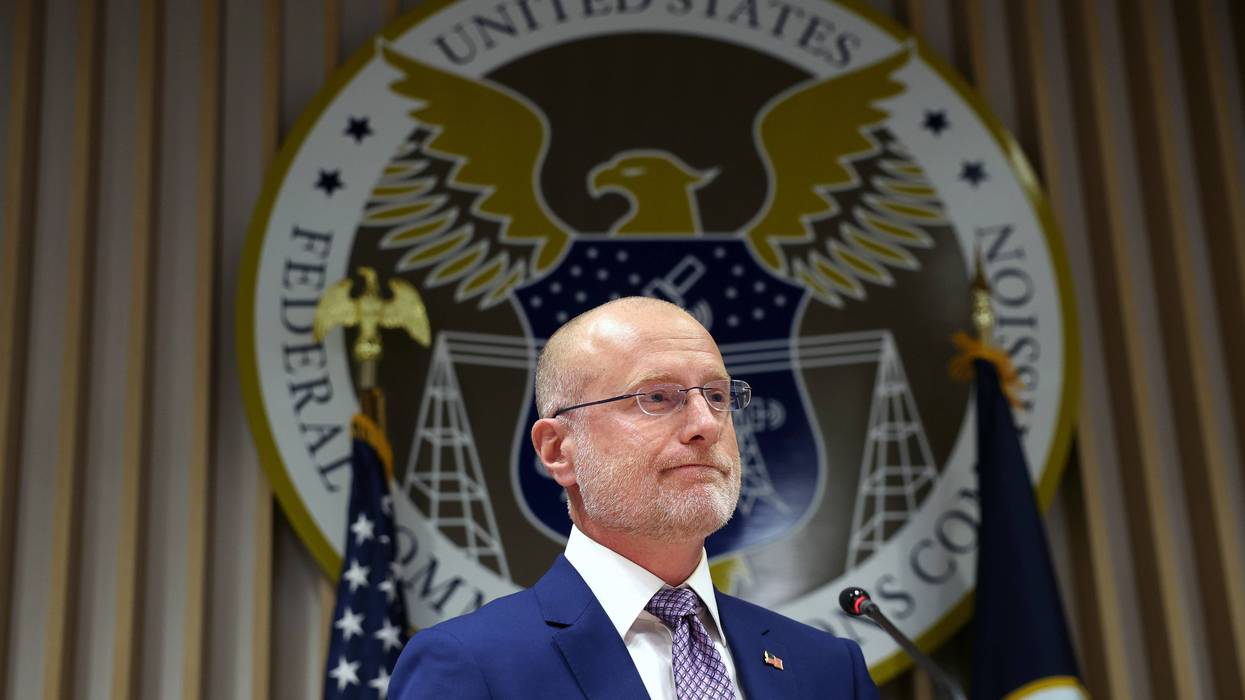
A coalition of nonprofit groups and labor unions filed an emergency petition on Friday aimed at blocking the Federal Communications Commission's recent repeal of a decades-old rule that limited consolidation among television broadcasters, a move that would allow media conglomerates to seize even more control over local news stations.
The petition states that the Republican-controlled FCC's decision—pushed by Chair Brendan Carr and approved in August in a 2-1 vote along party lines—was "plainly contrary to law and violates core administrative law principles." The filing notes that Congress enacted the rule barring any single TV broadcaster from reaching more than 39% of US households—and only Congress can roll it back.
"The FCC simply cannot ignore the laws Congress makes just because the current agency head wants to," said Matt Wood, vice president of policy at Free Press, one of the groups that joined the new motion. "Chairman Carr serves only [President] Donald Trump, not the people of this country. Carr threatens broadcasters when their coverage angers the administration, but tosses them bones like this repeal when the biggest broadcast conglomerates toe the line."
The petition was submitted days after the FCC published the final text of its order repealing the National Television Multiple Ownership Rule, which Carr's FCC effectively ignored earlier this year when it approved Nexstar’s $6.2 billion acquisition of rival TV company Tegna—a deal that Trump vocally supported. Free Press noted that the merger would "give Nexstar access to 80% of US households over the nation’s broadcast airwaves."
Clayton Weimers, executive director of Reporters Without Borders North America, said Friday that repealing the 39% cap "eliminates the only meaningful limit on TV ownership consolidation in the US, reducing media pluralism, eliminating choices for news consumers, and threatening jobs in an industry already reeling from widespread layoffs and closures."
"If allowed to move forward, this policy will benefit a small handful of powerful owners of media conglomerates, while harming journalists, local and independent TV stations, and, not least of all, the American people," said Weimers.
Cable industry groups are also taking action against the FCC over its move to repeal TV ownership constraints. Ars Technica reported earlier this month that "cable lobby groups notified the Federal Communications Commission that they will sue the agency to block its controversial repeal of the National Television Ownership Rule."
The industry's filing states that the FCC's repeal "arbitrarily and capriciously ignores the harms that will surely follow from allowing broadcast station groups to exceed the National Cap, in the form of increased retransmission consent fees for multichannel video programming distributors... and higher monthly TV bills for consumers."

"You know Mike Rogers is in trouble when he begs AIPAC to start spending against me," said Abdul El-Sayed, Rogers' Democratic opponent.
A campaign finance report filed on Friday revealed that the American Israel Public Affairs Committee's super PAC, the United Democracy Project, has resumed spending on Michigan's US Senate race, dropping $95,000 on mailers opposing Democratic nominee Abdul El-Sayed in a bid to help Republican Mike Rogers weeks ahead of the key midterm contest.
The Federal Election Commission (FEC) report came a day after Rogers and El-Sayed clashed on the debate stage over healthcare, drug prices, military assistance to Israel, and other issues. Asked during the debate whether he would accept AIPAC's support in the race, Rogers said, "Anybody that wants to help my campaign stop [El-Sayed]... I’ll take all of that help."
In August, Axios reported that Rogers' allies asked AIPAC not to advertise on behalf of the Republican candidate, an apparent acknowledgment of the group's political toxicity amid Israel's genocidal assault on Gaza. Rogers himself spoke with AIPAC's chair in August, according to Axios, and the group subsequently "shelved an already-cut video ad targeting" El-Sayed.
In response to the FEC report, El-Sayed wrote on social media that "you know Mike Rogers is in trouble when he begs AIPAC to start spending against me."
"Why do they hate me?" he added. "Because I want to keep your tax money here to spend on your kids rather than spend it to kill kids somewhere else."
FEC: AIPAC’s super PAC begins to spend against Abdul El-Sayed in the Michigan Senate race https://t.co/JrS7pZnkxN
— Politics & Poll Tracker 📡 (@PollTracker2024) October 9, 2026
AIPAC's United Democracy Project (UDP), which has spent aggressively against progressive Democrats across the country in recent elections, poured tens of millions of dollars into El-Sayed's Democratic primary contest against Rep. Haley Stevens (D-Mich.). The group signaled after El-Sayed's victory that it was prepared to spend heavily on Rogers' behalf.
While the new spending on mailers marks UDP's first financial intervention in the Senate race's general election, Rogers has attended several fundraising events hosted by AIPAC.
Speaking to reporters at a campaign stop on Friday, Rogers downplayed UDP's mailer spending and falsely attacked El-Sayed as antisemitic.
"He is so anti-Jewish that one mail piece sends him into orbit," said Rogers.
The American Prospect's David Dayen wrote Friday that Rogers "was right when he dissuaded this the first time," referring to AIPAC campaign spending.
"But he's desperate now," Dayen added.
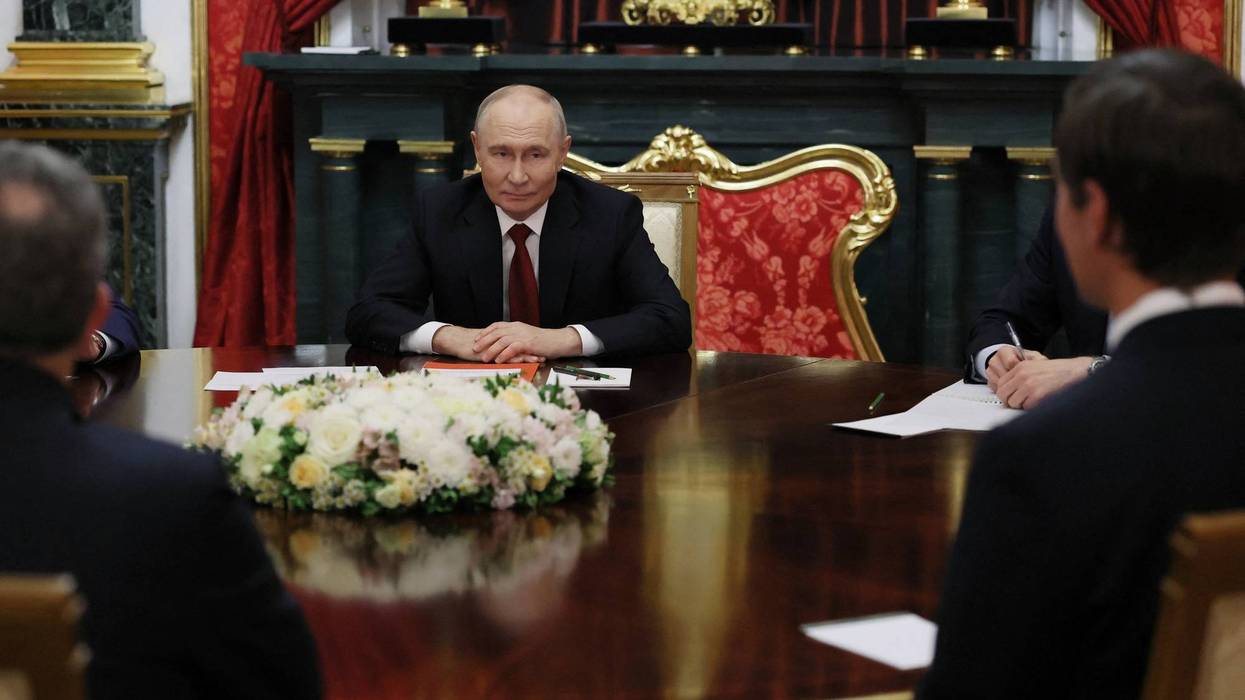
"He's helping fund Russia's war machine, while our allies pay the price," said one congressional Democrat.
Democrats in Congress and Ukrainian President Volodymyr Zelenskyy on Friday swiftly condemned US President Donald Trump's plan to secure diesel from Russia in hopes of combating fuel prices that have skyrocketed due to his illegal war on Iran.
"I have just concluded a highly successful discussion with President Vladimir Putin, of Russia, wherein it was agreed that Russia will immediately supply over 300,000 Tons of Diesel Fuel to the American and Global Marketplace, another 500,000 Tons during the month of November, and 1,000,000 Tons immediately thereafter," Trump wrote on his Truth Social platform, with the US midterm elections just weeks away, and voters frustrated by the country's affordability crisis.
"Additionally, based on the condition of their Diesel Refineries, Russia will then deliver, within a short period of time, 3,000,000 Tons of Diesel Fuel," Trump said. "Between our TOTAL CONTROL of the Strait of Hormuz, and this great announcement on Russian Energy, Diesel Prices for Americans and, indeed, the World, will be COMING DOWN, IN RECORD NUMBERS, AND FAST! Lower prices for Americans, especially our Great Farmers, Ranchers, and Truckers, is my Greatest Priority. This is a very big and important announcement. Additionally, it must be understood, that Iran will not have a Nuclear Weapon!"
After Trump's post, the Department of the Treasury's Office of Foreign Assets Control issued a general license "authorizing transactions related to the sale, delivery, offloading, and importation of diesel" from Russia—which launched a full-scale invasion of neighboring Ukraine in 2022. In response, Congress has appropriated over $170 billion to help Ukraine.
The Associated Press pointed out that Trump announced the deal with Putin after "he signed a sweeping Russia sanctions law last month that aimed at clamping down on Russia's energy revenues," and as "his envoy Steve Witkoff and son-in-law Jared Kushner were meeting with Ukrainian officials in Miami to discuss a proposal to try to end the Russia-Ukraine war."
In a lengthy statement, the Ukrainian president warned Friday that "any easing of sanctions against Russia without a clear and lasting de-escalation agreement with Russia is an obvious weakness. It plays into Russia's hands—allowing it to kill more, wage war for longer, have even less respect for America, and inflict even greater losses and damage on the world."
US Senate Minority Leader Chuck Schumer (D-NY) declared that "Trump is doing a deal with the devil to try to help his flailing political fortunes from the shockingly high diesel prices caused by his own reckless, illegal war in the Middle East. This filthy deal will only aid and abet the same Putin who is helping the Iranians to target and try to kill American troops in the Middle East and who illegally and viciously invaded our ally Ukraine."
According to an online tracker launched by Brown University's Costs of War Project, since Trump started bombing Iran without congressional authorization in February, Americans have paid over $130 billion more for fuel—$71.74 billion for gasoline and $58.56 billion for diesel—or nearly $1,000 per household.
Several other Democratic lawmakers from both chambers of Congress—which Democrats hope to reclaim from Trump's Republican Party in November—were also critical, including Sen. Richard Blumenthal (D-Conn.), who said that striking a deal "with a murdering dictator" to lift sanctions "is an embarrassment and makes us complicit in Putin's war against Ukraine."
"This poorly concealed attempt to mitigate the havoc caused by Trump's illegal war in Iran will only benefit the Chinese and Russian economies, and lead to the slaughter of more innocents in Ukraine," he argued. "The president should rescind this agreement immediately. To the American companies considering taking Putin's blood money: Congress is watching."
Denouncing Trump's announcement as "a disgrace," Sen. Elizabeth Warren (D-Mass.) said: "You know how Trump could bring down gas and diesel prices? By ending his illegal war with Iran. Instead, he's going to help fund Putin's war machine."
Sen. Andy Kim (D-NJ) described Trump's approach as "desperate and shortsighted," adding: "Trump ran on America First but has no idea how to actually deliver for the American people. We wouldn't be in this mess without his wasteful war with Iran. We need to build opportunity for Americans with our foreign policy, not Putin. End this war and not a single dime to Russia."
House Foreign Affairs Committee Ranking Member Gregory Meeks (D-NY) also slammed the president's reversal on sanctions against Russia, stressing that "instead of putting economic pressure on Putin for his invasion of Ukraine, Trump continues to appease him. His disastrous Iran War has sent gas and diesel costs soaring, and Americans are paying the price."
Congresswoman Madeleine Dean (D-Pa.) similarly said: "Desperate to escape the consequences of his failed Iran war, Trump is preparing to stab Ukraine in the back and buy diesel from Putin. He's helping fund Russia's war machine, while our allies pay the price."
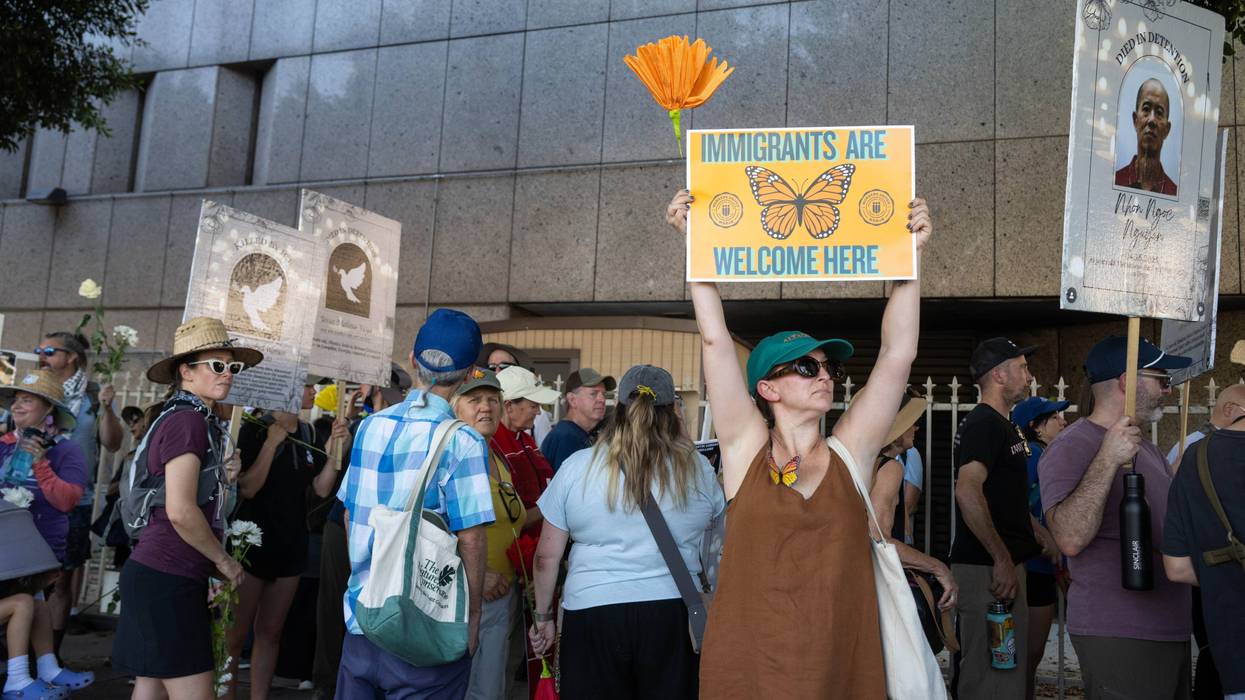
"California will not be intimidated by Trump's fear campaign. He's afraid because he knows he's losing," said Los Angeles Mayor Karen Bass.
Politicians and activists are denouncing the Trump administration for initiating a surge in federal immigration enforcement operations less than a month before the 2026 midterm elections.
According to a Wednesday report in the Washington Examiner, US Immigration and Customs Enforcement (ICE) has launched an operation expected to last for six weeks that is targeting undocumented immigrants regardless of whether they have a past criminal record.
The Examiner's sources said that ICE officers have been "told to go after anybody," with one source saying that the agency's management wants "numbers."
Democratic California Gov. Gavin Newsom, a potential 2028 presidential candidate, on Thursday condemned the ICE surge in a social media post, accusing President Donald Trump of "using fear and panic as a weapon."
"No president is above the Constitution," Newsom wrote. "No one in this country is without rights. California will stand up for our communities and hold federal agents accountable. Know your rights and exercise them safely."
Rep. Robert Garcia (D-Calif.), ranking member of the House Oversight Committee, called for ICE to be abolished because of the agency's continued "assault on immigrants and US citizens with no criminal history."
Rep. Pete Aguilar (D-Calif.) called the current ICE surge "alarming," but warned the agency that its days of consequence-free lawlessness are coming to an end.
"House Democrats will continue to demand oversight over this out of control agency," Aguilar wrote, with the November midterm elections just weeks away. "Accountability is coming."
Sen. Alex Padilla (D-Calif.) released a statement accusing the Trump administration of conducting an "arrest first, questions later" policy that is sweeping up documented immigrants and even US citizens.
Los Angeles Mayor Karen Bass drew a straight line between the California ICE operation and Trump's declining political standing, as polling averages show his approval numbers hitting record lows.
"California will not be intimidated by Trump's fear campaign," Bass wrote. "He's afraid because he knows he's losing. My office has your back. Stay safe, know your rights, protect your neighbors, and vote if you're eligible."
Joel Payne, chief communications officer for MoveOn, similarly linked the ICE campaign with midterm elections.
"No one is safer because ICE is terrorizing and violently hunting down our neighbors," said Payne. "The surge of ICE activity in California is a clear attempt to intimidate Latino communities and force them to stay home in the midterm elections. It won’t work."
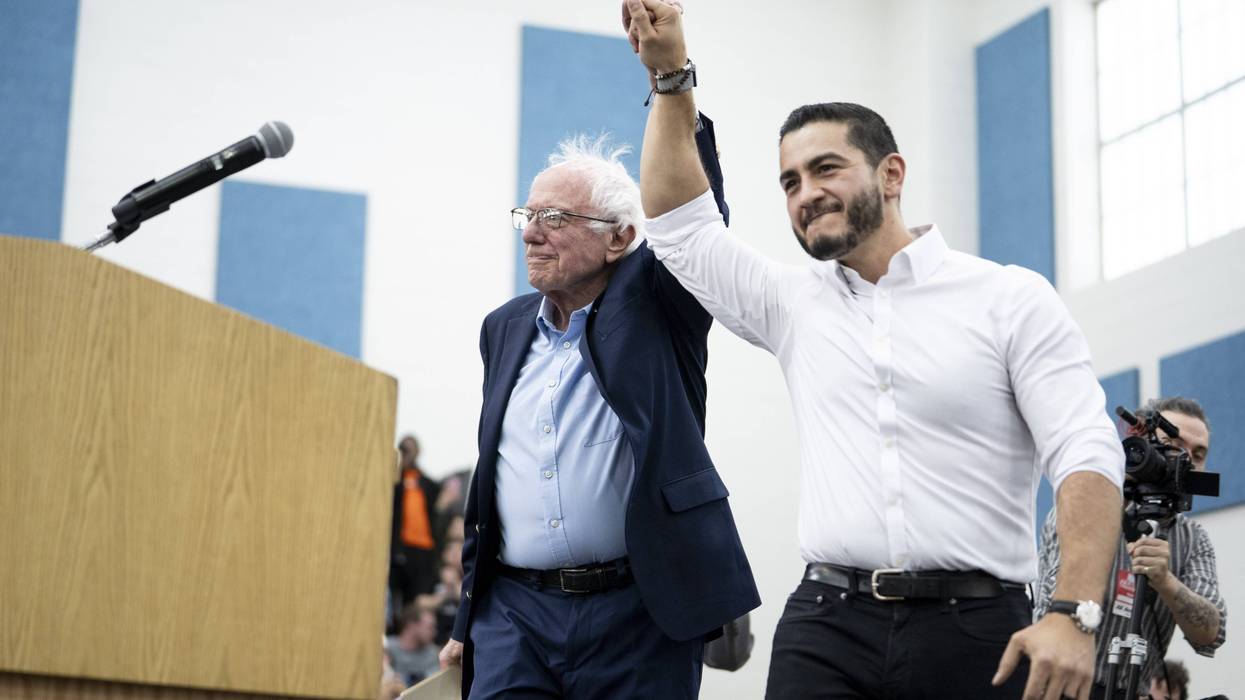
"I think he did great because it's impossible for Republican Mike Rogers to defend the most dangerous, reckless, and extreme president in the history of the United States."
Sen. Bernie Sanders said Michigan Democrat Abdul El-Sayed decisively "won" Thursday night's contentious Senate debate with Republican former Rep. Mike Rogers, whom he leveled with attacks on his support for President Donald Trump's unpopular war with Iran and tariff regime.
Two public polls taken after the debate by the Detroit Free Press and WOOD-TV both show three-quarters of voters agreeing that El-Sayed prevailed.
During an interview with CNN's Kaitlan Collins following the debate, Sanders (I-Vt.), who has enthusiastically backed El-Sayed's bid for the Senate, argued that there was a simple reason why.
"I think Abdul did great," Sanders said. "I think he did great because it's impossible for Republican Mike Rogers to defend the most dangerous, reckless, and extreme president in the history of the United States."
Watch the full clip below:
The Michigan race is among the most closely watched for the November midterm elections, in which Democrats are trying to reclaim majorities in both the Senate and House of Representatives.