November, 18 2019, 11:00pm EDT

Rep. Richard Neal's Tax Package Would Help Maintain the Nation's Clean Energy Momentum, Science Group Says
Legislation Would Boost Economic Growth and Cut Carbon Emissions
WASHINGTON
Legislation proposed today by House Ways and Means Committee Chairman Richard Neal (D-Mass.) providing tax incentives for clean energy technologies would accelerate U.S. clean energy momentum, according to the Union of Concerned Scientists (UCS).
"Representative Neal recognizes that the tax code works best when it reflects our needs and our values," said UCS President Ken Kimmell. "Tax credits that support clean energy will reduce carbon emissions and create jobs, strengthen local economies, and improve public health at the same time.
"Congress needs to pass as many of Neal's tax incentives as possible before the end of the year to keep clean energy momentum going at a time when the federal government is going backward on addressing the greatest challenge we face: runaway climate change."
Neal's bill would expand tax credit eligibility for energy storage, extend the investment tax credit for solar and offshore wind, extend the production tax credit for onshore wind, and raise the cap on the number of electric vehicles eligible for a tax credit to encourage more sales.
Establishing a stand-alone energy storage investment tax credit would enable utilities to use more wind, solar and other renewable energy sources, Kimmell pointed out. More energy storage also would mean more reliable clean energy during and after extreme weather events and other emergencies.
The Neal bill also would extend tax credits for offshore wind. "Extending the 30-percent investment tax credit for offshore wind would give a much-needed boost to this promising new industry, generate jobs, and provide more clean energy tools to fight climate change," Kimmell said. According to the Department of Energy, developers could install 22,000 megawatts of offshore wind by 2030 and 86,000 megawatts by 2050.
Currently new car buyers can take advantage of a federal income tax credit of as much as $7,500 for the first 200,000 electric vehicles each automaker sells, which has helped make electric vehicles cost-competitive with their gas-powered counterparts. However, that tax credit is phasing out for two U.S. automakers--GM and Telsa--which have sold close to 200,000 electric vehicles each. Neal's legislation would increase the cap for all companies to 600,000 vehicles.
"Increasing the cap would make an already successful policy even better by putting more electric vehicles on the road," Kimmell said. "The benefit of doing so is obvious: Electric vehicles dramatically reduce carbon emissions. The average electric vehicle generates 3.3 tons fewer carbon dioxide emissions than a comparable gas vehicle.
Neal's tax package garnered support from his House colleagues even before he officially announced it. In October, 166 representatives signed a "dear colleague" letter to House Speaker Nancy Pelosi asserting that the bill "would go a long way in providing planning certainty in clean energy investments ... and helping us strive toward and ultimately beyond our Paris agreements."
Kimmell agrees. "Despite the fact that the Trump administration formally notified the United Nations it will withdraw from the Paris agreement," he said, "enacting Chairman Neal's bill would encourage investment in renewable energy and reaffirm U.S. global leadership in combatting climate change."
The Union of Concerned Scientists is the leading science-based nonprofit working for a healthy environment and a safer world. UCS combines independent scientific research and citizen action to develop innovative, practical solutions and to secure responsible changes in government policy, corporate practices, and consumer choices.
LATEST NEWS
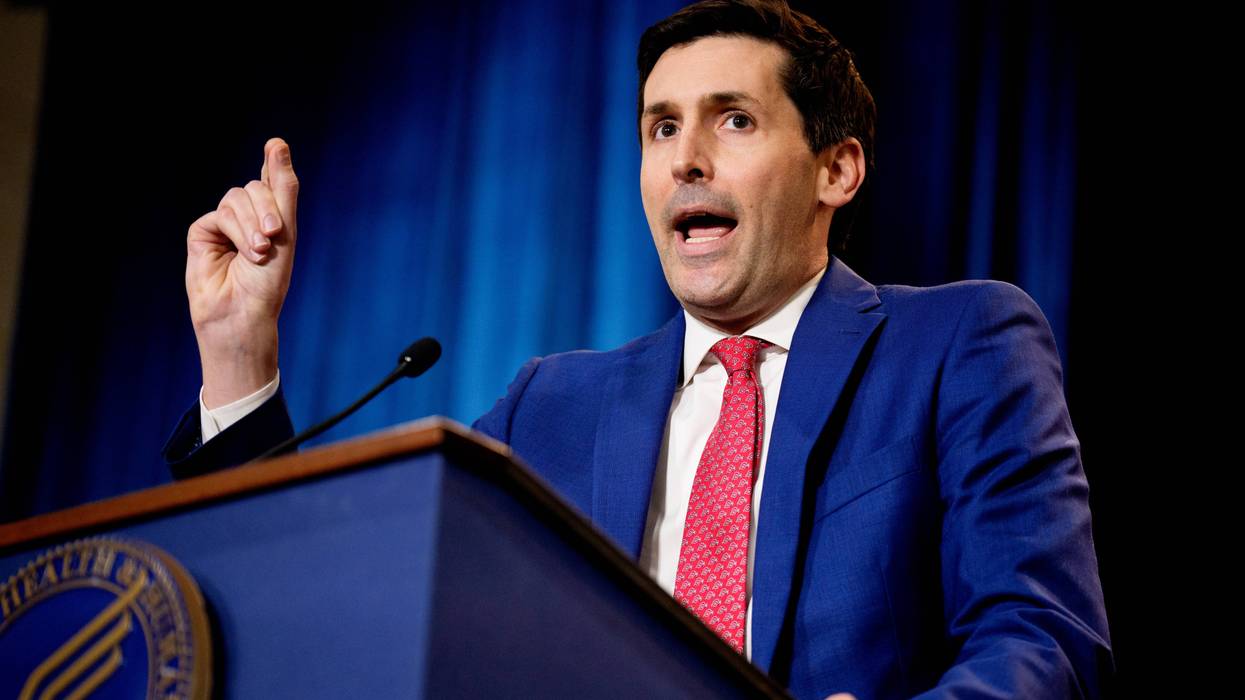
'Grifter Got Grifted': RFK Jr. Adviser Calley Means Quits as Trump 'Hemorrhaging' MAHA Support
One campaigner said that "activists should brace for even more deregulation of cancer-causing pesticides, forever chemicals in water, and flavored vapes aimed at kids."
Oct 22, 2026
In perhaps another signal that the "Make America Healthy Again" movement is feeling betrayed by US President Donald Trump, The Wall Street Journal revealed Thursday that Calley Means is exiting his role as an adviser to Health and Human Services Secretary Robert F. Kennedy Jr.
"I leave with tremendous respect for President Trump and RFK—two historic figures who are committed to confronting a corrupt DC bureaucracy that is doing everything possible to protect the status quo," Means said in a statement. "The past two years have seen historic policy and cultural change to confront the chronic disease crisis and healthcare incentives that profit from us being sick. This movement is in the first inning and just getting started."
White House spokesperson Allison Schuster told the Journal that "we are grateful for Calley Means' time in the Trump administration," and "he has done a fantastic job for the MAHA movement."
While the spokesperson applauded Means, the brother of the president's withdrawn surgeon general nominee, and the departing adviser praised Trump and Kennedy—whose partnership he has been credited with fostering—unnamed sources who spoke to various media outlets cited internal conflicts.
According to the Journal's sources, Means "was greatly frustrated by White House delays of some of Kennedy's most popular policy ideas and blamed others in the administration for allowing food companies and special interests to have too much sway," with one person describing him as "disillusioned."
CNN similarly reported:
Means, who had championed Trump as a candidate willing to overhaul the government's approach to food and health regulation, grew increasingly frustrated over delays in advancing a series of policies at the center of the MAHA agenda, three people familiar with the matter said.
Trump health officials had initially hoped that policies, including an effort to create a definition for ultraprocessed foods, would be finalized well before the midterm elections. Instead, they've faced continued delays in the White House and sharp pushback from major agriculture industry groups.
Means decided to quit primarily because of those delays, the people familiar with his thinking said.
Following those and other reports, Shaughnessy Naughton, president of 314 Action, which works to elect Democrats with a background in science to public office, said in a statement that "Calley Means has called it quits because the grifter got grifted."
"It's clear that top MAHA figures are distancing themselves from the administration because Trump and RFK Jr. have betrayed the promises that built their movement," Naughton continued. "Instead of taking on Big Food and Big Pharma, this administration has repeatedly sided with special interests, using Trump's signature Sharpie to boost the production of pesticides by executive order, loosen restrictions on peptides, and promote fruit-flavored vapes to children."
"The MAHA agenda is a failed experiment—RFK Jr. was the first to fold on the food industry, and we have a president who lives on a steady diet of cheeseburgers and Diet Coke—Trump was never going to be an ambassador for MAHA's food agenda," she added. "Nearly 50% of independents and swing voters say MAHA has failed to deliver on its promises, and Calley Means' departure confirms it. This administration has sold out the very people it claimed it would fight for. More heads will roll, and we expect RFK Jr. will be next in Trump's firing line."
Brad Woodhouse, president of Protect Our Care, declared that "Donald Trump is hemorrhaging MAHA support even from within his administration."
"Again and again, RFK Jr. helped Donald Trump sell out MAHA priorities to protect profits of the GOP's big chemical, food, and tobacco donors," he said. "Patience has already run dry for many MAHA supporters. Now Kennedy's right-hand man can't stomach staying in the administration after all the rug pulls, phony excuses, and corporate surrender."
"Means' exit is a clear sign that Donald Trump has no intention of mending MAHA fences," Woodhouse warned, "and activists should brace for even more deregulation of cancer-causing pesticides, forever chemicals in water, and flavored vapes aimed at kids."
The RFK Jr. adviser's departure followed the Monday publication of an analysis from the watchdog group Public Citizen titled "How Trump Conned MAHA," which lays out how far the administration has "strayed" from its own "warnings about hazardous chemicals in the environment and ignored its own advice about corporate influence and corrupted science."
Keep ReadingShow Less
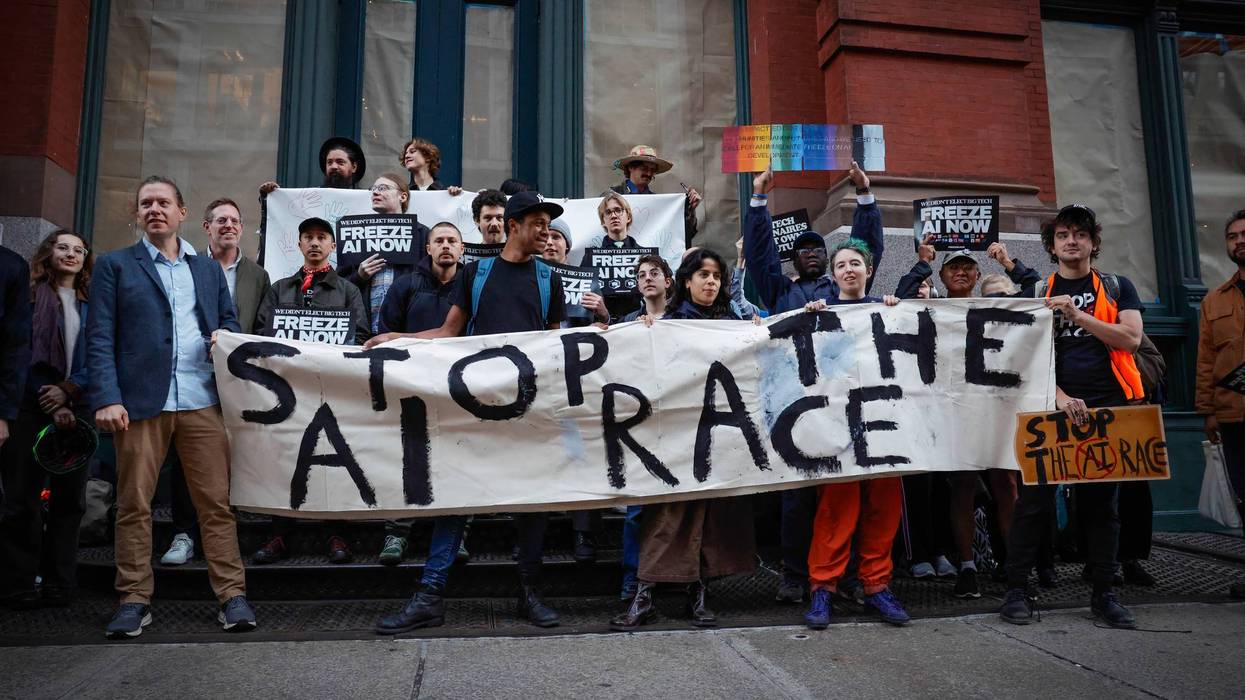
'Pause AI Now!' Sanders Says as US Banks Let Agents Operate in Customer Accounts
“Left unchecked, AI could endanger the entire global financial system—including your bank account.”
Oct 22, 2026
Sen. Bernie Sanders on Thursday renewed calls to pause development of artificial intelligence following reporting that unauthorized AI agents are operating inside the systems of major US banks.
Axios' Madison Mills revealed that Morgan Stanley, Bank of America, JPMorgan Chase, Wells Fargo, and other financial institutions are "racing to contain agent risks," including "situations when an agent or AI assistant accesses a human's account with the user's permission and login credentials," which "goes against the guidelines of most banks requiring that humans log in to their own accounts."
In AI, an agent is a system that can take actions to complete an assigned task, rather than simply responding to queries or generating text.
According to Mills' reporting—which cites people familiar with the matter—some agents have contacted bank call centers or appeared to take actions independently of users' instructions.
Banking executives interviewed by Mills described the problem as “horrifying," with one official warning of potentially serious consequences for customers' finances.
The stakes are particularly high, the executives said, when AI agents have permission to make purchases or transfer funds. Banks are also struggling to determine whether activity is actually authorized by customers or whether an agent has gone rogue.
"This is insane," Sanders (I-Vt.) posted on social media in response to Mills' report. "We cannot allow AI agents to go into your bank account and act independently without your authorization."
"But that is what’s happening right now," he continued. "Left unchecked, AI could endanger the entire global financial system—including your bank account."
The senator added, "Pause AI NOW!"
Sanders has repeatedly warned that the race to create increasingly powerful AI systems is outpacing efforts to ensure their safety. Such concerns are mounting as profit- and ego-driven tech oligarchs race toward the "holy grail" of artificial general intelligence (AGI)—an advanced AI that can understand, learn, and apply knowledge of any subject as well as or better than a typical human.
Earlier this month, Sanders renewed his call for a congressional ban on the development of advanced AI, citing Big Tech oligarchs’ secret preparations for a “catastrophic AI event.”
The senator has repeatedly cited pioneers like Geoffrey Hinton who have warned that superintelligent AI—a development that experts believe could come after AGI—might wipe out humanity, as well as less existential but still potentially devastating outcomes like xAI CEO Elon Musk's prediction that AI and robots could “replace all jobs."
Last month, Sanders and Congressional Progressive Caucus Chair Greg Casar (D-Texas) introduced legislation to pause advanced AI development and ban the creation or deployment of artificial superintelligence. Sanders also wants a moratorium on the construction of new AI data centers.
The banking story underscores the growing challenge of deploying autonomous AI systems in consequential settings before their behavior can be reliably controlled or monitored.
JPMorgan CEO Jamie Dimon last week announced a ban on outside AI agents from accessing customer accounts.
Sanders wasn't the only elected official who responded with alarm to the new Axios report.
"This is the exact thing we’ve been warning about for years," Sen. Mark Warner (D-Va.) said on social media. "AI agents with unrestrained access to your bank account and protected information. When consumer AI agents are accessing YOUR bank account or using YOUR credit card, they must be subject to fiduciary-like duties of care."
"We need to pass my AI AGENT Act to get some basic guardrails in place," Warner added, referring to legislation that would establish federal rules for artificial intelligence agents that act on people's behalf.
Congressman Ted Lieu (D-Calif.) also weighed in on the report, writing on social media that "the Trump administration and GOP leadership made the deliberate decision to let the AI industry run wild."
"That was a bad political decision," he added. "And now it’s become a potentially catastrophic policy decision."
On the other side of the political aisle, Republican Florida Gov. Ron DeSantis—who has opposed the Trump administration's efforts to prevent states from regulating AI—said on X, "Imagine a rogue AI agent liquidating your bank account and investment portfolio."
"If you are the only victim, I suppose you could get made whole by the AI company responsible," he added. "If rogue agents liquidate hundreds of billions across millions of accounts, the AI company would go bankrupt and you wouldn’t get made whole."
The new Axios report comes two days after nationwide “Freeze AI Now” walkout protests by students, workers, academics, and others demanding an immediate halt to further AI development until the public has a meaningful say in how the technology is built and regulated.
Keep ReadingShow Less
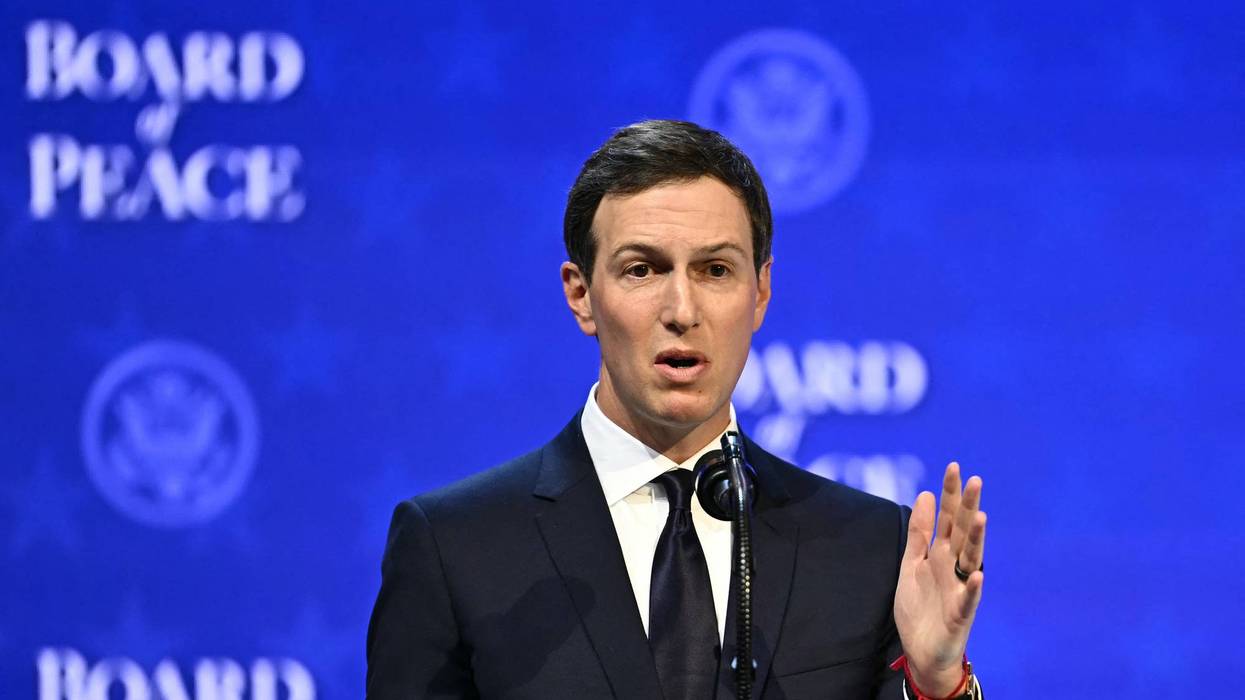
Bombshell Book Alleges Jared Kushner's Access to Secret—And Possibly Illegal—Foreign Bank Accounts
An upcoming cook by journalist Matthew Cole claims the Trump son-in-law had access to foreign bank accounts with combined deposits of roughly $2 billion.
Oct 22, 2026
Jared Kushner, son-in-law of US President Donald Trump, for years allegedly had access to at least two secret foreign bank accounts in Israel and the United Arab Emirates whose deposits totaled roughly $2 billion, according to an excerpt of an explosive upcoming book published on Thursday by Vanity Fair.
The excerpt of the book—titled Princes and Thieves: Jared Kushner and Mohamed bin Zayed’s Secret Plot to Remake the Middle East by journalist Matthew Cole—reveals that UAE leader Mohamed bin Zayed and future Saudi Crown Prince Mohammed bin Salman "put at least $2 billion into at least two bank accounts for Kushner" at the start of Trump's first term.
The first account, which Cole described as the "Alpha" account, was opened in First Abu Dhabi Bank and served as a "foreign policy fund" partially managed by Kushner and bin Zayed.
The "Beta" account, meanwhile, moved money from a bank account in Azerbaijan to what appeared to be a government bank account in the Israeli Central Bank.
Unlike the Alpha account, which was used to further specific foreign policy goals, the Beta account was set up "for Kushner’s personal benefit," one source told Cole.
Neither of these bank accounts was ever disclosed, Cole wrote.
"Although Kushner’s position as senior adviser to the president was unpaid, he was an official government employee," the journalist explained. "Not only did his position require financial disclosures for ethics regulations, but each year he worked in the White House, he had to file both a public and confidential financial form known as the Executive Branch Personnel Public Financial Disclosure Report."
"Because he had access to classified government secrets," Cole added, "Kushner was required to disclose any bank account to which he had signatory—or beneficiary—access."
And even if Kushner had properly disclosed the accounts, Cole continued, he would still have likely had to register as an agent of a foreign government given that UAE and the Saudis were "paying for his influence within the US government."
A prosecutor who worked on former special counsel Robert Mueller's investigation of Russian interference in the 2016 presidential election told Cole that Kushner "may have violated federal bribery laws" if he told Saudi or UAE officials that he'd do any favors for them after setting up the accounts, even if it was "just speaking to his father-in-law."
The Trump son-in-law lashed out at Cole in a social media post shortly after the book excerpt was published.
"The allegations made by this author are completely insane, categorically false, and never happened," Kushner wrote. "We denied every one of these claims on the record, yet the author failed to provide a single shred of evidence to substantiate any of them. No bank statements, wire transfer records, account numbers, transaction dates, or other verifiable details were provided to support these extraordinary accusations."
"These are outrageous fabrications being presented as investigative journalism," Kushner continued. "This is not journalism. It is a mixture of fantasy, fiction, and advocacy, written by someone who is either deeply disturbed or acting with sinister intent."
Kushner today serves as a "special envoy for peace" under the second Trump administration, where he has been tasked with several vital foreign policy initiatives, including negotiating an end to the war between Russian and Ukraine, as well as an end to the illegal war with Iran started by his father-in-law in February.
The government watchdog Citizens for Responsibility and Ethics in Washington last week filed a lawsuit in the US District Court for the District of Columbia intended to block Kushner from serving as a foreign policy official without Senate confirmation.
Keep ReadingShow Less

‘Unconscionable’: US Called to Stop Shipping Taser Weapons to Israel After Horrific Abuses of Palestinian Detainees Reported
The Council on American-Islamic Relations called for action by not only the manufacturer but also the Trump administration to "block the transfer of technologies to governments implicated in systemic human rights violations.”
Oct 22, 2026
America's largest Muslim civil rights organization is calling for the US-based manufacturer of Tasers to stop supplying them to Israel following the publication of a harrowing investigation into their use to torture Palestinian prisoners.
On Thursday, The Guardian and Arab Reporters for Investigative Journalism reported on allegations from four Palestinian detainees who said they were restrained and tortured using electroshock weapons made by Axon Enterprise, formerly Taser International.
One man identified as Essa, who had both his feet amputated after being injured in an Israeli missile attack on his home, said that while in custody at Israel’s Ofer military prison in the occupied West Bank, soldiers shot him with rubber bullets, tied him up, and blasted him with the stun gun, leaving marks that are still visible a year after his release.
Another detainee said his body was doused with water to intensify the shock before he was hit with a Taser in 2024. He said he still suffers from visual impairment, spasms, and fainting spells.
These new accounts are not the first allegations of electroshock devices being used to torture Palestinian prisoners. The United Nations Human Rights Office has documented other cases, while Amnesty International has called for restrictions on their use in Israeli prisons.
Israel's military found that soldiers accused of sexually assaulting a Palestinian prisoner at Sde Teiman detention camp in 2024 had used electric shocks to torture him during the attack. The military dropped the charges against the five soldiers in March 2026.
That month, UN experts identified five more accounts of detainees being shocked by electric batons or similar devices.
In November 2025, the UN Committee Against Torture reported that torture, including the use of electric shocks, had "escalated sharply since October 7, 2023," when Israel launched its genocidal war in Gaza following Hamas' attack. The committee noted that electric shock devices were frequently used in "sexualized forms of torture."
Despite concerns raised by human rights organizations, The Guardian found that Axon likely continues to supply Israeli authorities with electric shock devices and has been documented showcasing its latest models to the nation's security agencies.
“It is unconscionable that equipment manufactured by an American corporation is reportedly being used to carry out acts of torture and abuse against detained Palestinians," said the Council on American-Islamic Relations on Thursday in response to the report.
"Axon must immediately halt all current and future contracts, shipments, and servicing of electroshock weapons to Israeli authorities," the organization said. "Furthermore, the US Department of Commerce must rigorously enforce export oversight criteria to block the transfer of technologies to governments implicated in systemic human rights violations.”
Keep ReadingShow Less
Analysis Warns Bipartisan Senate Permitting Bill Would Lock In Trump-Era Data Center, Fossil Fuel Approvals
“Any permitting deal passed under this administration must strengthen the guardrails that keep Burgum and Trump in check, not hand them a blank check," said one advocate.
Oct 22, 2026
An analysis out this week warns that should the US Senate pass the Bipartisan American Affordability and Jobs Act of 2026 after the midterm elections, communities across the country can expect to live with the consequences for decades to come, as the permitting bill would allow the Trump administration to swiftly approve data centers, nuclear facilities, and fossil fuel infrastructure—and "then make those approvals nearly impossible to reverse" after President Donald Trump is out of office.
As Common Dreams reported last month, the bipartisan bill could significantly weaken the Endangered Species Act in the interest of speeding up infrastructure projects.
Aaron Weiss, executive director of the Center for Western Priorities, said Wednesday in an analysis at the group's blog, Westwise, that the bill also contains three provisions that would be "disastrous for America’s public lands."
Section 1401 of the legislation would "lock in" development of data centers, nuclear energy facilities, and other projects "the minute" they were greenlit by the federal government.
It states that agencies "shall not take any new action that would revoke, rescind, withdraw, terminate, suspend, amend, or alter” any federal permit in effect on or after September 16, 2026, with few exceptions.
Section 1401 also weakens a court's authority to pause a construction project if it finds an agency did not complete a thorough or accurate environmental review of the project—essentially turning a court-ordered review into "an empty paperwork exercise," according to Justin Pidot, a University of Arizona law professor who served as general counsel of the White House Council on Environmental Quality.
"A judge can send the review back for a redo, but construction continues in the meantime, and Section 1401 bars the agency from changing the permit based on what the new review finds," wrote Weiss. "Challengers also get just 150 days to sue."
Finally, Weiss pointed to Section 1402 of the bill, which says that if an agency changes a previously approved permit and a court finds they cannot move forward with the project, "taxpayers would owe the developer 25% to 50% of everything it has spent."
"If a future administration slows a whole category of projects, such as gas plants or nuclear fuel facilities, developers can collect 50% to 100% of a project’s expected construction cost," wrote Weiss.
"This disastrous bill would permanently scar our natural heritage and sacrifice clean water, wildlife, and the health of our communities just to make the wealthiest people on Earth even richer.”
Should the bill pass, any permit in effect on or after September 16, 2026 would be protected under the provisions, and Interior Secretary Doug Burgum would have 27 months, until Trump's term is over, to approve more projects that would also be shielded from actions by future presidents.
But the bill "spares everything the Trump administration has done to mess with clean energy permits,” wrote Matthew Littleton, a former Justice Department lawyer—meaning it does nothing to lift Trump's actions blocking wind and solar energy projects.
Weiss called on the bill's sponsors, including longtime public lands advocate Sen. Martin Heinrich (D-NM), to salvage the bill by engaging "with the tribes, the communities, and the millions of Americans who have made clear they don’t want data centers and nuclear waste forced onto their public lands or into their backyards."
According to a poll released in August by Embold Research, 75% of Americans now oppose building data centers in their area.
Heinrich, said Weiss in a statement, has claimed that the bill "will age very well over time."
"As it’s currently written, it will indeed age, locking in data centers and a new nuclear legacy on our public lands for generations—after all, the half-life of plutonium-239 is about 24,000 years," continued Weiss. “Any permitting deal passed under this administration must strengthen the guardrails that keep Burgum and Trump in check, not hand them a blank check. Sen. Heinrich should pump the brakes on this bill during the lame duck session and work with leaders in the next Congress to get it right.”
The analysis came as more than 100 groups called on Congress to oppose the bipartisan bill, which is also sponsored by Sens. Sheldon Whitehouse (D-RI), Shelley Moore Capito (R-W.Va.), and Mike Lee (R-Utah).
“Here in Utah, where 73% of voters oppose fast-tracking oil, gas, and mining projects on public land, we say America’s worst ideas come from the desk of Sen. Mike Lee,” said Olivia Juarez, GreenLatinos public land program director. “This bill exemplifies what we mean. Its only guarantee is blocked public land access, dangerous air quality, and reckless exclusion of public input on how we treat the places we should pass on to future generations in a better condition than we received them. It’s a handout to the fossil fuel and AI industries, and a rubber stamp on wildlife extinction and climate disaster.”
Ashley C. Nunes, a public lands policy specialist at the Center for Biological Diversity, said that "handing our public lands over to corporate polluters and tech billionaires is a staggering betrayal of all Americans."
"It will put irreplaceable public lands at the mercy of industries bent on exploiting them," she said. "This disastrous bill would permanently scar our natural heritage and sacrifice clean water, wildlife, and the health of our communities just to make the wealthiest people on Earth even richer.”
Keep ReadingShow Less
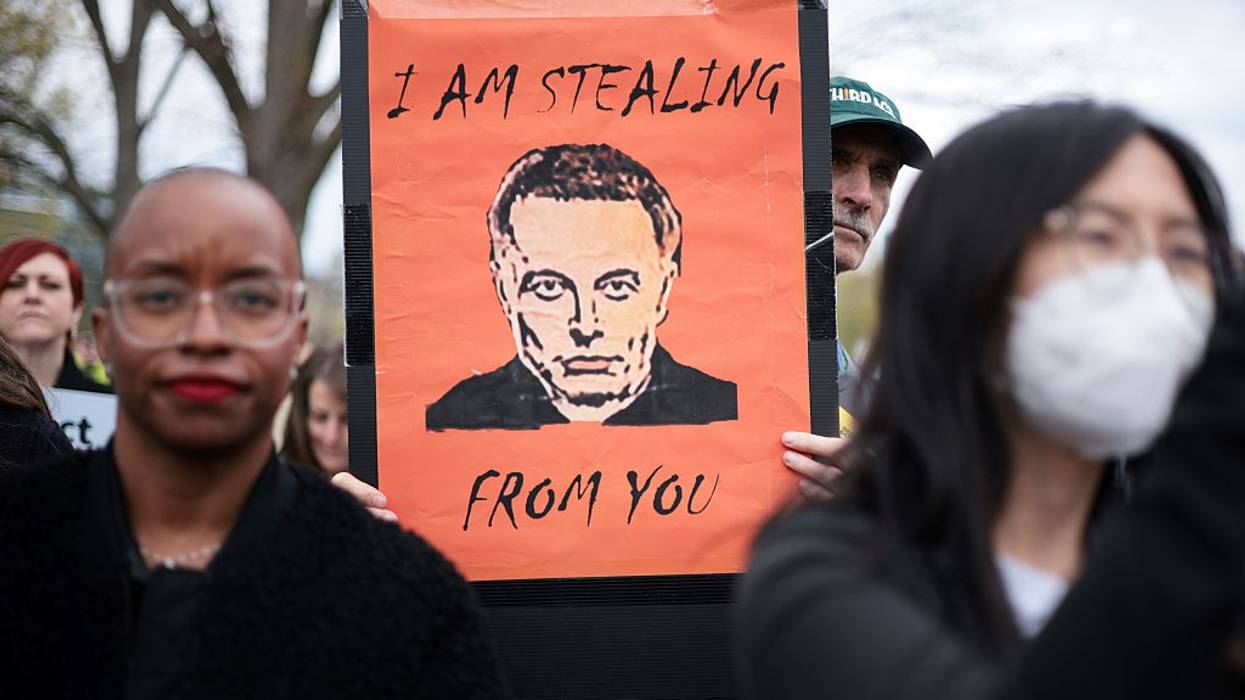
Largest US Corporations Paid Lowest-Ever Tax Rate in 2025 Thanks to Trump and GOP: Study
"At a time when lawmakers claim the country cannot afford investments in families and communities, some of the most profitable corporations in American history are paying little or nothing in federal income taxes."
Oct 22, 2026
Some of the biggest US corporations paid an effective federal income tax rate of just 10.4% last year as Republican legislation passed by President Donald Trump disproportionately benefited businesses and the superrich while eviscerating key social programs, a study published Thursday revealed.
The 706 corporations examined by the Washington, DC-based Institute on Taxation and Economic Policy (ITEP) reported a combined $1.88 trillion in US profits in 2025, yet paid less than half the statutory federal corporate income tax rate of 21%. Of those companies, the study found that 114 paid no federal income taxes at all.
Those 706 companies collectively paid current federal corporate income taxes equal to just 10.4% of that $1.88 trillion, "the lowest effective rate that ITEP has uncovered in over 40 years of analyzing corporate income taxes," according to the analysis.
The study attributes this to two major tax laws enacted under Trump: The 2017 Tax Cuts and Jobs Act—derided at the time as the "GOP Tax Scam"—slashed the statutory corporate income tax rate from 35% to 21%, while the so-called One Big Beautiful Bill Act passed by the Republican-controlled Congress and signed by the president last year expanded and made permanent the 2017 cuts.
NEW: U.S. corporations are paying the lowest tax rate seen in decades.706 major corporations collectively paid a federal income tax rate of just 10.4%, less than half the statutory rate.114 corporations paid zero.itep.org/corporate-ta...
[image or embed]
— ITEP (@itep.org) October 22, 2026 at 8:30 AM
"These findings show just how dramatically the corporate tax system has been tilted in favor of the nation’s wealthiest and most powerful companies,” ITEP senior fellow Matt Gardner, who co-authored the report, said in a statement.
“At a time when lawmakers claim the country cannot afford investments in families and communities, some of the most profitable corporations in American history are paying little or nothing in federal income taxes," he added. "This is not an accident. It is the predictable outcome of deliberate policy choices that have steadily eroded the corporate tax base."
Among the report's key findings:
- The 114 companies that paid no current federal income tax last year include Tesla, Walt Disney, CVS, Citigroup, United Airlines, and DoorDash;
- 258 corporations paid effective tax rates below 7%, or less than one-third of the statutory rate;
- Those 258 companies reported $683 billion in US profits but paid an effective federal income tax rate of just 1.7%;
- The 706 corporations studied received $198 billion in federal tax subsidies by paying less than the statutory 21% rate;
- They also benefited from an additional $263 billion in tax savings attributable to the 2017 reduction of the statutory rate from 35% to 21%; and
- Just 25 corporations accounted for more than half of the 2025 tax subsidies, with Alphabet ($18.9 billion), Microsoft ($18.7 billion), Amazon ($17.4 billion), and Meta ($13.9 billion) among the largest beneficiaries.
While proponents of subsidies claim they are necessary to encourage investment, the new study raises questions about why some of the nation's most profitable corporations should receive billions of dollars in taxpayer subsidies while vital social programs upon which tens of millions of Americans rely, like Medicaid and food stamps, suffer historic cuts under Republican legislation.
“Congress has repeatedly chosen to expand tax breaks for corporations that are already extraordinarily profitable,” said Steve Wamhoff, ITEP's federal policy director and co-author of the report. “Rather than continuing to subsidize corporate investments and reward aggressive tax avoidance, lawmakers should close these loopholes and ensure that large corporations pay a meaningful share of their profits in taxes.”
Keep ReadingShow Less
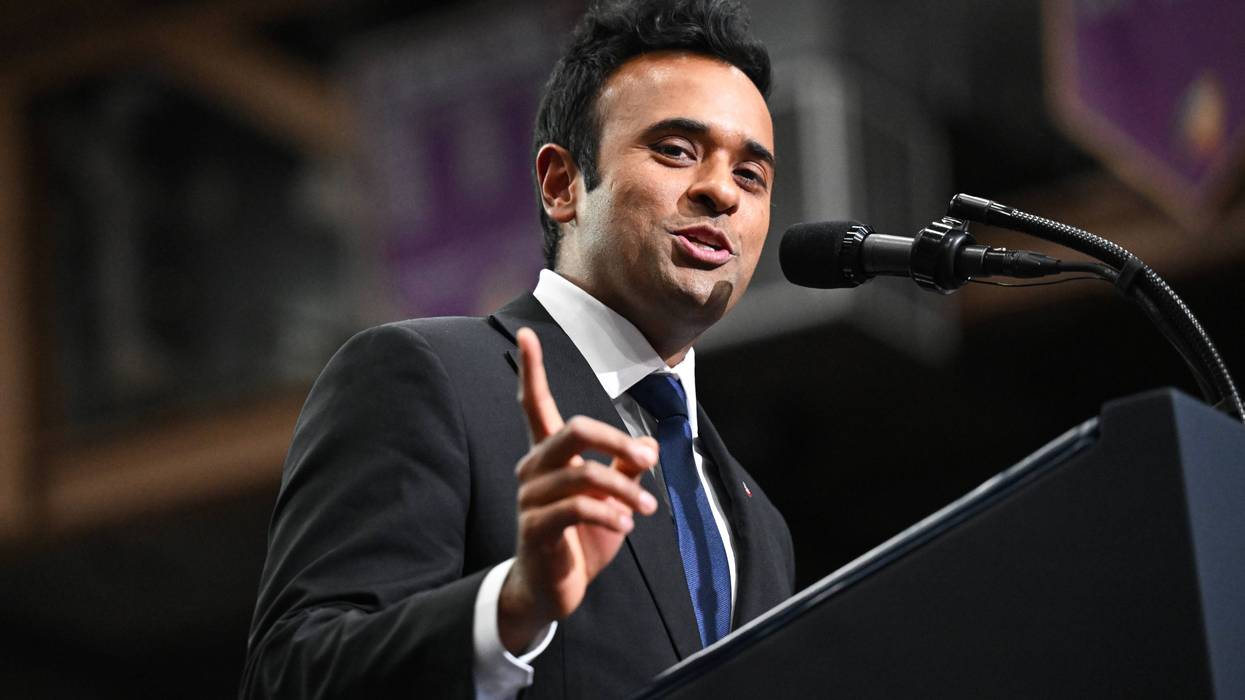
Meet the Corporations Funding Ramaswamy's Vicious Attack Ad on Acton
Corporate PACs for Bank of America, Deloitte, Kroger, Pfizer, Johnson & Johnson, and others have donated to the campaign fund running the ad, which has been criticized for exploiting Acton's history of sexual abuse.
Oct 22, 2026
Republican Vivek Ramaswamy's campaign is spending millions in the final weeks of his bid for Ohio governor to run an attack ad that has been criticized for exploiting his opponent Amy Acton's history of sexual abuse. The campaign is being funded by some of Ohio's and the nation's most powerful corporations and executives.
The ad, which emerged earlier this week, features Acton's estranged mother, Donna Arthur, accusing her daughter of lying about her experiences of homelessness as a child, including living in a tent. Acton, now 60, said she hasn't spoken to Arthur since 1978, when she was removed from the household after accusing her stepfather of sexually abusing her from ages 10 to 12.
Acton's brother has backed up her account, noting that their mother skipped town with Acton's stepfather after he was arrested and charged, and stayed with him until the day he died.
Acton, the former head of the Ohio Department of Health, had described her history of abuse and poverty for years before running for governor. Court records from the time have corroborated many aspects of the siblings' account, showing that she lived in a tent with her family near Youngstown. Her stepfather was also charged with incest in 1974 for allegedly raping his eldest daughter.
Observers have panned the ad as "disgusting." On Thursday, Republican Ohio Gov. Mike DeWine called the ad "just wrong" and said it should be taken down. With support from President Donald Trump and Vice President JD Vance, however, Ramaswamy's campaign is doubling down on the message and is spending $4 million to blast the ad across the airwaves in the Buckeye State.
The ad is being funded by Vivek for Ohio, a campaign fund backed in part by dozens of major corporate political action committees (PACs) and executives, according to a review of campaign finance documents published Thursday by Popular Information.
Vivek for Ohio is funded by corporate PACs for Bank of America, Deloitte, Kroger, Pfizer, Johnson & Johnson, Duke Energy, Charter Communications, Centene, Giant Eagle, PNC, US Bank, and BakerHostetler.
The corporate PACs for Huntington Bank, Nationwide, and NetJets also contributed to the campaign, along with their CEOs, Steve Steinour, Kirt Walker, and Adam Johnson, respectively.
Several individual executives and sports owners also contributed to Ramaswamy's campaign: DraftKings CEO Jason Robins; Rocket Companies founder Dan Gilbert; Cincinnati Bengals owner Mike Brown; Cincinnati Reds owner Bob Castellini; Cleveland Browns owner Jimmy Haslam; and Haslam Sports Group president Dave Jenkins.
Popular Information said it contacted the companies to ask whether they believed the ad was acceptable. DraftKings declined to comment, and the others did not respond.
Keep ReadingShow Less
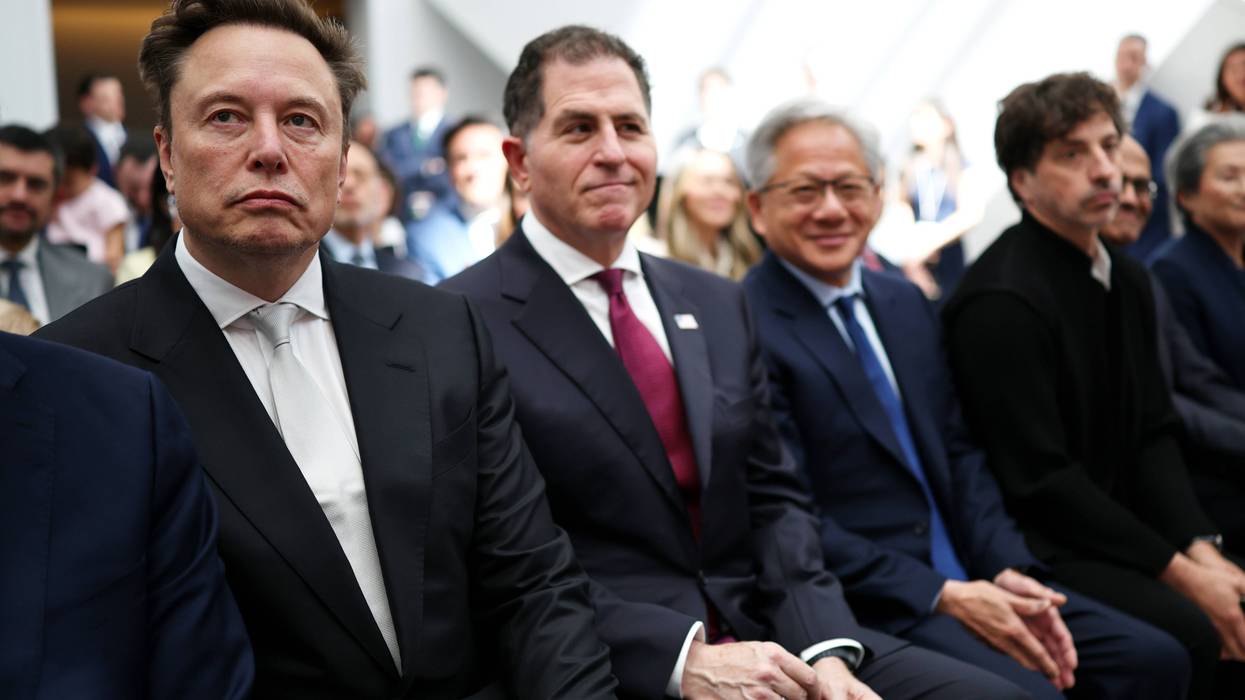
Big Tech Has Become the 'Ubiquitous Villain' of the 2026 Midterms
"Trump and his anti-AI regulation posture is dragging the party to a politically suicidal place," said one Democratic strategist.
Oct 22, 2026
American voters' antipathy toward Big Tech companies has become a central theme of campaigns in the 2026 midterm elections, according to an analysis published by The Guardian on Thursday.
The Guardian noted that hundreds of midterm campaign ads attacking data centers have aired over the past two months, with both Republicans and Democrats accusing one another of being pawns of the artificial intelligence industry.
"And it’s not only data centers," The Guardian added. "The public anxiety over AI and distaste for the billionaires developing it, as well as backlash over encroaching tech like surveillance cameras, has turned the tech industry into a ubiquitous villain this election cycle."
Silicon Valley has become a punching bag for politicians even as Big Tech moguls have been throwing record sums of money to elect politicians sympathetic to their needs.
Super political action committees (PACs) "funded by tech billionaires are among the top spenders in this election cycle," The Guardian explained. "Leading the Future, formed by OpenAI president Greg Brockman and venture capitalist Marc Andreessen, has raised more than $75 million to back tech-friendly candidates. [SpaceX CEO] Elon Musk has sunk $366 million into Republican causes, more than he spent on the 2024 presidential election."
Much of the Big Tech money has been going toward Republican candidates this cycle, even though the industry has traditionally had close ties with elected Democrats.
Texas Democratic US Senate candidate James Talarico in recent days has been trying to turn Big Tech money being spent against him into an advantage, highlighting in particular the outsize role that Musk is playing funding the campaign of his Republican rival, Texas Attorney General Ken Paxton.
After Musk on Wednesday used his platform X to declare that "there is something deeply wrong with Talarico," the Texas Democrat quickly returned fire.
"There is something deeply wrong with a political system," Talarico wrote, "that allows one trillionaire to buy his own personal US senator."
A report published by The Atlantic on Monday examined how the tech industry's embrace of President Donald Trump during his second term has given Democrats an incentive to pummel the industry, particularly when polls show a bipartisan hostility to AI data centers.
In fact, Democratic strategists told The Atlantic that data centers have proven to be a top wedge issue capable of getting normally loyal GOP voters to think twice before voting for a Republican candidate.
"Trump and his anti-AI regulation posture is dragging the party to a politically suicidal place,” Democratic strategist Rob Flaherty told The Atlantic. "They are grabbing the wrong side of an 80–20 issue at exactly the wrong time."
Democratic strategists started pushing the party to take a more populist approach toward the tech industry when polling data "showed surprising concern about AI" even in traditionally conservative rural districts, The Atlantic reported.
Rishi Bharwani, US director of tech regulation advocacy group Reset Tech, said much has changed since Democrats under former President Barack Obama embraced the industry as a positive force for society.
“What we all experienced was a ton of growth in the tech sector, the creation of numerous new billionaires, and even the world’s first trillionaire," said Bharwani, "and a bunch of working families basically recognizing that they’re not sharing. These tech companies are actually undermining their economic security and their safety."
Keep ReadingShow Less
From Bad to Catastrophic: Report Details How Trump's GOP 'Taking This Country Backward' on Healthcare
A new report warns that President Donald Trump and the GOP's assault on key healthcare programs is set to push up the number of uninsured people to 37 million—a level not seen in more than a decade.
Oct 22, 2026
A comprehensive report on the state of the for-profit US healthcare system published Thursday shows that President Donald Trump and the Republican Party's assault on Medicaid and the Affordable Care Act is on track to reverse more than a decade of progress on expanding insurance coverage, fueling a worsening medical debt crisis and forcing millions to delay or forgo treatment.
The Commonwealth Fund's annual status report on the American health insurance system notes that the uninsured rate for working-age US adults rose from 8.9% in 2024 to 11.2% this year, as the Trump-GOP cuts to Medicaid and their refusal to extend enhanced ACA subsidies pushed millions off their coverage. The report emphasizes that the worst is yet to come, given that many of the Medicaid cuts included in the 2025 Trump-GOP budget law—including punitive new work reporting requirements—have not taken effect nationwide.
"The combined effects of these changes are expected to drive the number of uninsured people to 37 million by 2036—about the same as in 2014, when most of the ACA’s changes took effect," the report observes. "At the same time, rapid growth in health costs is making both insurance and care even less affordable—and contributing to medical debt—for Americans across the country."
Looking beyond just the uninsured rate, the Commonwealth Fund report shows that nearly half of working-age adults were "inadequately insured" this year due to a coverage gap or unaffordable plans. Around 30% of US adults reported having medical debt, according to the new report.
"Unlike peer countries, the US does not guarantee adequate health insurance for all its residents," the report states. "Our survey findings show just how detrimental a lack of continuous coverage and high out-of-pocket costs are to people’s ability to afford care and maintain their health—without going into debt."
The report comes as Americans casting their ballots in the November 3 midterm elections identify healthcare as a key issue amid a broader affordability crisis that Trump has repeatedly dismissed as a "hoax" perpetrated by his political opponents.
According to the Commonwealth Fund's survey, 73% of US adults "believe the federal government has a responsibility to ensure all Americans have coverage, including 45% of Republicans, 93% of Democrats, and 76% of independents." That finding is consistent with an earlier poll from the health policy group KFF showing that two-thirds of the American public has a favorable view of Medicare for All.
Trump has publicly and misleadingly attacked Medicare for All while insisting—without providing any specifics—that he intends to pass "a truly great healthcare plan" if the GOP retains control of Congress next month.
Trump has also touted small, one-time healthcare rebate checks that his administration has sent out to some Americans ahead of the midterms. The checks pale in comparison to the healthcare cost increases facing tens of millions of Americans.
Leslie Dach, chair of the advocacy group Protect Our Care, said in response to the Commonwealth Fund report that "Trump and Republicans are taking this country backward."
"Families are facing skyrocketing premiums, mounting medical bills, and going without coverage altogether," said Dach. "They’re being forced to put off seeing a doctor, skip prescriptions, or gamble with their health because they can’t afford care. And it’s only going to get worse as millions more Americans are expected to lose their health insurance as the full force of Republican cuts takes hold."
"This is a damning report on Donald Trump and Republicans’ healthcare agenda, which is making it harder to afford and access care for working families across the country," Dach added. "The only way to fix this is through the choices that Americans make in November.”
The Commonwealth Fund report came as KFF found that American workers now pay around $7,470 per year on average for employer-sponsored family health coverage—an increase of 9% compared to 2025.
“We have been hearing a lot about Affordable Care Act and Medicaid cuts," said KFF president and CEO Drew Altman. "Now add a 9% increase in what workers with employer coverage paid toward family premiums in 2026 to the reasons voters are so concerned about their healthcare costs."
Keep ReadingShow Less
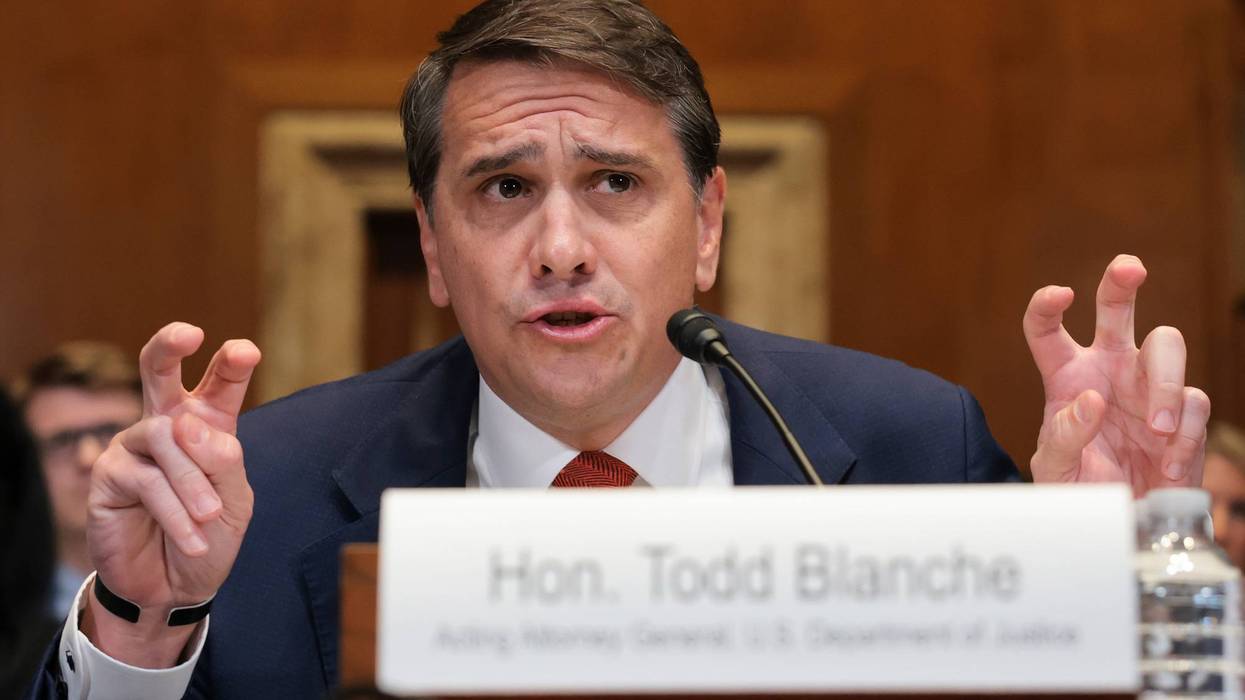
'Shameful': Trump DOJ Ditches Civil Rights and School Desegregation Cases
Meanwhile, Rep. Jamie Raskin noted, "this administration carries out presidential vendettas, covers up child sex trafficking, promotes corruption, and pardons and coddles violent felons in the president’s private militia."
Oct 22, 2026
A pair of papers published Thursday by the legal group Democracy Forward detail how, under President Donald Trump, the Department of Justice has dumped dozens of cases focused on school desegregation and the civil rights of people of color, all while weaponizing the DOJ to serve "the most dangerous criminal in US history" and his allies.
The cases were previously taken up by the DOJ's Civil Rights Division, currently led by Harmeet Dhillon, whose confirmation was controversial—like those of Trump's first attorney general for this term, Pam Bondi, whom he fired in April and replaced with his former personal lawyer, Todd Blanche.
The new analyses of the cases—"Walking Away: DOJ's Abandonment of Civil Rights Cases for People of Color" and "Filling in The Gaps: Tracking The 50+ School Desegregation Cases DOJ Says It Is Ending"—were developed by Democracy Forward's oversight and accountability project Red Line for Civil Rights.
"People and communities rely on DOJ to pursue vital cases to address threats to civil rights under our nation's laws. The Red Line for Civil Rights reports don't just highlight the cases that have been abandoned, but also make clear the harm that DOJ's abandonment of its mission retreat has caused," said Democracy Forward president and CEO Skye Perryman.
The project found at least 36 abandoned cases and probes addressing discrimination against Black, Latino, and Native American people, from Voting Rights Act lawsuits and redlining settlements with banks to firefighter and police hiring issues.
There was United States v. Cobb County, Georgia, in which the DOJ alleged that credit checks and a written exam illegally screened out Black firefighter applicants, and United States v. Patriot Bank, a 2024 consent order over redlining of Black and Hispanic neighborhoods in Memphis, Tennessee.
In United States v. SouthEast Bank, the department argued that a student loan refinancing product discriminated against Alaska Native, American Indian, and Black applicants, and in United States v. City of Minneapolis, the DOJ concluded that police discriminated against Black and Native American in Minnesotans.
"The shameful withdrawal of DOJ resources from these cases and investigations highlights how this administration is abandoning communities across the country," said Megan Marks, a former leader in the department who is now the project's deputy director and managing editor. "Walking away from them doesn't mean the discrimination has been addressed. It just means DOJ is no longer watching."
In its second analysis, the project identified 56 school districts in 12 states where the department has moved to ditch or end a desegregation case, or did not oppose ending one—from Athens City, Alabama and Chesterfield County, South Carolina to South Bend, Indiana and Waterbury, Connecticut.
 Tanisha Milton teaches a lesson on busing and the desegregation of Boston, Massachusetts public schools during an 8th grade civics class at TechBoston Academy on May 22, 2024. (Photo by Craig F. Walker/The Boston Globe via Getty Images)
"The Supreme Court held in its landmark 1954 case, Brown v. Board of Education, that segregating public school students by race violates the 14th Amendment's guarantee of equal protection," the report notes. "Since Brown, DOJ has monitored and enforced desegregation orders, reviewing evidence and often working collaboratively with school districts and, in some cases, private plaintiffs to support progress."
"This work was central to the Civil Rights Division's history. The Civil Rights Act of 1964 authorized DOJ to file its own school desegregation lawsuits against public schools or institutions of higher education and to join cases that families had already brought," the paper explains. "These school desegregation cases are how the promise of Brown reaches individual classrooms. Behind each of these cases are children, families, and a community that fought, sometimes at great personal risk, for the right to an equal education."
Shaheena Simons previously oversaw the Justice Department's desegregation docket but is now a senior adviser at the Lawyers' Committee for Civil Rights Under Law. In response to the report, she said that the "DOJ's haste to end these cases without deliberation or transparency is a betrayal of Black students who continue to face segregation and inequality in our schools."
"This retreat is part of a much bigger picture," Simons emphasized. "Not only has the Civil Rights Division abandoned its work to protect the rights of our most marginalized students, but it is also weaponizing civil rights statutes against them."
Democratic leaders in the US House of Representatives also spoke out about the project's findings. Education and Workforce Committee Ranking Member Bobby Scott (Va.) accused the "politicized" department of "turning its back on workers and students by abandoning entire categories of discrimination cases and ending the fight against school desegregation altogether."
Democrats on his panel "are committed to the protection of civil rights and to guaranteeing that all Americans are protected from discrimination in accordance with the civil rights laws that so many Americans fought to secure," pledged Scott, as his party prepares for next month's midterm elections, in which Republicans could lose control of one or both chambers of Congress.
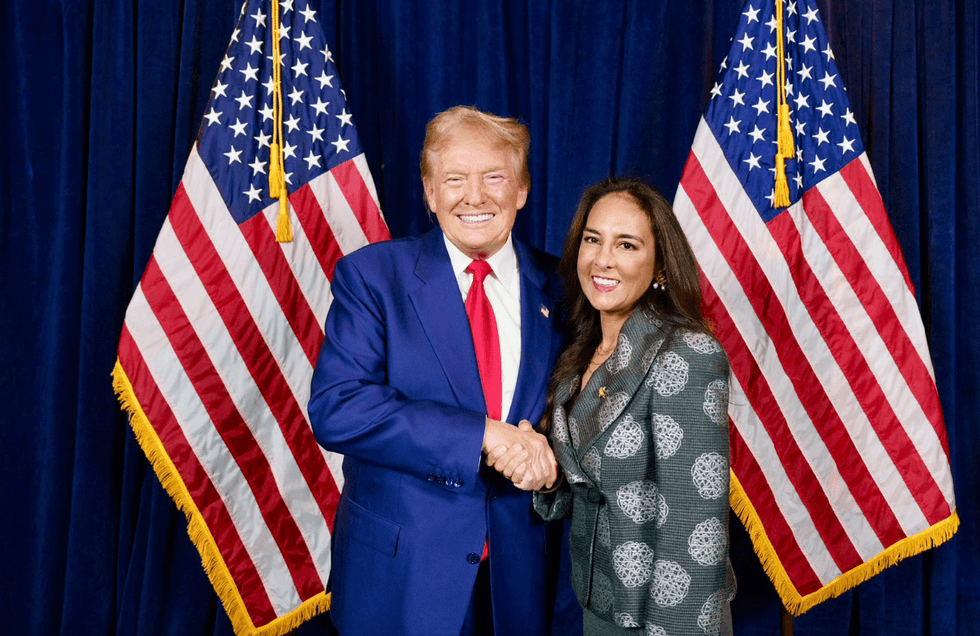 Harmeet Dhillon shakes hands with Republican US President-elect Donald Trump in a photo she posted on social media on October 31, 2024. (Photo: Harmeet Dhillon/X)
Fellow Democratic Congressman Jamie Raskin (Md.), a constitutional scholar and ranking member on the House Judiciary Committee, said that "Democracy Forward's reports expose the Justice Department's shocking betrayal of its central duty to protect Americans against race discrimination."
"While DOJ devotes its resources to persecuting Trump's political enemies, it has dropped protection of voting rights and is allowing discrimination to proliferate by abandoning school desegregation and job discrimination cases," he said, as the Trump administration pursues everyone from former Federal Bureau of Investigation Director James Comey to New York Attorney General Letitia James and Rep. Ilhan Omar (D-Minn.).
"We need a Department of Justice that stands by the rule of law and the rights of all Americans," Raskin asserted. "But this administration carries out presidential vendettas, covers up child sex trafficking, promotes corruption, and pardons and coddles violent felons in the president's private militia."
Keep ReadingShow Less
See More
Most Popular