

SUBSCRIBE TO OUR FREE NEWSLETTER
Daily news & progressive opinion—funded by the people, not the corporations—delivered straight to your inbox.
5
#000000
#FFFFFF
To donate by check, phone, or other method, see our More Ways to Give page.
Daily news & progressive opinion—funded by the people, not the corporations—delivered straight to your inbox.

Ben Bienstock, browndivest@gmail.com, +1(917)304-0206, Tal Frieden, tal.frieden@gmail.com, +1(315)480-3976
On December 2nd, 2019, the Advisory Committee on Corporate Responsibility in Investment Policies (ACCRIP) at Brown University voted in favor of divestment from companies "facilitating human rights violations in Palestine." The committee voted six in favor, with two alumni voting no, and one abstaining from the vote.
The vote comes after eight months of deliberation, starting in April 2019, when 69% of student voters in a Brown undergraduate referendum voted in favor of the same motion. Following a statement by the Brown University president criticizing the referendum, over 100 faculty members authored a letter in favor of the student referendum. Since then, members of the Brown Divest student coalition have presented their case to ACCRIP on multiple occasions, as have Brown Students for Israel. Brown Divest is a coalition of student groups including Jewish Voice for Peace and Students for Justice in Palestine, as well as other groups.
Brown Divest states: "We are elated that the University committee responsible for divestment has finally joined the calls for divestment from human rights violations in Palestine. Today, ACCRIP made Brown the first Ivy League University to officially call for divestment from companies that are facilitating the Occupation and its human rights abuses in the West Bank and Gaza. We look forward to other universities joining the movement for dignity and human rights for Palestinians.
"Going forward, the Brown community expects the Brown Corporation to divest from companies facilitating human rights violations in Palestine, as demanded by Brown students, who voted for the University to divest, as has ACCRIP, the committee responsible for recommending University divestment."
One member of Brown University Divest said: "As a Palestinian student at Brown, I can't feel comfortable on this campus knowing that my university is literally profiting off the suffering of my family. When Brown invests in companies that provide materials that help demolish their houses and promote an apartheid regime against them, I cannot be silent about this. I cannot be complicit in the suffering of my very own family."
Tal Frieden, another member of Jewish Voice for Peace and Brown University Divest, said: "As Jews, as US citizens, as Brown students, and as people of conscience, it is our responsibility to speak up for Palestinian human rights and to denounce complicity in Palestinian suffering. We will continue to hold the University accountable to this vote."
Background:
On December 2nd, nine members of ACCRIP met at Brown University and heard presentations from faculty opposed to divestment, as well as those in favor. After the presentations, a motion was put forth to vote on whether the Israeli occupation of Palestinian territories constitutes social harm. Seven members voted yes, while two alumni abstained. At the end of the meeting, members of the committee motioned to vote on the following language:
"We recommend that the Brown Corporation exclude from Brown's direct investments, and require Brown's separate account investment managers to exclude from their direct investments, companies identified as facilitating human rights violations in Palestine. In addition, the Investment Office will share with all investment managers the University's desire to adhere to this investment philosophy. We recommend that the Corporation and Brown's separate account investment managers maintain the withdrawal of investments from said companies until they cease to engage in social harm"
For the final vote on divestment, six members voted in favor, two opposed, and one abstained. Companies that have been identified for divestment based on their involvement in social harm in Palestine include Caterpillar, Hewlett-Packard, Oaktree Capital Management, AB Volvo, Motorola, Boeing, Northrop Grumman, Lockheed Martin, Raytheon, United Technologies, and G4S.
Jewish Voice for Peace is a national, grassroots organization inspired by Jewish tradition to work for a just and lasting peace according to principles of human rights, equality, and international law for all the people of Israel and Palestine. JVP has over 200,000 online supporters, over 70 chapters, a youth wing, a Rabbinic Council, an Artist Council, an Academic Advisory Council, and an Advisory Board made up of leading U.S. intellectuals and artists.
(510) 465-1777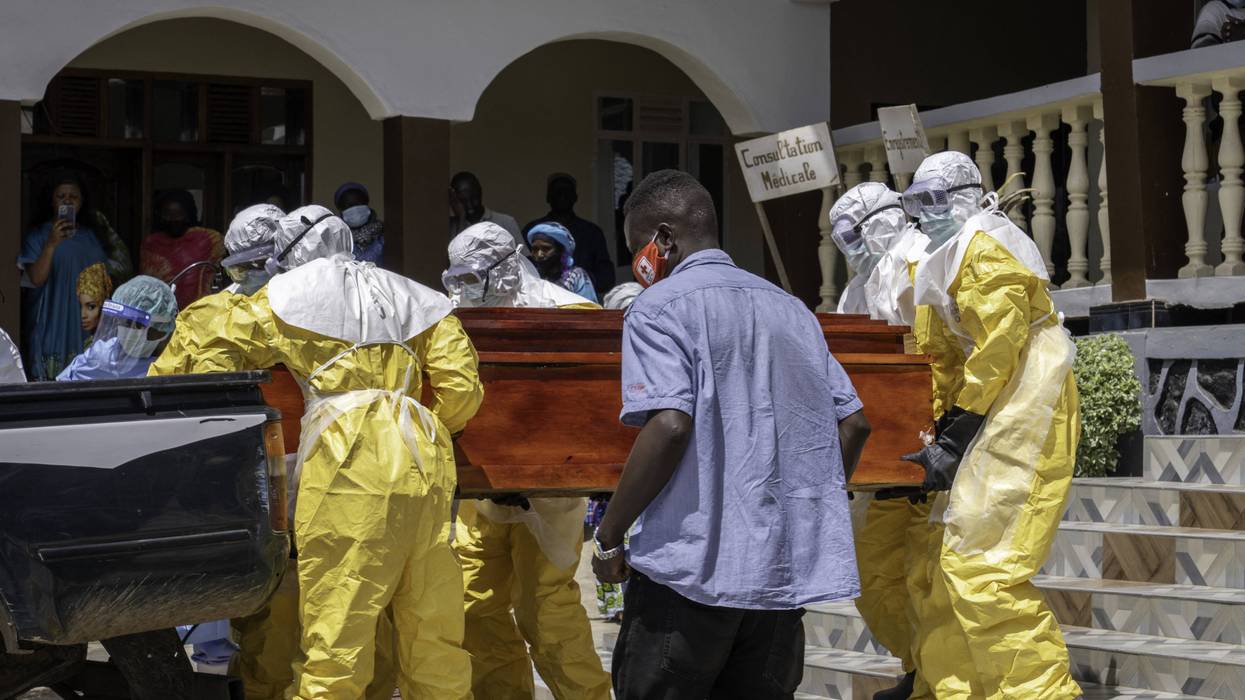
"The delay in detecting the outbreak means that we are now playing catch-up with a very fast-moving epidemic."
World Health Organization Director-General Tedros Adhanom Ghebreyesus warned Monday that the swiftly spreading Ebola outbreak in the Democratic Republic of Congo and Uganda "will get worse before it gets better," as a deadly delay in detecting infections has responders to the epidemic "playing catch-up."
"The outbreak is spreading rapidly," Tedros said during a virtual ministerial meeting on the matter. "So far, 101 cases have been confirmed in DRC, with 10 confirmed deaths. But we know the epidemic in DRC is much larger. There are now more than 900 suspected cases and 220 suspected deaths."
"Countries bordering DRC are at especially high risk and should take immediate action," he asserted. "In Uganda, there are five confirmed cases and one death."
Tedros pointed out that "there are several aspects of this outbreak that make it especially challenging."
"First, the delay in detecting the outbreak means that we are now playing catch-up with a very fast-moving epidemic," he said. "We are urgently scaling up operations, but at the moment, the epidemic is outpacing us."
"Second, as you know, the provinces of Ituri and North Kivu are highly insecure, with intensified fighting in recent months, causing more than 100,000 people to be newly displaced," the WHO chief continued. "There is also significant distrust of outside authorities among the local population. In the past week, there have been two security incidents at health facilities."
"WHO is fully committed to working under the leadership of the governments of DRC and Uganda, side by side with Africa [Centers for Disease Control and Prevention] and all other partners," Tedros added. "We will not rest until we bring this outbreak under control."
Ebola—which typically kills between 25% and 90% of infected people, depending upon the strain of the virus and quality of available medical care—causes widespread and often catastrophic damage to the body’s blood vessels, immune system, and organs.
Critics say US President Donald Trump's ideologically driven decision to withdraw the US from the WHO, his administration's dismantling of the US Agency for International Development (USAID), and reduced funding for the US Centers for Disease Control and Prevention's global public health efforts have adversely affected the response to the current Ebola epidemic, compared with 2014 and 2019 outbreaks.
After US Secretary of State Marco Rubio said last week that the WHO was "a little late" in identifying new Ebola infections, Tedros retorted that "we don’t replace the country’s work, we only support them," and suggested that Rubio's comments could be rooted in "a lack of understanding" of the agency and countries' responsibilities.
While Rubio said that “our number-one objective on Ebola, before anything else... has to be, we can’t have it affect the United States,” public health experts warn that Trump administration actions could make it more likely that the virus will make its way to the country.
There is currently no confirmed CDC director, Food and Drug Administration commissioner, or surgeon general.
Taking aim at Trump's evisceration of key public health agencies and programs, Congresswoman Rosa DeLauro (D-Conn.) said last week: “Ebola does not wait for bureaucratic reorganizations. It spreads when surveillance systems are weakened, health workers are laid off, clinics lack protective equipment, and communities lose the trusted partners who help detect and contain outbreaks before they become public health emergencies."
"This is the perfect storm President Trump created," she continued. "He recklessly dismantled USAID, withheld and slashed other United States assistance to the region, fired critical staff, and created global health chaos. This is not efficiency. It is dangerous neglect."
"The United States spent years building the relationships, supply chains, laboratories, and community health networks that help stop deadly diseases at their source," DeLauro added. "The Trump administration tore into that capacity and now wants to pretend the consequences were unforeseeable.”

"We have reached a conclusion on a large portion of the issues under discussion," said an Iranian spokesperson. "But to say that this means the signing of an agreement is imminent—no one can make such a claim.”
Officials in Tehran on Monday swatted down President Donald Trump's assertion that an agreement to end the nearly three-month Iran War was imminent, citing frequently shifting US positions and Israeli "sabotage" as obstacles during ongoing talks.
“It is correct to say that we have reached a conclusion on a large portion of the issues under discussion," Iran Foreign Ministry spokesperson Esmail Baghaei said during a press briefing. "But to say that this means the signing of an agreement is imminent—no one can make such a claim.”
Trump tempered his own Saturday claim that a peace deal had "been largely negotiated" with Tehran, "subject to finalization."
"Negotiations with the Islamic Republic of Iran are proceeding nicely!" the president said Monday on his Truth Social platform. "It will only be a Great Deal for all or, no Deal at all—Back to the Battlefront and shooting, but bigger and stronger than ever before—And nobody wants that!"
A 14-point memorandum of understanding between the US and Iran reportedly contains a ceasefire and 30-day negotiation period for a broader agreement, reopening of the Strait of Hormuz, easing or lifting the US naval blockade on Iran, unfreezing Iranian state assets abroad, relief from US sanctions, and restrictions on Iranian nuclear development.
Naming countries including Turkey, Pakistan, Egypt, Saudi Arabia, Qatar, and Jordan, Trump wrote that "after all the work done by the United States to try and pull this very complex puzzle together, it should be mandatory that all of these Countries, at a minimum, simultaneously sign onto the Abraham Accords," the US-brokered normalization pacts between the United Arab Emirates, Bahrain, Morocco, Sudan, Kazakhstan, and Israel that the Palestinian writer Karim Kattan called "a fever dream of dictators."
Trump suggested that Iran could also normalize relations with Israel by signing the Abraham Accords and said that "it would be an Honor to have them also be part of this unparalleled World Coalition."
However, Baghaei threw cold water on Trump's optimism, stressing Monday that “the focus of the negotiations is on ending the war on all fronts, including Lebanon," and that this critical point is "one of the core elements of understanding in any agreement."
What negotiators aren't discussing at this time, according to both sides, is ending Iran's nuclear development.
"The focus of the negotiations is on ending the war, and at this stage we are not discussing nuclear issues," Baghaei said.
Also not under current discussion is the future management of the Strait of Hormuz, the Iranian-controlled maritime chokepoint through which around 20% of the world's oil is shipped.
"How this region should be managed concerns the littoral states," Baghaei said, referring to Iran and Oman. "We understand that the security of the Strait of Hormuz is a concern for the entire world."
Baghaei affirmed that negotiations on the 14-point memorandum of understanding would continue over the next two months, but that the US blockade of Iranian ports and shipping "must stop."
According to Iranian state media outlet Press TV, Baghaei "criticized the inconsistency in US policymaking, saying contradictory positions within short periods complicate negotiations."
A major sticking point in the talks is Iran's insistence that any agreement to end hostilities must also include an end to Israel's attacks on Lebanon, which have killed or wounded more than 12,000 people, according to officials there. After the current Pakistan-brokered ceasefire took effect on April 7, Israel responded by escalating its war on Lebanon, killing or wounding more than 1,400 people, many of them civilians, over a 24-hour period.
Baghaei said Monday that "one should expect nothing from Israel except the sabotage of any process."
It's not just Israel; Iranian, Pakistani, and Omani negotiators have accused US officials of blowing up previous Iran peace talks when they were on the verge of success.
Israeli Prime Minister Benjamin Netanyahu claimed Sunday that while he supports the US effort to end the war, "President Trump and I agreed that any final agreement with Iran must eliminate the nuclear danger."
Israeli and US intelligence agencies have said for decades—including under Trump—that Iran is not trying to build nuclear weapons and stopped trying to do so in the early 2000s.
Pro-war Republican US lawmakers joined many Israeli leaders in both government and the opposition in expressing alarm over a potential peace deal that is widely viewed as a major win for Iran.
"Details of the deal between the United States and Iran are so disturbing," Israeli opposition leader Yair Lapid said Monday in West Jerusalem. "The deal is bad for Israel, bad for the region, bad for the citizens of Iran."
"Netanyahu has failed to achieve every single one of the war's objectives as he himself defined them," he added.
Some US Congressional Democrats also said the outcome of the illegal US-Israeli war of choice is likely to favor Iran, even as airstrikes have killed or wounded more than 30,000 Iranians, many of them civilians, according to the country's Ministry of Health.
"If this deal with Iran is real, I will welcome it because every day this insane war goes on, America gets weaker," Sen. Chris Murphy (D-Conn.) said Sunday. "The priority is to end the war—now. But make no mistake: These are Iran’s terms. Our nation emerges humiliated."
"The deal is basically this: We give Iran billions to get back to where we were before the war. And reports suggest the deal might codify Iran’s right to control the strait," he continued. "There are reports there may be a tiny nuclear concession from Iran in the deal and if so, great. But I doubt it—they are most likely postponing all the nuclear issues."
"But a promise to ship out enriched uranium (the reported concession) was also in [Former President Barack] Obama’s deal (as well as a lot of other things Trump will never get)," the senator noted, referring to the landmark Joint Comprehensive Plan of Action (JCPOA)—also known as the Iran nuclear deal—that Trump unilaterally abrogated during his first term.
"And now that we are dropping sanctions, we have less leverage to get them to give more in future negotiations," Murphy said. "And just remember, Trump hasn’t accomplished ANY of his constantly shifting goals. Iran still has its ballistic missile and drone program. They still have a navy that can close the strait. A hardline regime is still in charge."
"Of course, none of those things could be accomplished by an air campaign—which is why so many of us opposed this war," he added. "And now the new regime is emboldened. They took our best shot and beat us. Iran emerges more powerful."
Iranian leaders underscored their readiness to continue the fight should negotiations fail.
"Look, Americans talk too much and keep changing their story by the minute," Khatam al-Anbiya Central Headquarters Commander Ali Abdollahi Aliabadi said Monday. "We've said it many times before: On the battlefield, we'll show what we're capable of."
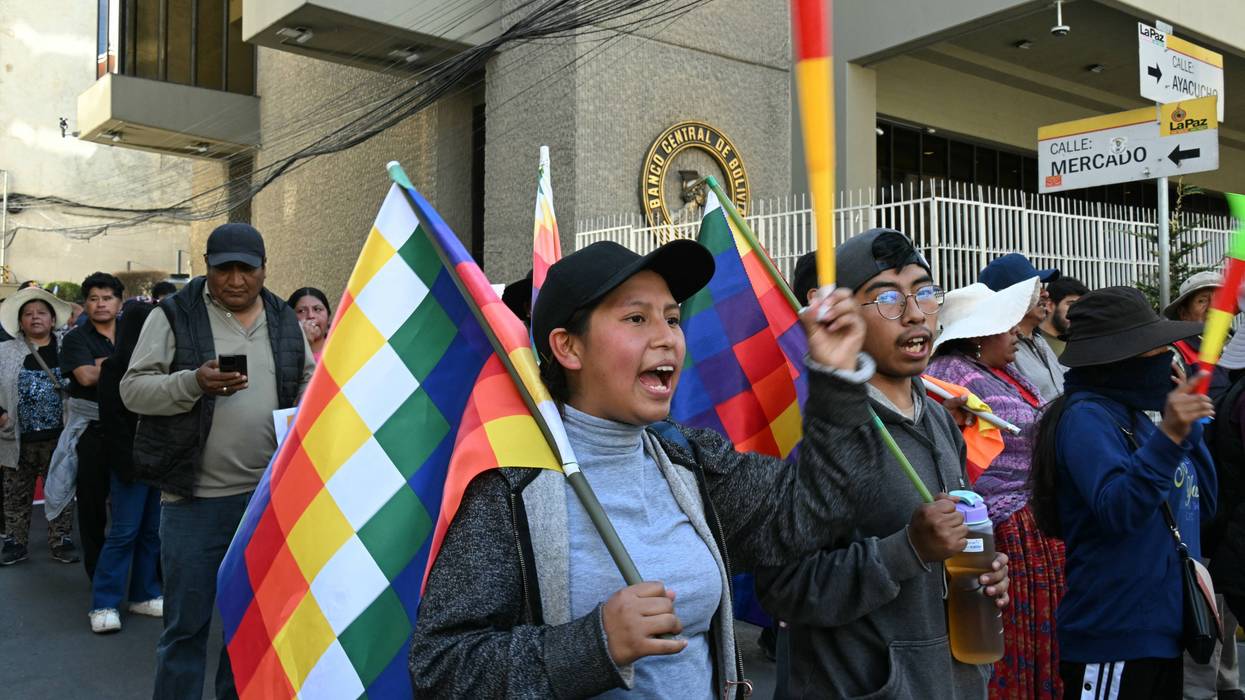
"They call us all bandits and thugs," said protesters, who have been met with a police crackdown. "We are democracy."
Bolivian President Rodrigo Paz, who is facing calls for his resignation as Indigenous and labor organizers lead protests across the country, could declare a "state of exception"—described by local reporters as "essentially martial law"—as soon as Monday night after the country's Senate overwhelmingly voted to overturn a law regulating the government's ability to crack down on protests.
According to Bolivian reports, the Chamber of Senators on Sunday overturned Law 1341, which since 2020 had imposed strict time limits on emergency measures, ensured certain violable rights could not be suspended under a state of exception, required legislative oversight, and made the president criminally liable for exceeding the law's perimeters.
"Abrogating Law 1341 does not remove the state of exception from Bolivia’s legal architecture," according to The Rio Times. "It removes the apparatus that prevented that constitutional clause from being exercised at the executive’s sole discretion."
Joseph Bouchard, who has reported for Drop Site News and The Intercept from Latin America, said far-right groups linked to the 2019 coup in Bolivia have demanded "a return to martial law, to use lethal force against opposition with impunity, and crack down on opposition as much as possible."
"Many of these groups are openly fascist and white supremacist," said Bouchard.
The law was overturned about three weeks into nationwide protests against Paz, who took office about six months ago. Protesters allied with former President Evo Morales have expressed anger over the administration's decision to end a fuel subsidy that was essential for working people amid an economic crisis. The demonstrators—comprised of a broad coalition which includes Indigenous groups, labor unions, and farmworkers—have demanded higher wages and an end to privatization and the broader neoliberal project under Paz.
The protests have been met with a crackdown by police, in La Paz and at the sites of dozens of road blockades around the country.
Last week, the country's public prosecutor issued arrest warrants for at least two organizers, including Mario Argollo, executive secretary of the top Bolivian labor union, Central Obrera Boliviana (COB).
On Monday, TeleSUR reported that COB refused to engage in talks with Paz's government until the charges against Argollo are dropped.
Bouchard reported that if Paz's government implements a state of exception, "the measures would mean security forces could arrest anyone, for any reason, and use extraordinary measures against all opposition."
The overturning of Law 1341 struck down limits on "the use of lethal force by the security forces," he said.
Only three senators aligned with Vice President Edmand Lara voted against repealing the law.
According to The Rio Times, Lara "has been politically distancing himself from Paz almost since inauguration."
"No measure can stand above human life," said Lara, expressing "profound concern and indignation" over the Senate vote.