

SUBSCRIBE TO OUR FREE NEWSLETTER
Daily news & progressive opinion—funded by the people, not the corporations—delivered straight to your inbox.
5
#000000
#FFFFFF
To donate by check, phone, or other method, see our More Ways to Give page.
Daily news & progressive opinion—funded by the people, not the corporations—delivered straight to your inbox.
Verified video footage, photographs and testimonies from victims and eyewitnesses on the ground obtained by Amnesty International, confirm that Iranian security forces used unlawful force against peaceful protesters who gathered across Iran following the authorities' admission that they had shot down a Ukrainian passenger plane on January 8.
Verified video footage, photographs and testimonies from victims and eyewitnesses on the ground obtained by Amnesty International, confirm that Iranian security forces used unlawful force against peaceful protesters who gathered across Iran following the authorities' admission that they had shot down a Ukrainian passenger plane on January 8.
The evidence indicates that on January 11 and 12, security forces fired pointed pellets from airguns, usually used for hunting, at peaceful protesters causing bleeding and painful injuries. Security forces also used rubber bullets, tear gas and pepper spray to disperse protesters as well as kicking and punching them, beating them with batons and carrying out arbitrary arrests.
"It is appalling that Iran's security forces have violently crushed peaceful vigils and protests by people demanding justice for the 176 passengers killed on the plane and expressing their anger at the Iranian authorities' initial cover-up," said Philip Luther, Research and Advocacy Director for the Middle East and North Africa at Amnesty International.
"The use of unlawful force in the latest demonstrations is part of a long-standing pattern by Iranian security forces."
Unlawful use of force
Testimonies and photographs obtained by Amnesty International indicate that security forces fired pointed pellets, causing painful wounds and requiring surgical treatment to remove the pellets, as well as injuries consistent with rubber bullet use. Such pellets are used for hunting small game and are completely inappropriate for use in any policing situation.
The organization's Digital Verification Corps (DVC) also verified dozens of videos showing security forces firing tear gas into crowds of peaceful protesters.
Security forces deployed on the streets, included the special forces of Iran's police, paramilitary Basij and plain-clothes agents.
One of the videos verified by Amnesty International shows two women in Tehran lying injured and bleeding on the ground. In another video recorded nearby, a woman is seen lying on the ground in a pool of blood crying out in pain. The people helping them in the videos are heard saying they have been shot. Amnesty International has not been able to establish what type of ammunition was used to cause their injuries.
Another video shows a man with a bleeding head wound. Two X-rays obtained by Amnesty International clearly show pellets lodged in the knee joint of one protester and the ankle of another.
Amnesty International has also verified images of security forces carrying shotguns, but it is unclear what type of ammunition was loaded in them.
The organization has received messages from several injured protesters who shared photographs showing their wounds and said they did not seek hospital treatment to remove the pointed pellets that remain painfully lodged in their bodies, fearing arrest.
Security and intelligence forces are maintaining a heavy presence in some hospitals raising fears they plan to arrest patients. Amnesty International has also received information that security forces have tried to transfer some injured protesters to military hospitals. Some medical clinics and hospitals in Tehran have turned away injured people, telling them that, if the security and intelligence forces find out they were among the protesters, they will be arrested.
One man from Maali Abad in Shiraz, Fars province, who said he went to light a candle in solidarity with the plane crash victims on January 12, said security forces outnumbered the crowd and created a "terrifying and intimidating atmosphere to frighten people away".
"They were swearing at and beating everyone with batons all over their bodies, it didn't matter if they were just passing by. It didn't make any difference to them if they beat young or old, man or woman," he said, adding that security forces also fired tear gas into the crowd. He was injured but did not seek hospital treatment for fear of arrest.
Another eyewitness, Mahsa from Tehran, described how security forces fired tear gas into the entrance hall of a metro station to stop people leaving to join the protest.
"There was so much tear gas... I was so mentally stressed and anxious that I initially didn't even realize that I had been shot... The special forces of the police were firing pointed pellets at people. My coat is now filled with holes and I have bruises on my body... The streets were filled with armed plain-clothes agents firing shots into the air and threatening to shoot people... A member of the security forces chased me when they saw me filming the protest and that's when I was shot in the leg with a pointed pellet... I'm in a lot of pain," she said.
Mahsa added that the authorities had threatened doctors and that she had been turned away by three medical centers and even a veterinary clinic where she sought treatment. On January 14, she was told by a doctor in a hospital in Tehran that she had to leave the hospital immediately because, if the intelligence department (Herasat) of the hospital found out that she was among the protesters, she would be arrested.
"The situation in Iran right now is even more painful than death. They are killing us slowly; they are torturing us to death," she said.
In several videos taken inside Shademan metro station in Tehran, people are heard saying that security forces fired tear gas inside the station. Tear gas canisters are indiscriminate and can result in serious injury and even death, especially when used in an enclosed space. They should only ever be used in a targeted response to specific acts of violence and never to disperse peaceful protesters. They must also never be used in a confined space.
In many cases the actions by the security forces violated the absolute prohibition of torture and other ill-treatment under international law.
Arbitrary arrests
There are reports that scores of people, including university students, have been arrested in cities where protests have taken place, including Ahvaz in Khuzestan province; Esfahan, Esfahan province, Zanjan, Zanjan province; Amol and Babol, Mazandaran province; Bandar Abbas, Hormozgan province; Kermanshah, Kermanshah province; Sanandaj, Kurdistan province; Mashhad, Razavi Khorasan province; Shiraz, Fars province; Tabriz, East Azerbaijan province; and Tehran.
Amnesty International has received information that, in at least two cities, Amol and Tehran, the authorities are denying the families of some detainees information about their fate and whereabouts, amounting to the crime of enforced disappearance under international law.
The organization also received shocking allegations of sexual violence against at least one woman arbitrarily arrested by plain-clothes security agents and detained for several hours in a police station. According to an informed source, while in detention, the woman was taken to a room where she was questioned by a security official who forced her to perform oral sex on him and attempted to rape her.
"Iran's security forces have once again carried out a reprehensible attack on the rights of Iranian people to peaceful expression and assembly and resorted to unlawful and brutal tactics," said Philip Luther.
"The Iranian authorities must end the repression as a matter of urgency and ensure the security forces exercise maximum restraint and respect protesters' rights to peaceful expression and assembly. Detainees must be protected from torture and other ill-treatment and all those who have been arbitrarily detained must be released."
Background
The protests began on January 11 after the Iranian authorities admitted to having unintentionally shot down the Ukrainian plane, following three days of denials, at first attributing the plane crash to mechanical failure. The protests quickly expanded to include anti-establishment slogans and demands for transformation of the country's political system, including a constitutional referendum and an end to the Islamic Republic system.
These protests follow a bloody crackdown that saw more than 300 protesters killed and thousands arrested between November 15 and 18, 2019 when Iranian security forces resorted to lethal force. Amnesty International has called on member states of the UN Human Rights Council to hold a special session on Iran to mandate an inquiry into the unlawful killings of protesters, horrifying wave of arrests, enforced disappearances and torture of detainees, with a view to ensuring accountability.
This statement is available at: https://www.amnestyusa.org/press-releases/scores-injured-as-security-forces-use-unlawful-force-to-crush-protests/
Amnesty International is a global movement of millions of people demanding human rights for all people - no matter who they are or where they are. We are the world's largest grassroots human rights organization.
(212) 807-8400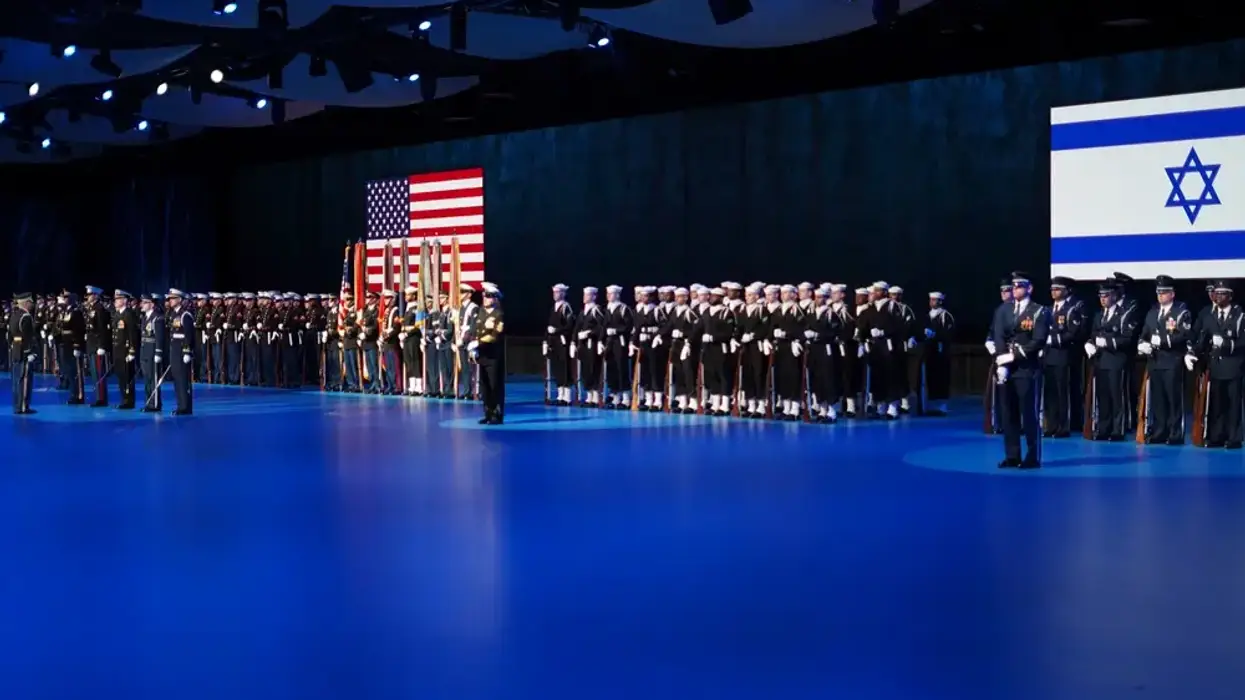
"At a time when Israel is committing genocide against Palestinians in Gaza... Congress should be cutting off military support—not integrating the US military and Israeli defense sector," said one critic.
A US congressional committee on Thursday rejected an amendment to strip a provision from next year's Pentagon funding bill aimed at deepening integration of the US and Israeli militaries under the guise of reducing aid.
Rep. Ro Khanna (D-Calif.) introduced an amendment to strike Section 224—which would establish a formal "United States–Israel Defense Technology Cooperation Initiative"—from the 2027 National Defense Authorization Act. The proposed NDAA authorizes $1.15 trillion in baseline military spending, while the Trump administration’s full defense request seeks an unprecedented, debt-exploding $1.5 trillion in armed forces and related funding for the coming fiscal year.
Section 224 would require the US defense secretary to designate a Pentagon executive agent responsible for coordinating and expanding US-Israel defense technology cooperation.
In Thursday's voice vote, members of the House Armed Services Committee (HASC) from both parties rejected the amendment to remove Section 2024 from the NDAA, with only Khanna and Rep. Sara Jacobs (D-Calif.) backing the measure.
Israeli Prime Minister Benjamin Netanyahu—who is wanted by the International Criminal Court for alleged war crimes and crimes against humanity in Gaza—has called Section 224 "my plan."
While proponents of Section 224 contend that the measure would reduce US taxpayer funding for Israel, Khanna argued that the provision amounts to a blank check for a country that most Americans oppose sending more aid to.
“The American people are tired of the arrogance and insolence of Prime Minister Netanyahu telling America what we should do," the congressman said Thursday while promoting his amendment. "The entire country of Israel has a GDP that is less than a single town in my district, yet somehow Netanyahu thinks he could tell the American people what we should do."
“I am for Team America," Khanna added. "I am for the interests of this country, and I believe that's what [President] Donald Trump ran on. That includes American interests against any foreign country. We should have American sovereignty and make it clear that we strike 224. If we want to give aid to Israel, if we want to sell them weapons, that should be a vote for the entire Congress.”
In a letter to Rep. Marlin Stutzman (R-Ind.)—who is not on the HASC—Netanyahu said he is "heartened" by Section 224's plan to “develop a new Memorandum of Understanding with the United States government” that will reduce “US financial military assistance over the next decade” and replace it with “a new framework of joint defense cooperation, codevelopment, coproduction, and mutual investment."
The US has provided more than $20 billion in armed aid to Israel during the Biden and Trump administrations since Netanyahu launched the genocidal war on Gaza in retaliation for the Hamas-led attack of October 7, 2023. The current 10-year Memorandum of Understanding between the US and Israel, signed in 2016 during former President Barack Obama's tenure, provided Israel with $38 billion in US military aid and expires in 2028.
Rep. Thomas Massie (R-Ky.)—who has partnered with Khanna on introducing or supporting war powers resolutions aimed at curbing Trump's ability to wage unconstitutional wars in countries including Yemen, Venezuela, and Iran—said last month that if Section 224 made it out of committee, he would work with Khanna to "offer an amendment to strip it from the bill on the floor."
The American-Arab Anti-Discrimination Committee (ADC) is urging Americans to contact their members of Congress to tell them to reject Section 224.
"This is not 'America First.' It is Israel First," ADC argues on its website. "The resolution language attached to this proposal gives it away: it expresses support for Prime Minister Benjamin Netanyahu’s initiative to transition the US–Israel relationship toward mutual defense cooperation and joint economic investment. This language turns Congress into a vehicle for advancing Netanyahu’s agenda and asks the American people to treat it as their own national security policy."
"Section 224 would move US support for Israel away from the more transparent foreign aid framework and into a maze of Pentagon procurement, licensing, data-sharing, and backdoor deals that are harder for Congress, taxpayers, and future administrations to monitor, cap, condition, or unwind," the group continued. "Concerns of undefined 'network integration' and 'data fusion' should alarm every American who cares about sovereignty, privacy, civil liberties, and democratic oversight."
"At a time when Israel is committing genocide against Palestinians in Gaza, exporting surveillance technologies used against activists and journalists around the world, marketing military technology tested on Palestinians, and carrying out terrorist attacks as seen in the cell phone [bombings] in Lebanon, Congress should be cutting off military support—not integrating the US military and Israeli defense sector and making accountability harder than ever," ADC added.
In an opinion piece published this week by Common Dreams, Ben Freeman, director of the Democratizing Foreign Policy Program at the Quincy Institute for Responsible Statecraft, wrote that "lawmakers should reject Section 224 from the NDAA to avoid deep integration with Israel’s military at a time when a growing number of Americans oppose Israel’s actions in the region."
"This unprecedented level of US-Israeli military integration stands in stark contrast to the traditional aid model of defense cooperation, in which Israel already stood out as the top recipient of US military assistance," Freeman said.
"Every day that we do nothing, 11 more Lebanese children are killed or injured by the Israeli military in this US-supported invasion."
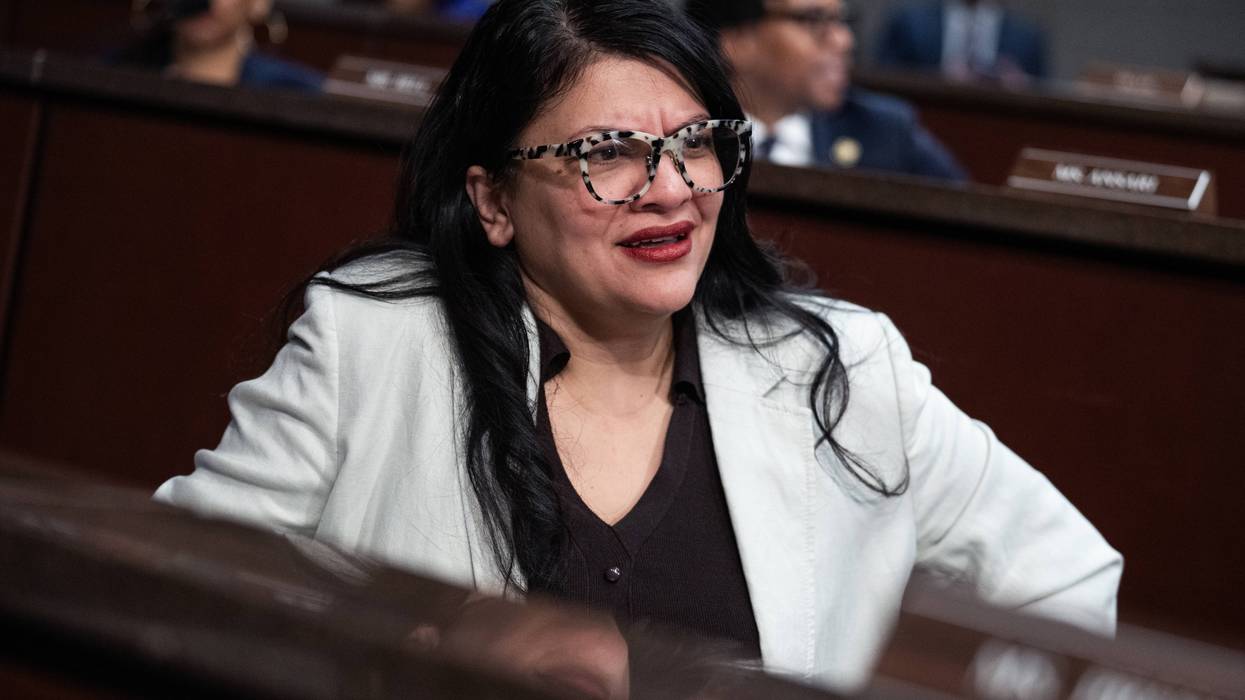
House Democratic leader Hakeem Jeffries helped Republicans tank Rep. Rashida Tlaib’s war powers resolution to limit US military involvement in Lebanon on Thursday, holding up the effort to curb the conflict for at least another several weeks.
Despite Israel’s invasion of Lebanon pushing deeper, with more than 3,500 people killed and 1.2 million displaced since early March, the Michigan Democrat's resolution was defeated in a 324-92 vote, with a large number in her own party joining Jeffries (D-NY) and the Republican majority against it.
In a joint statement shortly ahead of the vote on Tlaib's resolution, House Minority Leader Jeffries of New York, along with Whip Katherine Clark (D-Mass.), and Caucus Chair Pete Aguilar (D-Calif.), said: “We stand with the Lebanese people, the government of Lebanon, and the Lebanese Armed Forces in their efforts to live peacefully and defeat Hezbollah." The statement included no mention of Israel.
The lawmakers said they’d support a different resolution introduced by Tlaib on Wednesday, which was crafted in tandem with Rep. Gregory Meeks (D-NY), the ranking Democrat on the House Foreign Affairs Committee.
That resolution likewise required President Donald Trump to remove US forces “from any hostilities in Lebanon” within seven days of passage. But it also added the caveat that it could not be construed to "prevent or limit security cooperation with the Lebanese Armed Forces."
Jeffries, Clark, and Aguilar said, "There are no US servicemembers involved in combat operations or hostilities in Lebanon."
However, supporters of Tlaib's original measure have noted that the US military is heavily involved in Israel's actions in the country without having boots on the ground.
"The US is actively cooperating with Israel on coordinating strikes, intelligence sharing, and planning, including Trump green-lighting major attacks on Lebanon multiple times," Janet Abou-Elias, a researcher at the Democratizing Foreign Policy Project at the Quincy Institute for Responsible Statecraft, told Common Dreams.
While the resolution's passage wouldn't "end US involvement overnight," she said, "it fundamentally changes the landscape of accountability" by giving opponents of US collaboration a legal mechanism to conduct oversight.
And while the resolution would not cut off US military aid to Israel, Abou-Elias said Israel could continue its occupation "only for a limited period of time" without US assistance.
"Israel would be absorbing losses while also draining its broader manpower and firepower reserves," she said. "At some point, the cost-benefit of continuing their occupation without US support would shift."
Because war powers resolutions are privileged, they can be forced to a vote even without approval from the Republican majority.
However, committees are given 15 days to act before a resolution is forced onto the floor, followed by three days for a House vote. This means it could take until June 21 for the new version to pass. The Senate would also have to pass it, and it would then take another week to go into effect.
"The people of Lebanon can't wait another month for Congress to act," Tlaib said on social media following news that the proposal would be voted down. "Every day that we do nothing, 11 more Lebanese children are killed or injured by the Israeli military in this US-supported invasion. Congress must pass today's Lebanon war powers resolution."
Abou-Elias said that despite the setback, Tlaib's introduction of the measure was not a wasted effort.
"Even if the resolution doesn't pass today, the vote forces every representative on record on the US participation in the attacks on Lebanon," she said. "That alone has value."
Though resolution failed, proponents of the measure championed the 92 lawmakers who did vote in favor.
“Congress’s failure to act has thus far enabled multiple Israeli invasions of Lebanon and war crimes against Lebanese civilians,” said Beth Miller, political director of Jewish Voice for Peace Action, in a statement. “Tonight’s vote demonstrated that a growing block of members of Congress are beginning to listen to their constituents. Americans don’t want the US involved in atrocities against Lebanese, Palestinians, Iranians, or anyone. This vote is just the beginning, and we will continue to organize until all of Congress acts to end these atrocities.”
"The reality is that 4.5 million people were kicked off the program to pay for tax cuts for the wealthy," said US Rep. Shontel Brown.
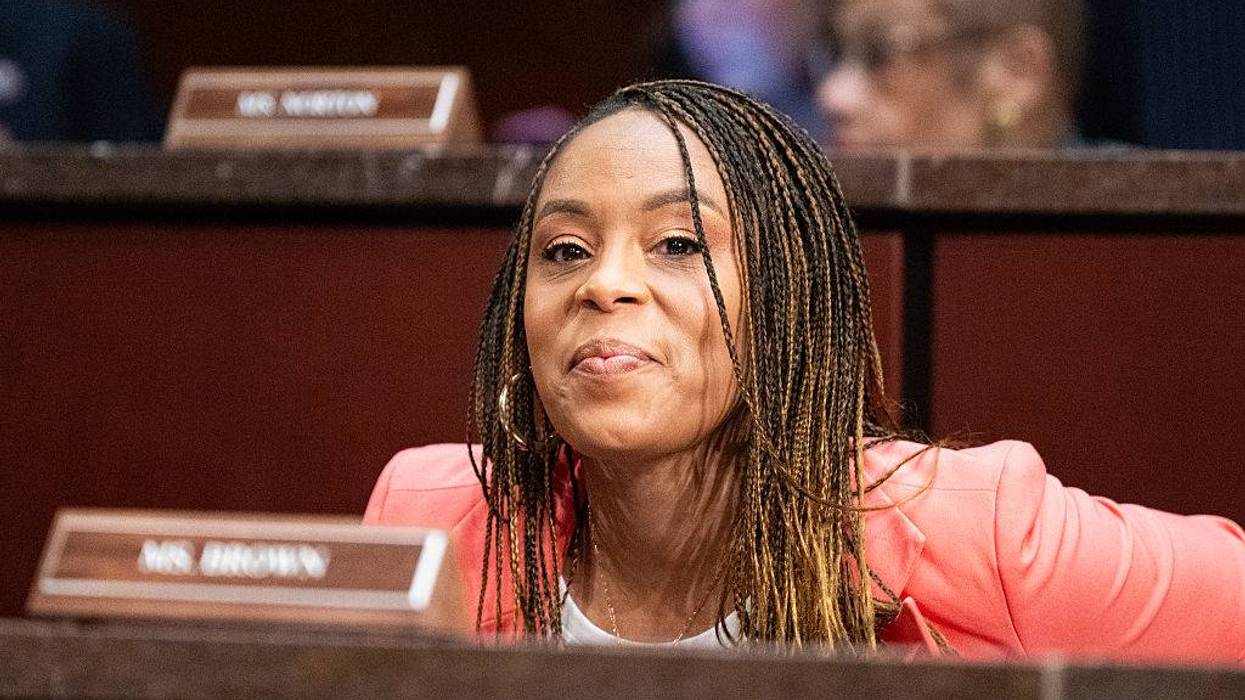
Rep. Shontel Brown on Thursday confronted US Secretary of Agriculture Brooke Rollins for her past boasts about kicking millions of Americans off food assistance.
During a House Agriculture Committee hearing, Brown grilled Rollins for saying it was "good news" that 4.5 million fewer people are now enrolled in the Supplemental Nutritional Assistance Program (SNAP) than before President Donald Trump took office last year.
"The reality is that 4.5 million people were kicked off the program to pay for tax cuts for the wealthy," said Brown. "Families and children are not leaving the SNAP program because they are doing better."
Rep. @ShontelMBrown: Recently, you described it as good news that roughly 4.5 million people have been moved off SNAP. The reality is that 4.5 million people were kicked off to pay for tax cuts for the wealthy. They are not doing better--
Rollins: They are. pic.twitter.com/qcB2WlAHLv
— Headquarters (@HQNewsNow) June 4, 2026
"They are," Rollins replied, without citing any evidence.
"They are being forced off because of eligibility changes, new administrative barriers, and states preparing for the enormous cost shift that they know is coming," Brown shot back. "And you know this. So I'm really struggling to understand why you think pulling the rug out from under children, seniors, veterans, and families that have fallen on hard times [is] good news."
Rollins then baselessly claimed that all of the people who had been removed from SNAP had been added to the program fraudulently, including "200,000 dead people."
The Associated Press last month published a fact check that examined a similar Rollins claim about the number of people removed from food assistance over the last year, and determined that the most likely culprit were changes made to the program by the One Big Beautiful Bill Act, a 2025 budget law that slashed funding to SNAP by $186 billion over a decade.
"What we’ve seen in terms of the data is that the trend in participation declines seems to be related to the program being harder to access,” Roger Figueroa, an assistant professor at Cornell University, explained to the AP.