

SUBSCRIBE TO OUR FREE NEWSLETTER
Daily news & progressive opinion—funded by the people, not the corporations—delivered straight to your inbox.
5
#000000
#FFFFFF
To donate by check, phone, or other method, see our More Ways to Give page.
Daily news & progressive opinion—funded by the people, not the corporations—delivered straight to your inbox.

Lori Ann Burd, (971) 717-6405, laburd@biologicaldiversity.org
Relying on confidential industry research, the Environmental Protection Agency issued a final interim decision today to reapprove glyphosate, the active ingredient in Monsanto/Bayer's Roundup and the world's most heavily used pesticide.
The EPA's assessment contradicts a 2015 World Health Organization analysis of published research that determined glyphosate is a probable carcinogen.
"The Trump EPA's assertion that glyphosate poses no risks to human health disregards independent science findings in favor of confidential industry research and industry profits," said Lori Ann Burd, the Center for Biological Diversity's director of environmental health. "This administration's troubling allegiance to Bayer/Monsanto and the pesticide industry doesn't change the trove of peer-reviewed research, by leading scientists, that's found troubling links between glyphosate and cancer."
While today's decision is called interim, the EPA's practice is to issue interim, rather than final, decisions in its registration-review process for pesticides, which means this is akin to a final decision.
In addition to the World Health Organization's conclusion, multiple U.S. federal agencies have acknowledged evidence of a link between glyphosate and cancer. This includes the EPA's Office of Research and Development and the U.S. Department of Health and Human Services' Agency for Toxic Substances and Disease Registry.
Earlier this week the EPA's Office of Inspector General announced it's starting an audit to assess whether the EPA's pesticide regulatory office adheres to pesticide registration risk assessment regulations, policies and procedures.
"The EPA's pesticide office is clearly willing to bend over backwards, including disregarding its own guidelines for evaluating cancer risks, to give the industry what it wants," said Burd. "This pesticide is heavily used on food crops, landscaping and even playgrounds, and the public deserves unbiased answers to the basic question of whether it's safe."
Emails obtained in litigation brought against Monsanto/Bayer by cancer victims and their families have uncovered a disturbingly cozy relationship between the EPA and the company on matters involving the glyphosate risk assessment.
In one example, when the U.S. Department of Health and Human Services announced it would be reviewing glyphosate's safety, an EPA official assured Monsanto he would work to thwart the review, saying, "If I can kill this, I should get a medal."
The Health and Human Services review was delayed for three years and only recently released.
Monsanto/Bayer also enjoys broad support from the Trump White House. A domestic policy advisor in the Trump administration stated, "We have Monsanto's back on pesticides regulation."
At the Center for Biological Diversity, we believe that the welfare of human beings is deeply linked to nature — to the existence in our world of a vast diversity of wild animals and plants. Because diversity has intrinsic value, and because its loss impoverishes society, we work to secure a future for all species, great and small, hovering on the brink of extinction. We do so through science, law and creative media, with a focus on protecting the lands, waters and climate that species need to survive.
(520) 623-5252
"I think it's time for the US to put its footprint back on Greenland," said the president's envoy, Jeff Landry.
Hundreds of Greenlanders demonstrated outside the new US Consulate in Nuuk on Thursday as President Donald Trump's envoy signaled that he's still seeking to control the self-governing Danish territory that straddles the Arctic and Atlantic oceans.
Various Greenlandic politicians also declined invitations to attend the opening of the consulate, with Prime Minister Jens-Frederik Nielsen telling the local outlet Sermitsiaq that "we haven't made a decision in principle, but I won't participate."
Protesters were armed with Greenland's red and white flag and signs that read "USA ASU," which translates to "Stop USA," as well as messages in English, including "Make America go away!" and "We are not for sale!" Their chants included "Greenland belongs to Greenlanders," "Go home," and "No means no."
"It's very important, now more than ever, to show the American people what we already said, that no means no, and that the future and self-determination of Greenland belongs to the Greenlandic people," said Aqqalukkuluk Fontain, a 37-year-old IT account manager and protest organizer, according to The Guardian.
"The protest itself is not to provoke Donald Trump or Jeff Landry but to show the world that Greenland has its own democracy," Fontain added. Landry, the Republican governor of Louisiana and the president's envoy to the island, arrived in Nuuk on Sunday.
The newspaper noted Trump's envoy traveled there "uninvited with a delegation including a doctor, who caused fury by saying he was there to 'assess the medical needs of Greenland.' Landry briefly attended a business conference with the US ambassador to Denmark, Kenneth Lowery, and left Nuuk on Wednesday night."
During Landry's "ham-handed trip," The New York Times reported, "he offered chocolate chip cookies and red MAGA hats to people he met on the street. He didn't get many takers, and Greenlandic officials criticized the visit."
It was Landry's first visit to the island of 57,000 since Trump appointed him as envoy in December. On Monday, he met with Greenlandic Foreign Minister Múte Egede and Nielsen, who called the talks "constructive," even though there was "no sign... that anything has changed" regarding Trump's position.
While polling has shown Americans and Greenlanders alike oppose Trump's takeover threats, Landry told Agence France-Presse near the end of his trip that "I think it's time for the US to put its footprint back on Greenland."
"I think that you're seeing the president talk about increasing national security operations and repopulating certain bases in Greenland," he continued. "Greenland needs the US."
The envoy made similar remarks on Friday during a Fox News appearance, highlighting Greenland's oil resources amid soaring global prices—which stem from Trump's illegal war on Iran that led the Iranian government to restrict ship traffic through the Strait of Hormuz, a key trade route for fertilizer and fossil fuels.
In addition to waging war on Iran and continuing to threaten both Greenland and Cuba, Trump invaded Venezuela early this year, abducting President Nicolás Maduro and seizing control of the South American country's nationalized oil industry.
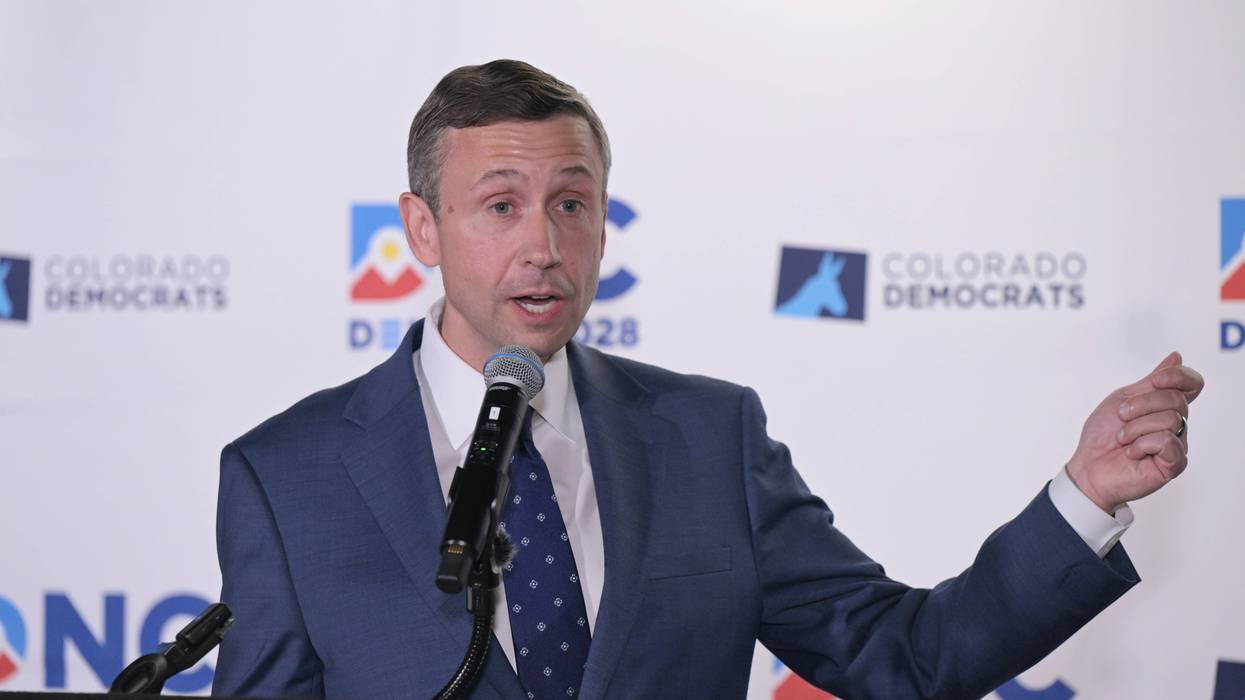
"The DNC should select a new leader who demonstrates competence, creativity, moral clarity, and a relentless commitment to actually changing the broken Democratic Party brand.”
The disastrous release of the Democratic National Committee's 2024 election "autopsy" report on Thursday has brought about a reckoning for the committee's chair, Ken Martin, who is facing calls to resign from legislators and other influential figures in the party.
The 192-page report, written by strategist Paul Rivera in the wake of former Vice President Kamala Harris' loss to President Donald Trump, was panned as amateurish and incomplete, even more than 18 months after the election. Rivera was reportedly fired on Friday.
Aside from being filled with glaring spelling and factual errors and containing several unfinished sections and self-contradicting annotations, it neglected key issues widely believed to have contributed to the Democratic nominee's defeat: Most acutely, her continued backing of Israel as it perpetrated a genocide in Gaza, her inability to address working- and middle-class voters' concerns about affordability, and the shambolic attempt by former President Joe Biden to run for a second term despite his old age and his earlier indications he would serve for only four years.
Many Democrats now see it as a damning indictment of Martin, who was elected as DNC chair last year in part on promises to conduct a thorough and transparent review of the party's defeat. Not helping was his sudden pivot in late 2025 to attempt to bury the report he once championed, only releasing it this week after it leaked to CNN despite mounting pressure from party members.
On Friday morning, Axios quoted an ideological mix of Democratic legislators describing the report's release as the final straw for Martin.
"He should resign," Rep. Seth Moulton (D-Mass.) told Axios, citing "his lack of leadership" and saying it is "utterly nuts it took us this long to release the autopsy."
In a radio interview Thursday, Rep. Mark Pocan (D-Wis.) said in response to a caller who argued Martin should be replaced: "I agree... Having what we have right now is not doing it."
Rep. Marc Veasey (D-Texas) told Semafor that "there doesn't seem to be a plan to turn things around and the clock is ticking... I believe it's time for him to move on."
Despite a push by Martin's allies to arm state party chairs with talking points expressing that they are "fully confident in his leadership," NOTUS reported that inside private DNC group chats and one-on-one conversations, dissension is brewing, and there is even talk of forcing a vote of no confidence to oust the chairman.
"People feel gaslit" by Martin's flip-flopping, one unnamed DNC member told the outlet. "You kept telling people it was coming, then when you didn’t release it, you didn’t even tell everyone the real reason why.”
“While I don’t believe that there are enough votes to pass a vote of no confidence yet, I think there’s more of a permission structure now to have a more open conversation about it,” said another member who NOTUS described as an ally of Martin's. “If they think this is going to make things go away, no, this is only going to ramp up now.”
That's the hope of many in the party's grassroots, who said the entire saga demonstrated Martin's unfitness for a role with major responsibilities as Democrats head into existentially important elections in 2026 and 2028.
Dan Pfeiffer—a former Obama administration staffer whose Pod Save America podcast cohosts held Martin's feet to the fire as he fought to keep the autopsy hidden—called the release "a disaster of his own making."
"He didn’t pick a qualified person to run the autopsy. The fact that he was apparently shocked by the work product shows there was no oversight of the process," Pfeiffer said on social media. "Once he saw that the report was poorly done, he just decided to start lying to everyone about why it wasn't being released."
"In '28, the DNC will set the primary calendar, decide how delegates are awarded, sponsor the debates, and put on the convention," he said. "If no one trusts the DNC, it will be harder to unite the party around the eventual nominee."
Amanda Litman, the president of Run For Something, a group that recruits progressive candidates for office, said in a video posted to social media Thursday that putting together a report composed of "pure gibberish," without access to any of the underlying interviews or materials that buoyed its conclusions, called into question the DNC's ability to be "a fair, competent... conductor of the Democratic presidential primary."
"Ken Martin is not up to the task of being DNC chair—the most important part of which is preparing to run the presidential primary process with trust and competency—and should resign," she added on Friday.
David Hogg, who served as the DNC vice chair in 2025 before being pushed out by Martin over his efforts to support primary challengers against some entrenched party elders, said the autopsy saga was a "demoralizing joke" for the party.
In a release from his political action committee, Leaders We Deserve, Hogg said, "Martin should resign, and the DNC should select a new leader who demonstrates competence, creativity, moral clarity, and a relentless commitment to actually changing the broken Democratic Party brand."
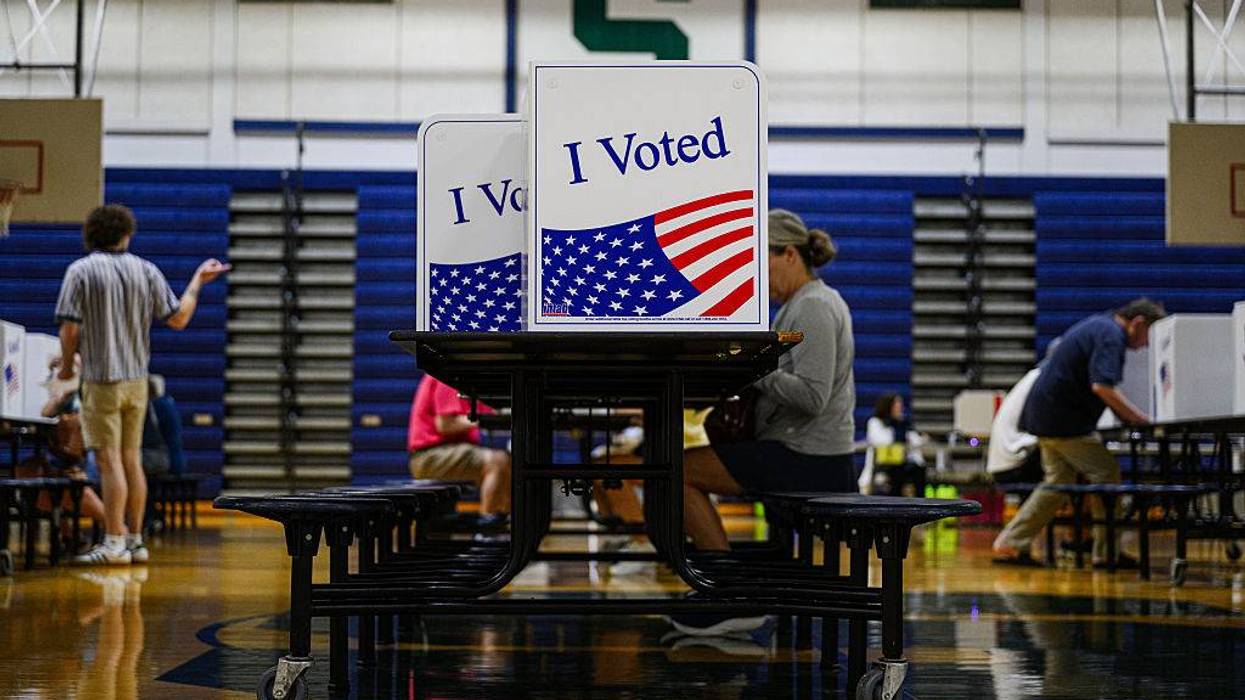
The voting machines ban was part of a broader effort aimed at letting the federal government "take control over elections from US states," reported Reuters.
A group of Trump administration officials last year pushed a plan to ban half of voting machines currently used in the US based on disproven conspiracy theories about the 2020 election being stolen by former President Joe Biden.
According to a Friday report from Reuters, Trump adviser Kurt Olsen asked the US Department of Commerce to declare components of machines produced by Dominion Voting Systems to be national security risks.
Reuters' sources said that Olsen's idea came as part of a brainstorming session "about how the federal government could take control over elections from US states, an idea publicly aired by Trump."
Some officials at the Commerce Department began exploring legal justifications that could be used to ban half of all voting machines, but the effort ended because "Olsen and other administration staffers working with him failed to provide evidence to justify such a move," Reuters reported.
In place of the Dominion voting machines, Olsen pushed a scheme to force all affected states to hand count ballots, a process that some election experts say would be both more time consuming and prone to error.
Alex Halderman, a University of Michigan computer science professor, told Reuters that "changing to hand counting would be chaotic,” adding that "it might facilitate cheating.”
Olsen, a former Trump campaign lawyer who tried to overturn the results of the 2020 election, was hired by the White House last year to investigate that very same election, which Trump lost to Biden by 4.5 percentage points in the popular vote and by 74 votes in the US electoral college.
The report on the election machine-banning effort comes as Trump has pushed an unprecedented mid-decade gerrymandering scheme, which has resulted in an electoral map that elections analyst G. Elliot Morris projects could result in Republicans maintaining control of the US House of Representatives while losing the nationwide popular vote by three points.
Democrats have accused the president of pushing to rig the 2026 midterm elections.
The president also issued an executive order that places new restrictions on mail-in voting, which the president has falsely claimed was used by Democrats to steal the 2020 election from him.
Additionally, Trump and allies such as right-wing podcaster Steve Bannin have suggested deploying federal immigration agents to polling places in November, a move that critics contend would be an unprecedented and unconstitutional federal voter intimidation campaign.