

SUBSCRIBE TO OUR FREE NEWSLETTER
Daily news & progressive opinion—funded by the people, not the corporations—delivered straight to your inbox.
5
#000000
#FFFFFF
To donate by check, phone, or other method, see our More Ways to Give page.
Daily news & progressive opinion—funded by the people, not the corporations—delivered straight to your inbox.

Mark Morgenstein, Director of Media Relations, markm@publicinterestnetwork.org, (w) 303-573-5556, (c) 678-427-1671
Representing Americans from Guam to St. Croix, more than 60 U.S. island communities, foundations, environmental organizations, companies, and academic institutions came together Wednesday to sign the Climate Strong Islands Declaration. This first-of-its kind effort is designed to encourage philanthropy, government, business, and academia to recognize how the deepening climate crisis is affecting island communities and how current policies, programs and approaches fall short in meeting their needs.
The Climate Strong Islands Declaration sets forth a set of principles, challenges, and opportunities faced by islands in the United States and its territories and serves as a call to help these communities respond to the climate crisis in an effective way.
With the right support, island communities are well positioned to create, pilot, and perfect innovative solutions that address climate mitigation, resilience, and sustainability. They can pioneer nature-based solutions to prevent coastal erosion in the face of rising sea levels and intensifying storms. With sustained and focused investments, they are poised to transform their energy, transportation, food, and water systems and model the low-carbon, resilient economy we need to build in the 21st century.
Wendy Wendlandt, acting president of Environment America, participated in the announcement of the Declaration and released the following statement:
Environment America has affiliates in more than two dozen states, including many with vibrant island communities. Our people on the ground see firsthand how island residents bravely face down climate impacts, from hurricanes to sea-level rise, and the devastating flooding and storm surges that they can bring. The destruction wrought by Hurricane Maria here in Puerto Rico and throughout the Caribbean made it clear to those who don't live it each day: To avoid the worst impacts of climate change, we need to act--and act NOW. For everyone's sake, it's imperative that we stop burning fossil fuels and switch to increasingly abundant renewable energy to electrify everything in our society, from buildings to transportation and more.
Transportation has become climate enemy number one in the United States. The U.S. transportation sector is responsible for more greenhouse gas emissions than the entire economies of France and the United Kingdom combined. We just released a report yesterday providing a roadmap to a destination of zero-carbon transportation to ensure that our children live in safer, healthier communities. We know how to do it -- with clean, electric cars and buses, and pedestrian-friendly and bicycle-friendly streets. We just need to convince our elected officials that we have the will to make these changes to our outdated, car-centric culture. And as we power our society more and more with clean, renewable energy, we can also power our transportation system with energy we harness from the sun and the wind.
We owe it to our friends here in Puerto Rico and on all endangered islands to step up to the climate challenge and take bold action.
The full list of signatories includes:
350.org
Abruna & Musgrave Architects
America's WETLAND Foundation
Atlantic Marine Conservation Society
Boricuas Unidos en la Diaspora
Brigadas Salubristas
Cambio, Puerto Rico
Citizen's Campaign for the Environment
Clean Energy Group
Comite Dialogo Ambiental
Coral Vita
Defend H2O
El Puente
El Puente: Enlace Latino de Accion Climatica
Emerge Puerto Rico
Enterprise
Environment America
Environmental Defense Fund
Estuario
Friends of the Bay
Friends of the Earth United States
Fundacion Amigos de El Yunque
Fundacion Comunitaria de Puerto Rico
Futures Forum
Galveston Bay Foundation
Global Island Partnership
Governor of Guam
Green Cross
Guam Legislature
Hawai'i Youth Climate Coalition
Hawai'i Green Growth
Hispanic Federation
Institute of Caribbean Studies
Island Impact
Island Institute
Kua'aina Ulu 'Auamo
Long Island Community Foundation
The Miami Foundation
Micronesia Climate Change Alliance
Mujeres de Islas
Natural Area Reserves System
The Nature Conservancy
The New York Community Trust
North Shore Land Alliance
The Ocean Foundation
Open Space Council
Pacific RISA
Para la Naturaleza
Puerto Rico Bar Association
Queremos Sol
Rocky Mountain Institute
Sea Grant Puerto Rico
Sierra Club
Sisters of St. Joseph, Brentwood NY
Solar Responders
SWEEP Standard
Sylvester Manor Educational Farm
Trust for Public Land's Hawaiian Islands Program
United Nations Association of the United States of America - Puerto Rico Chapter
University of Guam
University of Guam Center for Island Sustainability
University of Guam Green Army
University of Puerto Rico Center for Public Health Preparedness
University of Puerto Rico Department of Environmental Health
Vieques Conservation and Historical Trust
ViequesLove
Wise Laboratory of Environmental and Genetic Toxicology
With Environment America, you protect the places that all of us love and promote core environmental values, such as clean air to breathe, clean water to drink, and clean energy to power our lives. We're a national network of 29 state environmental groups with members and supporters in every state. Together, we focus on timely, targeted action that wins tangible improvements in the quality of our environment and our lives.
(303) 801-0581
"Billionaires have yet again bribed, censored, and bullied their way to the top," said one critic.
"A settlement that promises less than nothing."
That's how one critic of Paramount Skydance's planned acquisition of Warner Bros. Discovery on Tuesday described the paltry concessions extracted by Democratic California Attorney General Rob Bonta and other state officials to enable the proposed $111 billion media megamerger.
Critics argue that the proposed settlement agreement lacks meaningful antitrust enforcement and hands control of major news and entertainment properties to a billionaire family closely aligned with President Donald Trump.
“Every! single! one! of these concessions is meaningless bullshit,” writer Cory Doctorow said Tuesday on Medium. “Bonta just handed the American movie and TV sector to two of the most odious creeps to draw breath, surrendering without firing a shot."
The settlement, which was announced Monday, clears a major roadblock to Paramount CEO David Ellison's takeover of Warner Bros. Discovery, which owns CNN, HBO, Warner Bros. Pictures, and numerous cable networks. The combined company would control nearly 30% of both US theatrical film distribution and basic cable channel licensing.
The agreement contains a pledge to distribute at least 30 films annually for the first two years, then 32 movies each year after, invest hundreds of millions of dollars in US film production, maintain existing theater rental terms for three years, not sell Paramount and Warner Bros. studio lots for five years, and create an editorial independence board for CBS News and CNN.
In a Monday Substack post, American Economic Liberties Project research director Matt Stoller pointed out an apparent loophole in the settlement's film distribution requirement.
“They only have to distribute that many films,” he wrote. “They can make half as many. And those can be co-produced. So in fact, if you add up the numbers, Ellison promised to make fewer films going forward than Paramount and Warner are putting out today."
The settlement's editorial oversight board for CBS News and CNN have also come under fire. The five-member board overseeing the two entities will be appointed and paid by the combined company. Reuters reported Tuesday that the board would have no explicit investigative authority and that the company would be empowered to fill vacancies.
“As we learned from the failed and widely panned Facebook oversight board, a fake bipartisan oversight committee won’t save CNN,” Jessica González, the co-chief executive of the advocacy organization Free Press, said Monday. “We have all the evidence we need from the Ellisons’ destruction of CBS about what they do to warp journalism at Donald Trump’s request.”
David Ellison's father, tech billionaire Larry Ellison, is a Republican megadonor.
Seth Stern, a media attorney and chief of advocacy at the Freedom of the Press Foundation, said that "it's unclear how the attorneys general or courts can constitutionally hold Paramount accountable for the board's actions or inaction without themselves interfering in content."
Stoller noted that the agreement's force-majeure clause, which would reportedly allow Paramount-Warner to dodge its commitments in the event of economic recessions, strikes, and other labor disruptions.
Other opponents of the proposed deal bristle at the Federal Communications Commission’s approval of Saudi and Emirati investment in the new company that would be created if the merger is approved.
Alvaro Bedoya, a senior adviser to the American Economic Liberties Project, lamented that “today, billionaires have yet again bribed, censored, and bullied their way to the top."
“Layoffs will follow. People from [Los Angeles] to Atlanta will lose their jobs, small businesses will lose their contracts, your cable bill and movie ticket will be even more expensive,” he continued. “Dissent against money and power will be even harder to find.”
“This did not have to happen," Bedoya stressed. "Thanks to an extraordinary outpouring of grassroots anger against the merger, a coalition of 12 state attorneys general sued to block it. They beat Paramount in court, winning a court-ordered pause on the merger, and beat them again at the negotiating table, getting the conglomerate to agree to pause the merger until as late as next June.”
“But the Ellison family does not care about the law. Instead, they loudly threatened to leave California if their merger did not go through immediately," he added. "[Gov.] Gavin Newsom caved to that pressure. So did [former state Attorney General] Xavier Becerra. And eventually, so did Attorney General Rob Bonta, agreeing to a weak settlement that will be exceedingly difficult to enforce.”
Stoller said that "there are a bunch of reasons they cleared the deal, such as threats to move the studio out of California, corruption, and general incompetence."
"I personally think CNN is terrible, and I’m glad it’s going to be discredited," Stoller wrote. "I also find it embarrassing that the Democratic AGs used antitrust law in an attempt to shade news coverage. But it’s downright comical they demanded that David Ellison not corrupt CNN by having David Ellison appoint a board ensuring that David Ellison not do that."
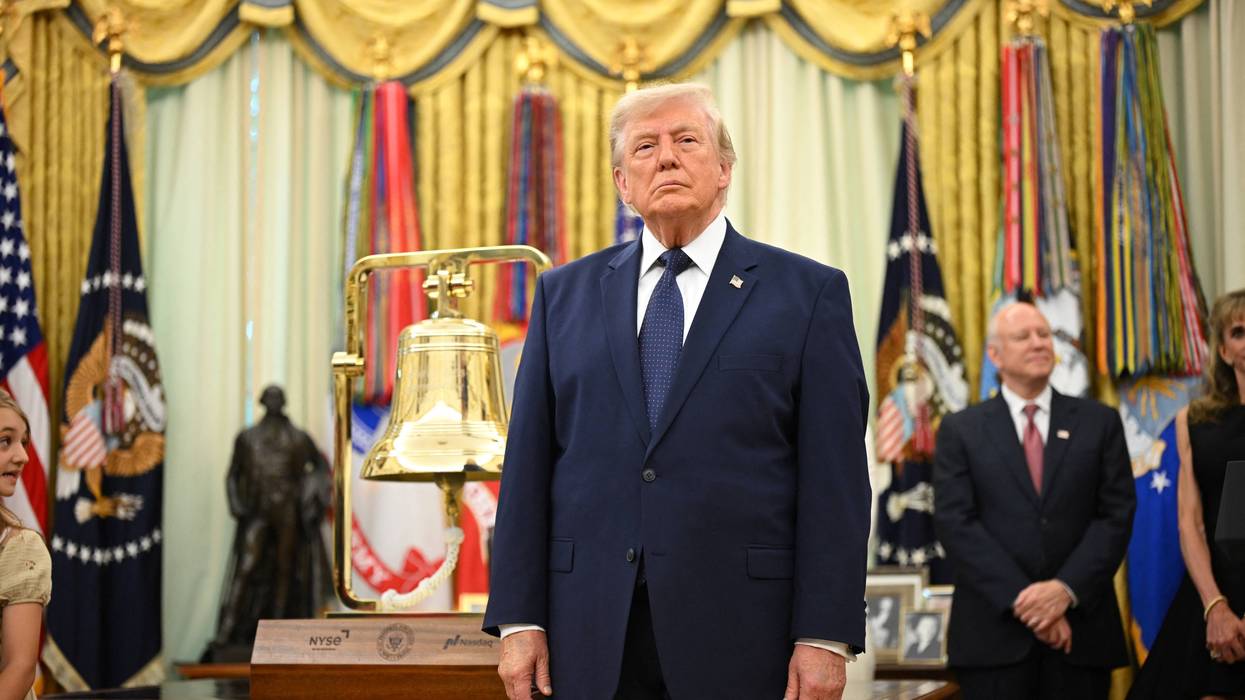
By failing to report some transactions within 45 days, the president appears to have violated a key federal law, again.
Donald Trump has been repeatedly ripped as "the most openly corrupt president in American history" by a range of critics, and the Republican faced fresh criticism on Tuesday after disclosing more than 1,100 securities transactions from July.
"The 1,156 purchases and sales totaled between roughly $79 million and $270 million," CNBC reported. "Purchases totaled at least $43.6 million, while sales came to at least $35.6 million... in what appears to be a broad reshuffling of his portfolio."
US Sen. Elizabeth Warren (D-Mass.), who has previously sounded the alarm over Trump's "unprecedented" trading, said on social media Tuesday that "it should be illegal for the president to trade individual stocks—period."
As Trump continues to rail against regulations on artificial intelligence, the filing with the Office of Government Ethics shows recent transactions involving tech giants including Alphabet, Amazon, Meta, Microsoft, Nvidia, and Oracle.
The president is also waging an illegal war on Iran with no end in sight, and those who manage his portfolio made trades involving military contractors such as GE Aerospace, Lockheed Martin, Northrop Grumman, Palantir, and SpaceX.
CNBC highlighted that the Northrop Grumman sale—worth $250,001 to $500,000—occurred the same day that "Trump signed an executive order tightening supply chain requirements for defense contractors and restricting waivers for certain critical materials sourced from China and other covered countries," though the disclosure does not include timing.
Iran has responded to Trump's war by restricting ship traffic through the Strait of Hormuz, which has caused fuel prices to surge worldwide. The president was accused of cashing in on the crisis he has created after he disclosed June stock transactions. The new filing shows more trades in oil and gas giants, including Chevron and ExxonMobil.
The Washington Sun pointed out that "Trump also purchased up to $500,000 worth of stock in Axon Enterprise, the manufacturer of Tasers, which has done tens of millions of dollars worth of business with US Immigration and Customs Enforcement and US Customs and Border Protection."
While "Trump is ostensibly aware of the contents of his portfolio, given that he personally certified his most recent disclosure, which bears his signature," the Sun noted, White House spokesperson Davis Ingle tried to dismiss any allegations of corruption in a statement to multiple outlets.
"President Trump's stock and bond portfolio is independently managed by third-party financial institutions," Ingle said. "All holdings are maintained in discretionary accounts and invested through computer-based model portfolios that automatically replicate recognized indexes, such as the Schwab 1000."
"Neither President Trump nor any member of his family has any ability to direct, influence, or provide input regarding how the portfolio is invested or when investments are bought or sold," he added. "All investment decisions are made entirely by independent managers. There are no conflicts of interest."
However, as the Sun highlighted, "a number of Trump's trades were disclosed more than 45 days after they were made—in violation of the Stop Trading on Congressional Knowledge Act, which also applies to top officials in the executive branch. It’s not the first time the president has run afoul of the stock trading law."
Just in: Trump reported making another 1,158 stock trades in July 2026.It appears he violated the Stock Act, again, by failing to report all of his trades within 45 days. extapps2.oge.gov/201/Presiden...
[image or embed]
— Zach Everson (@zacheverson.com) September 22, 2026 at 4:10 PM
Despite bipartisan support at times, congressional efforts to fully ban trading by lawmakers, their dependents, and the president and vice president have been unsuccessful.
In July, 13 Democrats in the US House of Representatives helped Republicans pass a purported congressional stock trading ban— even though the bill wouldn't apply to Trump or Vice President JD Vance, and the GOP tacked on a voter suppression provision demanded by the president.
The Senate has not yet acted on the bill, officially called the Stop Insider Trading Act, and condemned by critics as "a Trojan horse."
Trump's disclosure came a week after Bloomberg reported that "Trump has traded more securities than every member of Congress combined since he returned to office" last year. From January 2025 to June 2026, lawmakers reported a collective 22,200 transactions while the president made nearly 28,700.
Donald Trump and every member of Congress should be working for the American people — NOT their stock portfolio.
[image or embed]
— Elizabeth Warren (@warren.senate.gov) September 18, 2026 at 6:03 PM
Sharing the reporting on social media last week, House Democrats wrote: "The American people deserve a president that serves their interests, not his own wallet."
Annual financial disclosures released this summer show that Trump pocketed at least $2.2 billion—over half of it from his family’s cryptocurrency grift—during his first year back in the White House.
Following that revelation, Warren, ranking member of the Senate Banking Committee, called on the chamber to pass legislation aimed at stopping "the president, vice president, senior administration officials, members of Congress, and their families from profiting off the crypto industry," and warned that a failure to do so "will only turbocharge Donald Trump's brazen crypto corruption."

"The beautiful game should bring people together, not rubber-stamp apartheid."
Human rights group Amnesty International on Tuesday slammed the Union of European Football Associations for allowing the Israel men's team to participate in upcoming Nations League matches despite the Israeli government's continued systemic human rights abuses against Palestinians.
Steve Cockburn, Amnesty International’s regional director for Europe, called Israel's participation in the UEFA games "unconscionable," citing "clear evidence that Israel’s football association continues to support illegal settlements."
Cockburn said that UEFA should have long ago suspended the Israel Football Association (IFA) over its "refusal to exclude clubs based in illegal settlements" in the occupied Palestinian territories.
"As the money keeps flowing from FIFA and UEFA to the IFA," Cockburn said, "they risk contributing to the sustainability of illegal settlements and of Israel’s unlawful occupation... and therefore Israel’s violations of Palestinians’ human rights."
"Sport should never be used as a public relations spectacle for states committing atrocities," Cockburn added. "As the Israel team travels to Europe, Palestinian families are being displaced and dispossessed, their land stolen, their olive trees uprooted, and their histories erased by settlers with the support of the Israeli military. The beautiful game should bring people together, not rubber-stamp apartheid."
As explained in a Tuesday report from BBC, Israeli's inclusion in the Nations League has been a source of controversy for months.
Delegates for the Football Association of Ireland (FAI), which faced signifiant public pressure to boycott matches between Ireland and Israel, recently voted in favor of playing the matches, although roughly 30% of delegates voted in favor of a boycott.
Regardless, more than 160 Irish athletes on Monday signed an open letter organized by Irish Sport for Palestine urging FAI to reconsider its vote in favor of the matches.
Heimer Hallgrimsson, manager of the Irish men's team, tried to justify the matches by arguing that Ireland was playing against Israel, which meant it was really playing "against genocide."
The IFA shot back at Hallgrimsson, accusing him of "ignorance, hypocrisy, and stupidity."
The BBC also noted that the two scheduled matches between Israel and Ireland will be played on neutral cites in Hungary and Serbia "against a backdrop of ongoing and increasingly volatile disagreement between the two countries about Israel's military offensive in Gaza."
Cockburn praised efforts by sports fans to keep pressure on the UEFA to "demand accountability, justice and, fair play."
"When rules are broken, when occupation, apartheid, and genocide are ongoing," he emphasized, "we cannot look the other way.”

The vast majority of Democratic voters believe Israel has committed a genocide in Gaza and want its supporters in both parties to face consequences.
The majority of Democratic voters believe Israel has committed genocide in Gaza for the past three years. And they want the American politicians in both parties who supported it to pay.
In a poll released on Monday by the Center for Strategic Politics and commissioned by the magazine Liberal Currents, 683 Democratic voters were asked whether the next Democratic administration should "pursue criminal prosecution of members of the Trump and Biden administrations for actions taken related to Israel’s genocide in Gaza."
More than half, 57%, of the Democrats surveyed answered "yes," while only 22% answered "no" and another 22% said they "don't know."
Self-described "socialists" and "progressives" were most bullish on Gaza-focused prosecutions. But so were 52% of "liberals" and even 48% of Democrats who called themselves "moderate" or "conservative."
It is one of several questions in the poll about a hypothetical Democratic administration prosecuting its predecessors over policies considered deadly and destructive.
About two-thirds, 66%, said they wanted to see Trump administration officials prosecuted for actions taken during its aggressive war with Iran, which has led to the deaths of more than 1,700 civilians and wrought economic turmoil.
Nearly three-quarters, 72%, believed Trump officials should face similar accountability for their campaign of extrajudicial strikes on boats in the Caribbean and Pacific, which have killed more than 234 people in what a top United Nations official recently said may constitute "crimes against humanity."
And more than three-quarters said they wanted to see Trump officials face legal penalties for actions committed by US Immigration and Customs Enforcement (ICE) and Customs and Border Protection (CBP), which have waged a violent mass deportation campaign that has entailed numerous documented due process violations, instances of racial profiling, and several shootings of immigrants and US citizens without clear justification.
The question about Gaza is the only one in the survey in which Democrats were asked about the prospect of prosecuting members of their own party as well as Republicans. And while fewer Democrats ultimately answered yes, it indicates that their ire toward the American politicians supporting the genocide transcends party loyalty.
The poll results come as some activists pursue accountability for the Biden administration in other ways. Last week, organizers launched a campaign to pressure universities and other prominent institutions to cut ties with what they called the "Genocide 20."
These are officials like former Secretary of State Tony Blinken and former National Security Adviser Jake Sullivan who crafted and defended the administration's policy of unrestricted military aid for Israel despite mounting evidence that it was killing scores of civilians and enacting a campaign of starvation against the people of Gaza.
The United States provided Israel with at least $17.9 billion in military assistance between October 7, 2023, and the end of former President Joe Biden's term in January 2025, according to Brown University’s Costs of War project. During that period, more than 47,000 Palestinians were confirmed killed, according to the Gaza Ministry of Health.
Since President Donald Trump returned to office, the US has continued to provide Israel with billions of dollars in military assistance, including $3.8 billion in regular annual military aid, while the Trump administration has approved billions more in arms sales and expedited weapons deliveries. The death toll has risen to nearly 74,000, according to official figures, but independent experts have suggested this may be a significant undercount.
According to Monday's poll, more than 4 in 5 Democrats said that “foreign policy (including Israel and Iran)” is important to them in deciding which candidates to support, compared with just 4% who said it is not.
Foreign policy has been a critical dividing line in several recent Democratic primaries, in which voters have revolted against candidates backed by the American Israel Public Affairs Committee (AIPAC).
This includes Democratic Michigan Congresswoman Haley Stevens, who was defeated by Abdul El-Sayed in a contest for the US Senate despite her more than $30 million in backing from AIPAC, which helped to turn it into the most expensive Democratic primary ever.
AIPAC-backed House candidates have similarly suffered high-profile defeats at the hands of progressives calling to cut off US funding for Israel. Some of the victors include Chris Rabb in Pennsylvania, Brad Lander and Darializa Avila Chevalier in New York, and Aisha Wahab, who won a special election in California.

"Dangerously rushing a system that holds Americans’ lives in its hands is not a good use case for artificial intelligence."
A Democratic US congressman on Monday urged the Federal Aviation Administration to immediately suspend a new artificial intelligence system being used to help manage air traffic around Washington, DC, accusing the agency of using passengers as "guinea pigs" without adequately vetting the new technology.
The Strategic Management of Airspace, Routes, and Trajectories (SMART) system, developed by AI firm Air Space Intelligence under an $875 million contract, began limited operations Monday at Ronald Reagan Washington National Airport, Washington Dulles International Airport, and Baltimore-Washington International Thurgood Marshall Airport.
The Federal Aviation Administration (FAA) says the system uses AI to synthesize roughly 200 data streams—including weather, flight paths, airline schedules, airport capacity, and controller staffing—to anticipate congestion and recommend ways to avert delays and cancellations.
The FAA claims that use of SMART will result in fewer flight delays and cancellations, optimized airspace, more predictable operations, and lower airfare costs for consumers.
"To really improve the flying experience for the American people, we needed to build a 21st century scheduling tool like SMART,” US Transportation Secretary Sean Duffy said in a statement. “By fundamentally reshaping how we manage our airspace and preventing problems before they happen, SMART will slash those frustrating delays, reduce stress on air traffic controllers, and lower travel prices."
“It's always going to be a human that manages the airspace in America,” Duffy promised. “Humans control the airspace, humans make decisions.”
The industry trade group Airlines for America called SMART “exciting and bold," while United Airlines CEO Scott Kirby told The Washington Post that “if it works as we think it can, it will do more to reduce delays and cancellations than anything that’s happened in decades."
However, Congressman Don Beyer (D-Va.)—whose district includes Reagan National Airport—said in a statement that “the FAA should not use my constituents as guinea pigs for an unproven AI air traffic control system."
"The safety of the 24 million people traveling through DCA each year must be the top priority," he added, referring to the International Air Transport Association code for Reagan National Airport.
The FAA should not use my constituents as guinea pigs for an unproven AI air traffic control system that has Americans’ lives in its hands.I’m calling on the FAA to immediately suspend use of this AI system at Washington area airports until its safety has been established.My full statement:
[image or embed]
— Congressman Don Beyer (@beyer.house.gov) September 21, 2026 at 1:25 PM
A National Transportation Safety Board investigation concluded that the January 2025 midair collision between a US Army Blackhawk helicopter and an American Airlines regional jet, operated by PSA Airlines—which killed 67 people—was caused by a chain of human errors.
"Residents of this region are still uncertain about air safety after last year’s fatal accident, and the administration did shockingly little to educate the traveling public about this development before implementing it in one of the most complex airspaces in the world," Beyer said.
The congressman continued:
Unfortunately, I was informed today that air traffic controllers were not consulted on the SMART system’s design and development, and were not trained on using it prior to the system’s adoption at local airports. I was further informed that the air traffic controllers have been told the SMART system can adjust schedules and potentially even routes. Despite outward appearances, the airlines reportedly were privately "panicking" about the hasty implementation of this system. I do not know why the administration felt the need to race it into use, but it is unacceptable to use AI as a substitute for rebuilding the human-directed air traffic controller workforce.
“Dangerously rushing a system that holds Americans’ lives in its hands is not a good use case for artificial intelligence," Beyer asserted. "I call on the FAA to immediately suspend its operation, at the very least until it is clearly established beyond doubt via air traffic controller feedback and independently verified stress testing that the technology is safe."
Duffy responded to Beyer's concerns in an interview with Fox News' Brian Kilmeade, saying: "I like Don [but] this is just complete stupidity. The problem with this analysis is our new software is predictive, so we can predict weather and make better decisions on when we fly and weather."
Beyer isn't the only lawmaker voicing concerns over the use of SMART. Congresswoman Pramila Jayapal (D-Wash.) said Monday that "safety must always be the FAA's number one priority. This is extremely concerning, and we need immediate answers about what this means for travelers."
The National Air Traffic Controllers Association (NATCA) said that it was not involved in the SMART rollout.
“NATCA has not been involved in the design, testing, or implementation of SMART and therefore cannot speak to its effect on the air traffic control workforce at this time,” the union said, adding that any new technology “should complement and not replace the experience, training, and professional judgment of air traffic controllers who are responsible for the safety of the National Airspace System.”
The FAA's launch of SMART comes as the agency continues to suffer from a shortage of certified air traffic controllers. The Washington Post reported that the FAA had about 11,000 certified controllers as of April, more than 1,500 short of its official target of 12,563.

"DHS must not obstruct or otherwise interfere with this investigation by removing Mr. Garces Perez from the country," said lawmakers.
The attorney representing Wilber Rafael Garces Perez said Tuesday that a federal judge had granted her emergency request to block the Trump administration from deporting the 28-year-old delivery driver, who was shot by an immigration agent Sunday and has since been transferred multiple times between hospitals and a detention center—all while the officer's bullet reportedly remains lodged in his back.
"We have filed a federal lawsuit, and the judge has ordered that he be present at the first hearing, which is scheduled for Wednesday, September 30," said Kate Lincoln-Goldfinch. "And that means he won't be deported in the meantime."
Lincoln-Goldfinch applauded the rare piece of "good news" that has come out of Garces Perez's case since he was shot by an Immigration and Customs Enforcement (ICE) agent while making DoorDash deliveries in his car Sunday afternoon.
As Common Dreams reported, Garces Perez was transferred from an ICE detention center in Pearsall, Texas to a hospital late Monday after reporting that he had lost feeling in the left side of his body, likely as a result of the bullet that remained close to his spine.
But Lincoln-Goldfinch and Rep. Joaquin Castro (D-Texas) said Tuesday that Garces Perez had again been taken back to the detention center.
Castro said he and Rep. Greg Casar (D-Texas) plan to visit Garces Perez at South Texas ICE Processing Center on Wednesday, to "check on his condition and demand his release."
"It is nothing more than a prison," said Castro. "Wilber came to the United States legally. He had work permits and was an asylum seeker. None of this should have ever happened."
Garces Perez arrived in the US in 2024 from Venezuela, using a government program for asylum seekers and the CBP One app that was introduced by the Biden administration to make an appointment for approval from immigration agents. He received a work permit and applied for asylum.
He mistakenly missed an immigration hearing after a notice was sent to an old address, The New York Times reported, which led to his deportation order. He has no criminal history.
Lincoln-Goldfinch had been planning to visit her client in the hospital Tuesday, where he was taken after he called in to a press conference the lawyer was holding Monday and said that he had not received medical treatment for his gunshot wound.
After speaking to Garces Perez via a video call Tuesday morning, Lincoln-Goldfinch reported on social media:
Wilber tells me that after he spoke publicly, guards at the Pearsall detention center forcibly took the tablet from his hands, revoked his communication privileges, and moved him out of the infirmary into an isolated room with a flat bed that cannot be adjusted like a medical bed.
[...]
At the hospital, Wilber says doctors finally spoke directly to him about his care and gave him IV morphine for his pain. We now understand that the gunshot fractured his clavicle and that he has significant swelling and is wearing a sling. We still do not have clarity about the cause or extent of the loss of movement he experienced.
He was discharged back to Pearsall around midnight. Today, he tells me he is receiving only Tylenol and ibuprofen for pain. He remains in isolation, on a flat bed, and without the tablet he previously used to communicate. We are asking for his communication privileges to be immediately restored and for him to be provided an appropriate medical bed and adequate medical care. Most importantly, we are continuing to advocate for Wilber’s IMMEDIATE release.
Also on Tuesday, it was revealed that the ICE agent who shot Garces Perez was not wearing a body camera at the time of the shooting—similar to the case of Johan Sebastián Durán Guerrero, who was fatally shot by an ICE agent in Maine in July.
"Before we hear anything from ICE about, 'We pulled him over, or he was fleeing, or he was aggressive,' our response to any statements like that is, 'We won't believe you until you show us,'" said Goldfinch-Lincoln. "Show us your body cam footage, show us your dash cam footage."
On Tuesday, more than 100 members of Congress signed a letter to Homeland Security Secretary Markwayne Mullin and acting ICE Director David Venturella, spearheaded by Casar, calling on ICE to release Garces Perez and "abandon efforts to swiftly deport him or remove him from Texas."
"ICE has provided no justification for this shooting, and there is no indication Mr. Garces Perez posed a threat to officers," reads the letter, noting that the Department of Homeland Security (DHS) "has a history of withholding information and attempting to obstruct active investigations into wrongdoing by its agency."
"DHS must not obstruct or otherwise interfere with this investigation," said the lawmakers, "by removing Mr. Garces Perez from the country or interfering with the release of footage, data, or other information by Texas state or local agencies involved in the operation."

"After years of corporate greed and impunity, we are holding DoorDash to account."
New York City Mayor Zohran Mamdani on Tuesday touted a settlement with food delivery app DoorDash as a "landmark win" for workers.
During a press event, Mamdani announced DoorDash had agreed to pay $131 million—of which $115 million will go directly to short-changed workers—in what he described as "the largest settlement for food delivery workers ever secured in American municipal history."
The mayor said that DoorDash's systematic exploitation and underpayment of its workers showed it profited by using "greed as a business model."
"Two months ago, Tony Xu, the CEO of DoorDash, gave business owners a piece of advice," Mamdani said. "A CEO, he said, has to take the greedy algorithm and keep going all the way to see if there is more. In computer science, a greedy algorithm is one that makes the most optimized, best short-term outcome at every step, and never weighs the consequences."
Mamdani: Today, after years of corporate greed and impunity, we are holding DoorDash to account. I am proud to announce that DoorDash will pay more than $131 million, the largest settlement for food delivery workers ever secured in American municipal history, and a landmark win… pic.twitter.com/XuCMMSyBMR
— Acyn (@Acyn) September 22, 2026
Mamdani explained that DoorDash for years "failed to count every hour worked by deliver workers," emphasizing that this was "not an accidental rounding error or a mistake."
The mayor touted the work done by the New York City Department of Consumer and Worker Protection (DCWP), which analyzed more than 150 million DoorDash payments and determined that the company had "underpaid more than 260,000 delivery workers across New York City" over a four-year period.
"After years of corporate greed and impunity, we are holding DoorDash to account," Mamdani said. "City Hall will not sit idly by while a megacorporation that made nearly a billion dollars in profits last year rips off the working people who keep our city moving."
A Tuesday report in The New York Times noted that, in addition to making a $131 million payout, DoorDash has also agreed to allow closer monitoring of its payment methods to ensure that its workers get what they are owed.
While the company defended its payment calculation model as "fair, practical, and legal," it also acknowledged it made mistakes that led to some workers not getting everything they had earned.
"We screwed up,” DoorDash said, “and our mistakes meant some NYC Dashers were underpaid or paid late."
DCWP Commissioner Samuel Levine told the Times that the city's settlement with the delivery app "sends a strong message that we are in a new era of enforcement in New York," adding that "we will not tolerate nickeling and diming New York City workers."
Melanie D'Arrigo, executive director of Campaign for New York Healthcare, said in a Tuesday social media post that the DoorDash settlement showed the importance of electing leaders willing to take on corporate power.
"Just in case you were wondering why DoorDash was spending so much money to elect Andrew Cuomo and oppose Zohran Mamdani," D'Arrigo observed, "DoorDash now has to pay $115 million to the workers it stole wages from."
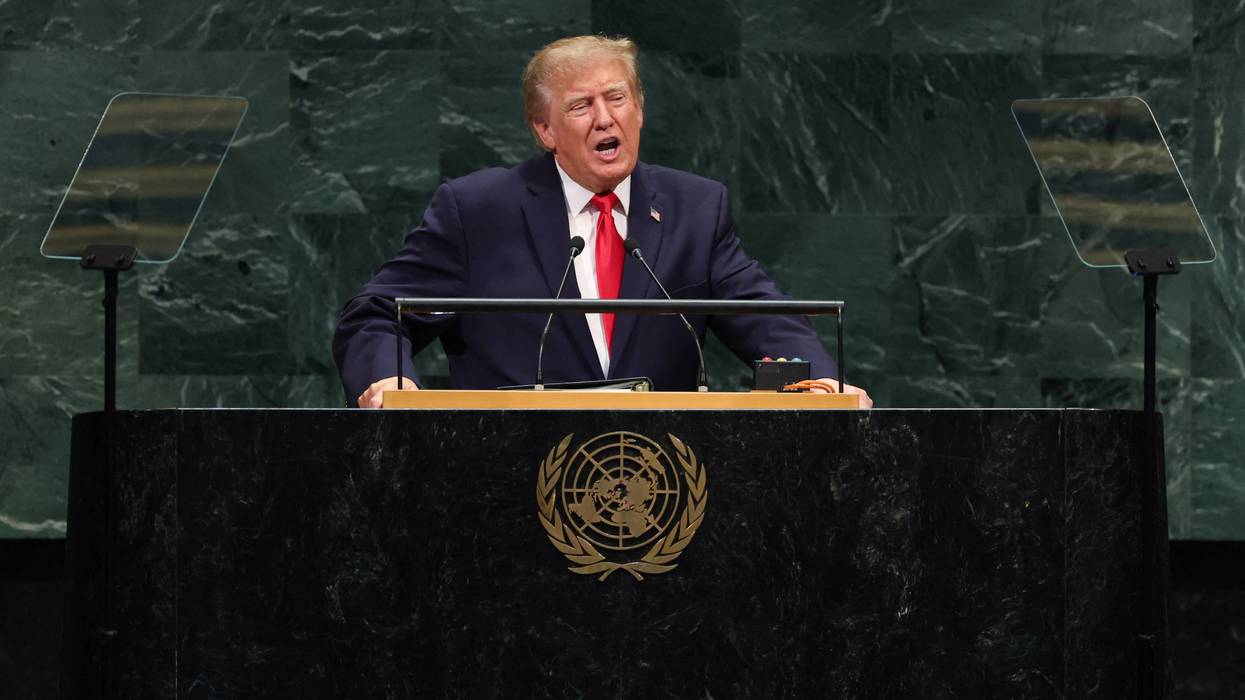
"Trump doesn’t know how to end the war he started with Iran," said one critic. "He’s so desperate that he’s threatening war crimes in front of the entire United Nations."
In a rambling, lie-laden speech Tuesday to world leaders gathered at the United Nations General Assembly in New York, US President Donald Trump again threatened to "annihilate" Iran if its leaders don't agree to a deal to end the illegal war of choice he started nearly seven months ago in the Middle Eastern country.
"I have a big decision to make," Trump said. "Will a deal be made with Iran that lets them rebuild and create a far greater country than it ever was before, maybe one of the greatest in the Middle East or even the world? Or do I annihilate the Islamic Republic and do it quickly, never giving them a chance to kill and destroy people and countries again?"
"Do I drive them into hell with no chance of survival and no hope of future greatness or generations?" the president continued. "But I believe we'll make a deal right after the election because it doesn't make sense for them not to. They're waiting to see how I do in the midterm election. What they don't realize is that I'm not running. I did that already and won in a landslide."
“Or do I annihilate the Islamic Republic [...] do I drive them into hell with no chance of survival…”Trump doesn’t know how to end the war he started with Iran. He’s so desperate that he’s threatening war crimes in front of the entire United Nations.
[image or embed]
— American Bridge 21st Century (@ab21.bsky.social) September 22, 2026 at 8:38 AM
Trump has repeatedly threatened to destroy Iran—a country of over 90 million people—since his first term. However, his latest menacing remarks raised eyebrows for their brazeness on the world stage.
"It’s one thing to make genocidal threats against a nation on social media. It’s another thing to do it from the podium of the UN," University of Colorado Law School associate professor Maryam Jamshidi said on X. "That's what Donald Trump just did. He used his speech at the UN to threaten Iran with annihilation."
While Jamshidi urged UN Secretary-General António Guterres and member states to condemn Trump's threat, independent journalist Taylor Noakes said of Trump that "what’s particularly sad about this (aside from the fact he’ll likely never be prosecuted for war crimes) is how so many leaders of other liberal democracies have stood by and done nothing while the Americans make a mockery of the UN as an instrument for global order."
The Democratic veterans group VoteVets accused Trump of "casually contemplating war crimes in front of the entire UN [General] Assembly," calling his threat "deranged and dangerous."
Bonus for whoever wrote this chyron
[image or embed]
— Brandy Zadrozny (@brandyzadrozny.bsky.social) September 22, 2026 at 7:54 AM
Journalist Mehdi Hasan said: "For shame. The president of the United States goes to the United Nations and threatens genocide against a UN member state in front of the world. This is where we’re at."
Matt Duss, executive vice president at the Center for International Policy and a former adviser to Sen. Bernie Sanders (I-Vt.), called Trump's comments "dangerously unhinged."
"Such rhetoric is not merely reckless, it is a criminal threat of genocide against an entire nation," he added. "US lawmakers and US partners around the world should condemn Trump’s remarks and take all due steps to bring an end to the war on Iran.”
Trump didn't just openly mull committing war crimes, he groundlessly boasted in his speech that the US "has carried out dozens of strikes on cartel drug boats, destroying 97% of the drugs coming into the ocean and sea."
Citing data from US Southern Command and Trump administration officials, The New York Times says that at least 234 people have been killed in a minimum of 70 strikes on boats allegedly smuggling drugs in the Caribbean Sea and Pacific Ocean. The administration has provided no solid evidence to support its trafficking allegations. Regional leaders and relatives of victims contend that at least some people killed in the strikes were fishers with no narcotrafficking ties. Legal experts assert that the attacks violate international law regardless of whether or not the targeted vessels were engaged in drug trafficking.
Trump's speech was laced with demonstrably false or unfounded statements, including an accusation that the Iranian government killed 72,000 people this year, that his invasion of Venezuela and abduction of President Nicolás Maduro left the US with "more than 60% of the oil in the world," that his administration "ended the war in Gaza," and that he settled eight wars.
"Donald Trump’s maniacal rant before the UN General Assembly today, complete with ridiculous braggadocio, narcissistic puffery, an almost unbroken line of absurd, demonstrable lies, open criminality, and deranged, murderous threats, should awaken even the most cowardly and complicit among world leaders that their attempts at appeasement of Trump and the tyrannical axis that he leads can only result in further aggression, economic terrorism, murder, and genocide," said Craig Mokhiber, a former senior UN official who resigned in protest of what he described as the world body's failure to stop Israel's genocidal war on Gaza.
"The world must unite to counter the threat and to defend peace, human rights, and the rule of law," he added, "which are, after all, declared purposes of the UN."
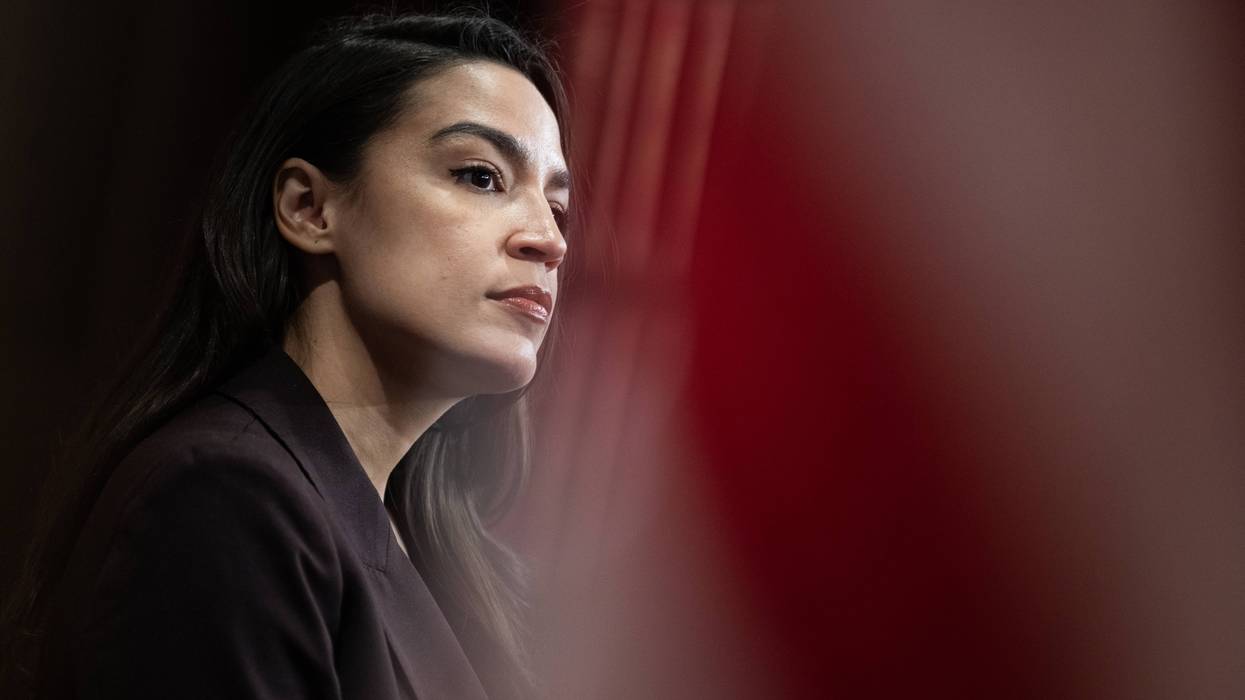
"Life doesn’t wait for you to be ready for things," the Democratic congresswoman said amid nationwide progressive political momentum. "Sometimes life just makes things ready for you."
As Rep. Alexandria Ocasio-Cortez weighs whether to run for president in 2028, there are numerous factors that complicate her decision: her identity as a Latina woman, her role as a leader in a progressive movement on the verge of unprecedented power, and her considerations about raising a family in the future.
Whatever decision the 36-year-old Democratic congresswoman makes, however, it will be “all or nothing,” she said in an interview published Tuesday by The New York Times, in which she spoke candidly about the stakes of what would be a historic and potentially transformative bid for the nation’s highest office.
Ocasio-Cortez (D-NY) became the youngest woman ever elected to Congress in 2018 in a victory over the Democratic Party establishment that became a model for the wave of progressive momentum that has defined this year’s cycle.
Amid what she described as the “ascendance” of her movement—marked by the insurgent victories of New York City Mayor Zohran Mamdani and Michigan Democratic Senate nominee Abdul El-Sayed over opponents with establishment support and big money behind them—Ocasio-Cortez is now wondering aloud whether her own moment has arrived.
“There’s an argument that some make that this is a very unique political window and, oftentimes in politics, you do only get one shot,” she said. “And you don’t—and just in life in general—life doesn’t wait for you to be ready for things. Sometimes life just makes things ready for you.”
But she is well aware of the obstacles and sacrifices, both personal and political. Having recently opened up publicly about receiving fertility treatments, she wondered aloud what a potential candidacy might mean for her life, including a possible future pregnancy.
She is also well aware that she would be up against the weight of very recent history. Two of the last three Democratic candidates for president, former Secretary of State Hillary Clinton and former Vice President Kamala Harris, were women, and they both lost to President Donald Trump after campaigns in which sexism—and, in Harris’ case, racism—featured prominently in attacks against them.
“Pretty candidly, I think about my identity," Ocasio-Cortez said. "I’m not naïve to the fact that we are living under a very regressive administration, and I happen to be a woman, and I, you know, happen to be Latina. And I think that there’s a lot of conversation about electability, and I don’t kind of shy away from those realities.”
Those realities are indeed hard to ignore, especially in contrast to her mentor, Sen. Bernie Sanders (I-Vt.), who ran two formidable Democratic primary campaigns for president in 2016 and 2020 and with whom Ocasio-Cortez embarked on a wildly successful "Fight Oligarchy" rally tour last year, speaking to large crowds in both red and blue districts.
Though they have long campaigned together and advance a platform centered on the same signature policies of Medicare for All, a Green New Deal, and a tax on billionaire wealth, Sanders consistently ranks among the most well-liked politicians in office, while a New York Times/Siena poll this month showed AOC with just 30% favorability, compared with 41% unfavorability among likely voters.
There are other paths in front of AOC that could put her on a more traditional long-term trajectory to the White House, which has never in modern history been occupied by a president who ascended straight from the US House.
She also said she was considering a primary bid against the Democratic Party's current Senate leader, Chuck Schumer (D-NY), whom many Democratic voters have come to see as the embodiment of all that is sclerotic and unchanging about their party's entrenched elite.
At a time when backing from corporations and other powerful special interests plays an unprecedented role in achieving political power, Ocasio-Cortez emphasized her near-exclusive backing from small donors, which she said makes her one of "very few people who are financially independent from special interests that are able to advocate directly for the needs of working people.”
Regardless of the decision she makes, she recognizes the enormous stakes.
“It’s very all or nothing,” she said. “If I were to run in this cycle, and not win, I would be done.”
“And I am not opposed to that,” she added. “That, in and of itself, does not exclude the decision... But it has to make it worth it.”
Ocasio-Cortez has previously emphasized that her "ambitions" have less to do with achieving the highest possible seat for herself than with helping her movement succeed.
“My ambition is to change this country,” she said during a forum in May. “Presidents come and go, Senate, House seats, elected officials come and go, but single-payer healthcare is forever, a living wage is forever, workers’ rights are forever, women’s rights, all of that.”
She told the Times that the question that will ultimately determine her path forward is: "Where can I do the most good?”
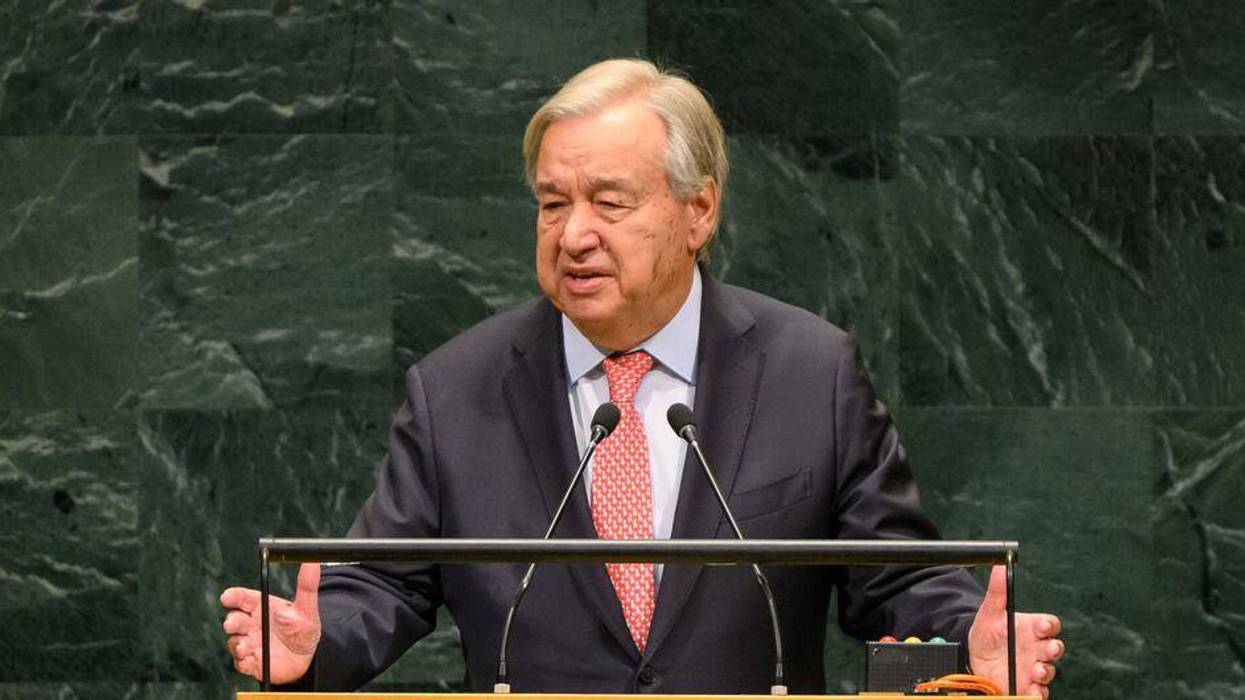
"We know that fossil fuel interests won't step aside on their own," said the UN chief. "When the harms of Big Tobacco became undeniable—governments acted. The climate crisis demands the same determination."
With United Nations Secretary-General António Guterres set to leave his post at the end of this year, he used his final address to the UN General Assembly on Monday to share a familiar call: "Polluters must pay" for fueling the global climate emergency.
Since the Portuguese politician began his first five-year term leading the world body nearly a decade ago, he has repeatedly called for international action to rapidly phase out the coal, gas, and oil that are heating up the planet. In late 2023, he emphasized that "the science is clear. The 1.5°C limit is only possible if we ultimately stop burning all fossil fuels. Not reduce. Not abate."
The UN chief announced at the end of 2024 that "the top 10 hottest years on record have happened in the last 10 years," and declared: "This is climate breakdown in real time. We must exit this road to ruin." Last year, he argued that fossil fuels represent "the greatest threat to energy security today," and countries clinging to them are "sabotaging" their own economies and futures.
Earlier this month, after a UN report found that at least temporarily surpassing the Paris Agreement's goal of limiting temperature rise this century to 1.5°C above preindustrial levels is now inevitable, Guterres stressed that "this summer’s scorching heat, raging wildfires, and deadly floods are a warning of what lies ahead," and called for making the overshoot "as small and short as possible."
Speaking to the General Assembly on Tuesday, he cited that recent finding: "Now we face a near-certain breach of the 1.5-degree limit, with a supersized El Niño speeding straight for humanity. The dangers are real. But so is the hope."
"The sun belongs to no one. The wind cannot be embargoed. Innovation can come from everywhere," he said. "Renewables are now the cheapest source of new electricity in most of the world. And the most viable path to energy security, independence, and sustainable growth... A future beyond fossil fuels is in sight. The question is how."
"Will it be a just and orderly transition built on international cooperation—or chaotic and costly, leaving people and countries behind?" he asked, urging every government to adopt a Paris Agreement-aligned national plan to transition away from fossil fuels.
"We know that fossil fuel interests won't step aside on their own. For decades, Big Oil has treated the atmosphere as an open sewer—and cashed in on the consequences," he acknowledged. "We have seen this kind of abuse of power before. When the harms of Big Tobacco became undeniable—governments acted. The climate crisis demands the same determination."
According to the UN chief: "Those who polluted the most—and profited the most—must do far more to repair the damage they caused. Polluters must pay. And to the leaders, cities, civil society and citizens working to hold them accountable: I say, you are on the right side of history. Keep going."
"And governments must keep going on all fronts: To end deforestation. Invest in grids and storage. Cut methane emissions," he continued. "But these actions are not enough: We need climate justice with a focus on adaptation and finance. Developed countries must respect their commitments. They must triple adaptation finance.And make the Loss and Damage Fund work at scale."
"We must also ensure that the mining of critical minerals does not dig deeper into the inequities of the past," he added. "Producing countries and affected communities must retain a far greater share of the value created from their resources. No more plundering. No more exploitation."
While Guterres' speech didn't just focus on "the power fueling climate chaos and the war on nature"—it also addressed peace and security, inequality, and artificial intelligence in detail—climate campaigners welcomed the time he devoted to the crisis.
"When the UN secretary-general calls for fossil fuel companies to pay, you know this demand has become impossible to ignore," said Louise Hutchins, co-convenor of the Make Polluters Pay International Coalition, in a statement. "Millions of people around the world are calling for it, and governments are starting to listen."
His address came just a day after campaigners from groups around the world delivered over 2 million petition signatures calling on governments to make polluters pay to Selwin Hart, the UN's assistant secretary-general for climate action, in New York City.
"For years, campaigners and communities on the frontlines have been saying the same thing: The companies that profited from fossil fuels must pay their fair share of the costs of the crisis they helped create. Today, that demand is moving into the mainstream," 350.org executive director Anne Jellema noted after Guterres' remarks. "The voices of more than 2 million people are now being brought to the UN. Governments have the power to make polluters pay, and they must use it."
Enough is enough: over 2 million petition signatures at UNGA to Make Polluters Pay www.greenpeace.org/internationa...
[image or embed]
— Nick Young (@nickofnz.bsky.social) September 21, 2026 at 5:56 PM
Amitabh Behar, executive director of Oxfam International, highlighted that "the people who have contributed least to the climate crisis are paying the highest price. They are losing homes, livelihoods, and access to food and facing an increasingly uncertain future, while fossil fuel corporations and their billionaire backers continue to profit. The call to make rich polluters pay is about justice. It is about ensuring that those who have benefited most from the fossil fuel economy pay for the damage it has caused."
Greenpeace International executive director Mads Christensen pointed out that "Guterres has spent years warning leaders where fossil fuel dependence leads, and this year proved him right. From deadly heat to devastating fires and floods, the very dependence driving these disasters is shaking entire economies and leaving families exposed to volatile energy and food prices, while the companies behind it keep raking in the profits."
"New rules forcing governments to align their taxes and spending with global climate goals would raise hundreds of billions of dollars to support the countries and communities least responsible, while incentivizing money out of fossil fuels and into secure, renewable energy that actually protects people," he argued. "As long as destruction stays profitable, the transition to a safer, fairer future will keep being held back. Guterres has named the solution, governments must now act on it."