

SUBSCRIBE TO OUR FREE NEWSLETTER
Daily news & progressive opinion—funded by the people, not the corporations—delivered straight to your inbox.
5
#000000
#FFFFFF
To donate by check, phone, or other method, see our More Ways to Give page.
Daily news & progressive opinion—funded by the people, not the corporations—delivered straight to your inbox.

A new study, which analyzes the results of Bolivia's October election, concludes "we cannot find results that would lead [...] to the same conclusion as the OAS" that there was an "inexplicable" and drastic change in the trend of the vote. The analysis, by Jack Williams and John Curiel of the MIT Election Data and Science Lab, determines: "it is very likely that Morales won the required 10 percentage point margin to win in the first round of the election on October 20, 2019." In an article for The Washington Post's Monkey Cage today, Williams and Curiel write: "as specialists in election integrity, we find that the statistical evidence does not support the claim of fraud in Bolivia's October election."
The study, commissioned by the Center for Economic and Policy Research (CEPR) to independently verify its November 2019 study, reaches many of the same conclusions as that earlier statistical analysis, and replicates some of the most significant statistical findings showing consistent voting trends in favor of Morales, before and after the interruption of the preliminary vote count [trep]. Repeated Organization of American States (OAS) claims of an "inexplicable" change in the vote count trend of the TREP were the basis for allegations of fraud shortly after the elections took place.
But "The OAS's claim that the stopping of the trep during the Bolivian election produced an oddity in the voting trend is contradicted by the data," the MIT researchers conclude. "While there was a break in the reporting of votes, the substance of those later-reporting votes could be determined prior to the break."
"The OAS seems to have made statements regarding the preliminary election results without basis in fact," Jack Williams, coauthor of the study, said. "Morales appears to have been heading toward a first-round victory prior to the interruption of the preliminary count. The results once the count resumed are in line with the prior trend."
Bolivia's electoral authority suspended the processing of tally sheets in the preliminary count on election night with 83.85 percent of tally sheets verified and Morales ahead by a difference of 7.87 percentage points over runner-up candidate Carlos Mesa. When results from the preliminary count were next reported with additional tally sheets verified, they showed Morales above the 10 percentage point margin of victory that would give him a first-round win.
But, contrary to OAS statements that fueled violent protests opposition rejection of the election results, these results are entirely consistent, and there was no "inexplicable change in trend" in the preliminary count as the OAS had claimed.
"The OAS greatly misled the media and the public about what happened in Bolivia's elections, and helped to foster a great deal of mistrust in the electoral process and the results," CEPR Co-Director Mark Weisbrot said. "This important analysis from MIT election researchers is the latest to show that the OAS's statements were without basis, and that simple arithmetic shows that there is no evidence that fraud or irregularities affected the preliminary results, or the official results -- the ones that actually matter. The OAS needs to explain why it made these statements and why anyone should trust it when it comes to elections."
The Center for Economic and Policy Research (CEPR) was established in 1999 to promote democratic debate on the most important economic and social issues that affect people's lives. In order for citizens to effectively exercise their voices in a democracy, they should be informed about the problems and choices that they face. CEPR is committed to presenting issues in an accurate and understandable manner, so that the public is better prepared to choose among the various policy options.
(202) 293-5380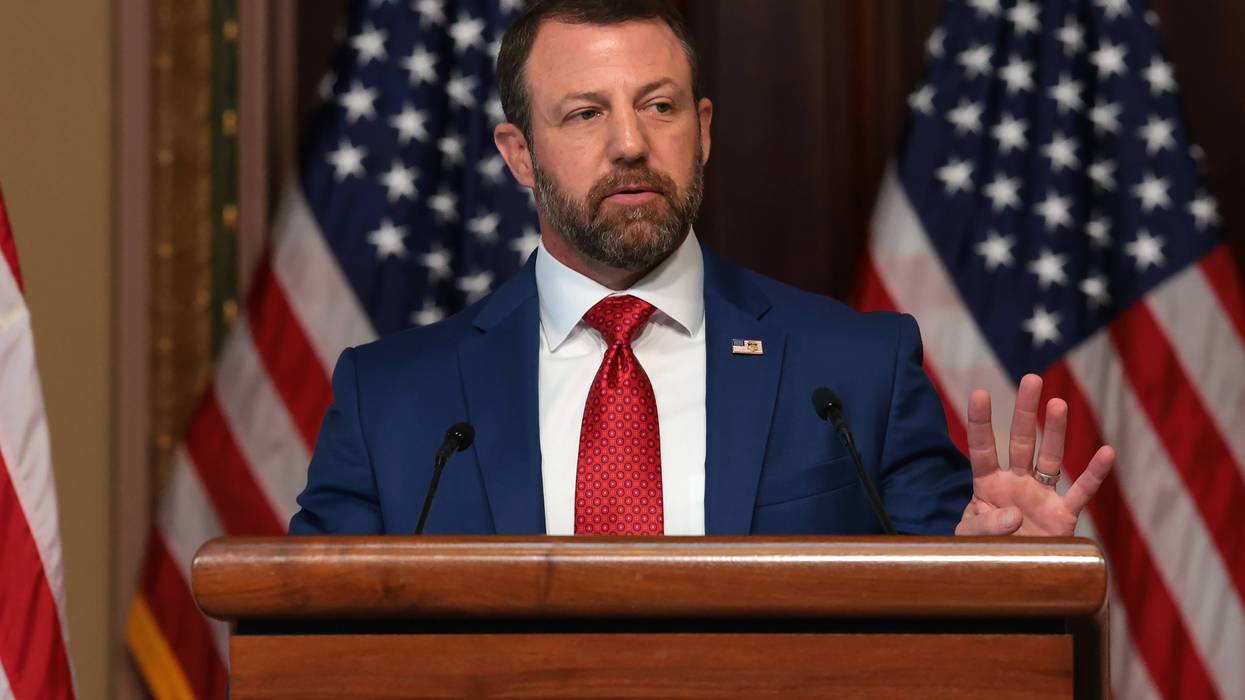
"They are losing, and they know it. Election officials will not be intimidated," said Senate Minority Leader Chuck Schumer.
US Homeland Security Secretary Markwayne Mullin on Friday threatened state election officials with prison time if they do not comply with the Trump administration's "mandatory" changes to how they run their elections.
During a press conference, Mullin said that the Trump administration was making so-called "security enhancements" to US elections "mandatory," adding that any uncooperative states will be penalized.
"If these states want a grant and they want to be reimbursed to run federal elections, they're going to have to implement security issues," Mullin said. "We're saying that your [voting] machines have to be secured and that your voter registration list needs to be scrubbed."
Later in the press conference, Mullin elaborated further on penalties states could face if they didn't "scrub" their voter rolls to the administration's specifications.
"The states that choose... not to participate in securing the elections, we will make sure we make those states a priority to look into who voted in their states, and hold then the election officials accountable," he said. "If the election officials, once we gave them the information they need to secure their elections, and they chose not to, then those individuals can also be held accountable."
Mullin added that this accountability can come "by fines, by penalties, and even, depending on how far it goes, prison time."
Mullin says that election officials in states that don’t cooperate with the Trump administration may face jail time pic.twitter.com/FvIaKmTEdc
— Aaron Rupar (@atrupar) July 17, 2026
Article 1, Section 4 of the United States Constitution explicitly gives states the power to run their own elections, while granting the US Congress the authority to implement federal regulations if needed.
The executive branch of the federal government is given no role in the administration and regulation of elections.
Democratic California Gov. Gavin Newsom reacted to Mullin's threats of jail time for election officials with defiance.
"California has free, fair, and secure elections and we will fight for them," Newsom wrote in a social media post. "Try us."
Senate Minority Leader Chuck Schumer (D-NY) similarly vowed to fight the administration's efforts to meddle in the elections.
"They are losing, and they know it," Schumer wrote. "Election officials will not be intimidated. Senate Democrats will make sure resources are in place to fight back against any illegal activity by the Trump administration."
Sen. Raphael Warnock (D-Ga.) warned that Mullin's Friday statements appear to be an escalation in the administration's tactics.
"First, they sent the FBI to seize ballots in Georgia," he wrote. "Then, they tried to get data on election workers in Fulton County. Now, they’re threatening to imprison election officials. This is escalating quickly. Every single American should be alarmed."
Government watchdog Citizens for Responsibility and Ethics in Washington also indicated it would file legal challenges to the administration's efforts to take over the elections process.
"The Constitution gives states, not the federal government, the power to administer elections," the group wrote. "That's for a good reason, but the Trump admin keeps trying and failing to grab power anyway. We're fighting back in court."
Aaron Reichlin-Melnick, senior fellow at the American Immigration Council, expressed skepticism that the Trump White House's election meddling would be successful.
The Department of Homeland Security "has literally zero power to do this," Reichlin-Melnick wrote. "The Trump admin has lost every single lawsuit on their efforts to get state voter data or change voter requirements. The power to administer elections is given to the states."
Historian Patrick Wyman similarly predicted the administration's efforts would end in failure.
"They’re going to threaten this stuff, they’ll ham-fistedly screw up the implementation, commit seven atrocities, and still lose every election that matters in November," Wyman wrote. "We’re now nearing the 'fuck you, do it, see what happens' stage of this confrontation."

ICE is already on track to arrest more people this month than any other month during the second Trump administration.
As scrutiny builds over two fatal shootings by Immigration and Customs Enforcement in less than a week, US Homeland Security Secretary Markwayne Mullin said the Trump administration was only going to keep ramping up its aggressive mass deportation push. Arrests have already reached a record high this month.
Mullin brushed off questions from reporters on Friday about the shootings of Lorenzo Salgado Araujo in Texas and Johan Sebastián Durán Guerrero in Maine—neither of whom was the target of ICE's operations—which have generated calls for investigations and reforms to ICE's tactics, including the traffic stops that led to the fatal shootings.
Earlier this week, acting assistant secretary Lauren Bis called on critical politicians and media outlets to "turn down the temperature" of their rhetoric towards ICE, which she claimed is “fueling vehicle attacks" against agents. The administration has claimed that both men attempted to "weaponize" their vehicles, but video and eyewitness accounts have not backed this up.
In light of the agency's calls to "turn down the temperature," a reporter asked Mullin whether he could assure Americans that ICE officers who violate the agency's use-of-force policy would face consequences and whether he'd commit to making that determination publicly.
"Let me clarify. When I say 'turn down the temperature,' I mean turn down the temperature with you guys," Mullin said, pointing at members of the media. "We're turning up the heat on the streets."
"We're out there working harder than we ever have because we've empowered law enforcement to do their jobs," he said. "What I'm trying to do is remove us from the headlines every single day."
Mullin added that "everybody will be held accountable," and that he would enforce the law "with our own agency" and "with the criminals on the streets."
Facing pressure from senior White House adviser Stephen Miller to reach a quota of 3,000 arrests per day, ICE has overwhelmingly prioritized going after individuals without criminal convictions during President Donald Trump's second term, despite the administration's claims that it's targeting "the worst of the worst."
A leaked Department of Homeland Security report published in February showed that just 14% of the nearly 400,000 people taken into custody by ICE in 2025 had been charged with or convicted of violent criminal offenses, while 40% have never been charged with any crime.
The Washington Post reported on Friday that ICE is on track to arrest more people in July than any previous month of the second Trump administration. Arrests dropped for a short time in February after immigration agents shot two US citizens—Renee Good and Alex Pretti—in Minneapolis, but spiked to a new high of over 39,500 in June.
None of the agents involved in January's pair of fatal shootings have faced federal charges, and the Trump administration has actively sought to obstruct state-level investigations into the shootings by withholding evidence, some of which was finally turned over on Monday.

Forty-seven percent of Americans surveyed say they have been cutting back on food and medical care to save money.
As the resumption of President Donald Trump's illegal war with Iran sends gas prices back to an average of $4 per gallon, a poll released by CNBC on Friday shows Americans' perceptions of the US economy growing increasingly negative.
The latest CNBC All-America Economic Survey finds that 61% of Americans are feeling pessimistic about the current state of the economy, with just 25% saying they feel optimistic.
This marks the most pessimistic Americans have felt about the economy since December 2023, after the US suffered through an inflationary shock primarily driven by the re-opening of the global economy after the Covid-19 pandemic.
Americans' biggest concerns are with the cost of living, with voters expressing particular worry about gas and grocery prices.
Forty-seven percent of Americans surveyed say they have been cutting back on food and medical care to save money, while two-thirds report reducing spending on "non-essential" purchases, such as restaurant meals and entertainment.
The survey also finds that US voters are pinning the blame for the state of the economy squarely on Trump, as just 38% of Americans approve of his economic performance while 60% disapprove. Americans are even harsher in their assessment of Trump's handling of the Iran war, with just 35% approving and 63% disapproving.
Democratic pollster Jay Campbell, a partner at Hart Research, told CNBC that the recent drop in gas prices from their peak earlier this year is not enough to put Americans in a better mood, especially given that prices are headed up again.
"People are still paying a lot more for stuff than they were a year and a half ago, two years ago, and that’s recent enough in memory that it still hurts and it still drives a lot of anger," said Campbell. “When gas prices drop 50 cents for a month, that’s just not enough to make up the difference."
According to data published by AAA on Friday, the average price of gas in the US is now $3.98 per gallon, 10 cents higher than it was a week before.
The price of diesel fuel has also risen back over $5 per gallon, up 15 cents from one week ago, according to AAA.
Despite Trump's brutal polling numbers, the CNBC survey finds that Democrats currently have a modest four-point advantage in the generic congressional ballot, which Campbell said "doesn’t point to a wave [election] at the moment."

“Yesterday, we were reminded who the Republicans are: a group of millionaires working for billionaires who will rip healthcare away from those who need it most," said one campaigner.
In what critics called a troubling sign of where US healthcare policy is headed, Senate Republicans on Thursday torpedoed an effort by their Democratic colleagues to block a Trump administration pilot program under which private companies will use artificial intelligence to review—and possibly deny—healthcare to patients seeking certain Medicare services.
Senators voted 50-46 along party lines against a Congressional Review Act resolution introduced by Sen. Ron Wyden (D-Ore.) and supported by 20 Democratic colleagues and Sen. Bernie Sanders (I-Vt.). The resolution was aimed at overturning the Trump administration's final rule establishing the US Centers for Medicare and Medicaid Services’ (CMS) so-called Wasteful and Inappropriate Service Reduction (WISeR) Model.
"Yesterday, I voted to block [President Donald] Trump’s plan to let AI decide whether Medicare will approve or deny your medical care. Every Senate Republican supported Trump’s scheme," Sen. Ed Markey (D-Mass.) said Friday on social media. "Doctors should be deciding what care seniors need—not a computer program."
The AFL-CIO, the nation's largest labor union federation, said on X: "No senior should have to wait weeks to see a doctor because a flawed AI system won’t authorize it. The Trump [administration's] WISeR program is delaying treatment for Medicare patients and putting tech companies’ interests first. Congress must end it."
Alex Jacquez, senior vice president of policy, advocacy, and research at the Groundwork Collaborative, highlighted the "horrendous" WISeR rollout, which, according to KFF, "has created confusion, errors, long wait times, and stress" and has left many patients "ensnared in the same red tape as those with private insurance."
CMS claims WISeR “helps protect American taxpayers by leveraging enhanced technologies, such as artificial intelligence (AI) and machine learning, along with human clinical review, to ensure timely and appropriate Medicare payment for select items and services.”
However, critics warn that AI will make it easier and faster to deny or delay care and have raised concerns that AI would likely be used as a cost-cutting tool to fulfill financial incentives.
“Yesterday, we were reminded who the Republicans are: a group of millionaires working for billionaires who will rip healthcare away from those who need it most," Alex Lawson, executive director of the advocacy group Social Security Works, told Common Dreams on Friday.
"The White House leaned on the Republican senators and they folded like the cheap suits they are," he continued. "Cowards to a person."
Singling out Sen. Josh Hawley, Lawson said the Missouri Republican "pretends he would oppose Medicare delays and denials by algorithm or AI, but when the vote is called dutifully dances to the tune his master calls."
"Their goal is to destroy Medicare, to destroy guaranteed healthcare, to ensure that every facet of the 'healthcare system' serves only one purpose, profit," Lawson said of Republican lawmakers.
Private Medicare Advantage healthcare profiteers have been using AI to deny care for years. Consumers are aware of—and outraged by—the practice.
“I don’t know any senior, Republican or Democrat, who asked President Trump to let AI decide if their doctor-recommended treatment was necessary," Sen. Patty Murray (D-Wash.) said on Thursday.

"One brutal kick sent the robot's head hanging loose."
Amid warnings from experts and political leaders about "killer robots," a Chinese robotics company on Thursday hosted an unprecedented combat tournament in which one humanoid robot decapitated another.
The fight featuring the decapitation—footage of which quickly circulated online—was part of the opening night of the Ultimate Robot Knock-out Legend (URKL) competition in Shenzhen, organized by the company EngineAI, which developed the humanoid.
The Chinese Embassy in Ireland was among the accounts on the social media platform X that highlighted the moment when one robot's "head" was dislodged.
The "white humanoid robot, named 'White Eagle' landed a high kick to the head of its black opponent, 'Matador,' which made the robot's head rock precariously in its socket before rolling completely out of place," according to Newsweek. "The two continued to spar as Matador's head was swinging from its socket until eventually the robot fell, crushing its head underneath its body."
Unveiled last year, the humanoid is called T800, a nod to the Terminator franchise. EngineAI's website features videos of T800 executing various mixed martial arts (MMA) moves, from a combination punch and a roundhouse kick to punch-kick combos.
EngineAI announced UKRL, the "world's first" humanoid robot combat league, early this year, seeking 32 teams from universities, enterprises, and research institutions worldwide to compete using its robots. The first round of competition is scheduled for July-August, followed by another round in September-October, and the grand finals in November-December.
As the Chinese tabloid Global Times reported when the tournament was announced in February:
Pan Helin, a Beijing-based veteran analyst, told the Global Times on Monday that such competitions help enhance public awareness of humanoid robots and expand potential application scenarios.
Pan noted that humanoid robots still face technological and practical limitations, and real-world application is key to their further development. Such events could yield positive effects in the entertainment and performance market, which is a necessary step forward in paving the way for further applications in factories or households, Pan said.
Tian Feng, former dean of SenseTime's Intelligence Industry Research Institute, said that the free provision of T800 robots will lower research and development barriers for smaller companies and promote the integration of applications involving industry, academia, and research bodies.
The tournament's opening night came on the heels of a series of artificial intelligence events hosted by the United Nations earlier this month, during which Secretary-General António Guterres said that "if AI is to be powerful, it must be governed," and "my main concern is with 'lethal autonomous weapon systems.'"
"Let us call them what they are: killer robots," Guterres continued. "Machines selecting and engaging their target and taking a life—without human control and judgment. That is morally repugnant. It is politically unacceptable. And it must be banned by international law."
"States are already at the discussion table. But let us not wait for atrocity to act. Some decisions must remain forever human—none more than taking a human life," he added. "Some might claim that governance is the enemy of innovation. But innovation needs guardrails. The technologies we trust most—in aviation, in medicine, in nuclear energy and beyond—earned that trust because we acted to hold their makers to account."
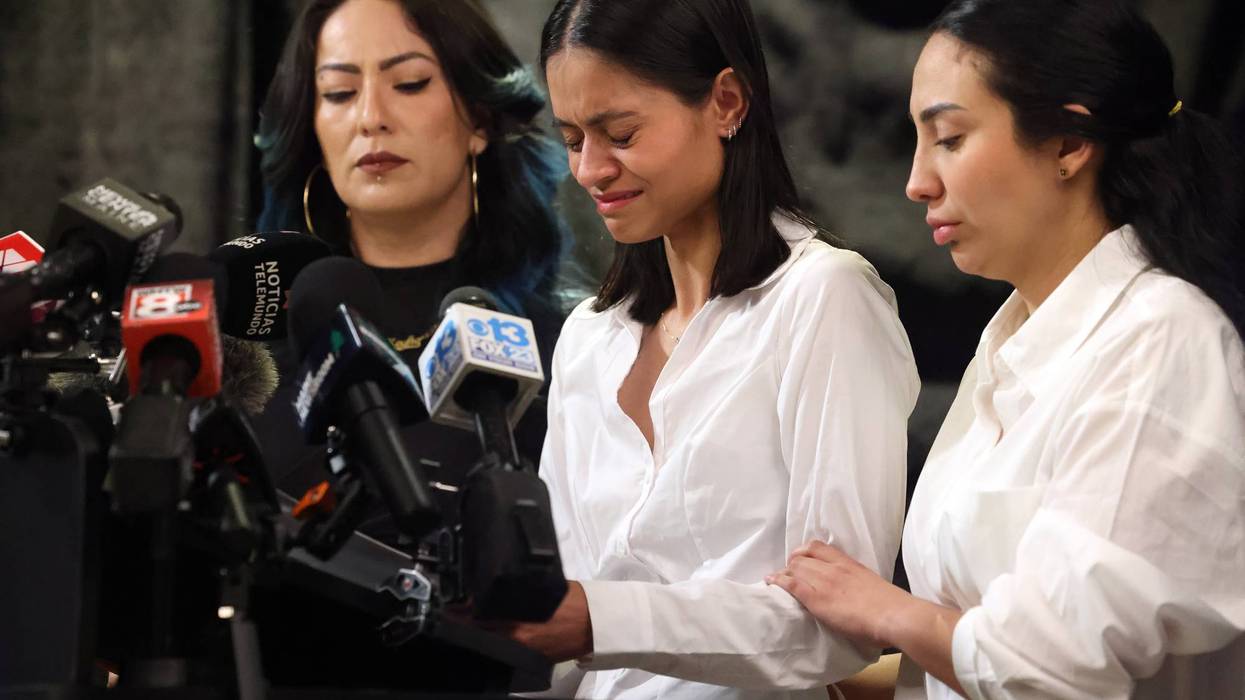
Karolina Rojas Alvarez said the couple's 3-year-old daughter now "asks for Papá, and I don’t have the strength to tell her that Papá isn’t coming."
Johan Sebastián Durán Guerrero "always dreamed big, and he had so many dreams left to fulfill," said Martha Karolina Rojas Alvarez Thursday evening, three days after she and the couple's 3-year-old daughter saw Guerrero's body lying in the street outside their home in Biddeford, Maine, moments after he was fatally shot by a federal agent.
Alvarez, joined by her husband's sister and the family's translator, wanted to make a public statement about Guerrero's killing "to ensure that Johan Sebastián’s memory does not become a casualty of the same people who so needlessly took his life," said Benjamin Gideon, her attorney.
The grieving 23-year-old widow talked about her husband's devotion to their young daughter, Dulce, who she said now "asks for Papá, and I don’t have the strength to tell her that Papá isn’t coming, that she can't hug him anymore or tell him, ‘Papi, I love you.'"
“From the moment he held her in his arms and held her tiny hand, he never let her go,” Alvarez said, adding that her daughter had a daily morning ritual of calling out "to Papá to tell him she was awake and had slept well."
"He always worked so that his gordita, as he called her, would never go without," she said through tears.
Alvarez also described Guerrero's dedication to their marriage, saying he spoke to her of growing to be “little old people” together.
“He always said I was his life, and that he dreamed of a whole lifetime with me," she said. "He was always happy, and his joy was contagious... He loved to work, and he couldn't stand sitting still. From the moment we met, we never separated again. We were always one."
Alvarez's remarks on her husband echoed the accounts of many of the family's neighbors. A resident named Wendy told the Portland Press Herald that Guerrero, who was 25, had a connection with her special needs son.
“We as a nation and we as a community have to answer a simple question: Do we accept the idea that innocent, loving partners and loving and devoted fathers of 3-year-olds can be collateral damage to this government’s policies?”
“The way that he interacted with my son was really beautiful,” she told the newspaper. A local mail carrier said the young family was always together.
Julio Mosquera, a friend and former co-worker of Guerrero's, told The New York Times, “All he did was work and talk about his little girl."
Witnesses reported that Alvarez and her daughter, still dressed in her pajamas, came out of their house and saw Guerrero's body in the street after he was shot early Monday morning. Nelson Elias, a neighbor who knew Guerrero from their delivery jobs, told the Maine Morning Star he saw the mother and child sitting in the street, crying.
The US Department of Homeland Security (DHS) has acknowledged that the young father, who worked as a cleaner at a veterinary clinic as well as delivering groceries, was not the target of the investigation that US Immigration and Customs Enforcement (ICE) agents were carrying out in Biddeford on Monday.
Alvarez spoke out the same day that the ex-wife of the ICE agent who shot Guerrero, David Michael Brouillette, told the Press Herald that Brouillette was abusive and had claimed the shooting was "justified... because the guy tried to hit him with his car.”
"He was asking me to lie for him and to cover for his character,” Ashley Brouillette told the Press Herald. “I told him that I was not going to lie for him."
She said she had seen video footage of the shooting and had told her ex-husband, “Nowhere in there does it show that this man charged at you with a car.”
Investigators have not yet released precise details of the shooting at the intersection of Hill and Pool Streets in Biddeford.
Gideon said Thursday that Guerrero simply pulled out of his driveway to leave for work while the ICE agents were in the area, allegedly conducting surveillance on another person who was subject to a deportation order, and was fatally shot.
A spokesperson for ICE said Guerrero "attempted to flee the scene and fearing for public safety an officer discharged his weapon."
Fleeing a scene is not grounds for a law enforcement agent to use force or discharge a weapon, according to Department of Justice policy.
Gustavo Petro, the president of Colombia, where Guerrero grew up in a middle-class neighborhood in the city of Bucaramanga, has denounced the young man's killing, saying Tuesday that "what has happened in Maine is a murder of a Colombian, a Latin American, at the hands of the US government."
Despite the fact that Guerrero was not the target of the agency's surveillance, DHS has appeared eager to claim the shooting was part of legitimate immigration enforcement operations. The agency claimed Wednesday that Guerrero entered the US without authorization in September 2023, and said his work authorization—issued by the Trump administration, according to Gideon—did not "confer legal status in the United States."
On Thursday, Gideon said that “we as a nation and we as a community have to answer a simple question: Do we accept the idea that innocent, loving partners and loving and devoted fathers of 3-year-olds can be collateral damage to this government’s policies?”

"UNRWA is vital to keeping hundreds of thousands of the most vulnerable Palestinians alive."
Human rights advocates are raising alarm about a bipartisan bill in the US House of Representatives aimed at abolishing the United Nations Relief and Works Agency for Palestine Refugees in the Near East, which they say will help Israel in its efforts to starve Palestinians in the occupied territories of food and medical aid.
Across Gaza, the West Bank, and other surrounding areas, UNRWA provides emergency food or cash assistance to roughly 2.6 million people and records about 10.5 million primary-care visits annually, according to UN Secretary-General António Guterres.
But since the genocide in Gaza began, Israel has waged a multifront campaign to dismantle the agency, legally banning it from operating in Israeli territory, blocking it from bringing desperately needed aid and staff into Gaza, and pressuring nations around the world to cut off funding based on unfounded allegations that the organization is controlled by Hamas, which dissolved Gaza's governing body earlier this month as part of the ceasefire agreement with Israel.
The bill introduced in the US House on Wednesday by Reps. Mike Lawler (R-NY) and Josh Gottheimer (D-NJ) would require the State Department to "dismantle" and transition its services to other nongovernmental organizations.
"UNRWA has been corrupted by Hamas for years, with documented ties to terrorism," claimed Lawler, the chair of the House Foreign Affairs Subcommittee on the Middle East and North Africa. "That’s why [Rep. Gottheimer] and I have introduced the bipartisan Replace UNRWA with Real Humanitarian Assistance Act to abolish UNRWA and replace it with trusted partners that will deliver aid to those who need it, without empowering terrorist organizations."
Gottheimer added that UNRWA "employs Hamas terrorists involved in the October 7 [2023] attack," echoing a claim that has been presented by Israel in its assault on the agency.
In 2024, Israel accused 19 of UNRWA's more than 13,000 employees in Gaza of having taken part in the attack, which resulted in the death of about 1,200 Israelis.
A UN investigation found that nine of the 19 employees may have been involved in the attack. Investigators found insufficient evidence to support involvement in nine cases and obtained no evidence in one case. UNRWA said the employment of the nine implicated staff members would be terminated.
Israeli officials have continued to portray UNRWA as a "civilian arm" of Hamas, alleging that hundreds of militants lurk among its ranks, but independent reviews have uncovered no evidence of this.
Nevertheless, many nations have taken Israel's claims at face value, initially cutting off funds and creating an existential funding crisis for the agency. While many have since resumed funding, its largest contributor, the US—which provided around a third of the agency's budget—has not, and the agency has been forced to scale back services for vulnerable refugees.
"This bill would be a death sentence for thousands of Palestinians who depend on UNRWA services," said Matt Duss, the executive vice president at the Center for International Policy (CIP) and a former foreign policy adviser to Sen. Bernie Sanders (I-Vt.). "What's really going on here: using the false claim that 'UNRWA equals Hamas' to advance the Israeli right's goal of removing the Palestinian refugee issue from the agenda."
Adil Haque, a law professor at Rutgers University, raised concerns about what sort of NGO might replace UNRWA if it were fully dismantled.
"This is how we ended up with the Gaza Humanitarian Foundation (GHF) and daily mass shootings of starving civilians," he said, referring to the US-Israeli nonprofit that supplanted UNRWA as the primary distributor of aid before shutting down after the October 2025 "ceasefire."
The organization consolidated aid distribution to a small number of sites under Israeli military control, where soldiers routinely fired into massive crowds of starving people. At least 859 people were killed near GHF sites in less than two months in 2025, and thousands more were wounded, according to a UN report.
Lawler and Gottheimer's bill has 23 co-sponsors, all of whom are Republicans. However, a majority of Democrats in both the House and Senate voted for a spending package in March 2024 that defunded the agency. Some Democrats have since sponsored legislation aimed at restoring the funds.
"UNRWA is vital to keeping hundreds of thousands of the most vulnerable Palestinians alive," said Dylan Williams, the vice president for government affairs at CIP, in response to a post by Lawler promoting the legislation. "Your attempt to kill it unconscionably compounds Israel’s genocide in Gaza."

Pentagon Secretary Pete Hegseth posted a photo of a surveillance tower at an Iranian port collapsing due to US airstrikes.
US Pentagon Secretary Pete Hegseth late Thursday gloatingly posted a photo of an Iranian tower collapsing due to the Trump administration's massive, illegal assault on the Middle East country's infrastructure, including bridges, railways, and power facilities.
The photo Hegseth posted to social media appeared to show the surveillance tower at Iran’s Chabahar Port enveloped in smoke and crumbling to the ground amid US forces' aggressive bombing campaign. Ryan Costello, policy director at the National Iranian American Council (NIAC), called Hegseth's post "disgusting online revelry in the bombardment of Iran and its infrastructure."
The Associated Press reported that US strikes on bridges and other infrastructure in southern Iran overnight into Friday killed at least eight people.
"The highway and railway bridge strikes appeared aimed at cutting off Bandar Abbas, Iran’s main port, from roads leading into the Islamic Republic’s central region onward to Tehran, the capital," AP noted.
US strikes, authorized by President Donald Trump, also targeted Iranian power infrastructure amid extreme heat.
The latest wave of US attacks came days after Trump threatened to "knock out all of [Iran's] power plants" and bridges "unless they get to the table and negotiate."
Deliberately attacking civilian infrastructure is a war crime. Kenneth Roth, former executive director of Human Rights Watch, said Friday that while "there may be some nominal military use of the bridges," the US attacks "potentially disrupt the movement of goods needed for Iran’s 90 million people."
"Trump doesn't care, but military commanders, who could face prosecution, should," Roth added.
https://t.co/jZlSVRePRC pic.twitter.com/Nj5o0oiphH
— Pete Hegseth (@PeteHegseth) July 17, 2026
NIAC said Friday that "the distinction between military and civilian infrastructure has become increasingly blurred," as "bridges, ports, airports, railways, power networks, and communications facilities sustain civilian life and economic activity, even if they at times are used for military purposes."
"Their destruction produces civilian casualties, isolates communities, interrupts emergency services, restricts food and fuel distribution, and leaves civilians without electricity during extreme summer heat," the group added. "As the campaign expands, the humanitarian consequences are therefore likely to grow even if Washington continues to classify the targets as militarily relevant."
On Thursday, NIAC released a report detailing the "civilian catastrophe" inflicted by the US-Israeli war on Iran, which began in late February. Estimates indicate that the civilian death toll from the war on Iran could be over 2,000—including hundreds of children, a majority of them killed in a US strike on an elementary school in Minab on the first day of the war.
Additionally, millions of Iranians have been displaced by the US-Israeli bombardment and more than 125,000 "civilian units"—including residential housing—have been damaged or destroyed," NIAC observed in its report.
"The evidence compiled in this report, independently corroborated across UN agencies, human rights organizations, and satellite analysis, points to a pattern of harm to civilians, homes, schools, and medical infrastructure that warrants urgent international attention," NIAC said.
"Americans are being warned of foreign influence. How about the extensive Israeli campaign to bamboozle the US administration into an unwinnable war of choice?"
President Donald Trump on Thursday accused the Chinese government of trying to meddle in US elections in a lengthy speech rattling off baseless conspiracy theories about his 2020 loss to former President Joe Biden.
However, Iranian Foreign Minister Seyed Abbas Araghchi on Friday said that the president was overlooking a foreign influence campaign being carried out by one of his longtime allies.
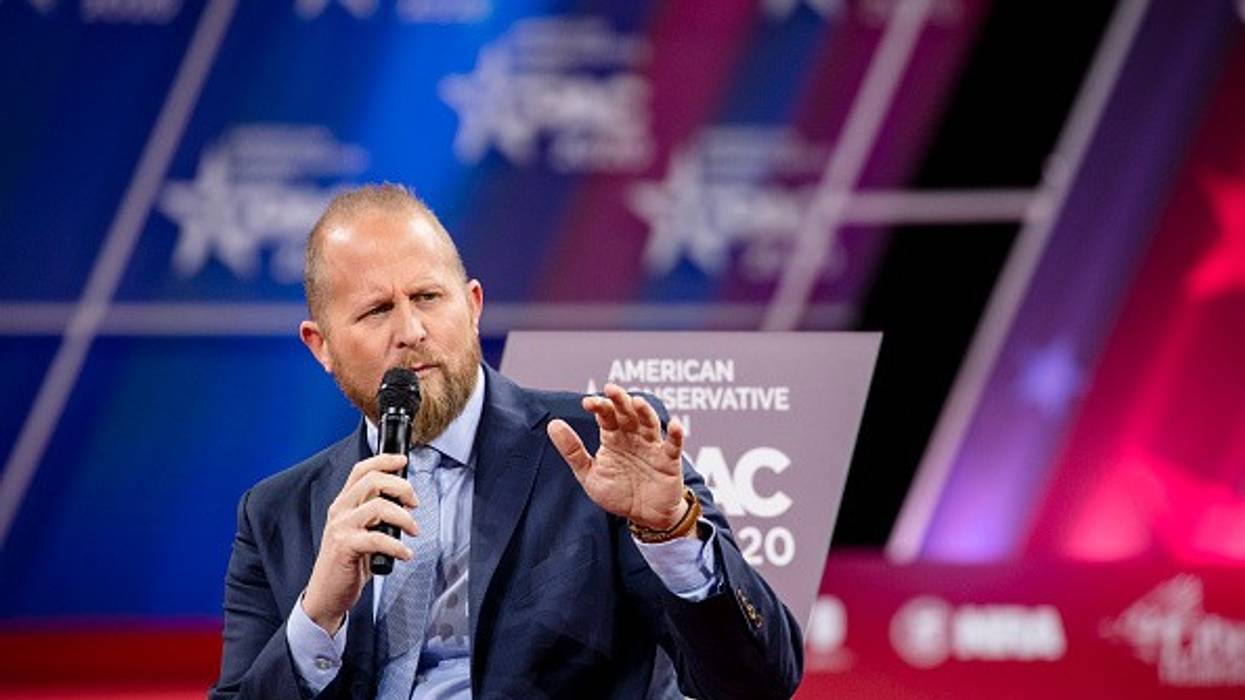
In a social media post, the Iranian diplomat pointed to a report in Time about Brad Parscale, Trump's former campaign manager, who is now a registered foreign agent of Israel conducting influence operations on behalf of its government.
"Americans are being warned of foreign influence," wrote Araghchi. "How about the extensive Israeli campaign to bamboozle the US administration into an unwinnable war of choice? Even worse: Israel is using US taxpayer dollars to silence any US critics. It will all soon unravel."
According to Time, Parscale's Clock Tower X firm last year signed an agreement to produce content across multiple platforms aimed at shoring up support for Israel among young US conservatives.
An anonymous Israeli Foreign Ministry official told Time that Parscale "presented himself as uniquely positioned to improve Israel’s reputation among young conservatives," while stressing "his experience at the helm of Trump’s political operation, with a grasp of both the architecture of the modern internet and the political movement Trump had built" during his three runs for the presidency.
"Three people familiar with the campaign describe a messaging operation run through a network of interconnected firms overseen by Parscale or other firms he owns or created," reported Time. "Through private group chats, they say, conservative influencers receive suggested language for posts on social media sites such as X, Instagram and TikTok. They were then compensated based on the impressions and engagement their content generated."
One Trump official told Time they suspected that Parscale was also behind an operation aimed at undermining the president's efforts to broker a deal to end his illegal war with Iran.
Parscale, however, denied pushing messages that attacked the deal shortly after its announcement.
"I have never funded, organized, or participated in any effort to undermine President Trump—ever—including his [memorandum of understanding] or ceasefire proposal," the former Trump 2020 campaign manager told the magazine. "The claim that I am coordinating an effort to prolong the war is completely false."
"He’s reviving conspiracy theories about mail voting, pushing voter suppression, and laying the groundwork for an unprecedented federal takeover of our elections."
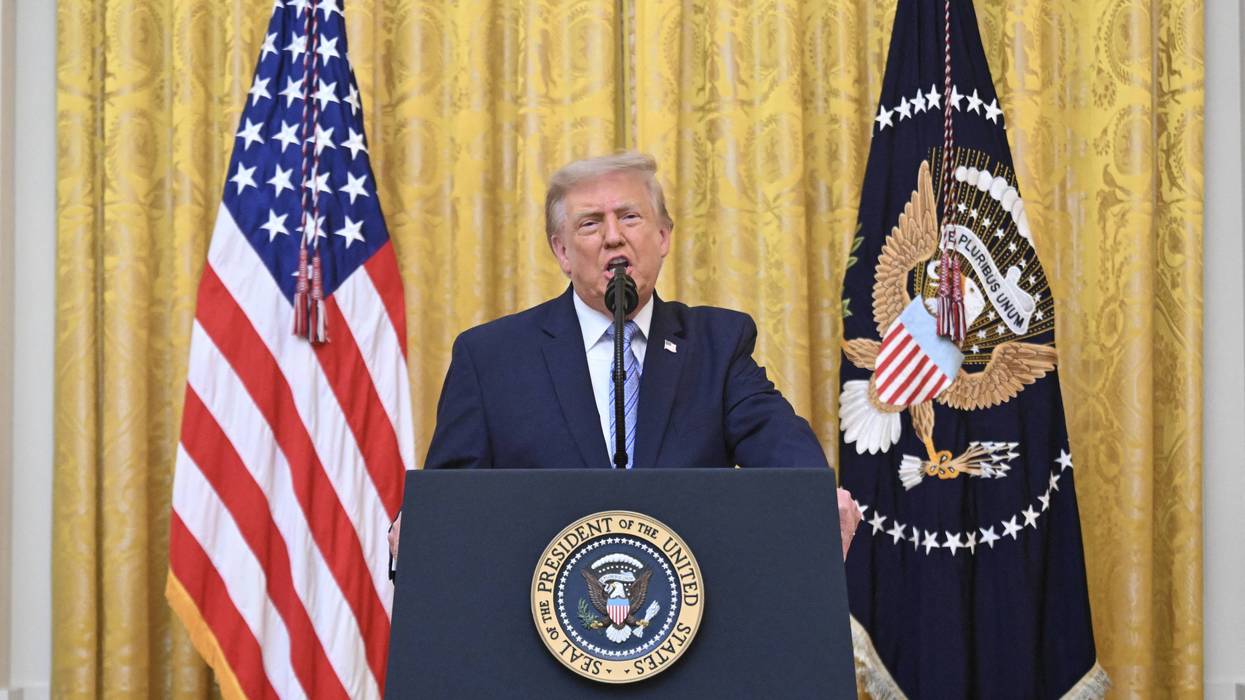
Four months out from the critical November midterms, President Donald Trump delivered a primetime address on Thursday night attempting to sow doubt about the integrity of US elections, repeating well-worn lies about the 2020 contest that he lost and claiming to have uncovered a sprawling Chinese plot to meddle in the voting process.
Trump, who has said his administration should "take over" US elections that are currently run by states, asserted in his speech that the American voting system was "left vulnerable to being rigged and stolen" by his political enemies and accused China of "illicit acquisition of 220 million US voter files" in an effort to undermine him. Trump's speech coincided with the declassification of intelligence purportedly revealing China's "sinister" scheme to disrupt US elections as well as attempts by "members of the Deep State" to "suppress and downplay" the scheme.
Experts and critics of the president said his speech cherrypicked intelligence agency findings to concoct a false, self-serving narrative about the vulnerability of US elections and the need for legislation such as the SAVE America Act, a voter suppression bill that Trump has obsessively worked to push through Congress.
Rep. Raja Krishnamoorthi (D-Ill.), a senior member of the House Permanent Select Committee on Intelligence, said in a statement that Trump "selectively declassified intelligence to try to rewrite the history of an election he lost."
"Even his own document release does not support his claim that the 2020 election was stolen. It confirms what we’ve long known: Foreign adversaries targeted our democracy, but there is no evidence they changed a single vote or altered the casting or counting of ballots," said Krishnamoorthi. "President Trump lost the 2020 election fair and square. If he cared about election security, he wouldn’t be putting unqualified political loyalists in charge of our intelligence agencies or weakening the agencies responsible for protecting our elections from foreign threats."
"Instead," Krishnamoorthi added, "he’s reviving conspiracy theories about mail voting, pushing voter suppression, and laying the groundwork for an unprecedented federal takeover of our elections—all while ignoring the real challenges facing American families.”
During his speech, Trump lashed out at major TV news networks for declining to broadcast his speech live and in full, accusing media outlets of being "part of the plot" and calling for the "revocation" of NBC and ABC's broadcast licenses.
Sen. Bernie Sanders (I-Vt.) called Trump's threat "insane."
"At a time when millions of Americans are finding it harder to pay for groceries, housing, and healthcare, when the climate crisis is causing record heatwaves and forest fires, Donald Trump felt it appropriate tonight to spew conspiracy theories about the 2020 election," said Sanders. "Pathetically, in true authoritarian fashion, he even threatened to revoke the licenses of ABC and NBC because they would not cover his speech."
"All of us, regardless of our political views, must stand together against this dangerous president who is seeking to undermine our Constitution and our basic freedoms," Sanders added.
"Trump is laying the groundwork to dismantle our elections, overturn results he does not like, cancel the will of the people, and hold onto power by any means necessary."
Trump's address cited "raw intelligence" that he said shows an attempt by China "to manufacture illegal ballots" for former President Joe Biden. The president claimed, without evidence, that the intelligence was maliciously "buried by rogue bureaucrats."
But, as The Washington Post observed, "raw intelligence reports are often wrong, incomplete, or contradictory, and spy agencies rely on judgments by expert analysts to vet and piece together the information to make conclusions with different levels of confidence."
"Officials in 2020 disagreed about whether China wanted Trump to lose and about whether Beijing took any steps to undermine him—a controversy noted in a declassified 2021 report. That report described consensus on the conclusion that neither China nor any other foreign actors had tampered with any votes," the Post noted. "The hundreds of pages of documents released online by the White House during Trump’s speech did not appear to support Trump’s contention that China interfered in the 2020 election to try to defeat him or that US intelligence officials deliberately hid information about Beijing’s intentions from him."
Robert Weissman, co-president of the advocacy group Public Citizen, characterized Trump's speech as an attempt to divert public attention from his administration's "catastrophic policy failures and plummeting approval ratings."
"Trump is waging an illegal, unconstitutional, and utterly pointless war that continues to put American and Iranian lives in jeopardy and drive up gas prices. Corporations are setting prices out of reach for people being paid too little," said Weissman. "Trump rammed through tax cuts for the rich, paid for by cutting healthcare and food assistance for millions and millions of people. An out-of-control paramilitary force is kidnapping people off our streets and killing them at shocking rates. Trump’s delusional rantings tonight are a transparent effort to distract from these realities."
Living United for Change in Arizona, a pro-democracy organization, warned that "Trump is trying to end our democracy in front of our very eyes."
"Tonight Donald Trump stood before the nation and attempted to rewrite history, erase the will of the voters, and prepare the country for his next assault on American democracy," the group said. "We must call this what it is. Donald Trump is laying the groundwork to dismantle our elections, overturn results he does not like, cancel the will of the people, and hold onto power by any means necessary."