

SUBSCRIBE TO OUR FREE NEWSLETTER
Daily news & progressive opinion—funded by the people, not the corporations—delivered straight to your inbox.
5
#000000
#FFFFFF
To donate by check, phone, or other method, see our More Ways to Give page.
Daily news & progressive opinion—funded by the people, not the corporations—delivered straight to your inbox.
Michael Galant, Win Without War: michael@winwithoutwar.org
Paul Kawika Martin, Peace Action: pmartin@peace-action.org
Today, 34 members of Congress sent a joint letter to Secretary of State Mike Pompeo and Secretary of the Treasury Steven Mnuchin urging temporary relief of U.S. sanctions on Iran to help reduce human suffering, increase access to medical supplies, and strengthen the Iranian people's ability to confront the coronavirus crisis. As the letter states "Pandemics know no borders. Allowing this crisis to become more dire in Iran threatens significant harm not only to the people of Iran but also to people in the United States and around the world."
The #EndCOVIDSanctions campaign -- a nationwide coalition of progressive organizations and grassroots activists working to end the U.S.'s deadly blanket sanctions on Iran -- fully supports this letter. We applaud all signers, and particularly commend the champions who put it forth: Reps. Alexandria Ocasio-Cortez, Ilhan Omar, Jared Huffman, and Joaquin Castro and Sens. Bernie Sanders, Elizabeth Warren, and Ed Markey.
This congressional letter comes after the #EndCOVIDSanctions campaign sent a joint organizational letter with similar demands earlier this month, and on the heels of a national petition and call-in campaign to the U.S. Treasury Department, and specifically the Office of Foreign Asset Control (OFAC).
"The global coronavirus crisis should be a wake-up call," said Erica Fein, Advocacy Director at Win Without War. "Human security is tied across borders. We can't bomb, sanction, or otherwise strong-arm our way to safety. In the face of shared global problems, from the climate crisis to pandemics, we must rethink our approach to human security, and build a foreign policy that puts international solidarity and collaboration first."
Ryan Costello, Policy Director at National Iranian American Council (NIAC) Action, said: "The Iranian people will remember which nations came to their assistance in their hour of need, and which chose to maintain senseless sanctions to their detriment. Half measures, as attempted by the administration thus far, won't be sufficient to prevent sanctions from inhibiting humanitarian trade and punishing ordinary Iranians. Congresswoman Ocasio-Cortez and Sen. Sanders, along with all signers, deserve tremendous credit for leading this timely and bold effort that would deliver real relief and help contain the pandemic."
"I'm scared for my friends who are healthcare workers in Iran," said Nahid Soltanzadeh, Digital Organizing Fellow at MPower Change. "They are paying the price of U.S. sanctions, while being portrayed by the Iranian government as soldiers and martyrs. Broad-based sanctions don't 'target governments.' Just like wars, they kill ordinary people." Says Nahid Soltanzadeh, an Iranian digital organizer at MPower Change. "Iranians have been fighting for their own liberation and self-determination for years -- sanctions have only hurt our cause. A global pandemic calls for global solidarity and justice. And that's why MPower Change members are calling on Sec. Mnuchin to suspend sanctions now."
Hoda Katebi, Iranian-American community organizer with the No War Campaign, said: "My loved ones live in Iran, and I am deeply concerned for their lives. My aunt is a doctor on the frontlines and has seen first-hand the massive shortages of medical supplies in hospitals. Dozens of Iranian doctors have already died for this reason. And every day that violent U.S. sanctions continue to block Iran's ability to fight coronavirus, the death toll continues to rapidly rise. If this virus has taught us anything, it is that our health and lives are deeply connected and interdependent on a global scale. The US must do its part in flattening the global curve and lift its deadly sanctions on Iran immediately."
"The sanctions have played a devastating role in the spread of the coronavirus by hindering access to life-saving medicine and medical supplies. As an Iranian-American who recently lost a relative in Iran to the virus, it's imperative that the administration heed the call of countless global health officials and organizations, dozens of Members of Congress, as well as the UN, to ease sanctions at this critical time. Iran has been one of the hardest hit countries by the coronavirus, and if it doesn't have the resources to mitigate this pandemic, humanity as a whole will suffer," said Yasmine Taeb, Senior Policy Counsel at Demand Progress.
Ju-Hyun Park, a member of Nodutdol for Korean Community Development, said: "The devastation COVID-19 has caused in Iran can't be separated from the long-term effects of US sanctions on Iran's economy and medical system. We should expect similar hardship in the 38 other countries currently sanctioned by the US. From North Korea to Iran, US sanctions cause widespread suffering and thousands of preventable deaths by disrupting economies, destroying livelihoods, and depriving people of basic goods like food and medical equipment. US insistence on maintaining and escalating sanctions against Iran during this pandemic demonstrates a ruthless disregard for the Iranian people. The US must cooperate with multilateral international peace efforts instead of using economic and conventional warfare to impose its will abroad."
"For years the Trump administration has imposed catastrophic maximum pressure sanctions on Iran, which has had the effect of depriving millions of innocent people of critical medical supplies," said Hassan El-Tayyab, Legislative Manager for Middle East Policy at FCNL. "This has compounded the suffering in Iran and limited their ability to slow the spread of COVID-19. As every nation in the world grapples with this global pandemic, it's critical to remember this virus knows no borders and that all human health is interconnected. The U.S. must lift the economic sanctions hurting Iran's ability to address the coronavirus and support the global cooperation needed to defeat this pandemic."
"It is cruel to enforce sanctions that devastate economies and hurt healthcare systems, especially during a global pandemic," said Erik Sperling, Executive Director of Just Foreign Policy. "It's morally wrong and counterproductive to pursue regime change by knowingly increasing death and suffering of innocent people. We are so grateful to Rep. Ocasio-Cortez and these Congressmembers for joining the global call for sanctions relief during this crisis."
""Before the pandemic, U.S. sanctions silently and slowly killed civilians by restricting access to medical supplies and medicine, causing food insecurity and wreaking economic havoc," said Paul Kawika Martin the Senior Director for Policy for Peace Action. "Now, the continued economic warfare waged by these sanctions will devastate more people and exacerbate the COVID-19 crisis. For humanitarian reasons and to stop the spread of the coronavirus disease the U.S. needs to lift sanctions that hurt ordinary people."
Win Without War is a diverse network of activists and organizations working for a more peaceful, progressive U.S. foreign policy. We believe that by democratizing U.S. foreign policy and providing progressive alternatives, we can achieve more peaceful, just, and common sense policies that ensure that all people--regardless of race, nationality, gender, religion, or economic status--can find and take advantage of opportunity equally and feel secure.
"Now it’s time for the Senate to act," said CodePink's Medea Benjamin. "Let’s keep the pressure on and send this resolution to Trump’s desk. No more illegal wars. No more blank checks for militarism."
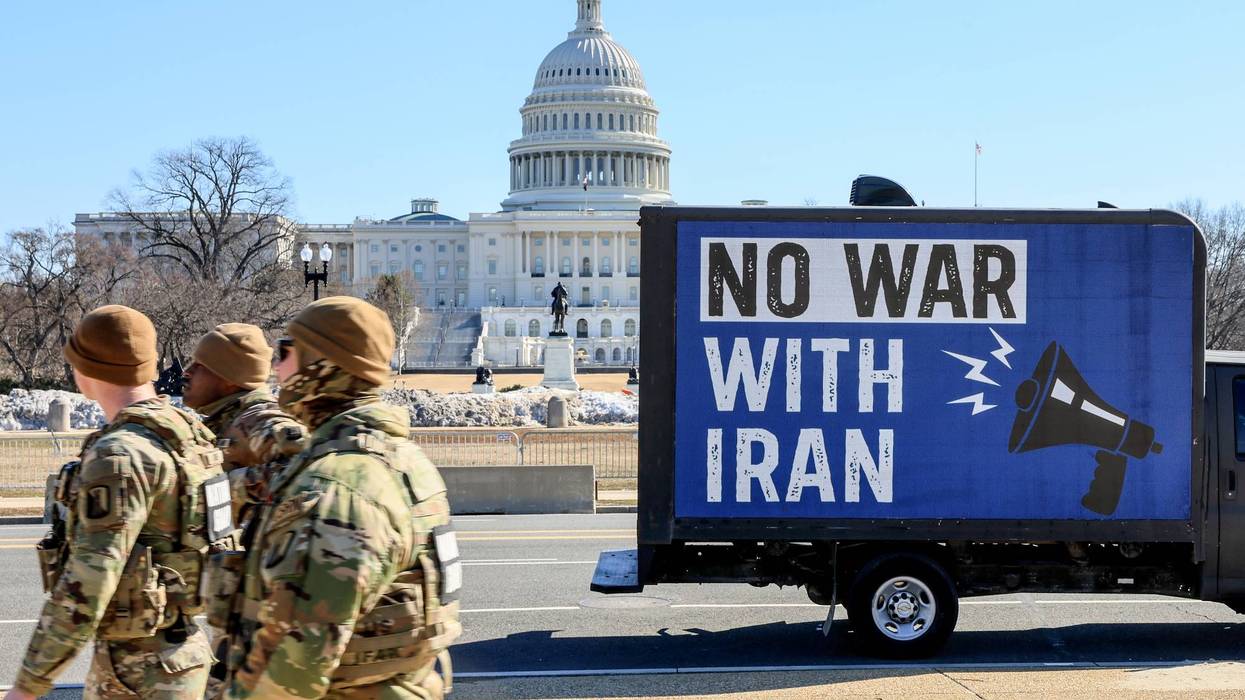
Raucous applause erupted in the House of Representatives on Wednesday after US lawmakers passed a war powers resolution aimed at ending Donald Trump's illegal war of choice against Iran—although skeptics cautioned that the measure will likely have little impact on the actions of a president who has habitually shown utter contempt for the rule of law.
House lawmakers voted 215-208, with 7 legislators not voting, in favor of H.Con.Res.86, introduced in April by Rep. Gregory Meeks (D-NY) and cosponsored by Reps. James Himes (D-Conn.), Adam Smith (D-Wash.), Gabe Amo (D-RI), Maggie Goodlander (D-NH), and Thomas Massie (R-Ky.).
Every Democrat present voted for the resolution, while three Republicans—Reps. Tom Barrett (Mich.), Warren Davidson (Ohio), and Brian Fitzpatrick (Pa.)—broke ranks with their GOP colleagues and joined Massie in voting to approve the measure, which directs Trump to "remove United States armed forces from hostilities with Iran."
“We are trapped in a war that won’t end because an incompetent president launched it thinking of only his own ego while failing to prepare for the consequences,” Meeks, the ranking member on the House Foreign Affairs Committee, said during floor debate ahead of Wednesday's vote. “Diplomacy is the only exit from this, not more bombing, not more bluster.”
The War Powers Resolution of 1973—also known as the War Powers Act—requires the president to notify Congress within 48 hours of committing troops to military action and limiting such action to 60 days, with a 30-day withdrawal period, unless lawmakers declare war or issue an authorization for the use of military force.
It's been 95 days since the US and Israel launched their war on Iran, which followed last summer's separate bombing campaigns by both allies. Since then, more than 3,400 Iranians—many of them civilians—have been killed and over 26,000 others wounded by airstrikes, while Iranian counterattacks have killed 13 US troops, 26 Israelis, and over 20 people in Gulf Arab states aligned with the US.
House lawmakers had tried and failed to pass Iran war powers resolutions on three previous occasions. Last month, after four US Senate Republicans helped Democrats advance one of the resolutions, GOP leadership in the House canceled two subsequent votes on the measure.
“Since President Trump’s illegal war of choice on Iran began, I have been extremely clear over and over again that Congress alone has the power to declare war," Rep. Pramila Jayapal (D-Wash.)—who did not vote Wednesday because she was in India due to a family health emergency—said in a statement. "This war has had disastrous effects for the American people and for the world in the nearly 100 days since Trump began it without congressional approval."
Jayapal continued:
"Waged with absolutely no imminent threat and no endgame, this war has already killed 13 US service members and injured many more; killed thousands of civilians in Iran and Lebanon, and displaced millions more; wasted billions in US taxpayer dollars that should have been spent on lowering healthcare and housing costs for Americans; and all while causing gas prices and grocery costs to skyrocket.
"The simple truth is that the American people are paying the price for Trump’s lawlessness," Jayapal added. “Every day that this war continues is a violation of our Constitution."
Rep. Yvette Clarke (D-NY) asserted that "our victory—while monumental—does not change the truth that this war never should have began, and never would have began, had the president not disgraced America and our laws to ensure that it did."
Rep. Mark Pocan (D-Wis.) said on social media: "The American people are tired of presidents abusing their power by spending billions of our taxpayer dollars on unnecessary wars. I urge the Senate to quickly pass this bill to end Trump’s illegal war in Iran."
Civil society groups opposed to the war applauded Wednesday's vote, which Medea Benjamin, co-founder of the peace group CodePink, called a "total rebuke of Trump."
"After 95 days of illegal war, Congress is finally enacting the will of the people, who overwhelmingly oppose President Trump’s disastrous war on Iran," Eric Eikenberry, government relations director at Win Without War, said in a statement.
"While congressional action is welcome, it is woefully late. Congress should not have taken over three months to pass a resolution that would force Trump to end this war," he continued. "Their delay has left millions of people struggling amidst unnecessary, unacceptable human and economic consequences."
"Lawmakers who've placed their loyalty to Trump over acting to determine when and whether the United States goes to war have failed both their constituents and their constitutional duty," Eikenberry added.
Naveed Shah, political director of the veterans' group Common Defense, said following the vote, "Veterans understand the costs of war better than most Americans, which is why we commend the Republicans who joined Democrats on this vote and showed the kind of courage and independence this moment demands."
"This was an important step toward ending a dangerous war and ensuring that the American people have a voice through their elected representatives," Shah added. "It is long past time to put guardrails on this brazen president, who launched us into an illegal war with Iran."
Alix Fraser, vice president of advocacy at Issue One, a group dedicated to reducing the role of money in politics, said in a statement that “today’s vote is a huge win for the Constitution and for the American people."
"The House finally had the political willpower to stand up to the president’s unconstitutional war," Fraser added. "Americans should celebrate this massive victory, but have every right to feel frustrated that it took this long for Congress to work on behalf of the people. That must change. Our democracy will not survive if Congress fails to uphold its responsibility to check executive power at this critical juncture."
“Every day that this war continues is a violation of our Constitution.”
Some observers noted that Wednesday's vote is likely to be largely symbolic, pointing to Trump's veto—and the Senate's failure to overturn it—of a 2019 bipartisan war powers resolution directing him to end US military support for the Saudi-led war in Yemen.
Still, lawmakers and advocates urged the Senate to pass the Iran resolution to uphold the rule of law and force Trump's hand.
"Ending this war is a moral imperative," said Rep. Don Beyer (D-Va.).
Rep. Ayanna Pressley (D-Mass.) implored upper chamber lawmakers to "immediately follow suit and act to end this war."
Rep. Melanie Stansbury (D-NM) posted on Bluesky: "Now it’s time to pass the Senate. The power to declare war has been with Congress. Now let’s get it done and end this war!"
Benjamin said: "Now it’s time for the Senate to act. Let’s keep the pressure on and send this resolution to Trump’s desk. No more illegal wars. No more blank checks for militarism."
"Americans know they’re being ripped off and are demanding accountability."
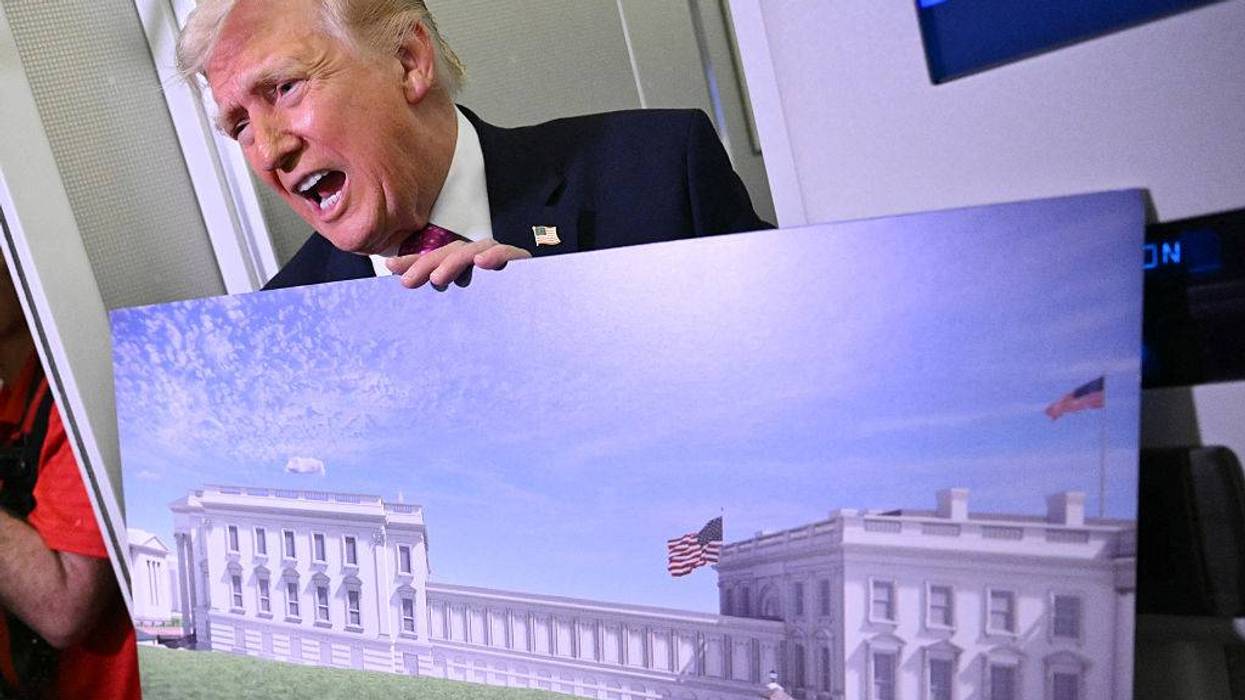
The American Economic Liberties Project and Groundwork Collaborative on Wednesday released a joint report detailing how President Donald Trump's unprecedented corruption is padding his own pockets at the expense of US taxpayers.
The report—titled "The Price of Corruption: How Trump's Pay-to-Play Administration is Driving Up Costs for Working Families"—explains how Trump isn't just using the presidency to enrich himself, but leaving ordinary Americans to foot the bill for his corrupt dealings.
The report notes that the TrumpRx website, which purports to offer Americans deep discounts on drugs, is actually a scheme for funneling even more money to large pharmaceutical companies.
"When Trump rolled out TrumpRX earlier this year, the administration claimed it was a way for Americans to access more affordable prescription drugs," the report states. "Instead, the platform fails to disclose information about less expensive generic alternatives and, in some instances, charges consumers more for products that are available for less elsewhere."
Rather than providing real relief, the report charges, TrumpRx "serves as free advertisement for Big Pharma and may be lining the pockets of the president’s eldest son, Donald Trump Jr., who is on the board of prescription drug platform BlinkRX, which stands to benefit from the administration’s promotion of direct-to-patient medicine sales."
The report also highlights the way that Trump has used his tariffs, which raise the cost of imported goods for US consumers, as a personal self-enrichment tool, such as when he slashed tariffs on Switzerland "just a few days after Swiss business leaders presented him with a personalized gold bar worth more than $130,000 and a Rolex desk clock."
Trump levied tariffs against Brazil last year in retaliation for that country convicting a political ally, former Brazilian President Jair Bolsonaro, of plotting a coup to illegally stay in power after he lost an election to current President Luiz Inácio Lula Da Silva.
"Americans paid the price for Trump’s international allies breaking the law," states the report, "as coffee imported from Brazil surged to a 40% increase in price."
One particularly egregious instance of Trump's corruption, the report explains, comes from the president's unprecedented number of pardons of political allies, including hundreds of rioters who violently stormed the US Capitol on his behalf on January 6, 2021.
Beyond the high-profile rioter cases, the report shines a spotlight on a number of white-collar criminals who have received presidential clemency, including Paul Walczak, "a nursing home executive convicted of tax evasion" who was pardoned "three weeks after his mother donated $1 million to Trump at a Mar-a-Lago fundraiser," and cryptocurrency mogul Changpeng Zhao, who received a pardon months after helping boost the Trump family's crypto venture.
The report notes that the Trump administration has also stacked regulatory agencies in ways that directly benefit the business interests of the president's family members, most prominently in the realm of online prediction markets tied to Donald Trump Jr.
"Over the past year, Donald Trump Jr. has served as a strategic advisor to Kalshi and a large investor in Polymarket, while the Commodity Futures Trading Commission (CFTC)—the agency overseeing these firms—has acted as their ally, rather than their watchdog," the report says. "Both firms had actively lobbied Trump’s CFTC to block states from regulating prediction markets in the same way they regulate gambling companies."
Morgan Harper, director of policy and advocacy at the American Economic Liberties Project, called the report on Trump's corruption "a reminder that we cannot afford to look away or pretend that any of this is normal."
"The country," Harper added, "is not Trump’s to liquidate."
Molly Claflin, senior fellow at Groundwork Collaborative, made the case that Trump's corruption and the economic pain being felt by Americans are inseparable.
“As working families buckle under the weight of Trump’s high prices, the president is further driving up costs by abusing his position to direct taxpayer-funded kickbacks to his family and political allies," said Claflin. "His erratic policymaking is making daily life more expensive. Americans know they’re being ripped off and are demanding accountability."

"This campaign has always been about the ideas that will move Maine forward and past a broken politics of the past—just what the electorate and this moment demands," said Platner.
Releasing new polling and fundraising data that has been gathered in recent days, Democratic US Senate candidate Graham Platner emphasized Wednesday that despite the latest wave of attacks by party consultants and the media, voters across Maine appear focused on "the cost of living and whether it still trusts" Republican Senator Susan Collins.
"This is a race against an incumbent losing her grip on the voters who put her there," said Platner. "Across the board—the poll numbers, the fundraising, the conversations with voters—all signs point in our favor."
On Tuesday and Wednesday, Public Policy Polling conducted a survey of 670 voters, and found that the presumptive Democratic candidate had the support of 49% of respondents, compared with 45% who backed Collins.
Six percent of voters said they were undecided, and those respondents largely voted for former Vice President Kamala Harris by a 23-point margin in 2024. They gave President Donald Trump a net -26 favorability rating, suggesting they're more likely to ultimately vote for Platner than the five-term Republican who cast decisive votes to help the president secure a right-wing US Supreme Court and has recently backed his invasion of Iran.
"Susan Collins is spineless and corrupt," said Platner on social media as his campaign released the internal polling results. "And in 153 days, we will defeat her."
The Maine Senate primary is being held on June 9. Platner's closest competitor, Gov. Janet Mills, suspended her campaign at the end of April after trailing him in polls and fundraising for months, making him the presumptive Democratic nominee.
The pollster surveyed Mainers after telling them about a former Platner campaign staffer's revelation over the weekend that the candidate's wife had told her about "sexually charged text messages" he sent to other women early in their marriage, an issue the couple says they worked through in counseling. The group also told voters that “critics say that Susan Collins used her position as US senator to help steer over $50 million in government contracts to her husband’s company."
When the voters were given the information, the four-point differential stayed the same, with Platner leading 48%-44%.
Platner said that over the past week, since the news broke about the couple's earlier marital struggles, the campaign has also "seen some of the strongest fundraising of the entire campaign."
Over four days following last Saturday, when the story set off a media firestorm, the campaign's fundraising was 17% higher than the previous four-day period.
It also saw an 18% increase in small-dollar donations overall, and a 27% increase in small-dollar donations that came from Mainers.
The campaign noted that media coverage on the ground in Maine this week tells a similar story to the one conveyed by the poll and the fundraising numbers.
On Tuesday, CBS News interviewed several voters who said the news about Platner's marriage and earlier controversies—none of which made a dent in polling for the candidate—would not change their voting plans.
Maine voters tells CBS News that Graham Platner’s sexting controversy won’t change their votes#MaineSenate pic.twitter.com/CNlNE6hp0J
— Politics & Poll Tracker 📡 (@PollTracker2024) June 2, 2026
A Maine resident named Anne Morrissey also told The Washington Post on Tuesday that she viewed the news of Platner's previous marital struggles as a "nothingburger."
"It's 2026," she said. "There are so many real problems."
Another voter, Tara Grady-Taylor, said the texting controversy “doesn’t change the amount of good he could do if he does the things he promises."
The Platner campaign described the message it is getting from Mainers as "steadfast."
"They care that you’re fighting for their hospitals, their wages, their housing, and their kids," said Platner. "This campaign has always been about the ideas that will move Maine forward and past a broken politics of the past—just what the electorate and this moment demands."
Key Platner supporters in Congress have also called for the media to remain focused on the issues facing working families across the country, such as the rising cost of living, healthcare, and massive economic inequality—all of which Platner has made central focuses of his campaign.
When asked by The Associated Press on Monday whether he still supports Platner, Sen. Bernie Sanders (I-Vt.) replied, "Of course. Why would I not?"
“People can’t afford healthcare. Can’t afford groceries. Can’t afford to put gas in their cars," said Sanders. "And I think it might be a good idea if we focused on the important issues facing the working families of Maine and this country."