May, 22 2020, 12:00am EDT

U.S. Unprepared for Nuclear Accident During Pandemic
Michigan floods expose impossible challenges of mass evacuation during Covid-19
TAKOMA PARK, MD
Two dam failures and catastrophic flooding in central Michigan, which also prompted a low-level emergency notification (NRC event #54719) at a nearby nuclear research reactor in Midland, have exposed the almost impossible challenge of evacuating people to safety during simultaneous catastrophic events.
The sudden need to evacuate large numbers of people from severe flooding -- also threatening to compromise a Dow chemical facility that uses a research reactor -- during a time of national lockdown due to the Covid-19 pandemic, raises "serious questions and concerns about the emergency response readiness and the viability of evacuation that might simultaneously include a radiological accident," said Paul Gunter, director of the Reactor Oversight Project at Beyond Nuclear, a national anti-nuclear advocacy organization.
Michigan authorities were forced to face a "no-win compromise" between protecting the public from exposure to Covid-19 while at the same time moving people out of harm's way, after heavy rains caused failures at the Edenville and Sanford dams, leading to devastating floods. The Dow plant insists there have been no chemical or radiological releases, but the situation will be evaluated once floodwaters recede. Fortunately, no full-scale commercial nuclear power plant was in the path of the Michigan floods.
Operating nuclear power stations are required by federal and state laws to maintain radiological emergency preparedness to protect populations within a ten-mile radius from the release of radioactivity following a serious nuclear accident. These measures include mass evacuations.
However, many communities around the nation's 95 commercial reactors are presently sheltering-in-place at home as a protective action during the Covid-19 pandemic.
"The Michigan flooding has forced the relocation of thousands of citizens from their stay-at-home shelters into the social distancing challenges of mass shelters," Gunter said. "Evacuating tens of thousands from a radioactive cloud to mass shelters, as is presently planned during a nuclear emergency, raises difficult if not impossible choices under pandemic conditions."
In fact, a Memorandum of Understanding (MOU), Sect.03.02, p.2, between the U.S. Nuclear Regulatory Commission (NRC) and the Federal Emergency Management Agency (FEMA) already obligates the federal government to re-exam radiological emergency plans around nuclear facilities specifically in response to a pandemic, and to identify any shortcomings, deficiencies and enhancements that might be needed under such conditions.
But to date, neither agency has publicly taken the initiative to do so. In fact, the NRC actions are focused on relaxing safety measures required by operating licenses, resulting in extended work hours for reactor operators and security guards, and deferred safety inspections and repairs for as much as another 18 months. This makes an accident more likely.
"Given what we see in Michigan, the NRC and FEMA should lose no time in reviewing the viability of their radiological emergency plans, and publicly take action to make any necessary enhancements or shut these nuclear facilities down," Gunter said.
Beyond Nuclear has identified two such actions under the MOU as vital to public health:
- NRC and FEMA must conduct a "Disaster Initiated Report", as mandated by the MOU, on the adequacy of offsite radiological emergency response plans during the pandemic, and;
- Federal and state response plans need to be bolstered by the immediate pre-distribution of potassium iodide (KI) tablets by direct delivery to every resident within the ten-mile radius of U.S. nuclear power stations, now, before any accident occurs. This is in accordance with disaster medicine expert recommendations including from the American Thyroid Association (ATA).
KI, if taken promptly in advance or shortly after exposure to radioactive iodine, is recognized by the US Food and Drug administration as a safe, inexpensive and effective prophylactic prevention for thyroid cancer and other developmental disorders caused by exposure to highly mobile iodine-131. Radioactive iodine is a gas released early in a serious nuclear accident.
KI is particularly important for the protection of infants, young children and pregnant women and should be readily on hand, according to the ATA and the American Academy of Pediatrics.
The ATA further recommends stockpiling KI tablets in schools, hospitals, police and fire stations from 10 miles out to 50 miles from every nuclear power plant. These institutions could then serve to pre-distribute KI free through the mail upon request to every home and business within 50 miles of an operating nuclear plant.
"KI is a critical adjunct to evacuation, but it should not replace evacuation from a nuclear accident, even during a viral pandemic," Gunter said. "If faced with an immediate threat to life, perhaps even a triple threat such as an extreme flood, a nuclear accident and Covid-19 exposure, evacuation must be the immediate decision," he said.
"But at least having KI tablets on hand provides for a reasonable protection from the radioactive iodine, a fundamental human right while seeking to shelter farther away from a nuclear accident," Gunter added.
"The prospect of a nuclear disaster prompting a mass evacuation during a viral pandemic reinforces the need for an energy policy focused on safe, clean and affordable renewable energy," said Gunter. "It's time to remove the added and unnecessary danger presented by the 95 nuclear reactors still operating in the US today, and transition to a rapid phaseout before a nuclear emergency during a pandemic becomes a nightmarish reality."
Beyond Nuclear aims to educate and activate the public about the connections between nuclear power and nuclear weapons and the need to abandon both to safeguard our future. Beyond Nuclear advocates for an energy future that is sustainable, benign and democratic.
(301) 270-2209LATEST NEWS
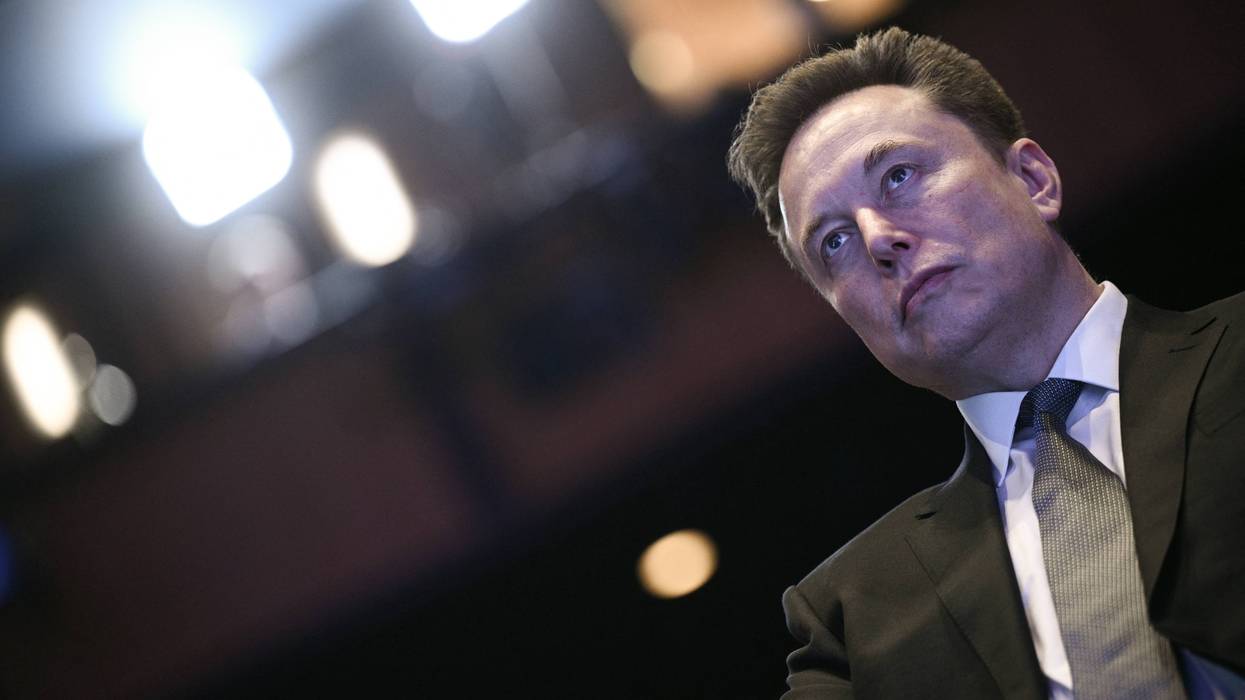
Destruction of East India Company Gives US Lawmakers a Blueprint for Confronting Big Tech: Historian
The instruments to take apart entrenched corporate power "still exist," but current governments are "lacking... the political nerve to use them," said historian William Dalrymple.
Aug 28, 2026
A historian who has written four books about the British East India Company is warning that big technology companies in the US are amassing similar levels of unchecked power and will need to be reined in.
In a New York Times op-ed published on Friday, William Dalrymple described how the British government eventually realized that it had allowed the East India Company—key to the British Empire's rise in the 18th and 19th centuries—to become too powerful and decided to finally clamp down.
The situation faced by the British Parliament in the 19th Century was strikingly similar to the situation faced by US lawmakers today, Dalrymple explained, as the East India Company had spent decades spending money to capture influence within the government.
"Around one in 20 members of Parliament sat on the East India Company’s board," the historian wrote, "and more than a fifth of the company’s directors sat in Parliament at some point; about 40% of members of Parliament were shareholders."
In the contemporary context, the executives of the nation's largest tech firms are spending lavishly to curry favor with lawmakers and government officials of both major parties
Writing in The Nation last month, investigative journalist David Moore detailed the massive political spending of major tech firms in the 2026 midterms, noting that "Super PACs working on behalf of crypto, AI, and AIPAC donors are the highest-spending groups on independent expenditures to influence voters this cycle—combining to spend more than $180 million so far, according to a review of Federal Election Commission records."
In addition to political clout, the East India Company in its day also had the power to raise its own army, which at its peak topped 200,000 soldiers, twice the size of England's own armed services.
Dalrymple pointed out that this is one power that today's Big Tech firms do not have, although he argued that they have been increasingly integrating themselves into the US military-industrial complex.
"In June 2025 the US Army commissioned the chief technology officers of Palantir and Meta and OpenAI’s chief product officer as lieutenant colonels in a new Reserve unit," he noted. "The new dispensation puts tech executives straight into a position of federal power, which in one way puts them ahead of their 18th-century counterparts."
The government finally dropped the hammer on the East India Company, Dalrymple said, after the bloody Indian Rebellion of 1857, as they feared the firm's "greed and self-interest" would cause the British Empire to lose what it considered its most valuable colony.
"The company’s navy was disbanded and its army passed to the Crown," wrote Dalrymple. "In 1858 the governor general of India announced that the company’s Indian possessions would be nationalized and pass into the control of the British Crown."
Less than two decades later, what was once the most powerful private corporation in world history shut down after the expiration of its charter.
What this shows, concluded Dalrymple, is that "states can master corporations," even if those corporations have their own private armies.
However, he said that while the instruments to take apart entrenched corporate power "still exist," it appears our current governments are "lacking... the political nerve to use them."
Dalrymple's op-ed was echoed thematically by a Friday op-ed written by SFGATE travel editor Silas Valentino, who argued that the city of San Francisco has not gotten any benefit from the current artificial intelligence boom, despite being the home of OpenAI and Anthropic, the world's two biggest AI firms.
In particular, Valentino argued that the AI firms have done nothing to give back to the city and alleviate its affordable housing crisis. In fact, Valentino found that the AI firms' initiatives in the city appear to be mostly self-serving.
"OpenAI says it has invested in our community, but so far, that’s meant less than a million dollars in 'SF civic contributions,'" Valentino wrote. "And worst of all, some of that is for things like AI training programs... That’s not improving the city; it’s OpenAI trying to make more money."
Valentino also noted that Anthropic last year teamed with the Tipping Point Community nonprofit group, which was founded by current San Francisco Mayor Daniel Lurie, to provide free training on the company's Claude chatbot.
"In the years since language models like ChatGPT and Claude proliferated to usher in the AI boom," the travel editor wrote, "I’m only counting negatives for nearly everyone trying to figure out a way to live here."
Valentino concluded by warning that if Lurie and his administration "don’t demand these companies start giving back and enhance our city for the better, they’ll continue ruining our city without pause."
Keep ReadingShow Less

'America Is For Sale': Trump Reportedly Trying to Hand Private Developer Part of Yosemite
"Government of the people, by the people, but for friends and donors of the president above everyone else."
Aug 28, 2026
Even while repeatedly serving the interests of destructive industries, President Donald Trump and Interior Secretary Doug Burgum have claimed they are committed to protecting US national parks—but the Republican administration is now working to give a private developer a piece of Yosemite, NOTUS reported on Friday.
Specifically, according to unnamed sources and government documents, federal staffers are working on a potential land exchange to give a quarter-mile strip of land in California's Yosemite National Park "to a company that, through a web of limited liability companies, is operated by real-estate developer and investment firm Kingsbarn Realty Capital."
The developers own 83 acres west of the park, and Kingsbarn CEO Jeff Pori—whose company did not respond to a request for comment—aims "to build a short road connecting the property to one of Yosemite's central thoroughfares," providing "the land exceptionally rare private access to a park that is otherwise almost entirely buffered by national forests," NOTUS detailed.
The sources told NOTUS that political leaders at the US Department of the Interior "want us to be responsive to the property owner and their lobbyists or people, and they want us to work with these folks," and that "the political pressure being brought to bear is very unusual."
The National Park Service, which is part of the department, said that "no final decisions have been made," but any proposals "would be subject to all applicable federal laws, regulations, and departmental policies, including required environmental review and public notification processes."
The revelation—which came during National Park Week—was met with outrage.
Ripping the possible "secretive, backroom deal," as "an attack on the American people that own this national park," Mark Rose, the National Parks Conservation Association's Sierra Nevada program manager, told NOTUS that "it would also be unlawful, and a court previously rejected a road development proposal."
We are opposed to private developers building driveways and special access into our parks. The ultra wealthy can wait in line and go through the gate just like everyone else. www.notus.org/agencies/tru...
[image or embed]
— AltYellostoneNatPar (@altyellonatpark.org) August 28, 2026 at 9:00 AM
While the looming land swap could move forward without any sign-off from Congress, House Natural Resources Committee Ranking Member Jared Huffman (D-Calif.) was among those who spoke out on social media Friday.
"Our parks belong to all of us," the congressman emphasized. "These places should be protected for every generation, not sold off to Trump's ultrawealthy friends to profit off of. I will fight this, both for Yosemite and for every treasured park that would be up for grabs if this domino falls."
Columnist and self-described "recovering attorney" Wajahat Ali declared, "America is for sale," and American Immigration Council senior fellow Aaron Reichlin-Melnick said, "Government of the people, by the people, but for friends and donors of the president above everyone else."
While other critics condemned the reported efforts as "disgusting," "sickening," and "shocking," journalist Chris D'Angelo commented, "I would say this is shocking, but things have been headed in this direction since Trump reentered office."
After Trump won a second term in 2024—having secured campaign funds from Big Oil, and run on a promise to "drill, baby, drill"— one of his early actions post-inauguration was declaring a "national energy emergency" intended to boost the climate-wrecking fossil fuel industry.
Since then, while cashing in on his second presidency—including via stock transactions made this year as fuel prices soared due to his illegal war with Iran—Trump has continued to push policies that help polluters and other rich allies. For example, last week the administration delivered a "one-two punch" to national forests, taking aim at a pair of rules intended to protect such lands.
The Center for Biological Diversity warned this week that the Trump administration's proposed repeal of the 2001 Roadless Area Conservation Rule would "open pristine public lands to road construction, commercial logging, and industrial development," and, according to the group's analysis, put 400 species on an "extinction fast track."
"More roads mean more sediment in streams, more fragmentation of wildlife habitat, more human access to places wildlife depend on for refuge, and more wildfires in forests already facing unprecedented climate change-fueled risk," the center stressed. "The roadless rule has held that line for a generation. Without it the losses to wildlife, water, and the wild places that define the American landscape will be irreversible."
Keep ReadingShow Less
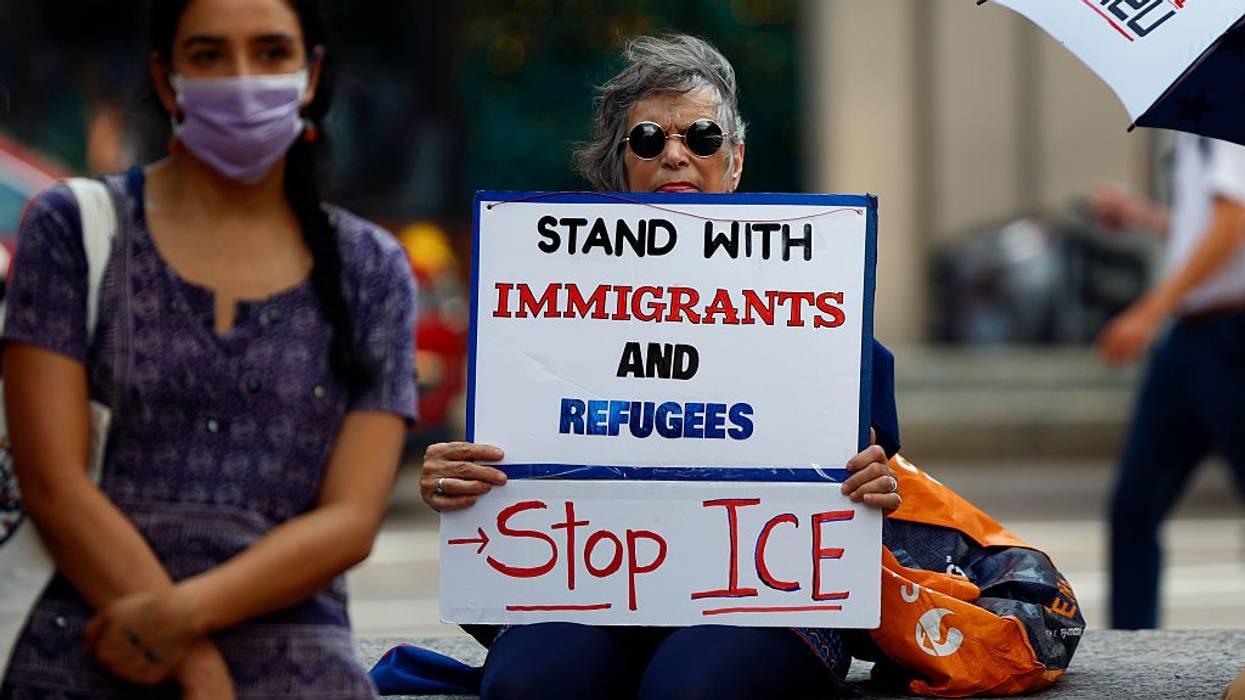
'Sadism': Trump DHS Boasts of Deportation Flight to Haiti in 'Propaganda' Video
"These are our neighbors and coworkers who were legally living and working here," said one advocate. "Stripping away their protections and then threatening them with deportation is cruel beyond words."
Aug 28, 2026
By releasing a video of Black men wearing handcuffs and prison uniforms being hauled onto a deportation flight, the US Department of Homeland Security appeared to be fulfilling a key objective of President Donald Trump's decision to terminate Temporary Protected Status for Haitian migrants, said one immigration policy expert on Thursday.
President Donald Trump "hates Haitians," said American Immigration Council senior fellow Aaron Reichlin-Melnick, "and the White House wanted videos of Black people in chains, so they stripped them all of status."
Reichlin-Melnick said the video, which also features a Haitian song and the text "Temporary Meant Temporary. Leave Now" on screen, was "propaganda for an audience of people that thrills to the sight of Black men being led in chains" and whom Trump's mass deportation agenda and racist attacks on Haitians, Somalis, and other refugee populations are aimed at satisfying.
The video was released a week after US Immigration and Customs Enforcement (ICE) sent a charter flight with 161 Haitians on board to Haiti, where gang violence, kidnappings, and humanitarian crises that have continued more than a decade after the 2010 earthquake have pushed the US State Department to maintain its highest "Do Not Travel" warning for Americans.
The administration said that flight would be the first of many, following the US Supreme Court ruling in June that allowed DHS to revoke Temporary Protected Status (TPS) for 350,000 Haitians and 6,000 Syrians.
The National Office of Migration in Haiti said last week that the Haitians aboard the ICE flight had not benefited from TPS, but were people who were facing removal proceedings due to criminal convictions or who had entered the US without authorization.
In the video—as in the Trump administration's persistent rhetoric about its mass deportation operation, which it claims is targeting "the worst of the worst" violent criminals—DHS suggested the Haitians who have been granted TPS for years pose a danger to the US public, despite the fact that criminal convictions make people ineligible for the protected status.
"TPS holders had been living and working legally and paying taxes," said Drop Site News—taxes, Reichlin-Melnick stressed, that do not permit them to benefit from federal assistance programs including the Supplemental Nutrition Assistance Program, Temporary Assistance for Needy Families, and Medicaid.
David Bier, the director of immigration studies at the libertarian Cato Institute, said the "sadism" depicted in the DHS video was "unrelenting."
The video was released as Archbishop Thomas Wenski of Miami called on the Trump administration to "rethink" its decision to end TPS for Haitians following an August 23 gang attack outside the country's capital of Port-au-Prince, in which at least 47 people were killed and at least 50 were kidnapped.
"The country is not safe, that Haiti is still a house on fire," Wenski told OSV News. "This should cause our administration to rethink its decision to send back into Haiti over 300,000 Haitians."
A bill introduced in the Senate by Sen. Ed Markey (D-Mass.) would extend TPS for Haitians through early 2029, and "would pass very easily" if Trump "would voice his support," said Wenski.
Cory Archibald of the anti-Zionist group Track AIPAC called for prosecutions of top White House officials including Trump, Homeland Security Adviser Stephen Miller, and Homeland Security Secretary Markwayne Mullin, "all the way on down to the masked chuds joyriding in this video and loading these men onto planes."
"All of them are guilty," she said, "and all of them should be prosecuted."
Keep ReadingShow Less
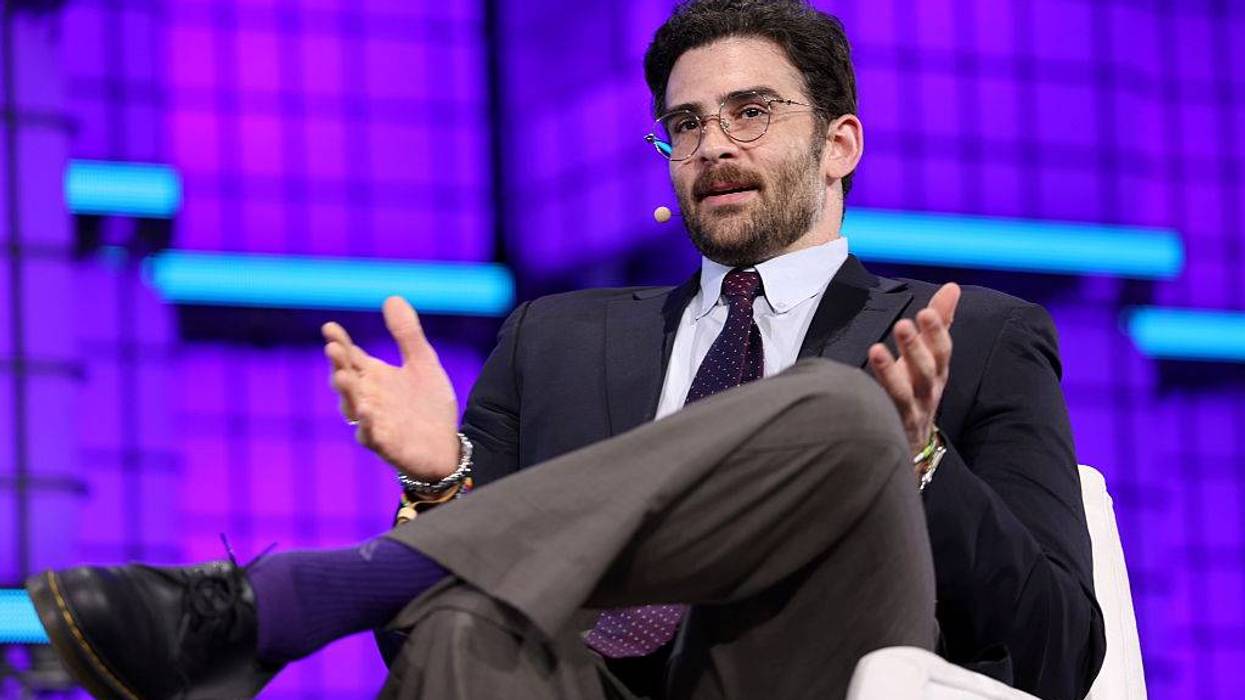
Progressives Warn Democrats Endlessly Invoking Hasan Piker to 'Get Their Shit Together'
"Every Democrat talking about Piker is handing the midterms to Trump."
Aug 28, 2026
Progressives this week have grown increasingly frustrated with the oxygen that Democratic lawmakers are wasting invoking the name of left-wing commentator Hasan Piker, warning that too many in the party are falling for a trap that so obviously favors President Donald Trump and Republicans with midterm elections just slightly more than two months away.
"Democrats need to get their shit together. I'm tired of hearing about Hasan," said Maurice Mitchell, national director of the Working Families Party, said in a social media post on Thursday.
"Whatever 3D chess you think you're playing is only pushing away real people," Mitchell added. "Stop obsessing over a streamer. We’re fighting authoritarianism here."
Chuck Idelson, a progressive Democratic voter and retired union official based in California, agreed.
"Exactly," Idelson said in response to Mitchell's declaration. "The obsession with Piker is the rabbit hole the GOP is counting on to focus the Democrats on anything other than the horror show of what Trump is doing to this nation. Every Democrat talking about Piker is handing the midterms to Trump."
As The Independent reports: "All of this is occurring under the spectacle of a national media frenzy surrounding Piker and the Democratic Socialists of America, whom journalists have made the focus of their questions to Democrats of all stripes. And some Democrats are beginning to air publicly their resentment over party leaders like Jeffries falling into what they call a Republican trap."
While much of the discourse around Piker is taking place on the airwaves and social media, Newsweek reported this week on an Echelon Insights poll conducted in April that "found that Piker remains largely unknown among Democratic voters," results that underscore "the gap between his enormous online following and his reach with the broader electorate."
Common Dreams reported earlier this week how critics have viewed the obsession with Piker on the part of establishment Democrats and certain members of the corporate media as a "mass psychosis event."
"I am begging everybody to spend less time arguing about Hasan Piker and more time attacking Republicans," said Mike Nellis, a City Councilman in Chicago representing the city's 32nd Ward, on Friday.
"The election is in about two month," added Nellis. "Lock the fuck in."
Keep ReadingShow Less
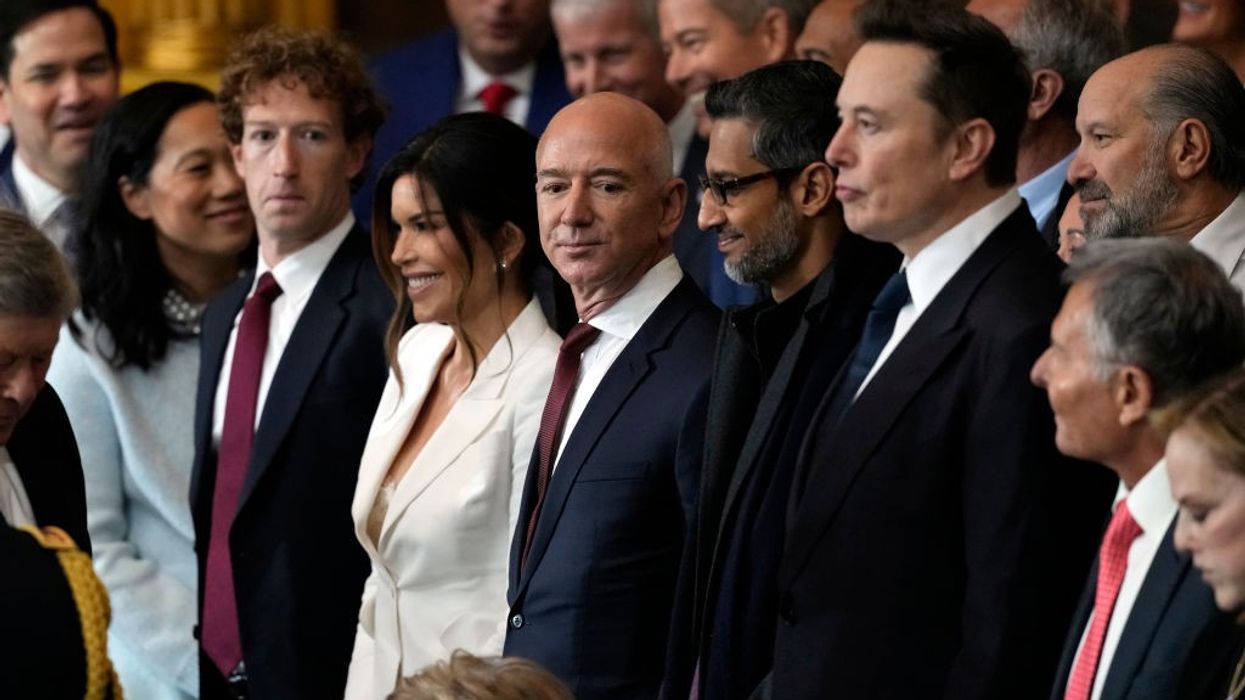
Watchdog Denounces 'Staggering and Disgusting' Hypocrisy of AI Industry Giants
"Put plainly, Silicon Valley is the problem threatening our ways of life."
Aug 28, 2026
Government watchdog Public Citizen on Thursday hit back at the artificial intelligence industry for warning about the dire threats posed by its own technology after it spent years trying to block any government regulations that could have curtailed dangerous AI behavior that experts and progressive lawmakers have warned about for years.
In an open letter sent on Thursday, dozens of tech companies—including OpenAI, Anthropic, Amazon Web Services, and Microsoft—claimed that there is a "limited window" to defend against AI-executed cyberattacks, which they said "will become far more widespread and sophisticated as models around the world become increasingly capable."
If nothing is done, the companies said, then crucial facilities "from hospitals to water treatment plants to the infrastructure that powers the internet" will be at risk.
The companies said that thwarting such AI cyberattacks would require a "global response" where governments will need to "fund cyber defense" and "give hospitals, water utilities, and local governments access to capable defensive AI, authorized testing, and hands-on support through trusted security providers and partners."
JB Branch, director of federal AI governance and technology policy at Public Citizen, urged lawmakers to be deeply skeptical of Big Tech’s messaging on the issue and the industry's proposed plan of action, which he said would further enrich Silicon Valley without providing any safeguards for the public when it comes to AI development.
"Big Tech does not get to unleash powerful AI systems, fight tooth and nail against meaningful regulation," said Branch, "and then cry for help when the dangers they helped create come knocking."
Branch noted that the tech industry has insisted for years that there should be no government intervention into developing technology, supposedly because it would put the US at risk of "losing" the AI race to China.
Now, Branch said, they are running to the government and demanding fast action to help solve a problem they created.
"That hypocrisy is equal parts staggering and disgusting," Branch said. "If the threat is serious enough to demand urgent action from the government, then it is serious enough to demand binding rules, independent oversight, and accountability from the companies creating it."
The AI firms' open letter comes as the tech industry appears acutely concerned about public backlash to its products. The Wall Street Journal reported on Friday that Big Tech firms who gave heavily to President Donald Trump have been scrambling to donate to Democratic candidates ahead of the 2026 midterm elections.
In particular, according to the reporting, many tech companies who donated to Trump's ballroom and other vanity projects fear that a Democratic majority will start subpoenaing them for records that could lead to criminal investigations.
Cooper Teboe, a Silicon Valley donor adviser and Democratic strategist, has told Trump-funding tech companies that they will pay a big price unless they repair their relationships with Democrats whom they've alienated by going all-in on MAGA.
"You’re going to be totally fucked next year or you’re going to figure it out this year and you’re going to make amends," Teboe said, "and amends are going to be much more costly than they were previously."
As Branch put it, "Big Tech knows it has lost public support on AI, and the PR machine is now working overtime."
Despite industry efforts to control narratives and members of Congress, he said, the American people "aren’t going to forget the harms these companies unleashed, the regulations they fought, or their promises that AI could replace their jobs."
"Silicon Valley is the problem threatening our ways of life," Branch concluded. "It’s hard to take them seriously when they invented the problem in the first place.”
Keep ReadingShow Less
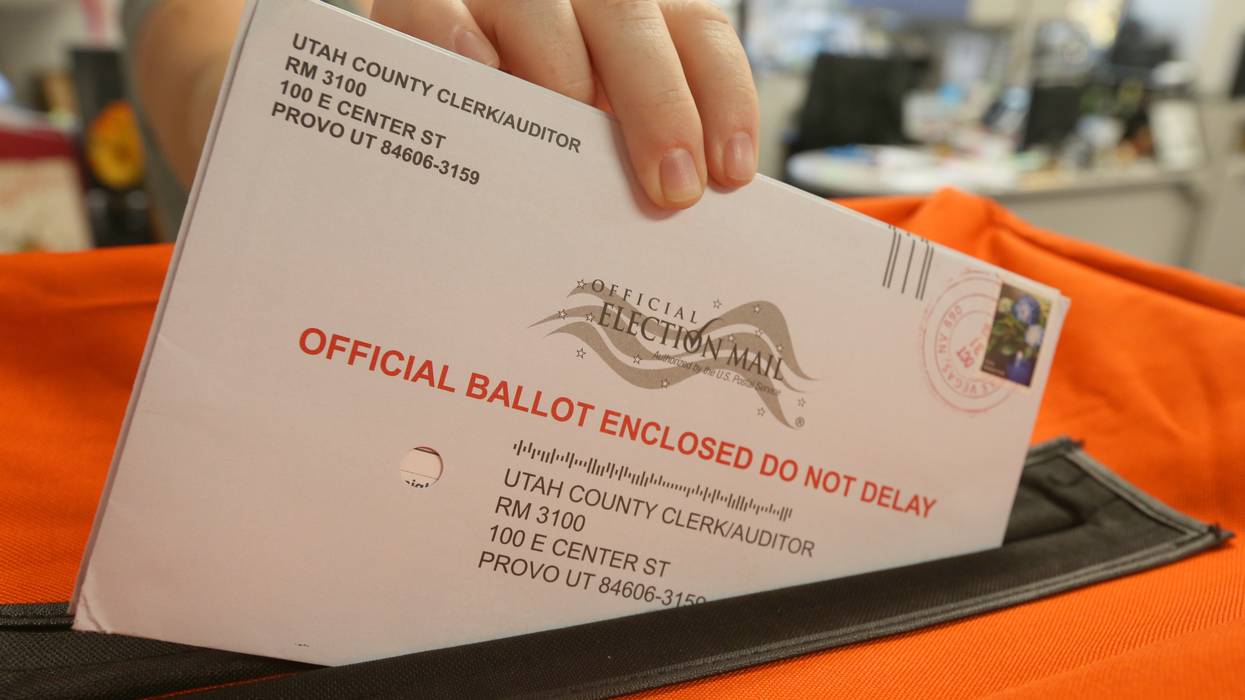
'Trump Must Keep His Hands Off Our Elections': Judge Again Blocks Attack on Mail-In Voting
US District Judge Indira Talwani said states will "face irreparable harm where they are required to comply with a likely unconstitutional regulation for which compliance is practically impossible as to the 2026 midterm elections," now just two months away.
Aug 28, 2026
A federal judge in Boston on Thursday evening issued a new and complete block on rules recently set forth by the US Postal Service designed to severely restrict mail-in voting nationwide—a ruling that comes just days after the US Supreme Court put a hold on a previous, similar injunction against the rules that stemmed from an executive order issued last year by President Donald Trump.
US District Judge Indira Talwani said the group of Democratic-led states and voting rights group that filed separate legal challenges over the changes to how the USPS would handle mail-in ballots adequately proved that they would "face irreparable harm where they are required to comply with a likely unconstitutional regulation for which compliance is practically impossible as to the 2026 midterm elections, now little more than two months away."
When the Supreme Court ruled Monday on the lawsuit, it lifted a previous injunction ordered by Judge Talwani, ruling not on the legality of the rules themselves but arguing that the states and other plaintiffs did not have proper legal standing at the time because the Postal Service had yet to release the finalized rules stemming from Trump's order at the time the lawsuit was filed.
However, because the USPS did finalize its rules at the end of last week, Talwani's new temporary injunction ordered on Thursday would not fall prey to that dynamic. As the New York Times reports:
[Talwani] wrote that while the Supreme Court had “admonished” her on Monday that the Postal Service had not finalized any changes when the groups sued initially, making court action premature, the stakes had changed since then because of the step the agency took Friday to formalize its plan.
Her ruling marked the third court decision on the issue in less than a week, a whipsaw of action that threatened to confuse voters. But each delay has reduced the administration’s chances of clearing the legal hurdles to execute its logistically complicated mail-in ballot plan before the November election. She blocked the rule from taking effect for 14 days, and she had previously scheduled a hearing to discuss the legality of the rule on Sept. 3.
In her order, Judge Talwani explained that the prospect of the new rule suddenly taking effect carried “significant risk of their members’ disenfranchisement” for voting rights organizations, which had also sued, along with the states.
Counsel and plaintiffs in the lawsuit by voting rights groups—led by the League of Women Voters of Massachusetts—issued a statement welcoming Thursday's decision.
“The Administration previously dismissed plaintiffs’ ongoing harms from the executive order as speculative, but the newly finalized rule confirmed what plaintiffs have been saying all along," the statement read. "The Rule implements the Executive Order’s unprecedented attempt to usurp electoral authority from the states and Congress at the expense of voters. We welcome the court’s order, which recognized the immediate need to protect the entire electorate from the damaging impacts of this unlawful final rule in the lead-up to November’s general elections. This is an important step towards affirming the public’s confidence in the system of mail ballots, which thousands of eligible voters nationwide rely on as a core method of democratic participation.”
After Monday's ruling by the Supreme Court, the group's behind the challenge vowed to keep fighting and introduced a new round of legal challenges.
"USPS’s decision to rush this blatantly unconstitutional rule into effect just weeks before an election is the latest step in a rollout that has sown confusion at every turn and now threatens to disenfranchise voters who did everything right. This is chaos by design, and voters are the ones who will pay for it,” warned Sophia Lin Lakin, director of the ACLU's Voting Rights Project, on Wednesday.
Attorneys General from the coalition of 24 states that had challenged the rule also welcomed Talwani's latest intervention.
“From the beginning, it’s been clear that President Trump doesn’t understand how elections work. He’s repeatedly broken the law, so we’ve repeatedly taken him to court,” said California Attorney General Bonta in a statement. “On Monday, the US Supreme Court issued an order on the emergency docket stating we brought our lawsuit too early but did not address the merits of our challenge to the President’s executive order seeking to impose additional, unlawful restrictions on the ability to vote by mail. Just two days later, consistent with that order, we sued to stop the illegal USPS rule in its tracks. Today, the district court blocked the rule, making it clear that President Trump must keep his hands off our elections. The right to vote is a foundational principle of our democracy, and we’re making sure it remains protected for everyone.”
With the Trump administration almost certain to appeal, the case is likely headed back to the US Supreme Court, likely on a fast track, to decide the legal merits presented by the challengers.
Keep ReadingShow Less
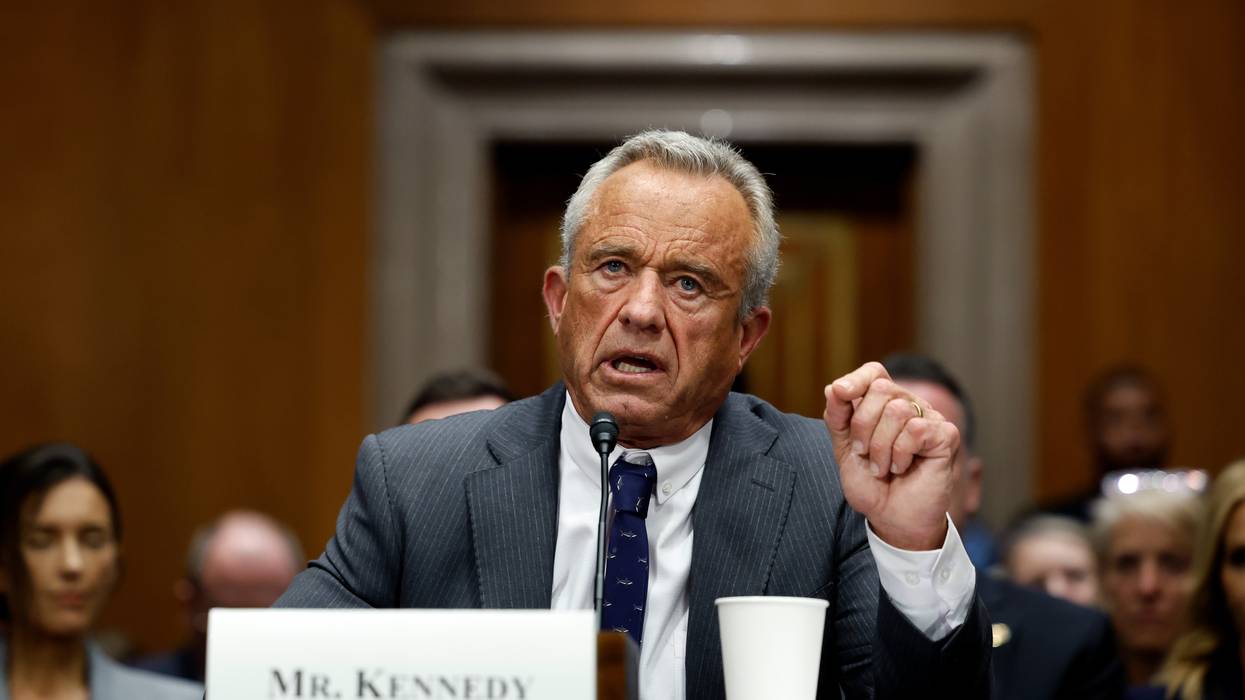
'RFK Jr. Lied to Congress': Criminal Probe Sought Over Samoa Trip Linked to 83 Measles Deaths
"He told us his Samoa trip had nothing to do with vaccines—now this letter shows that was false," Sen. Ed Markey said of President Donald Trump's health and human services secretary.
Aug 27, 2026
US Health and Human Services Secretary Robert F. Kennedy Jr. on Thursday faced calls for a criminal investigation after newly published documents appear to contradict his repeated testimony during Senate confirmation hearings that his 2019 trip to Samoa, which is linked to 83 measles deaths, “had nothing to do with vaccines.”
The advocacy group American Oversight on Thursday asked the US Department of Justice to investigate whether Kennedy knowingly made materially false statements during his 2025 Senate confirmation hearings. The request follows the publication of a January 2019 letter, signed by Kennedy and addressed to Samoa’s then-prime minister, Tuilaʻepa Saʻilele Malielegaoi, that explicitly proposed a vaccine-focused assessment of the Pacific island nation’s measles, mumps, and rubella (MMR) program.
“Robert F. Kennedy Jr. repeatedly testified before two separate Senate committees that his trip to Samoa had nothing to do with vaccines. But a letter he wrote to Samoa’s prime minister six years earlier appears to contradict that testimony,” American Oversight executive director Chioma Chukwu said Thursday in a statement.
“Congress relies on truthful testimony to do its job, particularly on matters as consequential as public health," Chukwu added. "If Kennedy lied to the Senate while seeking confirmation as the nation’s top health official, the Justice Department must investigate and hold him accountable.”
Questioned by Sen. Ron Wyden (D-Ore.) before the Senate Finance Committee, Kennedy said his trip had “nothing to do with vaccines,” describing it instead as an effort to introduce a medical informatics system to digitize the nation's health records.
The following day, when Sen. Ed Markey (D-Mass.) pressed him on the same issue before the Senate Health, Education, Labor, and Pensions Committee, Kennedy again said his trip had “nothing to do with vaccines.”
Markey's office released a statement Thursday noting that Kennedy "traveled to Samoa in 2019 to promote disinformation about the measles vaccine. Shortly after his trip, Samoa experienced a deadly outbreak of measles that killed over 80 people and has been attributed to mass vaccine disinformation."
My statement on new reporting that RFK Jr. lied to me in his Senate confirmation hearing.
[image or embed]
— Senator Ed Markey (@markey.senate.gov) August 27, 2026 at 1:47 PM
Of the 83 measles deaths during the outbreak, 72 were children under the age of 5. More than 1,860 hospitalizations in Samoa have been linked to the outbreak.
“New documents confirm what we already knew: RFK Jr. lied to Congress," Markey said. "He told us his Samoa trip had nothing to do with vaccines—now this letter shows that was false, just like it was false when he denied his role in the deadly outbreak that followed."
"This is a pattern, not a slip," he added. "RFK Jr. has lied to the Senate, lied to the American people, and jeopardized the health of children to advance his anti-vaccine agenda. He should never have been confirmed, and he cannot be trusted to run [the US Department of Health and Human Services] for even one more day."
Democratic Hawaii Gov. Josh Green, who is a physician, was invited by the Samoan government to help lead the measles response and recovery in the South Pacific archipelago.
“Misinformation and measles are a deadly combination—I saw that firsthand in Samoa," Green said on Thursday. "The truth is, this is a disease we know how to prevent. The MMR shot is the only proven and effective way to prevent the spread of measles."
"Vaccines save lives," he added. "Our public health decisions must be guided by doctors, scientists, and evidence—not conspiracy theories or political convenience. We owe it to every family to protect our children and communities, and make sure no one else dies from a preventable disease.”
The group 314 Action, which recruits, trains, and works to elect Democrats with expertise in science, published a statement Thursday noting that "now, America is facing its worst measles crisis in decades, and two more Americans have lost their lives to a disease we have long known how to prevent."
Public health experts have warned that the US is on track to lose its measles elimination status, which the country achieved in 2000, and blame the regression on declining vaccination driven by misinformation and conspiracy theories, including that vaccines are dangerous and even deadly.
Earlier this month, President Donald Trump signed an executive order overhauling federal recommendations for children that calls for separating the MMR vaccine into three individual shots.
"The only thing ‘lethal’ about vaccines is listening to RFK Jr.’s lies about them," said 314 Action. "America needs more leaders like Gov. Green who are willing to stand up to Trump and RFK Jr. and put public health over politics. We won’t stop fighting until RFK Jr. is fired or removed from office.”
Keep ReadingShow Less

Study Suggests Climate Crisis Is Supercharging 'Godzilla' El Niños
"We are seeing a trend of stronger El Niños, and the one we have now is consistent with that trend," said the lead author. "That is bad news for climate hazards and for people."
Aug 27, 2026
As the flooding disaster in Tibet and Nepal demonstrates the deadly consequences of the climate emergency, experts wrote Thursday in the journal Science that fossil fuel-driven global heating has intensified the warm phase of a key pattern in the Pacific Ocean.
The El Niño-Southern Oscillation (ENSO) has a warm phase, called El Niño, as well as a neutral phase and a cold one, La Niña. In June, scientists declared the start of a warm event nicknamed "Godzilla," which helped push last month's average global ocean surface temperature to the hottest ever recorded in July.
The current event is expected to become not only a super El Niño, but the most intense one on record—and it could contribute to 2027 possibly being the hottest year humanity has ever endured.
While ENSO is a naturally occurring phenomenon, the scientists behind the new paper studied coral skeletons from the Galápagos Islands and concluded that global warming—tied to humans continuing to burn fossil fuels—has intensified El Niño phases.
"Our findings suggest El Niño can supercharge global warming, but also global warming can supercharge El Niño—that is what we are seeing," said lead author Julia Cole, who chairs the University of Michigan's Department of Earth and Environmental Sciences.
The scientist also spoke with Inside Climate News, which noted that "the first documented super El Niño in 1982-83 killed about 95% of the shallow-water corals around the Galápagos Islands, right around the time Cole began her research career."
Based on the team's analysis, "after the El Niño in 1982, we start seeing much more variability; it's a lot more extreme and looks like nothing in the previous 1,000 years," Cole told The Guardian. "What surprised me was how consistent it was. There is just such a large, distinct difference between what has been happening in the last 40 years compared to preindustrial times."
As Inside Climate News reported:
When Cole visited the islands in 1989, many of the large mapped corals that could have served as sample material were gone, wiped out by the El Niño early in the decade and then decomposed quickly by organisms in the biologically active waters. But in 2006, her team discovered fossil coral remnants, often perched as boulders near remote east-facing coastlines, tossed inland by large waves or tsunamis.
Cole said the signal of El Niños intensified by human-caused warming would have been even stronger if the study had included the most recent occurrences. All the events categorized as super El Niños have occurred since the 1980s and have triggered flooding in East Africa, led to disease outbreaks, and intensified tropical storms. This year’s El Niño is intensifying drought in Indonesia, fueling widespread fires that are sending smoke and hazardous air pollution across Southeast Asia, Cole said. Her team is currently analyzing corals to show the changes from the El Niños in 2015-16 and 2023-24, she added.
"We are seeing a trend of stronger El Niños, and the one we have now is consistent with that trend—it's not a fluke. We are seeing a shift where El Niño doesn't look like what it did prior to industrial times," Cole said. "That is bad news for climate hazards and for people, particularly those who are badly impacted and yet have done little to cause climate change."
According to the United States' National Oceanic and Atmospheric Administration, consequences of El Niño include "increased rainfall across the southern tier of the US and in Peru, which has caused destructive flooding, and drought in the West Pacific, sometimes associated with devastating brush fires in Australia."
Dalhousie University marine scientist Boris Worm wasn't involved with the new study but told The Associated Press on Thursday that "El Niño is the most violent aspect of climate variability worldwide, with effects ranging from local fisheries collapse, to widespread coral die-offs to severe droughts, and food shortages around the world."
Experts are already worried about the latest El Niño's impact on food security and prices, with the United Nations World Food Program projecting earlier this month that almost 50 million more people worldwide face the prospect of acute hunger.
Pointing to late climate scientist Wallace Broecker's warning that "the climate system is an angry beast and we are poking it with sticks," Worm said that "human emissions are the stick, and El Niño is [one] of the 'angry' outbursts that can be so threatening to our collective safety."
Keep ReadingShow Less
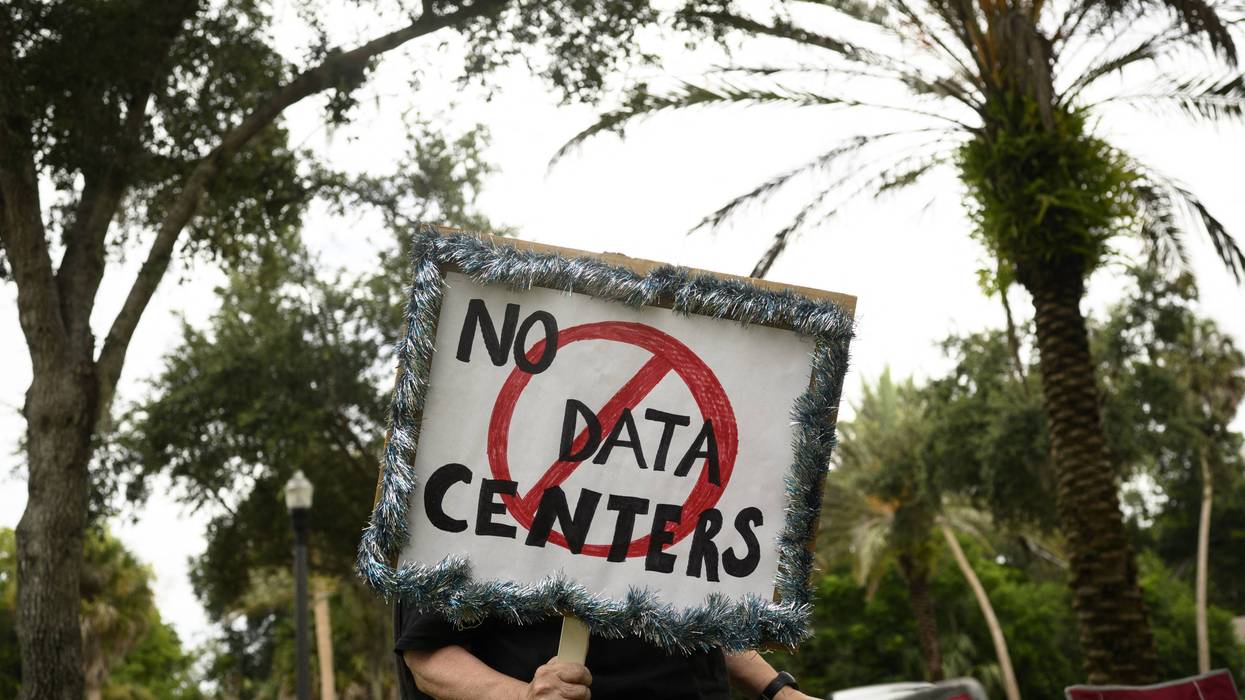
Investigation Exposes Massive New Jersey Data Center Operating Army of Polluting Generators Without Permits
“It seems that this industry, in particular, values speed to market more than almost anything else."
Aug 27, 2026
A joint investigative report published by Floodlight and The Guardian on Thursday revealed that one of the largest planned artificial intelligence data centers on the East Coast is operating dozens of gas-powered generators without permits in a possible violation of federal law.
Using a thermal drone to take footage of the Microsoft-backed DataOne facility in Vineland, New Jersey last week, Floodlight determined that the data center was operating 45 generators at once.
The investigation noted that the generators were operating roughly one mile from two different schools, and that the gas-powered generators used as the facility "emit substantial amounts of health-harming air pollution linked to asthma, heart attacks, and even premature death."
Bruce Buckheit, who previously served as air enforcement chief at the Environmental Protection Agency (EPA), told Floodlight that DataOne is likely violating federal law with its unpermitted generators, and he said the government should make the facility pay a fine for "illegal emissions."
Buckheit added that DataOne's apparent disregard for regulations appeared to be a common trait in the AI industry.
“It seems that this industry, in particular, values speed to market more than almost anything else,” he said.
A New Jersey Department of Environmental Protection spokesperson told Floodlight that the agency is investigating DataOne's use of gas generators but has yet to reach "a full compliance determination."
Local residents told Floodlight that they have for months complained about the nonstop humming produced by the facility, which they suspect is being caused by the generators.
"It's just constant," resident Andrew Groetsch told Floodlight of the noise coming from the facility. "It never goes away."
DataOne, which is projected to cover 2.5 million square feet upon its completion, has long been controversial.
In an interview with NBC Philadelphia published earlier this month, Vineland resident Peggy Schumacher said that the noise from the data center has gotten so bad that it's making her neighborhood "unlivable."
"We are a mile away," Schumacher explained, "and the vibration in our house is horrible now."
Fellow Vineland resident Tallis West offered a similar description of living near DataOne in an interview with CBS News published in May.
"Outside is not even enjoyable to sit outside because of the noise sometimes," West said. "We can't enjoy being outside anymore."
Despite the objections of many local residents, the Vineland Planning Board earlier this month voted to approve the second phase of construction at the facility.
The tech industry's rapid buildout of AI data centers is getting major pushback from voters across the US, as residents issue complaints about both pollution and energy consumption that has been raising their utility bills.
Sen. Bernie Sanders (I-Vt.) and Rep. Alexandria Ocasio-Cortez (D-NY) earlier this year proposed a moratorium on new data center construction.
Keep ReadingShow Less

'Democracy Is Under Attack': Civil Rights Lawsuit Aims to Block Trump Assault on Mail-In Voting
“These mail-in ballot restrictions threaten to disenfranchise millions of eligible voters who rely on mail voting to participate in our democracy," said one advocate.
Aug 27, 2026
A day after a federal judge lifted her injunction on President Donald Trump's executive order targeting mail-in ballots, a quartet of civil rights groups on Thursday filed fresh claims in their lawsuit challenging the administration's weaponization of the US Postal Service to attack the right to vote under the pretense of fighting nearly nonexistent fraud.
The Lawyers’ Committee for Civil Rights Under Law, NAACP, Common Cause, and Black Voters Matter Fund argued in the US District Court for the District of Columbia that Trump’s March 31 executive order unlawfully attempts to federalize important parts of election administration—especially voter eligibility verification and mail-ballot delivery—by presidential fiat, without authorization from Congress, while creating serious risks of disenfranchisement and misuse of personal data.
The plaintiffs—and many legal experts—argue that the US Constitution gives the states and Congress the authority to regulate federal elections, not the president.
"Our democracy is under attack," NAACP president and CEO Derrick Johnson said Thursday in a statement. "No federal entity should be allowed to implement last-minute rules that disenfranchise voters and override state election laws."
"This new USPS rule is a direct assault on the fundamental freedoms of millions of Americans—particularly Black voters, communities of color, seniors, military members, and rural residents—just weeks before a critical election,” Johnson added, referring to November's pmidterms. "We will not stand idly by while the voices of the people are silenced. We must protect every eligible citizen’s right to cast their ballot.”
Damon Hewitt, president and executive director of the Lawyers’ Committee for Civil Rights Under Law, warned that “these mail-in ballot restrictions threaten to disenfranchise millions of eligible voters who rely on mail voting to participate in our democracy while balancing work, caregiving responsibilities, disabilities, and other realities of daily life."
"The Trump administration is trying to limit access to the ballot, sow confusion at the polls, and to use the ensuing chaos as an excuse to exert power over agencies and processes in a politicized way," Hewitt added. “We will not let this or any administration further undermine our democratic process. We will fight to ensure our elections are free and fair, and that eligible voters are not shut out—especially Black voters and other voters of color, who are frequently targeted by voter suppression schemes.”
Several courts had ruled against Trump's order. But this week, the US Supreme Court cleared the way for the administration to proceed with its plans, and on Wednesday US District Judge Indira Talwani, an appointee of former President Barack Obama, was compelled to lift her injunction on the executive order as a result of the high court's decision.
Also on Wednesday, the groups behind the case before Talwani moved to block the Postal Service rule, as did a coalition of two dozen Democratic state attorneys general, whose initial challenge had resulted in the ruling from the Supreme Court—which found that the AGs filed their first suit prematurely.
Republicans including Trump—who has repeatedly voted by mail—have used fearmongering and disinformation to push the nearly nonexistent “threat” of voter fraud, especially in regard to mailed ballots, and noncitizens voting in US elections.
“Mail-in voting is so safe that even the president has used it twice this year,” Common Cause president and CEO Virginia Kase Solomón said on Thursday. “The Postal Service exists to deliver our mail, not to be weaponized by this administration to silence voters. Common Cause will keep fighting to protect a democracy where people choose their leaders—not the other way around.”
Trump’s March order is part of a broader attack on voting rights that includes pushing an updated version of Republicans’ so-called SAVE America Act, which would mandate proof of citizenship and strict photo ID requirements to register to vote in federal elections. The legislation, which was passed by the House of Representatives in February, is stalled in the narrowly split Senate, where it lacks the support of 60 lawmakers needed to avoid a Democrat filibuster.
"Mail-in voting gives people the freedom and flexibility to participate in our democracy, and we should be honest about what these efforts to restrict it are really doing: creating barriers to the ballot under the guise of election security," Black Voters Matter Fund co-founders Cliff Albright and LaTosha Brown said in a joint statement Thursday. "We are not fooled. This is the same old playbook—manufacture confusion, create unnecessary hurdles, and chip away at voting access."
“When the same politicians who defend their own access to mail-in voting move to restrict that access for others, the hypocrisy is hard to ignore," Albright and Brown continued. "We cannot allow voter suppression to be repackaged as voter protection or allow political interference to determine who gets to participate and whose voice counts."
"This is not about making democracy more secure; it is about reshaping who can fully participate in it," they added. "We will continue to call these efforts what they are and fight for every eligible voter’s freedom to make their voice heard.”
Keep ReadingShow Less
See More
Most Popular