SUBSCRIBE TO OUR FREE NEWSLETTER
Daily news & progressive opinion—funded by the people, not the corporations—delivered straight to your inbox.
5
#000000
#FFFFFF
To donate by check, phone, or other method, see our More Ways to Give page.


Daily news & progressive opinion—funded by the people, not the corporations—delivered straight to your inbox.

Stefanie Spear, sspear@asyousow.org, 216-387-1609
Today, at the annual meetings of two fossil fuel majors, 46% of investors voted to support a shareholder resolution at Chevron and 25% at Exxon, according to preliminary results announced at the meeting. The proposals, filed by shareholder advocacy group As You Sow, ask Exxon and Chevron to report on the public health risks of expanding petrochemical operations in areas increasingly prone to climate change-induced storms, flooding, and sea level rise. The same proposal received a majority 54.7% vote at Phillips 66 earlier this month.
"These investor votes demonstrate increasing concern for companies expanding petrochemical operations in areas that are facing climate-related physical impacts like stronger and more frequent storms and flooding," stated Lila Holzman, Energy Program Manager of As You Sow. "Company disclosures that indicate clinging to status quo risk management practices are clearly insufficient."
This is the second year this proposal has gone to a vote at Exxon, with last year's proposal having received the same notable 25% of shareholders in support. Since then, Exxon has failed to acknowledge the significance of its investors' concern and has made no substantive changes to its related disclosures since the vote in May 2019.
While climate impacts pose clear and growing risk to petrochemical operations and surrounding communities, Exxon and Chevron continue to contribute to that climate risk with their greenhouse gas-intensive, business as usual, operations -- despite the global energy transition away from fossil fuels. As You Sow has sought information as to whether the companies have any future plans to reduce their full carbon footprints, filing shareholder resolutions on the topic of Paris alignment with Exxon and Chevron; rather than respond, both companies have denied shareholders the right to vote on this critical issue by challenging the proposals at the U.S. Securities and Exchange Commission.
"Exxon and Chevron continue to give lip service to the goals of the Paris Agreement, while failing to clarify for investors if or how they will reduce their emissions in alignment with the Paris Agreement's critical 1.5 degree Celsius goal," stated Danielle Fugere, President of As You Sow. "Rather than meet the science head on, with proactive plans and long-term business strategies responsive to the global energy transition, Exxon and Chevron's focus appears short term as they lag their European peers. Their actions are exacerbating the climate crisis and, in turn, putting their own operations, communities, and investors' portfolios at risk."
Both companies have made a significant push into carbon-intensive petrochemical investments across the flood-prone Gulf Coast. These petrochemical operations include facilities that also produce dangerous pollutants, such as benzene, volatile organic compounds (VOCs), and sulfur dioxide. Such facilities can become inundated during extreme weather events and release toxic chemicals as they experience upsets and malfunctions.
During Hurricane Harvey, some estimates found roughly two million pounds of hazardous air pollutants were emitted from local oil refineries and chemical plants around the Houston area. One report found Chevron Phillips Chemical Company (a joint venture of Chevron and Phillips 66) was responsible for more than 745,000 pounds of storm-related pollution and Exxon 560,000 pounds, the second and fourth largest pollution releases during Harvey respectively. Following the storm, local community members reported health impacts such as respiratory illness, nausea, and headaches, among others. Some health impacts may be long-term and worse than captured by initial incident reports.
"Shareholders are also concerned that Exxon and Chevron are allocating significant resources to risky petrochemical investments at a time when trends show that plastic use must be limited due to its significant carbon footprint in addition to the growing global backlash against ocean plastic pollution," commented Holzman. "This concern is exacerbated because the companies do not appear to sufficiently account for physical climate change impacts in their planning processes, thereby exposing themselves, their shareholders, and their communities to more avoidable and unacceptable risks."
To learn more about As You Sow's work on climate change, click here.
As You Sow is the nation's non-profit leader in shareholder advocacy. Founded in 1992, we harness shareholder power to create lasting change that benefits people, planet, and profit. Our mission is to promote environmental and social corporate responsibility through shareholder advocacy, coalition building, and innovative legal strategies.
"When we do get ICE out of Maine, it's important for people to understand that that came from below, that came from power from organizers, from a mobilized population," said Senate candidate Graham Platner.
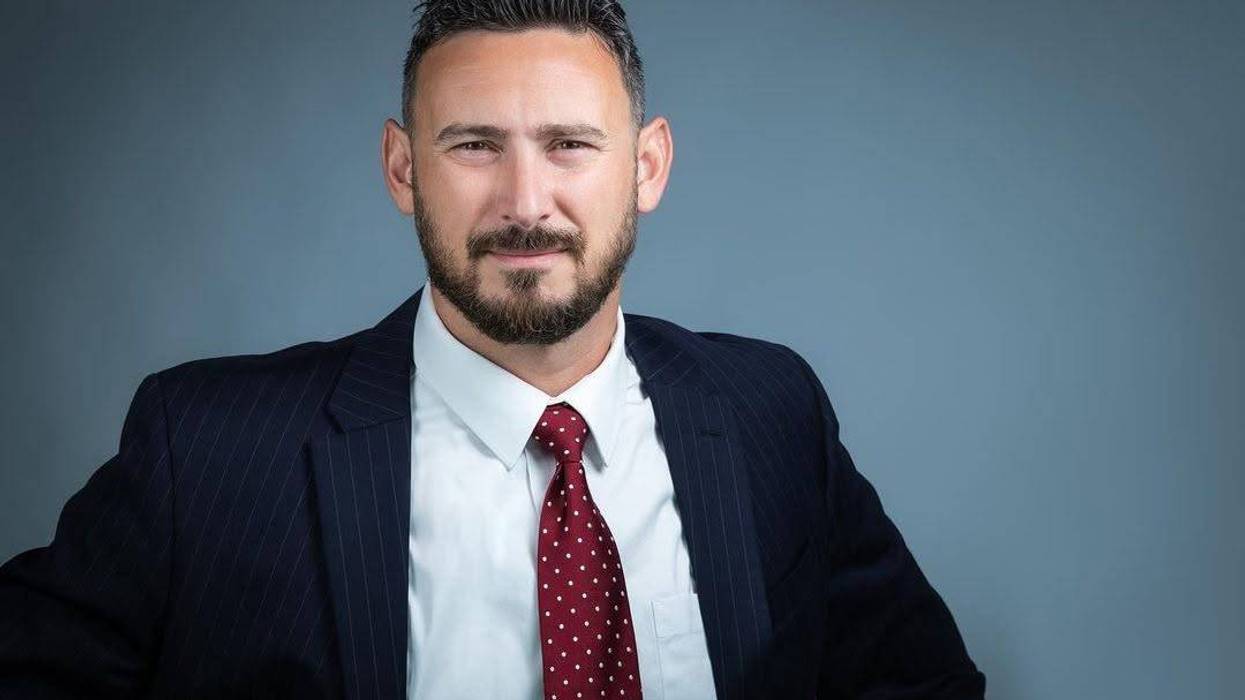
At a rally outside Sen. Susan Collins' office on Thursday morning, soon after the Republican lawmaker claimed she had gotten assurances from the Trump administration that it would end its immigration enforcement surge in Maine, Democratic Senate candidate Graham Platner said he was not prepared to accept a "pinky promise" from the White House after the arrests of hundreds of Mainers in recent days.
"I don’t believe it,” Platner told a crowd of protesters. “I don’t take the word of an administration that continues to break the law. I don’t take the word of an administration that continues to stomp our constitutional rights. We need to see material change.”
Collins said in a statement Thursday morning that she had spoken with Homeland Security Secretary Kristi Noem and received information that US Immigration and Customs Enforcement (ICE) "has ended its enhanced activities in the state of Maine"—adding the caveat that the Department of Homeland Security (DHS) "does not confirm law enforcement operations."
"There are currently no ongoing or planned large-scale ICE operations here," said the senator. "ICE and Customs and Border Patrol will continue their normal operations that have been ongoing here for many years."
About 200 people have been detained in what ICE has called "Operation Catch of the Day" since it was launched earlier this month, and immigrant rights and mutual aid groups in Portland, Lewiston, and other cities have ramped up efforts to support the state's growing population of immigrants and asylum-seekers, including its Somali community, which includes many people who have become citizens since arriving in the US.
The administration said it had a list of more than 1,400 people in Maine it aimed to arrest—people it claimed were among the so-called "worst of the worst" violent criminals the White House wants to deport.
People abducted from their cars and homes in the state, however, include a corrections officer who was eligible to work in the US, a civil engineer on a work visa, a mother who was followed home by ICE agents and had a pending asylum application, and a father who was driving his wife and 1-month-old baby home from an appointment and whose car window was shattered by an agent, sending glass flying into the infant's car seat. None of those people had criminal records, according to background checks and attorneys.
Rep. Chellie Pingree (D-Maine) said that while the "visible federal presence" in Maine may be reduced following Collins' announcement, "it is important that people understand what we saw during this operation: Individuals who are legally allowed to be in the United States, whether by lawful presence or an authorized period of stay, following the rules, and being detained anyway.”
“That is not limited to this one operation," said Pingree. "That has been the pattern of this administration’s immigration enforcement over the past year, and there is no indication that policy has changed.”
Platner told local ABC News affiliate WMTW that Collins affirmed in her statement that "she still supports ICE operations, just not this expanded one. An agency that over the past week has abducted people that work for the sheriff's department, has abducted fathers bringing their newborn child home from the hospital, an agency that has murdered American citizens in the streets of Minneapolis."
"That is not an agency that has any welcome in Maine to conduct any operations," said Platner, who has spoken out in support of abolishing ICE, which was established in 2003.
Sen. Susan Collins said ICE has ended its enhanced operation in Maine. But Graham Platner, who is running for Collins' Senate seat, told @catemccusker that he will believe it when he sees it. https://t.co/7GL6qM3Bf6 pic.twitter.com/iE6O44Ok5t
— WMTW TV (@WMTWTV) January 29, 2026
Platner also emphasized in comments to the Maine Newsroom that Collins, who as the Senate Appropriations Committee chair has been working to pass spending bills to avert a government shutdown and has been fighting against a push to strip DHS funding out of the package, should not get credit for pushing ICE out of Maine, if the agency is actually retreating.
"When we do get ICE out of Maine, it's important for people to understand that that came from below, that came from power from organizers, from a mobilized population," said Platner. "It is that power that is going to push ICE out of Maine, and those in power, who have done nothing, are not the ones who get to take credit. The people of Maine get to take credit."
The government spending bills passed last week in the House with seven Democrats—including Rep. Jared Golden of Maine—supporting the DHS funding. The Senate needs to pass the package by the end of Friday to avoid a shutdown.
Portland City Council member April Fournier said the timing of Collins' announcement seemed "very convenient" for the senator, who is running for a sixth term.
"I take this with a grain of salt," said Fournier. "There's a very important budget vote today that Susan Collins will be a part of and there's a lot of pressure on her given all of these immigration operations, what's happened in Maine, what's happened in Minneapolis, and all over. She has a lot of pressure to decrease funding for ICE, and she has really put her line in the sand that she's not willing to do that."
Fournier added that Collins is "vulnerable" as the midterms approach, "so if she's able to somehow say, 'We got ICE out of Maine,' and then try and paint herself as the hero, I think that her political analysis of the situation is that will win her back some favor."
The council member noted that just over seven years ago, the senator assured voters that US Supreme Court Justice Brett Kavanaugh would not vote to overturn Roe v. Wade as she announced her vote to confirm him.
"I trust Susan Collins and her actions about as much as I trust thin ice in spring here in Maine," said Fournier.
"'In theater' is an expression that has no place anywhere within the United States," said one critic.
White House border czar Tom Homan on Thursday sparked alarm when he used terminology associated with overseas war to describe federal immigration operations taking place in Minnesota.
During a press briefing, Homan was asked about the number of US Immigration and Customs Enforcement (ICE) and Customs and Border Protection (CBP) agents operating in Minnesota.
"3,000," Homan replied. "There's been some rotations. Another thing I witnessed when I came here, I'll share this with you, I've met a lot of people, they've been in theater, some of them have been in theater for eight months. So there's going to be rotations of personnel."
Q: Can you be specific about how many ICE and Border Patrol agents are currently operating in the state?
HOMAN: 3,000. There's been some rotations. They've been in theater a long time. Day after day, can't eat in restaurants, people spin on you, blowing whistles at you. But my… pic.twitter.com/1Vz8mKYCAv
— Aaron Rupar (@atrupar) January 29, 2026
Typically terms such as "rotations" and "theater" are not used to describe domestic law enforcement operations, but overseas military deployments.
Many critics were quick to notice Homan's use of war jargon to describe actions being taken in a US city and said it was reflective of how the Trump administration sees itself as an occupying force in its own country.
"'In theater' like they're landing marines at Guadalcanal or something," wrote Aaron Fritschner, deputy chief of staff for Rep. Don Beyer (D-Va.), in a post on X. "This stuff is happening in suburban American communities, that's where they're sending violent, masked invaders."
Northwestern University historian Kathleen Belew also expressed shock at Homan's rhetoric.
"'In theater' is an expression that has no place anywhere within the United States," she wrote on Bluesky. "'In theater' means in a war."
Andrew Lawrence, deputy director of rapid response as Media Matters, said Homan's war talk was "a crazy way to describe Minneapolis," while documentary filmmaker John Darwin Kurc described it as a "frightening characterization."
Shelby Edwards, a retired US Army major, also recognized the violent implications of Homan's words.
"Incredibly damaging how military language has infiltrated these agencies," she observed. "'In theater' is used for deployments into foreign nations, when we deploy soldiers we say things like this. This is America. This is an American agency assigned to an American city."
"ICE has likely violated more court orders in January 2026 than some federal agencies have violated in their entire existence."
Amid the latest budget standoff in Congress, Senate Democrats on Wednesday said they may be willing to make a deal to fund the US Department of Homeland Security in exchange for a slate of "reforms" designed to rein in what Senate Minority Leader Chuck Schumer described as Immigration and Customs Enforcement's "state-sanctioned thuggery."
But just because something is written in law doesn't mean ICE agents will follow it.
That's what Chief Judge Patrick J. Schiltz of the US District Court in Minnesota—a conservative jurist appointed by former President George W. Bush—demonstrated when, as part of an order issued Wednesday, he published a list of nearly 100 court orders ICE has violated in just the month of January.
Schiltz issued the list as part of an order canceling a hearing for acting ICE Director Todd Lyons, whom he’d previously ordered to appear in court on Friday or face contempt. The judge demanded Lyon's personal appearance after ICE ignored the judge’s order to give a bail hearing to a detainee, Juan Hugo Tobay Robles, one of “dozens of court orders with which respondents have failed to comply in recent weeks.” Schiltz canceled Lyons’ hearing when Robles was released from custody.
"That does not end the Court’s concerns, however," Schiltz wrote on Wednesday. "Attached to this order is an appendix that identifies 96 court orders that ICE has violated in 74 cases."
"This list should give pause to anyone—no matter his or her political beliefs—who cares about the rule of law," he went on. "ICE has likely violated more court orders in January 2026 than some federal agencies have violated in their entire existence."
"ICE," he said, "is not law unto itself."
This scathing document of ICE's willful disregard for the law was top of mind for many critics of the compromise Democrats appear poised to make in exchange for passing a budget package that includes $64.4 billion in DHS funding, including $10 billion for ICE and $18 billion for Customs and Border Protection (CBP).
On Thursday, seven Republicans joined Democrats in a 45-55 vote to block the spending package, which needs 60 votes to pass in the Senate. Democrats have said they want to separate DHS funding from the rest of the bill in order to negotiate a series of "reforms." If a deal is not reached by January 30, funding for DHS and several other agencies will lapse, causing another partial government shutdown.
On Wednesday, Schumer told the press that Democrats are "united" behind three key reforms to DHS. Per TIME Magazine:
“We want to end roving patrols,” Schumer said, laying out Democrats’ first demand. “We need to tighten the rules governing the use of warrants and require ICE coordination with state and local law enforcement.”
Second, he said, Democrats want to “enforce accountability,” including a uniform federal code of conduct and independent investigations into alleged abuses. Federal agents, he argued, should be held to the same use-of-force standards as local police and face consequences when they violate them.
Third, Schumer said, Democrats are demanding “masks off, body cameras on,” a reference to proposals that would bar agents from wearing face coverings, require they wear body cameras and mandate that agents carry visible identification. “No more anonymous agents, no more secret operatives,” he said.
Journalist and political analyst Adam Johnson described these proposals as "superficial," with many already being codified into law or even the US Constitution.
"As many scholars have noted, Trump arresting people without warrants is already unconstitutional and illegal, but his DHS is doing it anyway," he wrote. "Passing laws to enforce existing law may dissuade the Trump regime in some contexts, but it’s unclear why Trump wouldn’t just ignore the new law since they duly ignored the previous one."
He also said, "It’s unclear how much power Congress or states would have to 'enforce accountability' while Trump’s cartoonishly corrupt DOJ continues to investigate and threaten state lawmakers and leaders with prison time."
Johnson noted that the list of demands made by progressives, including Sen. Bernie Sanders (I-Vt.), was more comprehensive, including bans on arrest quotas and forcing ICE to end its reign of terror in Minneapolis, but said "it’s unclear how Congress would define, much less enforce, these parameters. And most conspicuous of all, their demands make zero mention of reducing DHS’s obscene budget."
DHS funds were already increased by $170 billion over the next five years in the One Big Beautiful Bill Act passed by Congress last year, and ICE funding tripled, from $10 billion per year to $30 billion, making it the equivalent of the 13th most expensive military in the world.
Aaron Regunberg, a writer at the New Republic, questioned what good it was to subject ICE to new laws when, as Schiltz's order showed, "ICE breaks the law, courts order them to stop, and then they keep breaking the law."
"You have to be dumb as bricks to think the answer is to pass a law saying it's against the law to break the law," he continued. "The answer is to stop giving these fascist goons billions of our tax dollars."