June, 23 2020, 12:00am EDT

For Immediate Release
Contact:
Ryan Schleeter, Senior Communications Specialist, Greenpeace USA: +1 (415) 342-2386, ryan.schleeter@greenpeace.org
Greenpeace USA Endorses the DNC Climate Crisis Council 2020 Platform
WASHINGTON
Last week, the Democratic National Committee (DNC) Council on the Environment & Climate Crisis released its 2020 platform recommendations. Informed by the Green New Deal, the platform marks the boldest stance Democrats have taken yet on combating climate change, centering racial and environmental justice in a $10 trillion investment package to be deployed over the next decade. Today, Greenpeace USA officially endorses the platform.
Greenpeace USA Climate Campaigner Charlie Jiang said:
"As we confront the interwoven crises of climate change, white supremacy, and COVID-19, we must demand nothing short of a visionary, transformative agenda from Democratic leadership. It would be unforgivable to return to a 'normal' in which fossil fuel corporations like Exxon, Shell, Chevron, and BP pollute Black, Brown, and Indigenous communities and put our shared climate under attack.
"We're glad to see the DNC Climate Crisis Council stake a bold and much-needed new direction for the Democratic Party. It's critical that candidates and elected officials champion a Green New Deal and a managed transition away from fossil fuels, including the end of federal permits, subsidies, and financing for oil, gas, and coal. A world beyond fossil fuels -- one that prioritizes justice for workers and communities on the frontlines of the climate crisis over corporate profit -- is possible if our elected officials are willing to fight for us. We hope to see the many visionary and essential elements of this proposal included in the official DNC platform to be finalized in August.
"As platform negotiations continue, we hope to see more details emerge as to how the part plans to meet its important goals for achieving 100% clean power, transportation, buildings, agriculture, and industry; deploy federal investments quickly and equitably; and meaningfully engage with impacted workers and communities. We must prioritize racial and economic justice for frontline communities while mobilizing the full power of the federal government to tackle the historic crises we face."
Greenpeace is a global, independent campaigning organization that uses peaceful protest and creative communication to expose global environmental problems and promote solutions that are essential to a green and peaceful future.
+31 20 718 2000LATEST NEWS
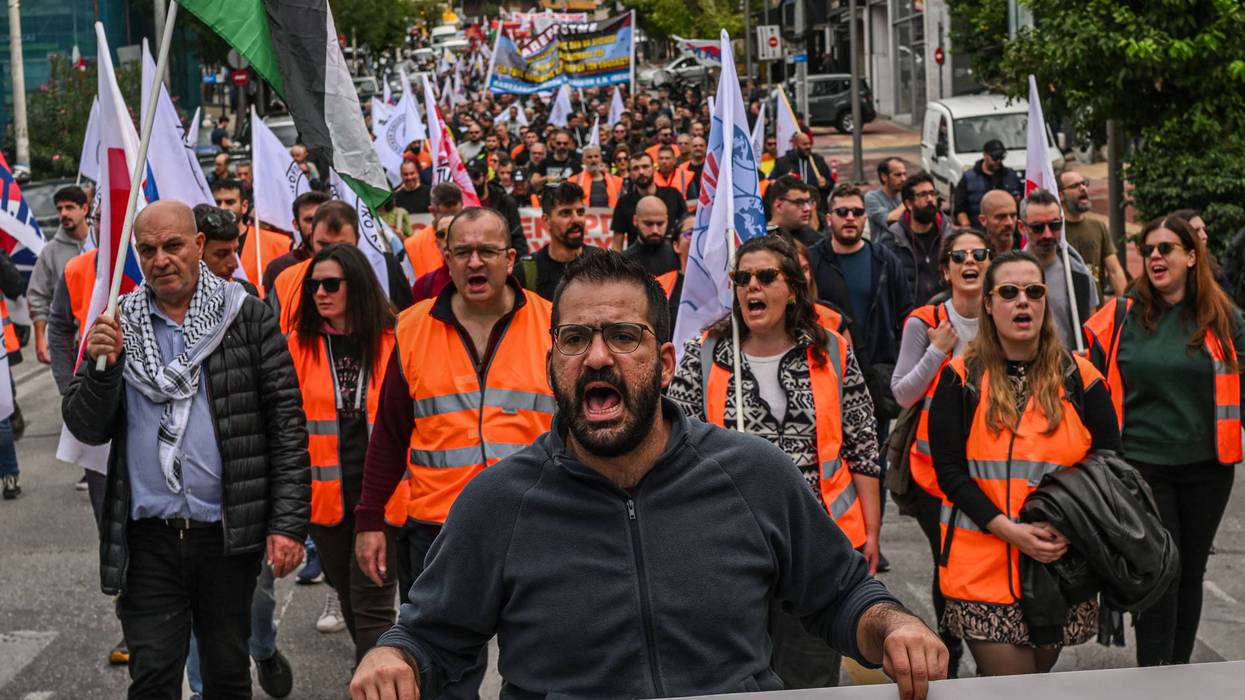
With 'Largest Coordinated Port Action Ever,' Dockworkers in 22 Countries Strike Against Gaza Genocide
"We, the workers in the ports, know very well that without us nothing moves. Without our hands, containers remain still, ships are not loaded, the war machines are blocked."
Oct 30, 2026
Dockworkers in more than 20 countries—from France to India to Greece—are withholding their labor on Friday to demand an end to Israel's genocidal assault on Gaza and highlight the role that commercial ports play in fueling deadly militarism worldwide.
Organizers said the work stoppages, led by dockworkers' unions at 113 ports across 22 countries, would be the "largest coordinated port action ever," easily surpassing the international day of action held in February. No Harbour for Genocide, a collective of trade unions and others supporting the day of action, said $2.8 billion worth of cargo will be halted at Mediterranean ports, where workers are planning to strike for 24 hours.
"A cargo refused in one port sails on to the next," said No Harbour for Genocide. "Refused in every port, it stops, and the workers have enforced the embargo that governments announced and did not."
In a joint statement last month announcing the day of action, dockworkers' unions from Türkiye, Morocco, Italy, France, Greece, Italy, and Basque Country laid out their demands:
- An immediate end to the genocide of the Palestinian people and the opening of safe corridor for humanitarian aid.. An end of colonization, occupation and apartheid imposed to Palestinian People and the recognition of an independent Palestinian state recognized by the international community on the 1967 borders, with East Jerusalem as its capital.
- An end to the war in the Middle East. No support, no facilitation, no participation in the US-Israeli war against Iran, Lebanon or any other imperialist intervention. Military fleets and bases out of the region. We express our full solidarity to the people of Cuba and Venezuela and Sudan menaced by US imperialism and we call for defend people's sovereignty, resources, territorial integrity, peace with justice, and the right for resistance for self-determination.
- Ports must not be used for the transport of weapons, ammunition, military equipment and troops. We call on unions to strengthen vigilance, to inform workers, to expose the cargoes of war, and to organize mass collective resistance with all our rightful available means and our struggle.
- An end to the militarization of ports and critical infrastructure. Ports belong to the peoples and the workers. They are not bases for NATO, the USA or the EU, nor tools of shipowners and monopoly groups.
- No to the war economy and armaments. The money must go to wages, collective agreements, health, education, social needs, and the protection of life and safety at work.
- Health and safety measures in the workplaces. Not one worker dead for profits. An end to intensification, subcontracting, dangerous conditions, and employer arbitrariness.
- Collective agreements with real wage increases, stable jobs with rights, a retirement policy with better pensions, and a reduction of working time. Technological developments, mechanization, automation, the use of AI and the development of ports must serve the needs of workers, and not lead to the intensification of work or the disappearance of their jobs.
"Our strength lies in organization. It lies in our unions, in general assemblies, in collective decisions, in solidarity among workers from different countries," the unions said. "We, the workers in the ports, know very well that without us nothing moves. Without our hands, containers remain still, ships are not loaded, the war machines are blocked."
Al Jazeera noted that of the ports participating in Friday's actions, "Genoa, Livorno, and Gioia Tauro in Italy, Marseille in France, Piraeus in Greece, and Tangier in Morocco all have proven links to weapons shipments to Israel."
Dockworkers International Day of Action across 5 Continents and 113 PortsIn Pireaus, at COSCO’s terminals, dockworkers are holding the picket lines. Their message is clearDockworkers do not work for war! Ports for the peoples and for peace, not bases for imperialists! https://t.co/cpOwK8XLhV
— PAME Greece International (@PAME_Greece) October 30, 2026
The strikes come as Israel's genocide in Gaza continues despite a ceasefire agreement that putatively took effect last October. A United Nations report published earlier this week noted that "Israeli authorities and forces continue to commit genocidal acts" in Gaza "even after the so-called ceasefire agreement, with the intent to destroy the Palestinian people, in whole or in part."
The report found that Israel—which is armed and supported diplomatically by Western governments, principally the United States—has "committed war crimes and the crimes against humanity of extermination, persecution, torture, rape, and other forms of sexual violence" in the illegally occupied Palestinian territories.
Port Workers and Communities for Palestine said in a statement Friday that will be demonstrating at the Port of Elizabeth in New Jersey. The coalition said the New Jersey port is the only port on the East Coast of the US where a protest is expected. Demonstrations are also expected in Oakland and San Francisco, California.
"We know that, regardless of what union leadership may decide, workers everywhere stand in solidarity with Palestine," said Port Workers and Communities for Palestine. "We will be out there on Friday to show them that they are part of this movement too. Workers have the power to stop the war machine."
Keep ReadingShow Less
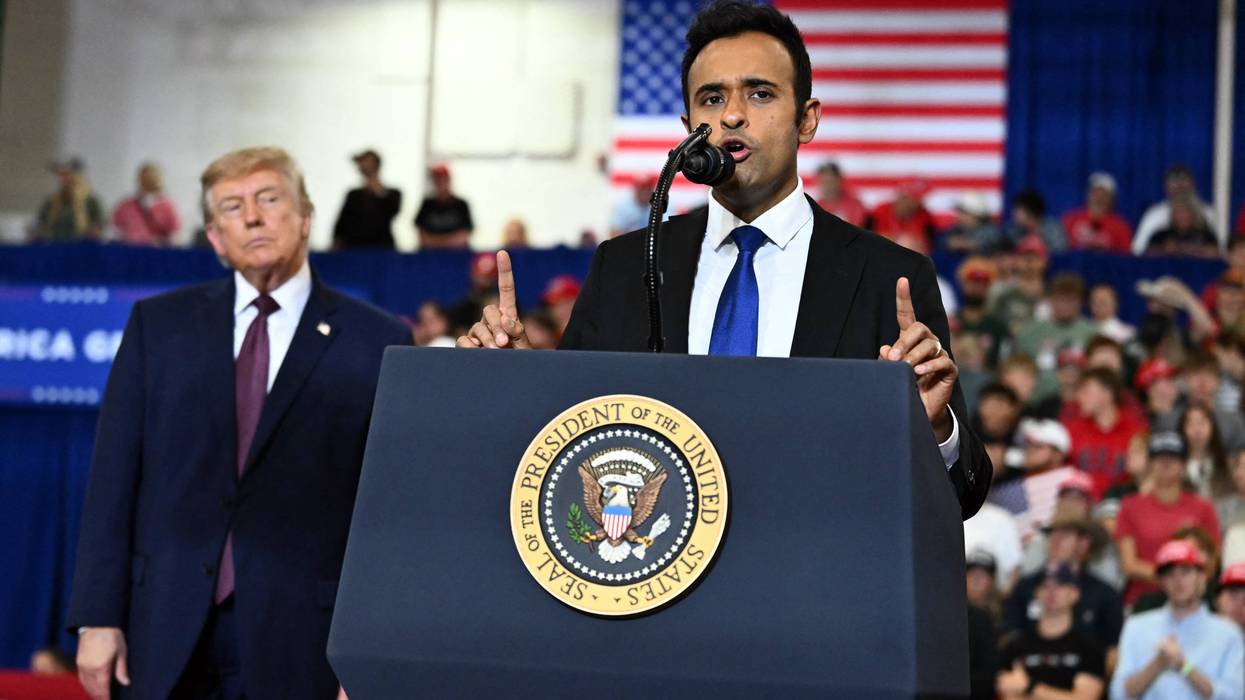
'He Cannot Undo the Cruelty': Ramaswamy Stops Airing Vile Attack Ad After Over a Week of Outrage
"Vivek Ramaswamy should never have run his despicable ad in the first place, and it’s totally unsurprising that he took it off the air in the most cowardly way possible."
Oct 30, 2026
Republican Ohio gubernatorial candidate Vivek Ramaswamy said Thursday that his repulsive attack ad featuring his Democratic opponent's estranged biological mother will no longer air on television after more than a week of nationwide outrage.
Ramaswamy did not apologize for running the ad, in which Donna Arthur calls her daughter, Democratic gubernatorial candidate Amy Acton, a liar. The ad doesn't mention that Arthur lost custody of Acton and her brother after their stepfather—Arthur's husband—was indicted for raping Acton when she was 12.
Ramaswamy’s campaign initially planned to spend $4 million airing the ad in Ohio, but tracking data shows it spent just a quarter of that total.
"It ran to completion, and we've put up four other ads," Ramaswamy, who ran for the Republican presidential nomination in 2024, said during a campaign stop in Vandalia on Thursday.
Addie Bullock, a spokesperson for Acton's campaign, said in a statement on Thursday that "Vivek Ramaswamy should never have run his despicable ad in the first place, and it’s totally unsurprising that he took it off the air in the most cowardly way possible, without even the hint of an apology to Dr. Acton, her family, or to the people of Ohio."
Others said that discontinuing the ad doesn't reverse the damage inflicted by Ramaswamy, who—according to polling commissioned by a Republican group—has fallen further behind Acton in the days leading up to next week's midterms.
"Vivek Ramaswamy may have stopped airing his vicious attack on Amy Acton, but he cannot undo the cruelty of creating it," said civil rights attorney Areva Martin.
The ad began circulating on social media on October 19, without paid-for disclosures required by federal law. Ramaswamy confirmed two days later that his campaign was behind the ad, and announced plans to spend millions airing the spot even as it sparked bipartisan backlash—including from Ohio's outgoing Republican governor.
But US President Donald Trump and Vice President JD Vance defended the ad, with Trump encouraging Ramaswamy to keep it on the air and dismissing Acton's account of childhood sexual assault.
“The Press is trying to convince everyone that this Ad is bad, because it’s so good!” Trump wrote in a social media post. “Who wouldn’t use such an Ad?”
The White House's public defense of the ad stands in contrast to the message Ramaswamy received privately from "multiple Republicans" before the spot aired, according to Zeteo.
“It’s siding with the rapist protector mom,” an unnamed Trump adviser told the outlet of Ramaswamy's ad. “This was never a good idea."
NEW on @zeteo_newsSources say Amy Acton's mom seemed mentally unwell when Ramaswamy's ad was filmed & she had trouble keeping a coherent narrative on the past.Some wanted to vet her more but *Ramaswamy himself* pushed ahead.@JSweetLI & Swin Suebsaeng:https://t.co/2yl7Vh0K5P
— Prem Thakker (@prem_thakker) October 28, 2026
Ramaswamy's ad led the editorial board of Ohio's largest newspaper, The Plain Dealer, to reverse its recently announced policy against endorsing candidates in major races and publish an endorsement of Acton.
"A candidate who uses childhood sexual abuse as a weapon against the person who endured it has crossed a line that Ohioans should defend, whatever their party," the editorial board wrote. "We are better than this. We have a responsibility to show it."
"And our endorsement of Acton rests on more than Ramaswamy’s failure to meet a basic standard of decency," the editorial added. "She has earned consideration on her own record, her preparation, and her commitment to the people she seeks to serve."
Keep ReadingShow Less
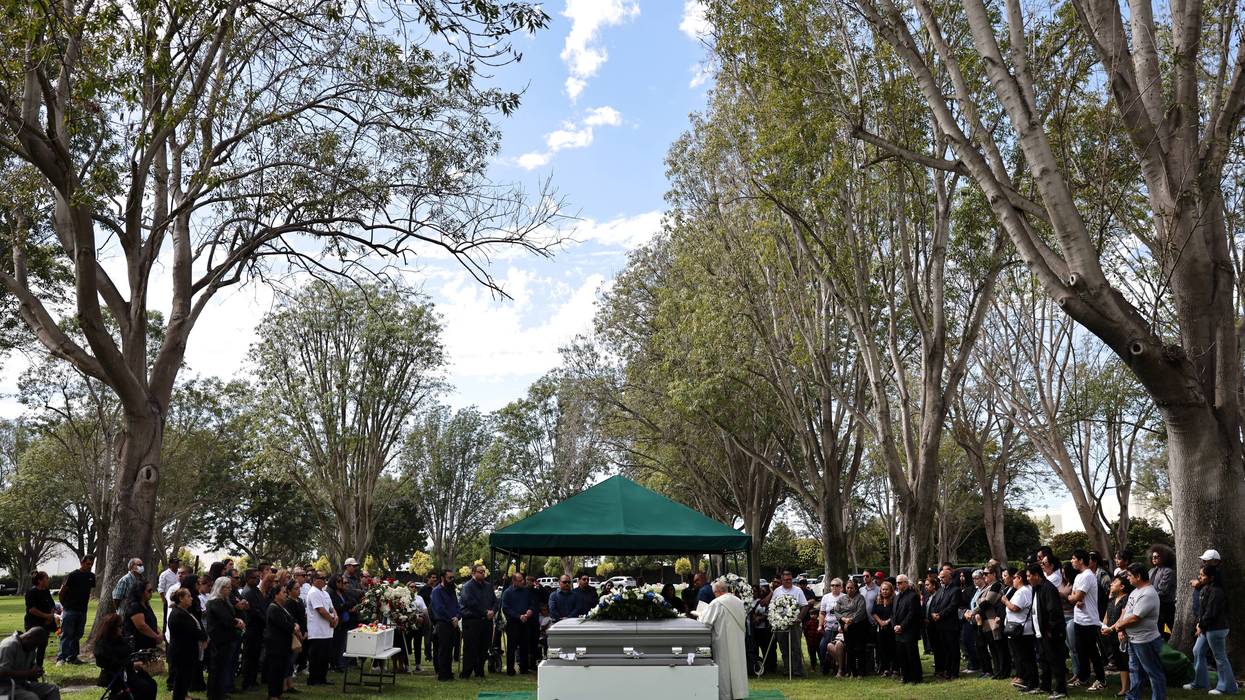
Debt After Death: How Unchecked Corporate Power Even Makes Dying More Expensive
"No one should be forced into debt just to bury a loved one, but as corporations exploit families," said Groundwork Collaborative's leader, "loved ones are being driven to the brink to pay for a dignified death."
Oct 29, 2026
Americans are struggling with the soaring cost of living—and dying, according to a Groundwork Collaborative report released Thursday.
The think tank's associate director of policy and advocacy, Zoe Butler, analyzed data on related topics, from life insurance to funeral expenses, and explained how deaths—especially unexpected ones—can affect US households.
As "Death, Debt, and Paperwork: How the Business of Dying Is Burying American Families" details, "the average funeral now costs $7,726, before cemetery plots, headstones, and other add-ons that can push the total above $10,000."
Data from 2023 shows that "funeral homes charge a nondeclinable basic services fee of $2,495 for both cremation and burial, along with $395 to transfer the body to the funeral home," plus additional charges for using facilities for services. The report notes that "even lower-cost options still carry added fees, including about $400 for cremation and $295 for an urn."
"For burial, costs increase further with additional required services," the publication continues. "These include over $1,000 for embalming and other preparation of the body, as well as $2,500 for a casket. Burial also introduces a separate set of expenses outside the funeral home, including $1,000 to $3,000 for a headstone, around $1,000 for a burial vault, and $1,000 to $2,500 to open and close the grave."
"Prices have surged 310% since 1986, far outpacing overall inflation of 193%," Butler highlighted. "As prices increase, more families are going into debt to cover funerals, with the share rising from 14% in 2024 to 37% in 2025."
Deaths can also mean navigating probate, "the often costly legal process of settling a loved one's estate," she wrote. Probate fees can take 3-8%, so "even modest estates in probate can lead to thousands of dollars in legal and administrative expenses."
"For example, a family inheriting a $250,000 home may have to pay $7,500 to $20,000 in probate-related expenses," the document says. "Fewer than 1 in 4 Americans have a will, and just 13% have a living trust, one of the few tools that lets assets pass to heirs without going through probate."
Some families dealing with a relative's death are assisted by life insurance, but "coverage is uneven and increasingly inadequate," the report stresses. "Nearly half of Americans do not have life insurance, meaning many families cannot cover funeral expenses or manage immediate costs after a loss."
"Access to employer-sponsored coverage is also highly unequal," according to the analysis. "While 77% of full-time workers have access to employer-provided life insurance, only 14% of part-time workers do. Just 20% of workers in the bottom tenth of wages have access to coverage, compared to 91% of top earners."
Additionally, 40% of new policies "are term-limited rather than permanent, meaning coverage can expire before a person dies," the report explains—so some "families may spend years paying into life insurance policies that ultimately provide no support for funeral expenses or other end-of-life costs."
It not only catalogs the costs of death in the US, it also points out that "median household savings are roughly $8,200, meaning many households have little cushion to absorb these costs."
The publication also offers "a path forward," urging Congress to cut prices and boost transparency with legislation that would "require funeral homes to provide standardized and itemized pricing online, including all fees and third-party costs," as well as "prohibit hidden fees and forced bundling of services."
Other actions Congress could take include expanding the Social Security Death benefit and creating a basic life insurance program administered through the Social Security Administration. There are also several probate-related proposals for states and localities.
"No one should be forced into debt just to bury a loved one, but as corporations exploit families at their most vulnerable moments, more and more grieving loved ones are being driven to the brink to pay for a dignified death," said Groundwork president and CEO, Lindsay Owens in a statement.
"Funeral companies are raising prices, hiding costs, and taking advantage of a system that gives grieving families no time and no transparency," she added. "Policymakers must act to bring down prices, increase accountability, and ensure families can access what is already theirs without delay."
Keep ReadingShow Less
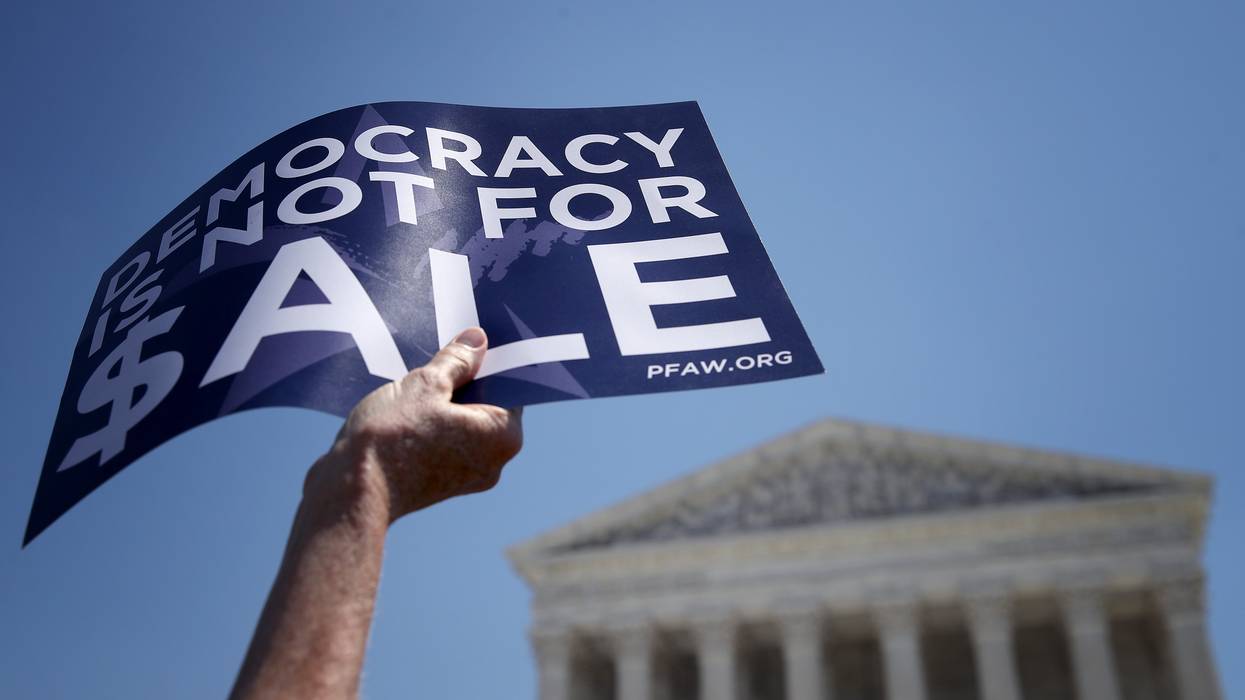
Before Citizens United, Corporations Spent $12.8 Million on 2010 Elections. In 2026? $737 Million
"This election cycle shows beyond any doubt that we desperately need a constitutional amendment to overturn Citizens United," said the co-president of a prominent consumer advocacy group.
Oct 29, 2026
Data published Thursday by a leading consumer watchdog group revealed that corporate spending on US elections has soared by more than 5,000% since an infamous 2010 Supreme Court ruling that opened the floodgates of outside political contributions—a staggering increase that critics said underscored the need for major campaign finance reform.
Public Citizen released an analysis of newly filed federal campaign finance data showing that corporate political spending has grown exponentially since the 2010 midterm election cycle, the first of the Citizens United era.
Citizens United v. Federal Election Commission affirmed corporate personhood and that unlimited political spending by corporations, nonprofit organizations, labor unions, and other groups is a form of free speech protected by the First Amendment that government cannot restrict. The decision ushered in the era of super political action committees (PACs)—which can raise unlimited amounts of money to spend on campaigns—and secret spending on elections with so-called “dark money.”
According to the data studied by Public Citizen, corporate spending totaled $12.8 million for the 2010 election cycle. By the 2012 cycle, it had surged to $84.9 million. During the 2016 cycle, it spiked to $117.9 million.
NEW from @publiccitizen.bsky.social:Corporate money in the 2026 midterms has reached an unprecedented $737 million, October filings show.Full report: www.citizen.org/article/corp...
[image or embed]
— Rick Claypool (@rickclaypool.bsky.social) October 29, 2026 at 10:55 AM
For 2026, spending this cycle—over $737 million—accounts for "40% of the $1.8 billion corporations have spent on federal elections" since 2010," Public Citizen said.
"Cryptocurrency, online betting, and Big Tech interests—including companies involved in [artificial intelligence] and data centers—have collectively contributed $391 million toward the 2026 elections," the group noted. "This accounts for more than half of corporate political spending reported this cycle."
The analysis shows that the 50 largest donors and organizations had collectively contributed $2.77 billion, with Republican-aligned contributors accounting for roughly 60% of that amount.
Elon Musk—the world's richest person and first trillionaire in history—led the pack, giving over $445 million to conservative candidates and causes. This, after the tech titan and former de facto head of the short-lived Department of Government Efficiency poured more than a quarter billion dollars into the campaign coffers of then-former President Donald Trump's successful reelection bid and Republican congressional candidates during the 2024 cycle.
“Corporations are exploiting Citizens United to drive their political spending to unprecedented levels,” Robert Weissman, Public Citizen's co-president, said Thursday.
“These corporations aren’t investing this money because they are civic-minded or want to advance a particular viewpoint," he continued. "They are spending to buy influence, determine outcomes, and shape policy. This election cycle shows beyond any doubt that we desperately need a constitutional amendment to overturn Citizens United and put the people, not corporations or the super rich, back in charge of elections."
Democrats are trying to do just that. Last year, Congresswoman Pramila Jayapal (D-Wash.) led more than two dozen lawmakers in introducing the We the People Amendment, a constitutional amendment that would reverse Citizens United.
The following month, Sen. Jeanne Shaheen (D-NH) led 39 upper chamber Democrats plus Sens. Bernie Sanders (I-Vt.) and Angus King (I-Maine) in reintroducing the Democracy for All Amendment. The proposal would allow Congress and state legislatures to impose some limits on money raised and spent to influence elections, distinguish between people and corporations, and prohibit corporate election spending.
But it might not take a constitutional amendment—something that is exceedingly difficult to pass, by design—to undo Citizens United.
Mother Jones reported Thursday that Montana could become a testing ground for a new legal strategy to reverse the effects of the ruling without having to overturn the decision. Instead, Montana is challenging corporations’ legal powers under state law rather than targeting their constitutionally protected political "speech" in the form of spending.
The strategy, known as the Montana Plan, will be put to voters on Election Day in the form of Initiative 194, which would prohibit corporations, nonprofits, labor unions, trade associations, and other special interests from spending money to support or oppose candidates, political parties, or state and local ballot measures. Violators could forfeit their state-granted privileges, including limited liability.
If approved, it could provide a model for other states seeking to curb corporate political spending and anonymous campaign financing.
Other efforts include a Sanders-led push for the Democratic Party to ban super PAC and dark money spending in its primaries.
"We cannot allow billionaires and powerful corporate interests to continue undermining democracy by injecting unlimited amounts of money into the political process," Sanders and seven Senate backers of his proposal asserted last year.
Keep ReadingShow Less

'They Are Terrorizing Us': Video Shows ICE Agents Slashing Tires of Lawful Observers
"We hope that sharing our story will bring attention to their reckless and unconstitutional attacks on our communities.”
Oct 29, 2026
A video taken from the car of two legal observers in the Portland, Oregon area shows an unmarked vehicle with emergency lights flashing, following close behind their car on a street in the suburb of Hillsboro.
About 15 seconds into the video, both cars stop and two masked people get out of the unmarked vehicle and approach the other car, with one carrying a sharp object that they use to puncture the back tire. They approach a second time a few seconds later, slashing the tire again.
Both of the masked people are wearing vests emblazoned with the name of their government agency: US Immigration and Customs Enforcement (ICE).
The people who filmed the attack, identified as AP and MP in an administrative complaint filed with the US Department of Homeland Security (DHS) on Thursday, had been observing and filming the agents in a Safeway parking lot in Hillsboro, and had used whistles and honked their car horn to alert people about ICE's presence, before the officers started following them.
Filming ICE agents and other federal officers who have been deployed to carry out President Donald Trump's mass deportation operation is legal under the First Amendment, as top DHS officials were forced to admit under oath last February.
At the time, people across the nation were reeling from the killings by DHS agents of two legal observers, Renee Good and Alex Pretti, in Minneapolis.
Numerous videos were posted on social media of federal agents threatening people and demanding that they stop exercising their constitutional right to film immigration enforcement operations, with one officer in Maine telling a woman her name would end up in a "nice little database" if she didn't stop recording him and that she'd be considered a "domestic terrorist."
In the administrative filing, the legal observers in Hillsboro emphasized that "what happened to us is not unique, and that is what is so terrifying."
“We observe and record public ICE activity in order to shine a light on their abusive behavior and to create a record of what our government is up to," they said. "Because of that, they are terrorizing us and anyone else who dares to exercise their First Amendment right to hold our government accountable. We hope that sharing our story will bring attention to their reckless and unconstitutional attacks on our communities.”
In the administrative complaint, filed by the ACLU and the ACLU of Oregon, the legal observers and their attorneys demanded that the DHS investigate the October 7 incident and discipline the agents who slashed the tire.
"In addition, we request that your offices undertake a comprehensive investigation of the pervasive pattern of ICE agents unlawfully retaliating against individuals who observe, gather information about, and record ICE agents performing their duties in public," reads the complaint. "We urge you to make recommendations for institutional changes to ICE training, oversight, and accountability consistent with your findings in order to prevent further abuses by ICE personnel. More specifically, we strongly urge ICE to adopt policies and implement training and instruction consistent with the First Amendment right to observe, gather information about, and record law enforcement officers performing their duties in public."
The ACLU has represented several observers who have been surveilled, intimidated, and harassed by federal agents for filming enforcement operations. In Memphis, Tennessee, the group has represented observers who have recorded the operations of the Memphis Safe Task Force, which is made up of more than 30 federal, state, and local agents who have spent more than a year "carrying out mass traffic and street stops and breaking into homes."
"Task Force agents are systematically retaliating against those who record them, including threatening to arrest them, stopping and questioning them without reasonable suspicion of any crime, sitting outside their homes, and even using excessive force against and arresting them," according to the ACLU.
The Hillsboro incident took place as DHS was threatening to target so-called "sanctuary" cities like Portland, where local police are restricted from participating in immigration enforcement operations.
“Masked federal officers have no business coming to Oregon to injure or intimidate people,” said Kelly Simon, legal director of the ACLU of Oregon. “Oregonians have the right to support their neighbors and communities by filming and documenting government abuses, and Oregonians should not have to fear retaliation when they exercise their right to record law enforcement.”
Scarlet Kim, a senior staff attorney with the ACLU's Speech, Privacy, and Technology Project, said that "the right to record publicly visible law enforcement activity is fundamental to our democracy."
"Like many people across the country, our clients have been observing and recording ICE activity in their community," she said. "These videos have proven critical to exposing ICE’s abuses. If we cannot see and document what our own government is doing on our streets, we cannot hold it accountable for running roughshod over our rights.”
Keep ReadingShow Less
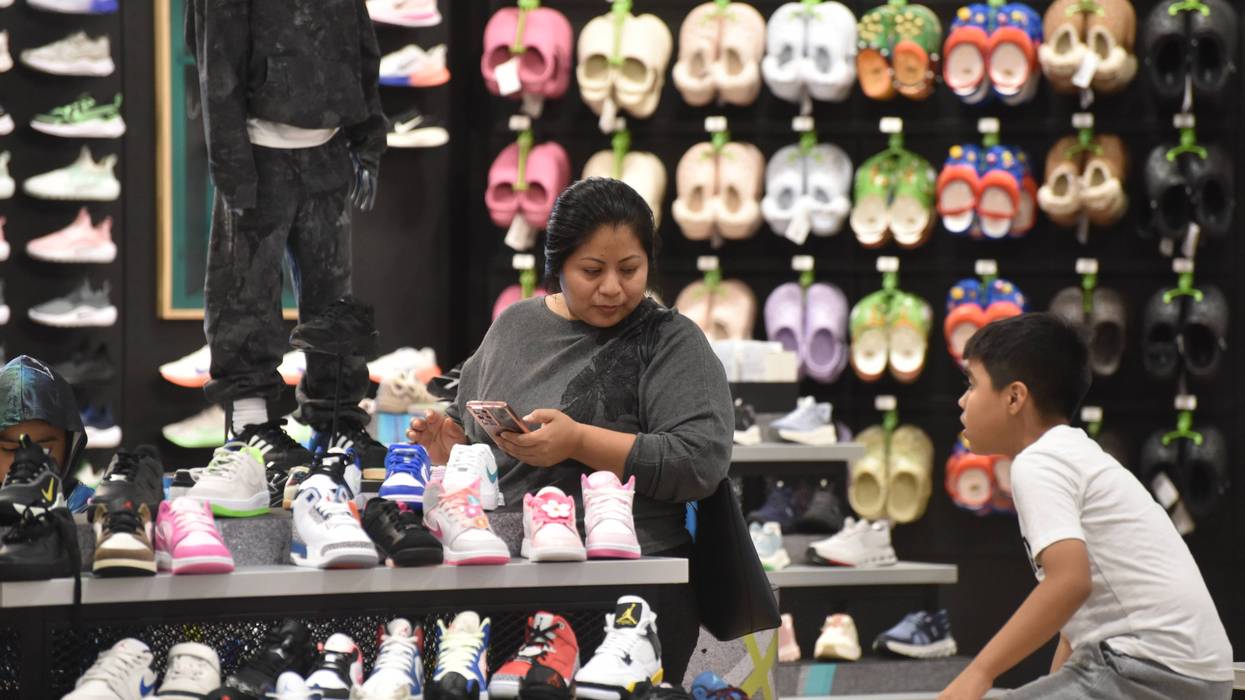
Not Just Food and Fuel—Inflation Numbers Show 'Worrying Trends' as Midterms Loom
With inflation climbing to 3.6%, "instead of focusing on delivering lower prices, Trump is touting Big Oil's Iran War windfall."
Oct 29, 2026
Less than a week before the US midterm elections in which voters may end Republican control of Congress, the Bureau of Economic Analysis on Thursday released inflation data highlighting the nation's persistent affordability crisis under GOP leaders, including President Donald Trump.
In September, the Personal Consumption Expenditures index rose 3.6% from a year ago, up from 3.4% in August, according to the BEA. Core PCE strips out food and energy prices, the latter of which has soared as Trump has waged an illegal war on Iran. That increased 3.1%, up from 3% the previous month.
The "bottom line," said Navy Federal Credit Union chief economist Heather Long, is that "inflation is back near a three-year high."
"It's largely due to war in Iran, but there's legitimate concern that inflation is spreading beyond energy," the economist explained. Referencing the "core" figure, she noted some "worrying trends."
Long pointed to a "big rise in goods prices" that "is largely driven by Trump's tariffs (big move up since 2025) and now war."
The expert also noted that "service sector inflation is picking up again."
She further observed that "rent prices are no longer improving" and housing inflation is "moving sideways."
The inflation update comes just days after the University of Michigan's Surveys of Consumers announced last week that its Consumer Sentiment Index dropped to 48 this month, nearing the record low of 44.8 from this past May, and Trump celebrated fossil fuel industry profits from his war during a weekend campaign rally in Georgia.
Trump told the crowd he was advised against highlighting how the industry—which helped him get elected two years ago and in which he is significantly invested—is "making hundreds of billions of dollars," given that "people are paying a little higher" for gasoline and diesel.
"I can just see the fake headlines," he said. "President Trump is talking about all the money they're making while people are suffering at the pump. That will be the headline. But I said, I don't give a damn, I'm going to say it: We're making a freaking fortune."
As of Thursday, the national average for a gallon of gasoline was $4.23 and $6.33 for diesel. The Climate Solutions Lab at Brown University estimates US residents have paid at least $81.1 billion more for gas and $65.9 billion for diesel, or a total of $147 billion. That's over $619 per household, for just gas.
Some estimates are even higher. A Monday report from Democrats on the congressional Joint Economic Committee states that US households "have now spent an additional $101 billion on gasoline since the start of the Iran War, or an average of $856 in gas costs per family."
Meanwhile, oil giants Shell and TotalEnergies announced their sizable third-quarter profits on Thursday, and companies such as BP, Chevron, and ExxonMobil are expected to follow suit on Friday.
"Inflation remains high, working families are paying $4.23 at the pump, and meager pay raises aren’t keeping up with rising prices," Alex Jacquez, a former Obama administration official who is now senior vice president of policy, advocacy, and research at Groundwork Collaborative, said in a statement.
"Instead of focusing on delivering lower prices, Trump is touting Big Oil's Iran War windfall," Jacquez stressed. "Skyrocketing prices and economic growth largely driven by AI spending do not add up to an economy that works for working families."
Democrats in Congress have seized on cost-of-living concerns ahead of the midterms, including Sen. Ed Markey, who is up for reelection in Massachusetts. He said Thursday that "inflation is up. Margins are tighter."
"Prices are skyrocketing—and small business owners are on the frontlines of Trump's war on Main Street," Markey added. "Small businesses and workers should not have to bear the costs of Trump's reckless economic policies."
This article has been updated to credit the Climate Solutions Lab at Brown University for its fuel cost tracker.
Keep ReadingShow Less

'Who Will Bomb Me Next?': As Israel Awaits Election Results, Palestinians Brace for the Worst—No Matter Who Wins
"Israeli policy will stay the same," said one woman in a Gaza refugee camp. "It's the policy that the Israeli state was founded on."
Oct 29, 2026
As Israelis await the results of this week's elections with a sense of uncertainty, Palestinians are certain of one thing—that their suffering will continue regardless of who emerges victorious.
"We don't care about their elections in any way. Gaza is in the same state. Their elections change nothing here," one elderly Palestinian woman told The Specter on Wednesday from a refugee camp in the obliterated strip, where three years of US-backed Israeli genocide have left 250,000 people dead or wounded, nearly 2 million inhabitants displaced, and the territory in ruins.
A younger woman in the camp told the outlet that "things in Gaza won't change, and they will get worse" if Prime Minister Benjamin Netanyahu is reelected.
"The first thing he'll do is pick up where he left off, displacing Palestinians from the occupied West Bank... and from the Gaza Strip," she continued.
If former lawmaker and ex-Israel Defense Forces Chief of Staff Gadi Eisenkot wins, "things may unfold a little differently," she predicted, but Israeli policy will stay the same. It's the policy the Israeli state was founded on."
Like Netanyahu, Eisenkot emphatically rejects Palestinian statehood, calling the two-state solution “a mistake" and "delusional," given the October 2023 attack led by the militant resistance group Hamas—whose animus was fueled by over a century of Zionist usurpation.
With around 90% of ballots counted as of Thursday, Israeli media projected that Netanyahu’s right-wing and ultra-Orthodox allies would capture 53 seats in the 120-member Knesset, compared with 48 for the opposition led by Eisenkot.
The Knesset has 120 seats, so 61 are needed for a parliamentary majority. The candidates' shortfall means either side would likely need support from Arab parties to emerge victorious—a prospect rejected by many Jewish political leaders.
Netanyahu would remain caretaker prime minister throughout any negotiations to form a new coalition.
Palestinian American fashion designer Alana Hadid—the half-sister of models Gigi and Bella Hadid—said in a video posted to social media that "it's important for people to understand that the intention of an election in Israel to make you think that there will be change. And of course, there will be some change in that there will be a different brand of Zionism."
"Zionism is universal across Israelis," she added, "so whoever wins this election, the change will be in name only."
Haaretz, Israel's oldest daily newspaper, on Thursday published an article in which Gazans mostly shrugged off the Israeli elections.
"Honestly, I don't feel anything about the results. As someone from Gaza, I'm just waiting to see who will bomb me next—the right or the left," a young man named Mahmoud said. "In the end, the bad will go, and the worse will come. They're two sides of the same coin, and both support your killing as a Gazan."
"I think people in Gaza will be happy to see Netanyahu fall, not because of Eisenkot, of course, but because they experienced Netanyahu and saw what he did," he added. "They hope Eisenkot will deal with Gaza differently, or that there will be some relief. But, as I said, even though the two are against each other, both want you killed."
Keep ReadingShow Less
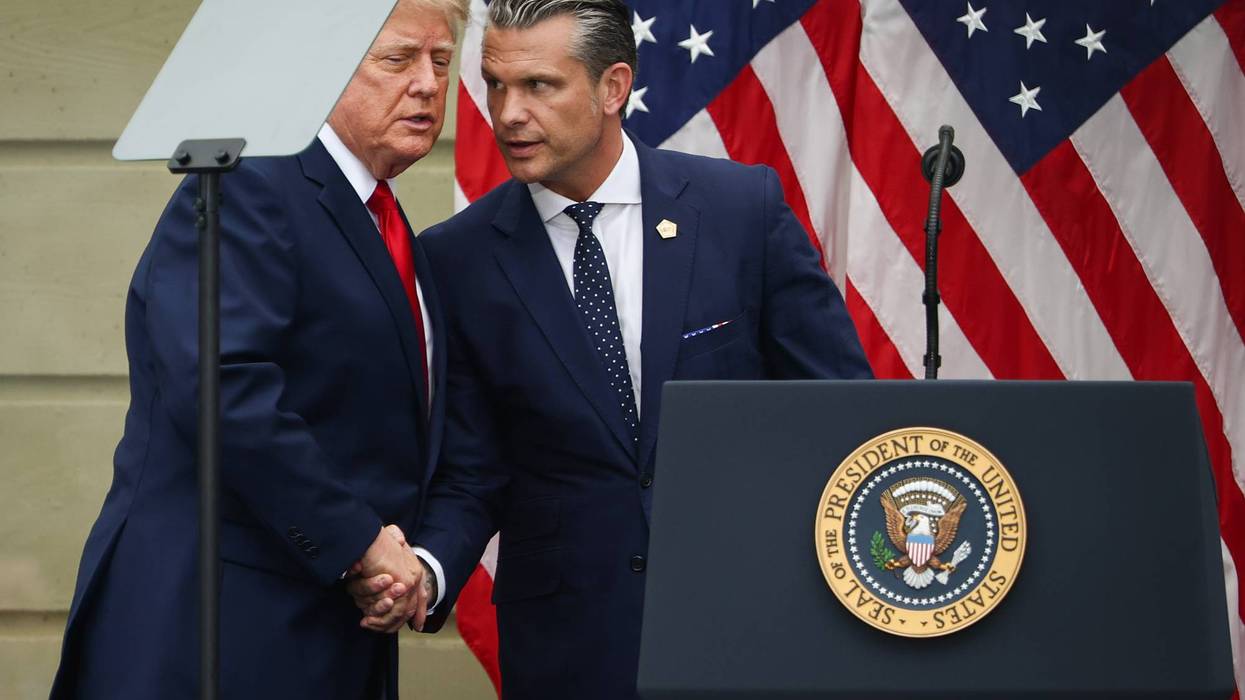
‘Their Plan Is Insane’: Senator Issues Grave Warning About Post-Election Assault on Iran
If carried out, says Sen. Chris Murphy, the attack Trump and Hegseth are plotting "will lead to devastating escalation and the likely destruction of our commitment to the rule of law."
Oct 29, 2026
US Sen. Chris Murphy disclosed Wednesday that he was among the members of Congress recently briefed behind closed doors on the Trump administration's discussions of a possible post-midterm assault on Iran, and he came away with a startling assessment: "Their plan is insane."
Murphy (D-Conn.), who recently traveled to Gulf countries to survey the extensive damage Iran has inflicted on American military installations in retaliation for US President Donald Trump's illegal war, said during an event hosted by the Middle East Institute that he and some of his colleagues got the chance during a classified briefing "to have a fairly detailed conversation about what the war plan would be if we restarted military operations."
Without disclosing specific details from the briefing, the senator said administration officials told lawmakers that a renewed assault would be a "short-duration plan"—a common narrative from an administration that pledged shortly after launching the war that it would be over in a matter of weeks.
"It will lead to devastating escalation and the likely destruction of our commitment to the rule of law," Murphy warned of the administration's post-election plan.
Asked to elaborate, he said that "there's been open reporting as to what we may be planning and the civilian infrastructure that we may be targeting."
"They've been asked by the president to develop a plan," Murphy continued. "The plan that they have developed will lead, in my view, to a prolongment and an escalation of this war that would be devastating for our security interests."
Watch:
Ryan Costello, policy director at the National Iranian American Council (NIAC), called Murphy's remarks "a chilling warning that underscores the need to end the Iran war immediately."
In recent days, major media outlets including The Associated Press, CNN, and The Wall Street Journal have reported that the Trump administration has notified Middle East allies of a potential new military assault on Iran following next week's elections in the US.
According to the Journal, the US "has told several Gulf Arab countries to be prepared for a short, intense military campaign" in Iran following the midterms.
Citing unnamed officials, CNN reported that "Trump has not made up his mind on what he will do after the midterms but that he appears to be leaning toward ordering major action." The outlet noted that "leaders in US Central Command and the Pentagon have been developing a wide-ranging target list, which includes Iranian energy infrastructure, military sites, and nuclear facilities."
Sina Toossi, a senior non-resident fellow at the Center for International Policy, said Thursday that he increasingly believes "some level of infrastructure warfare between the US/Israel and Iran, on a scale we haven't yet seen, is inevitable."
"With that said, I wouldn't expect such an infrastructure war to last long, or reach catastrophic levels, largely because I expect Iran would retaliate on a scale that would compel the US to stop quickly," Toossi continued. "Yet if that doesn't happen, the consequences could be disastrous for all sides. The destruction of critical regional energy infrastructure would greatly exacerbate the existing energy crisis, likely push many economies, including the US, into recession, and deal a devastating blow to the rest of Trump's presidency and his legacy."
"Whether that prospect has already deterred him, however, remains quite unclear," he added.
Trump himself has floated a possible attack on Iran while campaigning for Republicans in recent weeks. At a rally in Lubbock, Texas earlier this week, the president told a crowd of supporters: "You'll see Iran in a couple of weeks, if you don't mind."
"There is a way forward, but it can only materialize once the US administration genuinely accepts that it has no military options."
Meanwhile, US Vice President JD Vance—widely viewed as the leading choice to succeed Trump at the top of the Republican ticket in 2028—has reportedly reached out to a leading Iranian official in a bid to revive diplomatic talks.
The Journal reported on Wednesday that Vance, with Trump's approval, "sent a letter to Mohsen Rezaei, the secretary of Iran’s top security body, the Supreme National Security Council, and previously Iran’s longest-serving commander of the Islamic Revolutionary Guard Corps."
"Vance is testing whether Tehran and Washington could find enough common ground to persuade Trump not to give a final order for a short, intense attack on Iran in the coming weeks," the Journal reported. (Trump, who has repeatedly threatened to "annihilate" Iran, publicly denied that he directed Vance to try to revive peace talks with Iran.)
Costello of NIAC said in a statement Thursday that "while the desire to pursue an off-ramp is positive, Trump needs to walk the walk."
"Thus far, there is little to indicate a new approach and a serious desire to end the war," said Costello. "There is no military solution to the conflict with Iran, yet Trump still seems to think there is and that he’ll get to decide when the next round of fighting pauses. These are wrong-headed and dangerous conclusions to hold."
On the Iranian side, Foreign Minister Abbas Araghchi wrote in a Financial Times op-ed last week that while Tehran is "firmly committed to seeking a dignified peaceful resolution to the conflict, we are also fully prepared to defend ourselves."
"President Donald Trump entered this war on the basis of fundamentally erroneous assumptions about Iran’s fortitude. It appears that he continues to be wrongly told that our armed forces are unprepared to defend the homeland, despite all evidence to the contrary," Araghchi wrote. "To state the obvious, we have no trust whatsoever in the sincerity of the US administration’s professed desire for peace with Iran."
"Given that the White House has shown no willingness to reach an understanding on the way forward, while also threatening more violence, there is little reason to expect progress now," he added. "In spite of all this, as a career diplomat, I am obliged to do my utmost to give diplomacy a chance, even when hope of success is scant... There is a way forward, but it can only materialize once the US administration genuinely accepts that it has no military options."
Keep ReadingShow Less
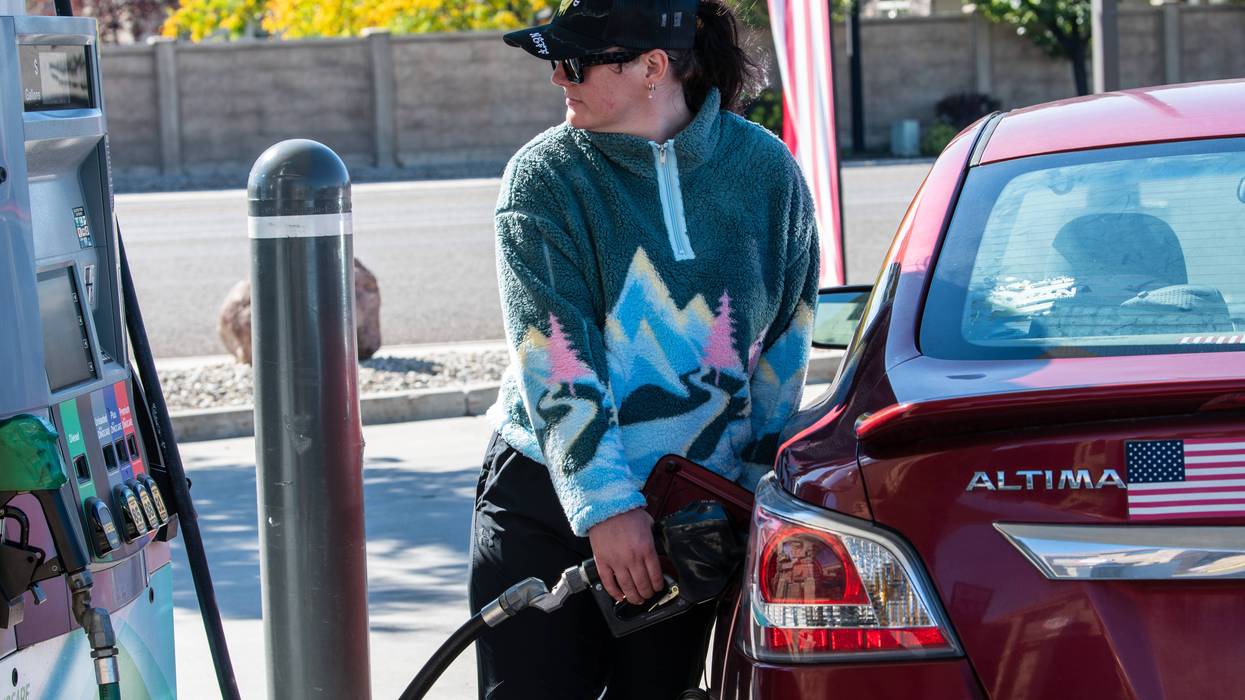
Oil Giants Post Record Profits as Trump Brags 'We're Making a Freaking Fortune'—And Americans Suffer at Pump
"Your pain is his paycheck," said one congressman of the president, who holds tens of millions of dollars in oil and gas stocks.
Oct 29, 2026
As oil giant Shell posted its third-quarter profits Thursday, the "freaking fortune" President Donald Trump mentioned last weekend at a campaign rally in Georgia became clear.
The president had noted that oil prices are "temporarily high," eight months after he joined Israel in launching an illegal, unprovoked war against Iran, setting off a conflict in which Iran swiftly closed the Strait of Hormuz in retaliation and sent energy prices soaring in the US and around the world.
"The United States oil and gas business is making hundreds of billions of dollars," Trump said at the rally ahead of the midterm elections, in which the cost of living tops the list of priorities for voters. "I don't give a damn, I'm going to say it—we're making a freaking fortune."
The "we" he was talking about didn't appear to include the vast majority of Americans, who are paying an average of $4.23 per gallon for gas—up from $2.87 before the Iran War started.
But it did include Shell, which said Thursday it had doubled its profits in the last quarter from July-September, raking in $10.8 billion. In the third quarter of 2025, the company made $5.4 billion.
Shell's investors were also among those making a "freaking fortune," with the company planning to return $5 billion through its share buyback program over the next three months—up from $3 billion last quarter.
UK company BP and other US oil majors, including ExxonMobil and Chevron, are expected to post their third-quarter profits on Friday, but in France, TotalEnergies reported similarly skyrocketing income.
The company reported a record-breaking net profit of $8.3 billion from July-September, while the Spanish oil giant Repsol quadrupled its profits over the first nine months of 2026, raking in $5.6 billion.
French government spokesperson Maud Bregeon told the TV network BFM that officials had asked TotalEnergies to "set an example" by passing on its savings to consumers, from the government's release of 10 million barrels of diesel from strategic reserves to distributors.
"We are asking Total to pass on the benefits of these released barrels—by lowering prices—and to continue capping prices for as long as necessary," said Bregeon. The government called on Total to reduce gas prices by 12-18 cents per liter, but CEO Patrick Pouyanne said Thursday the price reduction would likely amount to just 8-12 cents per liter.
In the US, households have paid an average of $856 more on gas since the war began—but the president has joined fossil fuel giants in reaping profits from the war that has killed more than 3,400 Iranians and more than 3,600 Lebanese people as the conflict has widened, as well as at least 21 US soldiers. Well over 100 people have been killed across other Middle Eastern countries.
With Trump continuing to trade stocks and bonds thousands of times this year, his personal holdings in the oil and gas industry have shot up to at least $22.5 million, and as much as $81.6 million. At the end of 2025 he held between $12.6 million and $46 million in the industry.
Democrats on the Joint Economic Committee in Congress said this week that Trump bought between $4.7 million and $17.5 million in oil and gas stocks from March-August, while also selling up to $5.4 million in stocks.
The White House has insisted that Trump's stock portfolio is "independently managed by third-party financial institutions," but Democratic lawmakers emphasized that the Iran War has allowed the president's personal wealth to balloon by as much as $35.8 million since February from oil and gas stocks.
With gas prices putting pressure on household budgets, said Rep. Jim McGovern (D-Mass.), "your pain is his paycheck."
Philip Evans, a senior climate campaigner for Greenpeace, told Agence France-Presse that the soaring profits for oil giants and the president are being reported "against a backdrop of near-constant climate disaster both in the UK and worldwide," and called on the UK government to "tax these companies for the untold damage they're inflicting."
"These profits go beyond mere greed," said Evans. "They are openly villainous."
Keep ReadingShow Less
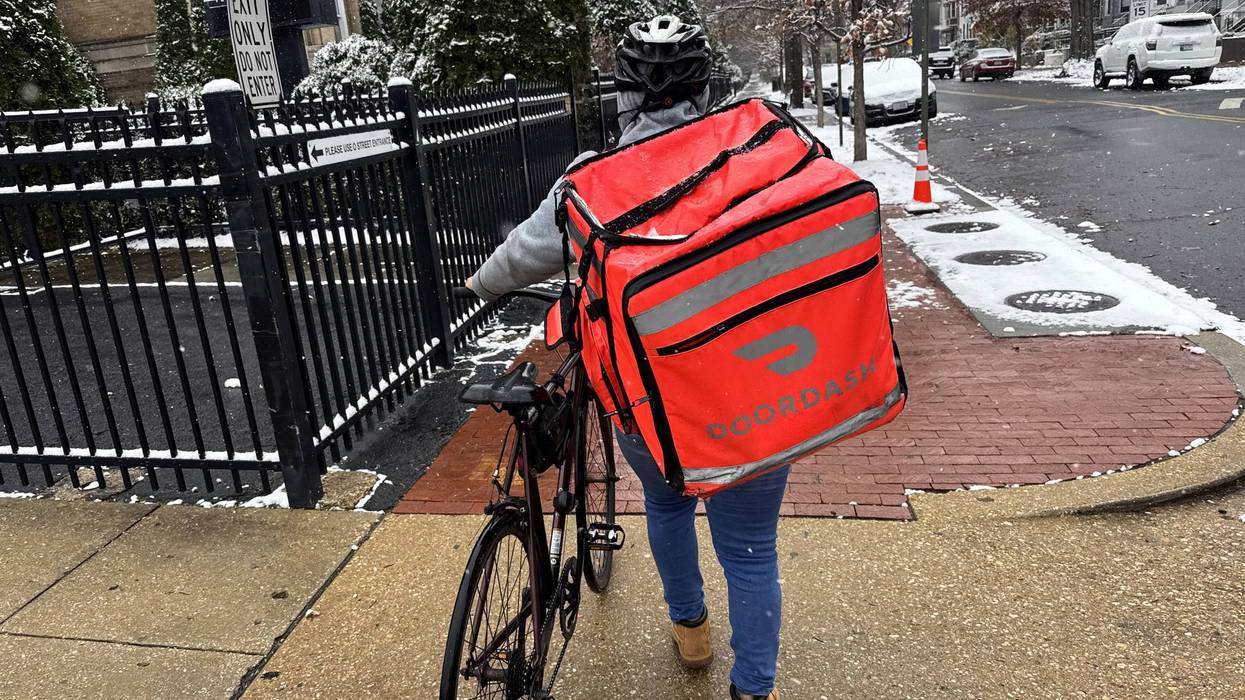
Trump FTC Urged to Prevent 'Two of the Biggest Ripoff Machines in America' From Merging
"Instacart and DoorDash have spent the better part of a decade bullying main street businesses and denying fair pay and benefits to their combined 9 million workers."
Oct 29, 2026
The US Federal Trade Commission on Thursday faced immediate calls to block DoorDash's proposed $17 billion acquisition of rival Instacart, with opponents of the merger arguing it would create a "food delivery monopoly" with disastrous consequences for workers, consumers, and small businesses.
“This is a brazen merger given the amount of heat on both companies for ongoing harms to restaurants, grocers, delivery drivers, and consumers,” Lee Hepner, senior legal counsel at the American Economic Liberties Project, said in a statement, alluding to investigations that DoorDash and Instacart are facing at the state and federal levels. On Wednesday, the FTC ordered DoorDash, Instacart, and other companies to provide the agency with detailed information about their "use of personal data to set prices and compensation."
"Instacart and DoorDash have spent the better part of a decade bullying main street businesses and denying fair pay and benefits to their combined 9 million workers," said Hepner. "This merger represents the next frontier of data-driven abuse, exploiting massive asymmetries of power to squeeze worker compensation on the way in and drain consumer wallets on the way out."
Last year, the Groundwork Collaborative and other groups released a report accusing Instacart of deploying "increasingly opaque pricing practices" that are "blowing a hole in families’ wallets."
Lindsay Owens, Groundwork's president and CEO, said in response to DoorDash's proposed acquisition of Instacart that "a grocery company that made its fortune running experiments on shoppers to determine how much they can overcharge them is now merging with a delivery company that built tech to track its customers’ every click and scroll to charge them as much as it can."
"The FTC knows these two companies are at the forefront of unfair and deceptive pricing technology, which is why it ordered them to open up their pricing labs just yesterday," said Owens. "Two of the biggest ripoff machines in America should not be allowed to become one. The FTC must block this merger."
News of the proposed merger comes a month after DoorDash agreed to a historic $131.5 million settlement with New York City for shortchanging delivery drivers.
In a social media post on Thursday, New York City Mayor Zohran Mamdani wrote that "just last month, DoorDash couldn’t seem to find the money to pay their deliveristas—until our administration forced them to give back $131M+ in stolen wages and penalties."
"This week, they’ve managed to find $17 billion to acquire one of their main competitors," wrote Mamdani. "Corporate consolidation means higher prices, harsher exploitation, and greater economic inequality for New Yorkers. We’ve stood up to these giants before. That doesn’t stop now."
The Trump administration's antitrust record during his second White House term doesn't inspire confidence that the Republican-controlled FTC will intervene to block DoorDash's acquisition of Instacart. States could choose to sue over the merger in the absence of federal action.
“There’s no useful mitigation short of blocking this outright, which the FTC or any state attorney general must now do," said Hepner of the American Economic Liberties Project.
Keep ReadingShow Less
See More
Most Popular