July, 01 2020, 12:00am EDT
US Supreme Court Ruling that Children of Asylum-Seekers Must be Released from Detention Lacks Necessary Provisions for Parents; Risks Further Family Separation
The International Rescue Committee (IRC) responds today to a federal judge's ruling that children of asylum-seekers in detention centers must be released by July 17, 2020 due to the outbreak of coronavirus in these facilities, but leaves the door open for the Administration to effectively separate families by releasing children to sponsors or transfer them to state custody while parents remain detained or are deported.
New York
The International Rescue Committee (IRC) responds today to a federal judge's ruling that children of asylum-seekers in detention centers must be released by July 17, 2020 due to the outbreak of coronavirus in these facilities, but leaves the door open for the Administration to effectively separate families by releasing children to sponsors or transfer them to state custody while parents remain detained or are deported.
This decision also leaves out potentially thousands of adult asylum-seekers and other immigrant groups at the mercy of the detention system to mitigate the spread of COVID-19 among detainees. 72 percent of individuals in detention centers are expected to be infected by day 90 under an optimistic scenario, according to recent modeling.
Olga Bryne, the Director of U.S. Immigration at the IRC said:
"While this decision will provide relief for the children of asylum-seekers, who were needlessly detained across 3 detention centers, it leaves it to the Trump Administration to decide whether the children will leave with their families or else be separated from them. The parents of the children, as well as asylum-seekers and immigrants, are at risk of continued or indefinite detention until their cases are heard. We urge that children and their parents are released together, and with urgency. The U.S. Government must not use this decision as a means to separate families.
"The policy to lock up people for seeking safe haven from danger was cruel at the point of ideation, but to keep them locked in during the most infectious pandemic in 100 years, is inhumane. As the U.S. deals with a new spike of COVID-19 cases breaking a record for daily cases, the risk to public health is exacerbated for those waiting out their cases in detention centers."
The IRC continues to provide emergency humanitarian programming to asylum-seekers on both sides of the U.S. southern border. In Phoenix, the IRC provides comprehensive assistance to asylum-seekers released from U.S. government detention through a collaborative shelter operation in Phoenix providing warm meals, clothing, transitional shelter, travel coordination to more than 8,000 asylum-seekers since June 2018. In California and Texas, we are working alongside partners to respond to asylum seekers' urgent needs.
To protect the health and safety of all, the Department of Homeland Security should take immediate steps to maximize the use of humanitarian parole, release on recognizance, and community-based alternatives to detention, following medical screening and in a manner consistent with public health protocols. Public health experts universally agree that social distancing is one of the most important measures we can all take to combat the spread of COVID-19, something that is impossible in detention facilities.
The International Rescue Committee responds to the world's worst humanitarian crises and helps people whose lives and livelihoods are shattered by conflict and disaster to survive, recover, and gain control of their future.
LATEST NEWS
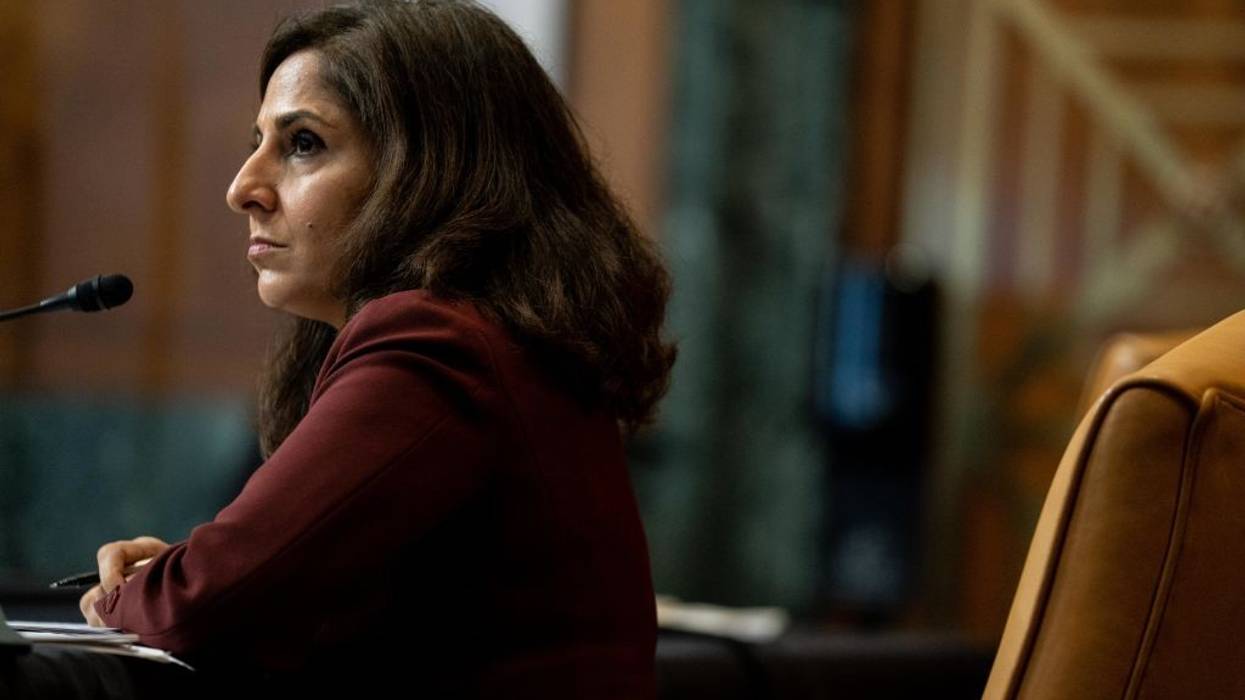
100+ Civil Society Groups Condemn Trump Attack on Democratic Establishment Think Tank
"We stand with the Center for American Progress, not in agreement with every view they hold, but in steadfast support for their rights to voice those views freely and without political retribution."
Sep 01, 2026
A diverse coalition of around 150 organizations on Tuesday collectively spoke out against US President Donald Trump's recent attack on the Center for American Progress, a liberal think tank with ties to the Democratic Party establishment.
The Republican president, through one of his lawyers, threatened to sue the center last month over its July report concluding that there was no evidence his deployment of the National Guard in Washington, DC did anything to reduce violent crime.
"Since our nation's founding, the rights to free speech, association, and the press have been the bedrock on which American democracy has thrived," begins the coalition's statement, spearheaded by Nonprofits Together. "We reaffirm, as has each generation before us, our unqualified commitment to the First Amendment and its foundational protections."
"In so doing, we stand in strong solidarity with the Center for American Progress (CAP), a nonpartisan think tank, and its right to publish expert analysis on the impact of the Trump administration's—or any administration's—policies," it continues. "The free exchange of ideas—including ideas that are inconvenient to those in power—is critical for Americans to understand the nature and impact of the actions of their government."
Trump's legal attack on CAP is just "the latest salvo in the administration's ongoing efforts to suppress the speech of organizations that challenge their policies, defend the rule of law, and protect civil rights and vulnerable communities," the coalition noted.
Other authoritarian attacks—as detailed last December in the Free Press report "Chokehold: Donald Trump's War on Free Speech & the Need for Systemic Resistance"—include the White House taking control of the presidential press pool, legal action such as Trump's lawsuit against Rupert Murdoch and the The Wall Street Journal over reporting on the president's ties to deceased sex offender Jeffrey Epstein, and the administration working to deport foreign scholars and journalists who criticize US policy.
First it was law firms, then universities, and now Trump has threatened a research organization in an attempt to silence them.We're proud to join 150+ organizations standing up for @americanprogress.bsky.social and the First Amendment. Read the full statement: nptogether.org/press/cap-st...
[image or embed]
— American Oversight (@weareoversight.bsky.social) September 1, 2026 at 12:14 PM
Stressing that there are often disagreements "even within think tanks," the coalition warned Tuesday that attempting to silence sources of information "degrades our free exchange of ideas, and risks leaving only distortions in the public square."
"This is infinitely more damaging to our democratic ideals when done for purely political purposes," the groups argued. "There are few issues more fundamental to the First Amendment than the right of an independent organization to publish evidence-based analysis of a government policy and how it is or is not working."
"This is not about ideology or partisanship," the organizations continued. "This is true regardless of who is in power, and who is issuing public critiques of that power. We stand with the Center for American Progress, not in agreement with every view they hold, but in steadfast support for their rights to voice those views freely and without political retribution."
The signatories range from environmental, labor, and legal groups to those focused on faith, housing, immigration, LGBTQ+ rights, reproductive freedom, and more. They include the ACLU, Center on Budget and Policy Priorities, Drug Policy Alliance, Economic Policy Institute, Giffords, Greenpeace USA, Human Rights Campaign, Indivisible, National Education Association, Oxfam America, Public Citizen, and Union of Concerned Scientists.
“The free exchange of ideas—including ideas that are inconvenient to those in power—is critical for Americans to understand the nature and impact of the actions of their government.” CAC stands with @americanprogress.bsky.social: nptogether.org/press/cap-st...
[image or embed]
— CAC (@myconstitution.bsky.social) September 1, 2026 at 11:30 AM
CAP was founded in 2003 by John Podesta, who has served in various roles under former Democratic Presidents Bill Clinton, Barack Obama, and Joe Biden. The center's current president, Neera Tanden, has also worked for key party leaders. In response to Trump's threat last month, she emphasized that the think tank "is an independent, nonpartisan research organization, and our work is grounded in rigorous, evidence-based research and analysis."
Blasting the threatened lawsuit as "baseless" and "a transparent attempt to silence us," Tanden pledged that "we will neither cower nor bend in the face of it."
"In America, profound disagreements over public policy are resolved through robust public debate, not through threats or intimidation," she added. "Independent data, evidence, and analysis are essential to that debate. Efforts to silence independent research because its findings are unwelcome by an administration or president should alarm every American."
Keep ReadingShow Less

Jewish Artists Condemn Corporate 'Smear Campaign' Against Mark Ruffalo for Israel Criticism
"The time is over for spurious charges of antisemitism to be trotted out, this time in the defense of war, oligarchy, and AI domination."
Sep 01, 2026
A group of over 170 Jewish figures, including many who work in the entertainment industry, have come to the defense of actor Mark Ruffalo as he faces antisemitism accusations from executives at Paramount for criticizing the Israeli government and its ties to powerful corporations.
In a letter released Tuesday, prominent Jewish figures—including filmmaker Joel Coen, director and author Miranda July, actress Debra Winger, actress and director Ilana Glazer, actress and comedian Hannah Einbinder, and playwright Tony Kushner—accused Paramount of waging a "smear campaign" to shield corporate interests from legitimate criticism.
"Enough with the false and dangerous weaponization of charges of antisemitism," the letter states, "against those who are brave enough to point out the obvious: that the assault on the Palestinian people and the assault on our liberties at home are deeply interconnected, and there is nothing antisemitic about recognizing that fact."
Ruffalo was accused of being an antisemite after he cited the work of Oracle founder Larry Ellison, father of Paramount CEO David Ellison, in helping the Israeli military carry out a years-long assault on Gaza that has left an estimated 73,500 Palestinians dead.
The actor specifically said that Oracle was powering "an apartheid system of oppression" in the Middle East, which he warned could be exported everywhere if "merged into one of the largest media conglomerates in the world," a reference to the proposed $110 billion megamerger between Paramount and Warner Bros. Discovery.
However, the Jewish figures' letter points out that there is nothing at all antisemitic about expressing concerns about corporate megamergers that could fuse the power of mass media with the power of a technology giant.
In particular, the letter says that the Paramount-Warner Bros. merger is part of "a larger project of tech-driven domination, a project Larry Ellison and his partners have never been shy about trumpeting—and one they themselves have explicitly linked to their support for the ongoing depredations being visited on the people of Palestine and their silencing of critics of those horrors."
The letter also slams Ellison for trying to create an "Orwellian world" as he "consolidates control over what we watch and how we watch it, knowing that as we watch he and his corrupt cohort will always be watching us."
"The time is over for spurious charges of antisemitism to be trotted out, this time in the defense of war, oligarchy, and [artificial intellignece] domination," the letter concludes. "That tired playbook has run its course. We stand proudly with Mark Ruffalo, and with all decent people who are bravely rising and speaking truth to power."
Keep ReadingShow Less

Wendell Berry, Writer and Activist Who Fought Corporate Takeover of US Farming, Dies at 92
“I was taught that taking care of land was one of the primary human responsibilities,” Berry said in 2009.
Sep 01, 2026
The death of poet, activist, and conservationist Wendell Berry on Monday was called by one labor organizer "a loss of morality and clarity and compassion," as admirers of Berry's lifelong crusade to defend the environment honored his memory by sharing favorite poems and other works.
Berry died at the age of 92 at his home in Port Royal, Kentucky, where he spent decades writing about his farming the land, teaching, and writing about the need to fight "the concentration of farmland into larger and larger holdings and fewer and fewer hands," as he wrote in one of his best-known works, The Unsettling of America: Culture and Agriculture.
"The true measure of agriculture is not the sophistication of its equipment, the size of its income, or even the statistics of its productivity, but the good health of the land," wrote Berry in the essay collection, published in 1977.
He stressed that the "increase in overhead, debt, and dependence on machines" in the agricultural sector "is a matter of complex significance, and its agricultural significance cannot be disentangled from its cultural significance."
The Unsettling of America was one of more than 50 works published by Berry, whose commitment to interdependent community-building, small farms, and the protection of nature was woven into his fiction, poems, and essays alike.
In America magazine in 2021, Jon Sweeney wrote in a review of What I Stand On, a collection of Berry's writing, that "he writes about what he has experienced, what he has learned, and always with humility for what he does not know."
"The natural world is his primary teacher: its rhythms, its largesse, its mysteries,” Sweeney wrote. “And in the essays, the natural world often reflects how change in humans is also natural, inexplicable, and possible. I think this is what many who love his writing appreciate most about Berry, whether they realize it or not."
Berry traveled and taught briefly at New York University as a young man before returning to his Kentucky roots, remaining there for six decades. He told The New York Times in 2018 that writing and working in rural Kentucky "made a permanent connection between me and my native place, and with its landscape. The landscape was there to check me if I was wrong. I could never go away and make up stuff at cocktail parties about the backwoods of Kentucky. I worked with people here in all walks of life and learned from them."
In his 1969 essay "The Long-Legged House," named for the two-room cabin his ancestors had lived in, to which Berry returned to write his books and other works, he offered an early warning about the harm humans and their industries—agribusiness and fossil fuels—were doing to the Earth.
“We have lived our lives by the assumption that what was good for us would be good for the world," wrote Berry. "We have been wrong. We must change our lives so that it will be possible to live by the contrary assumption, that what is good for the world will be good for us. And that requires that we make the effort to know the world and learn what is good for it.”
The writer Joyce Carol Oates said on social media on Monday that "long before it became a more familiar subject, Wendell Berry was conscious of the endangered natural environment; indeed, Berry helped to raise this consciousness."
In addition to making his views on the environment and corporate control over the natural world known through his writing, Berry took part in direct actions to protest mining, war, and capital punishment.
He rallied against the US war in Vietnam, saying, "Peace is more important than victory," and was arrested in 1979 for protesting the Marble Hill Nuclear Power Plant in Madison, Indiana. Thirty years later he was one of thousands who marched on Washington against the Capitol Power Plant, and two years after that, in 2011, Berry spent the night at a sit-in in the Kentucky governor's office to protest mountaintop removal mining.
In 2009 he also withdrew his writings from the collection of University of Kentucky, his alma mater, to express opposition to the university's $7 million donation from a coal producer; the school then named a dormitory Wildcat Coal Lodge.
“I was taught that taking care of land was one of the primary human responsibilities,” Berry told the student newspaper, the Kentucky Kernel, at the time. “In the long run, the top soil, the forests, and the woodland of this state will be more valuable than the coal deposits.”
Silas House, another writer who hailed from Kentucky, said that with Berry's death, "another great light" had gone out.
House described the writer as "complex. Brilliant. Revolutionary."
Keep ReadingShow Less
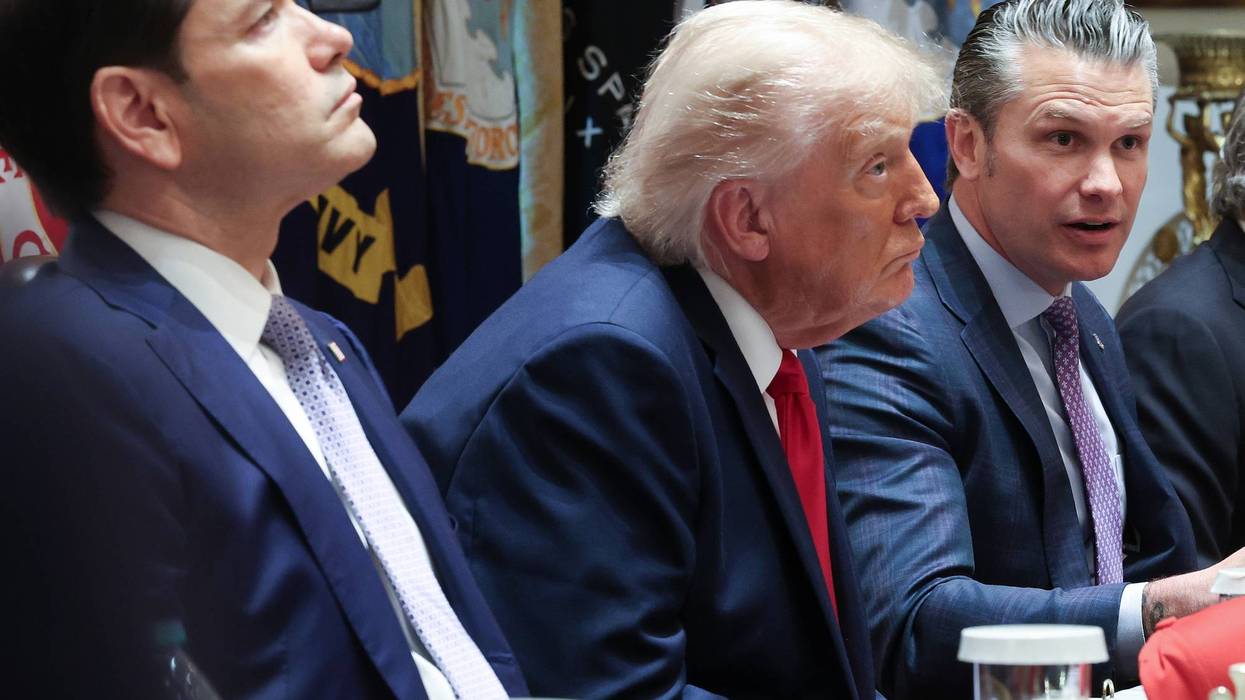
Iran War Has Cost the Average American More Than $1,200 Over Six Months, Economist Estimates
One columnist said it’s impossible to know the true extent to which the war has hit Americans’ pocketbooks, but “this figure should be understood as a rough sketch that conveys the magnitude of Trump’s folly.”
Sep 01, 2026
As President Donald Trump's war with Iran crosses the six-month mark without an end in sight, a new analysis calculates that it has cost the average American household at least $1,200 more than they would have paid if it had never started.
That is according to Mark Zandi, the chief economist at Moody’s Analytics, who was quoted by New Yorker columnist John Cassidy on Monday as he sought to look beyond military costs to determine the true extent to which the war has impacted Americans' pocketbooks.
Cassidy wrote that the task of reaching a solid number is "far from straightforward," especially since, in his assessment, the Pentagon has been "less than forthright about many aspects of the conflict," including the cost.
Defense Secretary Pete Hegseth told the Senate Appropriations Committee in July that the conflict had cost roughly $37.5 billion.
But prior to that, NBC News reported on internal Pentagon estimates that put the cost of the conflict between $80 billion and $100 billion when accounting for the cost to repair damage to US military bases, which has occurred on a level that, according to former Marine Col. Mark Cancian, has not been seen since World War II.
These costs do not include the additional $73 billion that House Republicans have approved for defense and intelligence related to the war, which will come up for a Senate vote in September.
"Whatever the true figure is, it’s a considerable sum that comes on top of the bloated trillion-dollar Pentagon budget that has already been approved for 2026, and it is money that could, in theory, be used for other purposes," Cassidy wrote.
He cited a recent analysis by the Center for American Progress (CAP), which found that the $73 billion could “provide full Medicaid coverage for 5 million more people, with $33 billion left over."
Some of those remaining funds could be used to provide free school lunch for every child in America, provide free childcare for 1 million children, or extend the Affordable Care Act tax credits that Republicans allowed to expire last year, which would reduce premiums for around 20 million Americans.
Trump has explicitly emphasized that funding the war is coming at the expense of other priorities.
“We’re fighting wars. We can’t take care of daycare. You gotta let a state take care of daycare, and they should pay for it too,” he said in April. “It’s not possible for us to take care of daycare, Medicaid, Medicare, all these individual things.”
Just taking the lower-bound $80 billion cost estimate would mean the average household has been forced to pay about $300 more as a result of the war, using the same methodology that the National Priorities Project used to estimate the cost to taxpayers in April. But this is only a fraction of the overall cost.
Average gasoline prices have shot up by more than $1 since the war began, while the price of diesel has risen by roughly half. Citing an energy-cost tracker maintained by the Climate Solutions Lab at Brown University’s Watson School of International and Public Affairs, Cassidy said these combined price hikes have cost Americans an additional $93 billion—more than an extra $700 per household.
Oil and fertilizer prices have also shot up, rippling through the economy and contributing to higher food prices. The overall rate of inflation has climbed to 3.4%, up from 2.4% in February. Cassidy notes that inflation has also hiked market interest rates, "raising the costs of mortgages, car loans, and other types of consumer credit."
Combining all these added costs, Zandi estimated that the average household had paid roughly an extra $1,200 in the six months since the war started, but emphasized that this was only a conservative estimate.
"Rather than being taken as a precise number," Cassidy added, "this figure should be understood as a rough sketch that conveys the magnitude of Trump’s folly."
As the midterms approach, Trump's approval rating has hit an all-time low of just 33% according to a poll out Monday from Reuters/Ipsos, which also found just 36% approval for the war.
Meanwhile, 71% of Americans, including 4 in 10 Republicans, said they disapprove of how Trump is handling the cost of living. This has caused the longstanding Republican advantage in the economy to evaporate, with 36% of registered voters saying in a poll last week they believe Democrats are better prepared to tackle the cost of living compared with 28% of Republicans.
"Absent a break in the war’s current stalemate between now and the November midterms," Cassidy said, "the president and his party may end up paying a higher political price. But the economic costs of the conflict can’t be reversed."
Keep ReadingShow Less
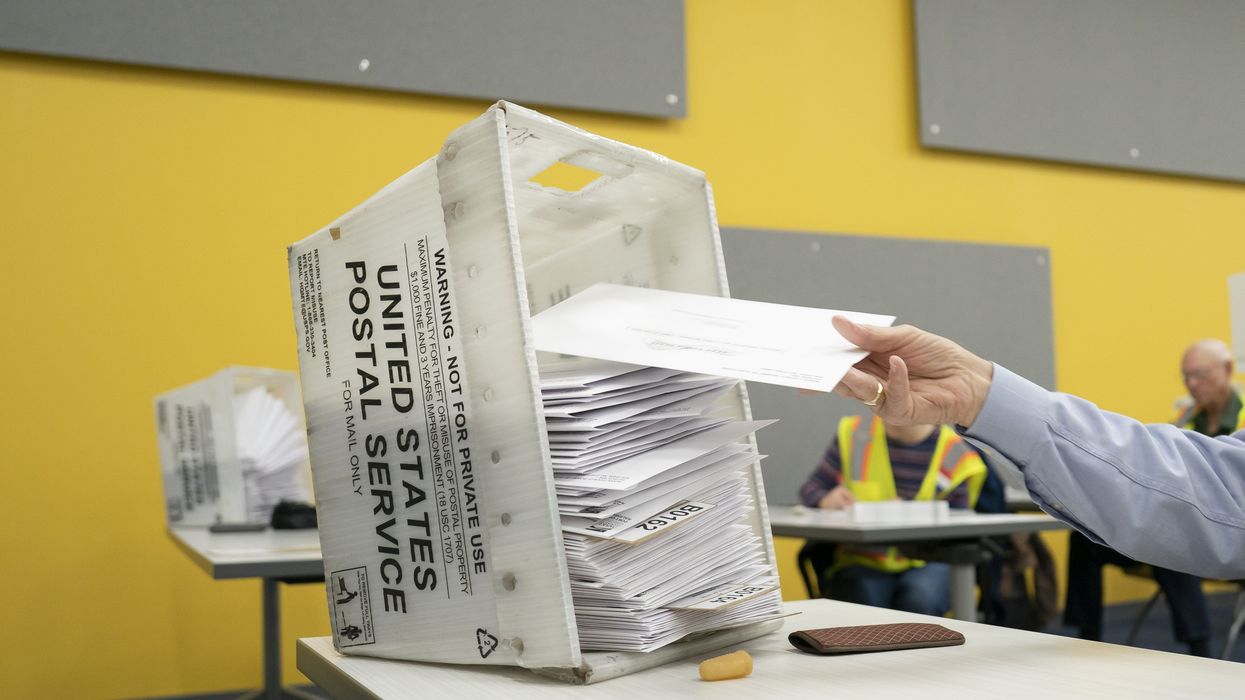
Postal Service Whistleblower Warns Trump Assault on Mail-In Voting Could ‘Derail the Midterm Elections’
An anonymous federal official warned of a "high likelihood that the new ballot mail verification processes will result in major disruptions in mail ballots ever getting delivered to voters."
Sep 01, 2026
An anonymous federal official warned in a whistleblower disclosure submitted to members of the US Congress that the Postal Service's haphazard implementation of President Donald Trump's executive order on mail-in voting could "derail the midterm elections" by preventing potentially millions of American voters from receiving ballots.
The disclosure was released in full on Tuesday by Sen. Richard Blumenthal (D-Conn.), who included the document in a letter to Postmaster General David Steiner—Trump's pick to lead USPS. Blumenthal said the whistleblower's account provides "disturbing details about USPS’ seemingly illegal plot to interfere in November’s midterms."
The new disclosure raises "significant concerns" about the Postal Service's "secretive, rushed, chaotic, and fundamentally flawed process" for establishing "an entirely new and untested set of IT systems" in compliance with Trump's March executive order, which is at the center of high-stakes legal fights just weeks before the November midterms.
Trump's USPS directives have been blocked in federal court, but the administration is trying to get them reinstated ahead of the midterm contests—and the whistleblower complaint suggests the administration may be violating court orders by continuing to work on the new systems. Mail-in voting for the midterms is officially set to begin this week.
Described in the disclosure as the "Portal," the new Postal Service IT systems "will govern the delivery of ballots to voters as soon as the 2026 mid-term federal elections and beyond." The whistleblower raises "grave concerns" that the Trump administration has "hidden the high likelihood that the new ballot mail verification processes will result in major disruptions in mail ballots ever getting delivered to voters."
"As presently designed, if even one bar code on one single ballot in a bulk-mailing of 10,000 ballots fails to properly scan during the verification process, the entire batch is rejected and sent back to the state—effectively stopping the ballots from being mailed to voters," the disclosure states. "The whistleblower is particularly concerned that the Portal (where the bar codes are stored) will almost certainly have significant operating problems when released to the public, due to the rushed IT development; this will contribute to failures in the verification process."
The whistleblower filing notes warnings that the Portal system could "completely crash" during rollout and quoted descriptions from IT workers at the Postal Service who described the entire process as "a shit show."
Theme throughout Whistleblower disclosure is how USPS IT work is complete mess, likely to "completely crash."
"Workers have described the election ballot mail development process as 'a sh*t show."
Raises stakes enormously on any state officials thinking to go along with this. pic.twitter.com/e8GrLYxu1W
— Ryan Goodman (@rgoodlaw) September 1, 2026
Libby Liu, the CEO of Whistleblower Aid—a nonprofit representing the anonymous federal official—said in a statement that "the whistleblower’s service to our nation is warning the public that their ability to vote is in serious jeopardy."
"We are crossing the Rubicon of American elections," said Liu. “This dangerously defective mail-in ballot process could disenfranchise millions of voters, ensnaring ballots in red tape under the guise of solving a non-existent problem. People in states that rely heavily on vote-by-mail will have a more difficult time making their voices heard in our challenged democracy this November."
The USPS whistleblower also provided their account to the House Oversight Committee. Rep. Robert Garcia (D-Calif.), the top Democrat on the committee, said in a statement Tuesday morning that the official's account makes clear that "Trump's attack on vote-by-mail for the 2026 election is more serious than previously understood."
"This new secret tracking system at the US Postal Service is faulty, untested, and threatens to totally disrupt ballot delivery for millions of American citizens," said Garcia. "We are fighting in court to protect the right to vote by mail for all and will continue to investigate. This unconstitutional and dangerous power grab must be permanently and immediately blocked."
Keep ReadingShow Less
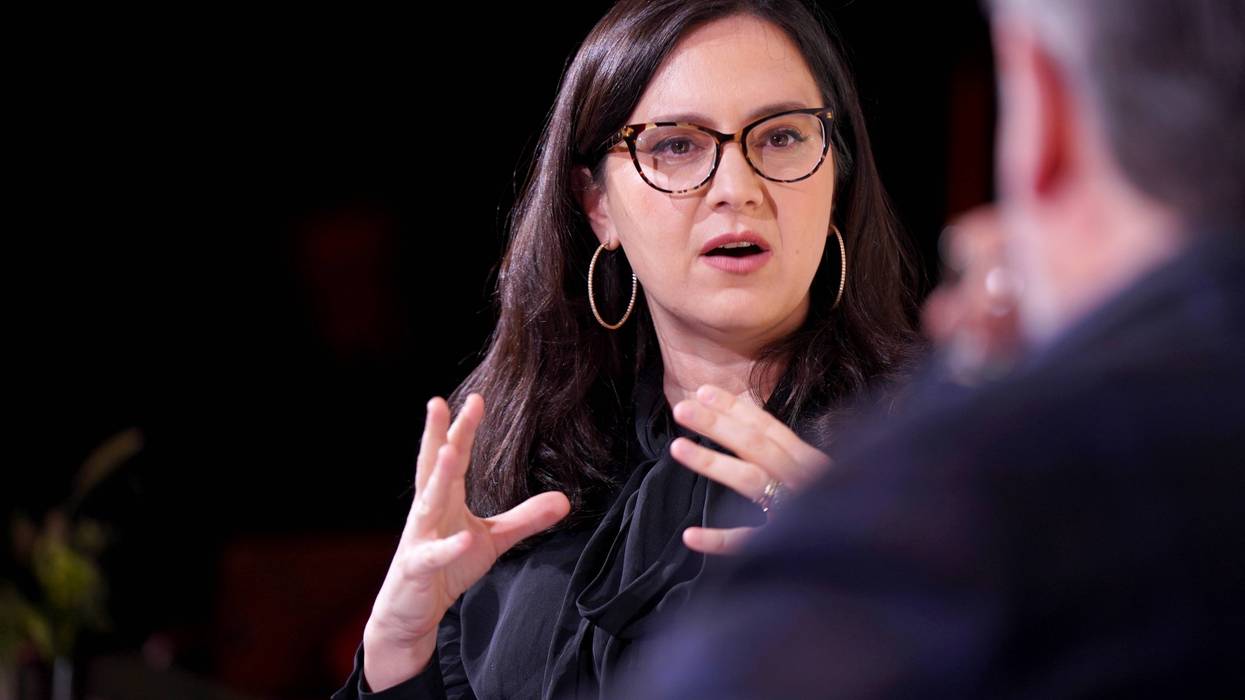
Bari Weiss Personally Involved in CBS News Hit Piece on Abdul El-Sayed: Report
"They took a small nugget of news, forced it into something much larger, and messed up," said one CBS News staffer.
Sep 01, 2026
A Tuesday report from Status claims that CBS News editor-in-chief Bari Weiss was personally involved with a widely criticized story that linked Democratic US Senate candidate Abdul El-Sayed to the September 11 terrorist attacks.
The CBS piece, which was published on Monday, drew criticism from Democratic lawmakers and progressive journalists for saying that El-Sayed "may be facing the risk of renewed scrutiny and fresh political attack" due to past innocuous statements he'd made about the 2001 attacks on the World Trade Center and the Pentagon.
According to Status' sources, Weiss "personally directed" that the story's headline be changed to "specifically mention that El-Sayed, who is vying to become the first Muslim American senator, had deleted tweets referencing" the attacks.
The two deleted posts highlighted in the story were far from scandalous, however. In the first post, El-Sayed called on Americans to unite in a common purpose to combat the Covid-19 pandemic just as they came together after the 2001 attacks, and in the second one he drew attention not just to the victims who died on 9/11, but to all the people who died afterward as a result of the US War on Terror.
Status also reported that Weiss "praised the story during the network's daily editorial meeting Monday, signaling her support for the piece to the entire network."
Weiss' endorsement of the El-Sayed story came despite the fact that senior staffers at CBS raised concerns about it with the network's standards department, Status added.
“They took a small nugget of news, forced it into something much larger, and messed up,” one staffer said.
Another staffer told Status that the story is "shameful" due to its "overt" racism.
One anonymous CBS News staffer similarly told Zeteo media columnist Justin Baragona on Monday that the Weiss-endorsed story was “trash” and “horribly Islamophobic.”
Weiss was installed as CBS editor-in-chief last year after David Ellison, the son of billionaire Oracle founder Larry Ellison, a megadonor to President Donald Trump, acquired network parent company Paramount.
In that time, CBS ratings have collapsed to record lows and Weiss has overseen a mass purge of reporters and staffers at the network's legendary news program "60 Minutes."
Veteran "60 Minutes" correspondent Scott Pelley, who was fired by CBS earlier this year, subsequently accused the Weiss-led management team of instructing him to "inject falsehoods and bias into a politically sensitive story."
Keep ReadingShow Less
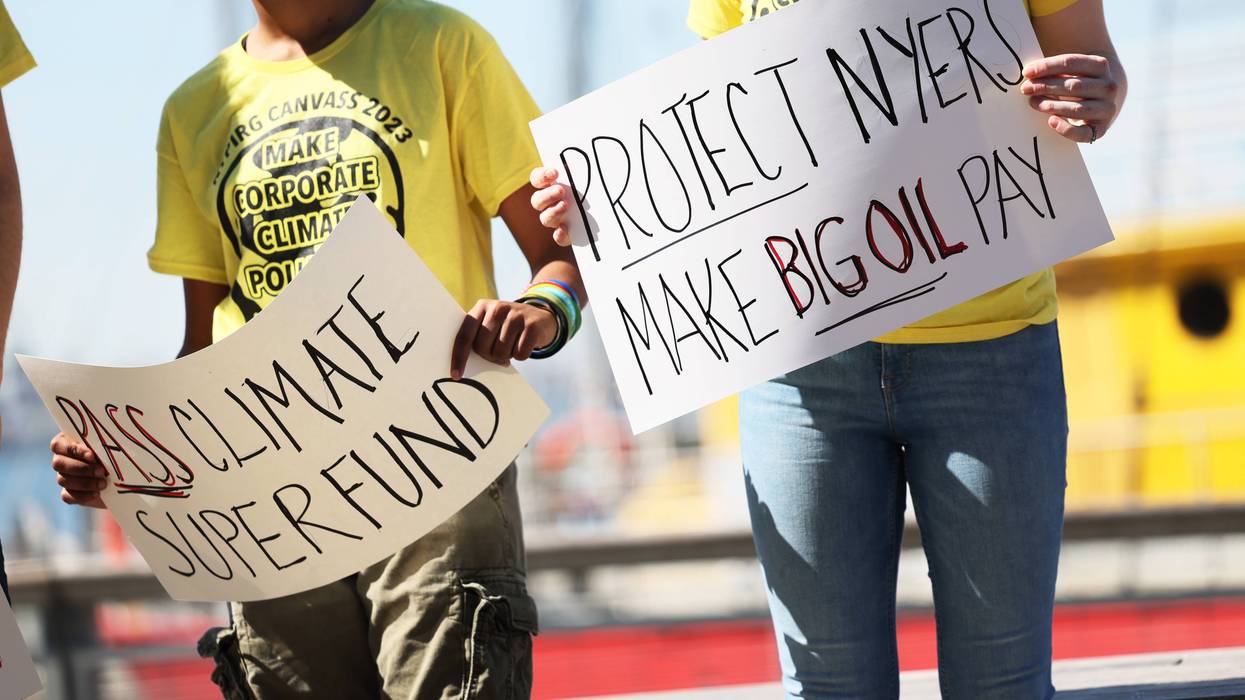
'Far From the Last Word': Campaigners Urge Appeal After Judge Blocks New York Climate Superfund Law
“If allowed to stand, this wrongheaded ruling would shift $75 billion in planned climate-resilience funding from major fossil fuel polluters onto New York taxpayers,” said one advocate.
Sep 01, 2026
Climate advocates on Monday called on New York Attorney General Letitia James to appeal a ruling by a federal judge that found the state's superfund law, aimed at holding fossil fuel companies accountable for the weather disasters they cause, was unenforceable—"a bad decision," as campaigner Jamie Henn said, "based off a controversial ruling."
Henn, co-founder of 350.org and director of Fossil Free Media, said that "a cabal of Big Oil lawyers, Republican attorneys general, and Trump administration stooges just convinced a federal judge to strike down" the law, which was signed in 2024 by Democratic Gov. Kathy Hochul and would require oil and gas companies in New York to contribute about $3 billion annually—$75 billion total—to a superfund starting in 2028.
That sum would be divided among the companies according to their greenhouse gas emissions, which cause planetary heating and the hurricanes, flooding, and other extreme weather disasters that are associated with it.
Companies that have been found responsible for at least 1 billion tons of fossil fuel emissions between 2000-18 would be required to contribute to the fund, which would be used to rebuild infrastructure and help communities adapt to more frequent extreme weather events.
Chief Judge Brenda Sannes of the US District Court for the Northern District of New York ruled that a federal appeals court's earlier decision in City of New York v. Chevron Corp., in which the city's lawsuit against oil companies for climate damages was thrown out, was relevant to the Climate Change Superfund Act.
Sannes, who was appointed by former President Barack Obama, also said in her ruling that the state law is not authorized by the Clean Air Act and is preempted by federal law.
Henn said that after 22 Republican states joined industry groups and the US Chamber of Commerce in suing over the law, the judge "fell for Big Oil's argument that because of a precedent set by a controversial ruling involving the City of New York, the superfund program was preempted by the Clean Air Act."
"But that's bogus," said Henn. "The superfund program does nothing to regulate future emissions, it's just asking polluters to pay for a small share of the damages caused by their past pollution."
A judge in Vermont is expected to rule soon on the state's superfund law, which was the first in the nation. Sixteen states in all have proposed similar laws.
"This is far from the last word on the legality of climate superfund bills," said Henn.
Maya Golden-Krasner, deputy director of the Climate Law Institute at the Center for Biological Diversity, urged other states to "move forward with fair legislation that makes polluters pay for their damage."
"With the Trump administration gutting climate protections," she said, the campaign for superfund laws in states including California "is gaining momentum every day" despite the legal setback.
“If allowed to stand, this wrongheaded ruling would shift $75 billion in planned climate-resilience funding from major fossil fuel polluters onto New York taxpayers,” said Golden-Krasner.
Henn also said that the push to hold fossil fuel giants accountable for the damages their emissions cause "isn't going away."
"Eighty percent of voters think the fossil fuel industry should pay their fair share of climate damages," said Henn. "As disasters increase (and oil profits keep skyrocketing), the call to make polluters pay will only grow louder."
Keep ReadingShow Less
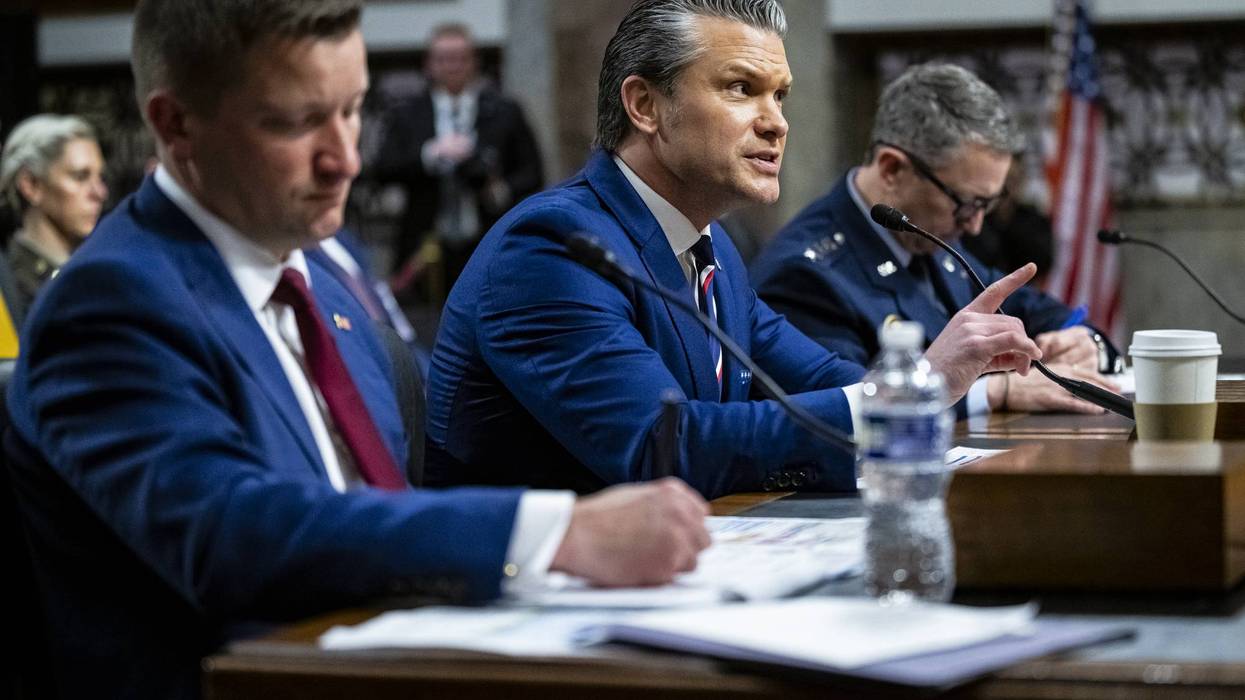
Analyst Warns New Pentagon Plan for Iran Would Amount to 'Permanent State of War'
"Make no mistake," said Trita Parsi, "to periodically bomb a country is to fight a forever war."
Sep 01, 2026
The US Defense Department is reportedly considering a new strategy for Iran that would entail bombing the country "periodically" in an effort to keep ship traffic flowing through the Strait of Hormuz, a plan that one analyst said would amount to the kind of forever war that President Donald Trump once vowed to avoid.
"During previous administrations, Israel tried to sell war with Iran to the US and conceded that military strikes would not knock out Iran’s nuclear program, but would require 'periodic' return to kinetic action to keep the program in check," Trita Parsi, executive vice president of the Quincy Institute for Responsible Statecraft, wrote late Monday. "The US rejected the plan precisely because it didn’t want to be in a permanent state of war with Iran. Now, Trump’s secretary of war is pushing for it."
Parsi's comments came in response to new reporting by Axios indicating that Trump administration officials are weighing a plan under which US forces would "strike Iran periodically in order to keep moving dozens of oil tankers out of the Gulf relatively safely every day."
Pentagon Secretary Pete Hegseth supports the plan, unnamed US officials told the outlet.
Axios' reporting followed a Washington Post story detailing US military leaders' warning that "prolonging large-scale operations against Iran is unsustainable," increasing the likelihood of more limited strikes—though without a clearly defined timeline.
On Monday, Trump threatened to hit Iran "hard" in response to the country's retaliatory attacks on American military installations in Jordan and the United Arab Emirates. The Iranian attacks followed a US bombing campaign on Larak Island, marking the first military exchange in weeks as the costly and unpopular war—which Trump said would last just weeks—drags on with no end in sight.
Iran pledged to respond "dozens of times greater" to future US attacks, warning that "no target in the region is beyond Tehran’s reach."
"The invading US military has no choice but to leave the region," the general staff of Iran's armed forces said in a statement on Monday.
In his analysis, Parsi called the shifting US strategy "quite stunning," noting that "only a week ago, [Treasury Secretary] Scott Bessent said sanctions would make military action unnecessary."
"Six days later, the US bombed Iran again," Parsi observed. "And now, Axios reveals that all along, the Pentagon was preparing a plan for 'periodic' bombings of Iran to prevent it from suppressing traffic in the Strait of Hormuz. What does this tell us? First, the administration is apparently giving up on solving the issue militarily, economically, or diplomatically. Instead, permanent warfare is needed to manage the problem."
"Make no mistake," Parsi continued, "to periodically bomb a country is to fight a forever war."
Keep ReadingShow Less
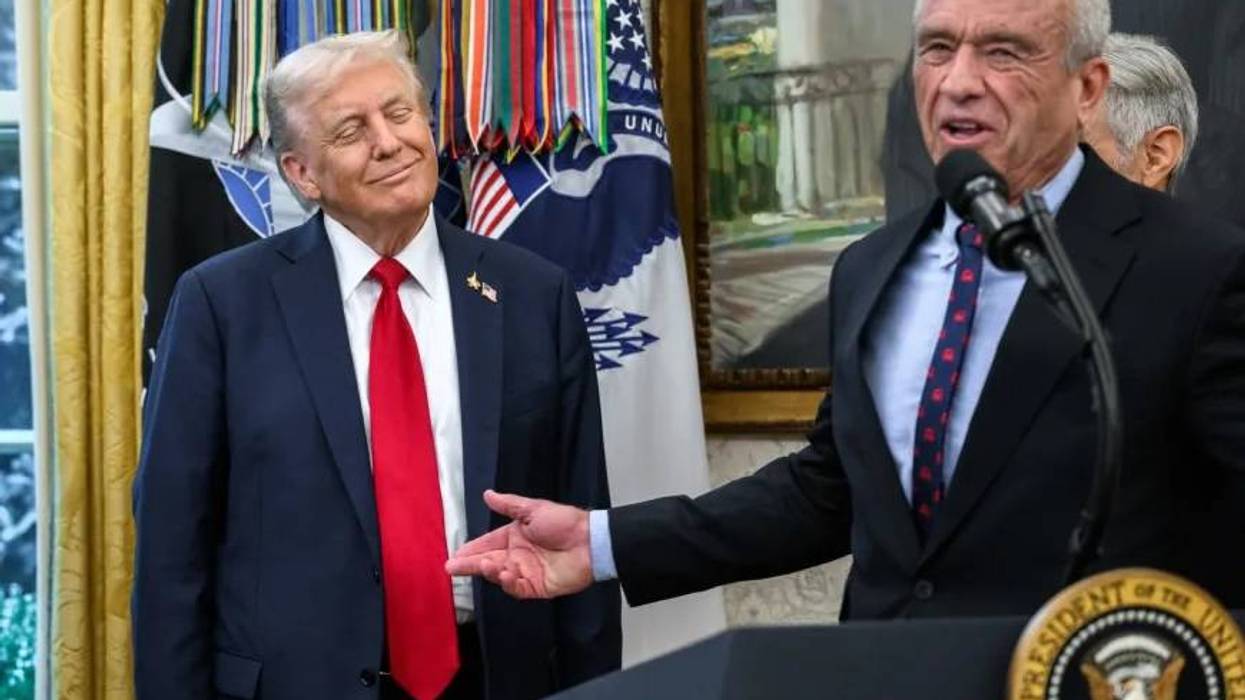
Trump Pharma Deals Called Distraction From 'Failed Plan to Lower US Drug Prices'
"Lasting relief requires transparent, enforceable measures that lower drug prices and hold big drug companies accountable," said one critic.
Aug 31, 2026
US President Donald Trump on Monday announced nine more agreements with pharmaceutical manufacturers intended to lower prescription drug prices nationwide, bringing the total to 26, but patient advocates responded skeptically.
The administration previously struck "most favored nation" (MFN) deals with 17 large drug manufacturers. The new ones with midsized companies—Alcon, Astellas Pharma, BeOne Medicines, BridgeBio, CSL, Kyowa Kirin, Sun Pharma, Teva Pharmaceuticals, and UCB—mean that 89% of the branded drug market is subject to an agreement, according to a White House fact sheet.
"It has been nearly a year since Trump announced his first secret MFN deal with Pfizer, and he has almost nothing to show for it," Peter Maybarduk, Access to Medicines director at the watchdog group Public Citizen, said in a Monday statement. "The new deals are a distraction from the administration's failed plan to lower US drug prices to the levels paid in other wealthy countries."
Earlier this month, Public Citizen released an analysis of Trump's policies to cut drug costs, including MFN deals. Maybarduk said at the time that "Trump has three kinds of drug pricing policy: fake, exaggerated, and not-real-yet, probably-won't-happen."
Following Monday's agreements, the campaigner argued that "a more serious approach would build international reference pricing into Medicare drug price negotiation. Instead, Trump is cozying up to Big Pharma and keeping American drug prices high."
"There still is no evidence that any pharma company has followed through on prior commitments to the Trump administration to launch new drugs at MFN price points," he explained. "Uptake of TrumpRx, which may cause consumers to overpay on medicines, has been lackluster."
TrumpRx is a government-operated website that helps patients find discounted prices and coupons for certain medications—and, as the Public Citizen analysis highlighted, the only part of the president's MFN program that is fully underway.
"The Centers for Medicare and Medicaid Services (CMS) has not announced any state participants in a pilot to test MFN-based prices in Medicaid," Maybarduk noted. "And CMS has failed to issue final rules to test MFN-pricing in Medicare, while simultaneously excluding almost all drug companies from these programs."
Public Citizen said it plans to immediately file a Freedom of Information Act request to obtain the texts of these "farce" deals—a pledge that came just days after US Sen. Elizabeth Warren (D-Mass.) highlighted that Health and Human Services Secretary Robert F. Kennedy Jr. has failed to publicize initial 17 agreements, despite agreeing to do so during an April hearing.
Like Public Citizen, the advocacy group Patients for Affordable Drugs was critical of the new deals, with CEO Merith Basey pointing out that "for decades, drug companies have been charging Americans at least four times more for brand-name medicines than people in other high-income nations."
"Patients need systemic reforms that will lower drug prices, rather than short-term, voluntary agreements whose terms remain secret," she asserted. "The deals announced today focus on Medicaid, where steep discounts already exist, and even then, states can choose whether to participate. Lasting relief requires transparent, enforceable measures that lower drug prices and hold big drug companies accountable."
As the industry trade publication Fierce Pharma reported, the large companies behind the initial deals "made a combination of drug pricing commitments and domestic investment pledges to win temporary immunity from the Trump administration's drug import tariffs," and "individual company press releases Monday, like UCB's, suggest that tariff immunity is still very much part of the MFN equation."
Although Trump's tried taking credit for a recent drop in medication costs, with the White House X account claiming Monday that he's "leveled the playing field, and made prescription drugs more affordable than ever for the American people," as Common Dreams reported earlier this month, experts have cited the Biden administration's policy allowing Medicare to directly negotiate some prices.
As Trump has touted his MFN deals, critics of the United States' for-profit healthcare system have in recent months renewed calls for shifting to Medicare for All—which new research shows would save over 114,000 lives and $1 trillion each year—and other healthcare reforms, including breaking up industry giants, capping drug prices, strengthening antitrust enforcement, and expanding the sector's workforce.
Keep ReadingShow Less
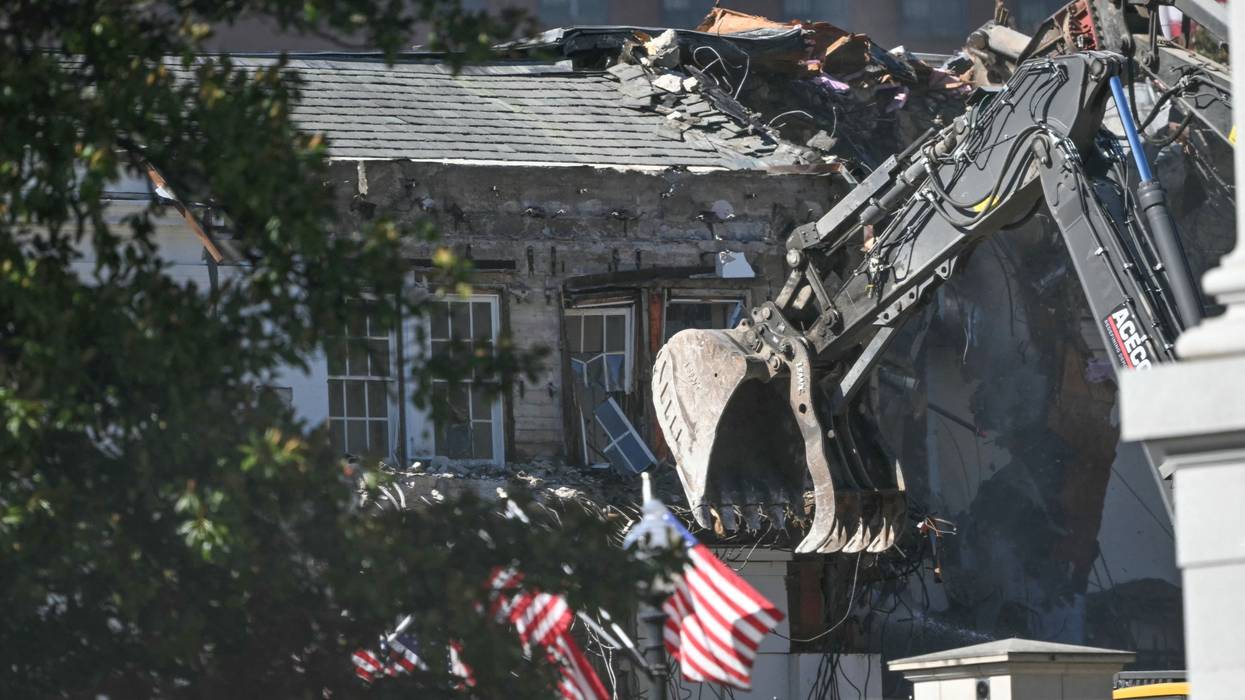
Split Supreme Court Allows Trump Ballroom Construction That Chief Justice Calls 'Likely Unlawful'
"The White House belongs to the people, but Trump consistently acts like it belongs to him alone," said one watchdog, calling out the court's majority for allowing construction on "this illegal project."
Aug 31, 2026
US Supreme Court Chief Justice John Roberts recently let construction on President Donald Trump's White House ballroom continue in a temporary solo decision, but on Monday he sided with the three liberals against the five right-wingers who allowed the project to proceed during a legal battle.
The Trump administration sought intervention from the nation's top court after the US Court of Appeals for the District of Columbia upheld a district judge's ruling that halted above-ground construction but permitted work on an underground bunker and other "national security facilities." Roberts then paused the appellate decision but also sought a review from all justices.
The five justices behind the majority's Monday decision, including Trump's three appointees, concluded the administration "is likely to prevail" in showing that the National Trust for Historic Preservation—which is challenging parts of the widely contested project that's already destroyed the East Wing of the White House—lacks standing.
"This court has not found standing in circumstances like these before. To the contrary, we have repeatedly held that mere offense, disagreement, or distaste does not qualify as a concrete and particularized injury under Article III," the majority wrote, referring to the portion of the US Constitution that addresses the judicial system.
"The government has also established that it will likely suffer irreparable harm from the district court's injunction and that the balance of the equities tips in its favor," the majority added in its unsigned order, which signaled that the merits of the case should continue to be examined by lower courts.
Meanwhile, writing for himself and the liberal justices, Roberts said that the construction "is likely unlawful," given that Congress has not passed legislation authorizing the project, and pointed to the trust's executive committee member Alison K. Hoagland.
"As a Capitol Hill resident, Hoagland regularly visits the White House to take in the historic building's beauty and to appreciate its symbolism. By overshadowing the traditional White House, Hoagland explains, the new ballroom will detract from the building's
message of republican simplicity and thereby worsen her viewing experience," he wrote. "Hoagland's injury suffices for standing."
The high court's majority "misconceives the plaintiff's injury, allowing the executive's likely infringement of the legislature's power of the purse and authority to regulate federal property in the District of Columbia to continue," Roberts added. "Today's decision is no victory for the separation of powers."
The president cheered the majority's decision, writing on his Truth Social platform:
I am pleased to report that the United States Supreme Court has just ruled in favor of the Ballroom/Military Complex being built without any further contingency, doubt, or threat. We are living in the Golden Age of America, and this Building will be one of the Greatest ever constructed in Washington, D.C. When completed in the Summer of 2028, the magnificent Ballroom and Military Complex will be something that the entire Country is very proud of. The Project, despite the baseless lawsuit brought by the so-called National Trust for Historic Preservation of the United States, which is not in any way affiliated with the United States Government, is under budget and ahead of schedule. The Ballroom is totally funded by Great Patriots and Corporations and, therefore, is a Gift — At no cost to the American Taxpayer.
Critics continued to condemn the project after the decision, with US Sen. John Hickenlooper (D-Colo.) stressing on Bluesky that "the president's vanity project does nothing to benefit anyone but Donald J. Trump himself."
"Not a penny to lower your costs," the senator reminded Americans. "This has been a ridiculous waste of taxpayer dollars from the start."
Jon Golinger, democracy advocate at the watchdog group Public Citizen, said in a statement that "in light of this disappointing decision by the court, the next Congress must make investigating Trump's illegal ballroom project and everyone involved with funding and facilitating it a top priority."
Both chambers of Congress are narrowly controlled by Trump's Republican Party, and some GOP lawmakers even tried to boost the project. However, Democrats are aiming to reclaim majorities in the Senate and House of Representatives in the November midterm elections—and if they succeed, they could probe the ballroom and various other concerns from his second presidency.
"Trump suffers from a crippling case of 'palace-envy' and who knows what national treasure he'll demolish next to try to build himself another gold-plated monument," warned Golinger. "For now, we will keep digging into and exposing Trump's ballroom funding schemes, through which he raked in millions from corporations with billions in government contracts and anonymous donors with unknown agendas."
Keep ReadingShow Less
See More
Most Popular