

SUBSCRIBE TO OUR FREE NEWSLETTER
Daily news & progressive opinion—funded by the people, not the corporations—delivered straight to your inbox.
5
#000000
#FFFFFF
To donate by check, phone, or other method, see our More Ways to Give page.
Daily news & progressive opinion—funded by the people, not the corporations—delivered straight to your inbox.

At least nine people have become new billionaires since the beginning of the COVID pandemic, thanks to the excessive profits pharmaceutical corporations with monopolies on COVID vaccines are making, The People's Vaccine Alliance revealed today ahead of a G20 leaders Global Health Summit.
At least nine people have become new billionaires since the beginning of the COVID pandemic, thanks to the excessive profits pharmaceutical corporations with monopolies on COVID vaccines are making, The People's Vaccine Alliance revealed today ahead of a G20 leaders Global Health Summit.
Key members of the G20, who meet tomorrow, including the UK and Germany, are blocking moves to boost supply by ending companies' monopoly control of vaccine production as COVID-19 continues to devastate lives in countries like India and Nepal where only a tiny fraction of the population has been vaccinated.
Between them, the nine new billionaires, have a combined net wealth of $19.3 billion, enough to fully vaccinate all people in low-income countries 1.3 times. Meanwhile, these countries have received only 0.2 per cent of the global supply of vaccines, because of the massive shortfall in available doses, despite being home to 10 per cent of the world's population.
In addition, eight existing billionaires -who have extensive portfolios in the COVID-19 vaccine pharma corporations- have seen their combined wealth increase by $32.2 billion, enough to fully vaccinate everyone in India.
Campaigners from the People's Vaccine Alliance, whose members include Global Justice Now, Oxfam and UNAIDS, have analysed Forbes Rich List data to highlight the massive wealth being generated for a handful of people from vaccines which were largely public funded.
Anna Marriott, Oxfam's Health Policy Manager, said: "What a testament to our collective failure to control this cruel disease that we quickly create new vaccine billionaires but totally fail to vaccinate the billions who desperately need to feel safe.
"These billionaires are the human face of the huge profits many pharmaceutical corporations are making from the monopoly they hold on these vaccines. These vaccines were funded by public money and should be first and foremost a global public good, not a private profit opportunity. We need to urgently end these monopolies so that we can scale up vaccine production, drive down prices and vaccinate the world."
Vaccine billionaires are being created as stocks in pharmaceutical firms rise rapidly in expectation of huge profits from the COVID-19 vaccines over which these firms have monopoly control. The alliance warned that these monopolies allow pharmaceutical corporations total control over the supply and price of vaccines, pushing up their profits while making it harder for poor countries, in particular, to secure the stocks they need.
Earlier this month the US backed proposals by South Africa and India at the World Trade Organisation to temporarily break up these monopolies and lift the patents on COVID-19 vaccines. This move has the support of over 100 developing countries, and in recent days countries like Spain have also declared their support, as has the Pope and over 100 world leaders and Nobel laureates.
Despite this, other rich nations, including the UK and Germany, are still blocking the proposal, putting the interest of pharmaceutical companies over what's best for the world. Italy, who are hosting the G20 Global Health Summit tomorrow, are continuing to sit on the fence on the issue, as are Canada and France.
Heidi Chow, Senior Policy and Campaigns Manager at Global Justice Now, said: "As thousands of people die each day in India, it is utterly repugnant that the UK, Germany and others want to put the interests of the billionaire owners of Big Pharma ahead of the desperate needs of millions.
"The highly effective vaccines we have are thanks to massive amounts of taxpayers' money so it can't be fair that private individuals are cashing in while hundreds of millions face second and third waves completely unprotected. It is a sad indictment of the loyalties of some current governments that a handful of people working for pharmaceutical companies have been allowed to become billionaires off the back of publicly-funded efforts to end the pandemic."
Topping the list of new billionaires who have cashed in on the success of COVID vaccines are the CEOs of Moderna and BioNTech, each with a wealth over $4 billion or more. The list also includes two of Moderna's founding investors and the company's chair as well as the CEO of a company with a deal to manufacture and package the Moderna vaccine. This is despite the fact the vast majority of funding for the Moderna vaccine was paid for by taxpayers. The final three new vaccine billionaires are all co-founders of the Chinese vaccine company CanSino Biologics.
Winnie Byanyima, Executive Director of UNAIDS, said: "While the companies making massive profits from COVID vaccines are refusing to share their science and technology with others in order to increase the global vaccine supply, the world continues to face the very real risk of mutations that could render the vaccines we have ineffective and put everyone at risk all over again.
"The pandemic has come at a terrible human cost, so it is obscene that profits continue to come before saving lives."
Oxfam is a global organization working to end the injustice of poverty. We help people build better futures for themselves, hold the powerful accountable, and save lives in disasters.
(800)-776-9326
"He’s the Jim Cramer of Iran war predictions," said one critic.
Conservative commentator Dave Rubin, who for months has been a top booster of President Donald Trump's illegal war with Iran, was inundated with mockery on Sunday after a viral video exposed months' worth of his failed predictions about the conflict.
The video, which was posted on social media Saturday, begins with Rubin telling viewers to not listen to any of the prognostications being made by critics of the war, which Trump launched in late February without any authorization from Congress.
"I'm pretty good with predictions," Rubin says. "And my prediction here is that everything the media is now going to say about Iran—it's going to close the Strait of Hormuz, and energy prices are going to go crazy—none of this is going to come to pass."
Iran war: greatest hits from the last 12 weeks pic.twitter.com/9pgXyvmsgF
— Dave Rubin Clips II (Parody) - Retired Jan.20/2025 (@DaveClips) May 24, 2026
The video then cuts to Rubin wrongly predicting that gas prices during the conflict "will continue to come down," before switching to claims that Iran lacks the military capability to keep the Strait of Hormuz closed in the face of US military power.
"If the United States wants to keep the Strait of Hormuz open, which it does," says Rubin, "and Donald Trump says we'll escort ships through if we have to, it's going to stay open."
From there, the video shows Rubin hyping of the prospect of Iranian dissident Reza Pahlavi swooping in to take over the country after the war, and then getting fooled by a fake artificial intelligence-generated video of Iranians giving thanks to Israeli Prime Minister Benjamin Netanyahu for bombing their country.
The video compilation of Rubin's failed predictions drew immediate ridicule from critics.
"He’s the Jim Cramer of Iran war predictions," joked Krystal Ball.
Commentator Adam Mockler wrote of Rubin that "it’s brutal watching him make failed predictions week after week."
Journalist Glenn Greenwald argued that the video should be the last nail in the coffin of whatever credibility Rubin had left.
"Imagine having sat through and listened to all of this Israeli propaganda, which turned out to be (predictably and completely) false," commented Greenwald, "and then thinking there was some value in continuing to listen to this person."
The Bulwark's Tim Miller said that while he knew Rubin was "a smooth-brained hack," he still "couldn’t even fathom how bad these war takes would be."
Political analyst Omar Baddar, meanwhile, said the video should erase any doubt that Rubin is "the dumbest man on the internet."

The Trump administration last week sued Minnesota after it passed a law banning prediction markets from operating in the state.
A Sunday report in The New York Times revealed how the Trump administration is using a key government agency to shut down any efforts to regulate online betting markets such as Kalshi and Polymarket.
According to the Times, the administration has stacked the Commodity Futures Trading Commission (CFTC) with industry insiders who have systematically "mowed down" staffers at the agency who have expressed interest in providing oversight on prediction markets.
Among other things, the report documented how multiple officials at CTFC have been put on leave simply for asking questions about the betting markets' ties to members of President Donald Trump's family or for having past experience enforcing regulations related to cryptocurrencies.
What's more, the Times found that even being an industry insider isn't enough to guarantee good standing in the agency. Brian Quintenz, who was tapped by Trump to lead CTFC last year, saw his nomination withdrawn after he drew the ire of Cameron and Tyler Winklevoss for refusing to support their cryptocurrency exchange's complaint against the agency.
Revelations about industry insiders rolling over regulators at CTFC come as the Trump administration is fighting any attempts by states to regulate prediction markets.
As explained in a Thursday report from CNBC, the Trump administration is "fighting a multi-front battle to stop the state actions and assert its regulatory authority," with CTFC arguing that it is "the only entity that can regulate" betting platforms.
16 different states are engaged in legal proceedings against the platforms, and Minnesota last week passed a law to ban them outright, which immediately drew a lawsuit from the administration.
The new Minnesota law, which is scheduled to take effect in August, bans prediction markets "from hosting, creating or advertising in the state," according to ABC News.
In an interview with ABC, Minnesota state Rep. Emma Greenman (D-63B) said she authored the legislation because she has grown increasingly concerned about young people in the state seeing their finances drained from placing online bets.
"We're seeing studies come out that say [the companies] are targeting 18- to 21-year-olds," said Greenman, "and we are seeing gambling starting younger and younger."
CFTC Chair Michael Selig last month warned states against trying to regulate prediction markets, which he said would "circumvent the clear directive of Congress."
"Our message to Wisconsin is the same as to New York, Arizona, and others," said Selig. "If you interfere with the operation of federal law in regulating financial markets, we will sue you."
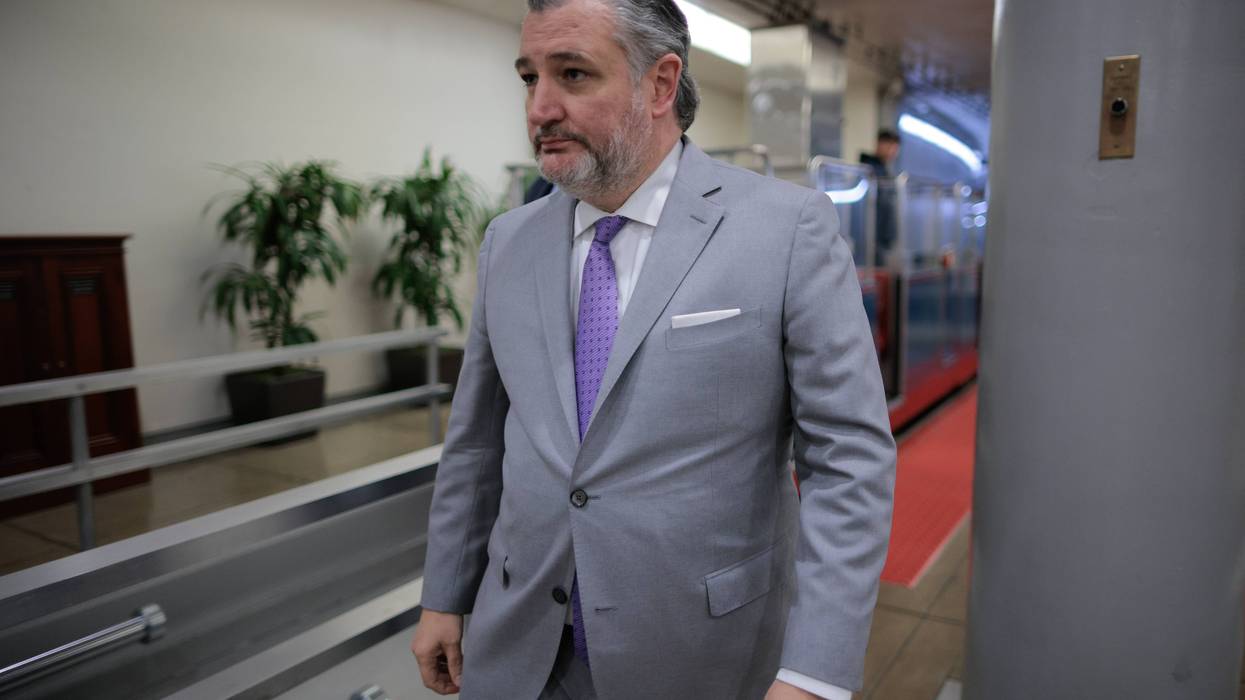
"Nothing was accomplished by Operation Epic Fury except putting the Islamic Revolutionary Guard Corps in charge of Iran and the Strait of Hormuz," said one critic of the war.
President Donald Trump revealed on Saturday that he is mulling a deal that would end his illegal war with Iran, and some hawks within the Republican Party are expressing alarm.
According to a Sunday report in The New York Times, many details of the agreement to end the war remain murky, with the fate of Iran's enriched uranium up in the air. US and Iranian officials have also given contradictory messages about the proposed deal's contents, suggesting there is much work still to be done before any agreement is finalized.
Regardless, three hawkish GOP senators on Saturday raised major concerns about the contents of the deal, warning against accepting any agreement that will leave Iran in a stronger position than before Trump illegally launched a war against it without any authorization from Congress in late February.
"If it is perceived in the region that a deal with Iran allows the regime to survive and become more powerful over time, we will have poured gasoline on the conflicts in Lebanon and Iraq," wrote Sen. Lindsey Graham (R-SC), who lobbied Trump to attack Iran repeatedly before the start of the war. "A deal that is perceived to allow Iran to survive and possess the ability to control the [Strait of Hormuz] in the future will put Hezbollah in Lebanon and the Shia militias in Iraq on steroids.
Sen. Ted Cruz (R-Texas), another longtime Iran hawk, said he was "deeply concerned" about what he's been hearing about the deal and expressed particular worry about Iran getting relief from US sanctions while still maintaining the ability to shut down the Strait of Hormuz.
"If the result of all that is to be an Iranian regime—still run by Islamists who chant 'death to America'—now receiving billions of dollars," Cruz wrote, "being able to enrich uranium and develop nuclear weapons, and having effective control over the Strait of Hormuz, then that outcome would be a disastrous mistake."
Sen. Roger Wicker (D-Miss.) was even blunter in his condemnation of the reported agreement.
"The rumored 60-day ceasefire—with the belief that Iran will ever engage in good faith—would be a disaster," Wicker wrote. "Everything accomplished by Operation Epic Fury would be for naught!"
Ben Rhodes, a former deputy national security adviser for President Barack Obama, challenged Wicker's claims that Trump's illegal war had achieved anything of value.
"Nothing was accomplished by Operation Epic Fury," Rhodes wrote, "except putting the Islamic Revolutionary Guard Corps in charge of Iran and the Strait of Hormuz."
Rhodes' criticism was echoed by Stephen Wertheim, senior fellow at the Carnegie Endowment for International Peace, who wrote that "everything accomplished by Operation Epic Fury is already for naught."
Ali Vaez, director of the Iran Project at the International Crisis Group, accused the Iran hawks of being delusional for thinking further bombing would force Iran to capitulate.
"DC's Iran hawks got two wars, nearly every conceivable sanction designation, a blockade, threw a wrench in global economy," Vaez wrote, "and will still claim that just a little more pressure and a touch more bombing will magically yield the concessions they still won't be satisfied with."