

SUBSCRIBE TO OUR FREE NEWSLETTER
Daily news & progressive opinion—funded by the people, not the corporations—delivered straight to your inbox.
5
#000000
#FFFFFF
To donate by check, phone, or other method, see our More Ways to Give page.
Daily news & progressive opinion—funded by the people, not the corporations—delivered straight to your inbox.
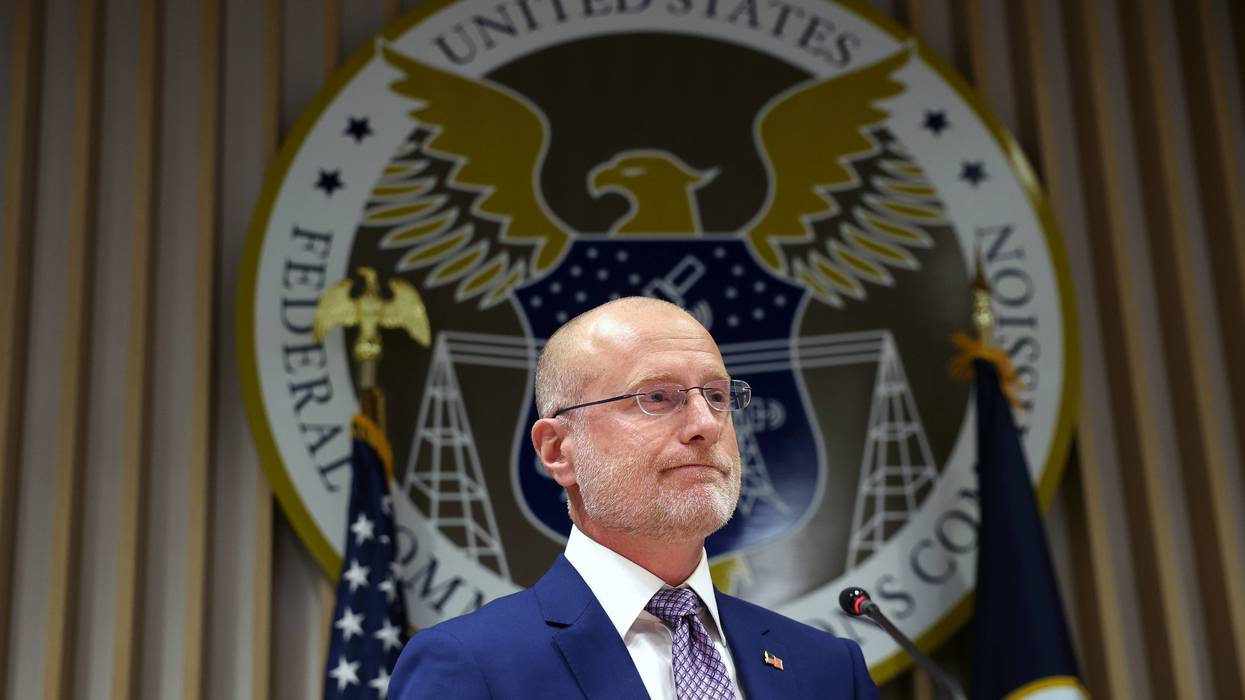
"Although the FCC has the authority to ensure broadcasters operate in the public interest, it cannot serve as President Trump’s roving censor."
A group of Senate Democrats on Thursday told Federal Communications Chairman Brendan Carr to back off his threats to strip Disney-owned TV network ABC of its broadcast licenses.
In a letter addressed to Carr, the Democrats took Carr to task for ordering Disney to file early license renewals for eight ABC stations shortly after President Donald Trump demanded that the network fire late-night host Jimmy Kimmel.
Kimmel earned Trump's ire when he jokingly likened first lady Melania Trump to an "expectant widow" days before a gunman stormed into the White House Correspondents' Dinner in an alleged attempt to assassinate the president.
The senators called Carr's order an "extraordinary abuse of power" and "the latest and most extreme step in your use of the FCC’s licensing authority as a cudgel against broadcasters whose editorial choices displease the president."
The Democrats charged that the order "appears to penalize Disney for refusing to capitulate to Trump’s demands to fire Kimmel and to send a message to other broadcasters: Modify your speech to favor Trump or face the FCC’s wrath," while noting that the order was the first time in over 50 years that the commission had called on a broadcaster to apply for early renewal.
The day before the order to Disney, the FCC sent a similar order to a small station license holder called Bridge News.
Carr's order to Disney was also part of a broad pattern of Trump administration assaults on the free press, including calls to fire Kimmel last year after the comedian said Trump and his political allies were trying “to score political points" after the assassination of right-wing activist Charlie Kirk.
"Although the FCC has the authority to ensure broadcasters operate in the public interest," they wrote, "it cannot serve as President Trump’s roving censor, threatening to revoke licenses against broadcasters whose editorial content—including a comedian’s jokes—displeases the president."
The Democrats concluded their letter by asking Carr to provide information about the timing and process by which the FCC decided to send Disney its early renewal order, including whether any FCC staff had communicated with the White House about the order before it was issued.
The letter was signed by Sens. Ed Markey (D-Mass.), Chuck Schumer (D-NY), Maria Cantwell (D-NM), Ben Ray Lujan (D-NM), John Hickenlooper (D-Colo.), Mazie Hirono (D-Hawaii), Jacky Rosen (D-Nev.), Bernie Sanders (I-Vt.), Brian Schatz (D-Hawaii), Adam Schiff (D-Calif.), Chris Van Hollen (D-Md.), and Elizabethe Warren (D-Mass.).

One expert warned that removing works on activism and social movements erodes the ability of marginalized communities "to take action amid rising authoritarian tactics by our government and attacks on free speech."
As President Donald Trump returned to the White House in the middle of the 2024-25 academic year and swiftly pursued increasingly authoritarian policies, there was "an embrace of anti-intellectualism" within the book-banning movement targeting US public schools and classrooms.
That embrace is detailed in "Facts & Fiction: Stories Stripped Away By Book Bans," an annual report released Thursday by PEN America, a nonprofit that promotes the protection of free expression through the advancement of human rights and literature.
The group found that from July 2024 to last June, 3,743 unique titles were removed from school libraries and classrooms nationwide—and 1,102 of them were "educational or informational books for young people—textbooks or reference texts on a wide range of subjects, history books, biographies, and autobiographies."
Although the majority of banned titles were still fiction, such as Fahrenheit 451 by Ray Bradbury and The Hunger Games by Suzanne Collins, the share of "fiction titles dropped from 85% to 69% of all banned titles, while nonfiction rose from 14% to a startling 29% of all banned titles," according to the analysis.
"This marked impact on books anchored in scientific and historic facts, real events, and real people represents something new and distinctive about the trajectory of book bans in public schools," the report states. "As nonfiction titles are not always the targets of efforts to remove books, that books on ancient Egypt, the digestive system, and self-help for teens, to name a few examples, are impacted by censorship signals an alarming spread of book bans that ignore the educational value of texts and books."
Targeted "nonfiction titles are wide-ranging," the report notes, "from memoirs such as Night by Elie Wiesel to biographies such as RuPaul by Maria Isabel Sánchez Vegara, alongside historical and educational or informational books such as Aztec, Inca & Maya by Elizabeth Baquedano and Challenges for LGBTQ Teens by Martha Lundin."
Flagging this "embrace of anti-intellectualism" in a statement about the new report, Kasey Meehan, director of PEN America's Freedom to Read program, said that "it is another example of how censorship sweeps broadly, leading to removals of all kinds of books, in its efforts to sow fear and distrust in our public education system."
Like the previous academic year, "realistic/contemporary and dystopia/sci-fi/fantasy remain the dominant genres banned," the publication highlights. "But of note, educational/informational titles grew from 5% of all titles in 2023-24 to 13% of total titles banned in 2024-25, or nearly 500 unique titles."
Among the nonfiction titles banned, "52% contained themes of activism and social movements, the most commonly banned topic within nonfiction titles," the report says. "Whether #WomensMarch: Insisting on Equality by Rebecca Felix or IntersectionAllies: We Make Room for All by Chelsea Johnson, LaToya Council, and Carolyn Choi, and illustrated by Ashley Seil Smith, this literature is crucial in the education of young people. These books can encourage readers to challenge the status quo and resist injustice."
Freedom to Read program assistant and report co-author Yuliana Tamayo Latorre said that removing books on these topics "silences the voices of marginalized communities and erode[s] their ability to take action amid rising authoritarian tactics by our government and attacks on free speech."
The most common theme across all banned books was nonsexual violence. This was a theme in 57% of the targeted titles, and they addressed topics including "war, gun violence, natural disasters, domestic violence, human trafficking, slavery and genocide, physical fighting, and more."
Other key themes included death and grief (48%), empowerment and self-esteem (39%), LGBTQ+ topics and metaphors (36%), consensual sexual experiences (34%), mental health disorders (29%), verbal or emotional abuse (28%), and substance use and/or abuse (27%).
There was an increase in banned titles with themes of empowerment and self-esteem, up from 31% in 2023-24.
"Fictional titles with themes of empowerment include Flor Fights Back: A Stonewall Riots Survival Story by Joy Michael Ellison and illustrated by Francesca Ficorilli, and The Moon Within by Aida Salazar," the report says. "To remove these books from classroom and library shelves means revoking access to books that students may rely on for personal and emotional development."
There is an entire section of the report about "erasing people" that examines trends in the identities of characters in banned books. Of all the targeted titles, 44% featured people of color, 39% had LGBTQ+ characters, 19% included transgender or genderqueer individuals, and 10% involved those who are neurodivergent or disabled.
Trump and other leading Republicans have embraced and advanced campaigns against diversity, equity, and inclusion (DEI). PEN America acknowledged that such efforts "have contributed to restrictions and removals on books with people of color and mirror efforts to suppress curriculum on Indigenous history, Black history, Asian American and Pacific Islander stories, and Latine and Hispanic contributions."
Another section of the report addresses a major "discrepancy between the titles impacted by book bans and the justifications made to ban books. Book banners have long cited 'pornography' and 'sexually explicit' material in literature to justify book challenges. Claims that these books contain 'explicit' or 'obscene' content grossly misrepresent the materials."
That section points out that 19% of last year's banned titles contained sexual violence—and "according to RAINN, 1 in 9 girls and 1 in 20 boys under 18 experience sexual abuse or assault. With so many of these titles banned since 2021, it is possible that some young people who have experienced sexual violence no longer have access to books that could help them."
"Books containing experiences of sexual violence include The Nickel Boys by Colson Whitehead, winner of the 2020 Pulitzer Prize for Fiction, set in a 1960s Southern juvenile reform school, and Laurie Halse Anderson's memoir Shout, a call to action for sexual abuse and trauma survivors in the wake of the #MeToo movement," according to PEN America.
The group's report came just a few weeks after a similar annual publication from the American Library Association, which details challenges to at least 4,235 unique titles in 2025, resulting in bans on at least 5,668 books and restrictions on another 920 works.
"In 2025, book bans were not sparked by concerned parents, and they were not the result of local grassroots efforts," noted Sarah Lamdan, executive director of the association's Office for Intellectual Freedom. “They were part of a well-funded, politically driven campaign to suppress the stories and lived experiences of LGBTQIA+ and BIPOC individuals and communities."
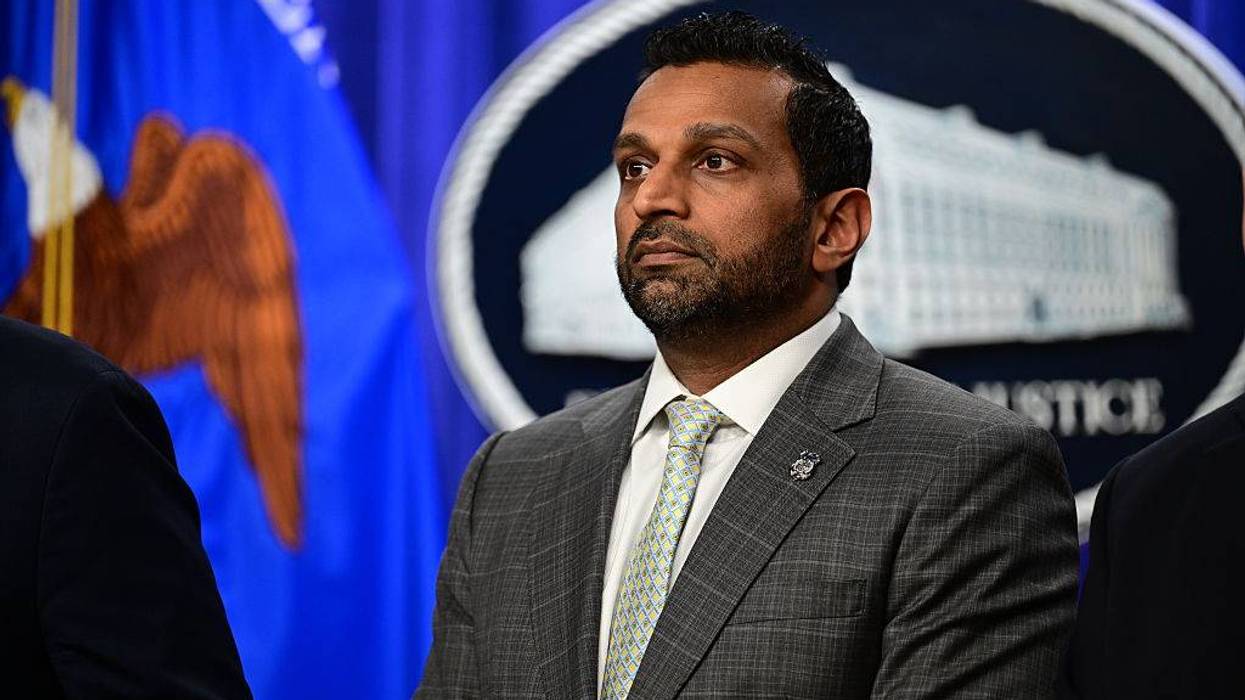
One press freedom advocate said the reported FBI investigation "would be outrageous even if The Atlantic reported classified information, which it didn’t."
The Federal Bureau of Investigation on Wednesday denied that it launched a reported probe into The Atlantic, which recently published a damning account of FBI Director Kash Patel’s alleged drunkenness, though magazine leadership and press freedom advocates remain alarmed.
As reported by MS NOW on Wednesday, the FBI is conducting a criminal leak investigation into The Atlantic's Sarah Fitzpatrick, whose reporting on Patel cited two dozen anonymous sources to document concerns about the FBI director's behavior.
MS NOW noted that the investigation into Fitzpatrick's reporting is "highly unusual because it did not stem from a disclosure of classified information" on the part of government insiders.
One source told MS NOW that the FBI agents assigned to the case have expressed serious reservations about its scope and purpose.
"They know they are not supposed to do this," the source said. "But if they don’t go forward, they could lose their jobs. You’re damned if you do and damned if you don't."
FBI spokesperson Ben Williamson denied to MS NOW that the agency had launched an investigation into Fitzpatrick, saying that "every time there’s a publication of false claims by anonymous sources that gets called out, the media plays the victim via investigations that do not exist."
Jeffrey Goldberg, editor-in-chief of The Atlantic, said the magazine was working to learn more about the alleged investigation, but "if true, this would be an outrageous, illegal, and dangerous attack on the free press and the First Amendment."
"We will defend Sarah and all of our reporters who are subjected to government harassment simply for pursuing the truth," Goldberg added.
Seth Stern, chief of advocacy at the Freedom of the Press Foundation, also condemned the reported investigation, which he said "would be outrageous even if The Atlantic reported classified information, which it didn’t."
"The FBI is reportedly conducting an invasive leak investigation merely to settle a personal vendetta," added Stern. "Separately, it doesn’t make much sense for Patel’s FBI to investigate leaks from what Patel’s lawsuit over the same reporting called ‘sham sources.’ Fake sources can’t leak."
Patel last month filed a $250 million defamation suit against The Atlantic for its report on his behavior, which the magazine said included "episodes of excessive drinking and unexplained absences."
The Atlantic vowed to fight the lawsuit, saying it stood by its reporting while describing Patel's complaint as "meritless."