

SUBSCRIBE TO OUR FREE NEWSLETTER
Daily news & progressive opinion—funded by the people, not the corporations—delivered straight to your inbox.
5
#000000
#FFFFFF
To donate by check, phone, or other method, see our More Ways to Give page.
Daily news & progressive opinion—funded by the people, not the corporations—delivered straight to your inbox.
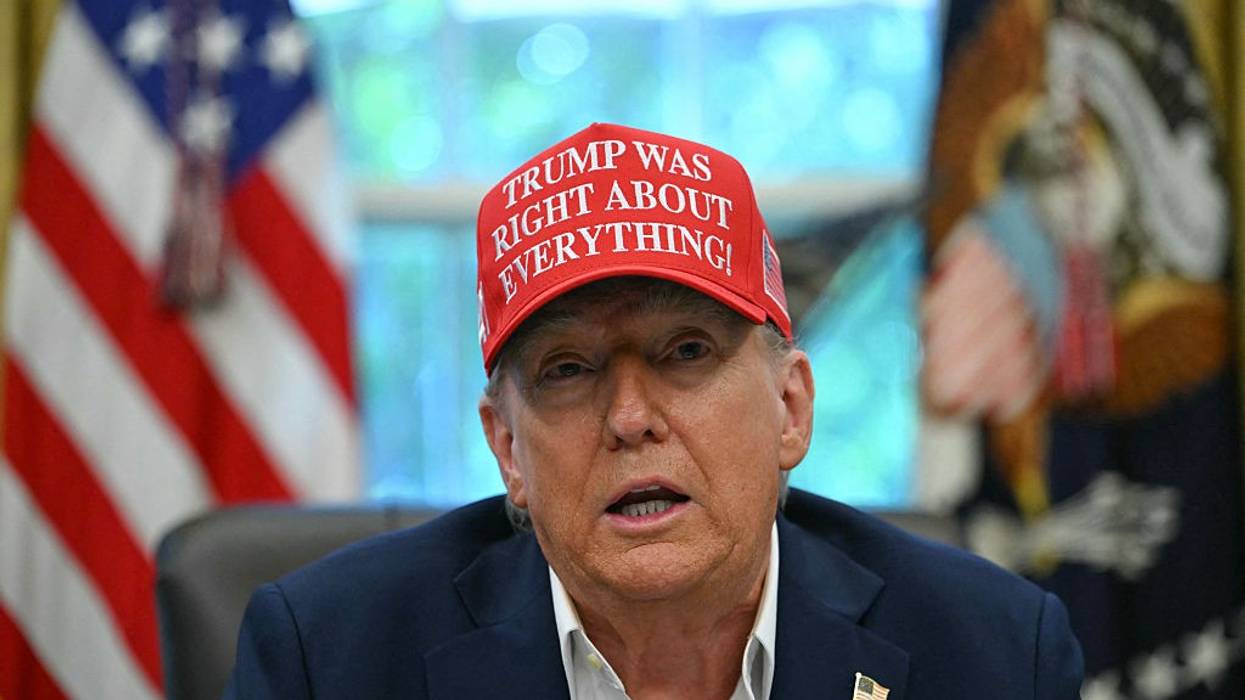
"President Trump, MAGA Inc., and anyone else who breaks campaign finance laws must be held accountable to help ensure that our political system is free of corruption."
An election spending watchdog on Friday accused President Donald Trump of committing a "clear-cut violation of campaign finance law" through his stated control over spending decisions made by the MAGA Inc. super political action committee.
Citing decades of legal precedent, the Campaign Legal Center (CLC) argued that federal office holders are prohibited from directing spending for super PACs, which raise money outside the scope of federal campaign laws.
Saurav Ghosh, director of federal campaign finance reform at CLC, noted that Trump has stated publicly on multiple occasions that he will decide where MAGA Inc.'s $400 million war chest will be deployed in the 2026 elections—which Ghosh said would be flatly illegal.
"Our laws are clear: No federal officeholder or candidate is allowed to direct the money raised or spent by a super PAC," said Ghosh. "President Trump, MAGA Inc., and anyone else who breaks campaign finance laws must be held accountable to help ensure that our political system is free of corruption."
Last week, CLC filed a complaint with the Federal Election Commission (FEC) that cited statements Trump made to reporters, whom he told funds raised by MAGA Inc. were "my money that I control."
This statement alone, the group said, was "a remarkable admission of a serious campaign finance violation."
The complaint then asked the FEC to seek "appropriate sanctions for any and all violations" of campaign finance law committed by Trump and MAGA Inc., "including civil penalties sufficient to deter future violations and an injunction prohibiting the respondents from any and all violations in the future."
While MAGA Inc. has a formidable stash of campaign cash at its disposal, it is unclear how much of an impact it will have on the 2026 midterms given that polls show the president and his party are in a deep hole with voters.
A report from The New Republic published last week revealed that the pro-Trump super PAC is plugging significant money into at least 17 districts that the president won by more than five points in 2024, and six districts that he won by more than 10 points.
David Wasserman, elections analyst for Cook Political Report, told The New Republic that this spending in pro-Trump districts is "an acknowledgment that things have shifted in a huge way since 2024."
"Republicans have hemorrhaged support among independent voters, they’ve got a real enthusiasm problem," said Wasserman, "and as a result, districts that ordinarily would vote handily for Trump and Republicans are now in play."
A Friday report in The Washington Post examined the states where Trump is preparing to campaign in the coming days, and found the president is being deployed in deep-red states such as Alabama and Oklahoma.
"Oklahoma is a state Trump won in 2024 with 66% of the vote—and won all 77 counties," the Post reported. "In Alabama, Trump won with 65%."
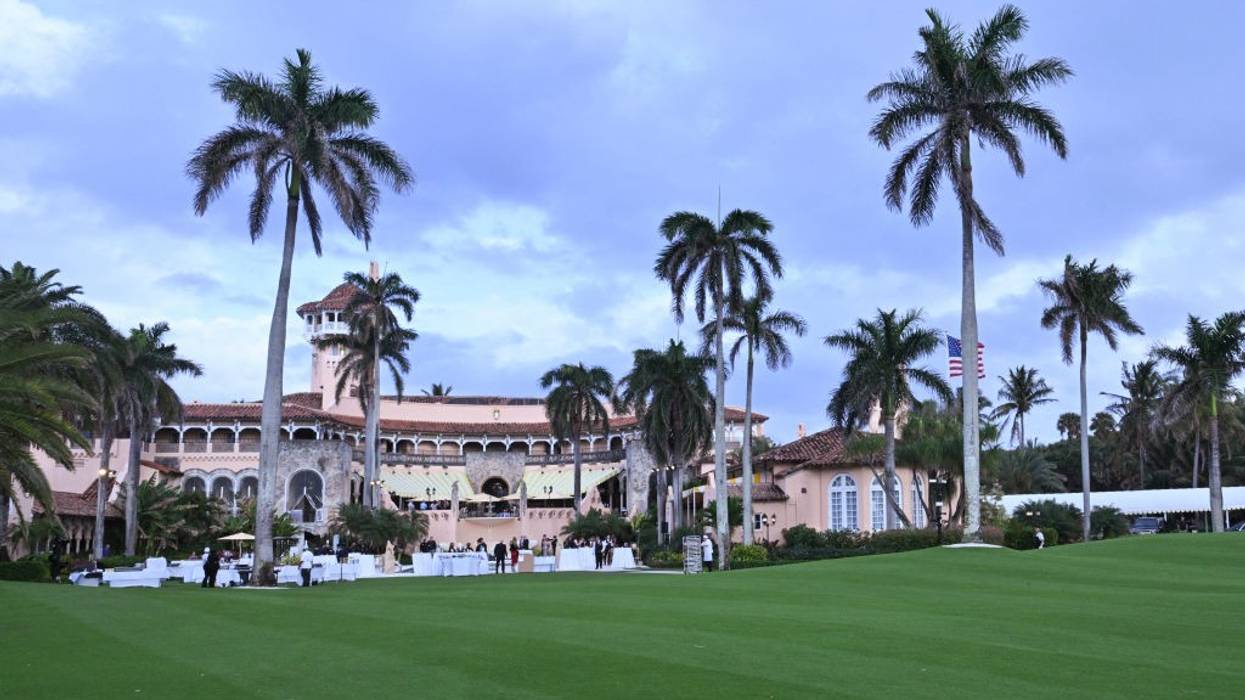
Trump has said that communities that don't want data centers "want to end up being backwards and poor."
President Donald Trump has said every American should want a data center in their town. But his home county in Florida just voted to block them.
In a 6-0 vote, commissioners in Palm Beach County—home to the president's luxurious private club and second residence, Mar-a-Lago—voted to enact a one-year moratorium on the construction of new "large-scale" data centers that use at least 50 megawatts of power.
The moratorium, approved on Thursday, came after Palm Beach residents expressed concerns shared by Americans around the country who’ve seen data centers move into their communities. Palm Beach already has some smaller data centers. But in July, it rejected a proposal for the 600MW Project Tango, following warnings about its potential effects on local wetlands and on families’ pocketbooks.
"Many communities want the economic benefits that data centers bring, but we all fear the higher power bills, the negative environmental impact, disruptive noise, and the depletion of water resources," explained one supporter of the moratorium at a county commission meeting on Thursday, according to the local ABC affiliate.
A poll conducted last month by Embold Research and published by Heatmap Pro found that 75% of Americans now oppose the building of AI data centers in their area, including 61% who registered strong opposition. Aversion to data centers crosses party lines, with majorities of Democrats, Republicans, and independents viewing them negatively.
As AI companies spend tens of millions bankrolling Trump and Republican candidates, members of the president's Cabinet, including Commerce Secretary Howard Lutnick and Energy Secretary Chris Wright, have scoffed at Americans' concerns about the tremendous water and energy use of data centers, which have been well documented as jacking up utility prices.
In a social media post last month, Trump himself said the only reason communities would not want a data center nearby is if they "want to end up being backwards and poor." Before that, he said that "smart communities" were "begging for them."
Sen. Bernie Sanders (I-Vt.), who has become one of Capitol Hill's leading critics of data centers and the artificial intelligence models they power, has said that if Trump truly finds data centers so desirable, he should “lead by example” by having his friend and megadonor, tech billionaire Elon Musk, build one at Mar-a-Lago.
"Trump says communities that oppose data centers will end up 'backwards' and 'poor,'" Sanders remarked Friday on social media. "Yesterday, Mar-a-Lago’s own Palm Beach County passed a year-long ban on these facilities."
"Maybe," the senator said, "Trump’s neighbors know something he doesn’t."
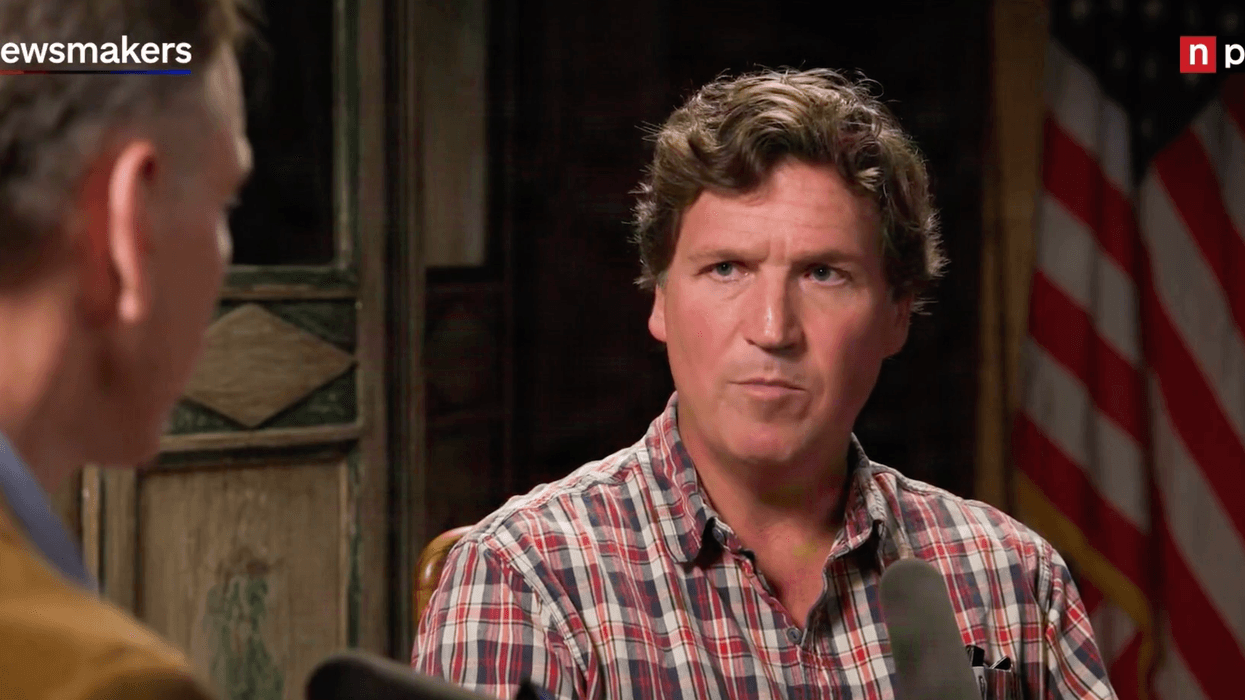
Carlson's account of his conversation with the president days before the US and Israel attacked Iran was "extremely disturbing," said one journalist.
New revelations from right-wing political commentator Tucker Carlson about President Donald Trump's push to wage war on Iran earlier this year prompted the latest calls for Cabinet members to invoke the 25th Amendment and force Trump out of office on the grounds that he is unable to fulfill the duties of the office—namely, to protect the security of the people of the United States.
"Days before the war began," Carlson told Steve Inskeep of NPR on Thursday, the president explicitly said that the outcome of the conflict didn't matter, because "in the end we all die, anyway."
Carlson revealed that he visited Trump in the Oval Office of the White House in late February, after having gone to Tel Aviv and interviewed Mike Huckabee, the US ambassador to Israel.
Trump expressed annoyance at Carlson, an on-and-off ally of the president over the years who claimed in April that he had "regrets" about supporting him, for challenging Huckabee on the US relationship with Israel.
Carlson had pressed Huckabee on his comment that "it would be fine if Israel took" over huge swaths of the Middle East, including parts of Lebanon, Syria, Iraq, Jordan, and Türkiye.
The host of "The Tucker Carlson Show" said he told Trump he had come away from his two-hour discussion with Huckabee understanding that the unprovoked war the US and Israel was days away from started was not aimed at ending Iran's nuclear program—which the president had claimed was taken out of commission in June 2025 by US strikes.
The Israeli threats against Iran, said Carlson, were actually aimed at ending Iran's "regional power," "diminishing the power" of the Gulf Cooperation Council, and ultimately "getting the US out of the Middle East because we constrain their ambitions" by maintaining a presence in countries in the region.
As the podcaster warned the president not to be manipulated by the Israeli government into taking military action against Iran, according to Carlson, "he looked at me and said, 'Yes, you're right, but in the end we all die, anyway, so it doesn't matter."
This is also 25th Amendment stuff. Extremely disturbing. pic.twitter.com/SnyqCwI3fL
— Ryan Grim (@ryangrim) September 25, 2026
"That's exactly what he said," said Carlson. "I said to him, shocked, ''But what about our kids and our grandkids, and like, our country?' And he goes, 'Argh!'... That's a verbatim exchange."
"I was shocked by that," he added. "Who lives or dies does matter, the future does matter."
The president's assertion that allowing Israel to push the US into war—something Secretary of State Marco Rubio also openly acknowledged had happened after the conflict began—could be disastrous for the US and lead to an untold number of American deaths, was called "extremely disturbing" by Drop Site News journalist Ryan Grim, who suggested Carlson's revelation should prompt the use of the 25th Amendment.
Journalist Pedro L. Gonzalez expressed wariness at the thought of taking Carlson at his word regarding his exchange with Trump and his current opposition to the president, while Carlson said he believed the need for Cabinet members to push Trump out of office predated the interview.
He said that Trump's threat of nuclear war in April, when he threatened to annihilate the "whole civilization" of Iran, "never to be brought back again," was grounds for invoking the 25th Amendment, with a majority of his Cabinet members voting to remove him from office.
Tucker Carlson: Trump should have been removed from office immediately when he threatened nuclear war pic.twitter.com/eYPbYBRsta
— FactPost (@factpostnews) September 24, 2026
"He should have been bundled up and taken out," said Carlson. "That's a crime."
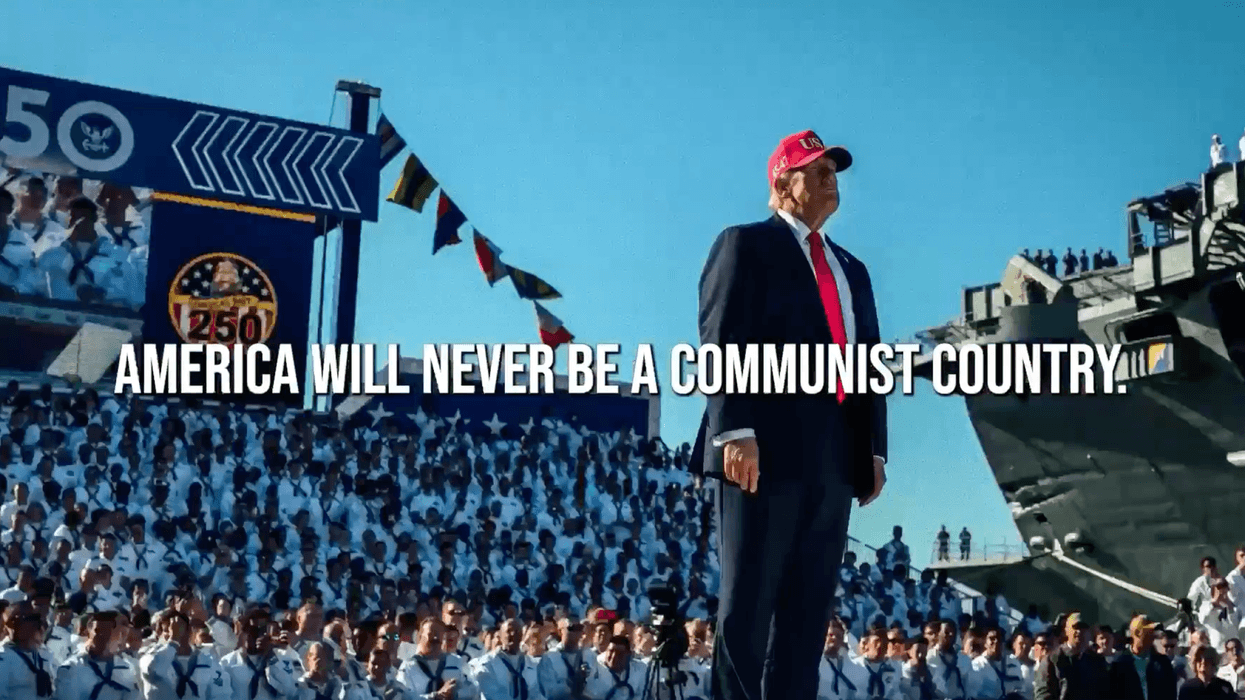
“This is the sort of government propaganda one might expect in North Korea, not the United States of America, and it is an egregious and utterly illegal misuse of Americans’ hard-earned tax dollars,” said four lawmakers.
Outrage mounted Friday over a taxpayer-funded television advertisement glorifying President Donald Trump, with critics describing the 30-second spot as self-aggrandizing propaganda and questioning whether the administration violated federal law restricting the use of public money for partisan communications.
The ad—which aired this week on outlets including Fox News, Newsmax, and CBS—features a dizzying montage of Trump at rallies, White House events, sporting events, and alongside military personnel, captioned, "AMERICA WILL NEVER BE A COMMUNIST COUNTRY."
The refrain of R&B singer JMSN’s “Love Me” plays over the rapid-fire images. The spot concludes with a voiceover from Ultimate Fighting Championship CEO Dana White praising Trump as “the toughest, most resilient person that I’ve ever met.”
At the bottom of the screen, an alarming disclosure appears, reading, "Paid for by the US government."
The White House dismissed criticism of the ad—which aired ahead of November's midterm elections—by calling the spot a "public service announcement" intended to remind Americans “to love their country and understand what makes it worth defending.”
However, on Friday, US Sens. Patty Murray (D-Wash.) and Jack Reed (D-RI), along with Reps. Rosa DeLauro (D-Conn.) and Steny Hoyer (D-Md.), excoriated the clip.
“This is the sort of government propaganda one might expect in North Korea, not the United States of America, and it is an egregious and utterly illegal misuse of Americans’ hard-earned tax dollars,” the four senior congressional appropriators said in a joint statement.
“The law is not complicated," the lawmakers added. "You cannot use taxpayer dollars for political advertisements.”
Federal appropriations law—including the funding bill Trump signed earlier this year—prohibits the use of government funds for unauthorized “publicity or propaganda purposes,” while the Government Accountability Office (GAO) has interpreted the prohibition to encompass communications whose obvious purpose is “self-aggrandizement” or “puffery,” as well as “purely partisan” communications.
The consumer advocacy watchdog group Public Citizen on Friday filed a complaint with the GAO alleging the ad "violates laws prohibiting the use of government resources for propaganda, the Hatch Act, and other related laws."
"Whether or not President Trump was personally involved in the ad, it was conceived, produced, and distributed by Trump’s White House staff," Public Citizen said.
US Sen. Chris Murphy (D-Conn.) said Friday on social media that "every taxpayer, no matter your party, should be outraged by this."
"Your money is being used to fund campaign ads for Trump," the senator added. "It’s totally, completely [illegal]. He’s stealing your money for his campaign."
"The advertisement raises deep concerns about the Trump administration’s use of taxpayer dollars and its compliance with federal laws that prohibit the use of appropriated funds for the promotion of a political party or candidate," Sen. Maggie Hassan (D-NH) said Thursday.
“This taxpayer-funded political advertisement serves as yet another troubling example of President Trump’s growing list of expensive vanity projects—including the White House ballroom—that are estimated to cost over $1.8 billion, money that could have instead [been] spent lowering costs for Americans.”
Sam Stein, co-host of "The Bulwark Podcast," said, "What possible rationale could there be for using tax dollars to play that ad? This is just pure cult propaganda paid for by us."
@timmiller.bsky.social and @samsteindc.bsky.social react to a taxpayer-funded TV ad praising Trump, complete with “Love Me” playing over footage of the president.“This is just pure cult propaganda paid for by us.”
[image or embed]
— The Bulwark (@thebulwark.com) September 24, 2026 at 6:46 PM
Noting that Trump's approval rating has plunged below 30%, Stein added: "People are abandoning him... members of his own party are starting to distance themselves from him, and he uses that moment to have an ad [saying] please love me... It's desperate."
Tim Miller, Stein's co-host, called the ad "alarming" and "Orwellian."
Virginia Kase Solomón, president and CEO of the advocacy group Common Cause, said Friday in a statement that “taxpayer dollars should never be used to bolster the president’s self-esteem because his ego has been damaged."
"Running political messaging stamped with ‘Paid for by the US Government’ dangerously crosses the line from public service into authoritarian self-promotion," she added. "It also raises serious questions about whether it violates federal law barring tax dollars from being used for publicity or propaganda."
Others noted that the ad blasted communism as Trump rolled out the red carpet at a state dinner for Chinese President Ji Xinping, who is also the secretary general of the Chinese Communist Party.
"The clip’s heavy-handed anti-communist messaging also strikes a wildly hypocritical note, if not for anything but the fact that the Supreme Leader that ran it followed up by hosting China’s Xi Jinping with open arms, a flyover of US military planes, and a statue of a bald eagle," Jezebel's Danielle Han wrote on Friday.
Meanwhile, the controversy has spread beyond politics. JMSN—whose real name is Christian Berishaj—said that he never authorized Trump to use “Love Me,” writing that he would “never authorize my music to be used for ANY political agenda or campaign.”
"I am looking at lawyers," he added, "and handling this internally.”
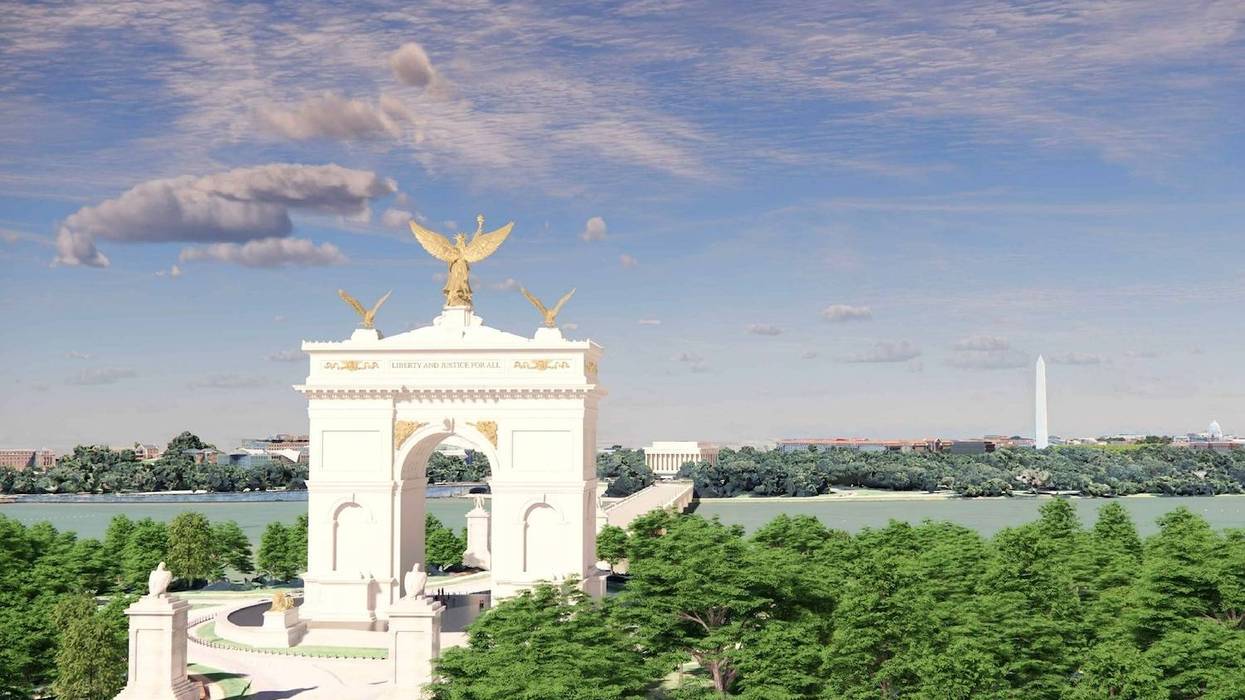
"I will continue doing everything in my power to stop this illegal and reckless attempt to turn our nation's capital into a monument to Donald Trump," vowed Rep. Don Beyer.
While Americans are stressed about the economy and President Donald Trump's approval rating has hit a historic low, the second-term Republican is focused on vanity projects like his proposed 250-foot "Triumphal Arch," which opponents are trying to block.
The watchdog group Public Citizen is planning a protest and press conference for the morning of October 1 at Memorial Circle in Washington, DC. Speakers include Congressman Don Beyer (D-Va.), military veterans, and other critics of the "self-indulgent project" that lacks congressional approval—and which Trump is now trying to push as a national security project.
"Trump's planned construction is not only illegal," Public Citizen said in a Thursday statement, pointing to the lawsuit it filed on behalf of three Vietnam War veterans and an architectural historian. "It is an affront to American veterans and their families."
"The arch will sit on Memorial Circle along the Potomac River, impeding the symbolic line-of-sight between the Lincoln Memorial in DC and Arlington National Cemetery in Virginia, where hundreds of thousands of our nation's military members have been laid to rest," explained the group, which has secured from a federal judge temporary restrictions on work at the site.
Beyer—whose district includes Arlington National Cemetery—headed to the site on Thursday. He said in a statement that "after hearing from constituents who saw construction equipment at the site of Trump's proposed vanity arch, I drove down to Columbia Island to see for myself. When I arrived, I found workers operating heavy equipment who told me they were conducting archaeological work to evaluate the composition of the soil."
"When I asked whether this work was a precursor to construction of the arch, they said that they could not answer," the congressman continued. "The logical conclusion, however, is that the presence of this heavy equipment and additional surveyors is a clear indication that the Trump administration is preparing to move forward with construction. That would be deeply troubling. Trump's arch is illegal and immoral, and the administration is also under court order requiring 48 hours' notice before work proceeds."
"Yet, the administration appears to be pushing ahead with activity at the site even while it still has not done the basic work necessary to understand the consequences of this project," Beyer warned. "There has been no adequate assessment of the regional impacts of this 250-foot structure on public safety, vehicular traffic, air traffic, or historic sites, including the implications of Trump's latest ravings about using the arch as a base for drone and sniper operations."
Beyer, who also shared video of his visit to the site on social media, added that “Donald Trump and his administration are determined to find a way to push this project through by any means necessary, regardless of the law or the concerns of the people who live here, but my constituents have made their views abundantly clear: They do not want this project. Neither do I. I will continue doing everything in my power to stop this illegal and reckless attempt to turn our nation's capital into a monument to Donald Trump."
In May, Beyer and Dina Titus (D-Nev.)—who, as co-chair of the Congressional Humanities Caucus, led challenges to the administration's illegal attempts to fund the arch using the National Endowment for the Humanities budget—introduced the Arlington National Cemetery Viewshed Protection Act, which would explicitly prohibit construction of Trump's project.
"As President Trump strips away the necessary safety nets from Americans who are struggling to afford their basic needs like groceries and healthcare, he builds his unauthorized, grandiose Triumphal Arch. While destroying historical monuments and artifacts important to our American identity, he is erecting monuments to honor himself," Titus said at the time. "The American people deserve a leader who is responsibly using federal funding for critical government services, not for self-promotion."
After months of pushback over the project, Trump announced last Sunday that "at the strong request of the United States Military, and for National Security purposes, I have agreed to convert the magnificent Triumphal Arch, planned since the Civil War Era many years ago, at the Receptive Circle adjoining the Arlington Memorial Bridge, into a top grade Military Complex/Triumphal Arch, to house, store, and have the rapid ability to use large numbers of drones, plus Snipers, on both the roof and plaza areas, and additionally have and hold large quantities of sniper ammunition in storage."
"There will be no facility like this anywhere in the World," the president wrote on his Truth Social platform. "Out of the 59 top cities and Capitals, Washington, DC, IS THE ONLY ONE IN THE WORLD THAT DOES NOT HAVE A TRIUMPHAL ARCH, but it will now and, by far, the greatest of them all!"
The Hill reported Friday that analysts and lawmakers "are perplexed by President Trump’s surprise declaration," with Michael O'Hanlon, a senior fellow at the Brookings Institution think tank, telling the outlet that adding military elements to the arch "is not totally fictional or crazy—but also not optimal."
Whether or not the project include military components, "to build an arch on federal land (that is not in the White House complex), the administration needs to navigate a lot of bureaucracy," The Washington Post noted Thursday. "The administration has argued the arch doesn't need to abide by DC's height laws for buildings and that it doesn't need congressional authorization because Congress authorized something similar a century ago nearby."
However, the Advisory Council on Historic Preservation—whose members are picked by the president—has attempted to abide by Section 106 of the National Historic Preservation Act and related regulations, and consulted with local officials "to seek ways to avoid, minimize, or mitigate adverse effects to historic properties that would result from this undertaking."
ABC News highlighted that "the law says federal officials don't have to reach an agreement with state officials on mitigation of those harms, but they do have to try. Those consultations can then be unilaterally terminated if there's a failure for parties to meet in the middle."
The council's vice chair, Travis Voyles, on Thursday wrote to Tammy Stidman, associate regional director for lands and planning at the National Park Service, that "we are hereby terminating consultation," but the panel "will develop and transmit its final comments to the secretary of interior," aiming to deliver them by October 7.
According to the Post, "The administration is hoping to start construction by November."
In the face of health and climate crises and unilateral wars, we can’t afford to ignore internationalism or to quietly retreat from institutions meant to buffer those most at risk.
This week, I watched New York’s East River swell with armed speedboats as cars, ferries, and planes ground to a halt for President Donald Trump’s motorcade to the United Nations General Assembly’s 81st session. Stranded temporarily, I had plenty of time to consider Trump's winner-takes-all rejection of the United Nations.
And yet, as UNGA81 continues, this dismissive bluster aims to hide the global ripple effects of a crumbling world order. Organisation for Economic Co-operation and Development oil inventories are at their lowest in decades as the US and Israel continue strikes on Iran, and as Russia continues to wage its war on Ukraine. The real costs continue to fall on those with the least cushion, including the 50 million people the World Food Program says will be pushed into acute hunger. While only 15% of the world’s population lives in what we call the Global North, that 15% continues to drive the greatest of climate and economic catastrophes imposed on the Global Majority.
Last year, the United Nations General Assembly felt like a descent into surrealism. This year, the world order is fully under attack. In the face of health and climate crises and unilateral wars, we can’t afford to ignore internationalism or to quietly retreat from institutions meant to buffer those most at risk.
Trump may have usurped the podium at UNGA to malign multilateralism, but we're doing the work beyond the podium.
This does not mean wholesale protection of multilateralism as we know it. From foundation leaders to UN officials to civil society, we hear calls for "reimagining" the UN and global governance. Indeed, we cannot build a future fit for purpose for us all if we don’t bring the lifelines we need—from the International Criminal Court to the Paris Agreement.
That is what makes this week so critical. UNGA takes place in the shadow of elections in Russia that are anything but free or fair and heading into midterms in the United States that, while free, rest under the pressure cooker of strong and clear cross-border efforts to attack open societies. If internationalism is to survive, we have to make the case for multilateral cooperation and global funding. Internationalism is the only way we can see ourselves through the crises that we’re facing.
Crises from the Covid-19 pandemic to the risks of unregulated AI have shown us that if we go at it alone or try to address just one country or one policy at a time, we will invariably fail all. We cannot withstand the polycrises we face if we don’t consider ourselves intrinsically linked to movements around the world. And philanthropy's purpose is precisely to fund what markets won't.
We—those who seek to protect human dignity and rights—are not alone. Autocratic leaders, who bask in impunity and lambast institutions like the UN, have a secret: They are the ultimate internationalists, under the guise of nationalism.
The irony is that autocratic forces have mobilized with one another, carefully, strategically, and across borders, over the last 20 years. They have trained each other, learned how to keep and barter power, and worked with the very same billionaires to mobilize breathtaking amounts of money to dismantle and destroy progressive policies and strip away our basic civil and political rights. "Make America Great Again" and "Russia United" are playing by the same authoritarian playbook to keep the opposition in check.
They have another secret: They need us, too. Leaders like Trump and Israeli Prime Minister Benjamin Netanyahu are still showing up to UNGA81 (albeit in a flurry). They still care enough to ridicule allies, to bully others into foreign aid budget cuts their citizens oppose, and to push back wherever they could be held to account, whether by the International Criminal Court or reports by the UN High Commissioner for Human Rights. Indeed, 10 countries—including the US, Russia, Israel, and North Korea—opposed an extended four-year mandate for the UN High Commissioner for Human Rights, Volker Türk.
These debates are not symbolic. They are signals that descent into isolationism and away from multilateralism is not a foregone conclusion. They point to where the fight is—and the spaces we must not cede. And, lest we lose sight of the larger lesson, the possibilities indeed, in a new world order: 144 countries voted in favor of extending High Commissioner Türk’s mandate.
So, how can we lead internationalism into its next era with conflicts multiplying, the Sustainable Development Goalss off track, and AI reshaping global governance? How can we protect human dignity and human rights for all people? By getting more creative in shaping our shared future—without wholesale retreat from the institutions that bring us together. Just this week, Canada invited the United Kingdom to join the economic alliance it is negotiating with the European Union, days after the commission floated a first-ever associate status. This year, countries committed to moving us away from fossil fuels came together despite China, Russia, and the US to implement just transitions. The Global Alliance for Human Rights is a perfect example of adaptation—convened by the Office of the United Nations High Commissioner for Human Rights (OHCHR), the alliance is a multi-stakeholder, cross-regional mobilization that connects people across sectors and generations, without any single person, organization, or country that is responsible for the lion’s share.
As many of us gather this week—itself a signal—from UNGA to Climate Week, the Clinton Global Initiative to the Devex Impact House, it is time to reimagine what kind of leadership can carry internationalism through its most consequential transition in decades. At Human Rights Funders Network, we believe that better preparedness means building infrastructure for coordination, improving funding flows, and connecting diverse sectors, so movements can survive today’s crises and thrive tomorrow. And we plan to make the case for development and multilateralism to a new United States and policymakers worldwide. We are two years away from the 80th anniversary of the UN Declaration of Human Rights. What we do, say, and create in the next two years will determine whether we are celebrating a new era of our shared humanity or if we have ceded to the divisions some would have us believe are inevitable.
The US war on Iran has shown how quickly one region's crisis becomes everyone's. Leaders who treat their constituencies as separate are ignoring what the past seven months have made plain. Trump may have usurped the podium at UNGA to malign multilateralism, but we're doing the work beyond the podium—at coffeetables, halls, and on the streets—to ensure the very best of the internationalism system is protected.
"Brazil has only one owner: The Brazilian people," said Brazilian President Luiz Inácio Lula da Silva.
The campaign of Brazilian President Luiz Inácio Lula da Silva released new advertisements this week that sounded alarms about the threat posed by US President Donald Trump to the country's sovereignty and resources.
One ad, released on Tuesday, features a Portuguese version of Puerto Rican music star Bad Bunny's song "Lo Que Le Pasó a Hawaii," the lyrics of which decry the damage done by US imperialism throughout the Western Hemisphere.
The ad consists of a video montage highlighting Brazil's rich cultural, ethnic, and ecological diversity, and ends with Lula saying, "Brazil has only one owner: The Brazilian people."
Do Latim, Silva é a própria selva: a raiz que brota do solo, o verde que resiste e a força viva da terra.
Durante séculos quiseram diminuir a nossa gente, mas foi na garra, no suor e na dignidade que cada Silva construiu este país.
A nossa força não se curva, a nossa bandeira… pic.twitter.com/iwujl0ojq0
— Lula (@LulaOficial) September 23, 2026
"Lo Que Le Pasó a Hawaii" was one of the songs that Bad Bunny performed during his acclaimed Super Bowl halftime show in February, which some critics saw as a joyful rebuke to the colonialist vision for Latin America that Trump has embraced throughout his second term.
According to a report published Thursday in Correio Braziliense, Bad Bunny gave Lula's team permission to use his music in the campaign video.
Another ad, released on Thursday, is more explicit in its warnings about Trump's ambitions for Latin America.
Unlike the video released Tuesday, the later ad directly links the unpopular US president to far-right politician Flávio Bolsonaro, who has emerged as Lula’s top rival for the presidency in upcoming elections and is the son of former Brazilian President Jair Bolsonaro, still serving a criminal sentence for efforts to overthrow Lula's government.
"Flávio Bolsonaro is Trump's candidate," says that ad's narrator. "And what Trump wants is to colonize Brazil, take our wealth, steal our future, and leave us behind."
"Flávio Bolsonaro," the narrator concludes, "is playing against the Brazilian people."
Flávio Bolsonaro é o candidato do Trump.
Quer entregar o nosso país e as nossas riquezas para os Estados Unidos.
Se depender dele, o Brasil vira colônia de novo.
Mas o Brasil só tem um dono: o povo brasileiro. pic.twitter.com/jOSJ83xcKb
— Lula (@LulaOficial) September 25, 2026
In a Thursday social media post, Lula said Bolsonaro “wants to deliver our country and our wealth to the United States,” adding that, if it were up to Bolsonaro, “Brazil will become a colony again.”
During a speech delivered at the United Nations General Assembly on Tuesday, Lula called out efforts to treat Brazil as a colony, although he didn’t mention the US directly.
“Brazil is no one’s backyard,” the Brazilian president said at one point.
“We will not allow the enemies of democracy—internal or external—to attack the will of the people," he said. "Brazilian democracy belongs to the Brazilians.”

The Trump-Vance family policy reeks of white supremacy and misogyny.
Creepy. That’s the word for the rising right-wing interest in family policy, exemplified by a recent administration proposal to pay $9,000 each year per child for women to stay at home with their children. The money would come from, and deplete, an existing federal program that helps working parents pay for childcare.
Of course, that program, the Child Care and Development Fund, is already woefully underfunded—only 1 in 7 eligible parents is able to use it. Most of those are single working mothers, the kind of hardworking people who do tough work for low wages and are derided by conservatives as “Welfare Queens.” They would not be eligible for the stay-at-home moms benefit.
MAGA leaders like Vice President JD Vance have a model of family life that is a caricature of a 1950s TV family: Dad works and Mom stays home with the kids, shops, cooks, cleans house, and puts on a clean apron and a big smile for Dad when he comes home from the office. A woman’s appropriate concerns in that model life are “Kinder, Küche, Kirche.” Children, cooking, church, as 19th-century Germans described the feminine role.
MAGA right-wingers define America as a white nation and seek to shrink our non-white population, so the only solution acceptable to them is persuading or forcing women to have more babies than they want. It won’t work.
Or put more simply, “barefoot and pregnant.”
In Vance’s view, women who seek a professional career have chosen a “value system that leads to misery.” Consistent with the MAGA conception of women’s roles in society, Vance opposes abortion in all circumstances, wants to make divorce more difficult, and sees traditional family life as “the path to happiness and to fulfillment.”
But Vance and the right are motivated by bigger concerns than female happiness. They believe more pregnancies are critical to preserving civilization. It’s a “crisis,” says Secretary of Health Robert F. Kennedy, Jr. “Low birth rate is the number one threat to the West,” says Elon Musk.
Medicare and Medicaid Services chief Mehmet Oz warns that “1 in 3 Americans are under-babied.” Declining teen pregnancy is part of the problem: Fox medical analyst Marc Siegel laments that teen pregnancies (15-to-19-year-old girls) are “down 70% over the last two decades, meaning we’re telling people who are young not to have babies.” To remedy that problem, President Donald Trump is actually defunding federal programs designed to reduce teen pregnancies.
This despite the well-documented medical and developmental risks of teen pregnancies for both mother and child: high blood pressure, preeclampsia, post-partum hemorrhage, systemic infections, mental health difficulties, life-long health issues, premature births, neonatal fatalities and stillbirths, low birth weight. And the teen mom’s interruption in schooling commonly means a life of poverty and instability.
MAGA family policy bears striking similarities to that of Nazi Germany, which linked national greatness to more babies—of the correct race. In the interest of higher birth rates, German mothers could not terminate pregnancies if the child would be “of good blood.” The Nazi state also offered “marriage loans” and child financial incentives, and—in a society that treated single mothers as pariahs—they even tried to destigmatize unmarried motherhood.
Medals for motherhood were a Nazi honor Trump might consider offering. Hitler awarded the Mother Cross for large families. (In bronze for mothers of four children, silver for six, gold for eight or more babies.)
The American fertility rate is indeed substantially below the 2.1 required to maintain the American population level. But if a declining population is a problem, the answer is obvious: Welcome immigrants.
America is already suffering from Trump’s mass deportation efforts, as the agricultural workforce is decimated, and workers in home healthcare, food packing, restaurants, home construction, and building services are in desperately short supply, exacerbating inflation. We plainly need more immigrants, not fewer, to sustain our nation.
Immigration is not an acceptable solution for MAGA because they demand a whiter America, and more immigrants come from what the president has called “shithole countries” than from “Aryan” nations like Norway. But non-whites are not “replacing” supposed “real” Americans because America is and always has been a multiracial, multinational society.
MAGA right-wingers define America as a white nation and seek to shrink our non-white population, so the only solution acceptable to them is persuading or forcing (white) women to have more babies than they want. It won’t work.
A 2025 survey of Americans showed that two children was the most desired family size, and only 20% wanted to three or more. Similarly, an international survey conducted by the United Nations showed most respondents wanted just two children.
In the US survey, cost and the state of the world were high among the reasons Americans gave for not wanting more children.
Here is what the Trump regime is doing to address those concerns: defunding healthcare; slashing food assistance for families and children; weakening education and child welfare systems; imposing eligibility requirements for government rental assistance; denying climate change; ignoring the challenge of AI; deregulating polluting industries; and fueling inflation through deportation, tariffs, and an unending war.
Why are women in the workforce and not staying home with the children? The determination to lead full lives is a driving force. But, in all likelihood, the number of stay-at-home moms has plummeted since the 1970s because rising income inequality has made it impossible for a working class or middle class family to survive on one income. Before right-wing “traditionalists” utter any more demands that women give up their jobs, ambitions, independence, and self-respect, perhaps they can start by confronting the unbearable greed of the billionaire class that has rendered the supposed MAGA aim beyond reach.
Sen. John Fetterman was the lone Democrat to vote against the resolution.
Even as some swing-state Republican US Senate candidates are suddenly calling for an end to President Donald Trump's unpopular and illegal war with Iran, the vast majority of elected GOP senators are voting to keep the conflict going.
A war powers resolution that would have compelled Trump to end the war he started more than six months ago was narrowly defeated in the US Senate on Thursday.
Just four Republicans—Sens. Rand Paul (R-Ky.), Susan Collins (R-Maine), Lisa Murkowski (R-Alaska), and Thom Tillis (R-NC)—voted in favor of the resolution, which failed by a vote of 49-50. Sen. John Fetterman (D-Pa.) was the lone Democrat to vote against the resolution.
The Iran War, which Trump launched in February without congressional authorization, has led to a massive spike in energy prices, including record-high prices for diesel fuel.
As reported by NPR, Senate Majority Leader John Thune (R-SD), who voted against Thursday's resolution, nonetheless acknowledged the economic toll the war is taking on Americans while speaking with reporters earlier this week.
"Everybody wants to see wars come to a conclusion," said the South Dakota Republican. "We are hopeful that the administration's efforts will lead to getting... the shipping lanes open and taking some of the pressure off of the American peoples' pocketbooks via a lower price at the pump for gasoline."
Rep. Pramila Jayapal (D-Wash.), who led the war powers resolution in the US House of Representatives, decried the Senate's failure to pass it as "a slap in the face to the millions of American people who want this war to end."
"The Senate had the opportunity to send a clear message to this administration that they would not stand for another day of his war of choice," said Jayapal. "Instead, a majority of Senate Republicans acted as a cult party and stood by Trump’s unpopular and devastating war."
The Washington Democrat vowed that the House "will continue to pass these resolutions and demand an end to the war."
Cavan Kharrazian, senior policy adviser for Demand Progress, had a more optimistic take on the resolution's failure, arguing that the close vote count "shows that the tide continues to turn against this illegal war."
Kharrazian also noted that "Congress has already passed a legally binding war powers resolution directing him to remove US forces from the fighting," but the president "ignored it and kept waging a war that was illegal from day one."
During an unhinged speech before the United Nations General Assembly on Tuesday, Trump threatened to "annihilate" Iran by driving the country "into hell with no chance of survival and no hope of future greatness or generations."

US Sen. Bernie Sanders noted that the expected dinner attendees "have nearly doubled their wealth since Trump's election."
The combined net worth of the tech executives expected to attend US President Donald Trump's private dinner Thursday night with his Chinese counterpart, Xi Jinping, is around $2 trillion, underscoring the staggering wealth and political influence of the small group of moguls poised to profit immensely from rapid developments in artificial intelligence—which researchers and industry insiders say is a threat to humanity.
The dinner attendee list is expected to include Tesla and SpaceX CEO Elon Musk, the world's richest man; OpenAI CEO Sam Altman; Nvidia CEO Jensen Huang; Meta CEO Mark Zuckerberg; Google CEO Sundar Pichai; and Microsoft CEO Satya Nadella. A Forbes analysis released earlier this week estimated that the tech executives are worth a combined $2.2 trillion.
The Trump White House has published the dinner menu for the event but has not released any details on what will be discussed on Thursday night. Given the expected guest list—and intensifying competition between the US and China on AI development—artificial intelligence is expected to be a major topic of discussion.
Earlier this week, during a speech at the United Nations General Assembly in New York, Trump dismissed efforts to regulate AI and said he plans to "encourage" the technology, "not rein it in."
US Sen. Bernie Sanders (I-Vt.), who introduced legislation earlier this week that would ban AI superintelligence and pause advanced AI development, wrote in a social media post on Thursday that "the function of AI must be to improve life for all humanity, not just make a handful of billionaires even richer."
Sanders pointed to the guest list for the Trump-Xi dinner and noted that the expected attendees "have nearly doubled their wealth since Trump's election."
Trump invited 10 Big Tech Oligarchs to his private dinner with President Xi of China.
They have nearly doubled their wealth since Trump's election & are now worth almost $2 trillion. Here's how much richer each of them got since Trump was elected:
Elon Musk: ⬆️ $658 billion…
— Bernie Sanders (@BernieSanders) September 24, 2026
Bloomberg reporter Jonathan Tamari argued that the Trump-Xi dinner shows how the US president has "treated Silicon Valley execs almost like an extension of his administration."
Other executives expected to attend the dinner are Citigroup’s Jane Fraser, Amazon’s Jeff Bezos, and Apple's Tim Cook.