

SUBSCRIBE TO OUR FREE NEWSLETTER
Daily news & progressive opinion—funded by the people, not the corporations—delivered straight to your inbox.
5
#000000
#FFFFFF
To donate by check, phone, or other method, see our More Ways to Give page.
Daily news & progressive opinion—funded by the people, not the corporations—delivered straight to your inbox.
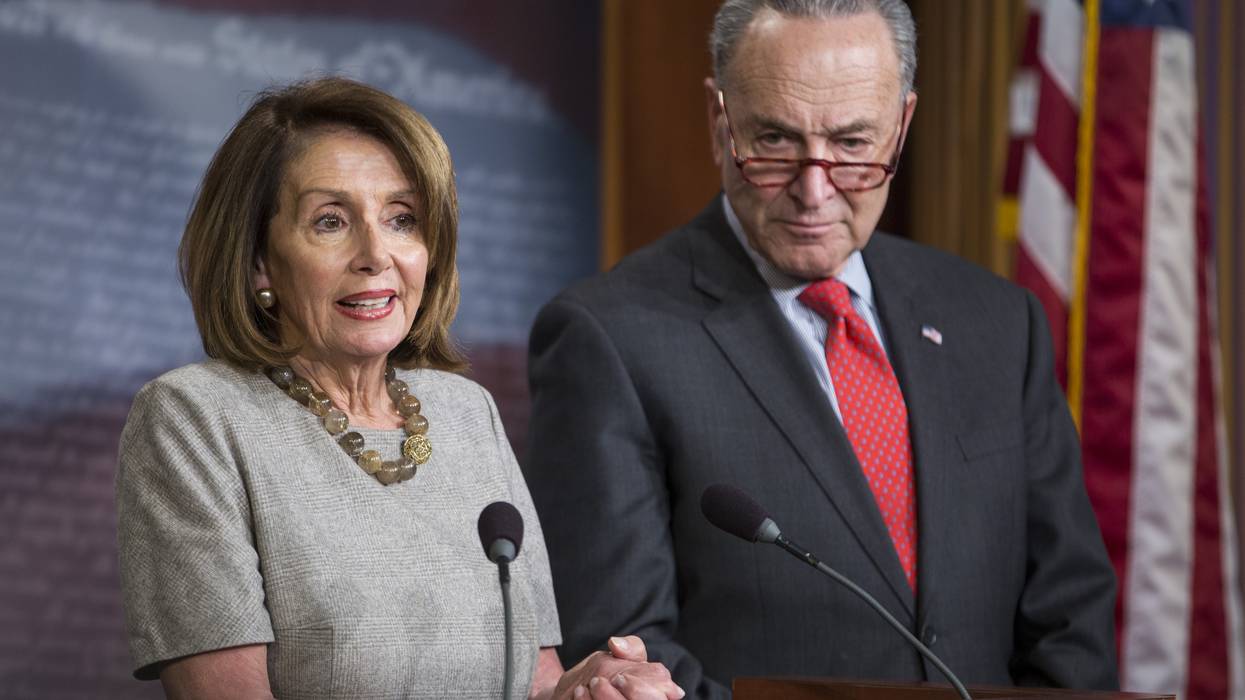
We must be willing to say out loud that the Democratic Party as currently led is a huge part of the problem. The people running it have failed. They have names. Saying so isn’t radical. It’s honest.
I’ve been hearing from a lot of candidates and campaigns lately. This one is for them.
In 2015, I sold my food trucks to volunteer for Bernie Sanders. That turned into co-founding Brand New Congress and Justice Democrats, then helping elect Alexandria Ocasio-Cortez to the US House of Representatives. I worked as her strategist and communications director for a few years after that. I’ve spent the better part of a decade pretty close to the center of the progressive movement. The following is what I learned.
Back in 2016, Hillary Clinton said Bernie Sanders’ policies were “fairy dust and rainbows.” The point wasn’t just that big things were hard. The point was that big things weren’t needed. The system was basically working. America was great. If you thought otherwise you weren’t serious, or you weren’t paying attention, or you were the kind of person who gets dismissed at Brookings as insufficiently realistic.
That was the consensus. Serious people. Credentialed people. New York Times columnists and think tank fellows and television regulars, all reading from the same hymnal. Don’t rock the boat. Take what the system offers. Be grateful.
That consensus didn’t protect us from Donald Trump. It elected him. Twice.
Because when someone came along and said the system is rigged and I’ll burn it down, 80 million people said, "Finally." They were wrong about the messenger. They were completely right about the problem. The “things are actually pretty good” position was the most destabilizing thing anyone could have said. That realism was actually radicalism. And we’re living in the results.
Progressive politics has the same capacity problem that the rest of the country does. We don’t have enough aligned people in power, and we can’t fix that one seat at a time any more than we can fix the housing crisis one subsidy at a time.
The market doesn’t work for the things people actually need to live. Not anymore. Maybe it once did. It doesn’t now and the evidence is everywhere.
We spend $6 trillion a year on healthcare. More than any country on earth, by a lot, and we rank last among wealthy nations in outcomes. Last. Tens of millions of people are one diagnosis away from financial ruin. Rural hospitals are closing. The market has had decades to fix this. It hasn’t fixed it. It has extracted wealth from it while delivering less.
Or consider the mRNA vaccines. The federal government funded the foundational research for 35 years. When COVID hit, the government paid Moderna and Pfizer billions more to finish the job and purchase the doses. Moderna and Pfizer then walked away with over $100 billion in combined revenue. The public got the bill twice, once as taxpayers funding the research, once as patients paying the prices, and the companies kept the patents.
The same pattern shows up in housing. We have been short on housing for decades. The market hasn’t built our way out of it. Cities that people actually want to live in are unaffordable. But so are the rural areas. I live in Lenoir City, Tennessee. Population about 11,000. Here a studio apartment runs you a thousand dollars a month.
And what did our nominee offer? Kamala Harris proposed a $25,000 grant for first-time home buyers. I understand the instinct. But the issue is supply. You pump $25,000 into a market that isn’t building enough homes then prices go up. The money flows straight through the buyer and into the seller or the landlord and the developer, and nothing new gets built. It’s the same story as healthcare. We keep pouring money into broken systems I assume because it seems like a logical solution. But it only makes the problem worse.
Too many people think of American problems as spending problems. But if I walked into my local grocery store and wanted 15,000 pounds of beef, it wouldn’t matter how much money I had. You can’t buy what doesn’t exist. We don’t have enough housing. We don’t have enough doctors. We don’t have enough childcare slots. Pumping money into markets that aren’t producing those things doesn’t produce them. It inflates the price of whatever scraps are left. You fix a capacity problem by building and training, not injecting more cash.
We built our way out of the Depression not just by writing checks but by doing it ourselves. The government built water and irrigation infrastructure that turned the Central Valley into the food supply for half the country. It strung electrical wire to farms and small towns across the rural South and Midwest that private utilities had written off as unprofitable. We built the industrial capacity that became the Arsenal of Democracy. That was public investment. That was us deciding some things are too important to leave to the market.
We don’t believe that anymore. Or rather, our leaders don’t. Those few that do get stopped before they can do anything about it.
AOC won. She scared people badly enough that they spent millions trying to destroy her. She had the right diagnosis. She had the right policies. She had the courage. The things she ran on didn’t happen. Not because she wasn’t good enough. Because she walked in alone. A seat won in isolation gets absorbed. The machinery of this system is designed to absorb individual attacks.
Progressive politics has the same capacity problem that the rest of the country does. We don’t have enough aligned people in power, and we can’t fix that one seat at a time any more than we can fix the housing crisis one subsidy at a time.
Which brings me to where we are. An American president is suggesting on a Tuesday night that Iran should cease to exist. Not metaphorically. And the people who are supposed to be the opposition are writing letters. That is where we end up when the people in charge have no affirmative vision, no plan to build anything, and no team capable of fighting for it even if they did.
So when people ask me about candidates, I’m not asking whether they have the right positions. Most of the good ones do. I’m asking whether they understand what those positions are actually up against. Whether they’re ready to fight it.
I’m looking for bold, specific, public policy positions. Not values. Policies. Medicare for All. Public ownership of AI infrastructure. A housing program that builds and owns, not just subsidizes. Drug pricing reform that takes back the patents on publicly-funded research so the public owns what the public paid for. You would be amazed how many candidates won’t put this out publicly.
We must be willing to say out loud that the Democratic Party as currently led is the problem. The people running it have failed. They have names. Saying so isn’t radical. It’s honest.
An understanding that our institutions have been captured. The FEC. The FDA. The SEC. The DOJ. The Supreme Court. Not neutral referees. A coordinated fifty-year project to make progressive governance legally impossible. A candidate who won’t say that isn’t ready for what’s coming.
I’m looking for bold, specific, public policy positions. Not values. Policies.
A willingness to take risks inside the party. Not fighting Republicans on television, which costs nothing. Backing primary challengers against Democratic incumbents who are blocking the agenda. Making it more dangerous to oppose you than to support you. Almost nobody will do this.
All of those are necessary. None of them are enough.
A commitment to building a team before they win. Not after. Campaigning alongside candidates in other states and districts. Endorsing across geographies. Treating their race as part of something bigger than their district. This has never been done at scale on our side. It’s the thing that would change everything.
People resist this one the most, so let me explain why it matters.
A candidate’s victory, whether it’s a House seat or a Senate seat, can only accomplish things within the framework of how big and powerful their team is, how aligned that team is, and whether they built it before they walked into the building. It has to happen before, not after, for two reasons. First, because building it before is what proves you’re willing to put skin in the game and take real risks. Anyone can talk about solidarity after they’ve won. Doing it before, when it costs you something, is what makes it mean anything. Second, because you cannot change who’s sitting at the table from inside the table. You have to build the power to change it from outside. That means committing to each other before any of you have a seat, when the only thing binding you together is the mission itself.
And it matters to voters. Candidates running on these ideas as individuals are just putting policies on a page. They’re giving speeches. When they show up with a team, when they’ve committed to each other before they’ve won anything, they’re showing voters they understand what’s standing in their way and they have a plan for taking it head on.
Nobody is coming to do this for us. It takes a team. People who said all of this out loud before they won.
Underneath all of it, public ownership as the mechanism. Not regulation. Not subsidy. Ownership. We did it before. We can do it again. When a technology has the power to transform society, it’s unwise to leave it in the hands of a tiny group of self-absorbed billionaires whose only goal is to maximize profit, who consistently show contempt for the rights and interests of their fellow Americans, and who aren’t accountable to anyone, especially with a federal government this weak. We don’t let private companies build nuclear weapons. We don’t let them decide when or how to use them. We don’t let them raise armies. We understand some things are too powerful to leave in private hands. AI is one of those things. It’s built off of thousands of years of human data and thought. It’s built off of major public investment. It’s built by us. It should be working for us. The only thing that’s got a single chance of ensuring that is if we own it. Just like Alaska gets dividends from its oil reserves, the American people should be getting dividends from their data and their investments.
Nobody is coming to do this for us. It takes a team. People who said all of this out loud before they won. Who committed to each other before they walked into Washington. Who understand that their victory only matters if the person running three states over wins too.
That team is what I’m building with A Fight Worth Having. Not candidates with good vibes. Candidates who’ve passed this filter. Who know what they’re up against. Who are ready to fight the right people, including the ones in their own party.
If you’ve been reading this and asking what do we do, this is what we do.
Go to AFightWorthHaving.com
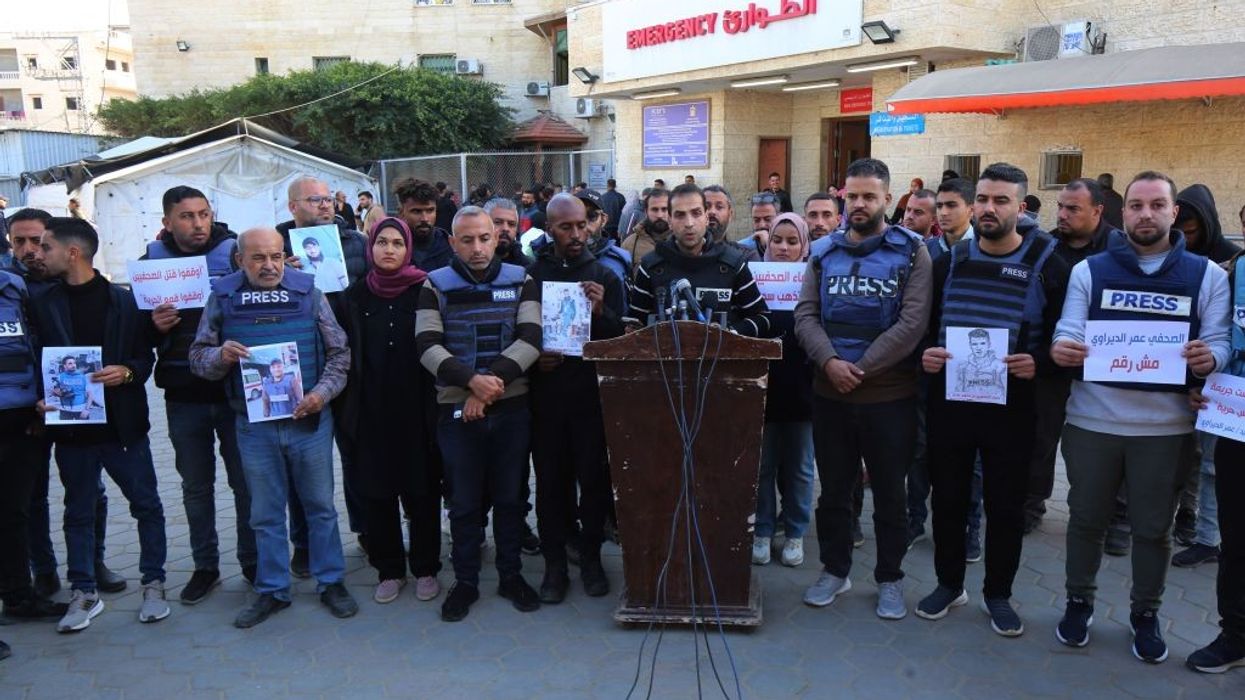
Youth support for Palestine reflects a changing media landscape.
As unconditional support for Israel becomes more of a political liability and solidarity with Palestine establishes itself as a litmus test, former Secretary of State Hillary Clinton and her fellow status-quo defenders are blaming social media for the US public’s growing solidarity with Palestine.
In accusing young people of falling for fake news, they rely on an outdated assumption that equates social media with falsehoods—and equates legacy media with trustworthiness. What’s clear is that Clinton and her peers who partake in similar rhetoric fail to grasp the nuances of today’s media landscape, particularly as it has unraveled around Palestine.
More and more Americans have realized that Israel’s post-October 7 assault on Gaza is not only disproportionate but genocidal, and that in spite of the carnage, the US government continues to provide diplomatic cover and send billions in military aid. It’s no wonder that public sentiment has shifted considerably against Israel in the past two years, with young people in particular being increasingly supportive of Palestine. This sea change has made establishment politicians very nervous. In several recent speaking engagements, former Secretary of State Hillary Clinton has lamented that these pro-Palestine young people have the unfortunate habit of getting their news from social media; to her, that makes them uninformed and sorely misled.
“More than 50% of young people in America get their news from social media. Just pause on that for a second,” she said at an event for the newspaper Israel Hayom earlier this month. “They are seeing short-form videos, some of them totally made up, some of them not at all representing what they claim to be showing. And that’s where they get their information.”
The claim that social media is misleading and misinforming young people is simply an attempt not only to delegitimize pro-Palestine sentiment but to cast doubt on the devastation in Gaza itself.
Clinton’s framing is reminiscent of 2016-era misinformation discourse, back when the US public hadn’t fully figured out what to do with social media’s rapid acceleration and impact on politics. But that familiar rhetoric does not apply to the youth-driven political realignment on Palestine. When Clinton implies that pro-Palestine sentiment is a result of misinformation—a fraught umbrella diagnosis that often tries to encompass too much, and whose remedies can clash with the ideals of free speech—she attempts to place it within the context of Facebook fueling atrocities in Myanmar, Russian information campaigns working to influence the US election, and then-candidate Donald Trump labeling every media outlet “fake news,” forcing them to have tough conversations about when and how to fact-check his claims.
While the current media landscape and its relationship to politics is still bleak, Clinton’s accusation is much more about her fealty to Israel and the centrist-liberal order. The claim that social media is misleading and misinforming young people is simply an attempt not only to delegitimize pro-Palestine sentiment but to cast doubt on the devastation in Gaza itself.
The data point that half of Americans get (some of) their news from social media alarms most people—perhaps a valid instinct, given the current media landscape of local news in decline, billionaires taking over outlets, and profit-driven influencers peddling dubious wellness claims via vertical video. Social media did democratize information sharing without necessarily embedding any accountability mechanism for its quality and accuracy, resulting in a lot of low-quality content of dubious veracity.
But this doesn’t mean that social media users are only, primarily, or even significantly consuming fake news or slop. Pew Research Center reports that users, shockingly, do make assessments about what content they’re looking at. Not to mention that plenty of the content on social media is content from news outlets themselves.
According to Clinton, what’s most concerning is the fact that so many young people are getting their information from TikTok, given that the app is “governed by an algorithm—at least up til now—still largely manipulated by the Chinese Communist Party.” Her geopolitical paranoia echoes CNN commentator Van Jones, who in October placed blame on Iran and Qatar for running a “disinformation campaign” that flooded social media users with images of “dead Gaza baby, dead Gaza baby, dead Gaza baby.” Both try to convince audiences that concern for Palestine is just an information-operations campaign from our geopolitical enemies. Reports from earlier this year indicated that the legislation banning TikTok was, in part, ushered along by lawmakers’ worries about the prevalence of content critical of Israel on the platform.
Yet the most damning lesson here is not the growing reliance on getting information from social media, or even the fact that our collective outlook toward it should be more nuanced (it should!). Rather, it’s the collapse of trust in traditional legacy media that has accompanied young peoples’ shifting views on Palestine. The media industry utterly failed in its charge to report the news, and it failed to defend colleagues in Gaza as they were systematically murdered by the Israeli government. The New York Times in particular has been especially egregious, most infamously failing to retract their story “Screams Without Words” even after its credibility was seriously questioned.
Let’s say Clinton and her peers are only consuming these news sources (and even then, they’d have to be taking great lengths to avoid reading the quality reporting on Gaza that mainstream publications do often release, not to mention ignoring the numerous reports from human rights organizations and experts), then they’d be the ones who are uninformed—not the bogeyman of kids on social media.
The Lemkin Institute for Genocide Prevention and Human Security issued a statement last week on Clinton’s baseless accusations:
What truly seems to unsettle Secretary Clinton is not “misinformation,” but rather the fact that younger generations are no longer consuming a single, state-controlled narrative. They are accessing unfiltered images and testimonies that challenge decades of political messaging.
Clinton’s basic premise—denying the genocide in Gaza—is false. Young people know that they’re being gaslit. Yes, it is true that they’ve experienced “TikTok smashing their brains all day long with videos of carnage in Gaza.” They’ve seen Western media bend over backwards to diminish blame on Israel. And they’ve seen resilient Palestinian journalists like Bisan Owda showing Gaza through her own eyes.
At the Doha Forum, Clinton said it’s “a provable fact that most Americans... get their news from social media.” To echo Foreign Policy editor-in-chief Ravi Agrawal’s response: “Is that a bad thing?”
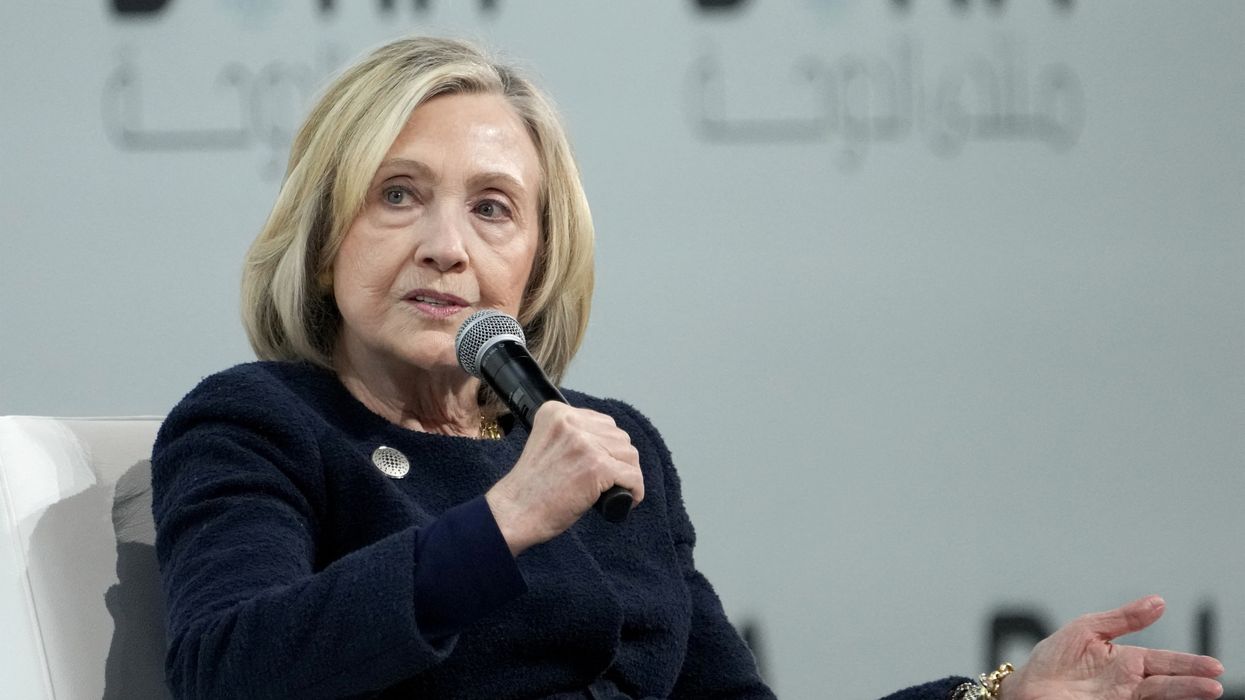
"Young people in the US are not stupid or gullible. They simply reject genocide—something the secretary might consider."
The world's leading genocide prevention group this week accused former US Secretary of State Hillary Clinton of "outright genocide denial" for comments last week attributing young Americans' opposition to Israel's US-backed genocide in Gaza on social media.
Speaking last week at the Israel Hayom Summit in New York, Clinton asserted that young people's support for Palestine stems from the fact that they are "getting their information from social media, particularly TikTok," adding that many younger Jewish Americans “don’t know the history and don’t understand" the Israel-Palestine issue.
On Monday, the Philadelphia-based Lemkin Institute for Genocide Prevention and Human Security—named for Raphael Lemkin, a lawyer and Holocaust survivor who coined the term genocide—published a statement arguing that "Secretary Clinton’s framing is not at all an accurate reflection of why Americans are growing more critical of Israel."
"Young Americans of all political stripes have not fallen prey to propaganda, though that is always a legitimate concern," the institute said. "Rather, they have consumed two years of videos depicting Israel’s genocide against Palestinians that have been uploaded by Palestinian journalists, ordinary people trying to survive in Gaza, [Israel Defense Forces] soldiers, and ordinary Israelis themselves."
"There has been no convincing refutation of the sheer amount of raw evidence of genocide coming out of Palestine," the institute contended. "Young people in the US are not stupid or gullible. They simply reject genocide—something the secretary might consider doing as well."
Wow: Lemkin Institute for Genocide Prevention (named for Holocaust survivor Raphael Lemkin, who coined term "genocide") calls Clinton's remarks "genocide denial.""Young people in the US are not stupid or gullible. They simply reject genocide – something the Secretary might consider doing as well."
[image or embed]
— Prem Thakker ツ (@premthakker.bsky.social) December 9, 2025 at 11:15 AM
LIGP continued:
Secretary Clinton appears not to be bothered by the reality of genocidal violence—in fact, she did not mention anything about it. Her concern is, rather, in her words, “the narrative”—the fact that these crimes are no longer hidden and are now being livestreamed and documented in real time, making it harder for her and others to control it. TikTok cannot be blamed for the fact that many members of Gen Z understand that Israel is committing genocide, since so many other people, including those who never look at TikTok, also hold that view. Apart from the Lemkin Institute, the vast majority of large, mainstream human rights organizations, the [United Nations], and many scholars as well as international legal bodies have denounced Israel’s actions in Gaza as genocide. Many carefully researched reports by international organizations have established that Israel’s crimes meet the international legal threshold for genocide. We encourage the former secretary to read them.
"The Lemkin Institute continues to support students and young people worldwide for having the courage to stand up for their convictions, to speak truth to power, and to fight against the scourge of genocide in Palestine and elsewhere," LIGP added. "Secretary Clinton’s remarks are not only inaccurate—they are also a shameful example of the lengths to which people complicit in genocide will go to to deny its existence."
The institute's rebuke of Clinton's comments came as the International Court of Justice in The Hague adjudicates a genocide case against Israel filed by South Africa and supported by around two dozen nations. Israeli Prime Minister Benjamin Netanyahu and former Defense Minister Yoav Gallant—who ordered the "complete siege" of Gaza that fueled famine and disease—are also wanted by the International Criminal Court, also located in the The Hague, for alleged war crimes and crimes against humanity including murder and forced starvation.
Lemkin's denunciation also comes amid a tenuous ceasefire between Israel and Hamas in Gaza, a truce Israeli forces have broken more than 500 times, according to officials in the Palestinian exclave. Israeli officials say Palestinian resistance fighters have violated the ceasefire more than 30 times.
Since the Hamas-led attack of October 7, 2023, Israel's annihilation and siege of Gaza have left more than 250,000 Palestinians dead, maimed, or missing and around 2 million more forcibly displaced, starved, or sickened. Israeli military data suggests that of the the more than 70,000 Palestinian deaths, over 8 in 10 were civilians.
Through it all, the United States has backed Israel with more than $21 billion worth of weaponry and diplomatic support including repeatedly vetoing United Nations Security Council ceasefire resolutions.