

SUBSCRIBE TO OUR FREE NEWSLETTER
Daily news & progressive opinion—funded by the people, not the corporations—delivered straight to your inbox.
5
#000000
#FFFFFF
To donate by check, phone, or other method, see our More Ways to Give page.
Daily news & progressive opinion—funded by the people, not the corporations—delivered straight to your inbox.
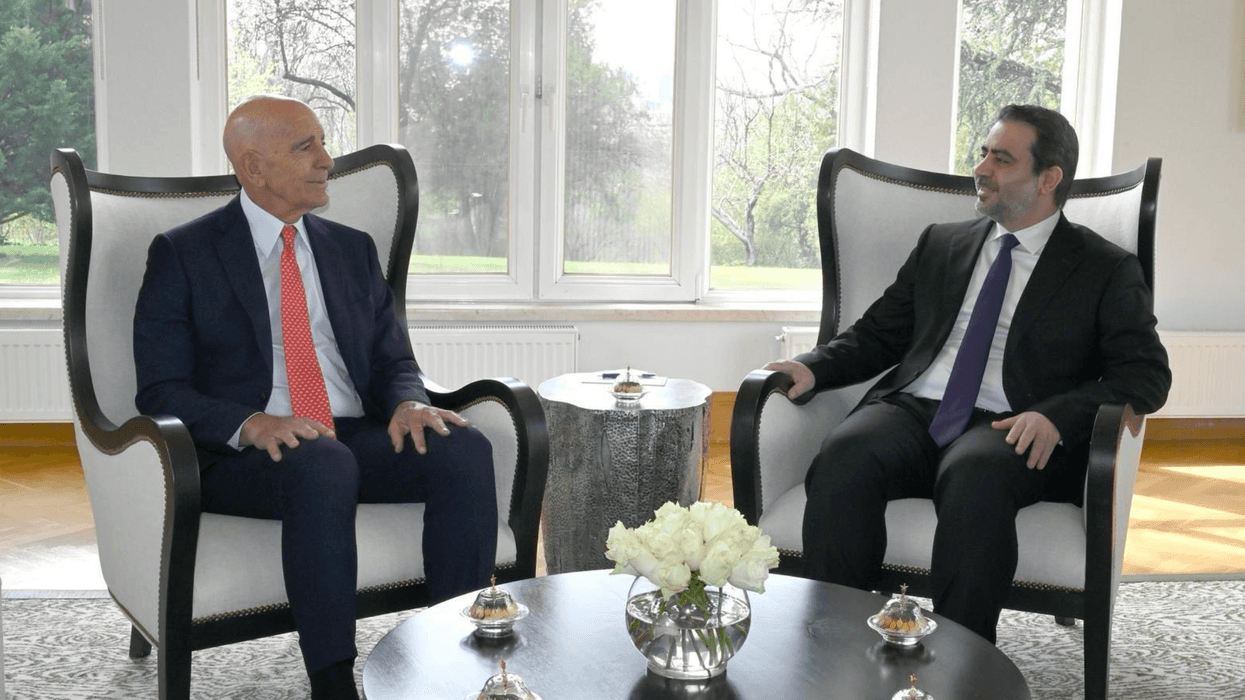
Barrack's comments—since retracted amid Republican calls for his resignation—directly contradicted the president's recognition of Israel's illegal occupation of Syrian territory conquered in 1967.
Tom Barrack, the US ambassador to Türkiye and special presidential envoy for Syria and Iraq, on Sunday retracted his acknowledgment of Israel's illegal occupation of Syria's Golan Heights amid mounting Republican calls for his resignation.
Directly contradicting Trump's formal recognition of Israel's unlawful 1981 annexation of the Golan Heights, Barrack said during a Friday interview with podcaster Mario Nawfal that Israel would face difficulties if it moved to unlawfully annex parts of southern Lebanon it invaded and currently occupies.
"In the Golan with Syria, they still occupy the Golan against the [United Nations] resolutions, against all of the international order, which has said the Golan is Syria’s," Barrack noted. He also floated the possibility that last week's Israeli strike on an air base in northwestern Syria may have been an attempt at "baiting" Türkiye.
Israel invaded and captured the strategically important Golan Heights during the Six-Day War in 1967, ethnically cleansing more than 100,000 Syrians and eventually annexing the conquered territory, a move unanimously rejected by the United Nations Security Council in Resolution 497. Since then, tens of thousands of Israeli settlers have unlawfully colonized the Syrian territory.
UN Security Council Resolution 242 demands that Israel withdraw from the Golan Heights and all occupied Palestinian territories as well.
No country recognized Israel's occupation of the Golan Heights until US President Donald Trump did so during his first term. Israeli Prime Minister Benjamin Netanyahu showed his appreciation for the move by naming one of the dozens of illegal Jewish settlements in the territory Trump Heights.
Barrack subsequently reversed himself, telling The Associated Press on Sunday that “United States policy on the Golan was set by President Trump in 2019 and is unchanged."
This, as Israeli leaders denounced Barrack's remarks and Republican politicians and pundits called for his firing or resignation.
Israeli Foreign Minister Gideon Sa'ar said the ambassador's comments were "full of inaccuracies" and “contradict the position of Trump himself regarding the Golan Heights.”
US Sen. Rick Scott (R-Fla.) said on X: "The Senate confirmed [Barrack] to enact the PRESIDENT’S AGENDA, which millions of Americans voted for. It seems the ambassador forgot that or failed to do his research, so here’s a refresher for him… President Trump has been CLEAR about Israel’s sovereignty over the Golan Heights for years!"
Far-right provocateur and Trump confidant Laura Loomer called Barrack "absolutely brain dead."
"Tom Barrack is hands down the most retarded ambassador nominated by President Trump," she contended. "He should resign for his lack of understanding of US foreign policy."
Meanwhile, some experts positively noted Barrack's short-lived acknowledgment of what the international community has long maintained.
"[Barrack] said the Golan is occupied Syrian land under UN resolutions. That is simply what the UN says. It has said it since 1967. Most of the world agrees," political analyst Michael Arizanti said on X.
"Israel's foreign minister said his remarks were full of inaccuracies," he continued. "Professional lunatic Laura Loomer demanded he resign and claimed he was compromised by Arab money, with no evidence at all! Sen. Rick Scott told him to do his research. And because Barrack had criticized Israel's strike on a Syrian air base the week before, he was accused of siding with the bad guys."
"Four attacks," Arizanti added. "Not one about the actual policy!"
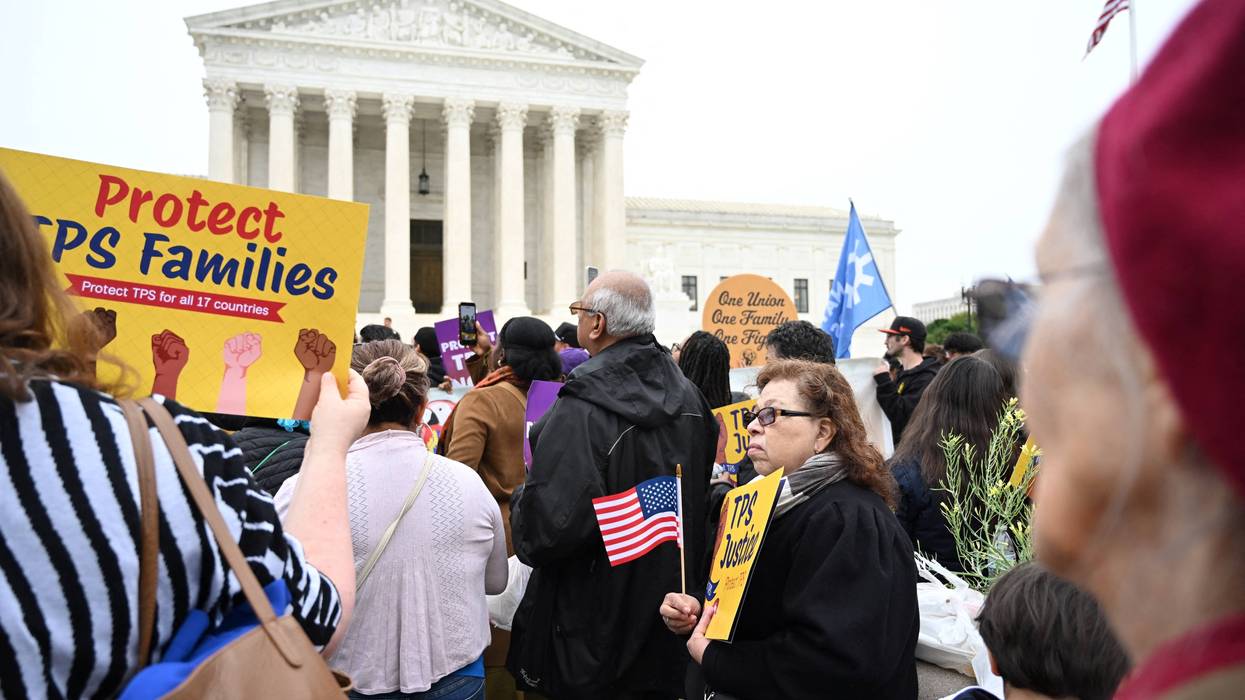
"Hundreds of thousands of people who hold legal status... now face losing their ability to work and being torn from their families and homes."
The US Supreme Court on Thursday cleared the way for the Trump administration to deport hundreds of thousands of Haitian and Syrian residents from the US after stripping them of their Temporary Protected Status last year.
In a 6-3 decision, the high court's conservative majority ruled that the Department of Homeland Security was able to strip status from 350,000 Haitians and 6,000 Syrians—including many who'd lived in the US for years—after they'd been given protection because DHS deemed their home countries unsafe to return to.
"Hundreds of thousands of people who hold legal status, who registered with the government, passed background checks, and paid fees to do so, now face losing their ability to work and being torn from their families and homes," explained Todd Schulte, the president of the immigration and criminal justice reform advocacy group Fwd.US.
A federal judge temporarily delayed the administration’s TPS terminations in February, blocking what advocates feared would be a flood of immigration agents to areas with many TPS recipients. The judge said DHS had not followed the legally required steps to determine whether Haiti and Syria were safe enough for people with temporary status to return.
The State Department currently advises Americans not to visit either country for any reason, as Haiti is in the midst of a brutal gang war that has displaced more than 1.4 million people, and Syria has been in an ongoing state of unrest since the civil war began in 2011.
Echoing the lower court, Supreme Court Justice Elena Kagan pointed out in her dissenting opinion that the only consultation within DHS on the conditions in these countries took place in a brief email exchange between a DHS aide and a State Department official, who said that there were no "foreign policy concerns" with terminating their status, but provided no evidence to declare that the two countries were safe.
The justice likewise noted that the stripping of status for Haitians was likely arbitrary and unconstitutional, based in part on "racial animus." She noted that President Donald Trump has made many statements about Haitians "so repellent and racially inflected that the majority declines to put them in print."
Kagan listed several of them, including Trump's nonsensical rant that Haitians were "eating the pets" of residents in Springfield, Ohio; his claim that Haitians living in the US “probably have AIDS"; and his description of Haiti as a "shithole country." She also noted his comments about immigrants more broadly, including that they are "poisoning the blood" of the nation.
"The statements fairly shout, in their racial undertones and overtones alike, that race entered into the president’s resolve to remove Haitians from this country," Kagan wrote.
In the majority opinion, Justice Samuel Alito sidestepped the question of whether DHS has properly considered the conditions in Haiti and Syria, stating that the TPS statute allows "no judicial review of any determination... with respect to the... termination” of a designation. He said that meant the court could not review either the final decision to terminate status or any of the individual decisions leading up to it.
He did acknowledge the question of racial animus and admitted that things Trump has said "would have scandalized the public just a short time ago." But, he said that “none of the cited statements" from Trump were "overtly racial, and in substance all expressed policy views that could rest on race-neutral justifications.”
The Trump administration has declined to renew TPS for all 13 countries for which it has come up for renewal during his second term. Alito said that since the administration has declined to renew TPS for every country, not just Haiti, the evidence was "insufficient to show that the termination of Haiti’s TPS designation was based on the race of the Haitian people.”
Thursday's ruling was yet another validation of Trump's efforts to end TPS by the Supreme Court, which last year ruled that he could similarly strip status from around 350,000 Venezuelan nationals.
But advocates have pointed out that the administration's case this time was substantially weaker.
Aaron Reichlin-Melnick, a senior fellow at the American Immigration Council, said it was "very important for people to understand that the Trump administration did not win a decision today saying that they had lawfully ended TPS."
"Instead," he said, "what the Supreme Court held was that even if the Trump administration had openly ignored the law in making TPS decisions, courts cannot stop them."
Nicolette Glazer, a California-based immigration attorney, said the court had basically determined that "a DHS secretary can end TPS at whim and neither statutory nor constitutional theory applies to curb administrative xenophobia."
"Make no mistake about what this is," said Amina Barhumi, the executive director of the Muslim Civic Coalition. "Temporary Protected Status exists because it is not safe to send people back to war and disaster. This decision does not change those dangers—it simply turns its back on the people fleeing them."
Schulte said it was a "heartbreaking, terrible decision that defies common sense." He added that "the administration simply broke the law in the way it terminated TPS." Now, he said, the lives of "hundreds of thousands of people who have lived here for decades... are in chaos."
While the Trump administration has often portrayed immigrants and refugees as parasites, Schulte argued that the "economic damage" of the decision would be felt far beyond the families facing deportation.
"Haitian TPS holders contribute nearly $6 billion to the US economy each year, and 200,000 of them work in industries already facing labor shortages, including healthcare, agriculture, and manufacturing," he said. "An estimated 25,000 US citizen children of Haitian TPS holders will be pushed into poverty when their parents lose work authorization. Employers will lose trained, dedicated workers they cannot easily replace. The real-life impact of this ruling is profound, cruel, and heartbreaking."
Some members of Congress pledged to take action to defend TPS recipients in light of the decision.
Rep. Sylvia Garcia (D-Texas) called on Congress to pass the American Dream and Promise Act, which would create pathways to permanent legal status for TPS holders, as well as holders of the similar Deferred Enforced Departure (DED), and those who were brought to the US unauthorized as children and received protection under the Deferred Action for Childhood Arrivals (DACA) program.
"TPS holders followed the rules. They registered with the government, passed background checks, renewed their status, worked legally, paid taxes, and raised their families here," Garcia said. "Their reward should not be a deportation notice."
Sen. Ed Markey (D-Mass.), who spoke outside the court on Thursday, said the ruling showed that "the far-right MAGA majority on the court cannot stand." He said, "We need to win back the House and the Senate and expand the court."
"This is not over," Markey added. "It is our responsibility to protect TPS holders and provide this vulnerable group with a pathway to permanent citizenship. I will not stop fighting."
Even Rep. Mike Lawler (R-NY), a strong supporter of Trump, said that while he "never disputed the ability" of Trump to end TPS, he "strongly disagree[d] with ending Haitian TPS at this time," saying that "the situation on the ground in Haiti is a humanitarian and political disaster and continues to warrant an extension."
Lawler noted that "roughly 1/3" of Haitian TPS holders "work in our healthcare system" and said "shutting off TPS will create a crisis" in hospitals, nursing homes, and for people with disabilities.
"I’m asking the administration to allow for an orderly process by which Haitian TPS holders can maintain their work authorization while their immigration cases are adjudicated over the next six months," he said, adding that the Senate should consider his legislation with Rep. Laura Gillen (D-NY) to temporarily extend TPS protections.
He said the administration needed to "allow for a stable government to be established with a free and fair election, creating the conditions for a safe return for Haitians."
Rep. Analilia Mejia (D-NJ), a member of the House Homeland Security Committee and Border Security and Enforcement Subcommittee, said the TPS ruling, and another ruling on Thursday allowing the administration to turn back asylum seekers at legal points of entry, "should alarm every American."
"The 14th Amendment promises due process and equal protection under the law. Those rights do not disappear because a president decides an entire community has become politically convenient to target," she said. "When the government can deny one group a hearing or strip away protections they have relied on for years, it is not just immigrants who lose. It sends a dangerous message that constitutional rights can be discarded whenever those in power find it politically useful."
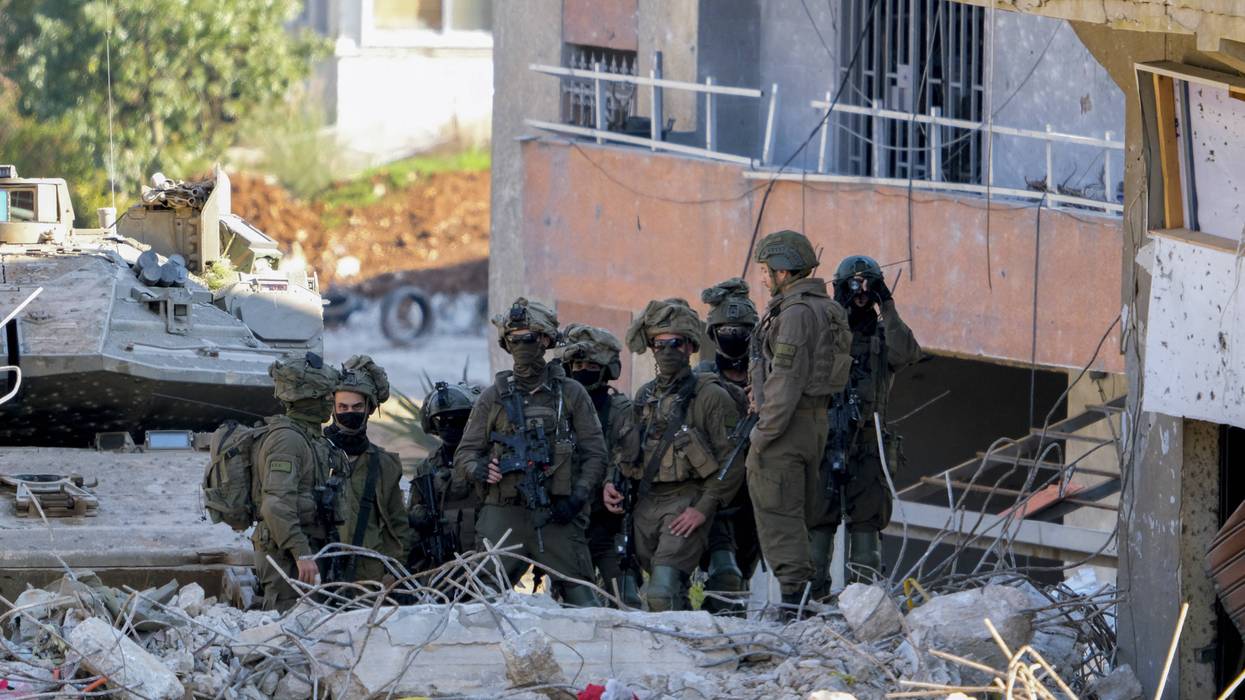
"It's not hidden," said one Israeli soldier. "Everyone sees it and understands."
While media coverage of Israel's war on Lebanon mainly focuses on the slaughter of hundreds of Lebanese civilians and destruction of entire villages, Israel Defense Forces commanders are tacitly condoning widespread looting by their troops in Lebanon, according to reporting Thursday.
Haaretz, Israel's oldest daily newspaper, interviewed a number of IDF personnel who described routine theft of items including motorcycles, televisions, paintings, sofas, and rugs from the homes and businesses of some of the more than 1 million Lebanese forcibly displaced by Israel's assault on its northern neighbor.
Israel has seized control of more than 50 villages in southern Lebanon as part of its expanding so-called “Yellow Line,” with residents who cross it risking their lives. Their absence offers IDF troops the opportunity to loot with no Lebanese resistance.
The looting of civilian homes and businesses is formally known as "pillage" and is strictly prohibited under numerous Israeli and international laws and conventions. However, according to the IDF soldiers and officers interviewed by Haaretz, senior and junior commanders know about the pillaging but are not punishing offending soldiers.
"It's on a crazy scale," one soldier said. "Anyone who takes something—televisions, cigarettes, tools, whatever—immediately puts it in their vehicle or leaves it off to the side, not inside the army base, but it's not hidden. Everyone sees it and understands."
Soldiers interviewed said commanders' responses range from turning a blind eye to prohibiting looting but not punishing offenders.
"In our unit, they don't even comment or get angry," one soldier claimed. "The battalion and brigade commanders know everything."
Another said that "battalion and brigade commanders do speak up and get angry, but without action, those are empty words."
Some IDF soldiers have even posted videos of their looting on social media—usually with no consequences.
🇮🇱🇱🇧IDF soldiers reportedly filmed looting homes in southern Lebanon.
The video shows troops taking belongings from civilian houses during the ground operations.
Israel’s campaign has displaced over 1 million Lebanese in under three weeks…pic.twitter.com/RRgjX8T9Rb https://t.co/iGcjA9NbXt
— Mario Nawfal (@MarioNawfal) March 20, 2026
Responding to the Haartez report, the IDF claimed:
The military views any harm to civilian property and acts of looting with utmost severity and unequivocally prohibits them. Any allegation or suspicion of such acts is thoroughly examined and addressed with the full weight of the law. In cases where sufficient evidence is established, disciplinary and criminal measures are taken, including prosecution. The Military Police Corps conducts inspections at the northern border crossing as forces exit Lebanon.
However, some military police checkpoints along the border have been removed, and in some locations there have never been any checkpoints at all.
Widespread looting by IDF soldiers has previously been documented in Gaza and the illegally occupied West Bank, sometimes by the perpetrators themselves.
IDF looting has also been reported in Syria, where Israel has seized as many as 200 square miles of additional territory in 2024, including dozens of border villages, under cover of the Gaza genocide. Israel already conquered and occupied much of the Syrian Golan Heights in 1967.
Israeli forces also allegedly backed Palestinians who looted Gaza aid convoys in order to boost the narrative that it's Hamas, not Israel, thatof is preventing humanitarian aid from reaching starving Gazans.
Looting of Palestinian property was particularly rampant during the Nakba, or "catastrophe," when more than 750,000 Palestinian Arabs were ethnically cleansed to make way for the establishment of Israel.
The systematic theft of Palestinian land, homes, and property—which continued with the occupation of the West Bank, Gaza, and Golan Heights in 1967—is accelerating today, and can be witnessed in videos of settler pogroms in the West Bank and infamous footage of an American-born settler colonist telling a Palestinian family whose home he's trying to steal that "if I don't steal it, someone else is going to."
The ongoing apartheid in Jerusalem.
“Even if i get out of the house, it won’t be returned to u” pic.twitter.com/5sELdmClH5
— Abed 🕊️ (@tiredpali) May 1, 2021
Such unchecked usurpation emboldens further thievery. One soldier interviewed by Haaretz for Thursday's article said the pillage would effectively end if there were serious consequences for offenders, pointing to units in which commanders took a tough stance against looting, resulting in negligible levels of the crime.
"Lenient enforcement sends a clear message. If someone were dismissed or jailed, or if military police were stationed at the border, it would stop almost immediately," they said. "But when there is no punishment, the message is obvious."
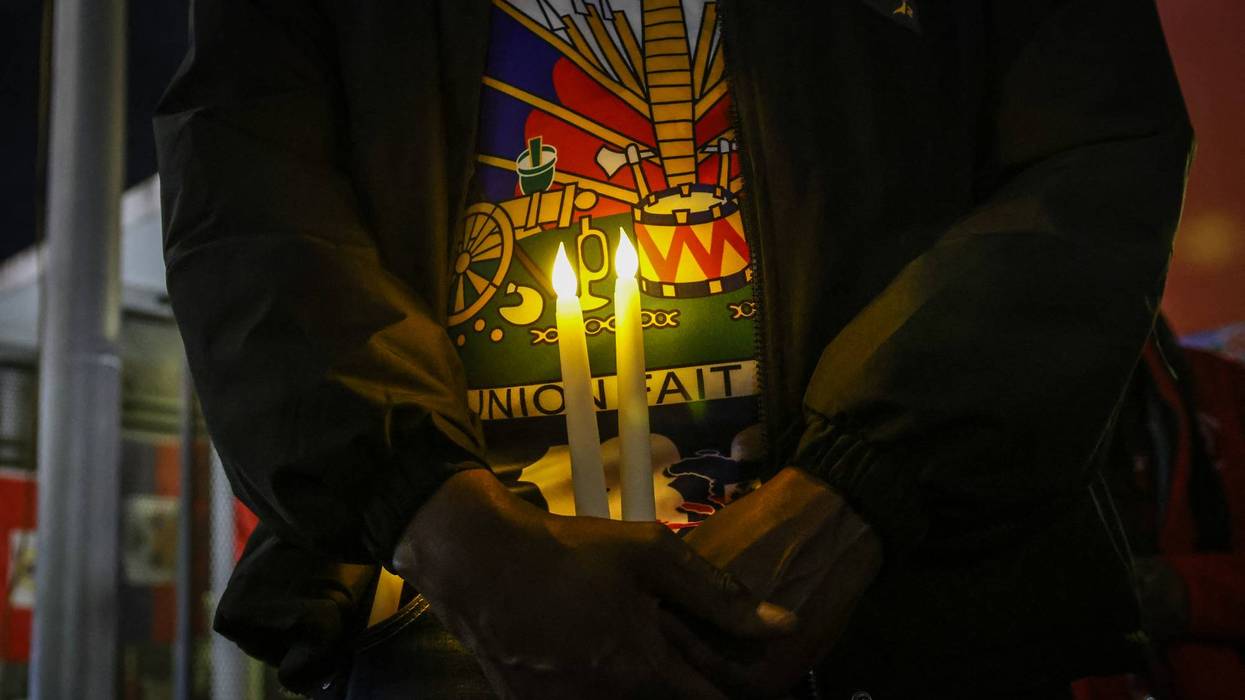
UN experts say both countries are still in the midst of extreme violence and that those with protected status would face dangers if forced to return.
The US Supreme Court will hear arguments next month over whether the Trump administration can strip legal status from migrants from Haiti and Syria who have been given temporary protection after fleeing war.
The court said on Monday that it would not grant the Trump administration emergency requests demanding that Temporary Protected Status (TPS) for migrants from the two countries be immediately lifted.
For the time being, this means that more than 350,000 people from these two countries can continue to live and work legally in the United States until a ruling is reached. The order set oral arguments in the case to take place in the last week of April.
The court has previously sided with the Trump administration in its bid to strip similar protections from around 600,000 Venezuelan nationals, putting them at risk of deportation.
But Aaron Reichlin-Melnick, a senior fellow at the American Immigration Council, said that there is "one notable distinction" between the case surrounding Venezuelan migrants and those from Syria and Haiti.
The Department of Homeland Security (DHS) is required to make its determinations about terminating TPS based on whether conditions in a specific country have improved enough that they would be safe to return. This includes consulting with other government departments, such as the State Department.
Unlike in the Venezuela case, Reichlin-Melnick said there is a "factual record showing that the Trump administration completely failed to do what is required by the law; actually consider the country conditions" in the case of Haiti or Syria.
He highlighted the opinion from US District Judge Ana C. Reyes, who last month ruled that the Trump administration's attempt to strip Haitians of their status was invalid because they'd "ignored Congress' requirement" to consult with other agencies to determine the conditions in the country, which has in recent years been ravaged by a gang war that killed more than 8,000 people in 2025 and has resulted in widespread instability and displacement in the country.
She noted that the only "consultation" conducted by the Trump administration was with a DHS staffer who emailed a State Department staffer, asking him to advise DHS on the matter on the same day a court first allowed them to re-review the status of Haitians.
The State staffer responded in less than an hour, stating definitively that "State believes that there would be no foreign policy concerns with respect to a change in the TPS statue [sic.] of Haiti." An attorney for the government later confirmed that "no other agency was consulted about the decision."
Moreover, the judge pointed to a social media post from Homeland Security Secretary Kristi Noem three days after Haitians had their TPS status formally stripped, referring to them and other immigrants as "killers, leeches, and entitlement junkies," as well as "foreign invaders." This, the judge said, suggested the decision was made in part based on "racial animus."
Following a 10-day trip to Haiti, William O'Neill, the United Nations-designated expert on human rights in the country, said on Monday that the humanitarian situation there is "dire and catastrophic" and is probably worse now than when Haitians were initially granted TPS in the US back in 2010 following a devastating earthquake that killed more than 300,000 people and inflicted widespread destruction and disease.
If the roughly 300,000 Haitians currently living under TPS were suddenly deported, he said, many would have nowhere safe to go in the war-ravaged country.
"Where would they go?" he asked. "The Haitians who are currently internally displaced can barely survive now.”
In November, another federal judge blocked DHS from stripping Syrians of status for failing to adequately evaluate the conditions in that country, where President Bashar al-Assad had been overthrown less than a year prior, igniting further instability after more than a decade of chaotic civil war.
A report from the Independent International Commission of Inquiry on the Syrian Arab Republic on Friday described ongoing sectarian violence in the country, as well as arbitrary detentions, torture, and extrajudicial killings.
According to a September report from the Syrian Observatory for Human Rights, more than 10,000 people, mostly civilians, have been killed by fighting and extrajudicial executions since Assad's ouster in December 2024.
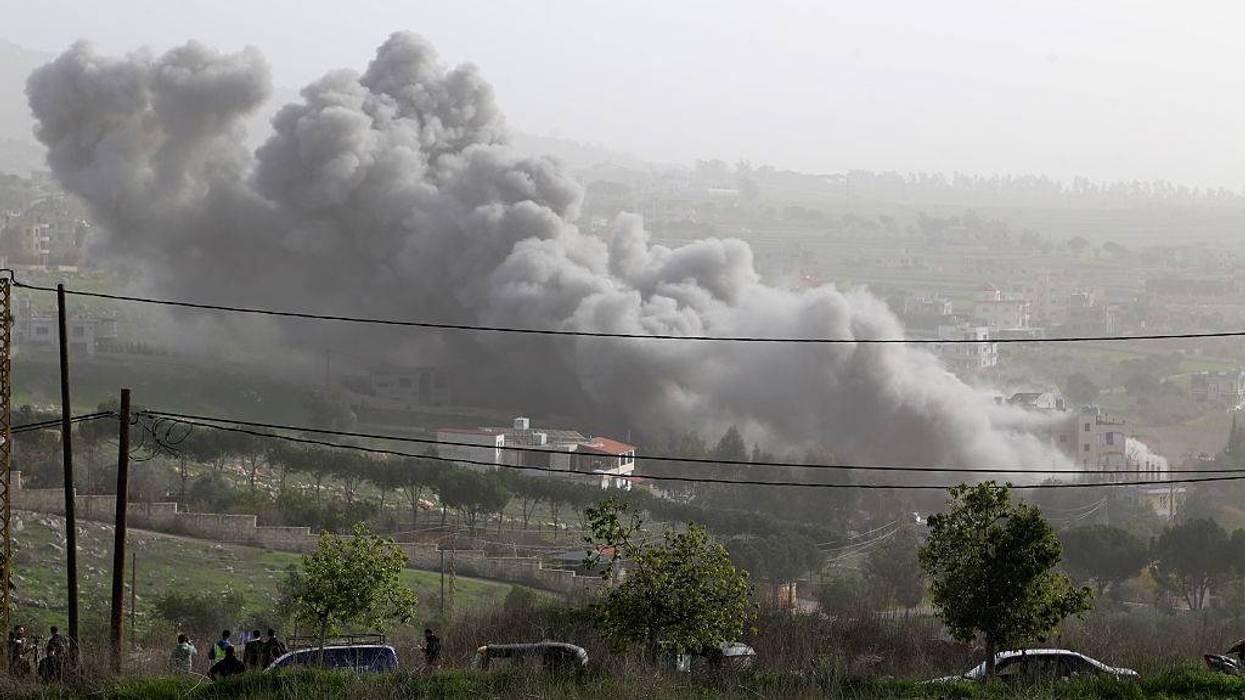
"This incident cannot be viewed in isolation from the scorched-earth policy pursued by the Israeli army," said watchdog Euro-Med Human Rights Monitor.
The Lebanese president has accused the Israeli government of committing "a crime against the environment and health" for allegedly spraying the herbicide glyphosate on agricultural lands in Lebanon and Syria.
As reported by Naharnet on Wednesday, Lebanon's agriculture and environmental ministries recently conducted analysis of soil near the site where Israel had sprayed a chemical substance and found glyphosate "20 to 30 times higher than the average" in the area.
The ministries said that this level of glyphosate in the soil could cause "damage to agricultural production," while also harming soil fertility.
Lebanese President Joseph Aoun denounced the spraying as a "flagrant violation of Lebanese sovereignty," and called on the United Nations (UN) and the international community at large to take action to stop future attacks.
Al-Jazeera reported on Tuesday that the UN Interim Force in Lebanon (UNIFIL) was warned by the Israel military on Monday to stay away from the border area because it planned to deploy a "nontoxic chemical substance" there, forcing the peacekeeping forces to cancel over a dozen planned activities.
Stephane Dujarric, a spokesperson for UN Secretary-General António Guterres, condemned Israel for preventing UNIFIL from conducting operations, emphasizing that "any activity that may put peacekeepers and civilians at risk is of serious concern."
Euro-Med Human Rights Monitor said on Wednesday that it has detected "Israeli aircraft spraying pesticides of unknown composition over farmland in the countryside of Quneitra in southern Syria" on January 26 and 27.
"This incident cannot be viewed in isolation from the scorched-earth policy pursued by the Israeli army," the human rights watchdog said. "It forms part of a pattern of systematic destruction of agricultural land, including the burning of approximately 9,000 hectares during recent military operations using white phosphorus and incendiary munitions."
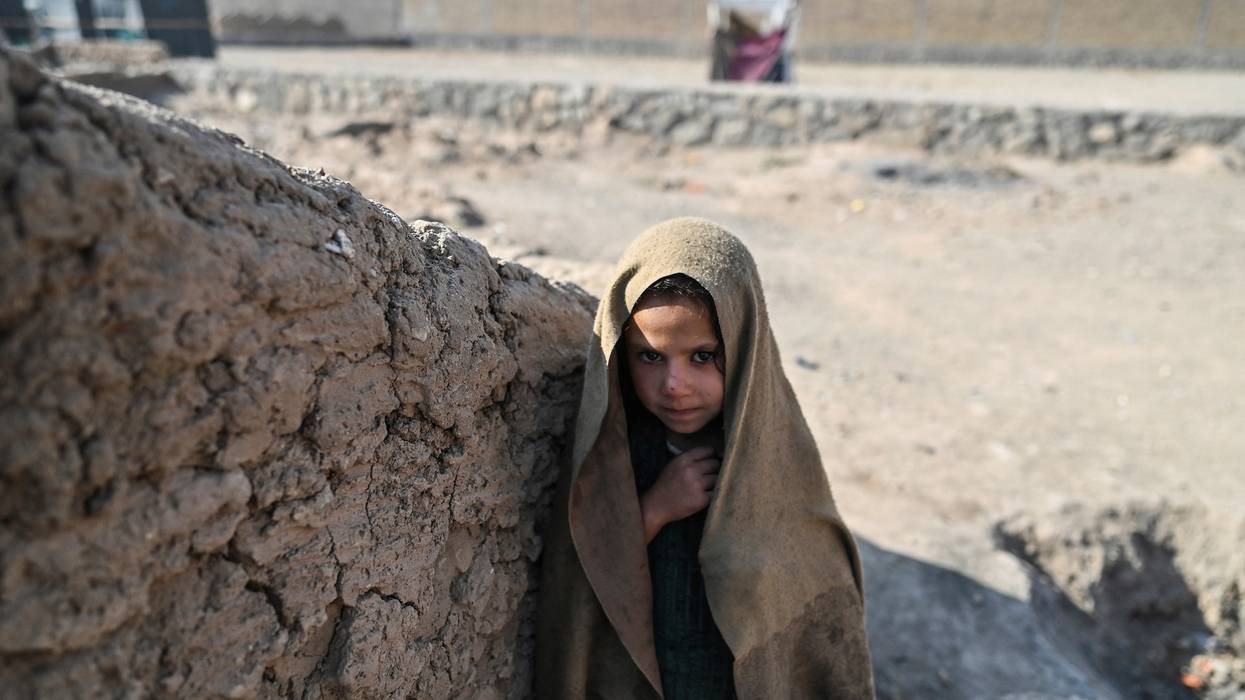
"We are seeing years of progress unravel, and more children suffer and die preventable deaths because of these cuts."
President Donald Trump's shuttering of USAID last year will have a long-term negative impact on children throughout the world, according to a report released on Thursday by Oxfam.
In its analysis, Oxfam estimates that a child under the age of five could die every 40 seconds by 2030 thanks to the Trump administration's dismantling of American foreign aid programs.
Oxfam says it's basing its projections on "calculations in [the] Lancet’s impact evaluation and forecasting analysis from last July, which projected "4,537,157 child deaths by 2030."
The report also pointed to estimates from the Institute for Health Metrics and Evaluation (IHME) and Gates Foundation, which calculates "an additional 200,000 child deaths" for children under five last year. This lines up with data published by the Boston University School of Public Health last year estimating over 250,000 child deaths caused by the drastic slashing of foreign aid funding under the Trump administration.
Abby Maxman, president and CEO of Oxfam America, said that "we have run out of words to describe the depths of suffering" caused by Trump's destruction of "the entire global aid system."
"We are seeing years of progress unravel, and more children suffer and die preventable deaths because of these cuts," Maxman added.
The report also highlighted the specific impacts cuts have had in Sudan, the Philippines, and Syria.
Mayfourth Luneta, deputy executive director of the Center for Disaster Preparedness Foundation, an Oxfam partner in the Philippines, said that due to the Trump aid cuts, her organization had to cancel programs across eight communities that were impacted by floods and earthquakes last year.
"The Philippines was hit with the most powerful storms on Earth recorded last year," Luneta said. "Communities were devastated, families were left with nothing."
Shabnam Baloch, country director for Oxfam in South Sudan, described the impact that aid cuts have had on a country that is undergoing a horrific civil war.
"Water borne illnesses are spreading rapidly, starvation is imminent for many, and while needs are rising, lifesaving organizations are working with a fraction of the resources we had in previous years," said Baloch. "Oxfam, along with many other vital organizations, will be forced to scale down our programs without immediate intervention."
Sara Savva, deputy director-general the alliance of the Greek Orthodox Patriarchate of Antioch and All the East and the Department of Ecumenical Relations and Development (GOPA-DERD), an Oxfam partner in Syria, said her organization had "to drastically reduce the scale and scope of our programs for Syrian families and Iraqi refugees residing in Syria" in the wake of the Trump administration's cuts.
"We were notified we will no longer receive funding from the US government, and thousands of people are left without crucial services necessary to rebuild their lives after a catastrophic civil war," Savva said.
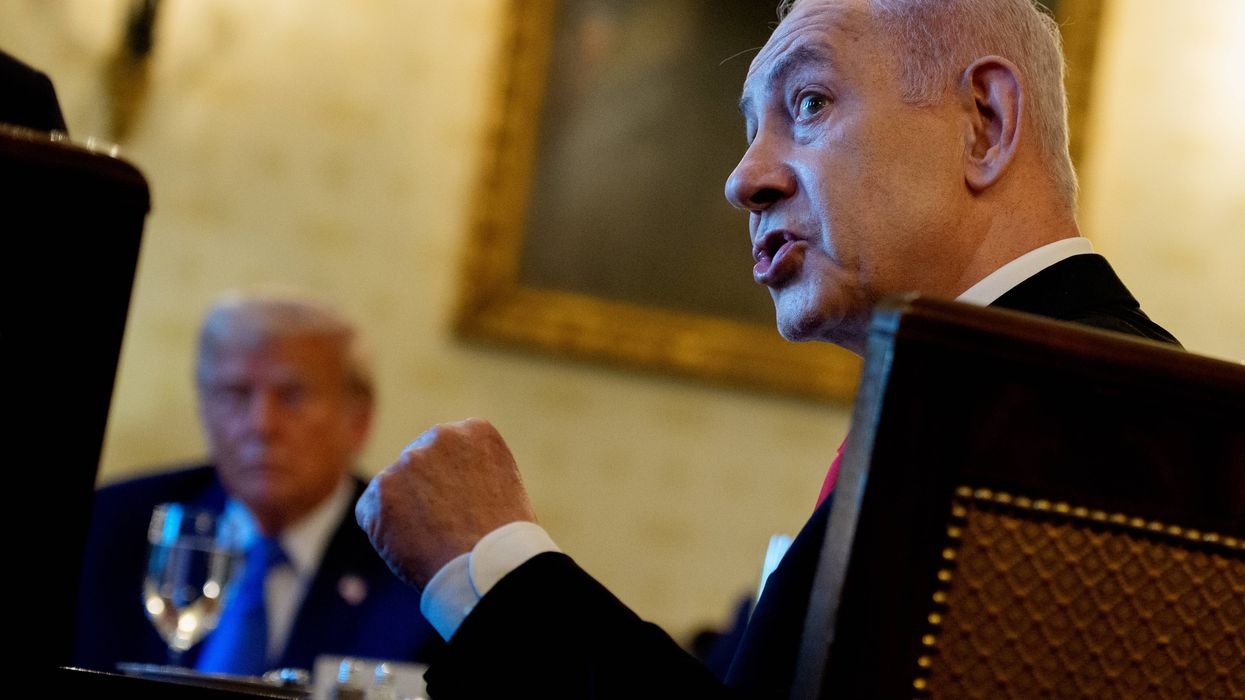
Amid a growing rift between Israel and the White House, one foreign policy analyst says the meeting "will signal whether Washington is prepared to continue underwriting open-ended escalation."
As Israeli Prime Minister Benjamin Netanyahu heads to Mar-a-Lago to meet with US President Donald Trump on Monday, amid a growing rift with the president and his advisers, reports say he'll seek to push the US back toward war with Iran.
Last week, NBC News reported that at the meeting, "Netanyahu is expected to make the case to Trump that Iran’s expansion of its ballistic missile program poses a threat that could necessitate swift action" and that "the Israeli leader is expected to present Trump with options for the US to join or assist in any new military operations."
"Netanyahu plans to press Donald Trump for US backing for another round of war with Iran, now framed around Iran’s ballistic missile program," said Sina Toossi, a senior fellow at the Center for International Policy. “Netanyahu’s pivot to missiles should therefore be read not as the discovery of a new threat, but as an effort to manufacture a replacement casus belli after the nuclear argument collapsed."
He noted criticisms levied against Netanyahu by Yair Golan, chair of the Democrats, a center-left party in Israel, earlier this week: "How is it possible that last June, at the end of the war with Iran, Benjamin Netanyahu solemnly declared that ‘Israel had eliminated Iran’s nuclear threat and severely damaged its missile array’; and that this was a ‘historic victory’—and today, less than six months later, he is running to the president of the United States to beg for permission to attack Iran again?" Golan said.
Iran is just one of several areas the two will likely discuss on Monday. According to Israeli officials who spoke to the Washington Post, Netanyahu also reportedly wants Trump to "take a tougher stance on Gaza and require that Hamas disarm before Israeli troops further withdraw as part of the second phase of Trump’s 20-point peace plan."
The chief of Israel's armed forces suggested earlier this week that its occupation of more than half of Gaza would be permanent, but walked those comments back after reported behind-the-scenes outrage in the White House. Meanwhile, Trump—invested in his image as a peacemaker—has reportedly balked at Israel's routine violations of the ceasefire agreement he helped to broker in October.
Near-daily strikes have resulted in the death of at least 418 Palestinians, according to the Gaza Media Office. Meanwhile, Israel's continued blockade of humanitarian aid has left hundreds of thousands of people—displaced from homes destroyed by Israeli bombing—to languish in the cold without tents. Desperately needed fuel, food, and medicine have entered the strip at far lower numbers than the ceasefire agreement required.
As Axios reported on Friday, Trump's advisers increasingly fear that Netanyahu is intentionally slow-walking and undermining the peace process in hopes of resuming the war.
Netanyahu also seeks Trump's continued backing of Israel's territorial expansion in Syria. Earlier this month, the Israel Defense Forces (IDF) pushed through a UN-monitored demilitarized zone between Israeli and Syrian-held positions in the Golan Heights, which Israel illegally occupies.
This push into southern Syria went against the wishes of the Trump administration, which feared it could destabilize the Western-backed government that rules in Damascus following the ouster of former President Bashar al-Assad.
Israel has also routinely struck Lebanon in violation of the US-brokered ceasefire it signed with Hezbollah in late 2024, with bombings becoming a near-daily occurrence in December. Last month, the UN reported that at least 127 civilians, including children, had been killed in Israeli strikes since the ceasefire began.
"Netanyahu’s visit unfolds against a backdrop of unresolved fronts, with widening disputes with Washington over the second phase of the Gaza ceasefire, including postwar governance, reconstruction, and Turkish involvement," Toossi said. "At the same time, Israel is seeking greater latitude to escalate again against Hezbollah in Lebanon, an end to US accommodation of Syria’s new leadership, and firm assurances on expanded military aid."
“Taken together, Netanyahu’s visit is less about resolving any single crisis than about postponing strategic reckoning," he continued. "The outcome will signal whether Washington is prepared to continue underwriting open-ended escalation, or whether this meeting marks the beginning of clearer limits on Israel’s regional strategy.”
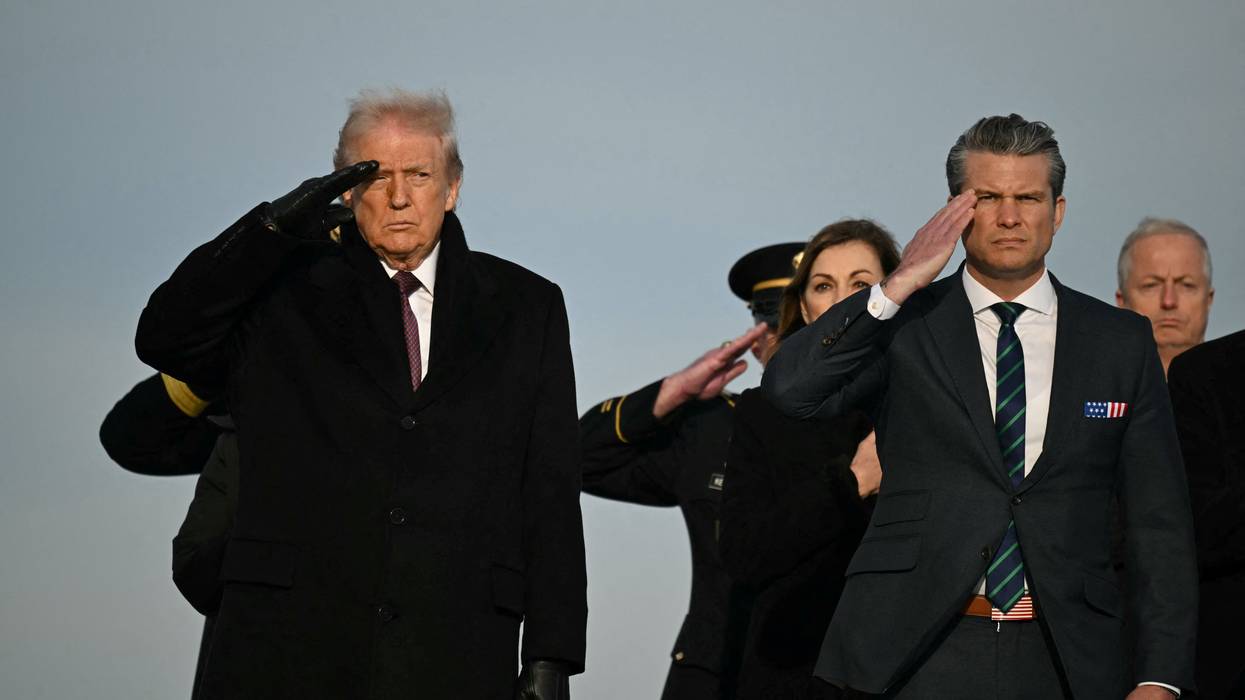
"Most anti-war president ever, also a winner of the FIFA Peace Prize, threatened to invade Venezuela for oil earlier this week and has now launched strikes in Syria," said one observer.
President Donald Trump—the self-described "most anti-war president in history"—on Friday said the US military is "striking very strongly" against Islamic State strongholds in Syria following the killing of two Iowa National Guard members and an American civilian interpreter in the Mideast nation.
"Because of ISIS’s vicious killing of brave American Patriots in Syria, whose beautiful souls I welcomed home to American soil earlier this week in a very dignified ceremony, I am hereby announcing that the United States is inflicting very serious retaliation, just as I promised, on the murderous terrorists responsible," Trump said on his Truth Social network.
"We are striking very strongly against ISIS strongholds in Syria, a place soaked in blood which has many problems, but one that has a bright future if ISIS can be eradicated," the president continued. "The Government of Syria, led by a man who is working very hard to bring Greatness back to Syria, is fully in support."
"All terrorists who are evil enough to attack Americans are hereby warned—YOU WILL BE HIT HARDER THAN YOU HAVE EVER BEEN HIT BEFORE IF YOU, IN ANY WAY, ATTACK OR THREATEN THE U.S.A.," he added.
US Defense Secretary Pete Hegseth said on X that "earlier today, US forces commenced OPERATION HAWKEYE STRIKE in Syria to eliminate ISIS fighters, infrastructure, and weapons sites in direct response to the attack on US forces that occurred on December 13th in Palmyra, Syria."
According to the Wall Street Journal, Jordanian warplanes also took part in Friday's attacks, which reportedly hit more than 70 targets in Syria.
"This is not the beginning of a war—it is a declaration of vengeance," said Hegseth. "The United States of America, under President Trump’s leadership, will never hesitate and never relent to defend our people. As we said directly following the savage attack, if you target Americans—anywhere in the world—you will spend the rest of your brief, anxious life knowing the United States will hunt you, find you, and ruthlessly kill you. Today, we hunted and we killed our enemies. Lots of them. And we will continue."
US Central Command (CENTCOM) said that one of Friday's airstrikes killed ISIS leader Abu Yusif in Dayr az Zawr province in eastern Syria.
“As stated before, the United States—working with allies and partners in the region—will not allow ISIS to take advantage of the current situation in Syria and reconstitute," CENTCOM commander Gen. Michael Erik Kurilla said in a statement. "ISIS has the intent to break out of detention the over 8,000 ISIS operatives currently being held in facilities in Syria. We will aggressively target these leaders and operatives, including those trying to conduct operations external to Syria."
During his first term, Trump followed through on his promise to "bomb the shit out of" ISIS militants in Syria and Iraq, killing thousands of civilians in a campaign launched by former President Barack Obama in 2014. Trump prematurely declared victory over ISIS in 2018.
Since then, the Biden and Trump administrations have bombed Syria, where around 1,000 US troops remain.
During his second term, Trump has ordered attacks on Iran, Somalia, Syria, Yemen, and boats allegedly transporting drugs in the Caribbean Sea and Pacific Ocean. The president—who says he deserves a Nobel Peace Prize—has also deployed warships and thousands of troops for a possible war on Venezuela.
"Most anti-war president ever, also a winner of the FIFA Peace Prize, threatened to invade Venezuela for oil earlier this week and has now launched strikes in Syria," political commentator David Pakman said on X in response to Friday's attacks.
Some observers noted that the strikes on Syria took place on the same day that the Trump administration released some of the files related to the late convicted sex criminal and longtime former Trump friend Jeffrey Epstein.
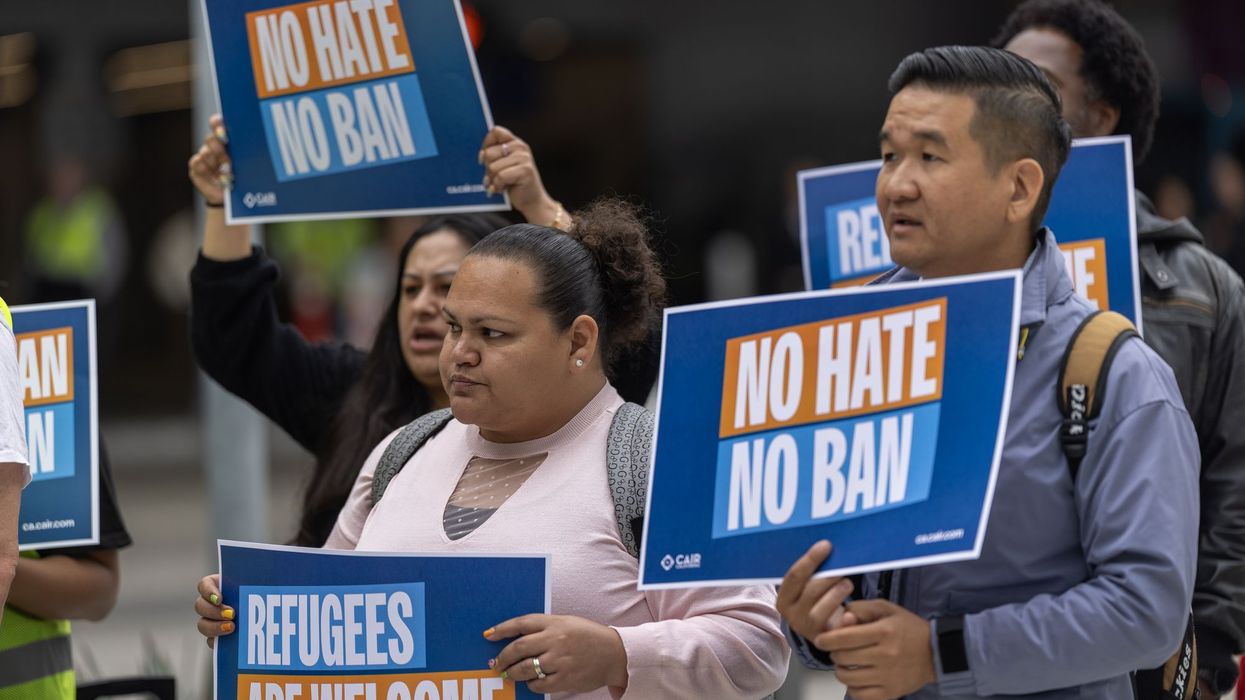
"This administration's racist cruelty knows no limits, expanding their travel ban to include even more African and Muslim-majority countries, even Palestinians fleeing a genocide," said Rep. Rashida Tlaib.
President Donald Trump faced sharp criticism on Tuesday after further expanding his travel ban—an effort the US leader launched during his first term, reinstated upon returning to office in January, and previously ramped up in June.
The Republican's new proclamation maintains full restrictions for people from Afghanistan, Burma, Chad, the Republic of the Congo, Equatorial Guinea, Eritrea, Haiti, Iran, Libya, Somalia, Sudan, and Yemen, and introduces them for travelers from Laos and Sierra Leone, who previously faced partial limitations.
Trump also added Burkina Faso, Mali, Niger, South Sudan, and Syria to that list, just days after he vowed to "retaliate" for an Islamic State gunman killing three Americans, including two service members, and wounding three others in Syria. Journalist James Stout warned that "expanding the travel ban to Syria leaves few options for the people who fought and defeated the Islamic State and are being increasingly threatened by the Syrian state."
While the US government does not recognize Palestine as a state—and has backed Israel's genocidal assault on the Gaza Strip—the president also imposed full restrictions on individuals holding travel documents issued by the Palestinian Authority.
"The harm isn't theoretical," stressed Etan Nechin, a New York-based reporter for the Israeli newspaper Haaretz. Pointing to Palestinian peace activist Awdah Hathaleen, who earlier this year was denied entry at San Francisco International Airport, deported, and then murdered by an Israeli settler in the West Bank, the journalist suggested that Trump and his allies know the consequences of the travel ban, and "they don't care."
As Common Dreams reported earlier Tuesday, Sudan, Palestine, and South Sudan topped the International Rescue Committee's annual humanitarian crisis forecast.
Trump's latest proclamation continues partial restrictions for Burundi, Cuba, Togo, and Venezuela, and adds such limitations for Angola, Antigua and Barbuda, Benin, Cote d'Ivoire, Dominica, Gabon, Gambia, Malawi, Mauritania, Nigeria, Senegal, Tanzania, Tonga, Zambia, and Zimbabwe.
It also lifts a ban on nonimmigrant visas for people from Turkmenistan but maintains the suspension of entry for them as immigrants, with a White House fact sheet stating the country "has engaged productively with the United States and demonstrated significant progress."
Writer Mark Chadbourn said, "It's a white nationalist list—mainly Africa, some Middle East, plus Haiti and Cuba."
Here is a map of the affected countries (excluding Tonga), to give you a sense of how much this new ban restricts immigration from Africa in particular.Of the newly-added country, Nigeria faces the largest impact, with tens of thousands of visas issued every year to Nigerians.
[image or embed]
— Aaron Reichlin-Melnick (@reichlinmelnick.bsky.social) December 16, 2025 at 3:58 PM
US Rep. Rashida Tlaib (D-Mich.), the only Palestinian American in Congress, said that "this administration's racist cruelty knows no limits, expanding their travel ban to include even more African and Muslim-majority countries, even Palestinians fleeing a genocide."
Tlaib also accused the president, along with his deputy chief of staff for policy and homeland security adviser, of wanting the United States to resemble a Ku Klux Klan event, declaring that "Trump and Stephen Miller won't be satisfied until our country has the demographics of a klan rally."
As the Associated Press noted:
The administration suggested it would expand the restrictions after the arrest of an Afghan national suspect in the shooting of two National Guard troops over Thanksgiving weekend...
The Afghan man accused of shooting the two National Guard troops near the White House has pleaded not guilty to murder and assault charges. In the aftermath of that incident, the administration announced a flurry of immigration restrictions, including further restrictions on people from those initial 19 countries who were already in the US.
Laurie Ball Cooper, vice president of US Legal Programs at the International Refugee Assistance Project, said in a statement that "IRAP condemns the Trump administration's escalating crackdown on immigrants from Muslim-majority and nonwhite countries. This expanded ban is not about national security but instead is another shameful attempt to demonize people simply for where they are from."
"Subjecting more people to this policy is especially harmful given the administration's recent invocation of the travel ban to prevent immigrants already living in the United States from accessing basic immigration benefits, including pulling them out of line at citizenship ceremonies," she continued.
"The expanded proclamation notably includes Palestinians and eliminates some exceptions to the original ban," she added. "This racist and xenophobic ban will keep families apart, but we are prepared to defend our clients, their communities, and the American values of welcome, justice, and dignity for all."

US Central Command said that the "lone ISIS gunman" who targeted the Americans "was engaged and killed."
Despite publicly seeking a Nobel Peace Prize, President Donald Trump on Saturday told reporters that "we will retaliate" after US Central Command announced that a solo Islamic State gunman killed three Americans—two service members and one civilian—and wounded three other members of the military.
"This is an ISIS attack," Trump said before departing the White House for the Army-Navy football game in Baltimore, according to the Associated Press. He also said the three unidentified American survivors of the ambush "seem to be doing pretty well."
US Central Command said that the "lone ISIS gunman" who targeted the Americans "was engaged and killed," and that in accordance with Department of Defense policy, "the identities of the service members will be withheld until 24 hours after their next of kin have been notified."
Citing three local officials, Reuters reported that the attacker "was a member of the Syrian security forces."
The news agency also noted that a Syrian Interior Ministry spokesperson, Noureddine el-Baba, told the state-run television channel Al-Ikhbariya that the man did not have a leadership role.
"On December 10, an evaluation was issued indicating that this attacker might hold extremist ideas, and a decision regarding him was due to be issued tomorrow, on Sunday," the spokesperson said.
Meanwhile, Rosemary Kelanic, director of the Middle East Program at the think tank Defense Priorities, said in a statement that "the deaths and injuries of US personnel in Syria today are tragic reminders that foreign military deployments are risky, costly, and should only be undertaken when vital national security interests are at stake. Sadly, Syria doesn't pass that test."
"The US military destroyed ISIS as a territorial entity more than five years ago, and its fighters pose no threat to the US homeland," Kelanic continued. "The only reason ISIS was able to strike US troops in Syria is because we senselessly left them in harm's way, long after their mission was completed. We must not compound this tragedy by allowing US troops to remain vulnerable to attack on a nebulous mission with no end date. The US should withdraw all forces from Syria and Iraq and let those countries manage their own problems."