SUBSCRIBE TO OUR FREE NEWSLETTER
Daily news & progressive opinion—funded by the people, not the corporations—delivered straight to your inbox.
5
#000000
#FFFFFF
To donate by check, phone, or other method, see our More Ways to Give page.
Daily news & progressive opinion—funded by the people, not the corporations—delivered straight to your inbox.
There was no vacation for the Internet this summer.
While many Americans slipped away to the beach, Internet users were busy defending the openness of a network that has become this era's engine for free expression, ingenuity and just about everything else.
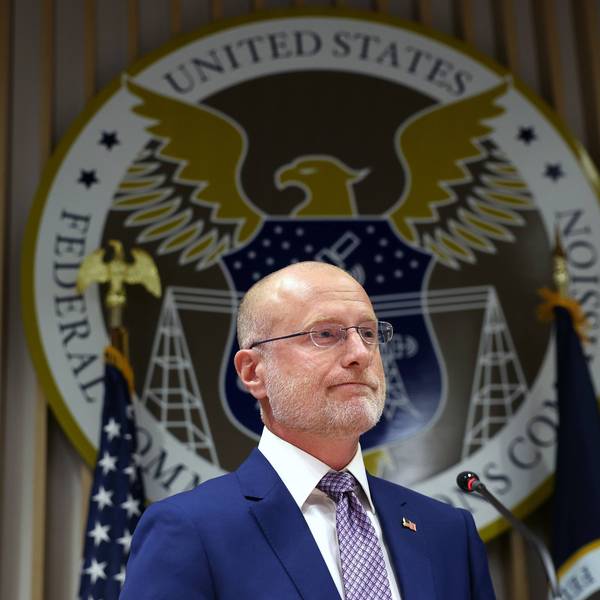
The threat comes from Federal Communications Commission Chairman Tom Wheeler, who has proposed rules that would fundamentally change the workings of the Web -- leaving its fate in the hands of a few powerful phone and cable companies.
There was no vacation for the Internet this summer.
While many Americans slipped away to the beach, Internet users were busy defending the openness of a network that has become this era's engine for free expression, ingenuity and just about everything else.
The threat comes from Federal Communications Commission Chairman Tom Wheeler, who has proposed rules that would fundamentally change the workings of the Web -- leaving its fate in the hands of a few powerful phone and cable companies.
Wheeler, who previously led the cable and wireless industries' top lobbying groups, has sworn to "strongly support an open, fast and robust Internet." He has said he'd never allow an Internet with fast lanes for the few companies that can afford them and slow lanes for the rest of us.
But his proposal undermines his rhetoric. The proposed rules are built on a legal argument for protecting the Internet that is so flimsy it would let network providers like AT&T, Comcast and Verizon slow down some sites and speed up others.
For example, Comcast could favor its own video-streaming service over Netflix or YouTube by making those popular sites so sluggish that consumers would have no option but to switch to Comcast's own product.
Wheeler's rules hand these providers the tools to upend the level playing field that's been a driver of online innovation since the Internet's inception. His proposal for protecting the open Internet falls so spectacularly short that all of the major phone and cable companies are lobbying Washington to support it. That pretty much tells you all you need to know.
But in May, the rest of us got our turn. The FCC opened its online comment tool and invited anyone and everyone to tell the agency what they thought of Wheeler's plan.
And as the July deadline for public feedback approached, so many people flooded the agency with comments that the FCC's website sputtered to a halt, incapable of handling the incoming traffic.
A deep dive into the comments by data analysis firm Quid found near-unanimous support for Net Neutrality, the principle that establishes Internet users' right to connect with anyone else on the network without their service providers discriminating, censoring or otherwise interfering with their communications.
Equally unanimous was opposition to Wheeler's approach. Every major consumer group, a nationwide coalition of mayors, and thousands of startups and small businesses joined millions of people in urging the agency to abandon the chairman's proposal.
Many asked Wheeler and his fellow commissioners to use the FCC's congressionally approved authority to reclassify ISPs as common carriers -- as services that must transmit information without discrimination.
In the last few weeks, activists from Free Press and other public interest groups have held dozens of meetings with their members of Congress, urging them to support reclassification. The list of elected officials calling for real Net Neutrality protections now includes 62 members of Congress, and it's growing as new meetings with constituents take place.
Throughout the summer people have called on Chairman Wheeler and his fellow commissioners to visit their communities and meet face-to-face to discuss what's next for Net Neutrality.
Wheeler, more a creature of the Beltway than a man of the people, has been reluctant to respond. His predecessors, from both Democratic and Republican administrations, felt a civic obligation to travel the country and engage people in town-hall meetings. It's a necessary process that put the FCC's leadership before an enthusiastic, if often angry, public. (FCC Commissioner Mignon Clyburn has called on Wheeler to convene Net Neutrality hearings outside of Washington, D.C., but so far to no avail.)
Wheeler can dodge this issue for only so long. As summer turns to fall -- and people's passion for an open Internet comes into even sharper focus -- the public's demands must be heard.
Dear Common Dreams reader, It’s been nearly 30 years since I co-founded Common Dreams with my late wife, Lina Newhouser. We had the radical notion that journalism should serve the public good, not corporate profits. It was clear to us from the outset what it would take to build such a project. No paid advertisements. No corporate sponsors. No millionaire publisher telling us what to think or do. Many people said we wouldn't last a year, but we proved those doubters wrong. Together with a tremendous team of journalists and dedicated staff, we built an independent media outlet free from the constraints of profits and corporate control. Our mission has always been simple: To inform. To inspire. To ignite change for the common good. Building Common Dreams was not easy. Our survival was never guaranteed. When you take on the most powerful forces—Wall Street greed, fossil fuel industry destruction, Big Tech lobbyists, and uber-rich oligarchs who have spent billions upon billions rigging the economy and democracy in their favor—the only bulwark you have is supporters who believe in your work. But here’s the urgent message from me today. It's never been this bad out there. And it's never been this hard to keep us going. At the very moment Common Dreams is most needed, the threats we face are intensifying. We need your support now more than ever. We don't accept corporate advertising and never will. We don't have a paywall because we don't think people should be blocked from critical news based on their ability to pay. Everything we do is funded by the donations of readers like you. When everyone does the little they can afford, we are strong. But if that support retreats or dries up, so do we. Will you donate now to make sure Common Dreams not only survives but thrives? —Craig Brown, Co-founder |
There was no vacation for the Internet this summer.
While many Americans slipped away to the beach, Internet users were busy defending the openness of a network that has become this era's engine for free expression, ingenuity and just about everything else.
The threat comes from Federal Communications Commission Chairman Tom Wheeler, who has proposed rules that would fundamentally change the workings of the Web -- leaving its fate in the hands of a few powerful phone and cable companies.
Wheeler, who previously led the cable and wireless industries' top lobbying groups, has sworn to "strongly support an open, fast and robust Internet." He has said he'd never allow an Internet with fast lanes for the few companies that can afford them and slow lanes for the rest of us.
But his proposal undermines his rhetoric. The proposed rules are built on a legal argument for protecting the Internet that is so flimsy it would let network providers like AT&T, Comcast and Verizon slow down some sites and speed up others.
For example, Comcast could favor its own video-streaming service over Netflix or YouTube by making those popular sites so sluggish that consumers would have no option but to switch to Comcast's own product.
Wheeler's rules hand these providers the tools to upend the level playing field that's been a driver of online innovation since the Internet's inception. His proposal for protecting the open Internet falls so spectacularly short that all of the major phone and cable companies are lobbying Washington to support it. That pretty much tells you all you need to know.
But in May, the rest of us got our turn. The FCC opened its online comment tool and invited anyone and everyone to tell the agency what they thought of Wheeler's plan.
And as the July deadline for public feedback approached, so many people flooded the agency with comments that the FCC's website sputtered to a halt, incapable of handling the incoming traffic.
A deep dive into the comments by data analysis firm Quid found near-unanimous support for Net Neutrality, the principle that establishes Internet users' right to connect with anyone else on the network without their service providers discriminating, censoring or otherwise interfering with their communications.
Equally unanimous was opposition to Wheeler's approach. Every major consumer group, a nationwide coalition of mayors, and thousands of startups and small businesses joined millions of people in urging the agency to abandon the chairman's proposal.
Many asked Wheeler and his fellow commissioners to use the FCC's congressionally approved authority to reclassify ISPs as common carriers -- as services that must transmit information without discrimination.
In the last few weeks, activists from Free Press and other public interest groups have held dozens of meetings with their members of Congress, urging them to support reclassification. The list of elected officials calling for real Net Neutrality protections now includes 62 members of Congress, and it's growing as new meetings with constituents take place.
Throughout the summer people have called on Chairman Wheeler and his fellow commissioners to visit their communities and meet face-to-face to discuss what's next for Net Neutrality.
Wheeler, more a creature of the Beltway than a man of the people, has been reluctant to respond. His predecessors, from both Democratic and Republican administrations, felt a civic obligation to travel the country and engage people in town-hall meetings. It's a necessary process that put the FCC's leadership before an enthusiastic, if often angry, public. (FCC Commissioner Mignon Clyburn has called on Wheeler to convene Net Neutrality hearings outside of Washington, D.C., but so far to no avail.)
Wheeler can dodge this issue for only so long. As summer turns to fall -- and people's passion for an open Internet comes into even sharper focus -- the public's demands must be heard.
There was no vacation for the Internet this summer.
While many Americans slipped away to the beach, Internet users were busy defending the openness of a network that has become this era's engine for free expression, ingenuity and just about everything else.
The threat comes from Federal Communications Commission Chairman Tom Wheeler, who has proposed rules that would fundamentally change the workings of the Web -- leaving its fate in the hands of a few powerful phone and cable companies.
Wheeler, who previously led the cable and wireless industries' top lobbying groups, has sworn to "strongly support an open, fast and robust Internet." He has said he'd never allow an Internet with fast lanes for the few companies that can afford them and slow lanes for the rest of us.
But his proposal undermines his rhetoric. The proposed rules are built on a legal argument for protecting the Internet that is so flimsy it would let network providers like AT&T, Comcast and Verizon slow down some sites and speed up others.
For example, Comcast could favor its own video-streaming service over Netflix or YouTube by making those popular sites so sluggish that consumers would have no option but to switch to Comcast's own product.
Wheeler's rules hand these providers the tools to upend the level playing field that's been a driver of online innovation since the Internet's inception. His proposal for protecting the open Internet falls so spectacularly short that all of the major phone and cable companies are lobbying Washington to support it. That pretty much tells you all you need to know.
But in May, the rest of us got our turn. The FCC opened its online comment tool and invited anyone and everyone to tell the agency what they thought of Wheeler's plan.
And as the July deadline for public feedback approached, so many people flooded the agency with comments that the FCC's website sputtered to a halt, incapable of handling the incoming traffic.
A deep dive into the comments by data analysis firm Quid found near-unanimous support for Net Neutrality, the principle that establishes Internet users' right to connect with anyone else on the network without their service providers discriminating, censoring or otherwise interfering with their communications.
Equally unanimous was opposition to Wheeler's approach. Every major consumer group, a nationwide coalition of mayors, and thousands of startups and small businesses joined millions of people in urging the agency to abandon the chairman's proposal.
Many asked Wheeler and his fellow commissioners to use the FCC's congressionally approved authority to reclassify ISPs as common carriers -- as services that must transmit information without discrimination.
In the last few weeks, activists from Free Press and other public interest groups have held dozens of meetings with their members of Congress, urging them to support reclassification. The list of elected officials calling for real Net Neutrality protections now includes 62 members of Congress, and it's growing as new meetings with constituents take place.
Throughout the summer people have called on Chairman Wheeler and his fellow commissioners to visit their communities and meet face-to-face to discuss what's next for Net Neutrality.
Wheeler, more a creature of the Beltway than a man of the people, has been reluctant to respond. His predecessors, from both Democratic and Republican administrations, felt a civic obligation to travel the country and engage people in town-hall meetings. It's a necessary process that put the FCC's leadership before an enthusiastic, if often angry, public. (FCC Commissioner Mignon Clyburn has called on Wheeler to convene Net Neutrality hearings outside of Washington, D.C., but so far to no avail.)
Wheeler can dodge this issue for only so long. As summer turns to fall -- and people's passion for an open Internet comes into even sharper focus -- the public's demands must be heard.