SUBSCRIBE TO OUR FREE NEWSLETTER
Daily news & progressive opinion—funded by the people, not the corporations—delivered straight to your inbox.
5
#000000
#FFFFFF
To donate by check, phone, or other method, see our More Ways to Give page.
Daily news & progressive opinion—funded by the people, not the corporations—delivered straight to your inbox.
As a high school student, I came across an observation by Abraham Lincoln who said that "With public sentiment, nothing can fail; without it nothing can succeed." Today "public sentiment" would be called "public opinion."
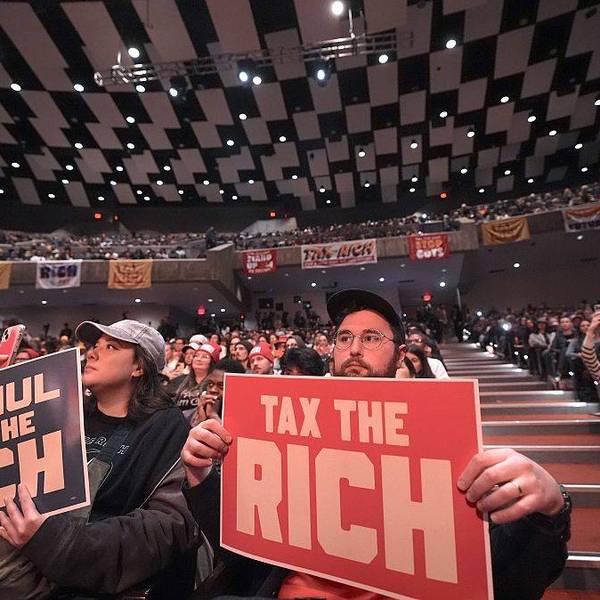
Over the years, I have been astonished at how less than one percent of the citizenry, backed by the "public sentiment," have changed our country for the better by enacting reforms to protect the people from abuses of power, discrimination and deep neglect.
As a high school student, I came across an observation by Abraham Lincoln who said that "With public sentiment, nothing can fail; without it nothing can succeed." Today "public sentiment" would be called "public opinion."
Over the years, I have been astonished at how less than one percent of the citizenry, backed by the "public sentiment," have changed our country for the better by enacting reforms to protect the people from abuses of power, discrimination and deep neglect.
Specifically, if - one percent or less - were to dedicate a modest amount of their time and money working together for much-needed changes that are overwhelmingly supported by public opinion in each congressional or state legislative district, they would prevail against the government and corporate power structures.
There are obstacles, such as a corporate influence over City Hall and wavering politicians who insincerely pledge support, but defer and delay action. But, if people work together, almost any problem can be solved.
History shows that it only takes a dedicated few to gain the momentum from many more to enact change. The major drives to give women the right to vote, workers the right to form unions and secure numerous protections, and farmers regulation of railroads and banks did not require more than one percent of seriously active champions. Those in power understood that there was overwhelming support for these reforms by affected populations.
Even the abolition movement against slavery was well under way in our country before Ft. Sumter and did not involve more than one percent of the people, including the slaves who fled via the Underground Railroad. By 1833, the British Empire, including Canada, had already brought slavery to an end.
More recently, the breakthrough laws in the late sixties and early seventies regarding auto and product safety, environmental health and occupational safety drew on far less than one percent of seriously engaged supporters. The air and water pollution laws were supported by widespread demonstrations that did not require a large burden of time by the participants. These air and water pollution laws, not surprisingly, were very popular when introduced and the public made its support known to lawmakers with numerous phone calls and letters. Other reforms (auto safety, product safety and occupational safety measures) were pushed through with far less than one percent of engaged citizens, as was the critical Freedom of Information Act of 1974.
Along with the small full-time advocacy groups, a modest level of visible activity around the country aroused the media. The more citizen power the media observed, the more reporting, and this in turn led to greater public awareness.
Lately, this pattern can be seen in the efforts to enact civil rights for the LGBTQ community and to pass a substantially higher minimum wage for tens of millions of workers being paid less now than workers were paid in 1968, adjusted for inflation. The latter has become a front burner issue at the city, state and congressional levels with picketers in front of McDonald's, Burger King, Walmart, and other giant low-pay chains over the past two years. Those pushing for higher wages number less than the population of Waterbury, Connecticut (approximately 110,000). The Service Employees International Union (SEIU), some think tanks, organizers, writers and economists rounded out this less than one percent model of action for justice.
It is important to remember that the active one percent or less, with the exception of a handful of full-timers, are committing no more time than do serious hobbyists, such as stamp and coin collectors, or members of bowling leagues and bridge clubs, or birdwatchers.
Why is all this important? Because in a demoralized society full of people who have given up on their government, on themselves and are out of the public civic arena, learning that one percent can be decisive, can be hugely motivational and encouraging, especially with emerging Left-Right alliances. Prison reform, juvenile justice, crony capitalism, civil liberties, unconstitutional wars, and sovereignty-shredding and job-exporting trade treaties that threaten health and safety protections are all ripe for Left-Right action (see my recent book Unstoppable: The Emerging Left-Right Alliance to Dismantle the Corporate State).
Youngsters grow up exposed to numerous obstacles that tell them they "can't fight City Hall" or the big corporate bosses. Unfortunately, they are not taught to reject being powerless because they learn myths, not reality, and they graduate without civic skills and experience. Small wonder why so many of them could easily be members of a Society of Apathetics.
But lawmakers want to retain their jobs. Companies want to keep their customers. On many issues that could so improve livelihoods and the quality of life in America, it is important to bring to everyone the history and current achievements of the one percent who stood tall, spoke and acted as the sovereign people our constitution empowers them to become.
Send more 1% examples to info@nader.org.
Dear Common Dreams reader, It’s been nearly 30 years since I co-founded Common Dreams with my late wife, Lina Newhouser. We had the radical notion that journalism should serve the public good, not corporate profits. It was clear to us from the outset what it would take to build such a project. No paid advertisements. No corporate sponsors. No millionaire publisher telling us what to think or do. Many people said we wouldn't last a year, but we proved those doubters wrong. Together with a tremendous team of journalists and dedicated staff, we built an independent media outlet free from the constraints of profits and corporate control. Our mission has always been simple: To inform. To inspire. To ignite change for the common good. Building Common Dreams was not easy. Our survival was never guaranteed. When you take on the most powerful forces—Wall Street greed, fossil fuel industry destruction, Big Tech lobbyists, and uber-rich oligarchs who have spent billions upon billions rigging the economy and democracy in their favor—the only bulwark you have is supporters who believe in your work. But here’s the urgent message from me today. It's never been this bad out there. And it's never been this hard to keep us going. At the very moment Common Dreams is most needed, the threats we face are intensifying. We need your support now more than ever. We don't accept corporate advertising and never will. We don't have a paywall because we don't think people should be blocked from critical news based on their ability to pay. Everything we do is funded by the donations of readers like you. When everyone does the little they can afford, we are strong. But if that support retreats or dries up, so do we. Will you donate now to make sure Common Dreams not only survives but thrives? —Craig Brown, Co-founder |
As a high school student, I came across an observation by Abraham Lincoln who said that "With public sentiment, nothing can fail; without it nothing can succeed." Today "public sentiment" would be called "public opinion."
Over the years, I have been astonished at how less than one percent of the citizenry, backed by the "public sentiment," have changed our country for the better by enacting reforms to protect the people from abuses of power, discrimination and deep neglect.
Specifically, if - one percent or less - were to dedicate a modest amount of their time and money working together for much-needed changes that are overwhelmingly supported by public opinion in each congressional or state legislative district, they would prevail against the government and corporate power structures.
There are obstacles, such as a corporate influence over City Hall and wavering politicians who insincerely pledge support, but defer and delay action. But, if people work together, almost any problem can be solved.
History shows that it only takes a dedicated few to gain the momentum from many more to enact change. The major drives to give women the right to vote, workers the right to form unions and secure numerous protections, and farmers regulation of railroads and banks did not require more than one percent of seriously active champions. Those in power understood that there was overwhelming support for these reforms by affected populations.
Even the abolition movement against slavery was well under way in our country before Ft. Sumter and did not involve more than one percent of the people, including the slaves who fled via the Underground Railroad. By 1833, the British Empire, including Canada, had already brought slavery to an end.
More recently, the breakthrough laws in the late sixties and early seventies regarding auto and product safety, environmental health and occupational safety drew on far less than one percent of seriously engaged supporters. The air and water pollution laws were supported by widespread demonstrations that did not require a large burden of time by the participants. These air and water pollution laws, not surprisingly, were very popular when introduced and the public made its support known to lawmakers with numerous phone calls and letters. Other reforms (auto safety, product safety and occupational safety measures) were pushed through with far less than one percent of engaged citizens, as was the critical Freedom of Information Act of 1974.
Along with the small full-time advocacy groups, a modest level of visible activity around the country aroused the media. The more citizen power the media observed, the more reporting, and this in turn led to greater public awareness.
Lately, this pattern can be seen in the efforts to enact civil rights for the LGBTQ community and to pass a substantially higher minimum wage for tens of millions of workers being paid less now than workers were paid in 1968, adjusted for inflation. The latter has become a front burner issue at the city, state and congressional levels with picketers in front of McDonald's, Burger King, Walmart, and other giant low-pay chains over the past two years. Those pushing for higher wages number less than the population of Waterbury, Connecticut (approximately 110,000). The Service Employees International Union (SEIU), some think tanks, organizers, writers and economists rounded out this less than one percent model of action for justice.
It is important to remember that the active one percent or less, with the exception of a handful of full-timers, are committing no more time than do serious hobbyists, such as stamp and coin collectors, or members of bowling leagues and bridge clubs, or birdwatchers.
Why is all this important? Because in a demoralized society full of people who have given up on their government, on themselves and are out of the public civic arena, learning that one percent can be decisive, can be hugely motivational and encouraging, especially with emerging Left-Right alliances. Prison reform, juvenile justice, crony capitalism, civil liberties, unconstitutional wars, and sovereignty-shredding and job-exporting trade treaties that threaten health and safety protections are all ripe for Left-Right action (see my recent book Unstoppable: The Emerging Left-Right Alliance to Dismantle the Corporate State).
Youngsters grow up exposed to numerous obstacles that tell them they "can't fight City Hall" or the big corporate bosses. Unfortunately, they are not taught to reject being powerless because they learn myths, not reality, and they graduate without civic skills and experience. Small wonder why so many of them could easily be members of a Society of Apathetics.
But lawmakers want to retain their jobs. Companies want to keep their customers. On many issues that could so improve livelihoods and the quality of life in America, it is important to bring to everyone the history and current achievements of the one percent who stood tall, spoke and acted as the sovereign people our constitution empowers them to become.
Send more 1% examples to info@nader.org.
As a high school student, I came across an observation by Abraham Lincoln who said that "With public sentiment, nothing can fail; without it nothing can succeed." Today "public sentiment" would be called "public opinion."
Over the years, I have been astonished at how less than one percent of the citizenry, backed by the "public sentiment," have changed our country for the better by enacting reforms to protect the people from abuses of power, discrimination and deep neglect.
Specifically, if - one percent or less - were to dedicate a modest amount of their time and money working together for much-needed changes that are overwhelmingly supported by public opinion in each congressional or state legislative district, they would prevail against the government and corporate power structures.
There are obstacles, such as a corporate influence over City Hall and wavering politicians who insincerely pledge support, but defer and delay action. But, if people work together, almost any problem can be solved.
History shows that it only takes a dedicated few to gain the momentum from many more to enact change. The major drives to give women the right to vote, workers the right to form unions and secure numerous protections, and farmers regulation of railroads and banks did not require more than one percent of seriously active champions. Those in power understood that there was overwhelming support for these reforms by affected populations.
Even the abolition movement against slavery was well under way in our country before Ft. Sumter and did not involve more than one percent of the people, including the slaves who fled via the Underground Railroad. By 1833, the British Empire, including Canada, had already brought slavery to an end.
More recently, the breakthrough laws in the late sixties and early seventies regarding auto and product safety, environmental health and occupational safety drew on far less than one percent of seriously engaged supporters. The air and water pollution laws were supported by widespread demonstrations that did not require a large burden of time by the participants. These air and water pollution laws, not surprisingly, were very popular when introduced and the public made its support known to lawmakers with numerous phone calls and letters. Other reforms (auto safety, product safety and occupational safety measures) were pushed through with far less than one percent of engaged citizens, as was the critical Freedom of Information Act of 1974.
Along with the small full-time advocacy groups, a modest level of visible activity around the country aroused the media. The more citizen power the media observed, the more reporting, and this in turn led to greater public awareness.
Lately, this pattern can be seen in the efforts to enact civil rights for the LGBTQ community and to pass a substantially higher minimum wage for tens of millions of workers being paid less now than workers were paid in 1968, adjusted for inflation. The latter has become a front burner issue at the city, state and congressional levels with picketers in front of McDonald's, Burger King, Walmart, and other giant low-pay chains over the past two years. Those pushing for higher wages number less than the population of Waterbury, Connecticut (approximately 110,000). The Service Employees International Union (SEIU), some think tanks, organizers, writers and economists rounded out this less than one percent model of action for justice.
It is important to remember that the active one percent or less, with the exception of a handful of full-timers, are committing no more time than do serious hobbyists, such as stamp and coin collectors, or members of bowling leagues and bridge clubs, or birdwatchers.
Why is all this important? Because in a demoralized society full of people who have given up on their government, on themselves and are out of the public civic arena, learning that one percent can be decisive, can be hugely motivational and encouraging, especially with emerging Left-Right alliances. Prison reform, juvenile justice, crony capitalism, civil liberties, unconstitutional wars, and sovereignty-shredding and job-exporting trade treaties that threaten health and safety protections are all ripe for Left-Right action (see my recent book Unstoppable: The Emerging Left-Right Alliance to Dismantle the Corporate State).
Youngsters grow up exposed to numerous obstacles that tell them they "can't fight City Hall" or the big corporate bosses. Unfortunately, they are not taught to reject being powerless because they learn myths, not reality, and they graduate without civic skills and experience. Small wonder why so many of them could easily be members of a Society of Apathetics.
But lawmakers want to retain their jobs. Companies want to keep their customers. On many issues that could so improve livelihoods and the quality of life in America, it is important to bring to everyone the history and current achievements of the one percent who stood tall, spoke and acted as the sovereign people our constitution empowers them to become.
Send more 1% examples to info@nader.org.