SUBSCRIBE TO OUR FREE NEWSLETTER
Daily news & progressive opinion—funded by the people, not the corporations—delivered straight to your inbox.
5
#000000
#FFFFFF
To donate by check, phone, or other method, see our More Ways to Give page.
Daily news & progressive opinion—funded by the people, not the corporations—delivered straight to your inbox.
After almost a year of civil war, the conflicting forces in Yemen sat down on December 15 in Geneva, Switzerland, to discuss the prospect of finding a political solution to the conflict that has been raging since March 2015. While this is a necessary step towards ending the violence that has killed thousands, crippled infrastructure and led to a critical humanitarian crisis, the peace talks should include a mechanism for rebuilding this impoverished nation. Saudi Arabia, which is responsible for most of the destruction with its relentless bombings, should be forced to pay for the terrible damage it has wrought. So should the United States.
The U.S. involvement in the Yemen crisis can be summed up in four words: allegiance to Saudi Arabia. The United States' problematic relationship with Saudi Arabia goes all the way back to World War II, when U.S. officials started to see Saudi's oil as a strategic advantage. Since then, the U.S. has blindly supported the Kingdom in almost every political and economic effort, despite the fact that Saudi Arabia is an ultraconservative Islamic monarchy rife with human rights abuses.
"Saudi Arabia's involvement in Yemen has only destroyed lives and created a state of total chaos, and the U.S. government is complicit in the carnage."
When the Houthis, a Shia rebel group from northern Yemen, took over the Yemeni capital of Sanaa in January 2015 and forced Sunni President Abdrabbuh Mansour Hadi into exile, Saudi Arabia formed an Arab Gulf states coalition to fight against the Houthis. Naturally, the U.S. agreed to support its close ally in its endeavor to 'reinstate order' in Yemen by providing intelligence, weaponry and midair refueling, as well as sending U.S. warships to help enforce a blockade in the Gulf of Aden and southern Arabian Sea. The blockade was allegedly to prevent weapons shipments from Iran to the Houthis, but it also stopped humanitarian aid shipments to beleaguered Yemeni citizens. The American CIA and military intelligence are also on the ground in Yemen, providing targeting and other logistical support, and Uncle Sam's drones are constantly flying overhead, sending intel to the Saudis.
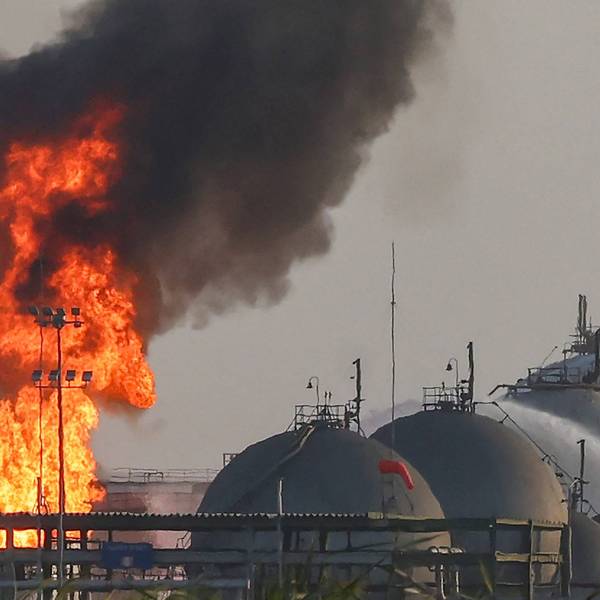
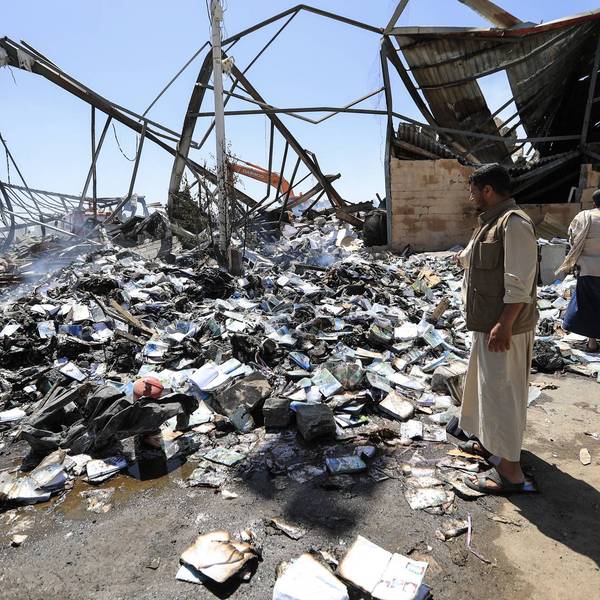
Since then, the coalition has carried out indiscriminate airstrikes and bombings throughout the country, often targeting highly populated civilian areas. As of late September, the U.N. had documented that the war had killed 2,355 civilians and wounded 4,862, the majority of cases as a result of coalition airstrikes. The Saudi-led military intervention has created a humanitarian crisis that has left over 75% of Yemen's population (21 million people) in urgent need of immediate aid. Millions of people have been forced out of their homes and left without water or electricity, as the country's infrastructure continues to disintegrate.
The U.S. is the main supplier of these weapons being used to carpet bomb Yemen. Cluster munitions, which are sold to Saudi Arabia by an American company called Textron, have been used in several coalition strikes. These horrific bombs constitute a particular danger to civilians because of their wide area of effect and the fact that unexploded bomblets can remain hazardous for decades after their deployment, which is why they are banned in over 115 countries. "Saudi-led cluster munition airstrikes have been hitting areas near villages, putting local people in danger," said Steve Goose, arms director at Human Rights Watch. "These weapons should never be used under any circumstances. Saudi Arabia and other coalition members - and the supplier, the US - are flouting the global standard that rejects cluster munitions because of their long-term threat to civilians."
The United States' direct role in coordinating Saudi air operations also makes the United States complicit in war crimes. "The US government is well aware of the Saudi-led coalition's indiscriminate air attacks that have killed hundreds of civilians in Yemen," said Joe Stork, deputy Middle East and North Africa director at Human Rights Watch. "Providing the Saudis with more bombs under these circumstances is a recipe for greater civilian deaths, for which the US will be partially responsible."
To make matters worse, the terrible conditions on the ground have led to the strengthening of extremist terrorist groups that will inevitably plague that nation for years to come. The local Al Qaeda branch, Al Qaeda of the Arabian Peninsula (also known as AQAP), formed in 2009, has exploited the present conflict and increased recruiting efforts. The current political and security vacuum has also opened the way for the appearance of a branch of ISIL, which has been carrying out deadly attacks on Shiite mosques and positioning itself as even more aggressive than AQAP. Some fear that AQAP and ISIL recruitment efforts might lead to competition between both radical groups, which could mean even more attacks around the country as the groups try to upstage one another.
Saudi Arabia's involvement in Yemen has only destroyed lives and created a state of total chaos, and the U.S. government is complicit in the carnage. Both nations should, as part of the peace process, be forced to pay reparations for the tremendous damage their bombs have inflicted.
The Yemen crisis should also serve as a prime moment for the U.S. to reconsider its alliance the Saudi regime, a regime that not only denies human rights to its own people but exports death and destruction abroad. An upcoming activist-based Saudi Summit, which will be held in Washington DC on March 5-6, is an effort to build a campaign to support challenge this toxic relationship.
Dear Common Dreams reader, It’s been nearly 30 years since I co-founded Common Dreams with my late wife, Lina Newhouser. We had the radical notion that journalism should serve the public good, not corporate profits. It was clear to us from the outset what it would take to build such a project. No paid advertisements. No corporate sponsors. No millionaire publisher telling us what to think or do. Many people said we wouldn't last a year, but we proved those doubters wrong. Together with a tremendous team of journalists and dedicated staff, we built an independent media outlet free from the constraints of profits and corporate control. Our mission has always been simple: To inform. To inspire. To ignite change for the common good. Building Common Dreams was not easy. Our survival was never guaranteed. When you take on the most powerful forces—Wall Street greed, fossil fuel industry destruction, Big Tech lobbyists, and uber-rich oligarchs who have spent billions upon billions rigging the economy and democracy in their favor—the only bulwark you have is supporters who believe in your work. But here’s the urgent message from me today. It's never been this bad out there. And it's never been this hard to keep us going. At the very moment Common Dreams is most needed, the threats we face are intensifying. We need your support now more than ever. We don't accept corporate advertising and never will. We don't have a paywall because we don't think people should be blocked from critical news based on their ability to pay. Everything we do is funded by the donations of readers like you. When everyone does the little they can afford, we are strong. But if that support retreats or dries up, so do we. Will you donate now to make sure Common Dreams not only survives but thrives? —Craig Brown, Co-founder |
After almost a year of civil war, the conflicting forces in Yemen sat down on December 15 in Geneva, Switzerland, to discuss the prospect of finding a political solution to the conflict that has been raging since March 2015. While this is a necessary step towards ending the violence that has killed thousands, crippled infrastructure and led to a critical humanitarian crisis, the peace talks should include a mechanism for rebuilding this impoverished nation. Saudi Arabia, which is responsible for most of the destruction with its relentless bombings, should be forced to pay for the terrible damage it has wrought. So should the United States.
The U.S. involvement in the Yemen crisis can be summed up in four words: allegiance to Saudi Arabia. The United States' problematic relationship with Saudi Arabia goes all the way back to World War II, when U.S. officials started to see Saudi's oil as a strategic advantage. Since then, the U.S. has blindly supported the Kingdom in almost every political and economic effort, despite the fact that Saudi Arabia is an ultraconservative Islamic monarchy rife with human rights abuses.
"Saudi Arabia's involvement in Yemen has only destroyed lives and created a state of total chaos, and the U.S. government is complicit in the carnage."
When the Houthis, a Shia rebel group from northern Yemen, took over the Yemeni capital of Sanaa in January 2015 and forced Sunni President Abdrabbuh Mansour Hadi into exile, Saudi Arabia formed an Arab Gulf states coalition to fight against the Houthis. Naturally, the U.S. agreed to support its close ally in its endeavor to 'reinstate order' in Yemen by providing intelligence, weaponry and midair refueling, as well as sending U.S. warships to help enforce a blockade in the Gulf of Aden and southern Arabian Sea. The blockade was allegedly to prevent weapons shipments from Iran to the Houthis, but it also stopped humanitarian aid shipments to beleaguered Yemeni citizens. The American CIA and military intelligence are also on the ground in Yemen, providing targeting and other logistical support, and Uncle Sam's drones are constantly flying overhead, sending intel to the Saudis.
Since then, the coalition has carried out indiscriminate airstrikes and bombings throughout the country, often targeting highly populated civilian areas. As of late September, the U.N. had documented that the war had killed 2,355 civilians and wounded 4,862, the majority of cases as a result of coalition airstrikes. The Saudi-led military intervention has created a humanitarian crisis that has left over 75% of Yemen's population (21 million people) in urgent need of immediate aid. Millions of people have been forced out of their homes and left without water or electricity, as the country's infrastructure continues to disintegrate.
The U.S. is the main supplier of these weapons being used to carpet bomb Yemen. Cluster munitions, which are sold to Saudi Arabia by an American company called Textron, have been used in several coalition strikes. These horrific bombs constitute a particular danger to civilians because of their wide area of effect and the fact that unexploded bomblets can remain hazardous for decades after their deployment, which is why they are banned in over 115 countries. "Saudi-led cluster munition airstrikes have been hitting areas near villages, putting local people in danger," said Steve Goose, arms director at Human Rights Watch. "These weapons should never be used under any circumstances. Saudi Arabia and other coalition members - and the supplier, the US - are flouting the global standard that rejects cluster munitions because of their long-term threat to civilians."
The United States' direct role in coordinating Saudi air operations also makes the United States complicit in war crimes. "The US government is well aware of the Saudi-led coalition's indiscriminate air attacks that have killed hundreds of civilians in Yemen," said Joe Stork, deputy Middle East and North Africa director at Human Rights Watch. "Providing the Saudis with more bombs under these circumstances is a recipe for greater civilian deaths, for which the US will be partially responsible."
To make matters worse, the terrible conditions on the ground have led to the strengthening of extremist terrorist groups that will inevitably plague that nation for years to come. The local Al Qaeda branch, Al Qaeda of the Arabian Peninsula (also known as AQAP), formed in 2009, has exploited the present conflict and increased recruiting efforts. The current political and security vacuum has also opened the way for the appearance of a branch of ISIL, which has been carrying out deadly attacks on Shiite mosques and positioning itself as even more aggressive than AQAP. Some fear that AQAP and ISIL recruitment efforts might lead to competition between both radical groups, which could mean even more attacks around the country as the groups try to upstage one another.
Saudi Arabia's involvement in Yemen has only destroyed lives and created a state of total chaos, and the U.S. government is complicit in the carnage. Both nations should, as part of the peace process, be forced to pay reparations for the tremendous damage their bombs have inflicted.
The Yemen crisis should also serve as a prime moment for the U.S. to reconsider its alliance the Saudi regime, a regime that not only denies human rights to its own people but exports death and destruction abroad. An upcoming activist-based Saudi Summit, which will be held in Washington DC on March 5-6, is an effort to build a campaign to support challenge this toxic relationship.
After almost a year of civil war, the conflicting forces in Yemen sat down on December 15 in Geneva, Switzerland, to discuss the prospect of finding a political solution to the conflict that has been raging since March 2015. While this is a necessary step towards ending the violence that has killed thousands, crippled infrastructure and led to a critical humanitarian crisis, the peace talks should include a mechanism for rebuilding this impoverished nation. Saudi Arabia, which is responsible for most of the destruction with its relentless bombings, should be forced to pay for the terrible damage it has wrought. So should the United States.
The U.S. involvement in the Yemen crisis can be summed up in four words: allegiance to Saudi Arabia. The United States' problematic relationship with Saudi Arabia goes all the way back to World War II, when U.S. officials started to see Saudi's oil as a strategic advantage. Since then, the U.S. has blindly supported the Kingdom in almost every political and economic effort, despite the fact that Saudi Arabia is an ultraconservative Islamic monarchy rife with human rights abuses.
"Saudi Arabia's involvement in Yemen has only destroyed lives and created a state of total chaos, and the U.S. government is complicit in the carnage."
When the Houthis, a Shia rebel group from northern Yemen, took over the Yemeni capital of Sanaa in January 2015 and forced Sunni President Abdrabbuh Mansour Hadi into exile, Saudi Arabia formed an Arab Gulf states coalition to fight against the Houthis. Naturally, the U.S. agreed to support its close ally in its endeavor to 'reinstate order' in Yemen by providing intelligence, weaponry and midair refueling, as well as sending U.S. warships to help enforce a blockade in the Gulf of Aden and southern Arabian Sea. The blockade was allegedly to prevent weapons shipments from Iran to the Houthis, but it also stopped humanitarian aid shipments to beleaguered Yemeni citizens. The American CIA and military intelligence are also on the ground in Yemen, providing targeting and other logistical support, and Uncle Sam's drones are constantly flying overhead, sending intel to the Saudis.
Since then, the coalition has carried out indiscriminate airstrikes and bombings throughout the country, often targeting highly populated civilian areas. As of late September, the U.N. had documented that the war had killed 2,355 civilians and wounded 4,862, the majority of cases as a result of coalition airstrikes. The Saudi-led military intervention has created a humanitarian crisis that has left over 75% of Yemen's population (21 million people) in urgent need of immediate aid. Millions of people have been forced out of their homes and left without water or electricity, as the country's infrastructure continues to disintegrate.
The U.S. is the main supplier of these weapons being used to carpet bomb Yemen. Cluster munitions, which are sold to Saudi Arabia by an American company called Textron, have been used in several coalition strikes. These horrific bombs constitute a particular danger to civilians because of their wide area of effect and the fact that unexploded bomblets can remain hazardous for decades after their deployment, which is why they are banned in over 115 countries. "Saudi-led cluster munition airstrikes have been hitting areas near villages, putting local people in danger," said Steve Goose, arms director at Human Rights Watch. "These weapons should never be used under any circumstances. Saudi Arabia and other coalition members - and the supplier, the US - are flouting the global standard that rejects cluster munitions because of their long-term threat to civilians."
The United States' direct role in coordinating Saudi air operations also makes the United States complicit in war crimes. "The US government is well aware of the Saudi-led coalition's indiscriminate air attacks that have killed hundreds of civilians in Yemen," said Joe Stork, deputy Middle East and North Africa director at Human Rights Watch. "Providing the Saudis with more bombs under these circumstances is a recipe for greater civilian deaths, for which the US will be partially responsible."
To make matters worse, the terrible conditions on the ground have led to the strengthening of extremist terrorist groups that will inevitably plague that nation for years to come. The local Al Qaeda branch, Al Qaeda of the Arabian Peninsula (also known as AQAP), formed in 2009, has exploited the present conflict and increased recruiting efforts. The current political and security vacuum has also opened the way for the appearance of a branch of ISIL, which has been carrying out deadly attacks on Shiite mosques and positioning itself as even more aggressive than AQAP. Some fear that AQAP and ISIL recruitment efforts might lead to competition between both radical groups, which could mean even more attacks around the country as the groups try to upstage one another.
Saudi Arabia's involvement in Yemen has only destroyed lives and created a state of total chaos, and the U.S. government is complicit in the carnage. Both nations should, as part of the peace process, be forced to pay reparations for the tremendous damage their bombs have inflicted.
The Yemen crisis should also serve as a prime moment for the U.S. to reconsider its alliance the Saudi regime, a regime that not only denies human rights to its own people but exports death and destruction abroad. An upcoming activist-based Saudi Summit, which will be held in Washington DC on March 5-6, is an effort to build a campaign to support challenge this toxic relationship.