SUBSCRIBE TO OUR FREE NEWSLETTER
Daily news & progressive opinion—funded by the people, not the corporations—delivered straight to your inbox.
5
#000000
#FFFFFF
To donate by check, phone, or other method, see our More Ways to Give page.
Daily news & progressive opinion—funded by the people, not the corporations—delivered straight to your inbox.
Forty-eight years ago, a serious insurrection jeopardized the power structure of the national Democratic Party for the first time in memory. Propelled by the movement against the Vietnam War, that grassroots uprising cast a big electoral shadow soon after Senator Eugene McCarthy dared to challenge the incumbent for the Democratic presidential nomination.
When 1968 got underway, the news media were scoffing at McCarthy's antiwar campaign as quixotic and doomed. But in the nation's leadoff New Hampshire primary, McCarthy received 42 percent of the vote while President Lyndon B. Johnson couldn't quite get to 50 percent--results that were shattering for LBJ. Suddenly emboldened, Senator Robert Kennedy quickly entered the race. Two weeks later, Johnson announced that he wouldn't seek re-election.
"Candidates often want to harness social movements for their campaigns. But our best approach is to view electoral campaigns as--at best--subsets of movements, not the other way around."
Although the nomination eventually went to Johnson's vice president Hubert Humphrey--a supporter of the war who was the choice of Democratic power brokers--the unmasking of the party's undemocratic process led to internal reforms that aided the Democratic Party's second modern insurrection. It came four years later, when Senator George McGovern won the presidential nomination, thanks to grassroots movements involving young people and activists of color. But any sense of triumph disappeared in the wake of President Nixon's landslide re-election in November 1972.
The third major insurrection came in 1988, when Jesse Jackson led a dynamic, multiracial "rainbow" campaign for president that had major impacts on the national stage. (His previous campaign, in '84, had been relatively weak.) The 1988 primaries and caucuses were hard-fought, state by state, with rainbow activists working shoulder-to-shoulder, whether focused on issues of class, race or gender. (Back then, Jackson was a gutsy voice for social justice, for human rights and against war -- much more willing to confront the Democratic Party establishment than he is now.) At the contentious Democratic National Convention that summer in Atlanta, where Jackson delegates were highly visible as 30 percent of the total, the old guard closed ranks behind nominee Michael Dukakis.
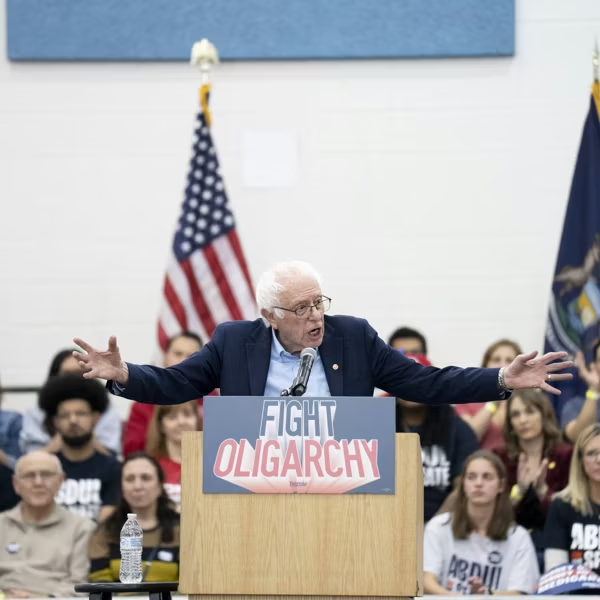
Now, as February 2016 gets underway, we're in the midst of the first major insurrection against the Democratic Party power structure in 28 years. The millions of us who support the Bernie Sanders campaign--whatever our important criticisms--should aim to fully grasp the huge opportunities and obstacles that await us.
Of the three previous insurrections, only one gained the nomination, and none won the presidency. Corporate capitalism--wielding its muscular appendage, mass media--can be depended upon to take off the gloves and pummel the insurrection's candidate to the extent that the campaign has gained momentum. That happened to McCarthy, McGovern and Jackson. It's now happening to Sanders.
The last days of January brought one big-daily newspaper editorial after another after another attacking Bernie with vehemence and vitriol. The less unlikely his winning of the nomination gets, the more that mega-media assaults promoting absurdities will intensify.
Meanwhile--at least as long as her nomination is threatened from the left--Hillary Clinton will benefit from corporate biases that wallpaper the mass-media echo chambers. The Sunday New York Times editorial endorsing Clinton could hardly be more fanciful and hagiographic if written by her campaign.
Many of the same media outlets and overall corporate forces that denounced Eugene McCarthy in 1968, George McGovern in 1972 and Jesse Jackson in 1988 are gunning for Bernie Sanders in 2016. We shouldn't be surprised. But we should be ready, willing and able to do our own messaging--widely and intensely--in communities across the country.
At the same time, we should not confuse electoral campaigns with long-term political organizing. Campaigns for office are quite different matters than the more transformative task of building progressive infrastructure--and vibrant coalitions--that can endure and grow, year after year.
Genuinely progressive candidates can inspire and galvanize--and sometimes they can even win. But election campaigns, especially national ones, are almost always boom/bust. Sometimes they can help to fuel movement momentum, but they aren't the engine.
Election campaigns are distinct from movements even if they converge for a while, no matter what pundits and campaign spinners say. Candidates often want to harness social movements for their campaigns. But our best approach is to view electoral campaigns as--at best--subsets of movements, not the other way around.
The Bernie campaign could be a watershed for progressive organizing through the rest of this decade and beyond. That will largely depend on what activists do--in the next weeks, months and years.
Dear Common Dreams reader, It’s been nearly 30 years since I co-founded Common Dreams with my late wife, Lina Newhouser. We had the radical notion that journalism should serve the public good, not corporate profits. It was clear to us from the outset what it would take to build such a project. No paid advertisements. No corporate sponsors. No millionaire publisher telling us what to think or do. Many people said we wouldn't last a year, but we proved those doubters wrong. Together with a tremendous team of journalists and dedicated staff, we built an independent media outlet free from the constraints of profits and corporate control. Our mission has always been simple: To inform. To inspire. To ignite change for the common good. Building Common Dreams was not easy. Our survival was never guaranteed. When you take on the most powerful forces—Wall Street greed, fossil fuel industry destruction, Big Tech lobbyists, and uber-rich oligarchs who have spent billions upon billions rigging the economy and democracy in their favor—the only bulwark you have is supporters who believe in your work. But here’s the urgent message from me today. It's never been this bad out there. And it's never been this hard to keep us going. At the very moment Common Dreams is most needed, the threats we face are intensifying. We need your support now more than ever. We don't accept corporate advertising and never will. We don't have a paywall because we don't think people should be blocked from critical news based on their ability to pay. Everything we do is funded by the donations of readers like you. When everyone does the little they can afford, we are strong. But if that support retreats or dries up, so do we. Will you donate now to make sure Common Dreams not only survives but thrives? —Craig Brown, Co-founder |
Norman Solomon is the national director of RootsAction.org and executive director of the Institute for Public Accuracy. The paperback edition of his latest book, War Made Invisible: How America Hides the Human Toll of Its Military Machine, includes an afterword about the Gaza war.
Forty-eight years ago, a serious insurrection jeopardized the power structure of the national Democratic Party for the first time in memory. Propelled by the movement against the Vietnam War, that grassroots uprising cast a big electoral shadow soon after Senator Eugene McCarthy dared to challenge the incumbent for the Democratic presidential nomination.
When 1968 got underway, the news media were scoffing at McCarthy's antiwar campaign as quixotic and doomed. But in the nation's leadoff New Hampshire primary, McCarthy received 42 percent of the vote while President Lyndon B. Johnson couldn't quite get to 50 percent--results that were shattering for LBJ. Suddenly emboldened, Senator Robert Kennedy quickly entered the race. Two weeks later, Johnson announced that he wouldn't seek re-election.
"Candidates often want to harness social movements for their campaigns. But our best approach is to view electoral campaigns as--at best--subsets of movements, not the other way around."
Although the nomination eventually went to Johnson's vice president Hubert Humphrey--a supporter of the war who was the choice of Democratic power brokers--the unmasking of the party's undemocratic process led to internal reforms that aided the Democratic Party's second modern insurrection. It came four years later, when Senator George McGovern won the presidential nomination, thanks to grassroots movements involving young people and activists of color. But any sense of triumph disappeared in the wake of President Nixon's landslide re-election in November 1972.
The third major insurrection came in 1988, when Jesse Jackson led a dynamic, multiracial "rainbow" campaign for president that had major impacts on the national stage. (His previous campaign, in '84, had been relatively weak.) The 1988 primaries and caucuses were hard-fought, state by state, with rainbow activists working shoulder-to-shoulder, whether focused on issues of class, race or gender. (Back then, Jackson was a gutsy voice for social justice, for human rights and against war -- much more willing to confront the Democratic Party establishment than he is now.) At the contentious Democratic National Convention that summer in Atlanta, where Jackson delegates were highly visible as 30 percent of the total, the old guard closed ranks behind nominee Michael Dukakis.
Now, as February 2016 gets underway, we're in the midst of the first major insurrection against the Democratic Party power structure in 28 years. The millions of us who support the Bernie Sanders campaign--whatever our important criticisms--should aim to fully grasp the huge opportunities and obstacles that await us.
Of the three previous insurrections, only one gained the nomination, and none won the presidency. Corporate capitalism--wielding its muscular appendage, mass media--can be depended upon to take off the gloves and pummel the insurrection's candidate to the extent that the campaign has gained momentum. That happened to McCarthy, McGovern and Jackson. It's now happening to Sanders.
The last days of January brought one big-daily newspaper editorial after another after another attacking Bernie with vehemence and vitriol. The less unlikely his winning of the nomination gets, the more that mega-media assaults promoting absurdities will intensify.
Meanwhile--at least as long as her nomination is threatened from the left--Hillary Clinton will benefit from corporate biases that wallpaper the mass-media echo chambers. The Sunday New York Times editorial endorsing Clinton could hardly be more fanciful and hagiographic if written by her campaign.
Many of the same media outlets and overall corporate forces that denounced Eugene McCarthy in 1968, George McGovern in 1972 and Jesse Jackson in 1988 are gunning for Bernie Sanders in 2016. We shouldn't be surprised. But we should be ready, willing and able to do our own messaging--widely and intensely--in communities across the country.
At the same time, we should not confuse electoral campaigns with long-term political organizing. Campaigns for office are quite different matters than the more transformative task of building progressive infrastructure--and vibrant coalitions--that can endure and grow, year after year.
Genuinely progressive candidates can inspire and galvanize--and sometimes they can even win. But election campaigns, especially national ones, are almost always boom/bust. Sometimes they can help to fuel movement momentum, but they aren't the engine.
Election campaigns are distinct from movements even if they converge for a while, no matter what pundits and campaign spinners say. Candidates often want to harness social movements for their campaigns. But our best approach is to view electoral campaigns as--at best--subsets of movements, not the other way around.
The Bernie campaign could be a watershed for progressive organizing through the rest of this decade and beyond. That will largely depend on what activists do--in the next weeks, months and years.
Norman Solomon is the national director of RootsAction.org and executive director of the Institute for Public Accuracy. The paperback edition of his latest book, War Made Invisible: How America Hides the Human Toll of Its Military Machine, includes an afterword about the Gaza war.
Forty-eight years ago, a serious insurrection jeopardized the power structure of the national Democratic Party for the first time in memory. Propelled by the movement against the Vietnam War, that grassroots uprising cast a big electoral shadow soon after Senator Eugene McCarthy dared to challenge the incumbent for the Democratic presidential nomination.
When 1968 got underway, the news media were scoffing at McCarthy's antiwar campaign as quixotic and doomed. But in the nation's leadoff New Hampshire primary, McCarthy received 42 percent of the vote while President Lyndon B. Johnson couldn't quite get to 50 percent--results that were shattering for LBJ. Suddenly emboldened, Senator Robert Kennedy quickly entered the race. Two weeks later, Johnson announced that he wouldn't seek re-election.
"Candidates often want to harness social movements for their campaigns. But our best approach is to view electoral campaigns as--at best--subsets of movements, not the other way around."
Although the nomination eventually went to Johnson's vice president Hubert Humphrey--a supporter of the war who was the choice of Democratic power brokers--the unmasking of the party's undemocratic process led to internal reforms that aided the Democratic Party's second modern insurrection. It came four years later, when Senator George McGovern won the presidential nomination, thanks to grassroots movements involving young people and activists of color. But any sense of triumph disappeared in the wake of President Nixon's landslide re-election in November 1972.
The third major insurrection came in 1988, when Jesse Jackson led a dynamic, multiracial "rainbow" campaign for president that had major impacts on the national stage. (His previous campaign, in '84, had been relatively weak.) The 1988 primaries and caucuses were hard-fought, state by state, with rainbow activists working shoulder-to-shoulder, whether focused on issues of class, race or gender. (Back then, Jackson was a gutsy voice for social justice, for human rights and against war -- much more willing to confront the Democratic Party establishment than he is now.) At the contentious Democratic National Convention that summer in Atlanta, where Jackson delegates were highly visible as 30 percent of the total, the old guard closed ranks behind nominee Michael Dukakis.
Now, as February 2016 gets underway, we're in the midst of the first major insurrection against the Democratic Party power structure in 28 years. The millions of us who support the Bernie Sanders campaign--whatever our important criticisms--should aim to fully grasp the huge opportunities and obstacles that await us.
Of the three previous insurrections, only one gained the nomination, and none won the presidency. Corporate capitalism--wielding its muscular appendage, mass media--can be depended upon to take off the gloves and pummel the insurrection's candidate to the extent that the campaign has gained momentum. That happened to McCarthy, McGovern and Jackson. It's now happening to Sanders.
The last days of January brought one big-daily newspaper editorial after another after another attacking Bernie with vehemence and vitriol. The less unlikely his winning of the nomination gets, the more that mega-media assaults promoting absurdities will intensify.
Meanwhile--at least as long as her nomination is threatened from the left--Hillary Clinton will benefit from corporate biases that wallpaper the mass-media echo chambers. The Sunday New York Times editorial endorsing Clinton could hardly be more fanciful and hagiographic if written by her campaign.
Many of the same media outlets and overall corporate forces that denounced Eugene McCarthy in 1968, George McGovern in 1972 and Jesse Jackson in 1988 are gunning for Bernie Sanders in 2016. We shouldn't be surprised. But we should be ready, willing and able to do our own messaging--widely and intensely--in communities across the country.
At the same time, we should not confuse electoral campaigns with long-term political organizing. Campaigns for office are quite different matters than the more transformative task of building progressive infrastructure--and vibrant coalitions--that can endure and grow, year after year.
Genuinely progressive candidates can inspire and galvanize--and sometimes they can even win. But election campaigns, especially national ones, are almost always boom/bust. Sometimes they can help to fuel movement momentum, but they aren't the engine.
Election campaigns are distinct from movements even if they converge for a while, no matter what pundits and campaign spinners say. Candidates often want to harness social movements for their campaigns. But our best approach is to view electoral campaigns as--at best--subsets of movements, not the other way around.
The Bernie campaign could be a watershed for progressive organizing through the rest of this decade and beyond. That will largely depend on what activists do--in the next weeks, months and years.