
Why Rivers, Why Now?
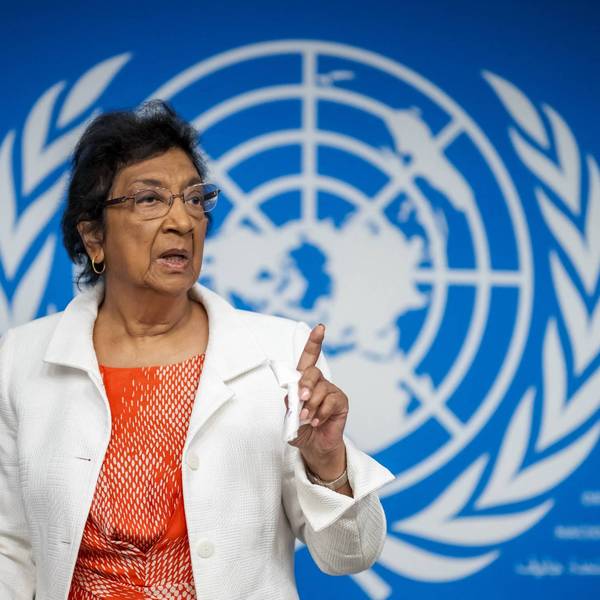
For over ten years, I've worked on campaigns to protect forests and secure land rights for communities around the world. And this month, I'm thrilled to take on a new position, as the Executive Director of International Rivers.
Why rivers? Why now? Believe it or not, it's not such a big stretch.
For over ten years, I've worked on campaigns to protect forests and secure land rights for communities around the world. And this month, I'm thrilled to take on a new position, as the Executive Director of International Rivers.
Why rivers? Why now? Believe it or not, it's not such a big stretch.
Throughout my career, I've worked to ensure that development is fair and equitable, that people's rights are respected, and that their livelihoods are upheld with dignity. Rivers are an often overlooked but critical part of an ecosystem, and they are essential to the livelihoods of billions of people. Freshwater fisheries are the primary source of protein for millions. Fertile river basins nourish and irrigate farms to feed the world. And rivers provide critical energy and sanitation services. For many indigenous communities, they are also a sacred source of life.
I joined International Rivers because it's the only international organization fully dedicated to protecting rivers and the lives they support. This sharp, savvy group has always had an outsized impact relative to its size, jumpstarting a global river protection movement thirty years ago. Over the organization's lifetime, it's prevented more than 200 bad projects and supported thousands of communities around the world to defend their rights and territories in the face of wasteful development projects. From our back of the envelope calculations, we've channeled $174 billion from destructive dams towards better alternatives. This is an organization that takes on the big fights undaunted by entrenched interests with deep pockets, and time and again, wins equally big.
"The challenge is immense. So too are the possibilities."
The threat to rivers has never been greater. There are over 3700 hydropower projects planned or under construction on the world's rivers. Large, destructive dam projects can permanently alter an entire watershed, displacing tens of thousands of people from their lands, decimating fisheries and biodiversity, starving cropland and deltas of life-giving sediment, and emitting copious amounts of a powerful greenhouse gas: methane.
Billons of dollars are on the line, and that's money that could be used to build clean, accessible energy and water infrastructure for the world's poor. But dams are often planned and constructed with no transparency, no accountability for impacted people, and no participation, leaving cash-strapped governments and displaced people to pick up the pieces when promises aren't met. In many countries, the dam building industry routinely runs afoul of national law. The projects are so enormous, and cost overruns so routine, that dam projects have caused debt crises in several countries. Some financiers now wisely shy away from these risky projects, but the money still rolls in when the state takes over the risks.
The threat of big infrastructure to our global water resources is exacerbated by climate change. As we've seen with recent fatal floods, climate change is often first (and most acutely) felt through an increasingly chaotic and unpredictable water cycle. This chaos largely impacts the world's poorest and most vulnerable. Healthy rivers, which can protect against both flood and drought, have never been more important to people or the planet.
And there are better ways to generate our energy: Wind and solar have become cost-competitive while doing far less damage. But clean, decentralized energy and water infrastructure will never take hold if policy choices are determined by vested interests and no one is held to account for damage done. The damage is most visibly and acutely felt in bad projects, but harmful infrastructure projects are a symptom, not the disease. That's why we need to fundamentally change the way that rivers are governed, to ensure they're managed for the benefit of all.
International Rivers has opened offices across Africa, Latin America and Asia over the last ten years to address these challenges head on, and we are starting to see the pay off. Just last week, the Chilean energy company Endesa relinquished its water rights to all six of its hydropower projects in Southern Chile. Citing community resistance to the projects over social and environmental impacts, the company is taking a $52 million USD hit on their investment. This extraordinary victory comes at a critical moment as we are laying the groundwork with our partners for the permanent legal protection of Chilean rivers. The campaign is a testament to the power of diligent grassroots campaigning to create political space for long-term improvements in natural resource and water governance, like the legal protections we're now pursuing.
International Rivers is working around the world to make sure our natural resources are governed sustainably and fairly. In Brazil, we have stood alongside the Munduruku people for years in their passionate defense of their rights against the Sao Luiz do Tapajos hydropower project, a planned mega-dam that would destroy their ancestral lands and livelihoods. After years of campaigning, that dam was cancelled in August. The power of the campaign is much greater than this single momentous victory: The Brazilian constitution, and its unparalleled defense of indigenous rights, was upheld. Our China program successfully pressured Sinohydro, a Chinese state-owned enterprise and the largest dam builder in the world, to pass a new social and environmental standard. The new standard was an incredible victory on its own, but it also showed the world that it's possible to create accountability and find a way forward, even in seemingly intractable situations.
I believe that no problem is intractable. Laws can be changed, and conflicts can be solved. I've seen it happen.
In the field of forest protection, I've witnessed a sea change in the recognition of land rights in recent years. Ten or 20 years ago, we thought that indigenous people had little hope of winning rights to their forests. After years of dedicated campaigns (and studies showing traditional communities can fight climate change best when managing the forests where they have lived for generations), governments have begun to recognize indigenous land rights. Much remains to be done, but it is sign of hope.
It's time to see this evolution extended to water. The challenge is immense. So too are the possibilities. The wind is at our back: I'm energized by our deep network of partners and supporters, and our recent wins. We are committed to a vision where healthy rivers and the rights of local communities are valued and protected, where people have fair and equitable access to water and electricity without giving up their homes, lands and livelihoods. I hope you will stand with us.
We are at a crossroads
This country and this world are at a monumental crossroads. In a few short weeks, US voters will have an opportunity to beat back the forces of fascism and confront the billionaires who are rigging the economy, our media system, and our democracy, making it increasingly impossible for ordinary people to get by. We’re not just talking about the election. We’re talking about what must be done once these fascist elements are vanquished from power. We need a bolder set of solutions than what either major party has so far been willing to offer and a working-class movement ready to fight like hell for it. Trump didn't emerge from nowhere. The conditions that fueled MAGA authoritarianism were created by decades of radical neoliberal economic policies and a corrupt political system dominated by corporate interests. They slashed taxes on the super-rich, promising that the benefits would trickle down. They said giveaways to the corporate titans would make life more affordable for the rest of us. It was all bullshit. And when a bitter, betrayed populace searches for someone to blame, right-wing demagogues have little trouble finding scapegoats. People know when they're being lied to, but you won't hear any of this from the corporate media. Only independent journalism—powered and funded by people who believe in building a better world—can deliver truly trustworthy daily news. Our Fall Campaign is underway, and we need your help. To power our newsroom through the rest of the year, we need to raise $125,000 by midnight on October 31. So if you share our vision, please contribute whatever you can to sustain our work. |
For over ten years, I've worked on campaigns to protect forests and secure land rights for communities around the world. And this month, I'm thrilled to take on a new position, as the Executive Director of International Rivers.
Why rivers? Why now? Believe it or not, it's not such a big stretch.
Throughout my career, I've worked to ensure that development is fair and equitable, that people's rights are respected, and that their livelihoods are upheld with dignity. Rivers are an often overlooked but critical part of an ecosystem, and they are essential to the livelihoods of billions of people. Freshwater fisheries are the primary source of protein for millions. Fertile river basins nourish and irrigate farms to feed the world. And rivers provide critical energy and sanitation services. For many indigenous communities, they are also a sacred source of life.
I joined International Rivers because it's the only international organization fully dedicated to protecting rivers and the lives they support. This sharp, savvy group has always had an outsized impact relative to its size, jumpstarting a global river protection movement thirty years ago. Over the organization's lifetime, it's prevented more than 200 bad projects and supported thousands of communities around the world to defend their rights and territories in the face of wasteful development projects. From our back of the envelope calculations, we've channeled $174 billion from destructive dams towards better alternatives. This is an organization that takes on the big fights undaunted by entrenched interests with deep pockets, and time and again, wins equally big.
"The challenge is immense. So too are the possibilities."
The threat to rivers has never been greater. There are over 3700 hydropower projects planned or under construction on the world's rivers. Large, destructive dam projects can permanently alter an entire watershed, displacing tens of thousands of people from their lands, decimating fisheries and biodiversity, starving cropland and deltas of life-giving sediment, and emitting copious amounts of a powerful greenhouse gas: methane.
Billons of dollars are on the line, and that's money that could be used to build clean, accessible energy and water infrastructure for the world's poor. But dams are often planned and constructed with no transparency, no accountability for impacted people, and no participation, leaving cash-strapped governments and displaced people to pick up the pieces when promises aren't met. In many countries, the dam building industry routinely runs afoul of national law. The projects are so enormous, and cost overruns so routine, that dam projects have caused debt crises in several countries. Some financiers now wisely shy away from these risky projects, but the money still rolls in when the state takes over the risks.
The threat of big infrastructure to our global water resources is exacerbated by climate change. As we've seen with recent fatal floods, climate change is often first (and most acutely) felt through an increasingly chaotic and unpredictable water cycle. This chaos largely impacts the world's poorest and most vulnerable. Healthy rivers, which can protect against both flood and drought, have never been more important to people or the planet.
And there are better ways to generate our energy: Wind and solar have become cost-competitive while doing far less damage. But clean, decentralized energy and water infrastructure will never take hold if policy choices are determined by vested interests and no one is held to account for damage done. The damage is most visibly and acutely felt in bad projects, but harmful infrastructure projects are a symptom, not the disease. That's why we need to fundamentally change the way that rivers are governed, to ensure they're managed for the benefit of all.
International Rivers has opened offices across Africa, Latin America and Asia over the last ten years to address these challenges head on, and we are starting to see the pay off. Just last week, the Chilean energy company Endesa relinquished its water rights to all six of its hydropower projects in Southern Chile. Citing community resistance to the projects over social and environmental impacts, the company is taking a $52 million USD hit on their investment. This extraordinary victory comes at a critical moment as we are laying the groundwork with our partners for the permanent legal protection of Chilean rivers. The campaign is a testament to the power of diligent grassroots campaigning to create political space for long-term improvements in natural resource and water governance, like the legal protections we're now pursuing.
International Rivers is working around the world to make sure our natural resources are governed sustainably and fairly. In Brazil, we have stood alongside the Munduruku people for years in their passionate defense of their rights against the Sao Luiz do Tapajos hydropower project, a planned mega-dam that would destroy their ancestral lands and livelihoods. After years of campaigning, that dam was cancelled in August. The power of the campaign is much greater than this single momentous victory: The Brazilian constitution, and its unparalleled defense of indigenous rights, was upheld. Our China program successfully pressured Sinohydro, a Chinese state-owned enterprise and the largest dam builder in the world, to pass a new social and environmental standard. The new standard was an incredible victory on its own, but it also showed the world that it's possible to create accountability and find a way forward, even in seemingly intractable situations.
I believe that no problem is intractable. Laws can be changed, and conflicts can be solved. I've seen it happen.
In the field of forest protection, I've witnessed a sea change in the recognition of land rights in recent years. Ten or 20 years ago, we thought that indigenous people had little hope of winning rights to their forests. After years of dedicated campaigns (and studies showing traditional communities can fight climate change best when managing the forests where they have lived for generations), governments have begun to recognize indigenous land rights. Much remains to be done, but it is sign of hope.
It's time to see this evolution extended to water. The challenge is immense. So too are the possibilities. The wind is at our back: I'm energized by our deep network of partners and supporters, and our recent wins. We are committed to a vision where healthy rivers and the rights of local communities are valued and protected, where people have fair and equitable access to water and electricity without giving up their homes, lands and livelihoods. I hope you will stand with us.
For over ten years, I've worked on campaigns to protect forests and secure land rights for communities around the world. And this month, I'm thrilled to take on a new position, as the Executive Director of International Rivers.
Why rivers? Why now? Believe it or not, it's not such a big stretch.
Throughout my career, I've worked to ensure that development is fair and equitable, that people's rights are respected, and that their livelihoods are upheld with dignity. Rivers are an often overlooked but critical part of an ecosystem, and they are essential to the livelihoods of billions of people. Freshwater fisheries are the primary source of protein for millions. Fertile river basins nourish and irrigate farms to feed the world. And rivers provide critical energy and sanitation services. For many indigenous communities, they are also a sacred source of life.
I joined International Rivers because it's the only international organization fully dedicated to protecting rivers and the lives they support. This sharp, savvy group has always had an outsized impact relative to its size, jumpstarting a global river protection movement thirty years ago. Over the organization's lifetime, it's prevented more than 200 bad projects and supported thousands of communities around the world to defend their rights and territories in the face of wasteful development projects. From our back of the envelope calculations, we've channeled $174 billion from destructive dams towards better alternatives. This is an organization that takes on the big fights undaunted by entrenched interests with deep pockets, and time and again, wins equally big.
"The challenge is immense. So too are the possibilities."
The threat to rivers has never been greater. There are over 3700 hydropower projects planned or under construction on the world's rivers. Large, destructive dam projects can permanently alter an entire watershed, displacing tens of thousands of people from their lands, decimating fisheries and biodiversity, starving cropland and deltas of life-giving sediment, and emitting copious amounts of a powerful greenhouse gas: methane.
Billons of dollars are on the line, and that's money that could be used to build clean, accessible energy and water infrastructure for the world's poor. But dams are often planned and constructed with no transparency, no accountability for impacted people, and no participation, leaving cash-strapped governments and displaced people to pick up the pieces when promises aren't met. In many countries, the dam building industry routinely runs afoul of national law. The projects are so enormous, and cost overruns so routine, that dam projects have caused debt crises in several countries. Some financiers now wisely shy away from these risky projects, but the money still rolls in when the state takes over the risks.
The threat of big infrastructure to our global water resources is exacerbated by climate change. As we've seen with recent fatal floods, climate change is often first (and most acutely) felt through an increasingly chaotic and unpredictable water cycle. This chaos largely impacts the world's poorest and most vulnerable. Healthy rivers, which can protect against both flood and drought, have never been more important to people or the planet.
And there are better ways to generate our energy: Wind and solar have become cost-competitive while doing far less damage. But clean, decentralized energy and water infrastructure will never take hold if policy choices are determined by vested interests and no one is held to account for damage done. The damage is most visibly and acutely felt in bad projects, but harmful infrastructure projects are a symptom, not the disease. That's why we need to fundamentally change the way that rivers are governed, to ensure they're managed for the benefit of all.
International Rivers has opened offices across Africa, Latin America and Asia over the last ten years to address these challenges head on, and we are starting to see the pay off. Just last week, the Chilean energy company Endesa relinquished its water rights to all six of its hydropower projects in Southern Chile. Citing community resistance to the projects over social and environmental impacts, the company is taking a $52 million USD hit on their investment. This extraordinary victory comes at a critical moment as we are laying the groundwork with our partners for the permanent legal protection of Chilean rivers. The campaign is a testament to the power of diligent grassroots campaigning to create political space for long-term improvements in natural resource and water governance, like the legal protections we're now pursuing.
International Rivers is working around the world to make sure our natural resources are governed sustainably and fairly. In Brazil, we have stood alongside the Munduruku people for years in their passionate defense of their rights against the Sao Luiz do Tapajos hydropower project, a planned mega-dam that would destroy their ancestral lands and livelihoods. After years of campaigning, that dam was cancelled in August. The power of the campaign is much greater than this single momentous victory: The Brazilian constitution, and its unparalleled defense of indigenous rights, was upheld. Our China program successfully pressured Sinohydro, a Chinese state-owned enterprise and the largest dam builder in the world, to pass a new social and environmental standard. The new standard was an incredible victory on its own, but it also showed the world that it's possible to create accountability and find a way forward, even in seemingly intractable situations.
I believe that no problem is intractable. Laws can be changed, and conflicts can be solved. I've seen it happen.
In the field of forest protection, I've witnessed a sea change in the recognition of land rights in recent years. Ten or 20 years ago, we thought that indigenous people had little hope of winning rights to their forests. After years of dedicated campaigns (and studies showing traditional communities can fight climate change best when managing the forests where they have lived for generations), governments have begun to recognize indigenous land rights. Much remains to be done, but it is sign of hope.
It's time to see this evolution extended to water. The challenge is immense. So too are the possibilities. The wind is at our back: I'm energized by our deep network of partners and supporters, and our recent wins. We are committed to a vision where healthy rivers and the rights of local communities are valued and protected, where people have fair and equitable access to water and electricity without giving up their homes, lands and livelihoods. I hope you will stand with us.