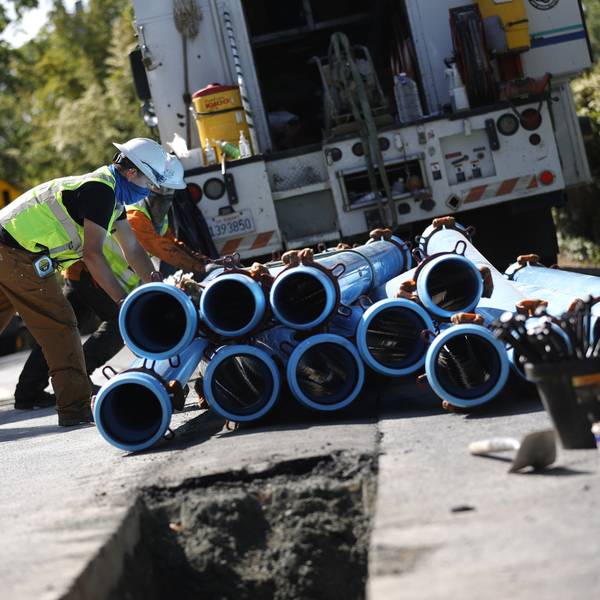
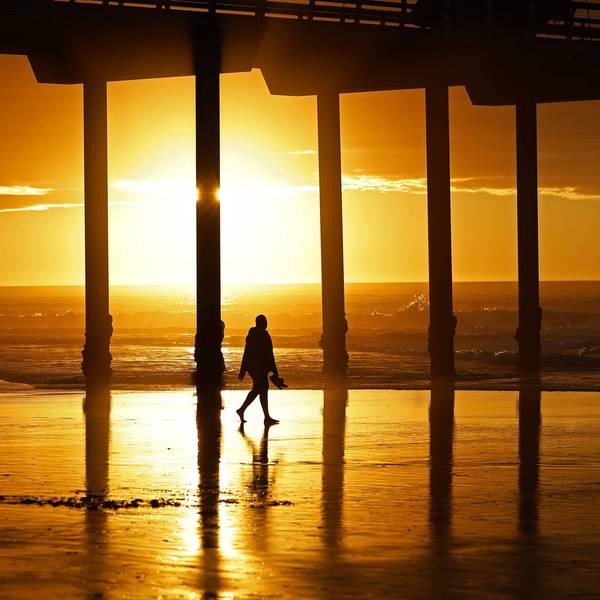
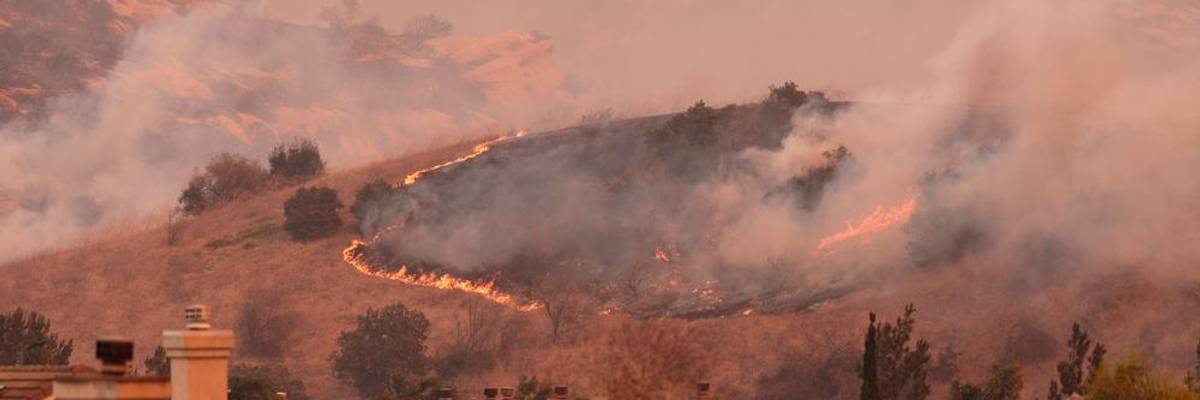
The wildfires--and the climate crisis that's making them worse--are public problems. The reliability of our power grid is a public need. (Photo: Shutterstock)
We Need Publicly Owned Utilities
California’s wildfires and blackouts show the dangers of entrusting our power to for-profit corporations.
Right now, thousands of Californians are fleeing raging wildfires, while millions sit in the dark. And for-profit utilities may be to blame.
Pacific Gas & Electric--a private, for-profit utility in the state--has admitted that its equipment likely caused 10 wildfires this year alone. To avoid further damage, the utility has been shutting off its customers' power when weather conditions cause increased fire danger.
Will this lower the risk of wildfires? Maybe. It will also leave blacked out hospitals choosing whether to refrigerate their vaccines or keep their medical records online.
As Vox environmental reporter David Roberts put it, giving customers a choice between blackouts or fires is a failure.
A popular theory says that businesses must be "efficient" in order to survive in a competitive marketplace. By contrast, the government--without such market pressure--is naturally "inefficient."
But even in the best cases, for-profit utilities with state-sanctioned monopolies are not functioning in a competitive marketplace. And unlike public utilities, which simply have to cover the costs of operating, privatized utilities must generate something else: profits.
As long as private, for-profit corporations provide our power, cleaner solutions like rooftop solar will remain out of reach to many.
How do they do this? By cutting costs--including employee salaries and benefits, customer services, and equipment upgrades. In the case of PG&E, it's meant failing to upgrade and maintain their aging infrastructure.
It would be one thing if PG&E's grid used all of the latest, most up-to-date technology. But that's not the case. Instead of making their grid more resilient, now they simply shut it off when the weather gets bad -- and it may still be causing fires.
And if customers don't like that, too bad. It's a monopoly.
Prices and service aren't the only things at stake. We also need to get power from sources that are reliable, safe, and environmentally clean.
A corporation with a profit incentive, which needs to provide shareholders with growth each quarter, may not invest in that. Upgrading and maintaining infrastructure cuts into profits, giving them a reason to sacrifice safety and eco-friendliness to cut costs.
Imagine a circumstance in which most consumers and businesses get their power from clean, rooftop solar panels.
Sounds great, but there's a big problem for for-profit utilities: After the initial manufacturing and installation, there's no profit in people getting their power from the sun.
It's clean, it's technologically sound, and yet it's not available to most people. As long as private, for-profit corporations provide our power, cleaner solutions like rooftop solar will remain out of reach to many.
But what if we had publicly owned utilities?
The wildfires--and the climate crisis that's making them worse--are public problems. The reliability of our power grid is a public need.
When we privatize our utilities, we limit the solutions we can choose from to those that are profitable to a corporation. We risk situations like the one we are in now, in which the public is suffering the consequences of decisions a private entity made to maximize its own profits.
The public interest, not private profit, should be priority No. 1. If there's a silver lining to this mess with PG&E, it's that more people will demand that.
We are at a crossroads
This country and this world are at a monumental crossroads. In a few short weeks, US voters will have an opportunity to beat back the forces of fascism and confront the billionaires who are rigging the economy, our media system, and our democracy, making it increasingly impossible for ordinary people to get by. We’re not just talking about the election. We’re talking about what must be done once these fascist elements are vanquished from power. We need a bolder set of solutions than what either major party has so far been willing to offer and a working-class movement ready to fight like hell for it. Trump didn't emerge from nowhere. The conditions that fueled MAGA authoritarianism were created by decades of radical neoliberal economic policies and a corrupt political system dominated by corporate interests. They slashed taxes on the super-rich, promising that the benefits would trickle down. They said giveaways to the corporate titans would make life more affordable for the rest of us. It was all bullshit. And when a bitter, betrayed populace searches for someone to blame, right-wing demagogues have little trouble finding scapegoats. People know when they're being lied to, but you won't hear any of this from the corporate media. Only independent journalism—powered and funded by people who believe in building a better world—can deliver truly trustworthy daily news. Our Fall Campaign is underway, and we need your help. To power our newsroom through the rest of the year, we need to raise $125,000 by midnight on October 31. So if you share our vision, please contribute whatever you can to sustain our work. |
Right now, thousands of Californians are fleeing raging wildfires, while millions sit in the dark. And for-profit utilities may be to blame.
Pacific Gas & Electric--a private, for-profit utility in the state--has admitted that its equipment likely caused 10 wildfires this year alone. To avoid further damage, the utility has been shutting off its customers' power when weather conditions cause increased fire danger.
Will this lower the risk of wildfires? Maybe. It will also leave blacked out hospitals choosing whether to refrigerate their vaccines or keep their medical records online.
As Vox environmental reporter David Roberts put it, giving customers a choice between blackouts or fires is a failure.
A popular theory says that businesses must be "efficient" in order to survive in a competitive marketplace. By contrast, the government--without such market pressure--is naturally "inefficient."
But even in the best cases, for-profit utilities with state-sanctioned monopolies are not functioning in a competitive marketplace. And unlike public utilities, which simply have to cover the costs of operating, privatized utilities must generate something else: profits.
As long as private, for-profit corporations provide our power, cleaner solutions like rooftop solar will remain out of reach to many.
How do they do this? By cutting costs--including employee salaries and benefits, customer services, and equipment upgrades. In the case of PG&E, it's meant failing to upgrade and maintain their aging infrastructure.
It would be one thing if PG&E's grid used all of the latest, most up-to-date technology. But that's not the case. Instead of making their grid more resilient, now they simply shut it off when the weather gets bad -- and it may still be causing fires.
And if customers don't like that, too bad. It's a monopoly.
Prices and service aren't the only things at stake. We also need to get power from sources that are reliable, safe, and environmentally clean.
A corporation with a profit incentive, which needs to provide shareholders with growth each quarter, may not invest in that. Upgrading and maintaining infrastructure cuts into profits, giving them a reason to sacrifice safety and eco-friendliness to cut costs.
Imagine a circumstance in which most consumers and businesses get their power from clean, rooftop solar panels.
Sounds great, but there's a big problem for for-profit utilities: After the initial manufacturing and installation, there's no profit in people getting their power from the sun.
It's clean, it's technologically sound, and yet it's not available to most people. As long as private, for-profit corporations provide our power, cleaner solutions like rooftop solar will remain out of reach to many.
But what if we had publicly owned utilities?
The wildfires--and the climate crisis that's making them worse--are public problems. The reliability of our power grid is a public need.
When we privatize our utilities, we limit the solutions we can choose from to those that are profitable to a corporation. We risk situations like the one we are in now, in which the public is suffering the consequences of decisions a private entity made to maximize its own profits.
The public interest, not private profit, should be priority No. 1. If there's a silver lining to this mess with PG&E, it's that more people will demand that.
Right now, thousands of Californians are fleeing raging wildfires, while millions sit in the dark. And for-profit utilities may be to blame.
Pacific Gas & Electric--a private, for-profit utility in the state--has admitted that its equipment likely caused 10 wildfires this year alone. To avoid further damage, the utility has been shutting off its customers' power when weather conditions cause increased fire danger.
Will this lower the risk of wildfires? Maybe. It will also leave blacked out hospitals choosing whether to refrigerate their vaccines or keep their medical records online.
As Vox environmental reporter David Roberts put it, giving customers a choice between blackouts or fires is a failure.
A popular theory says that businesses must be "efficient" in order to survive in a competitive marketplace. By contrast, the government--without such market pressure--is naturally "inefficient."
But even in the best cases, for-profit utilities with state-sanctioned monopolies are not functioning in a competitive marketplace. And unlike public utilities, which simply have to cover the costs of operating, privatized utilities must generate something else: profits.
As long as private, for-profit corporations provide our power, cleaner solutions like rooftop solar will remain out of reach to many.
How do they do this? By cutting costs--including employee salaries and benefits, customer services, and equipment upgrades. In the case of PG&E, it's meant failing to upgrade and maintain their aging infrastructure.
It would be one thing if PG&E's grid used all of the latest, most up-to-date technology. But that's not the case. Instead of making their grid more resilient, now they simply shut it off when the weather gets bad -- and it may still be causing fires.
And if customers don't like that, too bad. It's a monopoly.
Prices and service aren't the only things at stake. We also need to get power from sources that are reliable, safe, and environmentally clean.
A corporation with a profit incentive, which needs to provide shareholders with growth each quarter, may not invest in that. Upgrading and maintaining infrastructure cuts into profits, giving them a reason to sacrifice safety and eco-friendliness to cut costs.
Imagine a circumstance in which most consumers and businesses get their power from clean, rooftop solar panels.
Sounds great, but there's a big problem for for-profit utilities: After the initial manufacturing and installation, there's no profit in people getting their power from the sun.
It's clean, it's technologically sound, and yet it's not available to most people. As long as private, for-profit corporations provide our power, cleaner solutions like rooftop solar will remain out of reach to many.
But what if we had publicly owned utilities?
The wildfires--and the climate crisis that's making them worse--are public problems. The reliability of our power grid is a public need.
When we privatize our utilities, we limit the solutions we can choose from to those that are profitable to a corporation. We risk situations like the one we are in now, in which the public is suffering the consequences of decisions a private entity made to maximize its own profits.
The public interest, not private profit, should be priority No. 1. If there's a silver lining to this mess with PG&E, it's that more people will demand that.