SUBSCRIBE TO OUR FREE NEWSLETTER
Daily news & progressive opinion—funded by the people, not the corporations—delivered straight to your inbox.
5
#000000
#FFFFFF
To donate by check, phone, or other method, see our More Ways to Give page.
Daily news & progressive opinion—funded by the people, not the corporations—delivered straight to your inbox.
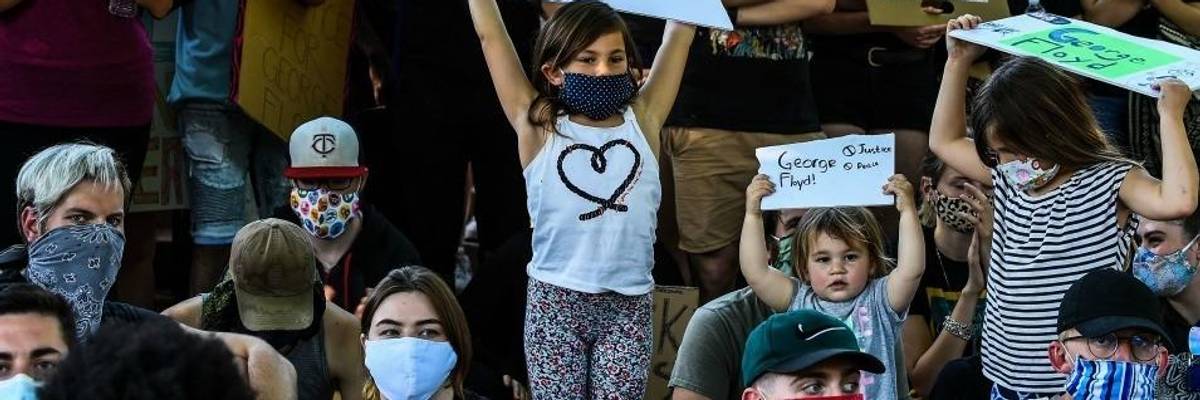
Defund the Police. (Photo: Chandan Khanna/AFP via Getty Images)
On my way down Central Park Drive into Berkeley's Tilden Park yesterday, I saw a white man of about sixty--twenty years my junior--standing by a black car. I paused to see if he needed help. He made a small hand gesture, which I took as a "drive on" wave, so I continued. But fifty feet later, troubled by something about him, I decided the gesture had been ambiguous. Brought up by parents who always stopped for strangers, I flashed my blinkers and reversed.
Rolling down my window, I asked, "Are you okay?"
"Don't try to qualify me." He stared angrily.
On my way down Central Park Drive into Berkeley's Tilden Park yesterday, I saw a white man of about sixty--twenty years my junior--standing by a black car. I paused to see if he needed help. He made a small hand gesture, which I took as a "drive on" wave, so I continued. But fifty feet later, troubled by something about him, I decided the gesture had been ambiguous. Brought up by parents who always stopped for strangers, I flashed my blinkers and reversed.
Rolling down my window, I asked, "Are you okay?"
"Don't try to qualify me." He stared angrily.
"Do you need anything, are you all right?"
"You're not okay!" He moved toward me. "Leave me alone!"
"Don't be so hostile. I was just trying to help you."
"You're the one who's not okay!" he screamed, waving his arms, shouting words I was too shocked to take in. "Get out of here!"
"Okay, I will," I said and rolled down the hill for my morning hike.
But my heart raced. Tears sprouted behind my lids. If he hadn't wanted assistance, a brief "No, thanks" would have sufficed. The society is really unraveling, I thought. This isn't how the social compact is supposed to work, where people have compassion and try to help each other.
I considered calling the police, because the man was clearly not well, but imagined how quickly that interaction could devolve. If an officer asked, "Do you need help?" and he reacted as belligerently as he had with me, the cop would likely end up arresting him. Maybe violently. Even with white skin, he wouldn't be safe. Isn't there a mental health officer in Berkeley, I wondered?
Too upset to start my usual meditative walk, I slipped on my mask and stopped the first person I saw in the park. "Can I tell you something scary that just happened to me?" She edged away, either from physical distancing concerns or fears that I might be unbalanced, but after I finished she urged me to alert someone. Without my cell phone I couldn't do it then, so focused on calming myself and savoring the peaceful, tree-filled paths I had come to enjoy.
An hour and a half later, when I drove back up Central Park Drive the black car remained. At first it looked empty, but when I pulled alongside I saw the man slumped in the driver's seat.
The main city number simply asked for a message, with a promise to call back. I told the story on voicemail, saying I did not want police, but hoped we had a mental health professional who might see about an agitated man. "What if someone else stops to help and he assaults them?" I asked, wondering if simply screaming at a Good Samaritan would be grounds to check on him. And with so much money going for COVID, did we have trained people?
The Black Lives Matter demand to Defund Police already made sense to me because of systemic racism, but this made it crystal clear that in most situations where we reflexively call police--disturbed-appearing man in public; schizophrenic teen terrifying his parents (as my nephew did)--what we need instead is a crisis line that can respond.
I received a response from a city worker and learned that in Berkeley we do have a mental health triage team. "Wonderful," I said.
"But it only operates on certain days," he added. "Because we don't have the funding for more." Still, he gave me that number and again I left a message, making it clear that I was concerned for the man's well being and that of others who might encounter him. Once more I received a callback, referring me to the crisis team (not available that day). If only we had the money to support it full time!
Let us use this transformative moment to reduce bloated, militarized police budgets and adequately fund social programs. Let's stop criminalizing mental illness and poverty by developing a new habit, where we call police less and mental health workers more. That way, we'll help create true public safety.
Dear Common Dreams reader, It’s been nearly 30 years since I co-founded Common Dreams with my late wife, Lina Newhouser. We had the radical notion that journalism should serve the public good, not corporate profits. It was clear to us from the outset what it would take to build such a project. No paid advertisements. No corporate sponsors. No millionaire publisher telling us what to think or do. Many people said we wouldn't last a year, but we proved those doubters wrong. Together with a tremendous team of journalists and dedicated staff, we built an independent media outlet free from the constraints of profits and corporate control. Our mission has always been simple: To inform. To inspire. To ignite change for the common good. Building Common Dreams was not easy. Our survival was never guaranteed. When you take on the most powerful forces—Wall Street greed, fossil fuel industry destruction, Big Tech lobbyists, and uber-rich oligarchs who have spent billions upon billions rigging the economy and democracy in their favor—the only bulwark you have is supporters who believe in your work. But here’s the urgent message from me today. It's never been this bad out there. And it's never been this hard to keep us going. At the very moment Common Dreams is most needed, the threats we face are intensifying. We need your support now more than ever. We don't accept corporate advertising and never will. We don't have a paywall because we don't think people should be blocked from critical news based on their ability to pay. Everything we do is funded by the donations of readers like you. When everyone does the little they can afford, we are strong. But if that support retreats or dries up, so do we. Will you donate now to make sure Common Dreams not only survives but thrives? —Craig Brown, Co-founder |
On my way down Central Park Drive into Berkeley's Tilden Park yesterday, I saw a white man of about sixty--twenty years my junior--standing by a black car. I paused to see if he needed help. He made a small hand gesture, which I took as a "drive on" wave, so I continued. But fifty feet later, troubled by something about him, I decided the gesture had been ambiguous. Brought up by parents who always stopped for strangers, I flashed my blinkers and reversed.
Rolling down my window, I asked, "Are you okay?"
"Don't try to qualify me." He stared angrily.
"Do you need anything, are you all right?"
"You're not okay!" He moved toward me. "Leave me alone!"
"Don't be so hostile. I was just trying to help you."
"You're the one who's not okay!" he screamed, waving his arms, shouting words I was too shocked to take in. "Get out of here!"
"Okay, I will," I said and rolled down the hill for my morning hike.
But my heart raced. Tears sprouted behind my lids. If he hadn't wanted assistance, a brief "No, thanks" would have sufficed. The society is really unraveling, I thought. This isn't how the social compact is supposed to work, where people have compassion and try to help each other.
I considered calling the police, because the man was clearly not well, but imagined how quickly that interaction could devolve. If an officer asked, "Do you need help?" and he reacted as belligerently as he had with me, the cop would likely end up arresting him. Maybe violently. Even with white skin, he wouldn't be safe. Isn't there a mental health officer in Berkeley, I wondered?
Too upset to start my usual meditative walk, I slipped on my mask and stopped the first person I saw in the park. "Can I tell you something scary that just happened to me?" She edged away, either from physical distancing concerns or fears that I might be unbalanced, but after I finished she urged me to alert someone. Without my cell phone I couldn't do it then, so focused on calming myself and savoring the peaceful, tree-filled paths I had come to enjoy.
An hour and a half later, when I drove back up Central Park Drive the black car remained. At first it looked empty, but when I pulled alongside I saw the man slumped in the driver's seat.
The main city number simply asked for a message, with a promise to call back. I told the story on voicemail, saying I did not want police, but hoped we had a mental health professional who might see about an agitated man. "What if someone else stops to help and he assaults them?" I asked, wondering if simply screaming at a Good Samaritan would be grounds to check on him. And with so much money going for COVID, did we have trained people?
The Black Lives Matter demand to Defund Police already made sense to me because of systemic racism, but this made it crystal clear that in most situations where we reflexively call police--disturbed-appearing man in public; schizophrenic teen terrifying his parents (as my nephew did)--what we need instead is a crisis line that can respond.
I received a response from a city worker and learned that in Berkeley we do have a mental health triage team. "Wonderful," I said.
"But it only operates on certain days," he added. "Because we don't have the funding for more." Still, he gave me that number and again I left a message, making it clear that I was concerned for the man's well being and that of others who might encounter him. Once more I received a callback, referring me to the crisis team (not available that day). If only we had the money to support it full time!
Let us use this transformative moment to reduce bloated, militarized police budgets and adequately fund social programs. Let's stop criminalizing mental illness and poverty by developing a new habit, where we call police less and mental health workers more. That way, we'll help create true public safety.
On my way down Central Park Drive into Berkeley's Tilden Park yesterday, I saw a white man of about sixty--twenty years my junior--standing by a black car. I paused to see if he needed help. He made a small hand gesture, which I took as a "drive on" wave, so I continued. But fifty feet later, troubled by something about him, I decided the gesture had been ambiguous. Brought up by parents who always stopped for strangers, I flashed my blinkers and reversed.
Rolling down my window, I asked, "Are you okay?"
"Don't try to qualify me." He stared angrily.
"Do you need anything, are you all right?"
"You're not okay!" He moved toward me. "Leave me alone!"
"Don't be so hostile. I was just trying to help you."
"You're the one who's not okay!" he screamed, waving his arms, shouting words I was too shocked to take in. "Get out of here!"
"Okay, I will," I said and rolled down the hill for my morning hike.
But my heart raced. Tears sprouted behind my lids. If he hadn't wanted assistance, a brief "No, thanks" would have sufficed. The society is really unraveling, I thought. This isn't how the social compact is supposed to work, where people have compassion and try to help each other.
I considered calling the police, because the man was clearly not well, but imagined how quickly that interaction could devolve. If an officer asked, "Do you need help?" and he reacted as belligerently as he had with me, the cop would likely end up arresting him. Maybe violently. Even with white skin, he wouldn't be safe. Isn't there a mental health officer in Berkeley, I wondered?
Too upset to start my usual meditative walk, I slipped on my mask and stopped the first person I saw in the park. "Can I tell you something scary that just happened to me?" She edged away, either from physical distancing concerns or fears that I might be unbalanced, but after I finished she urged me to alert someone. Without my cell phone I couldn't do it then, so focused on calming myself and savoring the peaceful, tree-filled paths I had come to enjoy.
An hour and a half later, when I drove back up Central Park Drive the black car remained. At first it looked empty, but when I pulled alongside I saw the man slumped in the driver's seat.
The main city number simply asked for a message, with a promise to call back. I told the story on voicemail, saying I did not want police, but hoped we had a mental health professional who might see about an agitated man. "What if someone else stops to help and he assaults them?" I asked, wondering if simply screaming at a Good Samaritan would be grounds to check on him. And with so much money going for COVID, did we have trained people?
The Black Lives Matter demand to Defund Police already made sense to me because of systemic racism, but this made it crystal clear that in most situations where we reflexively call police--disturbed-appearing man in public; schizophrenic teen terrifying his parents (as my nephew did)--what we need instead is a crisis line that can respond.
I received a response from a city worker and learned that in Berkeley we do have a mental health triage team. "Wonderful," I said.
"But it only operates on certain days," he added. "Because we don't have the funding for more." Still, he gave me that number and again I left a message, making it clear that I was concerned for the man's well being and that of others who might encounter him. Once more I received a callback, referring me to the crisis team (not available that day). If only we had the money to support it full time!
Let us use this transformative moment to reduce bloated, militarized police budgets and adequately fund social programs. Let's stop criminalizing mental illness and poverty by developing a new habit, where we call police less and mental health workers more. That way, we'll help create true public safety.