
SUBSCRIBE TO OUR FREE NEWSLETTER
Daily news & progressive opinion—funded by the people, not the corporations—delivered straight to your inbox.
5
#000000
#FFFFFF
To donate by check, phone, or other method, see our More Ways to Give page.


Daily news & progressive opinion—funded by the people, not the corporations—delivered straight to your inbox.
The interview with Mary Robinson comes as the Trump administration seeks to undercut climate research and congressional Republicans target portions of the 2022 Inflation Reduction Act.
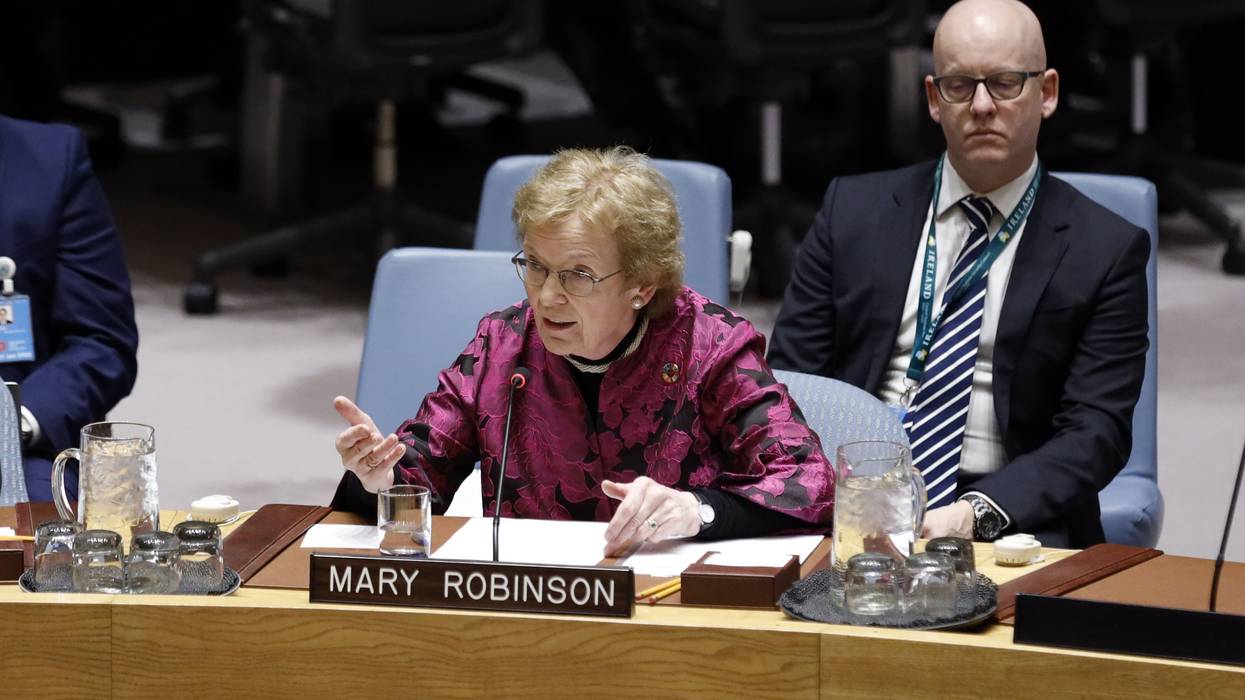
Former United Nations High Commissioner for Human Rights Mary Robinson is urging the European Union to step up and lead the way on combating the climate emergency in the face of U.S. President Donald Trump's efforts to dismantle the U.S. response to the crisis. Her remarks come as congressional Republicans are moving ahead with a plan to scale back Democrats' signature climate law passed in 2022.
Speaking on a Thursday episode of the podcast "Radio Schuman" from Euronews, Robinson said that she is "hoping that there will be a sense that actually the E.U. now has an opportunity, because the United States is being badly led on climate, actually stupidly led on climate."
Robinson highlighted the fact that Trump signed an executive order on his first day in office withdrawing the United States from the Paris climate agreement, the global treaty aimed at reducing global greenhouse gas emissions, reprising a move from his first term in office. She also noted the Trump administration's efforts to undercut climate research. In April, the Trump administration dismissed hundreds of scientists and experts working on the 6th National Climate Assessment, the government's flagship climate report.
These moves from the U.S. come as the E.U. has tempered its climate ambitions.
When asked whether she's critical of how the E.U. is currently handling climate change, Robinson said that the "E.U. is taking a long time, and we would need to see leadership now, but it's better to get good leadership than rush leadership."
As part of an independent group of global leaders called The Elders, Robinson recently met with E.U. officials where she and her fellow leaders sought to "encourage Europe to step up."
"The E.U. should step up on climate and nature and fulfill the commitments that are necessary," she told the Euronews.
On top of the actions by the Trump administration Robinson highlighted, a GOP megabill currently making its way through Congress includes provisions that target the Inflation Reduction Act (IRA)—a move that green groups have slammed.
The House Energy and Commerce Committee has approved a portion of the bill that would take back billions of dollars in unspent funds from IRA grant programs, and Republicans on the House Ways and Means Committee are pressing ahead with a portion of the bill that repeals clean energy incentives under the IRA.
To step back from the precipice we are at, those in positions of power must show long-view leadership to build a better world for current and future generations. But time is running out.
Note: At the conclusion of their board meeting in São Paulo, The Elders this week called on world leaders to uphold international law and prioritize multilateral cooperation to build a better world for current and future generations. The following was their message to those leaders and the world at large.
The world stands on the edge of a precipice. The foundations of international law and multilateral cooperation are at serious risk of collapse due to cumulative failures of political leadership. We face the most perilous moment since the Second World War.
The United Nations and other institutions created to promote the stability and accountability that come through the rule of law are under attack. The growing climate of impunity for states and leaders, who show no respect for the principles on which they were founded, may take us to a point of no return.
The principles of the UN Charter risk being subsumed by aggressive nationalism and great power rivalry. This is not in any state’s long-term interest, given the existential threats to humanity that can only be tackled by global cooperation within a framework of agreed rules.
The rule of law must be applied consistently. Double standards allow autocrats to frame the universal values of human rights and international law enshrined in the UN Charter as Western constructs. They are not. They serve the interests of every country.
International law must be applied universally. No country is above the law. But the double standards being displayed by some states, particularly the most powerful, weaken the credibility of global institutions charged with upholding the rule of law.
Russia’s war on Ukraine remains an act of aggression against a sovereign state and a fundamental attack on the UN Charter with global ramifications. Russian leaders must be held accountable. We support the International Criminal Court’s (ICC) efforts to bring them to justice.
The ICC and the International Court of Justice are both fulfilling their mandates to hold parties in the Israel-Hamas conflict to account under international law.
We oppose any attempts to de-legitimize this work, and threats of punitive measures and sanctions against the ICC Prosecutor or other officials.
The rule of law must be applied consistently. Double standards allow autocrats to frame the universal values of human rights and international law enshrined in the UN Charter as Western constructs. They are not. They serve the interests of every country.
The crumbling of the international order can be seen in the proliferation of conflicts, neglected by the world’s leaders and media, affecting 2 billion people in countries including Myanmar, Sudan, the Democratic Republic of Congo and Haiti.
The failure last week to agree a new pandemics treaty for approval by the World Health Assembly is another example of weak leadership. Scientists are clear that we risk another lethal pandemic. The world has not learned the lessons from COVID-19. We urgently need leaders to engage directly to secure a global agreement to prepare for, prevent and respond to such pandemics, so the world can cope better next time.
With vital negotiations approaching on the future of the world’s climate and biodiversity, countries must have confidence that when they make agreements with each other, those commitments will be implemented.
Now is the time for leaders to be honest with their people. The unpredictability and instability that comes when the rule of law is not guaranteed threatens the security of all countries. In a year of multiple elections, citizens also have a responsibility to cast their vote wisely, choosing leaders who take a longer view of protecting their interests, and rejecting populists who exploit fears and foster division for short-term gain.
As we conclude our board meeting in Brazil, we look to the country’s leadership to seize the opportunities presented by November’s G20 Summit and the major climate conference (COP30) in 2025, to work with other countries on restoring the credibility of the multilateral system and the trust which underpins it.
To step back from the precipice we are at, those in positions of power must show long-view leadership to build a better world for current and future generations. But time is running out to strengthen the institutions that make possible the collaboration needed to do so.
The Elders are:
Mary Robinson, former President of Ireland and Chair of The Elders
Ban Ki-moon, former UN Secretary-General and Deputy Chair of The Elders
Graça Machel, Founder of the Graça Machel Trust, Co-founder and Deputy Chair of The Elders
Gro Harlem Brundtland, former Prime Minister of Norway and former Director-General of the WHO
Helen Clark, former Prime Minister of New Zealand and former head of the UN Development Programme
Elbegdorj Tsakhia, former President and Prime Minister of Mongolia
Zeid Ra'ad Al Hussein, former UN High Commissioner for Human Rights
Hina Jilani, Advocate of the Supreme Court of Pakistan and co-chair of the Taskforce on Justice
Denis Mukwege, physician and human rights advocate, Nobel Peace Laureate
Ellen Johnson Sirleaf, former President of Liberia and Nobel Peace Laureate
Juan Manuel Santos, former President of Colombia and Nobel Peace Laureate
Ernesto Zedillo, former President of Mexico
In his meetings with the U.S. leader, Ireland's prime minister must "make it clear that Israel depends on the United States for military aid and for money," said Robinson, a former Irish president.
The Elders chair Mary Robinson on Friday highlighted the unique leverage that the United States has with Israel and suggested that the Biden administration should stop giving the Middle Eastern nation military assistance for its assault on the Gaza Strip.
Robinson, the former president of Ireland, conducted an on-camera interview with Irish public broadcaster Raidió Teilifís Éireann just before her country's prime minister, Taoiseach Leo Varadkar, met with U.S. President Joe Biden at the White House.
"Yes the humanitarian situation is utterly catastrophic and dire, reducing a people to famine, undermining all our values, but the message I want to deliver on behalf of the Elders is a direct message to our Taoiseach Leo Varadkar," Robinson said.
"We need a cease-fire and we need the opening up of Gaza with every avenue... for aid to get in."
In his meeting with Biden, Varadkar "should not spend too much time on the dire humanitarian situation, and the ships, and the rest of it," she asserted. "He has the opportunity to deliver a political message in a very direct way. The United States can influence Israel by not continuing to provide arms. It has provided a lot of the arms... that have been used on the Palestinian people."
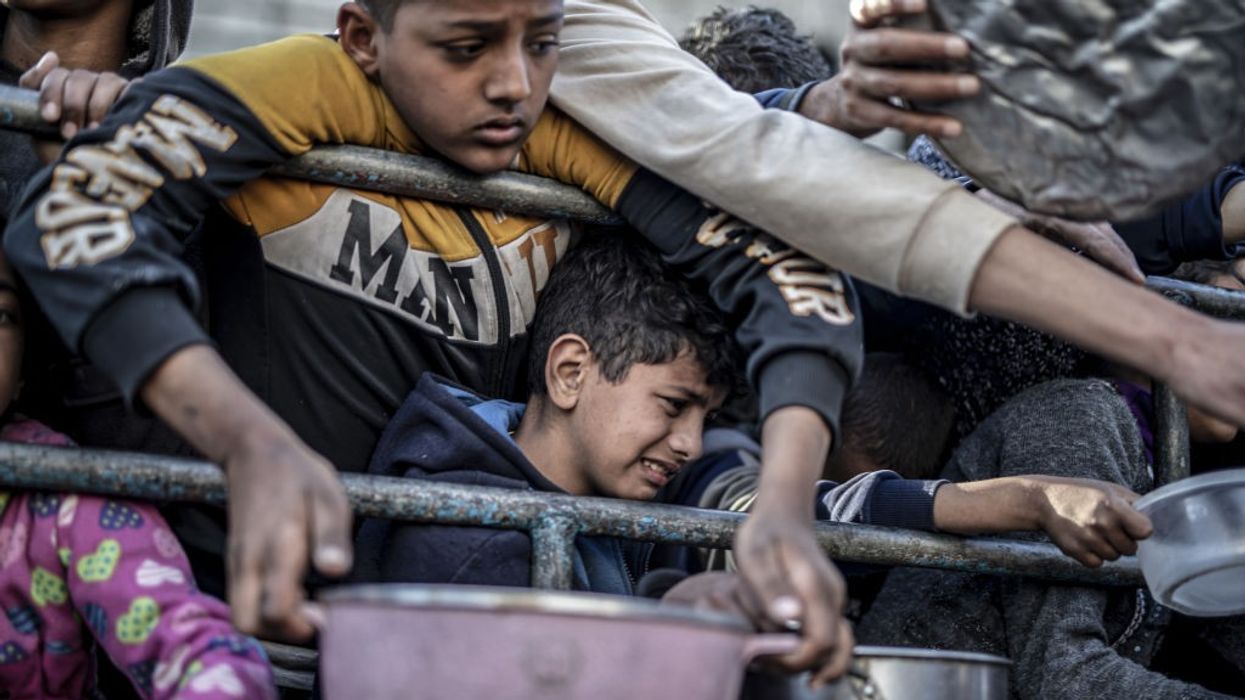
Since Israel declared war in response to the Hamas-led attack on October 7, Israeli forces have killed at least 31,490 people in Gaza—including people seeking food aid—and injured another 73,439. The assault has also devastated civilian infrastructure, including homes, hospitals, schools, and mosques, and displaced the vast majority of the enclave's 2.3 million residents.
Israel is also restricting desperately needed humanitarian aid into the Hamas-governed territory, and Palestinians have begun starving to death—which people around the world point to as further proof that the Israeli government is defying an International Court of Justice (ICJ) order to prevent genocidal acts as the South Africa-led case moves forward at The Hague.
The United States gives Israel $3.8 billion in annual military aid, and since October 7, Biden—who faces a genocide complicity case in federal court—has fought for another $14.3 billion while his administration has repeatedly bypassed Congress to arm Israeli forces. Critics, including some lawmakers, argue that continuing to send weapons to Israel violates U.S. law.
The far-right government of Israeli Prime Minister Benjamin Netanyahu "is on the wrong side of history, completely—is making the United States complicit in reducing a people to famine, making the world complicit," Robinson told RTÉ. "We're all watching. It is absolutely horrific what is happening."
Elders’ Chair Mary Robinson says President Biden should not continue to provide arms to Israel.
“The United States can influence Israel by not continuing to provide arms… The Government of Prime Minister Netanyahu is on the wrong side of history, completely. It’s making the… pic.twitter.com/fN3ptMjktz
— The Elders (@TheElders) March 15, 2024
"So Leo Varadkar has access today to President Biden," she said. "He must use this completely politically at all levels with the speaker of the House, with everyone, to make it clear that Israel depends on the United States for military aid and for money. That's what will change everything."
"We need a cease-fire and we need the opening up of Gaza with every avenue... for aid to get in, because the situation's so bad, and we need the political way forward, which is the two-state solution," she added. "So we need an Israeli government agreeing to that, and only the United States can put the pressure [on Israel]."
Robinson, who spent five years as the United Nations high commissioner for human rights after her presidency ended in 1997, has been part of the Elders since Nelson Mandela, the late anti-apartheid South African president, announced the group in 2007.
She has made multiple statements during the five-month Israeli assault on Gaza, including calling on Israel to comply with the ICJ's January ruling and warning Biden the previous month that his "support for Israel's indiscriminate bombing of Gaza is losing him respect all over the world."
"The U.S. is increasingly isolated, with allies like Australia, Canada, India, Japan, and Poland switching their votes in the U.N. General Assembly to support an immediate humanitarian cease-fire," she said in December. "The destruction of Gaza is making Israel less safe. President Biden's continuing support for Israel's actions is also making the world less safe, the Security Council less effective, and U.S. leadership less respected. It is time to stop the killing."
US President Joe Biden and Irish Prime Minister Leo Varadkar pledged to work to secure a ceasefire in the Israel-Hamas conflict as the humanitarian crisis in Gaza cast a shadow on the annual St. Patrick's Day reception at the White House https://t.co/gQBGDZZ4Ud pic.twitter.com/QGEPSzOk2G
— Reuters (@Reuters) March 15, 2024
Speaking to press at the Oval Office alongside Biden on Friday, Varadkar
said that he was "keen to talk about the situation in Gaza," and noted his view "that we need to have a cease-fire as soon as possible to get food and medicine in" to the besieged territory.
"On Sunday, the taoiseach will also gift Mr. Biden a bowl of shamrock as part of an annual tradition to mark St Patrick's Day," RTÉ reported Friday. "Mr. Varadkar started the trip on Monday, and since then has spoken several times... about how he will use the special platform of the St Patrick's Day visit to press Mr. Biden to back a cease-fire in the Gaza, while also thanking the U.S. for leadership in support for Ukraine."
"Given the staggering death toll—with more than 20,000 killed in over two months—and the horrifying scale of destruction and devastation in Gaza, this is simply unacceptable," said the head of Amnesty International.
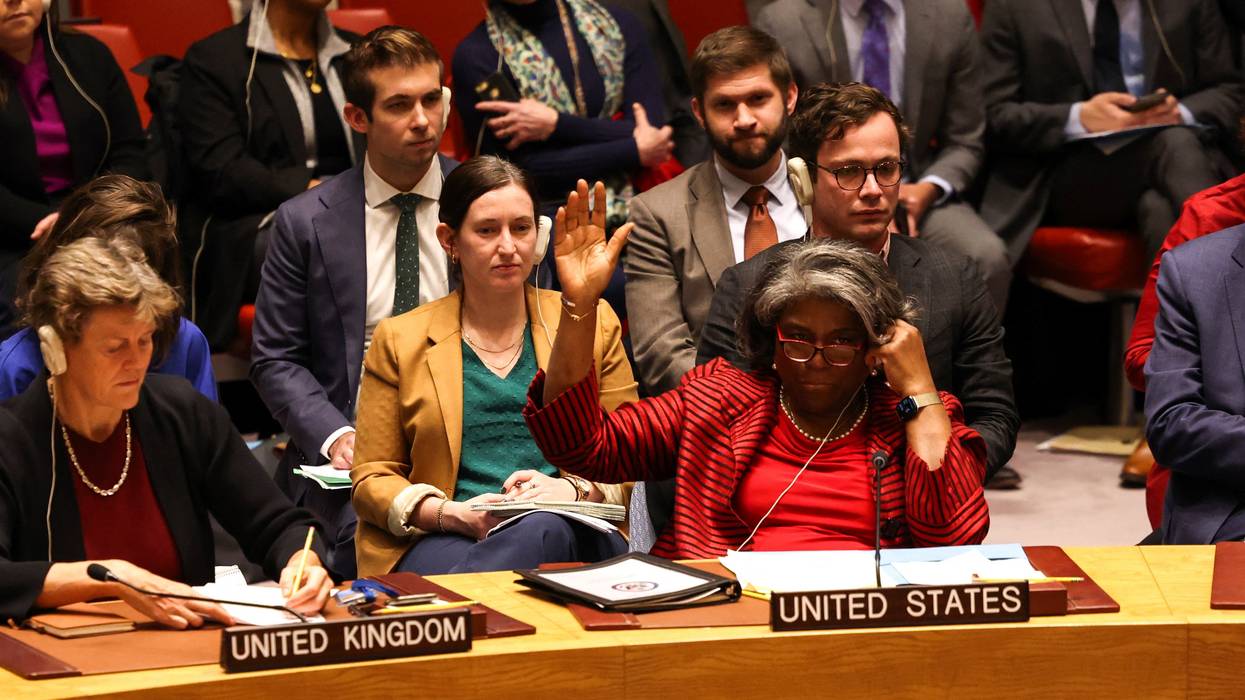
The United States on Friday abstained from voting on a U.N. Security Council resolution that it repeatedly stonewalled and lobbied to weaken in the face of intense international opposition as Israeli forces continue to kill hundreds of Palestinians daily.
The newly passed resolution—which was introduced by the United Arab Emirates—calls for "urgent and extended humanitarian pauses and corridors throughout the Gaza Strip for a sufficient number of days to enable full, rapid, safe, and unhindered humanitarian access."
Thirteen Security Council members voted in favor of the resolution. Russia joined the U.S. in abstaining.
The resolution calls for "urgent steps... for creating the conditions for a sustainable cessation of hostilities," language that's weaker than an earlier draft's call for an "urgent and sustainable cessation of hostilities."
"Biden's changes will help ensure that Israel's slaughter in Gaza continues while minimizing the U.N.'s insight into what increasingly appears to be a genocide."
Also removed from the final version was language condemning Israel's indiscriminate attacks on Palestinian civilians, tens of thousands of whom have been killed, wounded, or left missing during 77 days of Israeli onslaught.
The vote came just after Russia proposed an amendment that would have restored language calling for an "immediate cessation of hostilities" to the resolution. The U.S. vetoed the amendment.
Earlier this month, the U.S. vetoed a separate Security Council resolution calling for a Gaza cease-fire. That resolution was later approved by the U.N. General Assembly in a 153-10 vote.
"It is disgraceful that the U.S. was able to stall and use the threat of its veto power to force the U.N. Security Council to weaken a much-needed call for an immediate end to attacks by all parties," Amnesty International secretary-general Agnès Callamard said in a statement.
"This is a much-needed resolution—all efforts to address the unprecedented humanitarian catastrophe in Gaza must be welcomed—but it remains woefully insufficient in the face of the ongoing carnage and extensive destruction wrought by the government of Israel's attacks in the occupied Gaza Strip," Callamard continued. "Nothing short of an immediate cease-fire is enough to alleviate the mass civilian suffering we are witnessing."
"Given the staggering death toll—with more than 20,000 killed in over two months—and the horrifying scale of destruction and devastation in Gaza, this is simply unacceptable," she added.
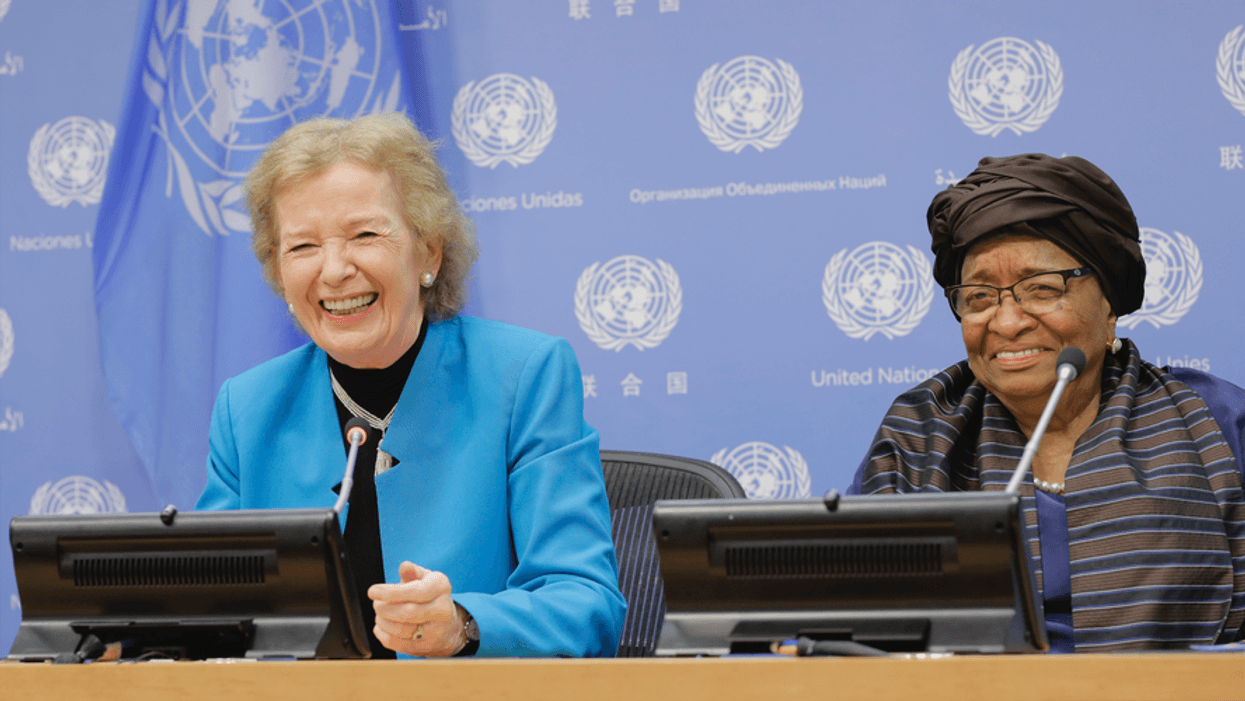
In a statement giving a "qualified welcome" to the resolution, Mary Robinson—a former U.N. high commissioner for human rights and Irish president who currently chairs The Elders—said: "Agreement on this weak and overdue U.N. Security Council resolution is better than another U.S. veto. But the test of the resolution's success will be how many lives are saved."
"The people of Gaza are facing starvation: they need food, not words," she added. "Neither Hamas nor Israel have complied with the previous resolution agreed last month. If the Security Council is to be credible, its members must push harder for implementation of its decisions."
Lamenting that the resolution "became increasingly meaningless" as U.S. President Joe Biden "managed to delete the call for suspension of hostilities," Trita Parsi, co-founder and executive vice president of the Quincy Institute for Responsible Statecraft, said on social media Friday that "Biden's changes will help ensure that Israel's slaughter in Gaza continues while minimizing the U.N.'s insight into what increasingly appears to be a genocide."
"Biden is effectively running war crimes management for Israel," he added.
"There are countries here with the capacity to ensure the outcome of this summit is historic for the right reasons," said Mary Robinson, chair of The Elders. "They need to lean in now with ambition and urgency."
With just two days left until the conclusion of the 28th United Nations Climate Change Conference in Dubai, climate justice advocates from the Global South on Sunday expressed alarm over the latest draft of the Global Goal on Adaptation, a document being negotiated at the summit as policymakers finalize an agreement on further progress that must be made to limit planetary heating.
African countries proposed a Global Goal on Adaptation (GGA) a decade ago, and a number of advocates warned Sunday that the document so far appears "vague," with insufficient financial pledges from fossil fuel-producing nations to help the Global South to adapt various sectors—including agriculture, water, and transportation—to the climate emergency.
"Across the world millions of people, most of whom are least responsible for carbon emissions, are attempting to adapt their lives and livelihoods to a distorted climate," wrote Mohamed Adow, founder and director of Power Shift Africa, at Climate Change News. "Although it isn't just about money, funding is important and severely lacking. The goal for 2023 was to raise $300 million for the Adaptation Fund, but at COP28 we've only seen $169 million in pledges, a mere 56% of the intended amount."
On social media, Simon Evans, deputy editor of Carbon Brief, provided an analysis of Sunday's draft, which he said was "very heavily qualitative, not quantitative" and includes only a "vague link to finance."
"Qualitative targets" in the text include "significantly reducing climate induced water scarcity" and "strengthening resilience"—phrases that "could mean almost anything," said Evans.
The draft reiterates an earlier call for wealthy nations to double adaptation finance by 2025, but only "urges" and "invites" governments to provide resources for developing countries that are disproportionately affected by climate-linked sea level rise, drought, and flooding—despite the fact that the entire continent of Africa is behind just 4% of planet-heating global greenhouse gas emissions.
The call to "urge" powerful countries to contribute meaningfully to a climate adaptation fund "is code for 'only if you feel like it, but no worries if you don't'," said Teresa Anderson, global climate justice lead for ActionAid.
"Overall, the text is weak and doesn't sufficiently address the aspiration for setting the required adaptation measures and indicators and mobilizing adaptation financing," said Adow.
The U.N. Environment Program said in November that between $215 billion and $387 billion is needed annually to help the Global South adapt their infrastructure to the climate crisis. In 2021, just $21 billion was provided.
While developed countries "have committed to at least double adaptation finance by 2025," said Obed Koringo of CARE Denmark, "a detailed roadmap is the only way to achieve this. This must set out what individual developed countries plan to provide by 2025 and how this adds up to $40 billion annually."
"It is disappointing to see that negotiations on adaptation are hurtling towards a damaging global failure," said Koringo. "We are afraid that it will have catastrophic consequences for communities on the frontlines of the climate crisis, especially in Africa... Failure to invest in adaptation, including early warning systems, flood defenses, and drought-resistant crops, will only increase the costs of loss and damage in the long run."
African policymakers this weekend also continued to sound alarms over the language being negotiated for the Global Stocktake (GST), the document that's expected to direct countries on how to proceed to limit planetary heating. Climate campaigners have joined experts in demanding a phaseout of fossil fuels, but European and American negotiators have pushed for language that would call only for a "phasedown," and fossil fuel-producing countries are demanding that the agreement address only "unabated" emissions—allowing for failed technical fixes like carbon capture instead of moving to reduce emissions altogether.
"Allowing 'abated' fossil fuels will mean developed countries which can afford expensive carbon capture technologies can keep expanding," chief Egyptian negotiator Mohamed Nasr told The Guardian.
Mary Robinson, chair of The Elders, called on governments including Saudi Arabia, the U.S., and the E.U to "abandon their subterfuge" and stop "obstructing a livable future."
"I fear COP28 is falling short of what is required to stay within the 1.5°C warming threshold. The science tells us we are in grave danger of bequeathing our children a completely unlivable world," said Robinson. "There are countries here with the capacity to ensure the outcome of this summit is historic for the right reasons. They need to lean in now with ambition and urgency. COP28 presents an opportunity for leaders to be on the right side of history."
"Governments must not leave this summit without an agreement to phase out all fossil fuels," she said, "and this agreement must not be at the expense of other critical workstreams here."
Thunberg said Russian forces "are deliberately targeting the environment and people's livelihoods and homes."
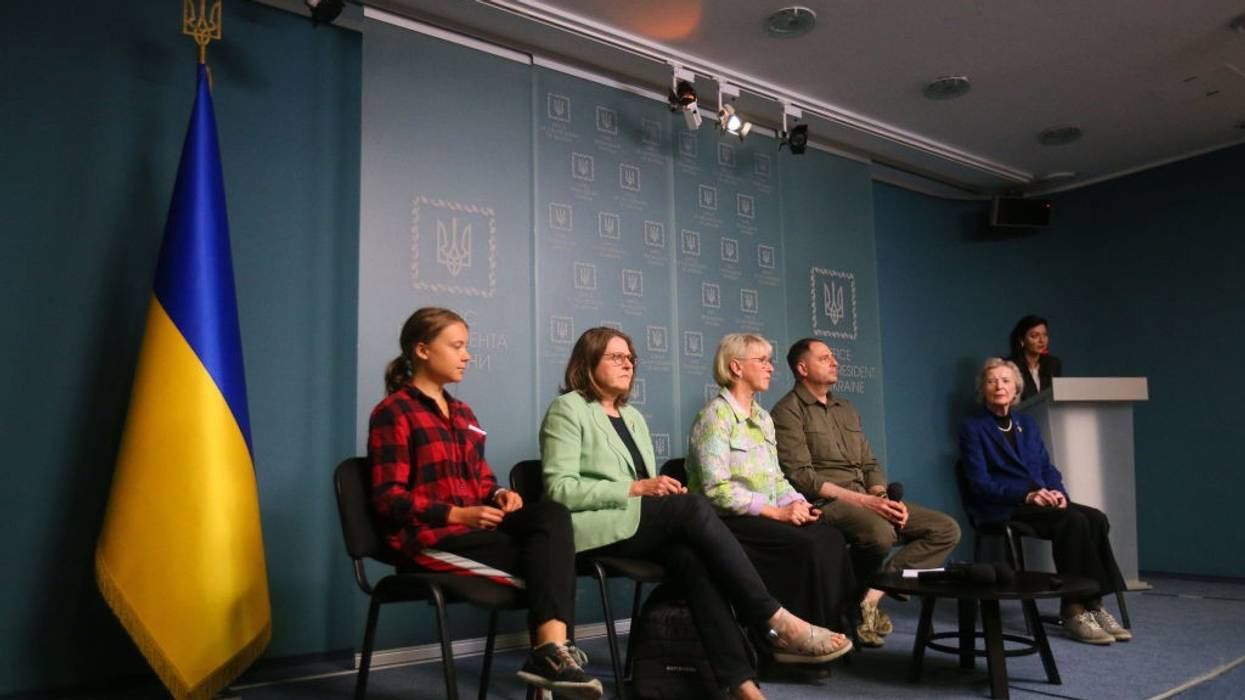
Swedish climate activist Greta Thunberg condemned the "ecocide" wrought by Russia's invasion of Ukraine as she visited Kyiv Thursday.
Thunberg was there to meet with Ukranian President Volodymyr Zelenskyy as part of a newly formed working group with other European leaders to assess and remedy the ecological destruction caused by the war.
"Ecocide and environmental destruction is a form of warfare… as Ukrainians by this point know all too well—and so does Russia," Thunberg said at a press conference reported by The Journal.
"I do not think that the world reaction to this ecocide was enough."
Thunberg added that Russian forces "are deliberately targeting the environment and people's livelihoods and homes. And therefore also destroying lives. Because this is after all a matter of people," according to The Associated Press.
The goal of the working group is to investigate the extent of ecological damage in Ukraine, determine ways of holding Russia to account, and start to repair the damage. In addition to Thunberg, members include former Swedish Deputy Prime Minister Margot Wallström, European Parliament Vice President Heidi Hautala, and former Irish President Mary Robinson.
"The environment should no longer be the silent victim of war," Ukraine's prosecutor general Andriy Kostin tweeted Thursday on the occasion of the meeting.
Kostin said that the war had seeded around 30% of Ukraine's land area with explosives and damaged more than 2.4 million hectares of forest.
"The blowing up of the Kakhovka Dam caused the most significant environmental disaster in Ukraine since Chernobyl," he added.
The June 6 dam collapse flooded large swaths of territory in southern Ukraine and the Russian-occupied region of Kherson, Reuters reported. The collapse killed dozens, forced around 2,200 people from their homes in Ukrainian-controlled territory, spilled hundreds of tons of engine oil into the Dnipro River, and threatened drinking water supplies, according to The Journal and Doctors of the World. The incident initially severely affected around 17,000 people and could impact more than 42,000. Both Russia and Ukraine have blamed the other for the collapse, Reuters reported.
Thunberg also criticized the international community for their response.
"I do not think that the world reaction to this ecocide was enough," she said. "We have to talk louder about it, we have to raise awareness about what is going on."
Kostin said that Ukraine was the first country to prosecute environmental war crimes and ecocide "on a massive scale."
Ukraine is investigating more than 200 war crimes against the environment and 15 incidents of ecocide, he said.
"We call for strengthening international efforts to investigate and prosecute Russia's war crimes against the environment and to ensure that the aggressor pays for the enormous damage caused by these crimes," he tweeted.
Zelensky said the working group was "a very important signal of supporting Ukraine," The Journal reported. "It's really important, we need your professional help."
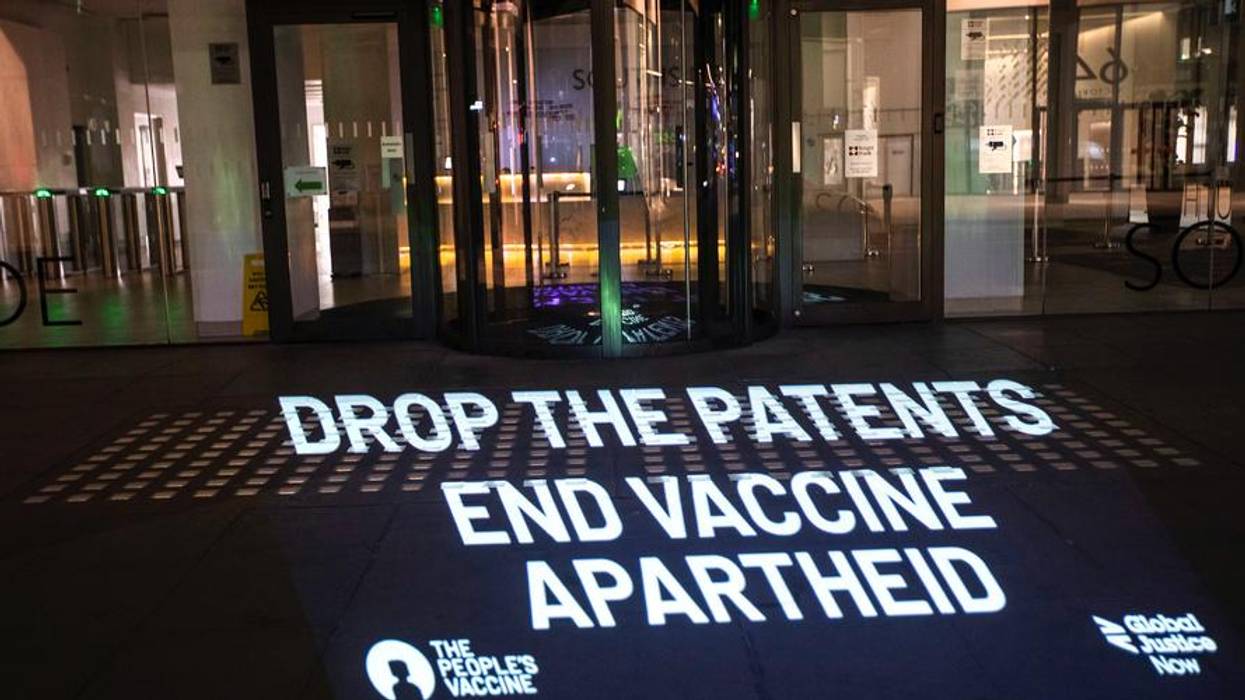
Calling on U.S. President Joe Biden to prioritize human need over corporate greed, more than 170 Nobel laureates and former heads of state and government on Wednesday sent an open letter urging him to back a waiver of intellectual property rules so that developing nations can ramp up coronavirus vaccine production and pursue a people's vaccine to help end a pandemic that has now claimed nearly three million lives.
"We will not end today's global pandemic until rich countries--most especially the United States--stop blocking the ability of countries around the world to mass produce safe and effective vaccines."
--Francoise Barre-Sinoussi,
Nobel laureate
Signers of the People's Vaccine Alliance letter--who include former Irish President Mary Robinson, former Liberian President Ellen Johnson Sirleaf, and former Soviet Union President Mikhail Gorbachev, as well as Nobel laureates including Joseph Stiglitz, Mairead Maguire, and Jody Williams--say they are "gravely concerned by the very slow progress in scaling up global Covid-19 vaccine access and inoculation in low- and middle-income countries."
"The world saw unprecedented development of safe and effective vaccines, in major part thanks to U.S. public investment," the letter states. "We all welcome that vaccination rollout in the U.S. and many wealthier countries is bringing hope to their citizens. Yet for the majority of the world that same hope is yet to be seen. New waves of suffering are now rising across the globe. Our global economy cannot rebuild if it remains vulnerable to this virus."
The letter continues:
But we are encouraged by news that your administration is considering a temporary waiver of World Trade Organization (WTO) intellectual property rules during the Covid-19 pandemic, as proposed by South Africa and India, and supported by more than 100 WTO member states and numerous health experts worldwide. A WTO waiver is a vital and necessary step to bringing an end to this pandemic. It must be combined with ensuring vaccine know-how and technology is shared openly.
This can be achieved through the World Health Organization Covid-19 Technology Access Pool, as your chief medical adviser, Dr. Anthony Fauci, has called for. This will save lives and advance us towards global herd immunity. These actions would expand global manufacturing capacity, unhindered by industry monopolies that are driving the dire supply shortages blocking vaccine access.
Nine in 10 people in most poor countries may well go without a vaccine this year. At this pace, many nations will be left waiting until at least 2024 to achieve mass Covid-19 immunization, despite what the limited, while welcome, COVAX initiative is able to offer.
"With your leadership, we can ensure Covid-19 vaccine technology is shared with the world," the letter to Biden concludes. "Supporting the emergency waiver of Covid-19-related intellectual property rules will give people around the globe a chance to wake up to a world free from the virus. We need a people's vaccine."
Letter signatory Francoise Barre-Sinoussi, winner of the 2008 Nobel Prize in Physiology or Medicine for co-discovering the human immunodeficiency virus (HIV), said in a statement that "we will not end today's global pandemic until rich countries--most especially the United States--stop blocking the ability of countries around the world to mass produce safe and effective vaccines."
"Big pharmaceutical companies are setting the terms of the end of today's pandemic--and the cost of allowing senseless monopolies is only more death and more people being pushed into poverty."
--Muhammad Yunus,
Nobel laureate
"Global health is on the line," she added. "History is watching. I, with my fellow laureates and scientists across the globe, urge President Biden to do the right thing and to support the TRIPS waiver, insist on pharmaceutical corporations to share vaccine technologies with the world, and strategically invest in distributed production."
Muhammad Yunus, who won the Nobel Peace Prize in 2006 for establishing the micro-lending Grameen Bank in Bangladesh, said that "big pharmaceutical companies are setting the terms of the end of today's pandemic--and the cost of allowing senseless monopolies is only more death and more people being pushed into poverty."
"Only government action--not philanthropy, and not the private sector--can solve today's unprecedented crisis," added Yunus. "We together urge President Biden to stand on the right side of history--and ensure a vaccine is a global common good, free of intellectual property protections."
The world leaders' and Nobel laureates' letter came on the same day that an international coalition of 250 civil society groups urged the head of the World Trade Organization to embrace a temporary suspension of coronavirus vaccine-related patents.
A group of prominent former world leaders on Thursday expressed "deep concern" over President Donald Trump's refusal to concede defeat to President-elect Joe Biden in the U.S. presidential election, warning that his failure to do so is "putting at risk the functioning of American democracy."
The Elders--a group that includes numerous former heads of state and government, as well as cabinet ministers, diplomats, activists, two former United Nations secretaries-general, and seven Nobel Peace Prize recipients--issued a statement decrying the "continued assertions of electoral fraud" by Trump, leading members of his administration, and the Republican Party.
"Continued baseless accusations of subversion risk further deepening the instability and polarization in American society, and eroding public faith in institutions that is the bedrock of democratic life."
--The Elders
Such allegations lack "any compelling evidence" and "convey a lack of respect for the integrity and independence of the democratic and legal institutions of the United States," the group said.
Warning of "far-reaching consequences beyond the United States' borders," The Elders said "those who stand to benefit from the current impasse are autocratic rulers and malign actors who wish to undermine democracy and the rule of law across the world."
"Notwithstanding any continuing legal challenges, President Trump should follow the example set by his predecessors and declare himself willing to accept the verdict cast by the American people at the ballot box," the group added. "The executive powers available to the president until his successor assumes office... should be used judiciously in the interests of the whole United States, rather than for partisan gain."
"Continued baseless accusations of subversion risk further deepening the instability and polarization in American society, and eroding public faith in institutions that is the bedrock of democratic life," it warned.
Mary Robinson, chair of The Elders and a former Irish president, added: "It is shocking to have to raise concerns about U.S. democratic processes as The Elders have previously commented on volatile and undemocratic situations in states such as Kenya, Sri Lanka, and Zimbabwe."
"President Trump's refusal thus far to facilitate a smooth transition weakens democratic values," stressed Robinson. "His fellow Republicans must now affirm their faith in the U.S. Constitution, democratic institutions, and the rule of law, so the country can begin a process of reconciliation."
This is the second time The Elders have weighed in on the U.S. presidential election this week. On Monday, the group released a statement congratulating Biden and Vice President-elect Kamala Harris on their victory and expressing hope that "the incoming administration, as well as seeking to unite a divided country, will seize the opportunity to renew America's commitment to the multilateral system at a time when U.S. leadership is urgently needed."
"This includes taking a leading role in efforts to keep global temperature rises to 1.5 degrees Celsius by recommitting the U.S. to the Paris climate agreement, supporting global collaboration on tackling Covid-19 by reversing plans to withdraw funding for the World Health Organization, and prioritizing the strengthening of nuclear arms controls," the statement said.
Created in 2007 by anti-apartheid activist, Nobel Peace Laureate and former South African President Nelson Mandela, The Elders works to promote "a world where people live in peace, conscious of their common humanity and their shared responsibilities for each other, for the planet, and for future generations."
Current members include former U.N. Secretary General Ban Ki-moon, former Mexican President Ernesto Zedillo, and former Liberian President and Nobel Peace Laureate Ellen Johnson Sirleaf. Among the group's former members are four Nobel Peace Prize recipients: former U.S. President Jimmy Carter, South African archbishop and anti-apartheid activist Desmond Tutu, former U.N. Secretary-General Kofi Annan, and former Finnish President Martti Ahtisaari.
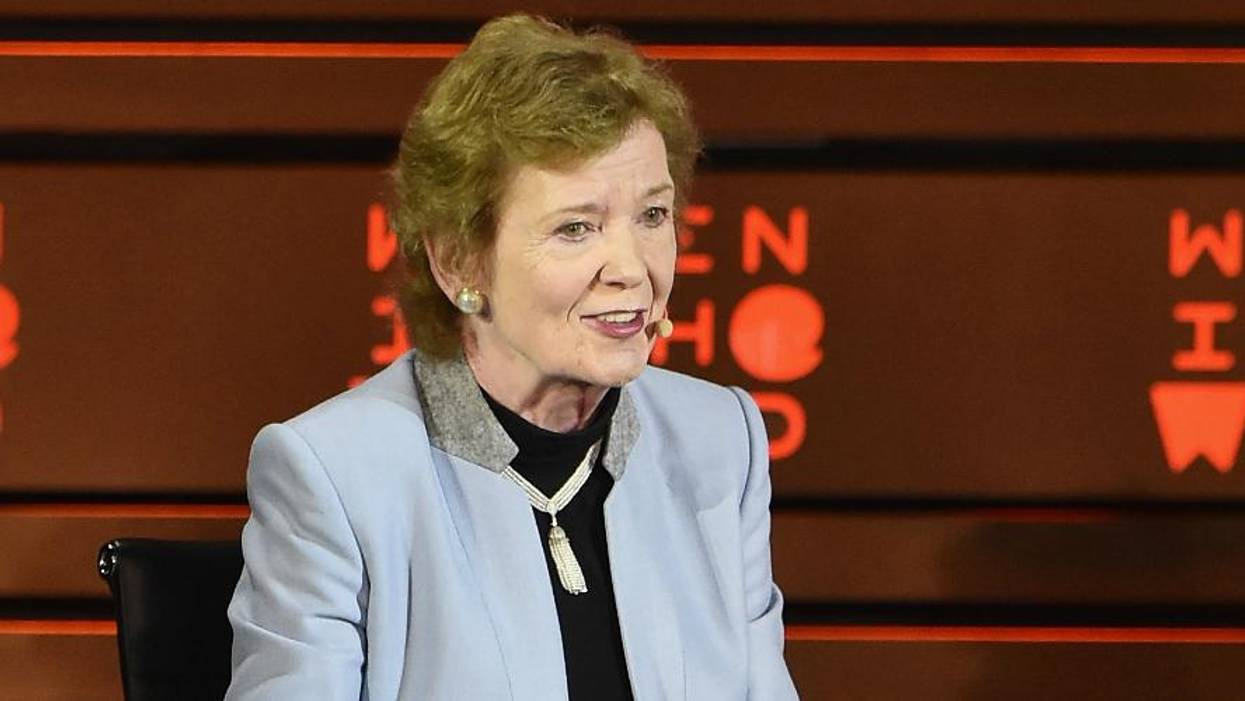
Echoing what other critics stated last week, former Irish president Mary Robinson on Monday warned that while some forms of "disruption" are necessary and good, it will set the global climate movement backwards if Extinction Rebellion activists or others "alienate the public" by taking aim at the wrong targets or make unforced tactical mistakes.
"So far, on the whole, they have been quite clever, they've been funny," said Robinson during a talk at the at the Aurora Forum in Armenia on Monday when asked about Extinction Rebellion (XR)--a movement launched last year which has staged coordinated direct actions around the globe in recent weeks.
"They've been apologetic for the disruption caused because they don't want to alienate the public," Robinson added. "But then there are some who want to go further. I think it is very, very important that the public display of disruption is seen by the public as being in their interests, and that has happened. But if they lose that, that would be very serious."
Unlike other climate campaigners, XR has made social disruption--including blocking roads, access to corporate or government buildings, and shutting down airport terminals--the driving force of its activism.
Last week, when a small group of XR-affiliated demonstrators shut down a commuter train during morning rush-hour there was immediate pushback from within the organization and without. As Common Dreams reported Friday:
Commuters' furious reaction to the protest appeared to validate concerns that the action would alienate potential and necessary working-class allies and fuel perception of the movement as out of touch with the material concerns of vulnerable people.
In the early hours of Thursday morning, several XR-aligned activists climbed atop an electric train at Canning Town station in London and glued themselves to one car. As commuters filled the platform, many shouted at the demonstrators and one man dragged an activist off the train.
"I need to get to work! I have to feed my kids!" one person yelled from the packed platform.
Speaking of the broader climate justice movement, including the global #FridaysforFuture and #ClimateStrike movement inspired by Swedish activist Greta Thunberg and other students, Robinson said "what they're saying--which is correct--is that we, the adults in this world, are not guaranteeing them a safe future; a livable future."
Robinson, the former special UN envoy on climate and the environment, said she was at the General Assembly in New York City last month when Thunberg spoke to those world leaders gathered for the Climate Action Summit.
"And when I heard [Thunberg] say, 'You have stolen my childhood'--a 16-year-old--I cried, actually," Robinson said. "I thought, this is not fair."
With global inaction still ruling the day, Robinson suggests these massive grassroots efforts around the world are more necessary than ever.
"I see no significant move on the part of emitters to change," she said. "So now I feel it's time for disruption--and disruption takes many forms."
"Disruption can be litigation, disruption can be shareholder questions at meetings, disruption of a very effective thought can be when investors are warning about being invested in stranded assets," Robinson continued. "Disruption can be bottom up the schoolchildren, the young people, the Extinction Rebellion, the women leaders. But most effective is the investors. If they can really move that needle, it can move very fast."
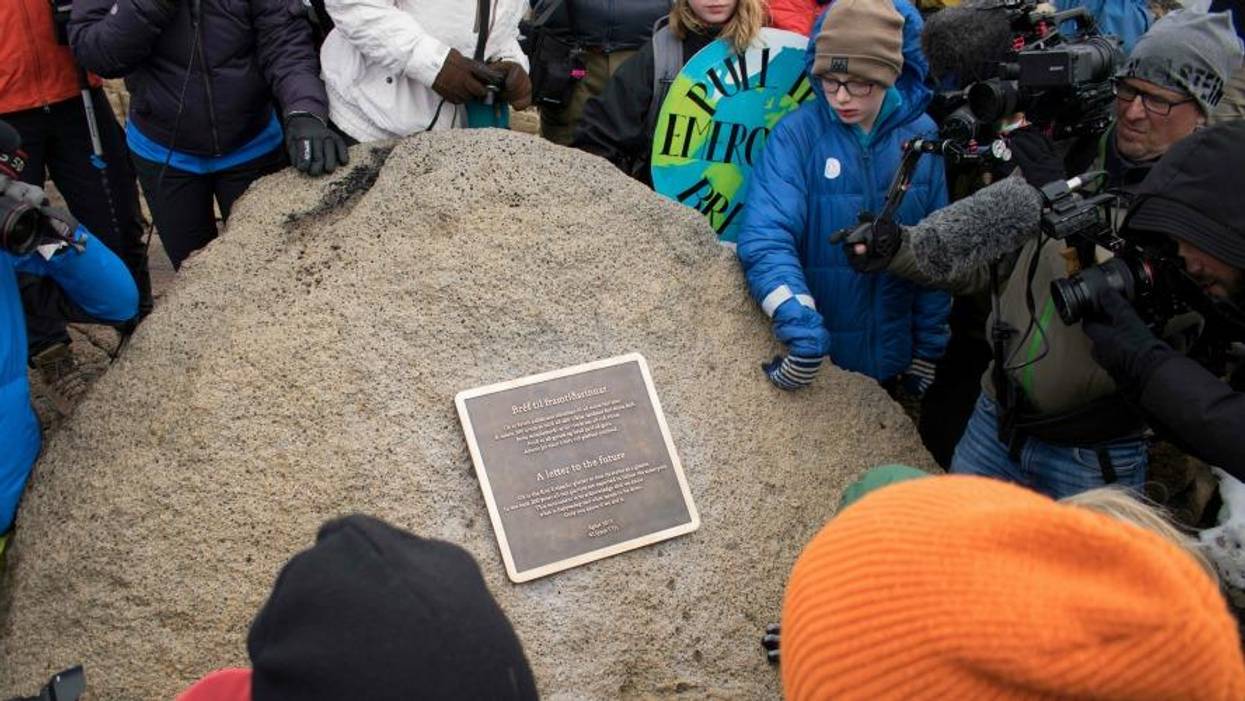
Gathering on a vast rocky landscape which until recent years was covered in a thick sheet of ice, Icelanders on Sunday took part in what was both a show of mourning and a call to action as they held a funeral for the country's first glacier to be lost to the climate crisis.
About 100 people marched to the top of what used to be the Okjokull glacier, commonly called Ok, led by the country's president and a number of climate researchers who have warned that the loss of the glacier is a sign of things to come if world governments fail to stop the planet's temperature from warming.
"The symbolic death of a glacier is a warning to us, and we need action," former Irish president Mary Robinson said at the event.
Alongside a group of climate action advocates carrying signs reading, "Pull the emergency brake" and "Not OK," President Katrin Jakobsdottir, Robinson, and Icelandic geologist Oddur Sigurdsson helped to place a plaque on a formerly-icy rock, commemorating Okjokull.
Speaking to Time, Jakobsdottir pointed out how the loss of glaciers may be destructive to the burgeoning renewable energy sector--which climate action groups are pushing governments to shift towards in order to cut carbon emissions to net zero in the coming decades.
"If the predictions of the scientists, if we see them happening, we will see other glaciers disappear in the next decades and centuries," said Jakobsdottir, "which is obviously a very big thing for our landscape, nature, ecosystems, but also our energy system, because we produce renewable energies from the glacial rivers."
As Common Dreams reported last month, the text on the plaque was written by Icelandic author Andri Snaer Magnason.
"This monument is to acknowledge that we know what is happening and what needs to be done," reads the plaque, addressed to those who may come across it in future centuries. "Only you know if we did it."
The rock is now also labeled with the measurement "415 ppm CO2"--the level of carbon that was detected in the Earth's atmosphere in May.
At the time, one journalist at TechCrunch wrote that the record-breaking level of CO2 was "yet another indication of the unprecedented territory humanity is now charting as it blazes new trails toward environmental catastrophe."
Okjokull's funeral was held days after the U.S. weather and atmospheric monitoring agency NOAA reported that July 2019 was the hottest month on record, since it began recording global temperatures in 1880.
Scientists announced in 2014 that Okjokull would no longer be considered a glacier, after its size measured at less than half of one square mile. In 1890, the glacier covered more than six square miles.
Glacier experts say that at the current rate of global warming, Iceland could lose the more than 400 glaciers which cover over 10 percent of the country by 2200.
"I hope this ceremony will be an inspiration not only to us here in Iceland but also for the rest of the world," Jakobsdottir told AFP, "because what we are seeing here is just one face of the climate crisis."