SUBSCRIBE TO OUR FREE NEWSLETTER
Daily news & progressive opinion—funded by the people, not the corporations—delivered straight to your inbox.
5
#000000
#FFFFFF
To donate by check, phone, or other method, see our More Ways to Give page.

Daily news & progressive opinion—funded by the people, not the corporations—delivered straight to your inbox.
"We must create effective and humane pathways for those seeking refuge to reduce the need for dangerous crossings and prevent further tragedies."
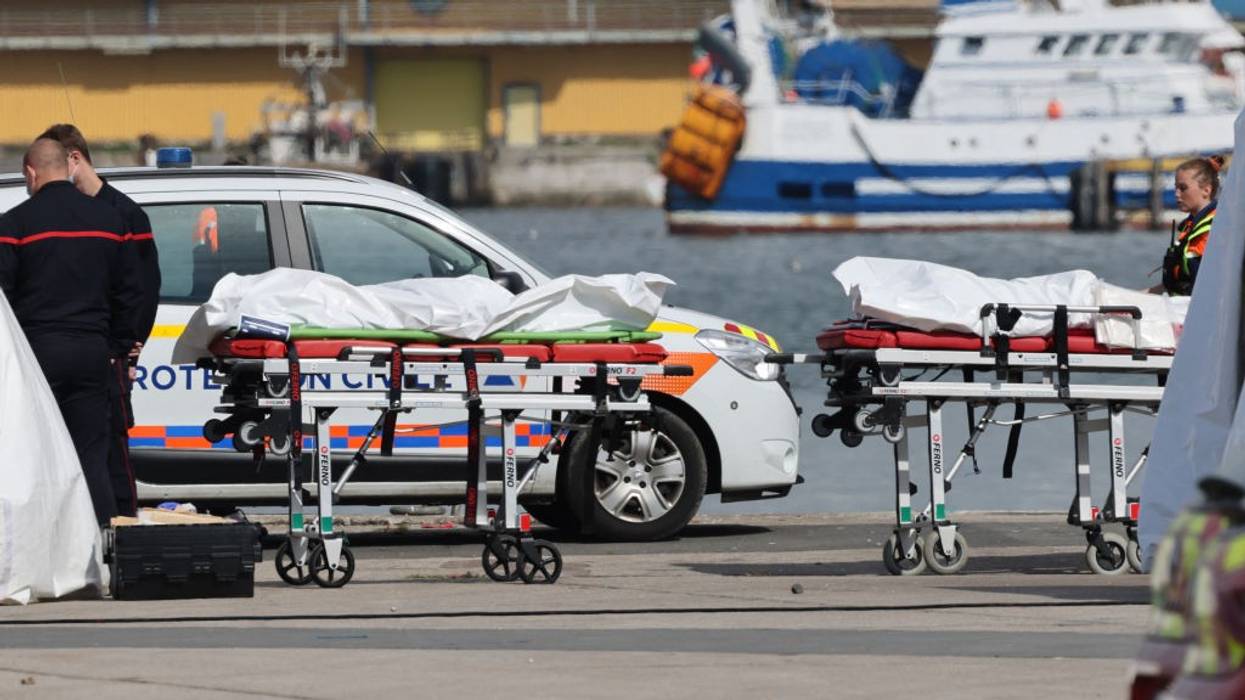
A small boat carrying migrants in the English Channel sank off the coast of France on Tuesday, leading to at least 12 deaths, mostly of women and girls.
Ten of the dead were female, one of whom was pregnant, and six were minors; they were of "primarily of Eritrean origin," a French prosecutor told reporters, according to The Guardian. The boat, which was about 23 feet long, was carrying roughly 70 passengers when the bottom collapsed. Most of them were rescued, and at least two people are in critical condition.
The overcrowded boat was bound for England but didn't make it far after setting off from the French coast, where migrants from war-torn countries in Africa, the Middle East, and elsewhere tend to gather in makeshift camps as they try to make it to the United Kingdom to claim asylum there. The boat "ripped open" near the Cap Gris-Nez, a cape whose cliffs mark the closest spot in France to England, with Dover just about 20 miles away.
The accident is the latest in a series of migration disasters in the channel in recent years. U.K. Prime Minister Keir Starmer, whose Labour Party has been in power since July, has declared a crackdown on 'gangs' involved in smuggling, but rights groups in the U.K. on Tuesday called for a broader set of reforms, including safe alternative routes into the country.
"In addition to taking action against the criminal gangs themselves, the [U.K.] government must develop a plan to improve and expand safe routes for those seeking safety," Enver Solomon, chief executive of Refugee Council, said in a statement.
"People risk their lives out of desperation, fleeing violence and persecution in countries like Afghanistan, Syria, and Sudan in search of safety," Solomon said. "We must create effective and humane pathways for those seeking refuge to reduce the need for dangerous crossings and prevent further tragedies."
Amnesty International U.K. refugee and migrant rights director Steve Valdez-Symonds agreed, arguing in a statement that "no amount of 'smash the gangs' policing and government rhetoric is going to stop these disasters from unfolding time and again if the needs of people exploited by those gangs remain unaddressed."
Wanda Wyporska, CEO of Safe Passage, also emphasized the need for safe routes.
"Today's tragedy must be the last," she said in a statement. "Without safe alternatives to reach protection in the U.K., people fleeing war and persecution will continue to make dangerous journeys at the hands of smugglers as they have no other choice. We must not accept this government's refusal to prioritize opening new safe routes."
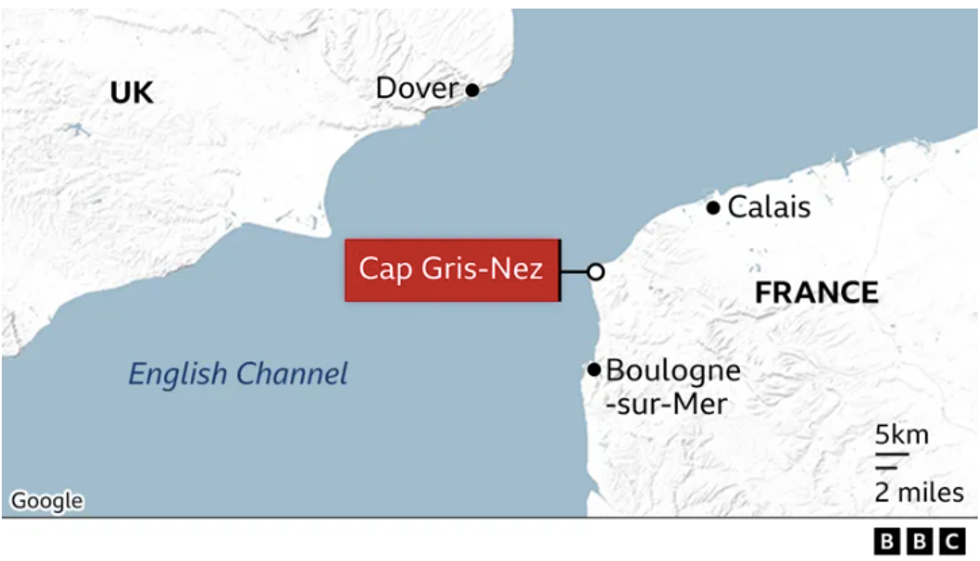
Roughly 20,000 people have come to England by crossing the channel on small boats this year, according to U.K. government data. More than a dozen have died while trying to cross, including nine since the start of July.
The channel is a busy shipping zone with unpredictable weather, where small boat accidents are common. In November 2021, 27 people died in frigid waters off of Calais, France, after their dinghy deflated, and other such tragedies with smaller death tolls have followed over the last three years.
The Conservative-led U.K. government established a fiercely anti-migrant position and even set up a controversial system to transfer asylum-seekers to Rwanda. Labour abandoned the Rwanda deportation program and directed its antagonism at people smugglers. Progressives have, however, cautioned that overzealous policing of smuggling can led to migration itself being prosecuted.
Rights groups have emphasized that people who take boats to the U.K. overwhelmingly intend to enter a legal asylum process. More than 90% people who've arrived in the U.K. on small boats since 2018 claimed asylum, and of those who had received a decision by March, about 75% were successful, according to a recent analysis by the Migration Observatory at Oxford University.
Many of the people on the small boat crossings are from Eritrea, Afghanistan, Albania, Iraq, Iran, Sudan, and Syria. Eritrea, a country in the Horn of Africa, gained independence from Ethiopia in the early 1990s and has since been plagued by conflict and human rights abuses. The authoritarian government has a mandatory military conscription policy that drives people from the country; the conditions of service are extremely harsh and torture has been alleged.
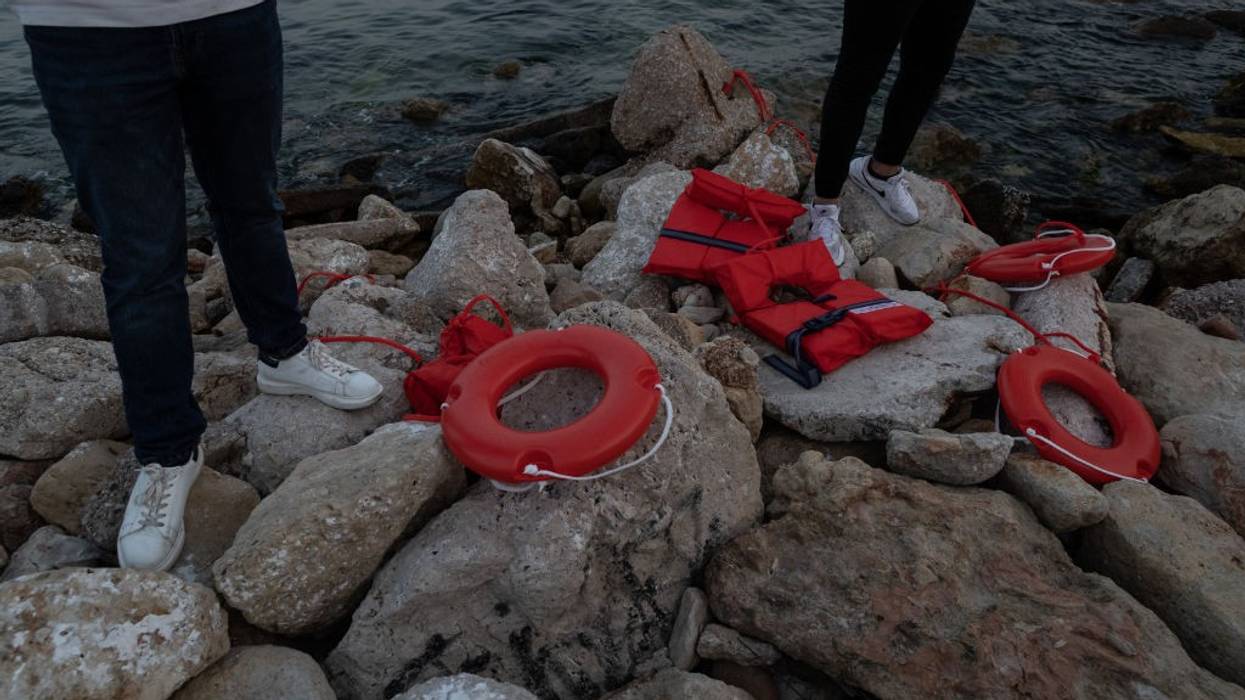
Only eight of the migrants on board the small boat on Tuesday wore life vests, officials said. Smugglers often use boats that are not seaworthy, as they wouldn't want to lose a valuable asset, and they crowd the boats to maximize their profits.
Following the incident, Gérald Darmanin, France's outgoing interior minister, called for a new migration treaty with the U.K. to create legal pathways for migrants.
French and U.K. governments, largely tilting right on immigration in the last decade, have worked together to limit the flow of people to Britain by, for example, increasing security at the border crossing at Calais. The two countries signed a $576 million deal last year that rights groups called racist and illegal.
Many migrants prefer the U.K. to continental Europe because they have family connections there or because of their language skills, among other reasons.
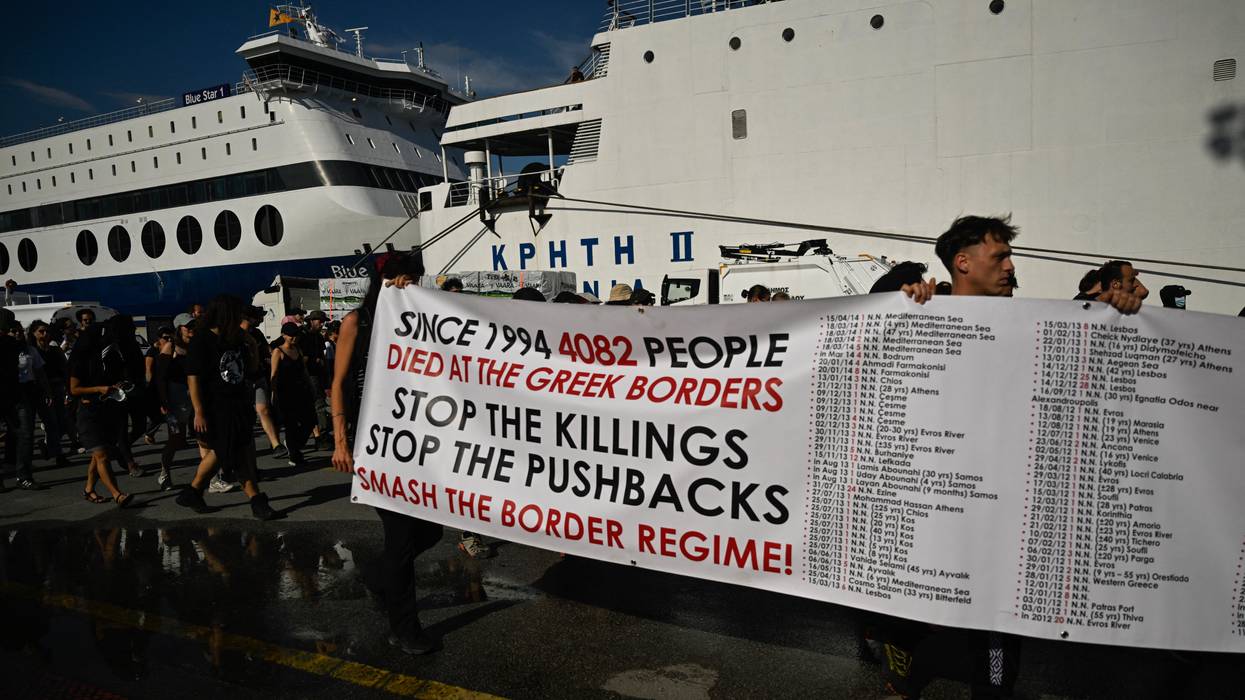
"The Greek authorities' response to the Pylos tragedy is a crucial test of their willingness to investigate human rights violations against racialized people on the move," said one researcher at Amnesty International.
Six months after a boat carrying 750 migrants and asylum-seekers capsized off the coast of Pylos, Greece, two international human rights organizations said Thursday that Greek authorities have failed to deliver justice and get to the bottom of how the shipwreck happened.
The boat sank on June 14, killing more than 600 people.
Amnesty International and Human Rights Watch (HRW) interviewed 21 of the 104 survivors as well as five relatives of victims who have not yet been found, representatives of the Hellenic Coast Guard, and international aid groups—and determined that Greek authorities failed to mobilize "appropriate resources for a rescue" as they "ignored or redirected" offers of help from the European Union as the boat approached Greece.
The fishing trawler was "severely overcrowded" with men, women, and children traveling from countries including Syria, Egypt, and Pakistan, when it set sail from Libya in June.
The boat was reportedly bound for Italy, but entered the Hellenic Coast Guard's search-and-rescue region in the Mediterranean Sea several days after leaving Libya. The marine authority was alerted to the Adriana's presence about 15 hours before it sank, but Amnesty and HRW found in its interviews that despite learning that the boat was in possible danger of sinking, the Coast Guard did not take action to avert disaster.
"At several points, the Coast Guard received information about conditions on the boat that Amnesty International and Human Rights Watch believe should have been interpreted as indicators of distress as set out in E.U. law and that trigger the duty to rescue under E.U. and international law of the sea," reads the groups' report. "At 12:47 EEST, [E.U. border agency] Frontex told the Greek authorities that the boat was heavily overcrowded and no one was wearing life jackets."
An activist who was in touch with people on the boat also reported on social media that at least six people had died aboard the Adriana, and the captain of another nearby tanker told the Hellenic Coast Guard the fishing trawler was "rocking dangerously."
But the groups found that the Coast Guard sent a rescue vessel equipped with just 43 life jackets, eight life preserver rings, two inflatable life boats with room for 39 people, and one auxiliary inflatable raft—supplies that would have left hundreds of people on the boat without any way of getting to safety if they'd been used.
Frontex confirmed to the two groups that it twice offered aerial support to the Greek authorities, and that its calls went unanswered.
Eleven of the survivors told Amnesty and HRW that the Coast Guard "attached a rope to the Adriana and accelerated, causing the boat to veer in various directions before capsizing."
A survivor named Gamal told the groups that as the Greek boat approached the Adriana, he was sitting on the roof.
"I was so excited, I wanted to see those people who came to rescue us," he said. "When they tied the rope... they pushed our boat to the left very fast... They go left, the boat sinks left, then they go right, the ship sinks more on the right."
Greek officials have denied making a failed rescue attempt, and have claimed that people aboard the Adriana "rejected assistance"—an allegation which, if true, "does not relieve competent authorities on the scene of their duty to protect lives at sea."
The groups' report comes weeks after official investigations were opened by the Greek ombudsman, the European ombudsman, and Frontex's fundamental rights officer. Greece began its probe due to the Coast Guard's "refusal to conduct an internal disciplinary investigation," said Amnesty. Only 13 survivors have been summoned to make statements to the Naval Court, which opened its own investigation in June.
"Greece must ensure that survivors and families' of the hundreds who lost their lives can safely and effectively participate in proceedings to the highest degree possible and ensure that investigations are carried out in a timely manner, guaranteeing the completeness and integrity of evidence admitted," said Adriana Tidona, migration researcher at Amnesty International.
Amnesty pointed out that there have been "historic failures in Greece's investigations of shipwrecks involving people on the move," including in its probe of the sinking of a boat near Farmakonisi in 2014, in which 11 people were killed. The European Court of Human Rights condemned Greek authorities for "the shortcomings in its rescue efforts and in its subsequent investigations" into that disaster.
"Almost 10 years since the deadly Farmakonisi shipwreck," said Tidona, "the Greek authorities' response to the Pylos tragedy is a crucial test of their willingness to investigate human rights violations against racialized people on the move at the country's border."
The incident "demonstrates once again the inhumane and lethal nature of the European border regime," said a research agency involved with the investigation.
After an overcrowded fishing vessel carrying hundreds of migrants capsized in the Mediterranean last month, the Greek coast guard claimed that those in control of the ship rejected repeated offers of assistance in the hours leading up to the wreck.
But a joint analysis by media outlets and the Berlin-based research agency Forensis offers a strikingly different account of the catastrophe, suggesting that the Greek coast guard's efforts to tow the vessel destabilized it, ultimately causing it to capsize and killing at least 78 people.
More than 500 people are still missing and feared dead.
The Guardian, German public broadcaster ARD/NDR/Funk, and Greek investigative outlet Solomon reconstructed the ship's trajectory on the night it capsized using an interactive 3D model of the vessel. What they found cast serious doubt on the Hellenic Coast Guard's (HCG) denial of responsibility for one of the deadliest migrant shipwrecks in recent history.
The analysis found that the migrant vessel known as the Adriana began moving westward—in the direction of Italy, its original target destination, and away from Greece's Search and Rescue zone—following the arrival of a single Greek coast guard. The HCG claims the Adriana began moving in that direction on its own, but survivors say the coast guard "told the migrants it would lead them to Italy" instead of Greece—the nearest safe port—even though the ship was clearly in distress.
The investigation further found that a Greek coast guard captain logged incorrect data about the speed and trajectory of the Adriana, indicating a possible attempt to cover up the HCG's actions in the lead-up to the deadly wreck.
"Our analysis shows that between 23:57 and 00:44 the migrant boat traveled 3.88nm, at an average speed of 4.95 knots, higher than the speed of 3 knots indicated in the logs of the HCG," Forensis reported. "This is the highest recorded speed for the migrant boat that day, which could indicate that it was attempting to follow the faster boat being operated by the HCG."
Our digital reconstruction of the boat and its trajectory reveals that actions by the Hellenic Coast Guard’s (HCG) led to the drowning of over 600 people, and that the HCG’s account of the incident was misleading. pic.twitter.com/vykPgo5Bm0
— Forensis (@counterinv) July 7, 2023
When the Adriana eventually lost engine power, an HCG vessel approached and "a masked man" climbed onto the migrant ship and "tied a rope to their railing off-center, to the right," Forensis noted, citing survivor accounts.
"They then tried to tow the migrant boat twice," Forensis continued. "Both attempts lasted, according to the migrants we interviewed, between a few seconds and a few minutes. The first time, the rope snapped. The second time, using the same rope, the HCG pulled away even faster, causing the migrant boat to rock to the right, then to the left, then to the right again, and eventually capsizing to the right (starboard). A group of witnesses who were sitting inside did not see the towing, but testified that they felt themselves being propelled forward 'like a rocket' long after their engine had stopped working."
Speaking to The Guardian, two unnamed sources from the Greek coast guard said that "they believed towing was a likely reason for the boat capsizing."
"This would not be without precedent," the newspaper observed. "In 2014, an attempt to tow a refugee boat off the coast of Farmakonisi cost 11 lives. Greek courts cleared the coastguard, but the European court of human rights passed a damning judgment in 2022."
"I believe the reason was the towing by the Greek boat."
The investigation found that after the Adriana capsized, the lone Greek vessel on the scene departed, "creating large waves in its wake that made swimming difficult and, according to survivors, further accelerated the sinking of the boat."
"Survivors recount that the HCG traveled and remained a considerable distance from their boat, directing its lights towards the people adrift in the water," Forensis noted. "Numerous individuals from the migrant boat attempted to swim to the HCG boat unsuccessfully. After approximately 20-30 minutes, once the boat had completely sunk, the HCG sent a small Rigid Hull Inflatable Boat (RHIB) and started looking for survivors."
Forensis argued that the facts accumulated over the course of the investigation prove that the Greek coast guard "bears crucial responsibility for the shipwreck" and appears to have taken deliberate steps to "distort and manipulate evidence related to the incident and silence witness accounts."
As The Guardian reported Monday, survivors gave two rounds of testimony about the wreck—one to the coast guard and one to a civil prosecutor.
"Testimonies to the coast guard by two separate survivors of different nationalities are word for word the same when describing the sinking: 'We were too many people on the boat, which was old and rusty... this is why it capsized and sank in the end,'" according to The Guardian, which viewed the testimony.
"Under oath to the civil prosecutor, days later, the same survivors describe towing incidents and blame the Greek coast guard for the sinking," The Guardian continued. "The same Syrian survivor who stated in his coastguard testimony that the trawler capsized due to its age and overcrowding would later testify: 'When they stepped on it, and I am sorry to mention this, our boat sank. I believe the reason was the towing by the Greek boat.'"
Forensis pledged to ensure that the findings of the probe are "made available to all independent bodies seeking accountability for this deadly incident—an event which demonstrates once again the inhumane and lethal nature of the European border regime."
All travelers, whether migrants or millionaires, deserve rescue.
Titan and Adriana are two vessels recently lost at sea, four days and 4,000 miles apart. The five men who lost their lives on the Titan have been getting wall-to-wall coverage in the media worldwide. Meanwhile, the estimated 700 who died when the Adriana sank off the coast of Greece, mostly women and children, have been essentially forgotten.
Passengers on the Titan were wealthy; two were billionaires. Each had paid $250,000 for an adventure of a lifetime, a deepsea dive to view the wreckage of the Titanic, the “unsinkable” passenger liner that sank in 1912 after hitting an iceberg. Those crammed onto the ramshackle Adriana fishing boat were seeking not adventure but refuge from war, poverty, climate change, or any of the many other life-threatening crises that force people to flee their homes with little more than the clothes on their back. They paid human traffickers to ferry them from Libya to Europe.
Perhaps the most notable difference between these two disasters was how the world responded to them. Governments immediately spent millions mounting a search and rescue operation to find the Titan, submerged somewhere in the north Atlantic, deep below an area twice the size of Connecticut. Media outlets provided continuous coverage, with one launching a countdown clock predicting when the submersible’s oxygen would run out. The U.S. Coast Guard and Navy and the Canadian government sent planes and boats to the search area. France and Canada each deployed deep sea robots. People around the world watched and waited breathlessly.
The U.N. High Commissioner for Human Rights estimates that close to 1,200 have perished so far this year in dangerous sea crossings to Spain, Italy, and Greece. These deaths, about the same number as died on the Titanic, are surely an undercount.
Meanwhile, in Greece, officials knew the exact location of the overcrowded, disabled Adriana. Shocking details are now emerging of its sinking on June 14. First-hand accounts, reported in El País, suggest the Greek Coast Guard could have saved the doomed vessel’s 400-750 passengers, but opted not to.
El País reported:
“The Greek authorities had been aware of the ship’s presence since 11 am on June 13 and, in addition to keeping it under surveillance, ordered two ships in the area to deliver food and water to those onboard. They never activated a rescue operation, despite the conditions in which the ship was sailing, not even when the ship’s engine broke down at 1:40 am. Between 2:04 am and 2:19 am, the old metal fishing trawler jolted violently and then disappeared right before the eyes of the Greek coastguard. It is still not clear what happened, but the sea swallowed everything up.”
(The Adriana’s sinking at 2:19 am grimly paralleled that of the Titanic, which sank at 2:20 am. Both sank in water over 12,000 feet deep.)
Most or all of Adriana’s roughly 100 survivors were helped not by Greek authorities but by a private yacht that had responded to the distress call. Among the survivors were 47 Syrians, 43 Egyptians, 12 Pakistanis, and two Palestinians. All were men, as they were traveling above deck on the Adriana. Hundreds of women and children were trapped below deck, and went down with the ship.
“I am struck by the alarming level of tolerance to serious human rights violations against refugees, asylum seekers, and migrants that has developed across Europe,” Dunja Mijatović, Council of Europe Commissioner for Human Rights, said on June 19, one day before World Refugee Day. “Reports of human rights violations… are now so frequent that they hardly register in the public consciousness.”
Mijatović continued, “Last week’s shipwreck off the Greek coast is yet another reminder that, despite many warnings, the lives of people at sea remain at risk in the face of insufficient rescue capacity and coordination, a lack of safe and legal routes and solidarity, and the criminalisation of NGOs trying to provide life-saving assistance. Elsewhere in Europe, pushbacks at land and sea borders, violence against refugees and migrants, denial of access to asylum, deprivation of humanitarian assistance, and the harassment of refugee rights defenders, are widely documented.”
The International Migration Organization’s Missing Migrant Project puts the Mediterranean migrant death toll at over 27,000 since 2014. The U.N. High Commissioner for Human Rights estimates that close to 1,200 have perished so far this year in dangerous sea crossings to Spain, Italy, and Greece. These deaths, about the same number as died on the Titanic, are surely an undercount. Just this week, 39 migrants are believed to have drowned attempting to cross from Morocco to Spain’s Canary Islands.
The Titan and the Adriana disasters were very different, but both were preventable. All travelers, whether migrants or millionaires, deserve rescue. The global response to the Titan’s disappearance should be the model for how we respond to migrant vessels in distress. Knowing the names and the plights of those seeking refuge is what makes the world care.
"No person fleeing conflict, persecution, or hunger should have to die trying to reach safety," said one U.N. official.
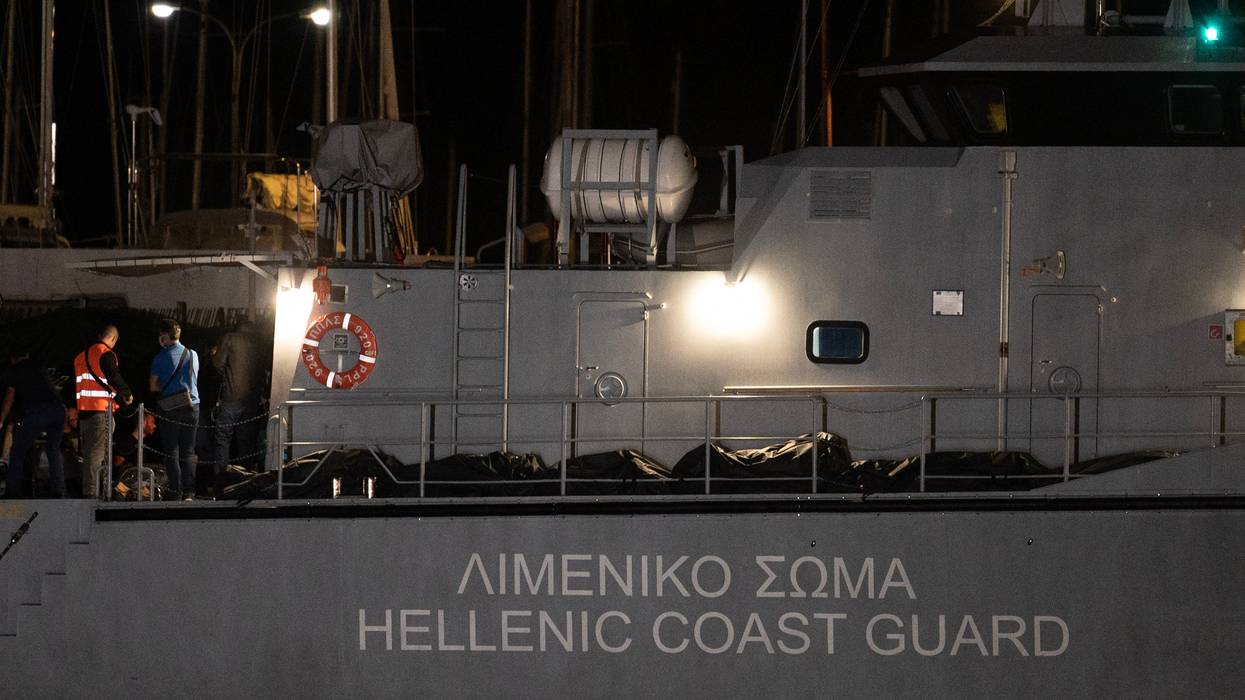
At least 79 migrants drowned early Wednesday when the overloaded fishing vessel in which they were attempting to cross the Mediterranean Sea capsized off the southwestern coast of Greece.
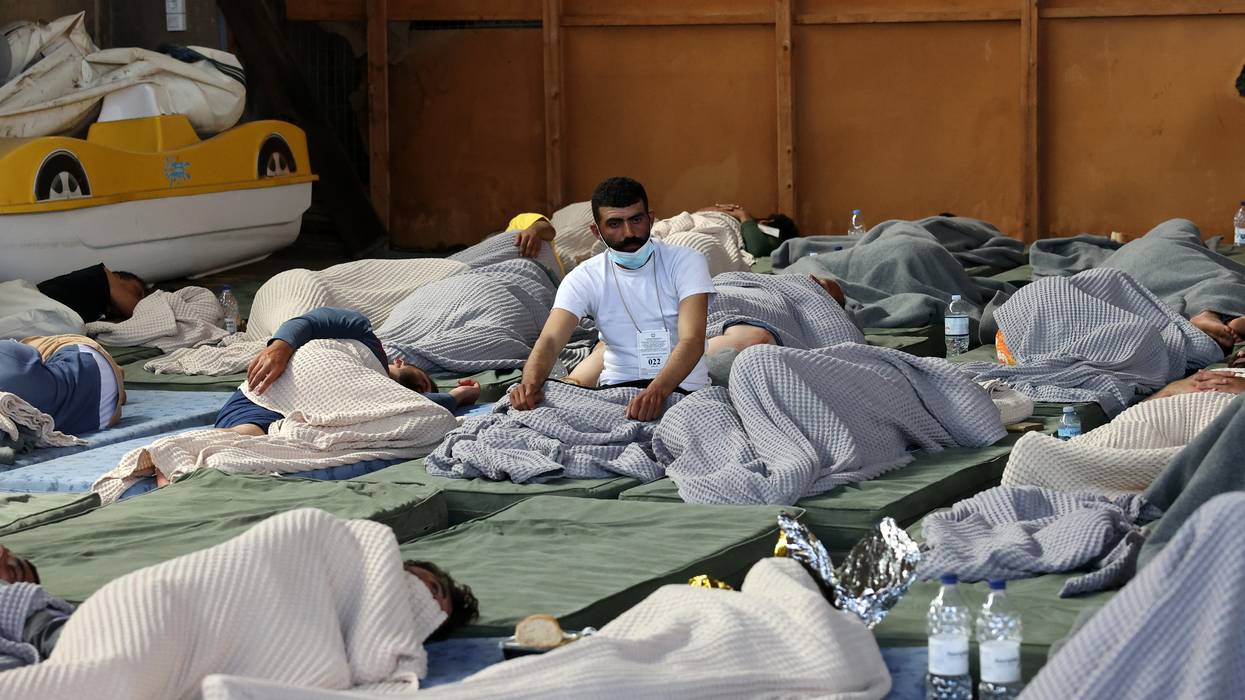
Reuters reports that hundreds more people are missing and presumed drowned, while 104 others had been rescued from the sunken boat by midday. The Greek state broadcaster ERT reported that the boat was en route to Italy from Tobruk in eastern Libya.
Arguing that "Europe's borders kill," the international rescue organization Alarm Phone said on Twitter that yesterday it was "alerted by a boat in distress" that had left Libya with 750 migrants on board. According to a transcript of Alarm Phone's communications with the vessel, "the captain left on a small boat" sometime before 5:20 pm on Tuesday. The group's last contact with the vessel was at 12:46 am Wednesday.
The Hellenic Coast Guard said that Greek officers approached the boat and offered aid, but that the migrants declined and stated their desire to continue toward Italy.
"Nobody should be forced to risk such dangerous journeys in search of protection," the migrant advocacy group International Rescue Committee tweeted. "With the number of displaced people at a record high, [the European Union] must act now to expand safe routes."
Speaking in New York, United Nations Spokesperson Stéphane Dujarric said U.N. Secretary-General António Guterres stressed "that every person searching for a better life needs dignity and safety."
"This is yet another example of the need for member states to come together and create orderly safe pathways for people forced to flee and for comprehensive action to save lives at sea and reduce perilous journeys," Dujarric added.
U.N. High Commissioner for Refugees Filippo Grandi said he felt "only sadness, and anger, after another deadly tragedy at sea in the Mediterranean."
"May the victims rest in peace," he added. "May the survivors find consolation and care. May governments cooperate to increase safe pathways and work together on collective solutions to address these flows."
Media reports are calling Wednesday's "devastating" disaster the deadliest migrant shipwreck off Greece this year. The country has been on the frontlines of Europe's migration crisis since 2015, when people fleeing wars—including ones waged by European powers—hunger, and economic privation began leaving the Middle East, Asia, and Africa in massive numbers.
Greek politicians halted their election campaigns in the wake of the disaster. Kyriakos Mitsotakis—the leader of the center-right New Democracy party who is expected to resume the prime ministership after the June 25 election—tweeted that "the priority now is to save as many lives as possible."
"This new incident, however, dramatically demonstrates that migration remains a problem that requires a coherent European policy," he added.
Opposition Leader Alex Tsipras of the leftist Syriza party tweeted: "This is a human tragedy, which captures in the saddest way the hopelessness of those seeking asylum in Europe. The moment demands that we put forward humanity and stand by the survivors of the shipwreck, while intensifying every effort to locate the missing."
The U.N.'s International Office for Migration said in April that 441 migrants drowned crossing the Mediterranean in the first three months of 2023 alone, the deadliest quarter since 2017.
Human rights groups say that nearly 25,000 migrants have died in the Mediterranean since 2014. On Wednesday,