Recent polls have shown 78% of Democrats support recognizing the State of Palestine, which three-quarters of United Nations member states—including some of the United States’ closest allies—already do. Similarly, 75% of Democratic voters oppose sending additional military aid to Israel, which is already illegal, according to Section 620I of the Foreign Assistance Act, which bars the United States from providing military assistance to countries blocking humanitarian aid.
Still, at its August meeting, the DNC Resolutions Committee voted down a resolution calling for recognizing Palestine and suspending military aid with a decisive margin.
Following the defeat of the resolution, which had been endorsed by College Democrats and other progressive constituencies, and rejecting the sponsors’ offers to compromise on the language, DNC Chair Ken Martin and 17 other top party leaders successfully pushed through a different resolution which, while advocating a two-state solution, insisted the creation of a Palestinian state only come “through direct bilateral negotiations.” Critics, however, note that no such direct Israeli-Palestinian talks have taken place for more than a decade while the current Israeli government categorically rules out Palestinian statehood. Combined with the DNC’s objection to conditioning aid to Israel, this appears to have been a de facto endorsement of ongoing Israeli control over and colonization of the occupied territories.
While the party leadership’s resolution specifically condemned Hamas for its October 7, 2023 terrorist attack, calling the killing of 1,200 Israelis a “massacre,” it did not condemn Israel’s killing of over 50 times as many Palestinians, referring to their deaths in the passive voice and not even saying who did the killing—the resolution only noted the “loss” of tens of thousands of lives in “the war between Israel and Hamas.” The resolution also implied that Hamas was equally responsible for the growing famine in Gaza as was the Israeli government, which is imposing the siege on the enclave. The resolution’s call for a ceasefire was linked to the unconditional release of the remaining Israeli hostages while failing to call on Israel to release the estimated nearly 5,000 Palestinians held without charge in Israeli prisons.
However, that resolution never even made it to the full DNC. Aware of the backlash following the two votes, Martin immediately withdrew his resolution from consideration. Recognizing the vote’s potential impact, the DNC chair for the first time acknowledged that “there’s a divide in our party on this issue,” saying, “This is a moment that calls for shared dialogue, calls for shared advocacy.” He then announced a taskforce “comprised of stakeholders on all sides of this” to help formulate the party’s position on Israel and Palestine.
The willingness to finally challenge the party’s traditional blank check to the Israeli government may be tactical: Increasing numbers of Democrats, particularly younger voters, are not just questioning Israeli policies, but Zionism itself.
There is likely no other issue where the party leadership is as out of sync with its base. Allison Minnerly, a young DNC member who sponsored the defeated resolution, noted how only 8% of registered Democrats support the party’s current position in support of Israel’s war on Gaza. And the defeat was not for lack of mobilization: Members of the committee received hundreds of thousands of emails encouraging support for Minnerly’s resolution.
Harold Meyerson, editor at-large for The American Prospect, noted, “We’ve been here before: widespread Democratic opposition to an outrageous war, particularly among the young, while a good chunk of the party’s establishment remains unwilling to halt US involvement in that conflict. In the ’60s, that was Vietnam. Today, it’s Gaza.”
According to James Zogby, a longtime DNC member and advocate of Palestinian rights, the Minneapolis meeting should be seen in a somewhat positive light as a result of the unprecedented level of debate—and the fact that Martin felt obliged to withdraw his resolution. In a statement following the meeting, Zogby, president of the Arab American Institute, wrote that the outcome should be seen as “a recognition of the shifting tides within the party and the reality that the status quo has become unacceptable and untenable. Supporters of Palestinian rights should understand that this was a victory and an important step forward in the long struggle for justice.”
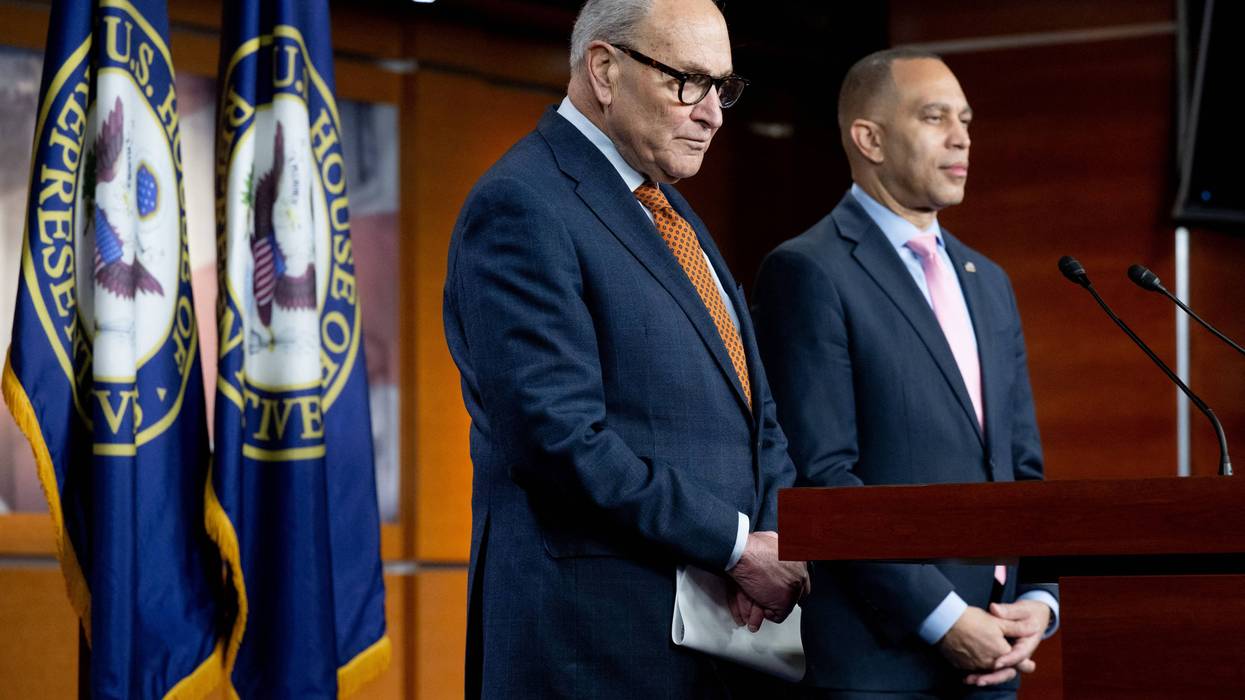
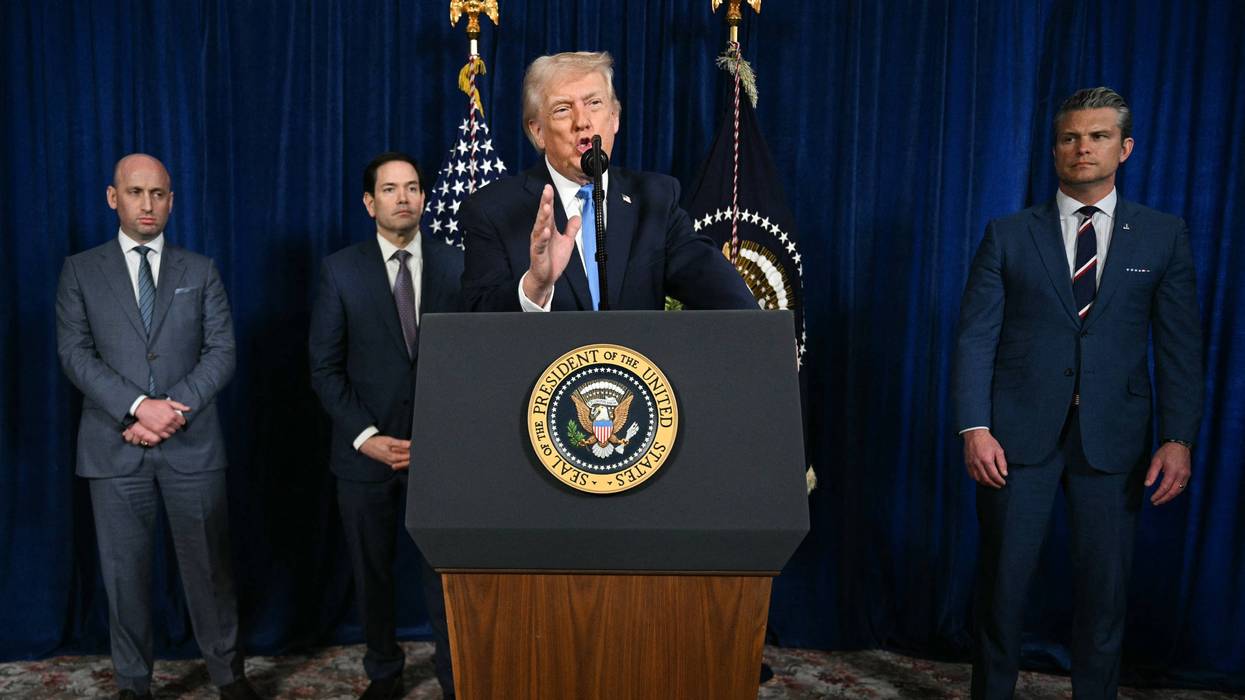
In addition, there are signs of a real shift among Democratic officials, even in Washington. While Democratic Senate leader Chuck Schumer, Democratic House leader Hakeem Jeffries, and most others in the congressional leadership still strongly advocate arming and supporting the Israeli government, for the first time a majority of Democratic senators voted in favor of an unsuccessful resolution earlier this summer to block US President Donald Trump’s proposal to send additional bombs and missiles to further destroy Gaza. As a result of the dramatic shift among Democratic voters in recent months regarding US policy toward Israel and Palestine, it appears that at least some Democratic politicians are now becoming more scared of their constituents than they are of the American Israel Public Affairs Committee (AIPAC).
Notably, increasing numbers of Jewish Democrats in Congress are calling for suspending offensive military aid to Israel, as are some Democrats who previously received AIPAC funding and supported the group’s unwavering support for the Netanyahu government.
Just as Democratic officials became more willing to oppose the Vietnam War once it was being waged by Republican Richard Nixon instead of Democrat Lyndon Johnson, Democratic members of Congress today are appearing more willing to challenge Trump’s support for Israeli Prime Minister Benjamin Netanyahu than they were former President Joe Biden’s.
With over two-thirds of registered Democrats saying Israel’s actions in Gaza constitute a genocide or are “akin to genocide” (nine times those saying otherwise), the party’s 2024 platform, which insisted that billions of dollars’ worth of unconditional military aid to Israel remain “ironclad,” is becoming increasingly controversial. And the Democratic Party’s longstanding position of prioritizing the national rights and security interests of Israelis over Palestinians is harder to defend when polling shows only 12% of registered Democrats say their sympathies are more with Israel.
By appearing to put the profits of arms manufacturers above the lives of Palestinian children, this refusal to condition offensive military aid could subject Israel hawks to primary challengers or result in lower turnout for incumbents in the general election.
Liberal Zionist groups like J Street are now for the first time supporting some restrictions on military aid and are trying to push the Democratic Party to take a more critical position against Netanyahu, the war on Gaza, and the occupation of Palestine. A number of state Democratic parties, even in swing states like North Carolina, have gone on record calling for a suspension of military aid to Israel.
Historically, the Democratic Party leadership has initially been out of line with its constituents on key foreign policy issues, including in Vietnam, Central America, Southern Africa, East Timor, Iraq and, Afghanistan, as well as on the nuclear arms race.
The willingness to finally challenge the party’s traditional blank check to the Israeli government may be tactical: Increasing numbers of Democrats, particularly younger voters, are not just questioning Israeli policies, but Zionism itself. There is also a growing sense among progressive Democrats that, with increasing colonization of the West Bank by Israeli settlers, it may be a too late for a viable two-state solution and the focus should be on ending Israeli apartheid and creating a single binational state between the Jordan River and the Mediterranean Sea.
As a result, there is growing recognition that if party leaders do not explicitly break with Netanyahu, Democratic voters may demand that Democratic candidates in the upcoming midterm elections and beyond take outright anti-Israel positions.
Rep. Ro Khanna (D-Calif.) has said that arms transfers to Israel is “going to be a defining issue in the Democratic Party in the midterms and for 2028.” Already, potential 2028 contenders like Rep. Alexandria Ocasio-Cortez (D-N.Y.), Sen. Amy Klobuchar (D-Minn.), Former Transportation Secretary Pete Buttigieg, Khanna, Sen. Chris Murphy (D-Conn.), and Illinois Governor JB Pritzker have gone on record supporting conditioning further arms transfers.
Meanwhile, in New York City, long a bastion of the pro-Israel wing of the Democratic Party, Democrats have nominated Zohran Mamdani, a vocal critic of Israel, to be their nominee for mayor.
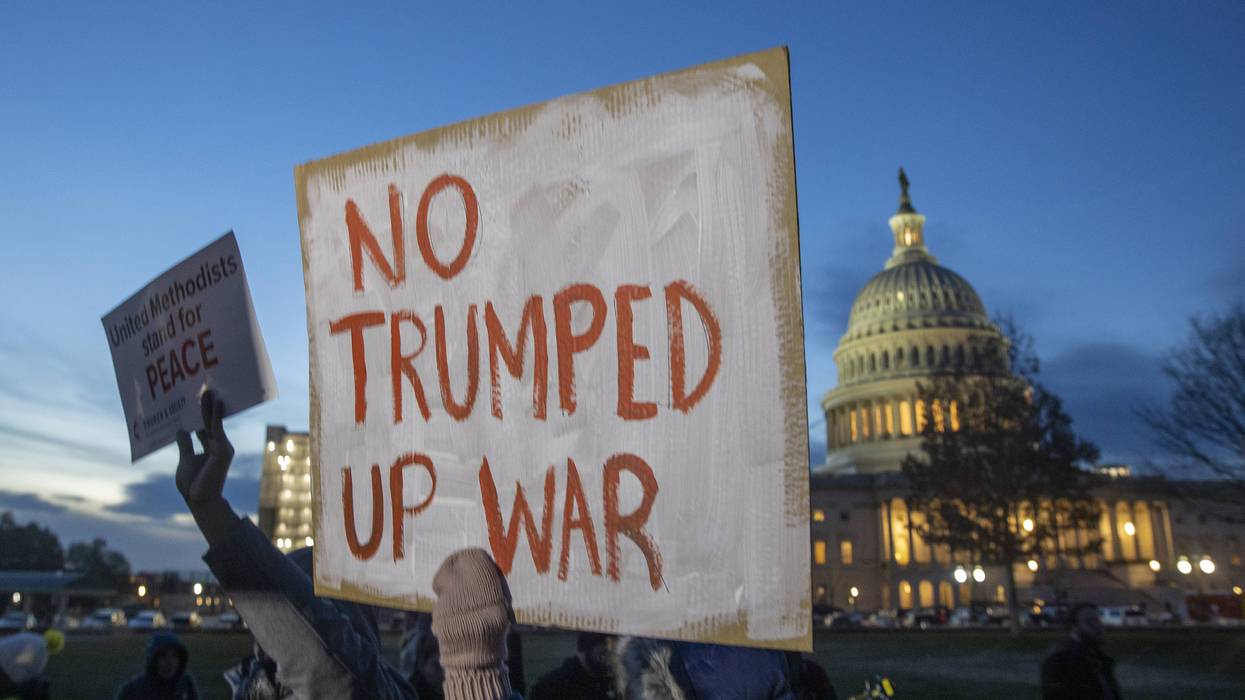
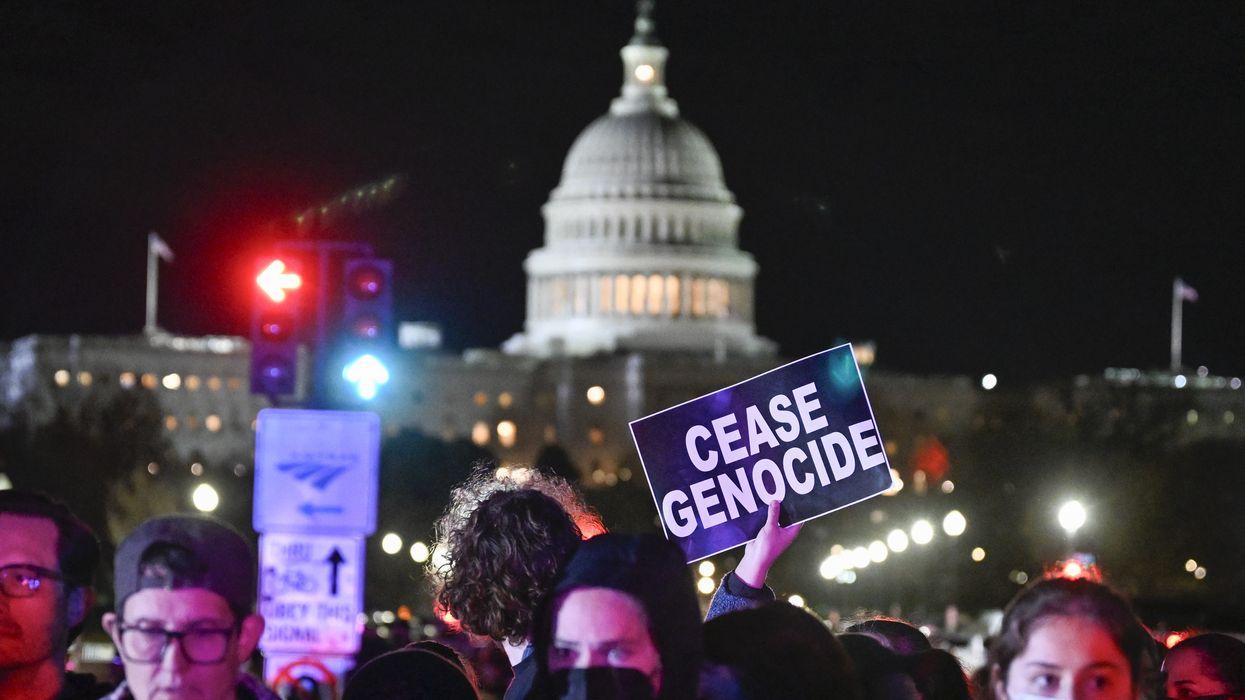
It is not just the undeniable horror of the humanitarian situation in Gaza and increasing settler violence in the West Bank that are responsible for this shift. Credit should also be given to the widespread popular mobilization against US support for Netanyahu, not only from traditional pro-Palestine groups, but mainstream liberal and progressive organizations which had traditionally avoided the subject. Over 20 prominent groups aligned with the Democratic Party have formed the Reject AIPAC Coalition to push Democratic candidates to refuse money from AIPAC, an influential right-wing Zionist organization.
For example, Peace Action, the largest multi-issue peace group, has long taken solid positions regarding Israel and Palestine, but only rarely made it a priority, and their PAC was willing to endorse supporters of Israel’s wars and occupation if they were progressive on other foreign policy issues. Now, however, they have been among the leading groups mobilizing against US support for Netanyahu, having made it their number one issue over the past two years, and are pushing hard to restrict US arms transfers. They are currently spearheading support for the Block the Bombs Act in Congress.
Jon Rainwater, Peace Action’s executive director noted: “How can Sen. Chuck Schumer lead the Democratic Party against Trumpism if he sides with Bibi Netanyahu’s worst authoritarian instincts…? How can someone like Sen. Cory Booker give anti-authoritarian speeches about fighting ‘for the moral soul of the nation’ while he votes to keep the US complicit in starving a people and other war crimes?”
There can be major political costs if Democratic candidates refuse to side with the majority of their constituents. Kamala Harris lost the 2024 election due to a major drop-off in Democratic voters from four years earlier. One poll indicated that the single biggest reason cited by voters who had cast their ballots for Biden in 2020 but didn’t back Harris in 2024 was the ongoing Israeli war on Gaza, which Harris was seen to support.
Historically, the Democratic Party leadership has initially been out of line with its constituents on key foreign policy issues, including in Vietnam, Central America, Southern Africa, East Timor, Iraq and, Afghanistan, as well as on the nuclear arms race. Eventually, however, the party’s base has been able to force changes in position. It is looking increasingly likely that such a change may be in store regarding Israel and Palestine.
The question is how long it will take—and how many more Palestinians will have to die before it becomes a reality.