

SUBSCRIBE TO OUR FREE NEWSLETTER
Daily news & progressive opinion—funded by the people, not the corporations—delivered straight to your inbox.
5
#000000
#FFFFFF
To donate by check, phone, or other method, see our More Ways to Give page.
Daily news & progressive opinion—funded by the people, not the corporations—delivered straight to your inbox.
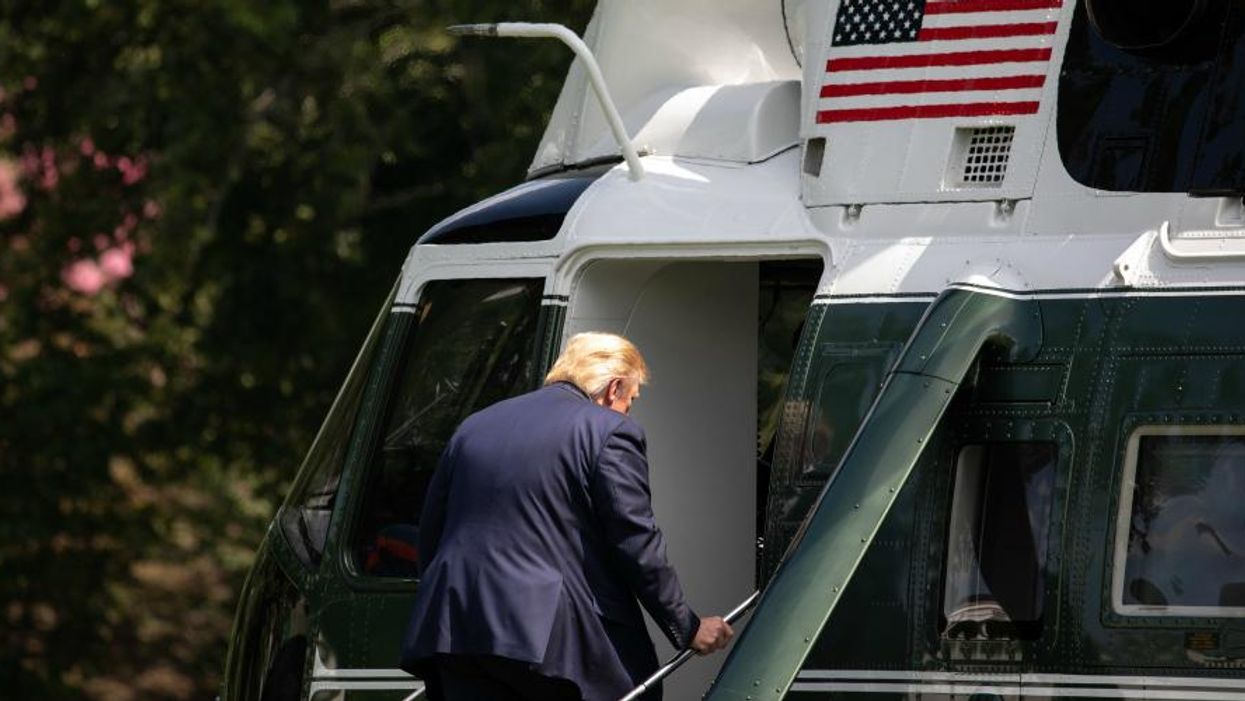
Every presidential election year, Frontline, the superb investigative TV series on PBS, produces an in-depth look at the Democratic and Republican candidates. It's called "The Choice," and invariably offers some insights that likely you won't see anywhere else.
When I first watched the 2016 edition, three things struck me as revelatory--aside from that now-infamous Omarosa Manigault soundbite from the program that began, "Every critic, every detractor will have to bow down to President Trump." Yikes.
Today, after two and a half years of a Trump White House, these three remembered moments seem more pertinent than ever. First up was journalist Marie Brenner, who recalled Trump's brother Robert telling her, "Donald was always the kid in the family who would start throwing birthday cake at all the parties, that you would build up a tower of blocks, he would come knock your blocks down."
Donald Trump is a racist, a white supremacist, a misogynist, a right-wing extremist, and as he goes full-tilt into maniacal campaign mode, with nary a GOP voice raised in protest, it's only going to get worse.
Second were the memories of fellow cadets at New York Military Academy, where young Donald was sent to deal with his behavior issues. One said that as a teenager, Trump "had a very Hugh Hefner Playboy magazine view of success." Another agreed: "Our lives came from Playboy magazine. That's how we learned about women. That was all of my adolescence. And that's why getting out of military school was difficult. You had to realize that you couldn't just follow the Playboy philosophy."
He added, "The things that we talked about at that time in 1964 really are very close to the kind of way [Trump] talks now."
But the third thing, the one that especially stuck in my head, is something Frontline reported Trump had learned from nature's own Nazi, his martinet of a father Fred. It was a theory, according to the narration, Donald "especially liked."
Interviewed for the documentary, Michael D'Antonio author of The Truth About Trump, says, "This is a very deep part of the Trump story. The family subscribes to a racehorse theory of human development, that they believe that there are superior people and that if you put together the genes of a superior woman and a superior man, you get superior offspring."
In other words, he embraced eugenics--the science of human selection that's just a hop, skip and a 23 and Me saliva test away from advocating the primacy of a master race.
Which is why what we're seeing now, less than a year and a half before the 2020 election is no surprise. You know the litany: Trump and his father's housing business censured by the Justice Department for racial discrimination; publicly attacking the young Latino and black men of the so-called Central Park Five, even after they were found innocent; ludicrous birther slurs flung at Barack Obama; the Muslim travel ban; offhand bigoted references to "shithole countries," Nigerians in huts and Haitians with AIDS; Charlottesville.
On and on. And now, these attacks on four women of color, four members of the United States Congress told by the president to go back where they came from, even though only one was born in another country and all four are US citizens. While a few of his Republican colleagues voiced disgust at Trump's tweets, most chose to remain silent, equivocate or to double down like the toadying Lindsey Graham, who screamed that Alexandria Ocasio-Cortez, Ayanna Pressley, Rashida Tlaib and Ilhan Omar are "a bunch of communists"-- sounding not like his late mentor John McCain but a raving, spittle-hurling Joe McCarthy.
(Lindsey and his man-crush Trump would do well to heed--but won't--the greatSupreme Court Justice Oliver Wendell Holmes, who in a 1929 dissent wrote, "If there is any principle of the Constitution that more imperatively calls for attachment than any other, it is the principle of free thought--not free thought for those who agree with us but freedom for the thought that we hate.")
So yes, Donald Trump is a racist, a white supremacist, a misogynist, a right-wing extremist, and as he goes full-tilt into maniacal campaign mode, with nary a GOP voice raised in protest, it's only going to get worse. This is how he thinks he can win reelection and so these current ravings were inevitable. Recent and intentionally misconstrued comments by the women may have sped the onslaught up a bit. As per The Washington Post, he thinks the four are "good foils." But this always was going to happen. Always.
Don't let your outrage at his words dim, but neither let this presidential pickpocket use these cruel verbal assaults--or his jeering rally crowds--to distract you from the truth as he falsely accuses these legitimately elected women of disloyalty and worse. Don't let him deflect your attention from Robert Mueller's congressional testimony this week or the Jeffrey Epstein pedophilia scandal and the role played by Trump's now-former labor secretary Alex Acosta.
Don't let your outrage at his words dim, but neither let this presidential pickpocket use these cruel verbal assaults--or his jeering rally crowds--to distract you from the truth as he falsely accuses these legitimately elected women of disloyalty and worse.
Ignore not the ICE raids and the new rules restricting asylum requests and the continuing deplorable conditions in the detention centers, the separation of undocumented families, the failed attempt to cook the census. And keep your eye on which candidates are offering viable plans and solutions for climate change, immigration, health care, the opioid crisis, education and student debt, infrastructure, income, and racial inequality.
As for those of you among Trump's vaunted base, the ones to whom he's pitching this poisonous snake oil, do you honest to God think that being given license to attack or mock a person's skin color or religion is more important than having a job, a roof over your head and food and clothing for you and your family? Do you truly believe that Trump's trade wars, tax cuts aimed at his rich cronies and slashing regulations to satisfy corporate fat cats are giving you a better life?
Is having a president who jabs his thumb in the eye of all who don't fawn over him here and abroad and who lacks a moral or honest bone in his body preferable to a leader who is respected here and overseas, who's not a white nationalist but a patriot with an informed worldview embracing diversity and expertise?
Trump needs to return where he came from, and I say that with some hesitation only because that would be New York City and I live here. Even if he's defeated in 2020 we won't have heard the last of him, of course, but at least the power and bully pulpit of the presidency will be denied the bully who currently lives in the White House. We'll put him in a special room where he can throw all the birthday cake and knock over all the toy blocks he wants. Just send him back.
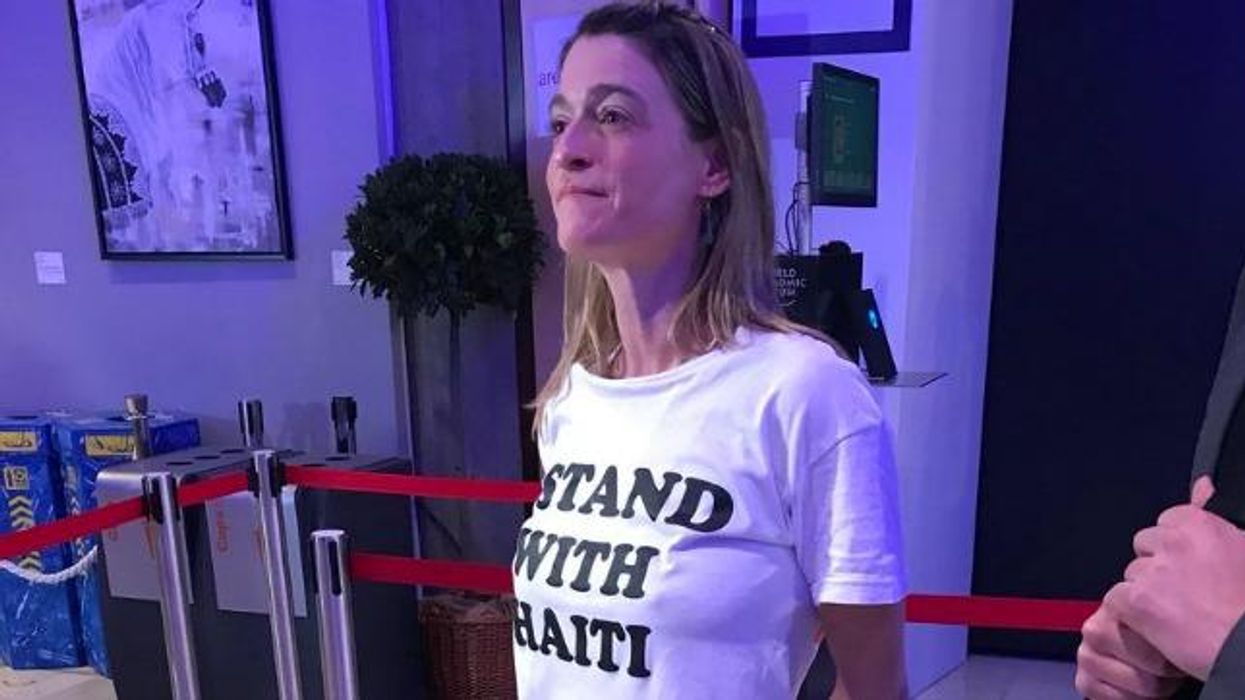
The head of highly respected non-governmental organization focused on relief work in Haiti walked out in protest on Friday during President Donald Trump's speech to the World Economic in Davos, Switzerland.
Dr. Sasha Kramer, co-founder and executive director of the group SOIL, which works on improving sustainable household sanitation and ecological waste treatment in Haiti, said her protest was in direct opposition to the dangerous rhetoric and racist policies of the Trump administration towards the people of that country.
Watch:
In particular, Kramer's action was a response to the administration's recent decision to end protections afforded Haitian refugees living in the U.S. under the Temporary Protected Status (TPS) program as well as eye-witness reports that Trump referred to Haiti, as well as other nations, as "shithole countries" during a White House meeting earlier this month.
"To me," Dr. Kramer said, "Haiti is anything but that. Haiti has always been a global example. Haiti was the country that led the fight against slavery and colonialism, and I think Haiti will continue to be an example."
In a statement by the group, SOIL said they would continue "to stand alongside the Haitian people calling for humanity over racism and hate, and we will not falter in our fight for justice in Haiti and throughout the world."
"In SOIL's 11-year history we have worked in Haiti alongside some of the strongest, bravest, and kindest people we have ever known," the group stated. "It is our privilege to work in this beautiful, unique, revolutionary nation -- not the other way around."
Common Dreams reported Thursday that other Davos attendees planned to walk out in protest during Trump's speech, but it was unclear as of this writing if others had, in fact, joined Kramer by following through with those plans.
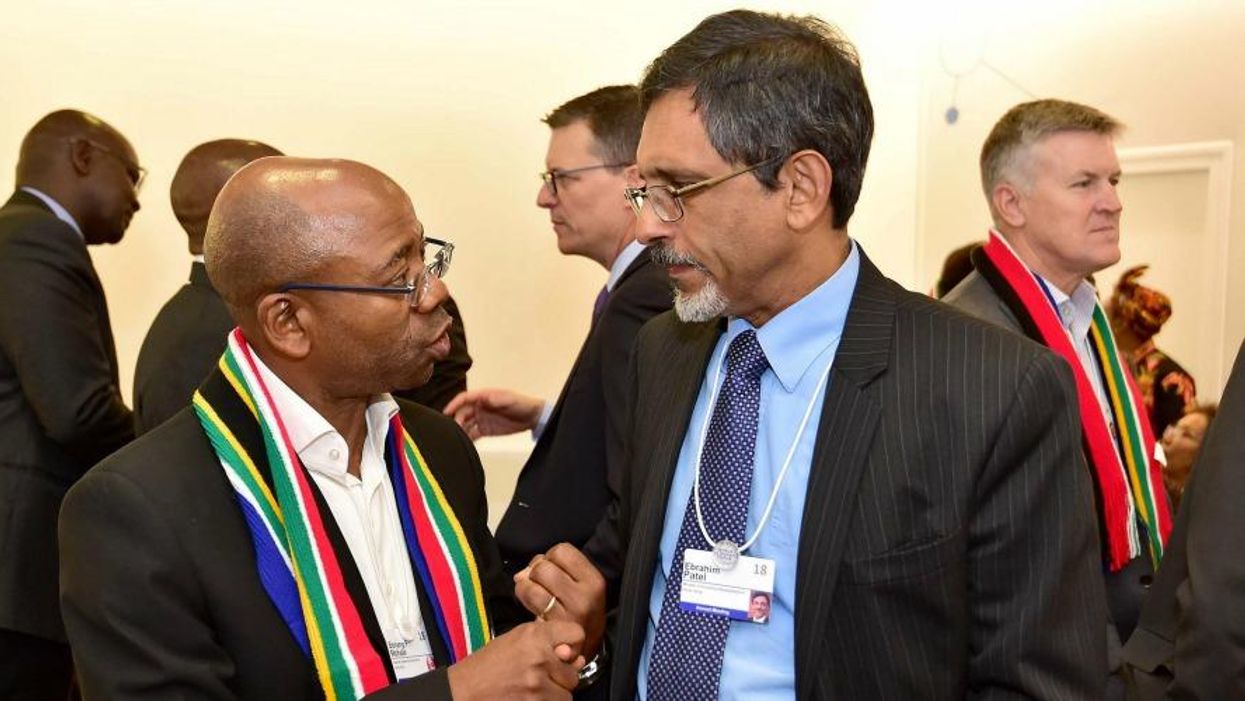
Several attendees of the World Economic Forum in Davos, Switzerland are planning to walk out of President Donald Trump's speech at the summit on Friday afternoon, in protest of his recent reported remarks about countries whose citizens he deems undesirable immigrants.
In an open letter, Business Leadership South Africa CEO Bonang Mohale denounced Trump's alleged statement, confirmed by Republican and Democratic lawmakers, that more immigrants from "countries like Norway" should come to the U.S. instead of people from "shithole countries" such as Haiti, El Salvador, and African nations.
When Trump arrives in Davos, Mohale wrote, "it will be clear exactly what it is you mean when you lay out your 'America First' doctrine. Rather than the laudable ethos upon which modern America is built, namely a nation of immigrants free to strive for excellence and success, regardless of their provenance, it appears you want to pull up the drawbridge for people who are not white, and engineer an exclusive, less diverse America."
Mohale did not name other attendees who will be boycotting the speech, but said several leaders plan to walk out and encouraged "likeminded peers to do the same."
According to Quartz, "Leaving Trump's speech after he starts is probably more powerful than boycotting it entirely, some Davos attendees speculate."
African business leaders have called on Trump to address and apologize for his comments. The president has denied denigrating African countries, and said of the reports only that he is "not a racist," while the White House dismissed the incident as evidence of Trump's "passionate" views on immigration.
Mohale acknowledged Trump's plummeting approval ratings in the U.S., noting that many in the international community view the president as separate from the broader U.S. population.
"It's encouraging to us that so many of your countrymen and women, who treasure this ideal of the U.S.--including many from within your own Republican party--are already rejecting your monochrome vision. We join hands with them, in the same spirit of solidarity that many of your citizens showed in rejecting Apartheid and isolating those who sought to entrench racism, segregation and discrimination."
At Davos, Trump will meet one-on-one with Rwandan president Paul Kagame--also the head of the African Union, which condemned Trump's comments after they were reported.
The AU demanded "a retraction of the comment as well as an apology, not only to the Africans, but to all people of African descent around the globe."
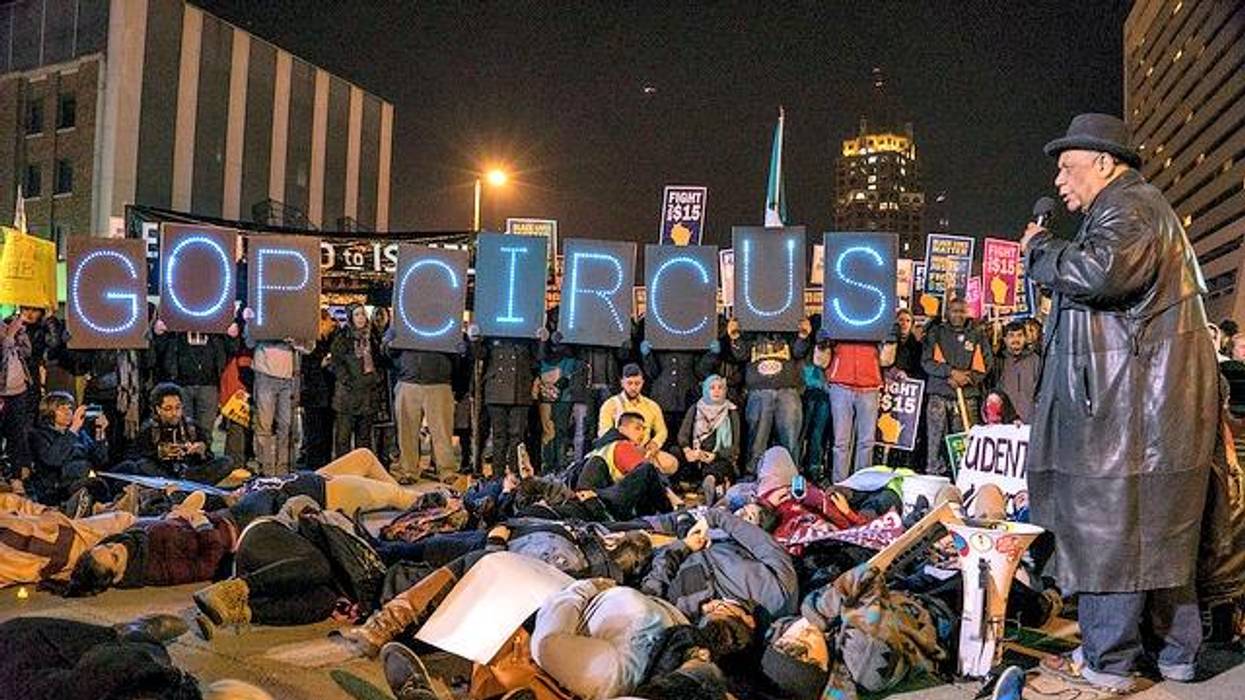
Recently, a memory of my son as a small boy came back to me. He was, in those days, terrified of clowns. Something about their strange, mask-like, painted faces unnerved him utterly, chilled him to the bone. To the rest of us, they were comic, but to him -- or so I came to imagine anyway -- they were emanations from hell.
Those circus memories of long ago seem relevant to me today because, in November 2016, the American electorate, or a near majority of them anyway, chose to send in the clowns. They voted willingly, knowingly, for the man with that strange orange thing on his head, the result -- we now know, thanks to his daughter -- of voluntary "scalp reduction surgery." They voted for the man with the eerily red face, an unearthly shade seldom seen since the perfection of Technicolor. They voted for the overweight man who reputedly ate little but Big Macs (for fear of being poisoned), while swinging one-handed from a political trapeze with fingers of a particularly contestable size. They voted for the man who never came across a superlative he couldn't apply to himself. Of his first presidential moment, he claimed "the largest audience ever to witness an inauguration, period, both in person and around the globe"; he declared himself "the greatest jobs president that God ever created"; he swore to reporters that he was "the least racist person you have ever interviewed"; he offered his version of modesty by insisting that, "with the exception of the late, great Abraham Lincoln, I can be more presidential than any president that's ever held this office"; and when his mental state was challenged, he responded that his "two greatest assets have been mental stability and being, like, really smart," adding, "I think that [I] would qualify as not smart, but genius... and a very stable genius at that!"
Of course, none of this is news to you, not if you have a screen in your life (or more likely your hand) -- the very definition of twenty-first-century modernity. In fact, by the time this piece comes out, you'll undoubtedly have a new set of examples to cite. After all, these days that essentially is the news: him and any outrageous thing he wants to say and not much else, which means that he is indisputably the greatest, possibly in the history of the universe, when it comes to yanking just about anybody's chain.
And you certainly don't need me to go on about that strange skill of his, since every time he says or tweets anything over the top or grotesque beyond belief, the media's all over it 24/7. No one, for instance, could doubt that never in our history has the word "shithole" (or, in some cases, "s--hole") or even "shithouse" been used more frequently than in the wake of the president's recent wielding of it (or them or one or the other) for unnamed African countries and Haiti in a White House meeting on immigration. That meeting proved an ambush and a half, only spiraling further out of control when, in its wake, the president denied ever using the word "shithole" and was backed by Republican attendees evidently so desperate to curry favor that they pretended they hadn't heard the word, which, by now, just about everyone on Earth has heard or seen in English or some translation thereof.
Since he rode down that Trump Tower escalator into our political lives in June 2015, this sort of thing and more or less nothing else has largely been "the news." It goes without saying -- which won't stop me from saying it -- that not since Nebuchadnezzar's words were first scratched onto a cuneiform tablet has more focus been put on the passing words, gestures, and expressions of a single human being. And that's the truest news about the news of this era. It's been consumed by a single news hog. Which means that Donald Trump has already won, no matter what happens, since he continues to be treated as if he were the only three-ring circus in town, as if he were in himself that classic big-top Volkswagen filled to the brim with clowns.
The Imperial Presidency Exposed
Who could deny that much of the attention he's received has been based on the absurdity, exaggeration, unsettling clownishness of it all, right down to the zany crew of subsidiary clowns who have helped keep him pumped up and cable newsed in the Oval Office?
In early October 2016, I suggested that a certain segment of voters in the white heartland, feeling their backs against the economic wall and the nation in decline -- Donald Trump being our first true declinist candidate (hence that "again" in MAGA) -- was prepared to send a "suicide bomber" into the White House. And I suggested as well that they were willing to do so even if the ceiling collapsed on them. (Had I thought of it at the time, I would have added that much of the mainstream media also had its back to the wall with its status and finances in decline, staffs shrinking, and fears rising that it might be eaten alive by social media. As a result, some of its key players were similarly inclined to escort that suicide bomber Washington-wards, no matter what fell or whom it hit.)
In retrospect, that has, I think, proven an accurate assessment, but like all authors I reserve the right to change my imagery in midstream, which brings me back to my son's childhood fear of clowns. At least for me, that now catches the most essential aspect of the age of Trump: its clownishness. And despite the fact that The Donald is often treated by his opponents as a laughing matter, an absurdity, a jokester (and a joke) in the Oval Office, I don't mean those clowns, the ones that leave you rolling in the aisles. I mean my son's clowns, the death's-head ones whose absurd versions of the gestures of everyday life leave you chilled to the bone, genuinely afraid.
Donald Trump fits that image exactly because -- though you wouldn't know it from the usual coverage of him -- he isn't at all unique (except in the details, except in the exaggeration of it all). What makes him so clownish, in the sense I'm describing, is that he offers a chillingly exaggerated, wildly fiery-and-furious version of the very imperial American presidency we've come to know over these last seven decades: the one that has long ridden herd on a nuclear apocalypse; that killed millions on its journey to nowhere in Southeast Asia in the previous century; that hasn't been able to stop itself from overseeing more than a quarter-century of war-making -- two wars, to be exact -- in Afghanistan of all places; that, in its pursuit of its never-ending "war" on terror, has made war on so much else as well, turning significant parts of the planet into zones of increasing chaos, failed states, fleeing populations, and wholesale destruction; the one whose "precision" military -- the battle against ISIS in Iraq and Syria has been termed the "most precise campaign in history" -- has helped transform cities from Ramadi and Fallujah to Mosul and Raqqa into landscapes that, in their indiscriminate wreckage, look like Stalingrad after the battle in World War II (and that now is threatening to develop a "precision" version of nuclear war as well); and that has, in this century, overseen the creation of "Saudi America" on a planet in which it was already easy enough to grasp that fossil fuels were doing the kinds of damage to the human environment that nothing short of a giant asteroid or nuclear war might otherwise do.
From his America First policies to his reported desire to see (and make use of) terrorist attacks on this country, the man who has declared climate change a Chinese hoax, threatened to loose "fire and fury like the world has never seen," described other countries in language once considered unpresidential by presidents who nonetheless treated the very same countries like "shitholes," and given "his" generals a remarkably free hand to "win" the war on terror is but an eerily clownish version of all that has gone before. He has, in a sense, ripped away the facade of dignity from the imperial presidency and let us glimpse just what is truly imperial (and imperious) about it. He continues to show us in new ways quite an old reality: how terrifying a force for destruction, possibly even on a planetary level, U.S. power can be.
And just in case you don't think that Volkswagen of Trump's (or maybe I mean that private plane with the golden bathroom fixtures) is filled with other clowns whose acts should similarly chill you to the bone, let's skip Scott Pruitt as he secretly dismantles the Environmental Protection Agency and so many protections for our health, the Energy Department's Rick Perry as he embraces the CEOs of Big Energy, that future oil-spill king, the Interior Department's Ryan Zinke, and the rest of the domestic wrecking crew, and turn instead to "his" generals -- the ones from America's losing wars -- that President Trump has made ascendant in Washington.
And even then, let's skip their urge to create smaller, more "usable" nuclear weapons (a process started in the Obama years), or hike the nuclear budget, or redefine ever more situations, including cyber attacks on the U.S., as potential nuclear ones; and let's skip as well their eagerness, from Niger to Yemen, Libya to Somalia, to expand and heighten the war on terror in an exaggerated version of exactly what we've been living through these past 16 years. Let's concentrate instead on just one place, the ur-location for that war, the country about which those in the Pentagon are no longer speaking of war at all but of "generational struggle": Afghanistan.
The Graveyard of Empires
Think of it: 28 years after the Soviet army limped out of that infamous "graveyard of empires" at the end of a decade-long struggle in which the U.S. had backed the most extreme groups of Islamic fundamentalists (including a rich young Saudi by the name of Osama bin Laden), 16 years after the U.S. returned to invade and "liberate" Afghanistan, they're still at it. In December, with Donald Trump lifting various constraints on U.S. military commanders there, the generals were, for instance, sending in the planes. That month there were more U.S. air strikes -- 455 in a winter period of minimal fighting -- than not just the previous December (65) but December 2012 (about 200) when 100,000 U.S. troops were still in-country. The phrase of this moment among U.S. military officers in Afghanistan, according to Max Bearak of the Washington Post: "We're at a turning point." Another: "The gloves are off." (Admittedly, no U.S. commander has as yet reported seeing "the light at the end of the tunnel," but don't rule it out.)
In the meantime, drones of both the armed and unarmed surveillance variety are being reassigned to Afghanistan in rising numbers (as well as more helicopters, ground vehicles, and artillery). With the recent announcement that 1,000 more personnel will soon head for that country, U.S. troop strength continues to grow, bringing the numbers of American advisers, trainers, and Special Operations forces there up to perhaps 15,000 or more (as opposed to the 11,000 or so when Donald Trump entered the Oval Office).
In addition, the military has plans to double the size of Afghanistan's own special ops forces and triple the size of its air force, while the head of U.S. Central Command, General Joseph Votel, is calling for far more aggressive actions by those American-advised Afghan security forces in the upcoming spring fighting season. (To put this in perspective, a 2008 U.S. military plan to spend billions of dollars ensuring that the Afghan air force was fully staffed, supplied, trained, and "self-sufficient" by 2015 ended seven years later with it in a "woeful state" of disrepair and near ruin.) Meanwhile, as part of this ramp-up of operations, the Navy is planning to hire drone-maker General Atomics to fly that company's surveillance drones in Afghanistan in what's being termed "a 'surge' of intelligence, reconnaissance, and surveillance capabilities."
If all of this sounds faintly familiar to you, I'm not surprised. In fact, if you've already stopped paying attention -- as most Americans on the nonexistent "home front" seem to have done when it comes to most of America's wars of this era -- I just want you to know that I completely understand. Sixteen repetitive years later, with the Taliban again in control of something close to halfof Afghanistan, your response couldn't be more all-American. Surges, turning points, more aggressive actions, you've heard it all before -- and when it comes to Afghanistan, the odds are that you'll hear it all again.
And don't for a moment think that this doesn't add up to another version of sending in the clowns.
If you don't believe that retired General James Mattis, Lieutenant General H.R. McMaster, and retired General James Kelly, aka the secretary of defense, the national security adviser, and the White House chief of staff, respectively, are clowns, if you're still convinced that they're the "adults" in the Trumpian playroom, check out Afghanistan and think again. But don't blame them either. What else can a clown do, once those giant floppy shoes are on their feet, their faces are painted, and the bulbous red nose is in place, but act the part? So many years later, they simply can't imagine another way to think about the world of American war. They only know what they know. Give them a horn and they'll honk it; give them Hamlet's "to be or not to be" soliloquy and they'll still honk that horn.
For the last decade and a half, through invasions and occupations, surges and counterinsurgency operations, bombing runs and drone strikes, commando raids and training missions, they and their colleagues in the U.S. high command have helped spread terror movements across significant parts of the planet, while playing a major role in creating a series of failing or failed states across the Greater Middle East and Africa. They've helped uproot whole populations and transform major cities into spectacles of ruin. Think of this as their twenty-first-century destiny. They've proven to be key actors in what has become an American empire of chaos or perhaps simply an empire of graveyards.
They can't help themselves. Forgive them, Father, for they are clowns led by the greatest clownster-in-chief in the history of this country. Yes, he makes even them uncomfortable because no one can pull the curtains back from the reality of the imperial presidency in quite the way he can. No one can showcase our grim American world, tweet by outrageous tweet, in quite his fashion.
And yes, it can all look ludicrous as hell, but don't laugh. Don't even think about it. Not now, not when we're all at the circus watching those emanations from hell perform. Instead, be chilled -- chilled to the bone. Absurd as every pratfall may be, it's distinctly a vision from hell, an all-American vision for the ages.
This is a mean-spirited administration. It combines a callous indifference to the poor, a contempt for the sick and vulnerable, a disregard for the truth and fairness, naked self-interest, ideological extremism and the most virulent racism, sexism and anti-Muslim and anti-immigrant sentiment in a presidential administration in living memory.
Donald Trump is a bigoted demagogue who sees the political payoff in scapegoating. In his self-absorbed megalomania, he is incapable of empathy. Devoid of concern for others and because he thinks it demonstrates strength and power, Trump is a cruel man. And in this regard he has built an administration in his own image.
Today's Trumpy nominations, highlighting the worst of the worst of an abominable administration, are for Cruelest Action.
You can vote for the Trumpy for Cruelest Action here.
The judges had an incredibly difficult time selecting the nominees, and they recognize a raft of other possible contenders. These include the move by Attorney General Jeff Sessions to hit low-level criminal offenders - frequently minorities charged with drug possession - with the most serious charges possible; vicious proposed budget cuts for programs benefiting the poor, including home heating assistance (yes, the administration is willing to let the poor freeze to death); the effort to strip health care from more than 20 million people through repeal of the Affordable Care Act, a move that would have led to more than 40,000 deaths a year; and the shameful failure to effectively assist Puerto Rican recovery after Hurricane Maria. But after great deliberation, the final four nominees are:
"The ban has zero to do with national security and is motivated exclusively by anti-Muslim animus."
The Muslim Ban. Days after his inauguration, Trump signed an executive order denying visas to people from seven overwhelmingly Muslim countries. Federal courts blocked the ban as unconstitutional, after which the Trump administration issued a second order. When the courts blocked that, they issued a third. The U.S. Supreme Court has permitted that ban to take effect while litigation continues. But while the litigation continues, the basic truth is obvious: The ban has zero to do with national security and is motivated exclusively by anti-Muslim animus. What a horrible statement this makes to the world, what a disgraceful contravention of the best of American history and values, and what a despicable message to the millions of Muslim-Americans who face a much increased risk of violence and mistreatment directly as a result of the president's actions.
Medicaid Work Requirements: Hard Bigotry Against the Poor. Earlier this month, the administration announced that it will permit states to impose work requirements on Medicaid recipients. This move is stupid, cruel and illegal. It denies that health care is a right and will lead to needless death and suffering. It will worsen public health problems, including by complicating availability of opioid treatment. It ignores the commonsense recognition - backed by lots of empirical data - that health problems prevent many people from working and that taking away their health care will lessen their ability to get and hold a job. It violates the law, by contravening Medicaid's purpose to expand health coverage. Centers for Medicare & Medicaid Services Administrator Seema Verma has condescendingly talked about combating the "soft bigotry" of low expectations for Medicaid recipients. What she is in fact doing is promoting the hard bigotry of animus against poor people - the hard and shameful bigotry of health care denial based on wealth.
Nursing Home Abuse. Don't let it be said that the Trump administration is unresponsive to cries of distress. When Trump administration officials heard "It is critical that we have relief," they rushed to the rescue. After all, if the nursing home industry was complaining of unfair treatment, then relief was indeed called for. And so, the Trump administration has pulled back a modest move by the Obama administration to impose fines on nursing homes engaged in wrongdoing. Although the fines had generally been small and inadequate, they were frequently levied - because nursing homes regularly engage in misconduct and mistreatment of patients. Since 2013, according to the New York Times, four in 10 nursing homes have been cited for serious violations of federal standards, and Medicare has fined two-thirds of them. By contrast, the Times reports, "the new guidelines discourage regulators from levying fines in some situations, even when they have resulted in a resident's death."
"The Dreamers are the leaders of the 21st century and Trump's actions are a disgrace."
Deportation Nation: DACA and TPS. Last fall, Attorney General Jeff Sessions announced the administration would end DACA - the Deferred Action for Childhood Arrivals program, which curbed enforcement of immigration laws against immigrants without documentation who came to the United States as children. About 800,000 Dreamers are enrolled in DACA and facing deportation - in many cases to countries they do not know - unless the program is rescued by Congress in the next couple of months. Trump says he "loves the Dreamers," has "a great love for them" and wants a "bill of love" to protect the Dreamers. But he hasn't supported any actual legislation, and at best seems to want to hold a solution hostage to concessions on a border wall and other anti-immigrant measures, placing a priority on splitting up families. The Dreamers are the leaders of the 21st century and Trump's actions are a disgrace.
If we're lucky, the DACA problem will be solved. But Trump is definitely moving aggressively and heartlessly to deport hundreds of thousands of other immigrants, notably among them those who have been in the United States with Temporary Protected Status (TPS). Trump is ending TPS for Haitians, Nicaraguans, Salvadorans and Sudanese. This means hundreds of thousands of immigrants who have effectively permanently relocated to the United States in the wake of natural disasters and other emergencies in their home countries will be forced to return to nations that do not have the capacity to absorb them and where they may face violence. The Trump administration line is that it is doing nothing more than ending haven for people who were supposed to be in the United States for a limited period only, long expired. That pretense hardly seems worth rebutting after the "shithole" remark.
Which of these is the cruelest and most shameful? Vote here.
And, you can vote for Worst Corrupting Conflict of Interest here.
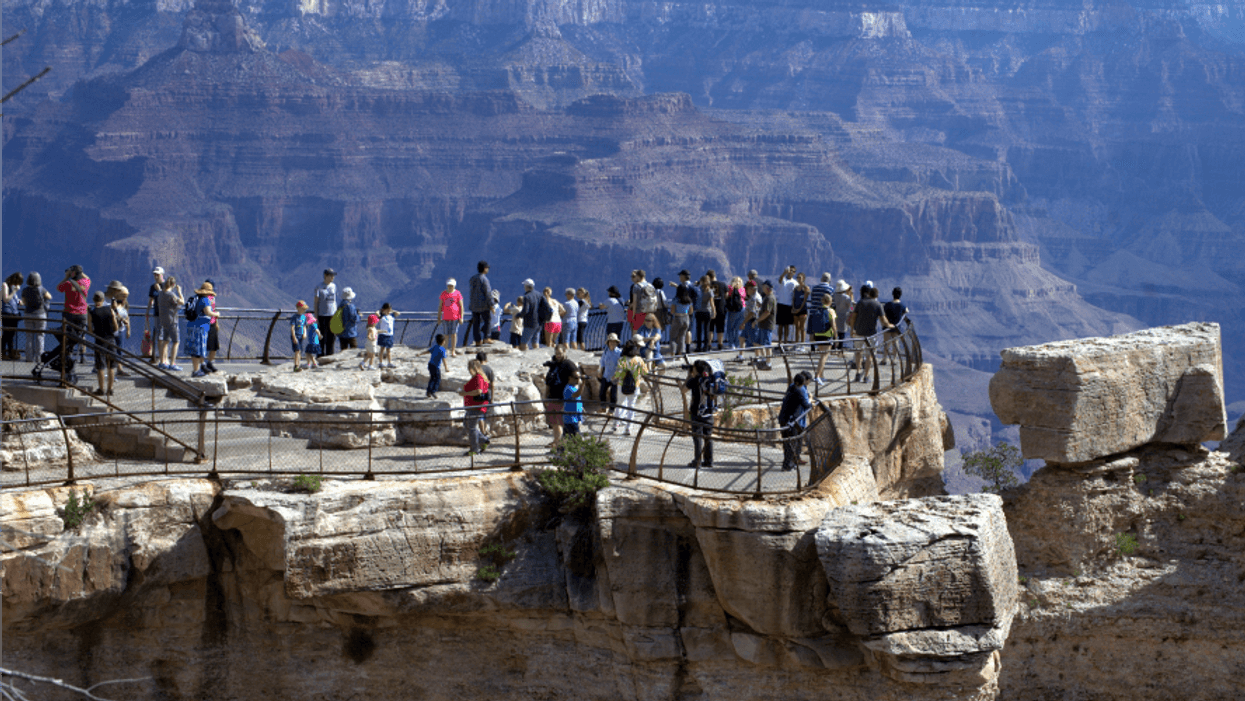
The tourism industry is blaming President Donald Trump's anti-immigrant policies and xenophobic rhetoric for a decline in foreign visitors to the U.S. since Trump took office a year ago.
The National Travel and Tourism Office saw a nearly four percent drop in foreign travelers entering the U.S. in 2017 and more than a three percent drop in spending by tourists.
The slump translates to $4.6 billion in lost tourist spending and 40,000 tourism jobs lost.
The data was released at the end of a year in which Trump ordered bans on travelers from several Muslim-majority countries; pardoned former Arizona sheriff Joe Arpaio, who was found guilty of racially profiling Latinos and abusing inmates; touted his plans to build a 30-foot wall separating the U.S. from Mexico; and moved to repeal deportation protections for undocumented immigrants who were brought to the U.S as children and have lived and worked there for years.
Most recently the president was accused by Republican and Democratic lawmakers of referring to Haiti, El Salvador, and the nations of Africa as "shithole" countries and advocated for more immigration from European countries such as Norway.
"It's not a reach to say the rhetoric and policies of this administration are affecting sentiment around the world, creating antipathy toward the U.S. and affecting travel behavior," Adam Sacks, president of Tourism Economics, told the New York Times.
The decline has bumped the U.S. out of its place as the number-two most visited country in the world, with Spain taking its place.
The number-one spot went to France, as it did in 2016.
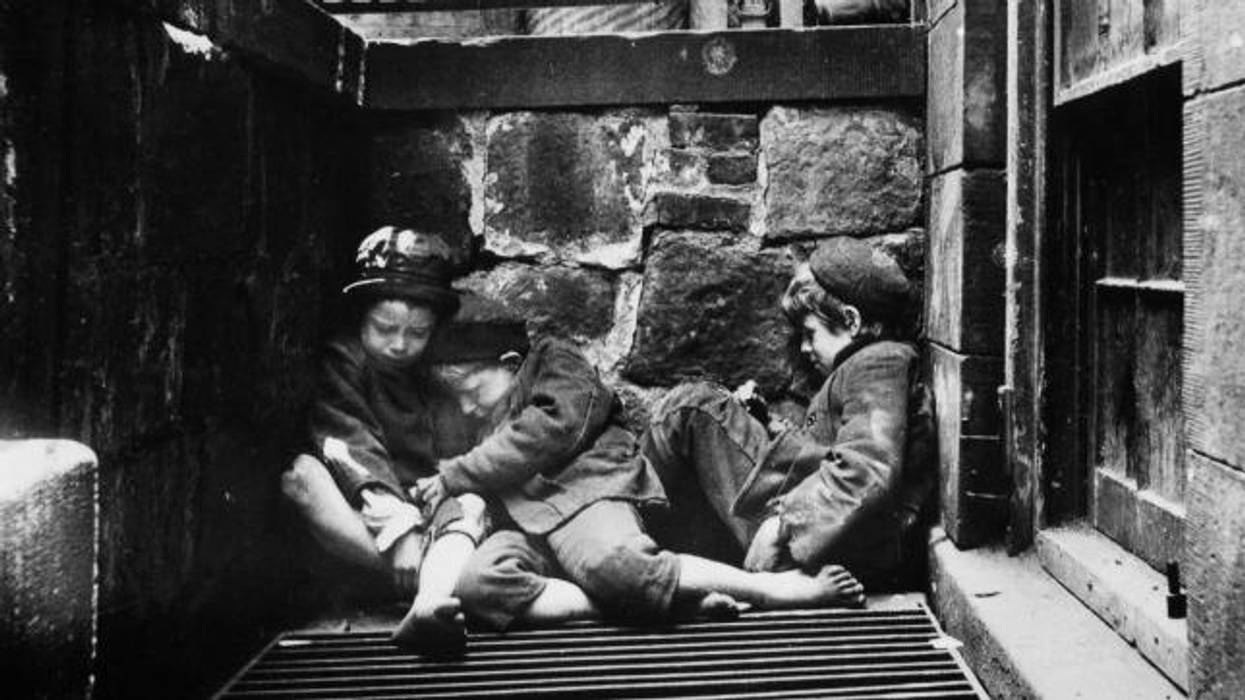
More than three decades ago, my aunt Hilda wrote an account of her father's voyage to and life in America for my daughter to read "someday." She began it this way: "Your great grandfather, Moore Engelhardt, a boy of 16, arrived in New York from Europe in March 1888. It was during the famous blizzard and after a sea voyage of about 30 days. He had no money. He often said that he had a German 50 cent piece in his pocket when he landed. His trip had to be in the cheapest part of the ship -- way down below in steerage. Poor boy, I'm sure he was seasick a good deal of the time. Since he was alone, he sort of attached himself to a family of a lot of children and, for the first few months in America, I imagine he slept behind the stove in somebody's kitchen.
History--specifically, the history of nativism and racism--is only repeating itself in this not-so-new century of ours. "I don't know the whole story of his trip from somewhere near Lemberg in Poland to Hamburg where he boarded the ship, but from the few things he told me about it I gathered that it wasn't easy. He worked at anything he could find to earn money for the trip, saving every penny he didn't need for daily living. I do know that it took him two years. His last job was as a scribe for a lawyer in Hamburg. There were no typewriters, but he had beautiful handwriting, almost as perfect as printing.
"The reason for his trip to America at the early age of 16, besides the stories he had heard about gold in the streets of New York, was, as he told it, a strange one..."
In other words, my grandfather was a kind of nineteenth-century equivalent of a DACA kid (though without even parents to bring him here since he ran away from home). Like so many other immigrants of that era, he made it to the United States from a shithole part of Europe--of, to be exact, the Austro-Hungarian Empire--and he was lucky. He spent the rest of his life in Brooklyn, New York. A few decades later, Jews like him, or Slavs, or Italians, or Asians of any variety--the Haitians, Salvadorans, and Nigerians of that era -- would essentially be put under the early twentieth-century equivalent of Donald Trump's "Muslim ban" and largely kept by law from entering the country. In those days, the analog to Trump's bitter complaints about Muslims and others of color was: Europe was "making the United States a dumping ground for its undesirable nationals." (So said Henry Fairfield Osborn, the then-president of New York's American Museum of Natural History, in 1925.)
So history--specifically, the history of nativism and racism--is only repeating itself in this not-so-new century of ours. Back then, northern European immigrants were favored by that same law, so no one should have blinked when Donald Trump, who (like me) grew up at a time when those bans of 1924 were still in place, extolled Norwegians as the dream immigrants he wants to come here.
It wasn't just racist but absurd for him to suggest that anyone from a country that regularly turns up at the top of the list of the "happiest" nations on Earth would have a driving urge to emigrate to our not-so-New World for a not-so-new life in a plutocrat-strong America with its 1% elections and ever widening inequalities of wealth. Still, for just a little while give reality a pass and let the wondrous Ann Jones, author of They Were Soldiers: How the Wounded Return from America's Wars--the Untold Story, take you in "The Norwegian Menace" to a planet in a galaxy far, far away and allow you to imagine what this country might actually be like if it were overwhelmed by Norwegian immigrants.
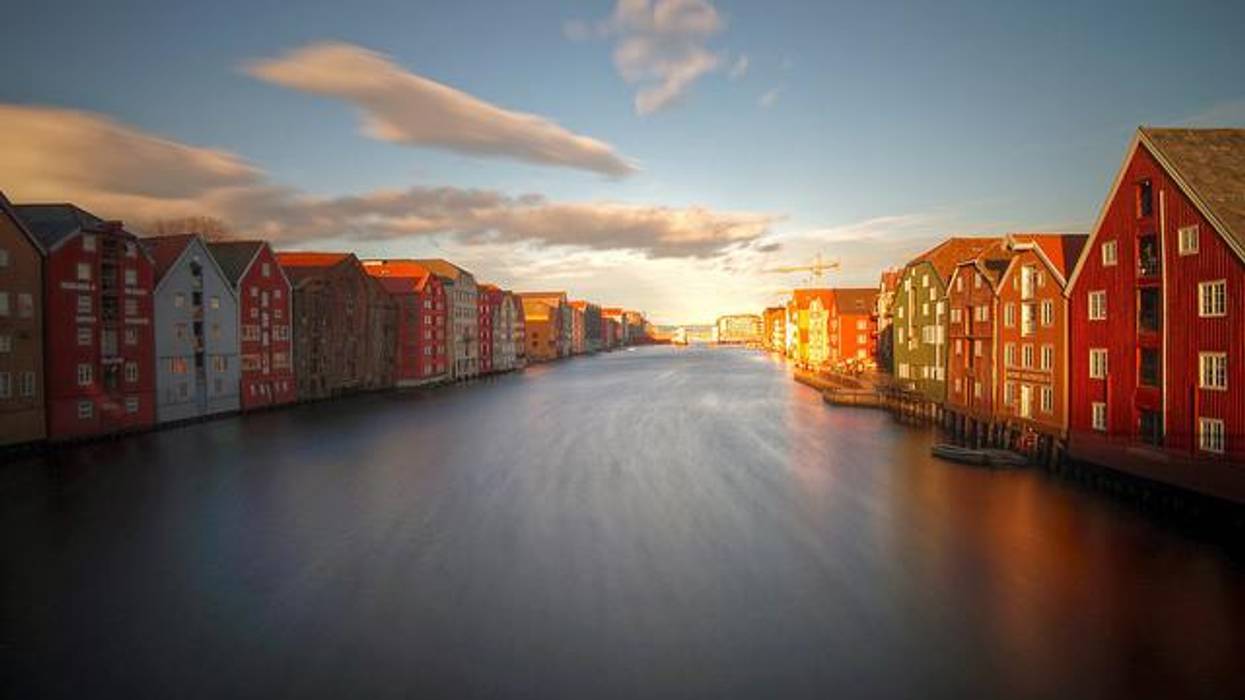
In the past couple of weeks, thanks to the president's racist comments about Haiti and African countries he can't even name -- remember "Nambia"? -- as well as the stamp of approval he awarded future immigrants from Norway, we've seen a surprising amount of commentary about that fortunate country. Let me just say: those Norwegians he's so eager to invite over are my ancestral people and, thanks to years I've spent in that country, my friends. Donald Trump should understand one thing: if he and his Republican backers really knew the truth about life in Norway, they would be clamoring to build a second "big, fat, beautiful" wall, this time right along our Eastern seaboard.
One thing is incontestable: a mass of Norwegian immigrants (however improbable the thought) would pose a genuine threat to Donald Trump's America. They would bring to our shores their progressive values, advanced ideas, and illustrious model of social democratic governance -- and this country would never be the same!
It's hard even to begin to imagine what a Norwegian-ization of the United States might mean. But just for a moment, try to picture how strange our country would be. After all, based on life in Norway, you would have to assume that our beloved land would lose many of its twenty-first-century landmarks. Gone would be its precious ghettos and slums, its boarded-up schools, hospitals, and libraries in the heartland, not to speak of its heirloom infrastructure: collapsing bridges, antique trains, clogged roads, and toxic drinking water.
To grasp what's at stake, consider how such immigrants would have reacted to the Republican tax "reform" bill, praised by the president as "the greatest achievement" of his first year in office (which, by his own account, is the greatest year in American history). That bill, filled with miscellaneous handouts meant to ensure the votes of individual Republican legislators, guarantees that the super rich and their mega-corporations will get richer still in perpetuity. It is, in its own way, a glorious hymn to future heights of economic inequality (in a country already ranked the most unequal in the developed world), as it cleverly passes on to the children of the un-rich classes a national deficit inflated by an extra $1.5 trillion.
It is, of course, the nature of any tax plan to redistribute the wealth of a nation in some fashion, even though Republicans use the word "redistribution" only to assail Democrats who occasionally suggest a little something to help the poor. But redistribute those Republicans did in a masterful way, surrendering yet more of our national wealth to the tiny team of people (many of whom also happen to be their donors) who already pocket almost all of it. As the Republicans were writing the tax bill, the top 20% of households were already taking home 90% of the American pie. Now, they will get more.
That's exactly the kind of "achievement" that no Norwegian parliament would ever approve. All nine parties now in that country's parliament, from left to right, would have joined in tearing up that Republican tax bill and replacing it with a much simpler one aimed at redistributing the nation's wealth equitably to every last one of its citizens.
As a start, they would have tossed in the trash can the single most basic project of Trump and the Republicans: making the rich richer. Norwegians have long worked to do just the reverse, based on a well-established conviction that inequality creates elites that corrupt and destroy democracy. That's where politics come in: devising multiple systems to regulate a capitalist economy and safeguard democracy.
For example, two national confederations, of trade unions on the one hand and corporate enterprises on the other, annually negotiate wages and working conditions, while minimizing the difference between high-paying and lower-wage jobs, between CEOs and workers. As a result, Norway's income equality is near the top of any international list. America's, not so. On average in 2014, for instance, American CEOs grabbed 354 times the salary of their workers. For many corporate chiefs that figure hit well over 1,000 times the salary of a median employee, while in Norway for every dollar the worker earned, the average Norwegian CEO took home 58 bucks.
Equitable paychecks may slow down the creation of Norwegian billionaires, but the country's overall standard of living is among the world's highest. The U.S. ranks much lower on international evaluations, although with its immense and still rapidly growing gap between the plutocrats and the rest of us, it's hard to calculate a meaningful "standard."
While those new Norwegian immigrants were at it, they would quickly move to simplify our tax system. That, of course, is exactly what Trump and the Republicans promised -- you remember that "postcard" you were going to mail to the IRS -- even as they made everything yet more complicated. In Norway, the government not only simplifies the tax system, but figures out, on a progressive scale, what every taxpayer owes and then sends out the bills.
Those dangerous Norwegians are peculiar enough to be grateful. They gladly pay up because taxes fund the country's universal public welfare system, which guarantees that strikingly high standard of living to a whole society. (That phrase "whole society," by the way, is the meaning of the word "social" in the phrase "social democracy.") Keep in mind that all Norwegians have the right to universal public health care, universal public education through professional schools or university and beyond, care of the elderly and disabled, paid parental leave for mothers and fathers, subsidized early childhood education (from age 1), affordable housing, state of the art public transport, and a raft of other services that take the worry out of daily life. The catch is -- and I can already hear the thundering footsteps of the Republican herd as it heads in panic for its top secret bunker -- if Norwegians can't trust the government, they kick it out and elect another.
We Americans, on the other hand, have been taught not to trust any government, but rather to admire our brilliant super-rich people who own this one, and so to let them pocket our tax money and think none the less of them for their dependence on Republican handouts like that tax bill. Consider the situation this way: Norwegian governments spoil their citizens, while President Trump and the Republicans despoilus ordinary Americans. And that just goes to show how much they trust us to take care of ourselves -- so much so that they're now planning to slash Medicaid and Medicare, leaving us "free" to set forth into sickness and death on our own. And if that isn't the good old American spirit of free enterprise, what is?
Striking "Oil" With Fair Wages for Women
To explain how Norway pays for all those social programs, almost every American commentator, even when theoretically sympathetic to the Norwegians, points to the income from the country's North Sea oil fields, discovered and developed in the 1970s. On that, however, they are mistaken.
Norway's welfare state programs are supported not by oil revenues but by taxing the citizenry. (While some of those citizen taxpayers are paid for working, directly or indirectly, in the oil business, as of 2016 they made up only 7% of the Norwegian workforce.) So to understand how Norway can afford to pay for the genuine well-being of its people in such an impressive way, you need to look at those tax rolls, which very nearly doubled in the 1970s when women walked into the workplace (and politics) in a major way -- and at wages close to matching those of men. In 2016, the Ministry of Finance calculated that the labor of women added to the net national wealth a value equivalent to the country's "total petroleum wealth" created by that North Sea oil and held in the world's largest sovereign wealth fund, worth in 2017 more than one trillion dollars.
It's pretty scary to think of hordes of immigrants from such a country landing on our shores, considering the radical reality I've just described, the startling idea that you could upgrade an economy in a wholesale way just by requiring fair wages for women. Not to mention that with the taxes those women pay, you could fully fund free universal child care, the lack of which drives American women from the workplace back home, where Republicans think they belong. In the U.S., none of our good old boy leaders would dream of enacting programs so... well, unpatriarchal. Or how about another idea I've heard from many Norwegians: that gender equality is the key to the good life?
But about that North Sea oil money: it, too, represents a kind of thinking utterly alien to this country. Oil is something we Americans believe we understand. Spill it in Alaska, spill it in the Gulf of Mexico. Now, drill for it in the Arctic National Wildlife Refuge (thanks to the need to secure Alaska Senator Lisa Murkowski's vote for that tax "reform" bill), as well as up and down the coasts of the country (except for Florida, the home of Trump's favorite golf club). We don't mind what you do with it as long as you keep down the costs of propelling our outsized vehicles over our outdated highways.
Norway, on the other hand, owns 67% of the shares in Statoil, the Norwegian oil company that controls those North Sea wells, even as it leads the world's changeover to electric vehicles. It's a country with a remarkable record of developing and adopting new technologies while phasing out the old, so its workforce is always employed. By law, the government spends no more (and usually less) than 4% of its yearly oil profits on current expenses. The other 96% or more, it pours into that trillion-dollar sovereign wealth fund. That, in turn, has been set aside for the future, for the country's children and their children, although some Norwegians, famous for their worldwide humanitarian and peacemaking activities, now propose to give much of it away to other lands that may need it far more.
Here's a question for future American administrations: Could they apply for some of that Norwegian money to build an East Coast wall against Norwegian immigrants or maybe to help our kids pay off that estimated $1.5 trillion in debt Trump and the Republicans just handed them in the new tax bill? Could we take advantage of those radical Norwegians without even letting them into our country? I'll bet Trump could finagle that.
Selling F-52s to Norway
It's likely that Norway came to Trump's mind in that meeting with Senators Dick Durbin and Lindsey Graham (among others) as some idyllic source for future white Republicans only because, the day before, he had met with its substantial and very white prime minister, Erna Solberg. (Surprised observers of the meeting tweeted that Solberg speaks better English than the American president -- as most Norwegians do.) "Erna," as Norwegians -- for whom everyone is equal and on a first-name basis -- call her, is the leader of the Conservative party. She heads a coalition government in which the top three positions are held by women. That in itself might have caused Trump to keep his hands in his pockets, but apparently he wasn't told. It's likely he mistook "Conservative" for "Republican," but as a matter of fact, all nine of Norway's political parties now in parliament are well to the left not just of the Republicans but of the Democrats and, yes, even that independent "democratic socialist" from Vermont.
At the moment, only one Norwegian cabinet member, Silvi Listhaug of the right-wing Progress Party, might be considered sufficiently neoliberal, uber-Christian, and mean to fit into Trump's regime. Perhaps that's because her early training included a 2005 internship in the Republican-controlled U.S. House of Representatives.
In Norwegian terms, Erna often tilts dangerously to the right under the pressure of U.S. and British neoliberal economic theorists. It has to be hard for the leader of a small country -- five million people, half the population of Haiti -- to resist pressure to conform to the autocratic example of a nation that styles itself the most exceptional on Earth. Erna herself is a polite, circumspect politician who, on returning from her visit to the White House, assured reporters in Oslo that President Trump was "a normal man" with "a sense of humor." Apparently she didn't mention Trump's self-proclaimed political acumen, intellectual brilliance, or awesome "America First" foreign policy. Norwegians reading their morning papers could, however, fill in the blanks.
At a joint press conference with Erna, Trump proudly announced that, last November, the U.S. had delivered the first F-52 and F-35 fighter jets to Norway, part of a $10 billion order of American military equipment. Norwegians are, in fact, stubbornly averse to war and think of their reluctant acquisition of way too many over-priced, overdue, bug-plagued F-35s as a surcharge on NATO membership. But F-52s?
That thoroughly fictional plane, as it turns out, exists only in the video game Call of Duty: Advanced Warfare. (Do you suppose Trump spends his executive time playing commander-in-chief?) Norwegians are having a good laugh, while their commentators are saying "thanks, but no thanks" to Trump's immigration invitation. If they really mean it, then perhaps we can relax and forget about that wall along the Eastern seaboard.
On the other hand, judging by their press, an awful lot of Norwegians are even more appalled and angered than we are by Trump's racist slurs about "shithole countries." What's more, just days after returning to Norway, Erna Solberg rolled out her new government, a coalition of three parties, all led by women, and a gender-equal cabinet to run ministries focused not only on defense or finance, but also on climate and the environment, eldercare and public health, research and higher education, family and equality. Erna announced that the platform of this new government would be "greener" and committed to sustaining the welfare state. And this, in Norway, is a center-right government.
You see what I mean about Norwegian ideas being totally at odds with Trump's America. Still, Trump might play that to his advantage. If he and his Republican supporters in Congress decide to build that East Coast wall after all, they might be able to get the Norwegians to pay for it -- not to keep them out, but to keep us in.
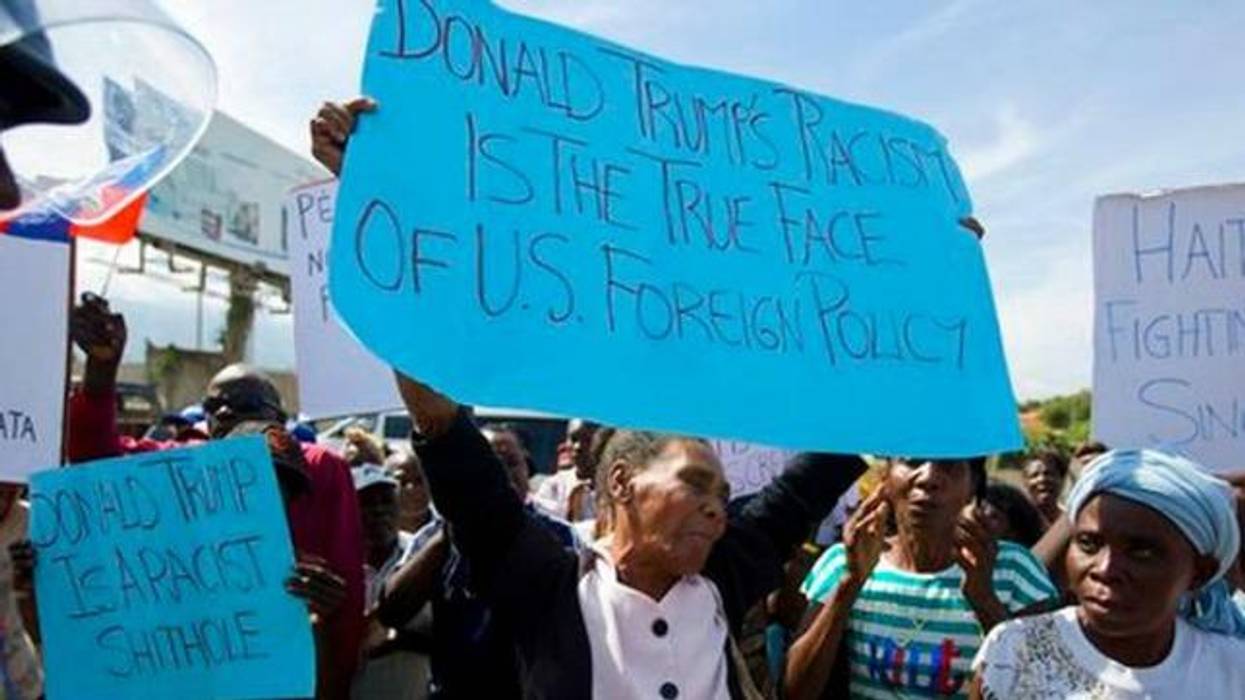
Stirring enough concern for U.S. officials to shutter the American Embassy in Port-au-Prince, thousands of Haitians marched in their nation's capital on Monday as they denounced President Donald Trump over his recent remarks in which reportedly referred to their country as a "shithole."
"Trump is a vulgar racist, and a racist is a very poor-minded person. We don't feel any resentment against the American people, who we know largely disapprove of Trump's behavior in the White House."
--Marvel Joseph, protesterWhile police set up barricades and fired rubber bullets at the protesters, the anger among regular Haitians was palpable as they demonstrated in the streets and spoke out against the U.S. president and his policies.
"We are here today to let President Donald Trump know that we declare him persona non grata in Haiti," declared protest leader Mario Joseph, a prominent human rights lawyer and activist in the country.
"Trump is a vulgar racist, and a racist is a very poor-minded person," Marvel Joseph, one participant, told Reuters. "We don't feel any resentment against the American people, who we know largely disapprove of Trump's behavior in the White House."
Watch:
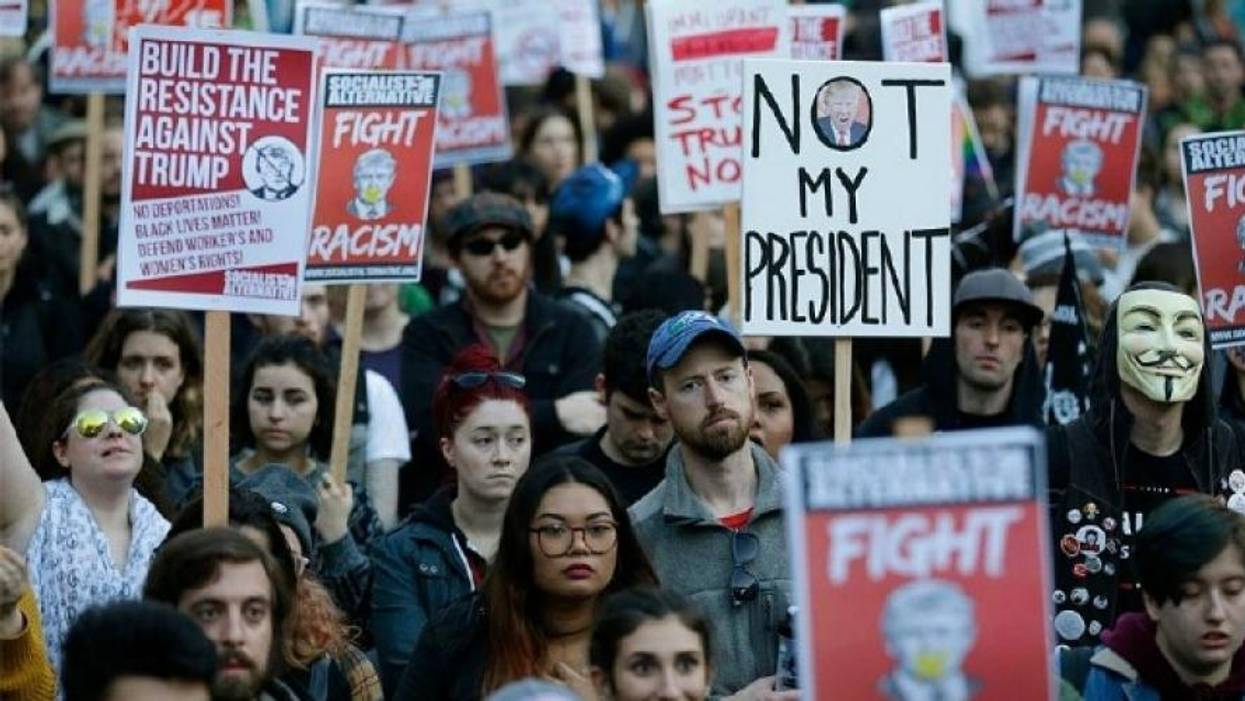
A little over a year ago at TomDispatch I wrote about the bloody nightmares rupturing my sleep and the night terrors gripping my little household in the wake of Donald Trump's election. That piece was reposted by a wide range of publications. And then, in what at first seemed like a terrible mistake, I read the comments.
Some of them weren't very nice. Some of the names the guys (and they were all guys) called me were downright mean. Shocking, I know. But a common thread ran through those responses, one I've been musing about ever since. It was this, as one fellow put it: "There's nothing to be afraid of. Stop being such a coward." They were wrong, of course. There's plenty to be afraid of in the Trump era from climate disaster to nuclear war to disappearing medical care. But they were half-right, too. Those of us seeking to resist Trump can't afford cowardice. We need to practice courage.
"If we are to successfully resist the Trump juggernaut, we will need to be brave, to create through practice a habit of refusing to let fear -- whether of ridicule or repression -- keep us from acting."
Remembering that exchange with those trolls has gotten me thinking about some of the personal qualities we'll need to sustain the movements resisting Trump and the Republican agenda forward. The ancient Greek philosophers called such qualities "virtues," by which they meant stable habits of character -- a dependable tendency to act a certain way in certain situations. The Greek philosopher Aristotle believed we can only develop such habits through practice. We become courageous, he wrote, by acting courageously. In effect, we fake it till we make it.
There are many lists of such virtues. Aristotle himself described a number of them, some of which didn't even have names -- like the ability to be entertainingly witty at a dinner party. But most of the classical and medieval European philosophers settled on four key or "cardinal" virtues: justice, courage, temperance (which, today, we would call moderation), and wisdom. It's as good a list as any to cultivate for those intent on resisting the transformation of our world into a Trumpian hell on Earth.
Justice
Ancient philosophers spent a lot of time defining justice. For the Greek philosopher Plato, a just person was someone in whom each part of the personality played the role it was best suited for. For Aristotle and many who came after him, justice consisted of giving to people what they were due or owed, what they deserved.
We've certainly seen the Trump administration fail to give people their due.
For example, in April 2017 Attorney General Jeff Sessions acted to stop the implementation of consent decrees worked out between the Obama-era Justice Department and a number of local police forces around the country. Those agreements to reform law enforcement practices came in the wake of a new media interest in an old problem: the deaths of striking numbers of unarmed people of color annually at the hands of police departments from Staten Island to Baltimore to San Francisco, not to mention Ferguson, Missouri, where Michael Brown was infamously shot to death by a city police officer.
After Brown's death, the Justice Department investigated the practices of the Ferguson police and discovered that, far from giving that city's citizens their due, the police department and its municipal court were preying on them for financial gain. "Ferguson's law enforcement practices," the Department's Civil Rights Division found, "are shaped by the city's focus on revenue rather than by public safety needs." In other words, the main activity of the police and court turned out to be wringing as much money as possible out of the African American population.
As a result of Justice Department action, in 2016 Ferguson agreed to a consent decree outlining the concrete steps it would take to correct an unjust system. Similar agreements were put in place in other cities with histories of discriminatory, indeed murderous, treatment of communities of color. Now, Trump's attorney general has halted enforcement of these consent decrees, effectively ending an attempt to bring justice to communities suffering at the hands of those who are supposed to protect them.
Donald Trump himself has demonstrated little respect for the institutions responsible for justice in this country. In January 2018, for example, the Ninth Circuit Court of Appeals stayed a Trump move to end Deferred Action for Childhood Arrivals (the DACA program, which allows undocumented immigrants who came here as children to remain in the United States). Trump's reaction? An attack not only on this particular decision, but a tweet pronouncing the entire court system "broken and unfair" (followed by his now infamous assault on the "shithole" countries from which such immigrants come and a call to replace them with "Norwegian" immigrants).
And this was hardly Trump's first attack on the courts. As early as June 2017, the Brennan Center for Justice at New York University Law School had already collected a remarkable range of presidential tweet assaults on the court system, part of a full-scale presidential campaign to delegitimize an entire branch of government (until the president can appoint judges more to his taste). It cited a tweet storm of Trumpian pronouncements like: "Our legal system is broken!" "Just can't believe a judge would put our country in such peril. If something happens blame him and court system." "What is our country coming to when a judge can halt a Homeland Security travel ban...?"
What, indeed? A country with a system of checks and balances, perhaps, in which multiple branches of government work to keep each other honest, or even... just?
In general, we tend to think of justice (or injustice) as a situation brought about by human activity, rather than as a quality of humanity itself. Consider the expression "to bring someone to justice." In this sense -- and it's a commonplace one -- justice is a metaphorical place, a condition. That's not wrong, of course, but we can also understand justice as a virtue -- a moral characteristic of individuals. Justice in this sense is the personal habit of giving people what they are truly owed, whether demanding respect for women's bodily and moral integrity or striving for a living wage for every worker.
Justice in the form of habitual respect for those who are -- perhaps profoundly -- different from ourselves is crucial if we are to build strong and effective coalitions of resistance.
Courage
George W. Bush and his administration spent eight years trying to turn the United States into a terrified nation of cowards. The pretext for their invasions and torture was "our" safety (though on any number of other, far more dangerous subjects they couldn't have cared less). We've now come to accept, for example, the "security theater" we encounter at U.S. airports, a drama in which an audience of docile passengers is reminded by the indignity of the procedures that we should be very afraid. Indeed the absurdity of these measures (only 3-ounce bottles in a quart-sized baggie permitted; no bigger! no smaller!) reinforces our sense of their ultimate power. The danger must be very great indeed, if our government is making such ridiculous demands in such profusion (even if the Transportation Security Administration has a dismal record when it comes to finding actual objects of danger on passengers as opposed to nail files orwater bottles).
Similarly, we were asked to accept that other people had to be tortured if we were to remain safe. It was as if the government were offering us a solemn deal: just let us do what we need to over there on the dark side and, in return, we promise you will never die. The same illusory guarantee of immortality is implied in the promise to wealthier, whiter communities that they could enjoy lives of perfect safety as long as they permitted militarized policing and massive incarceration in this country.
In spite of an historic decline in violent crime in recent years, Donald Trump continues to stir such fears. In his inaugural address a year ago, he spoke of "American carnage," in a landscape "of abandoned factories, economic angst, rising crime." To deal with it, Muslims and immigrants of color were to be tossed out of the country (or kept from entering), prompting no less a fear-monger than George W. Bush to describe the address as "some weird shit."
Such fear-mongering has a long history in this country. Today it is especially focused on the "dangers" represented by Muslims and immigrants in general. If you're a Central American immigrant, then you must also be a member of the Mara Salvatrucha (MS) 13 gang and in need of deportation so that good Americans can remain safe. Never mind that many such immigrants are here precisely because MS 13 and other drug gangs targeted them in their home countries -- or that MS 13 originated in the United States when Salvadorans fled war and repression instigated by U.S.-backed dictatorships.
We are encouraged to let fear guide our response to the horrors lived by millions of Middle Eastern refugees, many of them displaced from their homes by our own country's military adventures. Those adventures, in turn, were fueled by all sorts of ginned-up fears, including that -- as Condoleezza Rice, Bush's national security adviser, put it back in early 2003 -- we must not wait until the "smoking gun" (proving that Iraqi autocrat Saddam Hussein did indeed possess weapons of mass destruction) turned out to be "a mushroom cloud" rising over an American city.
Half of all Syrians have by now become refugees, in part because of the regional destabilization that began with the 2003 invasion of Iraq. The Trump travel ban forbids even one of them to enter this country. Since the attacks of 9/11, fear of terrorism -- and terrorism alone -- has constricted the American heart, while helping fund the spectacular rise of the national security state.
To be clear: the problem isn't fear itself, it's our habitual reaction to fear. Reasonable people are often afraid. We are all mortal and there are real dangers in this world. Fear can be a perfectly useful response, alerting us to danger. So courage doesn't mean never being frightened. Courage is the habit that allows us, even as we tremble, to do what we know is right and necessary -- to refuse to torture anyone, to rescue refugees, to recognize that striking first is not self-defense but aggressive war, to realize that others are profiting by the ways we let fear immobilize us.
If we are to successfully resist the Trump juggernaut, we will need to be brave, to create through practice a habit of refusing to let fear -- whether of ridicule or repression -- keep us from acting.
Moderation
Moderation -- the ability to resist extreme behavior -- isn't always a popular virtue among leftists like myself. Our intemperance often tends less in the direction of self-indulgence than puritanical self-righteousness. This makes it difficult to compromise; it often makes "the perfect," as they say, the enemy of "the good." Such a tendency could prove disastrous if we fail to support imperfect Democratic nominees -- is there any other kind? -- in the 2018 midterm elections. There are legitimate bottom lines of course. A resistance movement worth its name can't support candidates who don't recognize the full humanity of people of color, of women, and members of LGBTcommunities. We mustn't trade anyone's humanity for a mess of electoral pottage. Still, there are compromises we can make.
A puritan intemperance can also create in activists a contempt for anyone who takes time out from politics to pay attention to the details of ordinary life. Often such people are women on whom the main social responsibility still falls for raising children and feeding, clothing, and soothing family and friends. We can be tempted to forget that the whole point of political engagement is to create a world in which everyone is free to attend to the ordinary joys and pains of human life.
There's a saying attributed to Carlos Fonseca, one of the founders of Nicaragua's Sandinista party. "A man who is tired," he is supposed to have said, "has the right to rest. But a man who rests does not have the right to be in the vanguard." It's a stirring exhortation. But the implication is that only supermen (and they would be men) can lead movements for the benefit of ordinary people. And buried in that implication lies a contempt for the very people any "vanguard" hopes to lead.
Moderation -- a recognition and embrace of human limitations -- is the virtue that will keep a resistance movement humble and grounded in real life.
Wisdom
Aristotle called it phronesis; Thomas Aquinas, prudentia. It's probably best translated as practical wisdom. It's the ability to use your mental powers, honed through your experience of life, to discern in a given situation not just the most effective move, but the right one. It's the quality that allows us, for example, to recognize the injustice in a tax bill that gives wealthy people something not due to them -- even greater wealth -- while taking yet more from the poor. Once armed with that recognition, practical wisdom helps us figure out the best way to confront and overturn injustice, while maintaining our own integrity.
It helps us decide, for example, which candidates or ballot measures we should support or oppose in the 2018 elections. Once committed, practical wisdom helps us decide not only which tactics will be effective in an electoral battle, but which contribute to our longer-term goals.
Suppose, for example, there's a ballot initiative to outlaw all state and local services to undocumented immigrants. No emergency health care, no public schooling. Opponents could decide to leverage the very anti-immigrant sentiment fueling the initiative to defeat it. "You don't want untreated immigrants spreading tuberculosis," they might argue (as in fact they did in a 1994 California electoral campaign). Or "You don't want dangerous immigrant teenagers hanging out on street corners. Wouldn't it be better to have them in school where we can keep an eye on them?"
Arguments like this might deliver a short-term win (although they failed to do so in that state in 1994) but at the cost of reinforcing racism and xenophobia in the long run. Practical wisdom counsels us to do the right thing (in this case, oppose a vicious law) -- and in the right way.
Becoming Stable Geniuses
Resisting Trump will require developing such dependable habits in ourselves and our movements.
How do we do this? Here I defer to Aristotle. We become just by doing just acts and brave by acting bravely. We show up at immigration courts when asylum seekers ask to be released on bond from detention centers; we demonstrate outside legislators' offices, demanding they keep their promises to protect DACA holders; we keep doing these things even though we're afraid they won't help.
We take risks -- including the risk of being ridiculed for making moral arguments, for injecting questions of right and wrong into the political conversation -- in a country where the "grownups" only talk about costs and benefits measured in dollars and cents.
We fake it till we make it, all the while acknowledging our own human imperfections, even the possibility that we might be wrong. We build dependable habits of justice, courage, and moderation, guided by practical wisdom. We seek, in other words, to become very stable geniuses.